Overlooked Native Michigan Groundcovers That Replace Grass And Survive Heat
Lawn grass in Michigan has a difficult July. It browns, thins, and demands water and attention during the exact stretch of summer when most homeowners least want to provide it.
Native groundcovers solve that problem quietly and permanently in the areas where grass struggles most.
The ones worth knowing about are genuinely overlooked, absent from most garden centers and missing from most landscaping conversations despite performing exceptionally well in Michigan’s heat, clay soils, and dry summer stretches.
They spread at a useful pace, stay low enough to function as true lawn alternatives, and ask for almost nothing once they are established through their first season in the ground.
1. Wild Strawberry
Most people walk right past wild strawberry without giving it a second thought, but this little plant is quietly one of the best grass alternatives a Michigan gardener can choose.
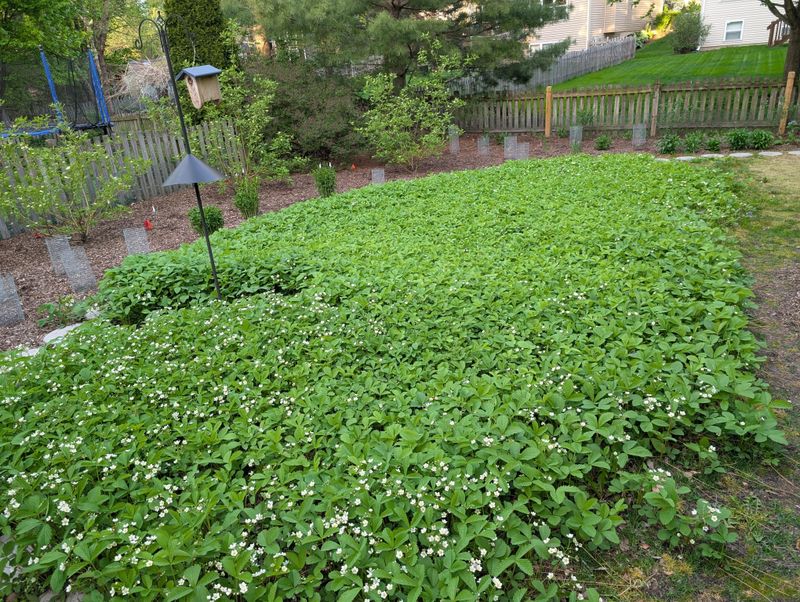
Fragaria virginiana stays low to the ground, usually only three to six inches tall, and spreads steadily through runners that root wherever they touch soil.
It fills in bare patches naturally, which means less work for you and a tighter, more weed-resistant surface over time.
One of the best things about wild strawberry is how much it gives back. Pollinators love the small white spring flowers, and birds along with small mammals enjoy the tiny red berries that follow.
You get a groundcover that actively supports your local ecosystem without any extra effort on your part.
Wild strawberry works well in sunny to partly shaded spots, and it handles Michigan summers better when planted where the soil holds a bit of moisture.
It is not a plant for bone-dry sandy areas, but in average garden soil with decent organic matter, it thrives through summer heat with minimal watering once established.
It does best in low-traffic areas since heavy foot traffic can thin it out over time. Getting started is simple. You can plant plugs or divisions in spring or fall, space them about a foot apart, and let the runners do the rest.
Within a season or two, you will have a soft, living carpet that blooms, fruits, and feeds wildlife while keeping your soil covered and healthy all year long.
2. Pennsylvania Sedge
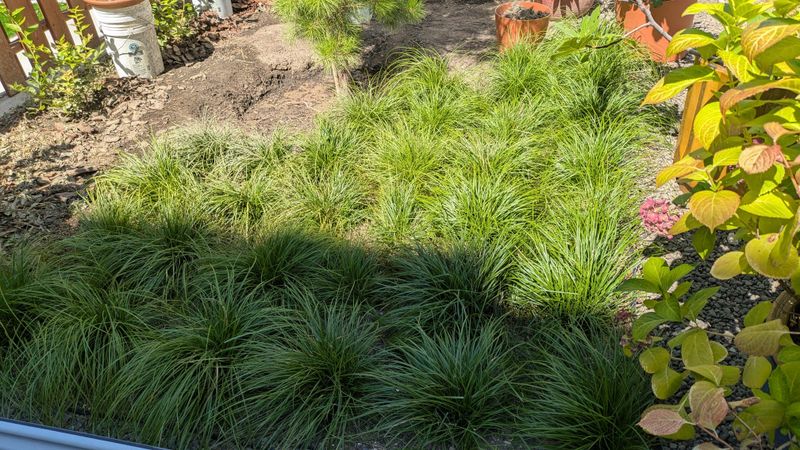
There is something almost magical about a plant that thrives exactly where grass refuses to grow. Pennsylvania Sedge, known botanically as Carex pensylvanica, does just that.
Under oaks, pines, and along open woodland edges where turf turns thin and patchy, this native sedge fills in with graceful, fine-textured blades that arch softly and stay a rich green through much of the year.
It looks a lot like a delicate ornamental grass, but it behaves more like a well-mannered groundcover.
Pennsylvania Sedge spreads slowly by rhizomes, gradually knitting together into a low mat that rarely exceeds eight to twelve inches in height.
Because it grows slowly and steadily rather than aggressively, it works alongside other native plants without crowding them out.
Dry shade is where this sedge really proves its value. Most lawn grasses struggle badly in these conditions, but Pennsylvania Sedge was built for them.
Your Michigan Garden Changes Every Week. Your Plan Should Too.
Gardening in Michigan changes quickly throughout the season. Every Friday you’ll receive a simple weekly plan showing exactly what to plant, prune, fertilize, harvest, and protect so you never miss the right timing.
It handles the dry, root-competitive soil under established trees without complaint. Once it settles in after the first season, it asks for very little in return.
Keep in mind that this plant is best suited for low-traffic areas. It can handle occasional footsteps, but regular walking will wear it down over time.
Think of it as a lawn replacement for visual appeal rather than a surface for playing or entertaining.
Plant it in fall or early spring, give it a season to establish, and you will have a tidy, shade-loving carpet that practically cares for itself through Michigan summers and beyond.
3. Bearberry
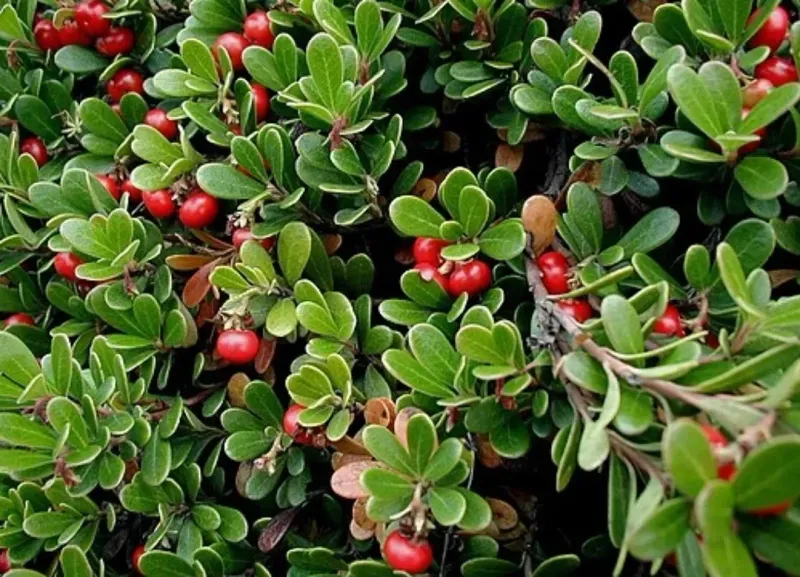
Sandy, hot, and acidic soil is a tough combination that sends most plants packing, but bearberry practically thrives on it.
Arctostaphylos uva-ursi is a native evergreen groundcover that hugs the ground, rarely growing more than six to twelve inches tall, while spreading several feet wide over time.
Its small, leathery leaves stay glossy and green through winter, giving you year-round color even in the most challenging spots in your yard.
Bearberry is a natural fit for dry slopes, sandy edges, and open areas where regular turf would need constant watering and fertilizing just to survive.
In Michigan, it grows wild in sandy pine barrens and along Great Lakes shorelines, which tells you everything you need to know about its toughness.
If your yard has a hot south-facing slope with sandy, well-drained soil, bearberry is practically made for that space. The plant also offers real seasonal interest beyond its evergreen foliage.
Small pinkish-white flowers appear in spring and attract early pollinators, followed by bright red berries that birds love through fall and winter.
It is a groundcover that earns its place in the landscape from every angle. Soil pH matters here.
Bearberry strongly prefers acidic conditions, ideally between 4.5 and 5.5, so avoid planting it where you have added lime or where the soil leans alkaline.
Plant nursery-grown stock in spring, water it through the first summer to help roots establish, and after that, this tough little evergreen can largely fend for itself through Michigan heat and cold alike.
4. Creeping Juniper
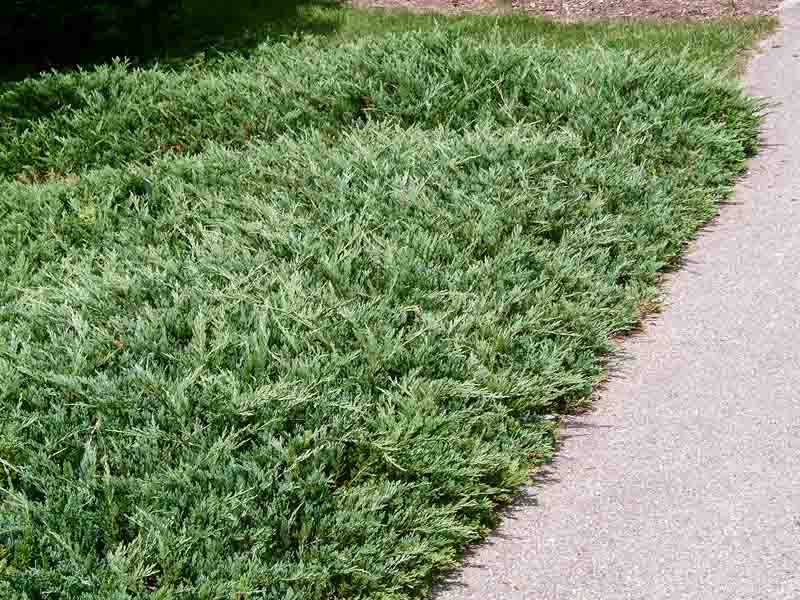
Few native plants handle tough conditions with as much confidence as creeping juniper.
Juniperus horizontalis grows flat against the ground, spreading wide while staying only six to eighteen inches tall, and it covers difficult soil with a dense, evergreen mat that looks sharp in all four seasons.
On sunny slopes, in exposed beds, and along sandy edges where other plants fade fast, creeping juniper holds its ground without fuss.
What makes this plant particularly valuable in Michigan landscapes is its incredible tolerance for poor, dry, and sandy soils. It does not need rich garden soil or regular watering once established.
In fact, too much water or overly fertile soil can actually cause problems, so this is one plant where less care truly means better results. Creeping juniper also offers some nice wildlife value.
Birds use its dense, low branches for cover, and the small blue-gray berries that appear in fall provide a food source for several species.
The foliage often takes on a beautiful purple tint in winter, which adds unexpected color to an otherwise bare landscape. One thing worth knowing upfront is that creeping juniper is not a walking surface.
It works beautifully on slopes, in raised beds, or as a border along driveways and paths, but foot traffic will damage it over time.
Plant it where it can spread freely without competition, give it full sun and sharp drainage, and it will reward you with decades of low-maintenance coverage that no lawn grass could match in those same conditions.
5. Field Pussytoes
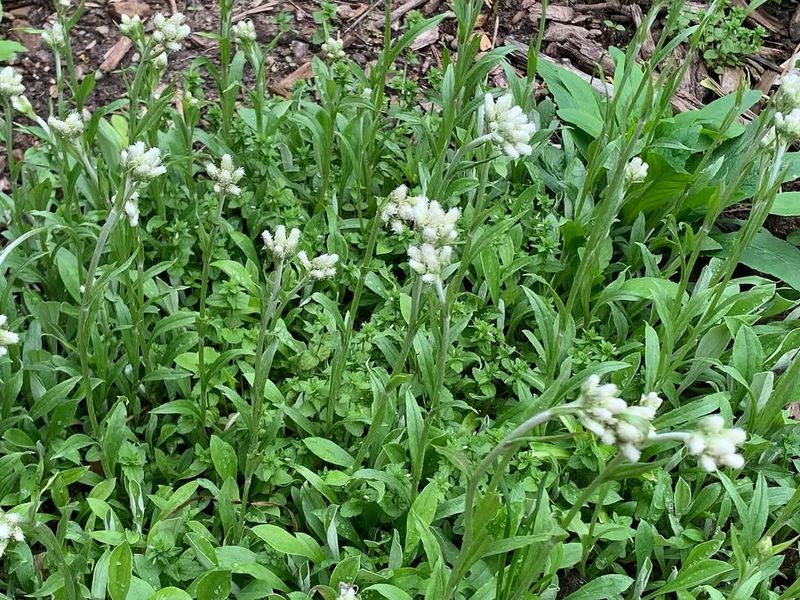
Field pussytoes might be the most underrated native plant in Michigan, and that is saying something given how many great native options exist.
Antennaria neglecta forms soft, silvery-green mats just two to four inches tall, spreading quietly across lean, dry soil where most other plants simply refuse to settle.
The fuzzy little flower clusters that appear in spring look exactly like tiny cat paws, which is where the charming name comes from.
Gravelly roadsides, sandy clearings, and thin rocky soil are the natural homes of field pussytoes, which makes it an ideal candidate for those tricky spots in your yard where grass always looks rough and thin no matter how much you water or fertilize.
Rather than fighting the conditions, field pussytoes works with them. It actually prefers lean, infertile soil, so adding compost or fertilizer is not only unnecessary but can actually weaken the plant over time.
From a wildlife standpoint, field pussytoes punches well above its size. It serves as a host plant for American painted lady butterfly caterpillars, making it a meaningful addition to any pollinator-friendly yard.
The spring flowers also attract small native bees and other early-season insects looking for nectar. Establishment is straightforward if you start with plugs and plant in spring or fall.
Water lightly until roots take hold, then step back and let the plant do what it does naturally.
Within a season or two, you will have a soft, low carpet covering bare soil in spots where nothing else wanted to grow, all with almost zero ongoing maintenance required.
6. Wild Ginger
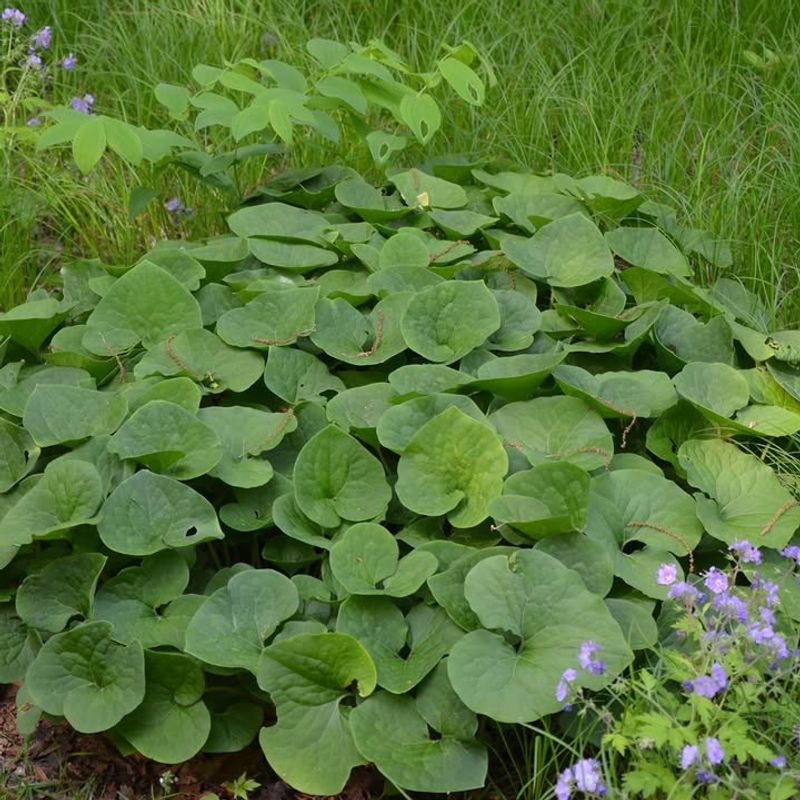
Walk into a Michigan woodland in late spring and you might notice the forest floor covered in broad, heart-shaped leaves so dense that almost no bare soil shows through. That is wild ginger doing what it does best.
Asarum canadense is a native shade groundcover that creates a lush, layered look under trees, and it is one of the most satisfying plants to establish in a shady corner of a home landscape.
Wild ginger is not a substitute for a sunny lawn, and it will not tolerate dry, compacted conditions.
What it needs is shade, steady moisture during establishment, and soil rich in humus and leaf mulch.
Think of spots under mature maples or at the base of large shrubs where the soil stays consistently cool and moist through summer. Those are the places where wild ginger truly comes alive.
Once established, it spreads gradually by rhizome, building a tighter and more weed-suppressing mat with each passing year.
The leaves emerge fresh each spring, and while the plant is technically deciduous, it covers the ground so densely during the growing season that it does an excellent job of keeping weeds out.
A hidden bonus is the small brownish-red flower tucked beneath the leaves in early spring, which is easy to miss but interesting to find.
Start with nursery-grown plants rather than divisions from wild populations, and mulch the area lightly with leaf litter to mimic its natural habitat.
Water regularly through the first season, and by the second year, wild ginger typically takes care of itself with just occasional attention during dry stretches.
7. Partridgeberry
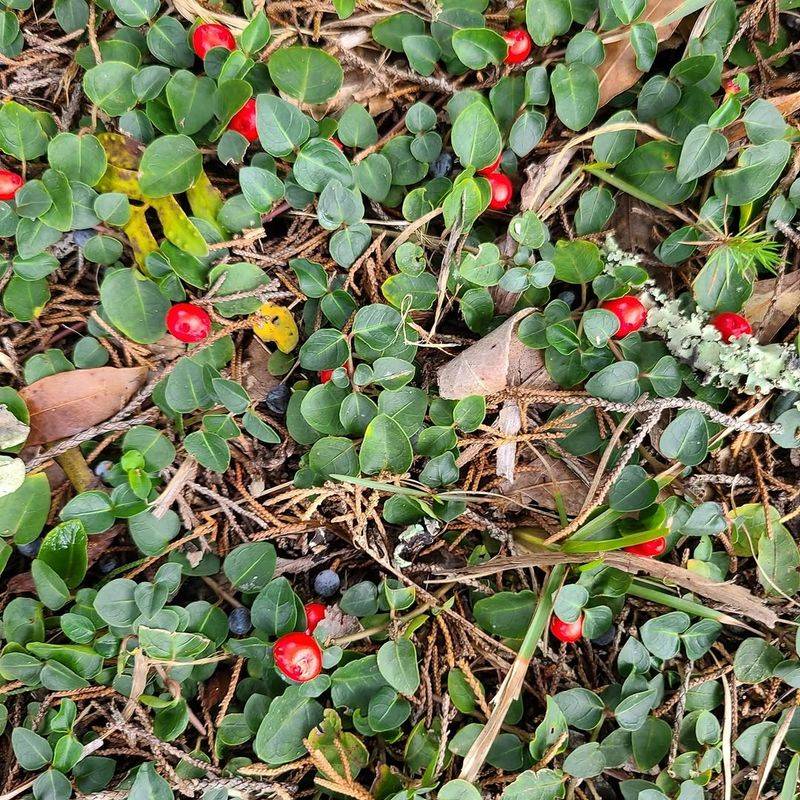
Slow, steady, and quietly beautiful, partridgeberry is the kind of plant that rewards patient gardeners.
Mitchella repens is a native evergreen groundcover that trails along the ground with small, paired, glossy leaves and produces tiny white tubular flowers in early summer that give way to bright red berries by fall.
Those berries last through winter, adding a pop of color to otherwise bare shady spots when the landscape looks its most dull.
Partridgeberry thrives in shady, acidic soil, making it a natural choice for planting under conifers, along woodland edges, or in small pockets where grass has thinned from root competition and low light.
It is not a fast spreader, and that is something to plan for from the start.
A single plant covers a modest area over several years, so for larger spaces, plant multiple plugs about eight to twelve inches apart to speed up coverage. Despite its slow pace, partridgeberry has real staying power.
It handles root-competitive soil under established shrubs and trees better than most groundcovers, and because it stays evergreen, it provides year-round coverage and visual interest.
Birds enjoy the red berries through winter, which adds another layer of ecological value to a small but mighty plant. Soil preparation makes a big difference here.
Work in leaf mold or acidic compost before planting, keep the area mulched with pine needles or shredded leaves, and water steadily through the first growing season.
After that first year, partridgeberry settles in comfortably and begins its quiet, persistent work of covering shady ground that nothing else seems to want.
8. Common Blue Violet
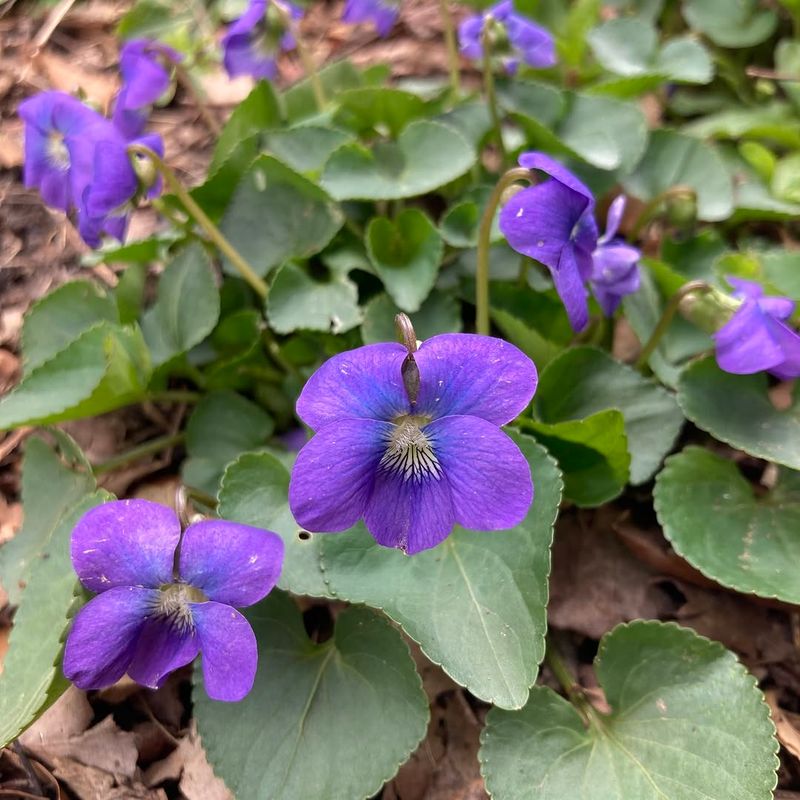
Not every yard needs a perfectly uniform carpet of turf, and common blue violet makes a compelling case for embracing a softer, more natural lawn aesthetic.
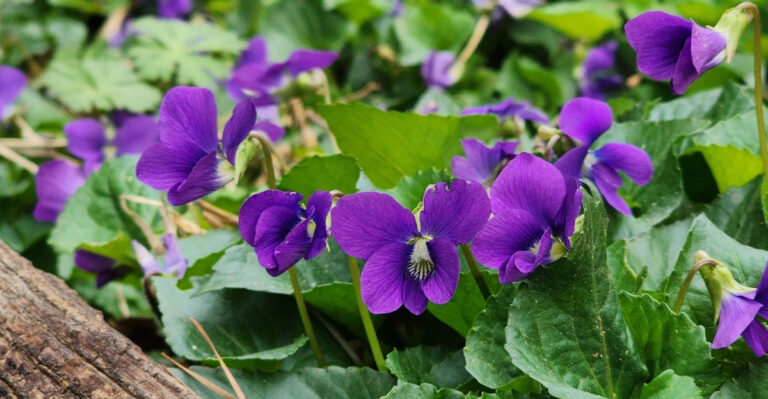
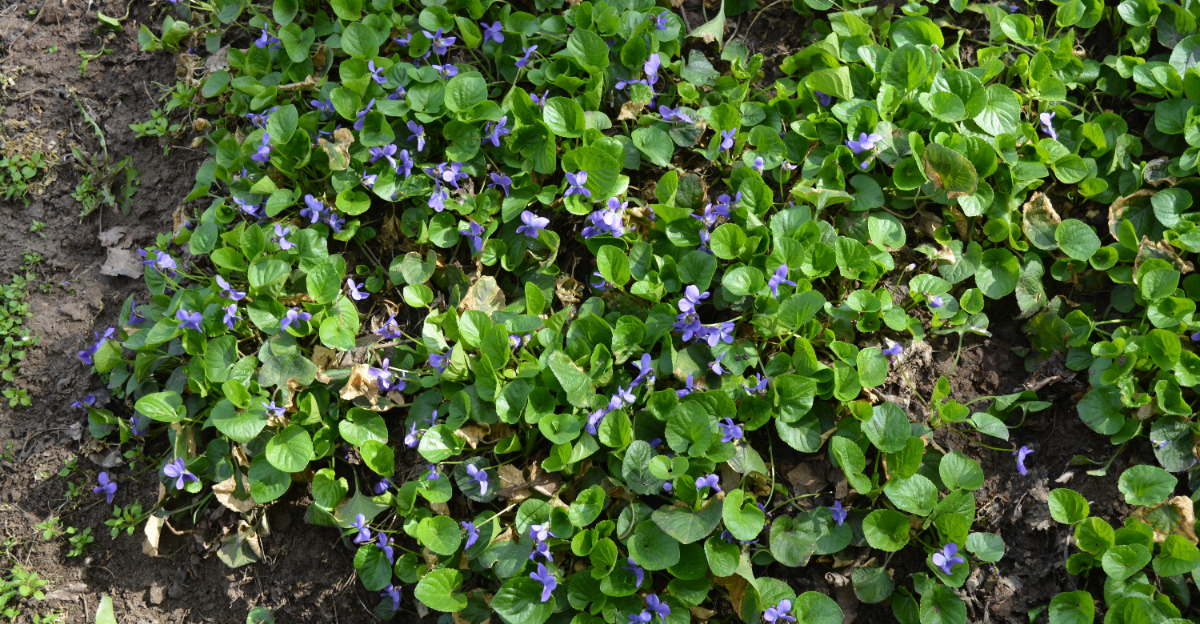
Viola sororia is a native low-growing plant that mixes beautifully into lawn areas, offering small purple-blue flowers in spring that are genuinely cheerful and surprisingly showy when they bloom en masse.
If you have a partly shaded yard where grass always looks a little thin, this violet might be exactly what that space needs.
Common blue violet handles part shade with ease, which is one reason it naturally appears in lawns under trees where turf struggles.
It stays low enough that it blends into a mixed lawn without looking weedy or out of place, especially when you stop trying to eliminate it and start letting it fill in naturally.
The heart-shaped leaves are attractive on their own, and the spring flowers are an early nectar source for bumblebees and other native bees just waking up for the season. The wildlife value goes even further than pollinators.
Common blue violet is the primary host plant for several fritillary butterfly species, including the great spangled fritillary, making it a meaningful addition for anyone interested in supporting local butterfly populations.
That small, overlooked plant in your lawn could be supporting an entire butterfly life cycle. Common blue violet spreads by seed and can gradually fill in over time without much help.
It works best where you want a relaxed, mixed lawn rather than a formal turf surface.
Mow it high or skip mowing in spring to let the flowers bloom fully, and you will have a yard that feels alive in a way that plain grass simply cannot match.