9 Perennials That Keep Part-Shade Areas Colorful In Georgia
Some spots in a Georgia yard never quite get the spotlight. They sit in that soft mix of sun and shade where color fades faster than you expect, and nothing really stands out for long.
But right around this time, those areas start to shift. Fresh growth pushes in, textures change, and a few well-chosen plants can completely change how that part of the yard feels.
If a shaded corner has been looking a little flat or forgotten, it does not take a full redesign to turn it around. The right mix can quietly fill in the gaps and keep things interesting well past early spring.
Once it starts working, it feels natural, not forced, like it was always meant to look that way.
Georgia gardens have a rhythm in spring, and those part shade areas are finally ready to catch up.
1. Hosta Brings Lush Foliage That Thrives In Shaded Spots
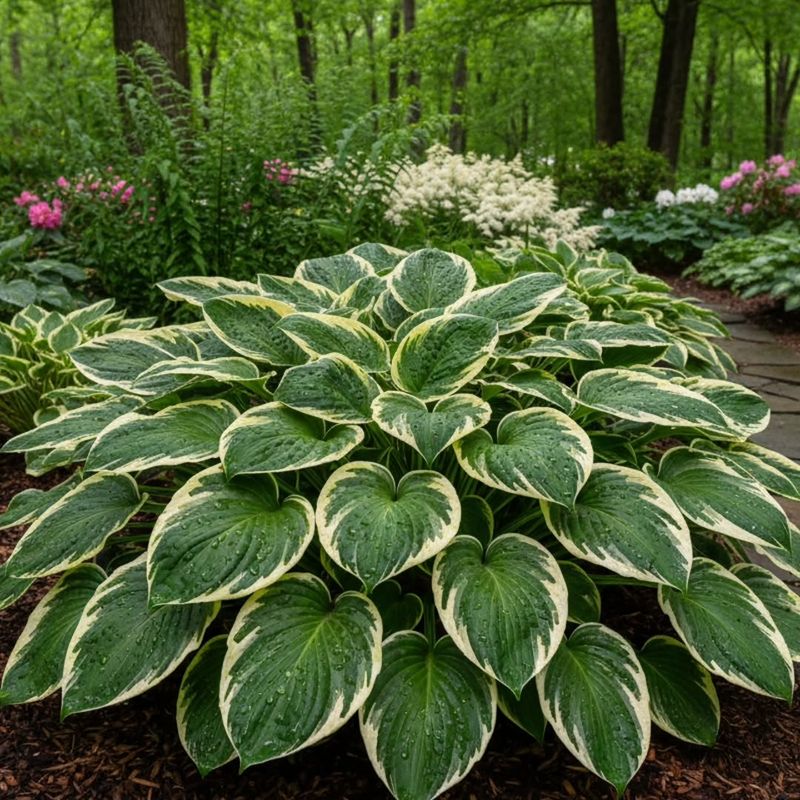
Bold, oversized leaves that practically glow in low light — that is what hosta brings to a shaded Georgia garden.
Few plants make a statement with foliage alone the way hosta does, and in the South’s long growing season, those leaves stay looking fresh from spring well into fall.
Hostas come in a wild range of sizes and colors. You can find varieties with deep blue-green leaves, bright chartreuse, or creamy white edges.
Planting a mix of two or three different types in the same bed creates a layered, almost tropical look without any extra effort.
In Georgia, hosta does best with morning sun and afternoon shade. Too much direct afternoon sun scorches the leaves, especially during July and August when temperatures push into the upper 90s.
A spot under a canopy of trees or on the north side of a structure keeps them looking clean.
Slugs can be a nuisance, particularly after rainy stretches common in Georgia’s spring. A light scatter of diatomaceous earth around the base of plants helps keep them away.
Water consistently during dry spells, and hostas will reward you with thick, healthy growth year after year.
2. Heuchera Adds Long-Lasting Color With Attractive Leaves
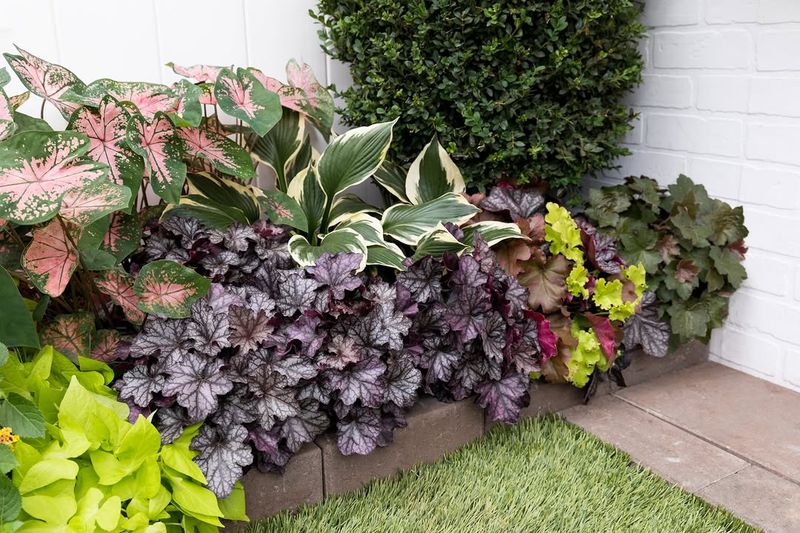
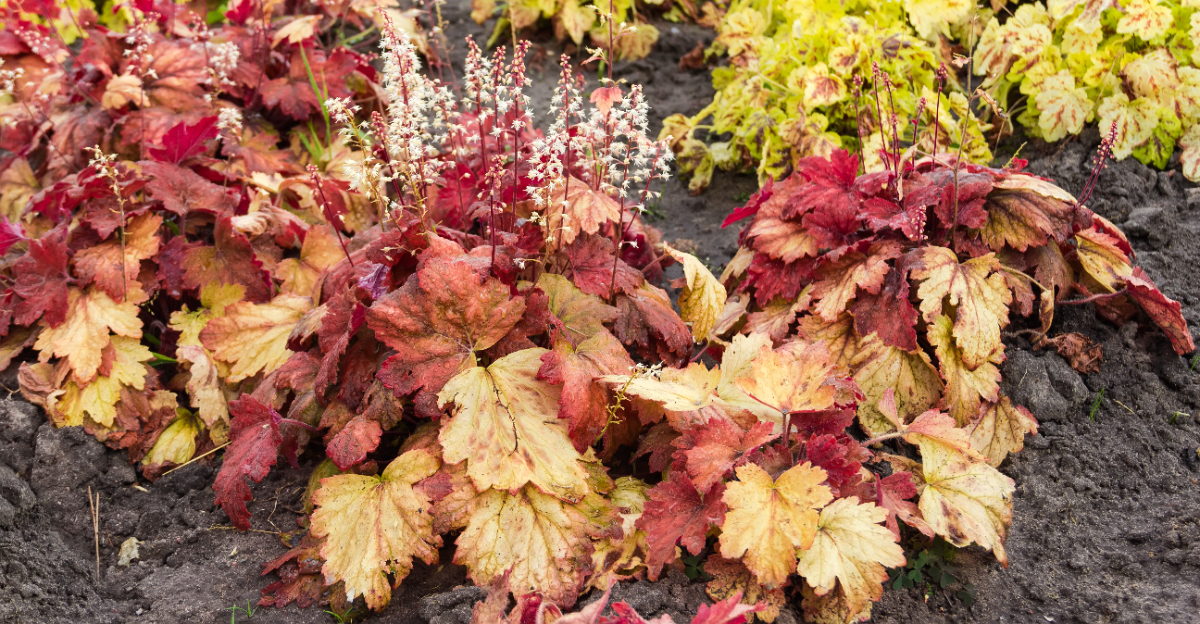
Heuchera might just be the most underused plant in Georgia gardens, and that is honestly a shame. With leaf colors ranging from burnt orange and deep purple to silvery green, it punches way above its weight in the color department — no flowers required.
Also called coral bells, heuchera holds its color through most of the growing season. Even in summer heat, the foliage stays rich and saturated as long as plants get afternoon shade and consistent watering.
In Georgia’s climate, the combination of heat and humidity can stress some varieties, so choosing heat-tolerant types like Caramel or Palace Purple makes a real difference.
Heuchera works especially well along the edges of shaded beds or tucked between larger plants like hostas. Pairing contrasting leaf colors side by side creates a natural, layered look that requires zero maintenance to keep looking intentional.
Divide clumps every three to four years to keep plants vigorous. Over time, the crown tends to rise above the soil level, so replanting slightly deeper when you divide helps.
In North Georgia’s cooler zones, heuchera may even hold its leaves through mild winters, giving the garden color when almost nothing else does.
3. Astilbe Produces Soft Plumes In Moist Part-Shade Areas
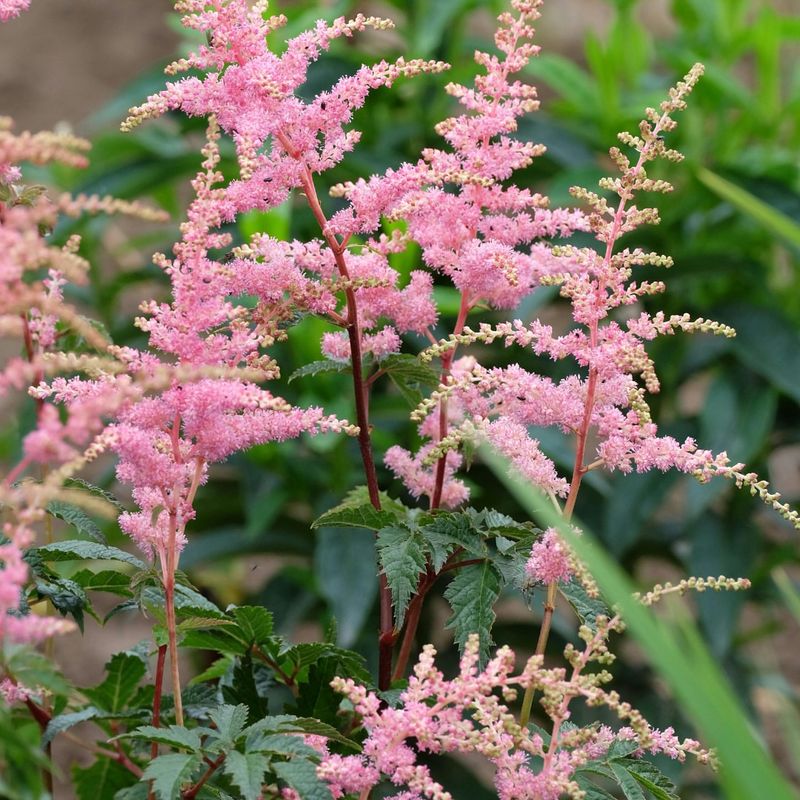
Watching astilbe bloom in a shaded Georgia garden feels a little like catching something rare.
Those feathery plumes in pink, red, white, or lavender rise above the foliage and sway with any passing breeze, bringing softness and movement to spots that often feel static.
Moisture is the key to keeping astilbe happy here. Georgia summers get hot, and astilbe will struggle in dry, compacted soil.
Raised beds amended with compost hold moisture well, and mulching around the base helps regulate soil temperature during the brutal stretch from June through August.
Bloom time typically lands in late spring to early summer, depending on the variety. After the plumes fade, the dried seed heads actually look interesting through fall, so there is no rush to cut them back.
Leave them standing and let the garden look a little wild.
Astilbe spreads slowly into nice clumps over several years. In Georgia’s Piedmont region, where soils can be dense red clay, amending the planting area generously before putting plants in the ground makes a huge difference in how quickly they establish.
Good drainage combined with consistent moisture is the sweet spot astilbe needs to thrive long-term.
4. Foamflower Spreads Gently And Blooms Well In Shade
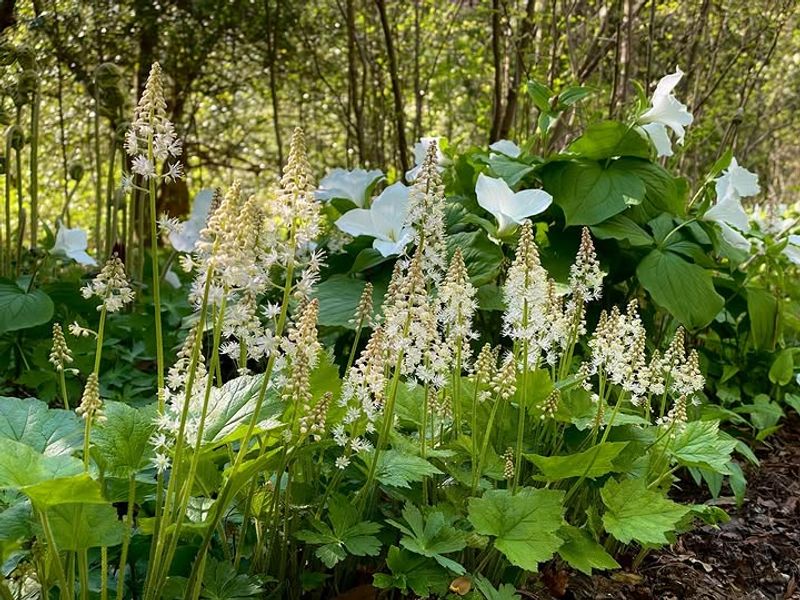
Foamflower is one of those plants that rewards patience. Put it in the right spot — dappled shade, decent moisture, loose woodland-style soil — and within two or three seasons, it quietly fills in a space in a way that looks completely natural, not planted.
Tiarella, as it is botanically known, produces clusters of tiny white or pale pink flowers on slender stems in spring. The blooms are not dramatic, but up close they are genuinely pretty, almost like foam floating above the leaf canopy.
In Georgia, bloom time usually hits in April, right when the garden is waking back up.
Beyond the flowers, the foliage does a lot of work. Many varieties have dark markings along the veins of the leaves, giving them a patterned, almost decorative look that stays interesting all season long.
Planted en masse under trees or along a shaded path, foamflower creates a ground cover that crowds out weeds naturally.
Foamflower spreads by stolons, meaning it sends out runners that root and form new plants nearby. In Georgia gardens with heavy foot traffic or narrow beds, just pull back the runners you do not want.
It responds well to editing without any setback to the parent plant.
5. Woodland Phlox Delivers Early Spring Color In Filtered Light
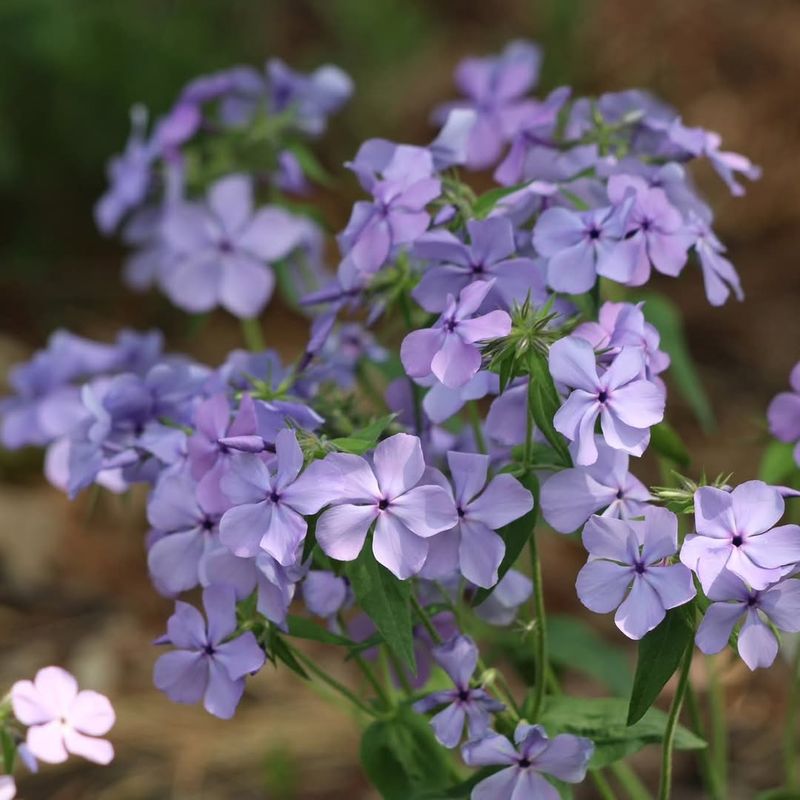
Purple-blue flowers carpeting the ground before most other plants have even leafed out — that is woodland phlox doing its thing in early spring. In Georgia, it often starts blooming in late March, which feels almost too early to be true after a long, gray winter.
Phlox divaricata is the species most gardeners in the Southeast work with, and it handles filtered light beautifully.
Full shade will reduce blooming, but a spot with morning sun filtered through tree branches gives it just enough energy to put on a solid show every spring.
Height stays modest, usually around 10 to 12 inches, so it fits naturally under shrubs or along the front of a shaded border. After blooming, the foliage stays tidy and semi-evergreen in Georgia’s mild climate, providing low green cover through fall and into winter.
Pair it with hostas or ferns for a classic woodland garden combination. As those larger plants fill in during summer, woodland phlox quietly rests underneath, ready to pop back up the following spring.
Dividing clumps every few years keeps the plants producing strong, abundant blooms and prevents the center from getting woody and sparse over time.
6. Ferns Create Texture And Stay Reliable In Shady Conditions
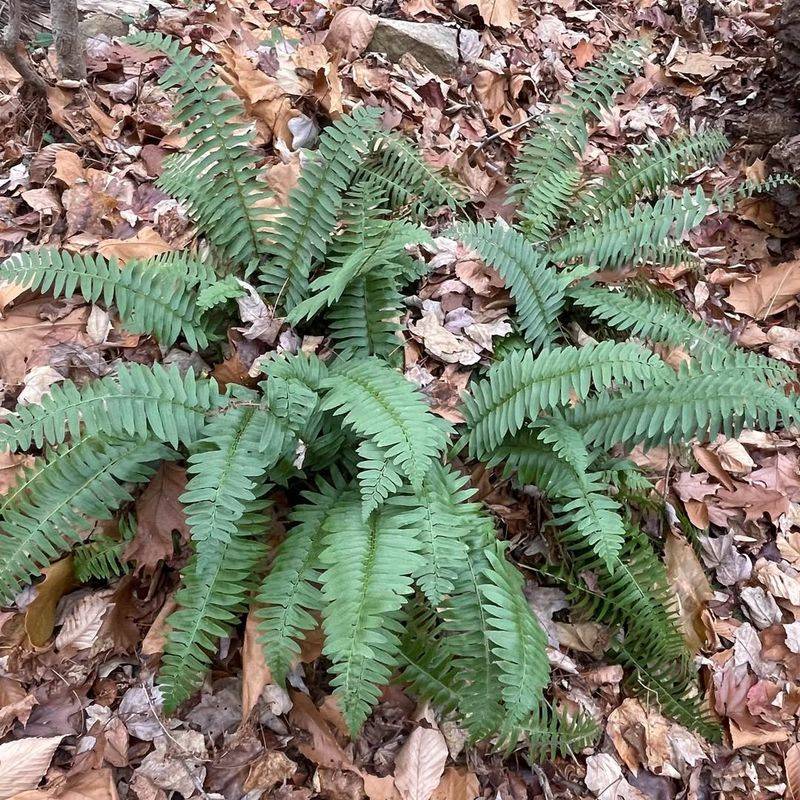
Reliable is not a word that gets used enough in gardening, but ferns earn it completely.
In Georgia’s shaded beds, where summers are relentless and rainfall can be unpredictable, ferns show up every single year without complaint and fill space in a way that just looks right.
Several fern species perform exceptionally well across Georgia. Autumn fern brings coppery new growth in spring that matures to deep green by summer.
Southern shield fern handles drier shade better than most. Cinnamon fern makes a dramatic statement in moist, low-lying areas with its tall, upright fronds reaching three feet or more.
Texture is where ferns really earn their place. Lacy, layered fronds soften the edges of shaded beds and create contrast against broader-leaved plants like hosta or foamflower.
That visual layering is what separates a well-designed shade garden from a random collection of plants.
Ferns in Georgia need minimal attention once settled into a good spot. Cutting back old fronds in late winter before new growth emerges keeps beds looking clean.
Mulching helps retain moisture through hot stretches. In particularly dry summers, deep watering once or twice a week keeps fronds from browning at the tips and looking ragged.
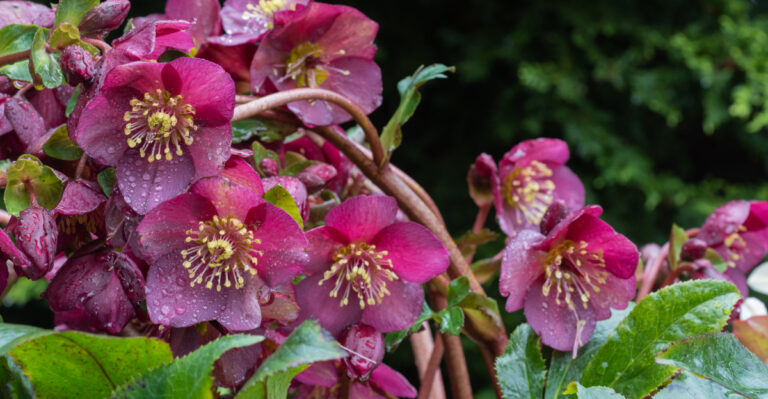
7. Lenten Rose Blooms Early And Handles Shade With Ease
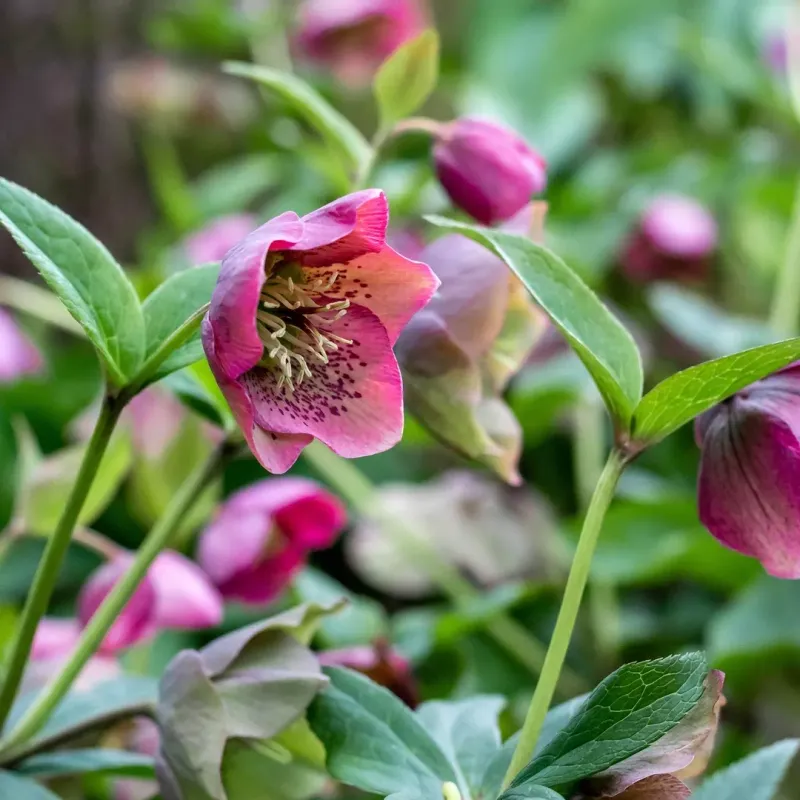
Blooming in February in Georgia is not something many plants can pull off, but Lenten rose does it without hesitation.
Those nodding, cup-shaped flowers in shades of deep plum, dusty rose, cream, and near-black show up when everything else in the garden is still dormant and brown.
Helleborus orientalis is the botanical name, and it is genuinely one of the toughest shade plants available to Georgia gardeners. Established clumps handle drought, compete with tree roots, and shrug off late cold snaps that would set back less resilient plants.
Heavy clay soil slows it down, but amend with compost at planting and it adapts over time.
Foliage is leathery and evergreen, staying attractive through the full year. In late winter, cut back the old leaves before new flower stems emerge so the blooms are not hidden behind tired foliage.
It is a small task that makes a big visual difference in how the plant presents itself.
Lenten rose self-seeds modestly, and seedlings can be transplanted to expand a planting over time. Colors in self-sown seedlings are unpredictable, which is actually part of the fun.
Across Georgia, from Columbus to Augusta, this plant is one of the most satisfying perennials a shade gardener can grow.
8. Columbine Produces Spring Flowers And Handles Part Shade
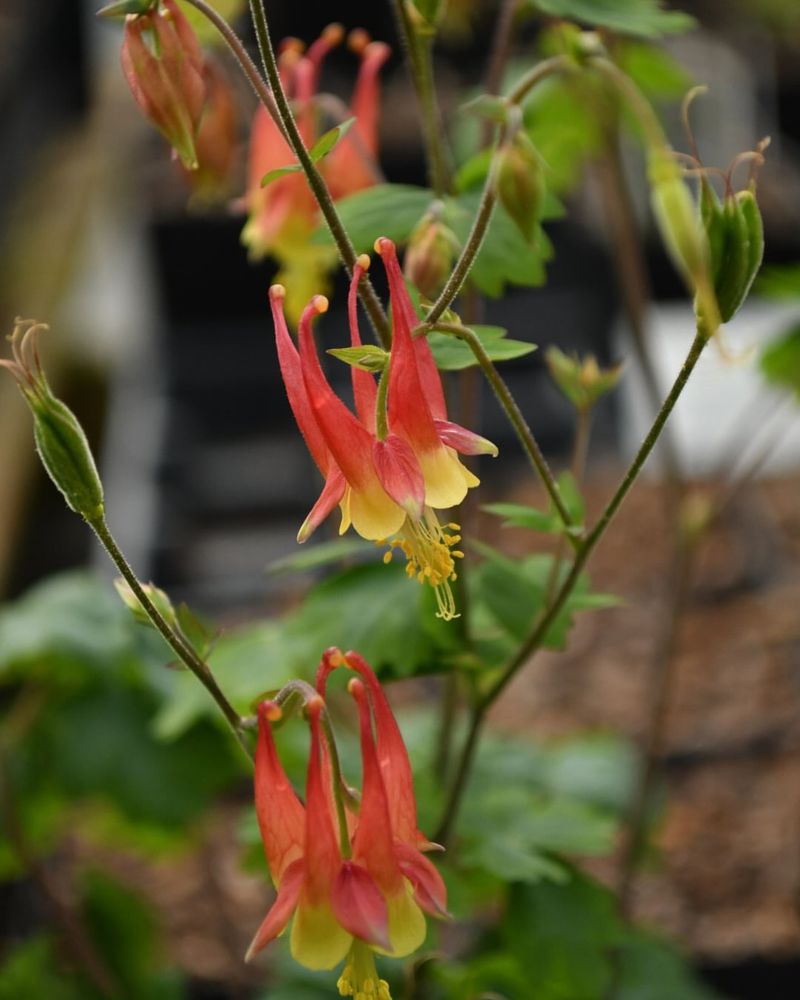
Spurred, nodding flowers in combinations of red, yellow, purple, pink, and white — columbine brings something genuinely unique to a spring garden.
No other perennial produces that same intricate, almost architectural flower shape, and in part shade, the blooms seem to glow against the darker background.
Aquilegia canadensis, the native columbine, performs particularly well across Georgia. Its red and yellow flowers attract hummingbirds reliably, which is a bonus that never gets old.
Bloom time hits in April and May, bridging the gap between early bulbs and the summer perennials that take over later in the season.
Columbine prefers loose, well-drained soil and does not love sitting in heavy wet clay. Raised beds or areas where water drains freely after rain keep the roots healthy.
In Georgia’s red clay regions, mixing in pine bark or compost before planting improves drainage significantly and gives the plant a much better start.
After blooming, columbine foliage can look a bit worn by midsummer, especially in hot, humid Georgia summers. Planting it behind later-emerging perennials like ferns or hostas hides the tired foliage naturally.
Columbine self-seeds freely, so expect new plants to pop up nearby each spring, slowly expanding the planting without any extra effort on your part.
9. Japanese Painted Fern Adds Colorful Foliage In Low Light
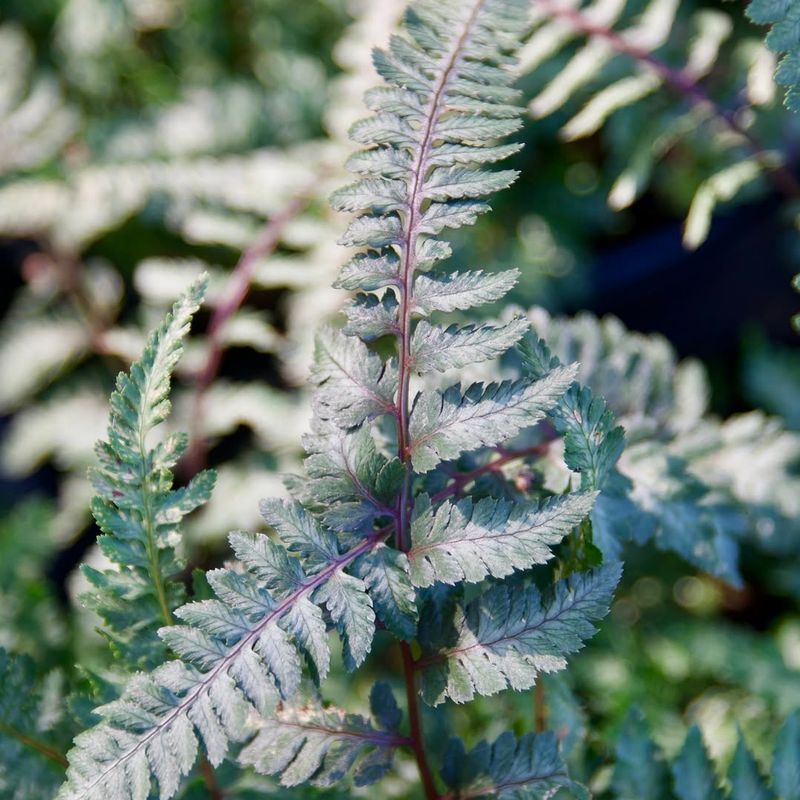
Silver, burgundy, and green all on one frond — Japanese painted fern looks like something a garden designer would order custom-made, but it grows from a simple rhizome you can buy at any decent nursery.
In low-light conditions where most plants just produce plain green, this fern delivers actual color.
Athyrium niponicum ‘Pictum’ is the classic variety, and it thrives in Georgia’s shaded beds as long as soil stays consistently moist and does not bake in afternoon sun.
The coloring intensifies with a little filtered morning light, but too much direct sun fades those beautiful silver tones to plain green quickly.
Growth habit is arching and graceful, with fronds reaching about 12 to 18 inches. Planted in groups of three or five, Japanese painted fern creates a striking mass that catches the eye from across the yard.
It pairs naturally with dark-leaved heuchera or bright chartreuse hosta for bold color contrast in shaded beds.
In Georgia, this fern is deciduous, meaning fronds go dormant in winter. Cut them back in late February before new growth emerges.
Each spring, fresh fronds unfurl with even brighter silver markings than the year before, making it one of the most rewarding shade perennials you can grow across the state.