7 Pink Perennials Texas Gardeners Love For Extended Bloom
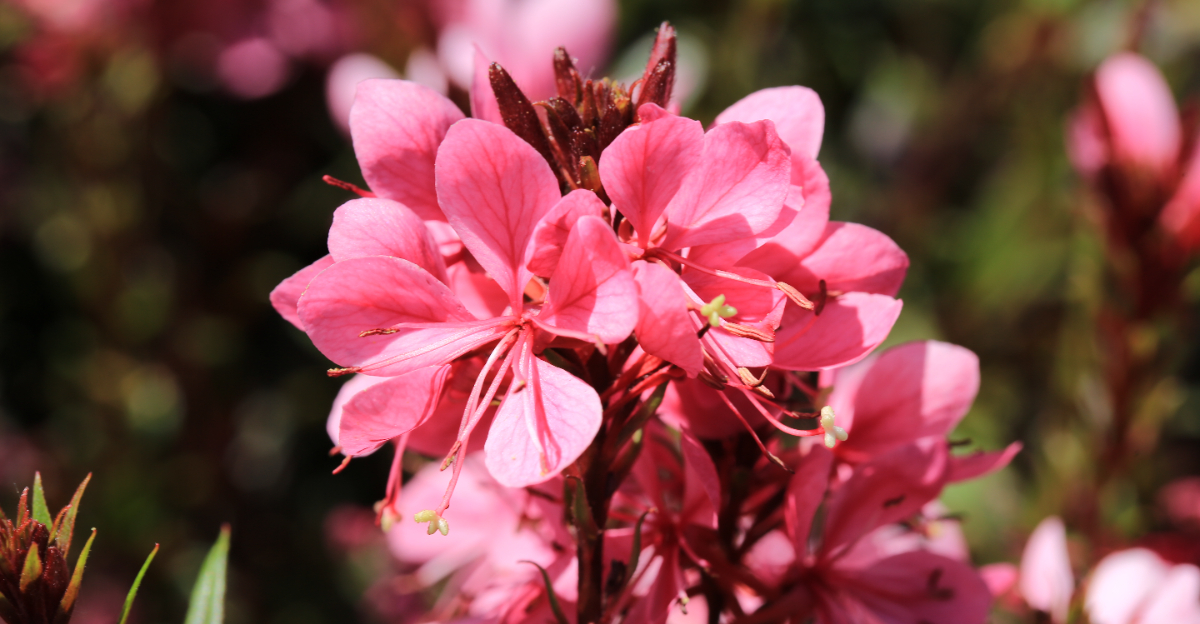
There’s something about pink in the garden that never goes out of style. It softens a fence line, brightens up a tired flower bed, and somehow makes the whole yard feel more welcoming.
Many Texas gardeners remember those dependable blooms near the mailbox or lining a walkway, holding their own through long, hot summers.
Finding perennials that keep that color going for months in Texas heat can feel like a bit of a challenge.
Between strong sun, dry spells, and sudden downpours, not every plant is built to last. The good news is that a handful of pink perennials truly handle the conditions and keep blooming far longer than you might expect.
Some of these might already be growing nearby, while others could surprise you with how tough they really are.
1. Pink Autumn Sage That Keeps Blooming Through Heat
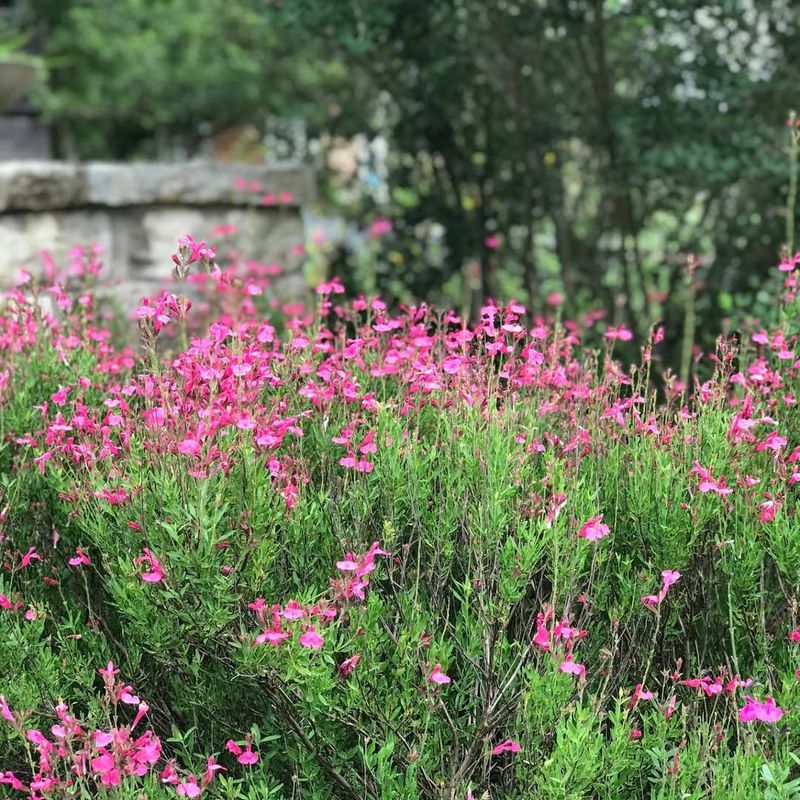
Bright pink blooms and a gentle, rounded form make autumn sage a favourite for many Texas gardens, drawing hummingbirds and butterflies alike to its tubular flowers. This native Salvia handles hot climates gracefully, continuing to bloom throughout the growing season, though flowering can slow during periods of extreme heat or drought.
Its low-maintenance character makes it appealing to gardeners of all experience levels, requiring minimal attention once established. Reaching two to three feet tall and wide, the plant forms a lush mound of small green leaves sprinkled with vibrant pink flowers that appear over several months.
Planting in full sun with well-drained soil ensures the best performance, and gently sloped areas or raised beds help prevent waterlogging, which can stress the roots. After the initial growing season, supplemental watering is typically needed only during extended dry spells.
Grouping several plants together produces a more dramatic visual effect, creating sweeping drifts of pink along pathways, borders, or foundation plantings. Light pruning in late winter encourages denser growth and more abundant blooms in the following season, keeping the plant looking its best.
Autumn sage thrives in cities such as San Antonio, Dallas, and El Paso, as well as in more rural landscapes, adapting to varied soils while supporting local pollinators. Its size, extended bloom period, and ability to tolerate heat make it a reliable and appealing choice for many Texas gardeners.
Occasional care with watering and pruning helps maintain vibrant color and structure, while the combination of hummingbirds, butterflies, and textured foliage ensures a lively, inviting garden atmosphere that brightens any outdoor space.
2. Texas Rock Rose That Flowers All Summer Long
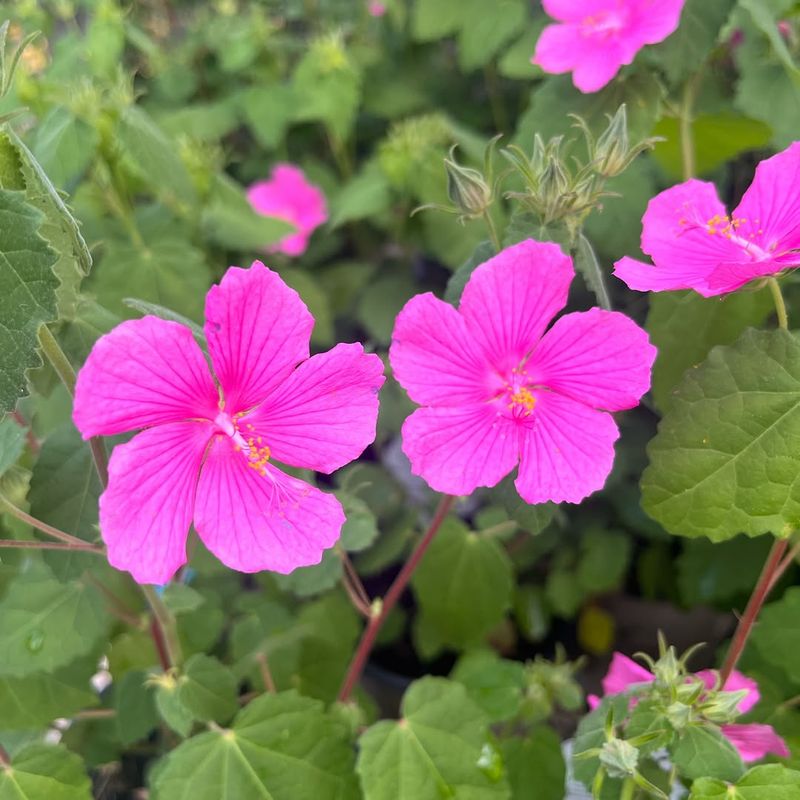
Adding a pop of tropical flair without leaving Texas, rock rose delivers delicate pink flowers that brighten gardens while handling the state’s challenging climate with ease. Each bloom resembles a miniature hibiscus, opening fresh each morning and creating a long-lasting display of color throughout the warm months, though bloom density may vary with heat and water conditions.
This native of Central and South Texas thrives in local conditions, from humid Houston landscapes to the drier soils of Austin and surrounding Hill Country. The shrubby perennial grows about three feet tall with a slightly wider spread, making it ideal for filling gaps without overwhelming nearby plants.
Its heart-shaped leaves stay attractive even during short pauses between blooms, providing a steady backdrop of greenery. Rock rose adapts to full sun or partial shade, though giving it some afternoon shade in the hottest areas helps maintain optimal leaf and flower health.
The plant tolerates clay soils better than many flowering perennials, and amending the soil with compost at planting gives it a strong start. Once established, supplemental watering is needed only during serious drought periods, reducing maintenance for busy gardeners.
Deer generally avoid this perennial, which can be helpful in rural landscapes where wildlife browsing is an issue. Pollinators, including native bees and butterflies, flock to the blooms, supporting both beauty and biodiversity.
Light trimming helps maintain a neat shape, but rock rose generally holds its form with minimal attention. Pairing it with other drought-tolerant perennials or textured greenery can enhance visual interest, making it a versatile choice for beds, borders, or foundation plantings.
With consistent color, low-maintenance growth, and charming tropical vibes, rock rose offers both practical and aesthetic benefits for Texas gardeners looking to brighten their outdoor spaces.
3. Pink Gaura That Floats Through Spring And Fall
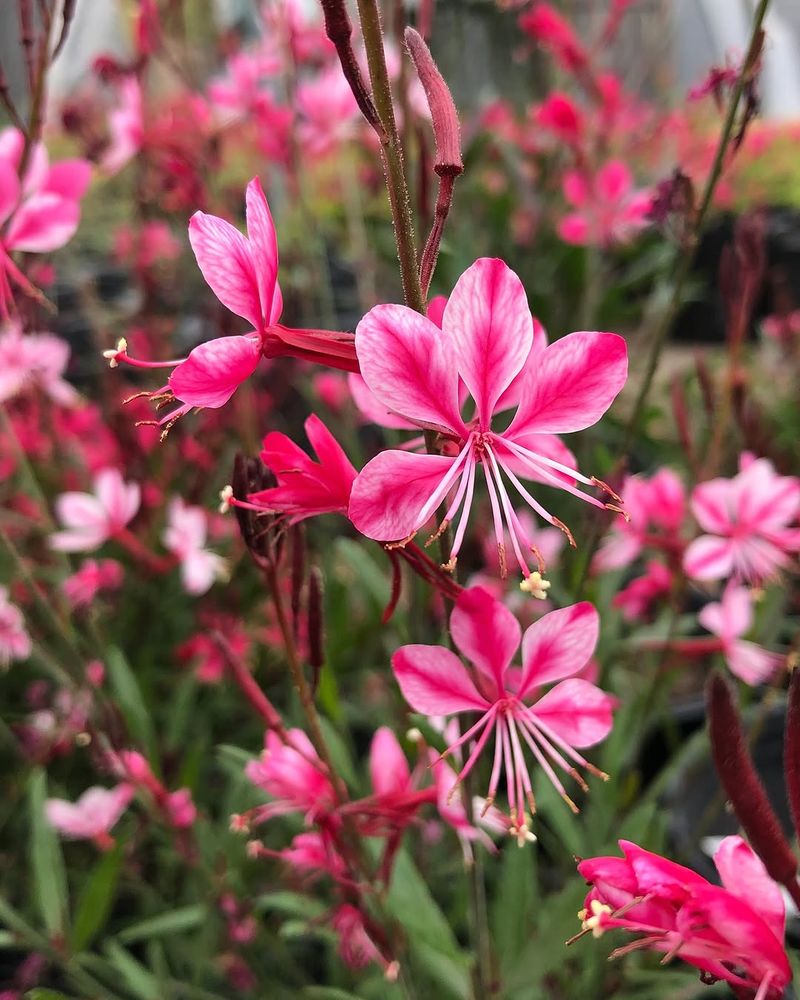
Often called “whirling butterflies,” its blooms hover above the foliage like tiny winged visitors, creating a lively, airy effect that feels almost magical. Gardeners enjoy how gaura delivers a naturalistic, low-maintenance touch while blending seamlessly with other perennials and ornamental grasses.
Growing two to four feet tall with a compact spread, this perennial fits perfectly in middle-ground plantings, borders, or mixed beds. Flower color begins pale pink or white and gradually deepens to rose-pink as blooms mature, creating a soft, two-toned display that adds subtle depth to any landscape.
Peak flowering occurs in spring, with scattered blooms through summer; sfall rebloom may happen in some areas, depending on local heat, water availability, and soil conditions. Full sun and well-drained soil support gaura’s healthiest growth, though it tolerates a range of soils that can stress other perennials.
Its deep taproot allows it to access moisture during dry spells, helping it persist with minimal intervention. Pollinators, including bees and butterflies, are frequent visitors, while deer generally leave it alone.
Light pruning in midsummer can encourage fresh growth and additional blooms, though many gardeners let it follow its natural form to maintain a carefree, flowing look. Gaura’s movement, long bloom period, and adaptability make it a delightful addition for Texas landscapes, adding texture, seasonal interest, and visual movement to garden beds.
4. Pink Evening Primrose That Spreads In Sunny Beds
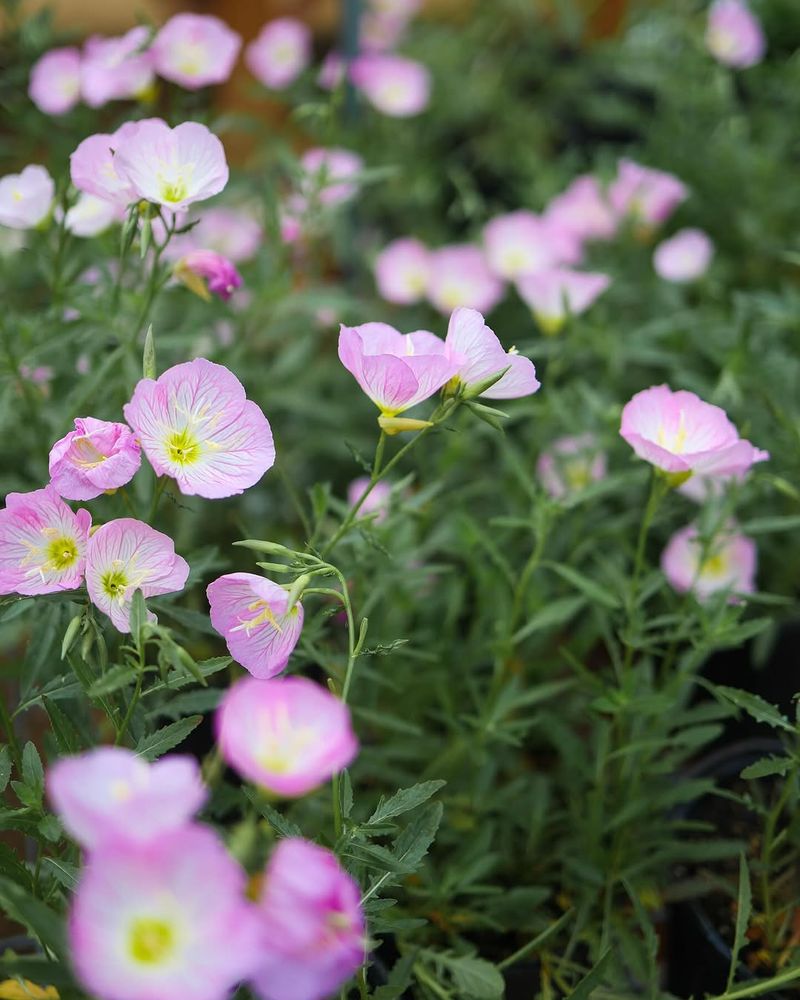
Adding a cheerful splash of pink to garden beds, evening primrose delights Texas gardeners with blooms that open in abundance, often masking the foliage beneath with their soft color. This low-growing perennial spreads via underground runners, making it perfect for filling spaces quickly or stabilizing slopes to help control erosion.
Each flower features bright pink petals with a yellow center, opening in the evening and often remaining visible into the next day, creating a gentle, long-lasting display. While peak flowering generally occurs from spring through early summer, growth may slow during the hottest months and pick up again as fall rains arrive.
Evening primrose adapts well to full sun and well-drained soil but tolerates a range of conditions, including leaner soils, making it a resilient option for many Central Texas gardens. Its moderate self-seeding can produce natural-looking drifts that return year after year, adding a sense of continuity to flower beds.
In some areas, well-placed barriers like sidewalks or edging can help manage its spreading habit. The plant attracts pollinators, including butterflies during the day and moths at night, supporting local ecosystems.
Compact at six to twelve inches tall, it works beautifully as a front-of-border plant or low groundcover, and multiple plants together create visual impact across larger spaces. With proper placement and occasional care, evening primrose adds extended color, enhances garden texture, and supports pollinators in many Texas landscapes.
5. Pink Yarrow That Handles Drought With Ease
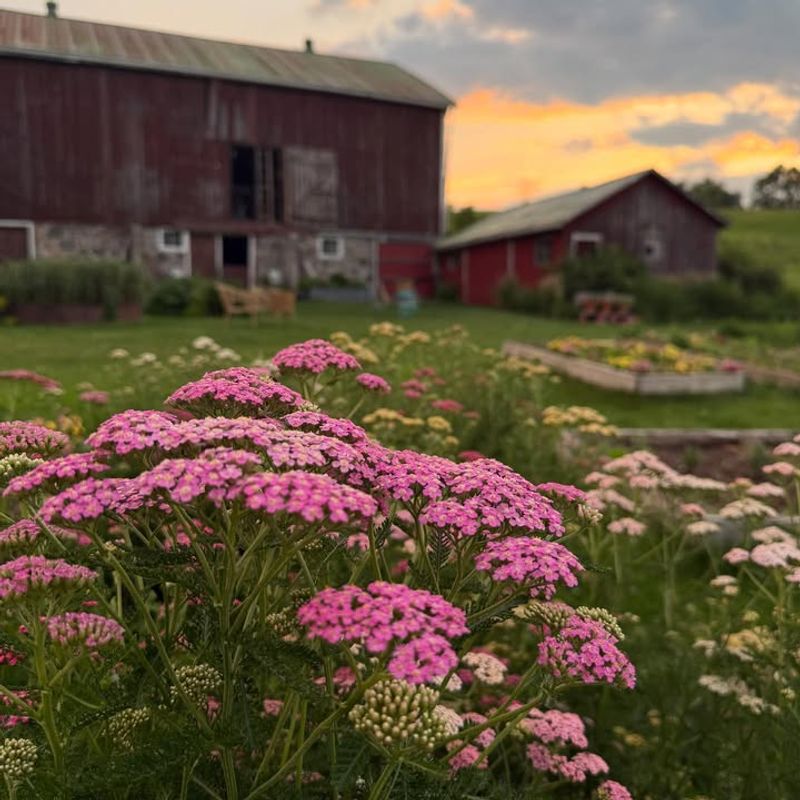
Ever wondered how to add old-fashioned cottage garden charm while keeping your Texas landscape tough and low-maintenance? Yarrow is a perfect choice, combining delicate pink flower clusters with impressive resilience to heat and drought.
Its flat-topped blooms range from soft to bright pink and rise on sturdy stems above finely divided, fern-like foliage that remains attractive throughout the growing season. Though a European native, yarrow has adapted beautifully to Texas conditions, performing reliably from the Panhandle to the Gulf Coast and thriving in both urban and rural gardens.
Typically reaching two to three feet tall with a similar spread, it forms substantial clumps that fill spaces elegantly, creating visual interest without demanding constant attention. Blooming is heaviest in late spring and early summer, with scattered flowers often continuing through fall if spent blooms are removed, and the flowers hold their color well for fresh or dried arrangements.
Full sun and well-drained soil suit yarrow best, and it often performs better in lean soils than in heavily fertilized beds, which can lead to weak, floppy stems that need staking. Established plants generally survive on natural rainfall, making them a smart pick for water-conscious gardeners across Dallas, Fort Worth, and other Texas communities embracing drought-tolerant landscapes.
Yarrow attracts beneficial insects like ladybugs and lacewings that help control pests naturally, and butterflies frequently visit its blooms for nectar. Deer typically avoid this perennial, reducing wildlife browsing issues.
Dividing clumps every three to four years keeps plants vigorous, prevents centers from becoming woody, and encourages continued, abundant flowering. With its charm, extended color, and toughness, yarrow offers a practical presence in Texas gardens while supporting pollinators and requiring relatively low maintenance.
6. Pink Penstemon That Steals the Spotlight in Texas Gardens
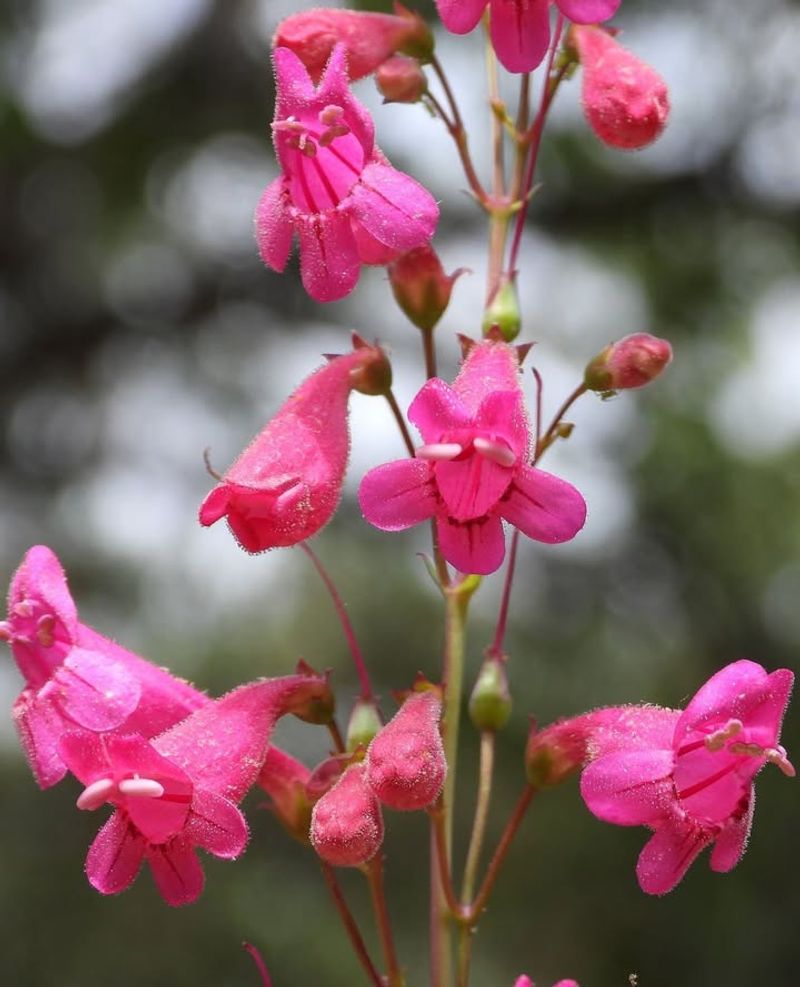
Step into a garden and let your eyes follow spikes of bright pink blooms – Pink Penstemon commands attention with its upright, tubular flowers that attract hummingbirds and butterflies alike. This Texas-friendly perennial is as tough as it is beautiful, flourishing in full sun and well-drained soils while holding up against the state’s hot summer days.
Its vivid pink color provides a cheerful contrast to greenery and pairs seamlessly with perennials like autumn sage, gaura, and yarrow.
Pink Penstemon typically grows two to three feet tall, creating vertical interest in beds, borders, or mixed plantings. The flowers bloom over an extended season, from late spring into fall, giving gardeners months of eye-catching color.
Once established, the plant is low-maintenance, tolerating dry spells and Texas heat with minimal supplemental watering. Its strong, upright form helps it stand out even when other blooms slow during peak summer temperatures.
Pruning spent flowers encourages continued blooming and keeps the plant looking tidy, while grouping several plants together produces a more dramatic visual effect with spikes of pink rising above surrounding foliage. Pollinators love it: hummingbirds, butterflies, and bees visit frequently, helping support the local ecosystem.
Deer usually leave it alone, giving it an advantage in rural and suburban landscapes alike.
With long-lasting color, vertical structure, and natural pollinator appeal, Pink Penstemon adds both charm and practicality to Texas gardens. Its enduring blooms, adaptability, and minimal care requirements make it a standout perennial that truly keeps the garden vibrant and buzzing throughout the growing season.
7. Pink Tropical Sage That Keeps Texas Gardens Buzzing All Season
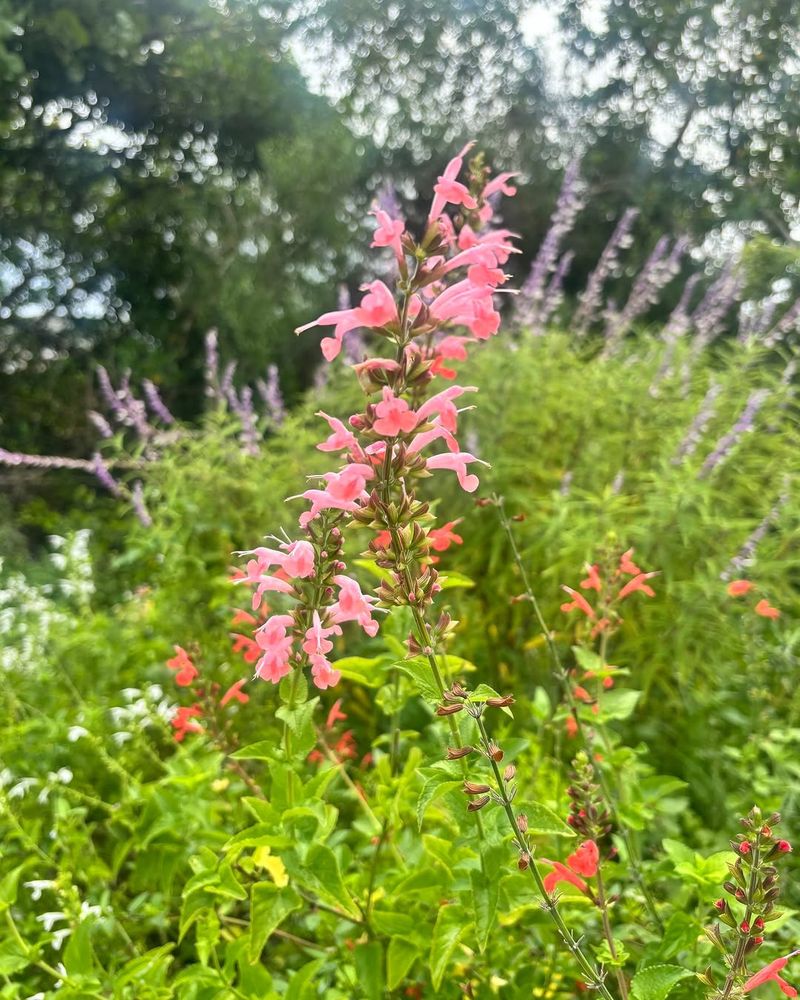
Imagine a garden alive with hummingbirds darting between soft pink blooms – Pink Tropical Sage makes that vision a reality. This resilient native perennial produces delicate tubular flowers that appear continuously through the growing season, adding long-lasting color to Texas gardens while attracting pollinators.
Its cheerful pink blossoms are perfect for brightening beds, borders, or containers, creating a lively, textured display that keeps hummingbirds and butterflies coming back.
Pink Tropical Sage grows in full sun and well-drained soil, thriving even under the intense Texas heat. Once established, it requires minimal care, only needing supplemental water during extended dry periods.
Its compact, bushy form typically reaches two to three feet tall and wide, making it ideal for middle-ground plantings without overshadowing smaller flowers nearby. Gardeners appreciate its low-maintenance nature, as it resists pests, tolerates heat, and adapts to a variety of soil types.
Pruning lightly in late winter or early spring encourages bushier growth and helps maintain a tidy shape, while deadheading spent blooms can promote additional flowering throughout the season. Grouping multiple plants together enhances visual impact, creating a gentle drift of pink that contrasts beautifully with green foliage and other perennials like gaura or yarrow.
With its extended bloom period, heat tolerance, and ability to support local pollinators, Pink Tropical Sage is more than just a pretty face – it’s a practical, vibrant, and enduring choice for Texas gardeners seeking continuous color, movement, and a garden full of life from spring through fall.