8 Plants Arizona Gardeners Should Keep Away From Lavender
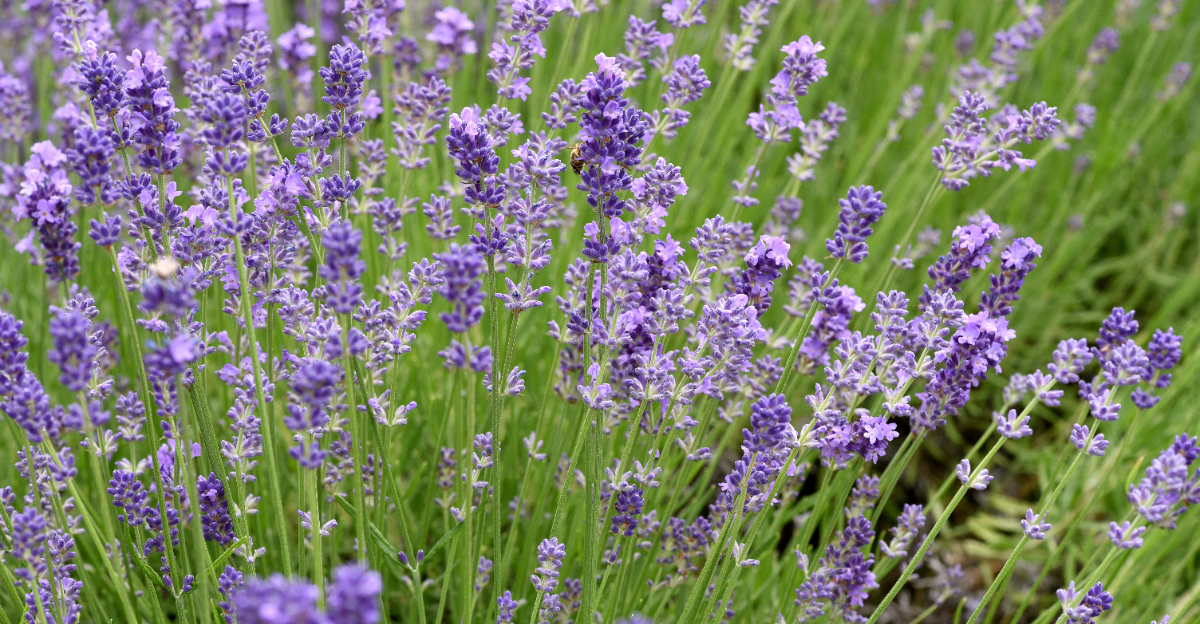
Lavender has a reputation for handling tough conditions without much trouble, which makes it extra confusing when it suddenly starts looking rough in the yard.
Thin growth, faded color, weak blooming, or constantly dry stems often trace back to something nearby instead of the lavender itself.
Arizona gardens make plant pairing more important than many realize. Certain flowers, shrubs, herbs, and spreading ground covers create conditions lavender struggles to tolerate once late spring heat starts building.
Everything may look perfectly fine early in the season, then slowly start declining as temperatures rise and watering routines change.
A few popular landscape plants tend to create the biggest problems, especially in hotter parts of the yard where lavender already deals with intense sun and dry conditions.
1. Russian Sage Can Take Over Dry Garden Beds Fast
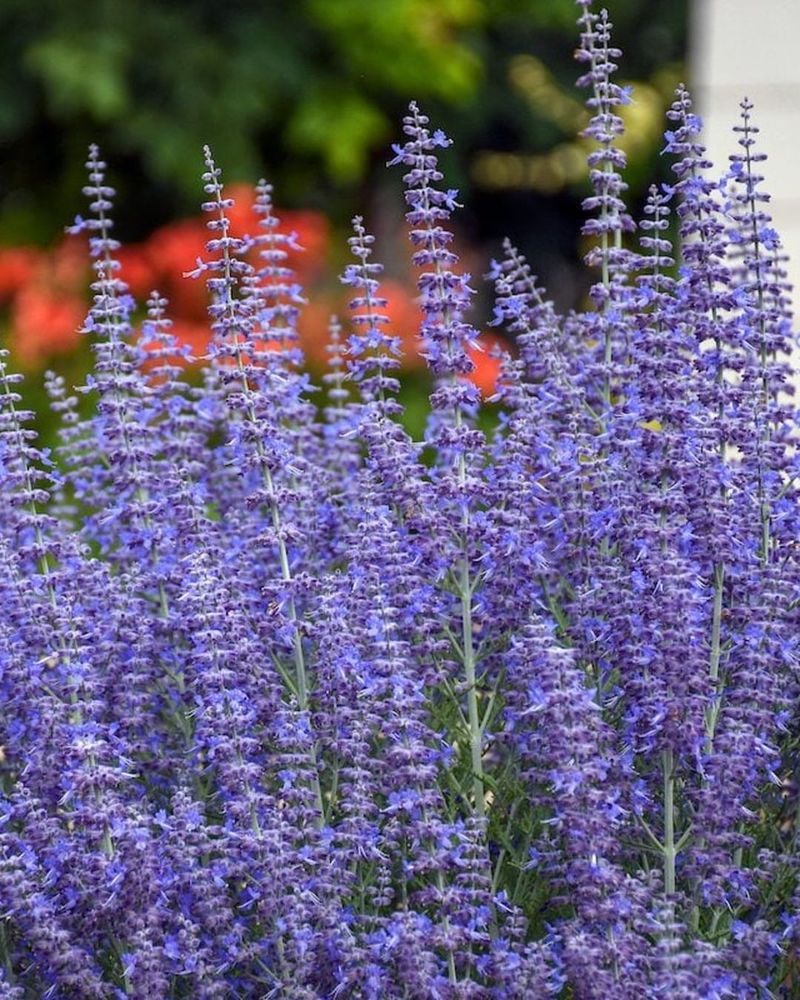
Russian sage looks stunning in an Arizona landscape, but do not let that beauty fool you. Once it gets comfortable in dry, hot conditions, it spreads with surprising speed and can easily overwhelm smaller or slower-growing plants nearby.
Lavender already has to compete with Arizona’s intense sun and low rainfall. Adding Russian sage right next to it creates a competition neither plant truly wins.
Russian sage puts out wide, woody stems that sprawl outward and shade the base of nearby lavender, which can reduce airflow and increase the chance of crown rot.
Both plants love similar conditions, which sounds like a good match at first. But in practice, Russian sage tends to get bigger faster, especially in amended soil.
Many Arizona gardeners have noticed their lavender shrinking or looking stressed after Russian sage filled in around it within just one or two growing seasons.
Keeping at least four to five feet between them gives both plants room to breathe. If space is limited in your Arizona garden bed, consider planting Russian sage in a separate area where it can spread freely without crowding your lavender.
Proper spacing is one of the simplest ways to protect your lavender long-term.
Intense reflected heat from gravel, patios, and block walls can make the crowding problem even worse during summer.
Lavender stays healthier when dry air can move freely around the base, especially during humid stretches later in the season.
2. Mint Spreads Faster Than Most Gardeners Expect
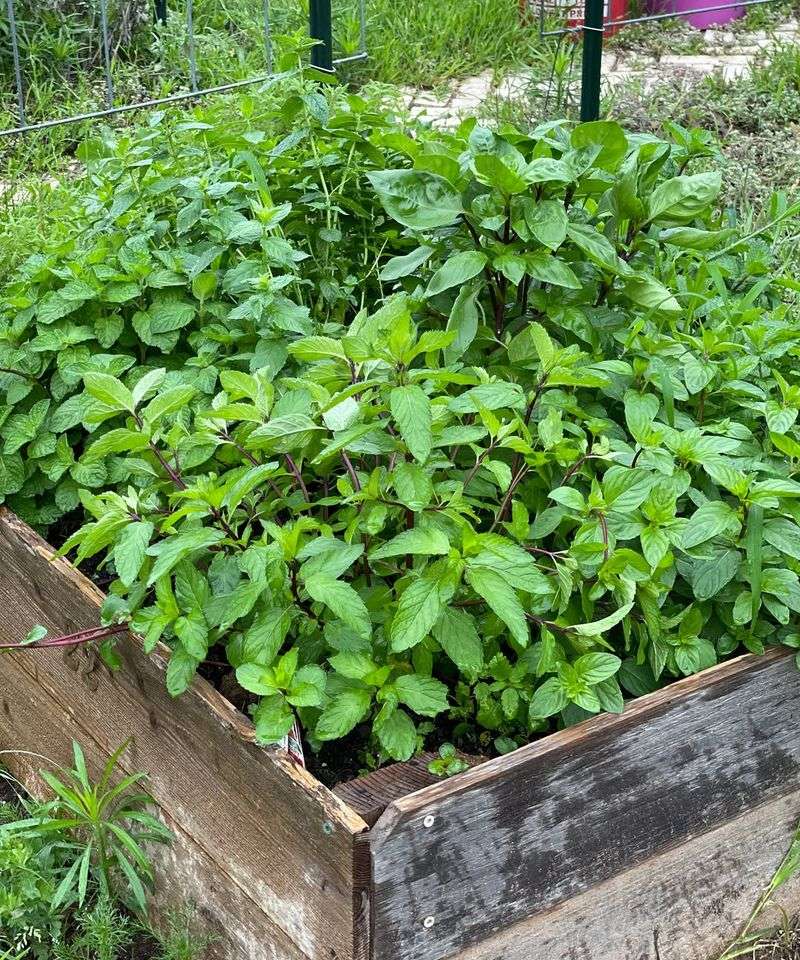
Mint is one of those plants that seems harmless in a pot but becomes a completely different story once it hits open ground. Planted near lavender in an Arizona garden, mint will spread through underground runners and claim territory fast.
Lavender needs dry, well-drained soil to stay healthy. Mint, on the other hand, prefers consistent moisture, so gardeners who water mint regularly end up overwatering the lavender growing beside it.
That extra moisture is one of the most common reasons lavender struggles in Arizona gardens where mint is nearby.
Beyond the water issue, mint roots are aggressive and dense. They weave through the soil and can wrap around or compete directly with lavender roots for nutrients.
Within a single growing season, mint can spread several feet in multiple directions, making it genuinely difficult to remove once established.
Your Arizona Garden Changes Every Week. Your Plan Should Too.
Gardening in Arizona changes quickly throughout the season. Every Friday you’ll receive a simple weekly plan showing exactly what to plant, prune, fertilize, harvest, and protect so you never miss the right timing.
Planting mint in a buried container or a completely separate raised bed is the smartest move for Arizona gardeners who want both plants. A buried pot with the bottom cut out can slow the spread significantly.
Just keeping a few feet of separation is not enough once mint runners get going. Containing it from the start protects your lavender and keeps your garden looking intentional rather than chaotic.
Mint also grows thick and low around the soil surface, which traps more moisture around lavender crowns after watering.
3. Rosemary Often Competes For The Same Hot And Dry Conditions
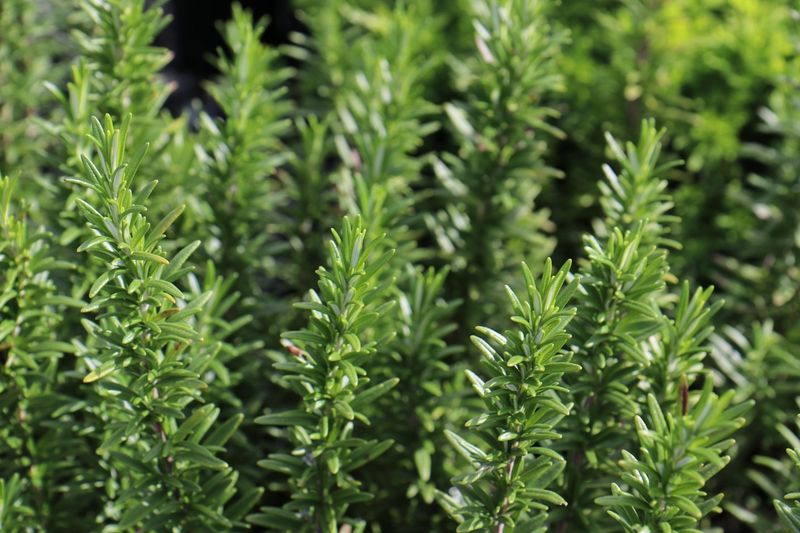
Rosemary and lavender seem like natural companions since both love heat, poor soil, and minimal water. Arizona gardeners often plant them side by side for exactly that reason.
But similarity in preferences does not always mean they coexist peacefully.
Rosemary grows significantly larger than most lavender varieties. A mature rosemary shrub in Arizona can reach four to six feet wide, easily shading out the lavender planted next to it.
Less sunlight reaching lavender means weaker growth, fewer blooms, and a plant that slowly declines over time.
Root competition is another real concern. Both plants send roots wide and shallow, searching for nutrients in the same soil zone.
When they overlap, neither plant performs at its best. Lavender tends to lose out in this competition, especially if the rosemary was planted first and already established its root system.
Spacing them at least five feet apart gives both plants enough room to develop without crowding each other. Some Arizona gardeners use low rock borders or gravel pathways to create a natural visual and physical separation between the two.
Rosemary is a wonderful plant for the Arizona climate, but it genuinely needs its own space to grow to full size without becoming a problem for neighboring lavender plants.
Pruning also becomes more difficult once the branches start growing into each other, especially as woody stems thicken with age.
4. Oleander Crowds Nearby Plants As It Matures
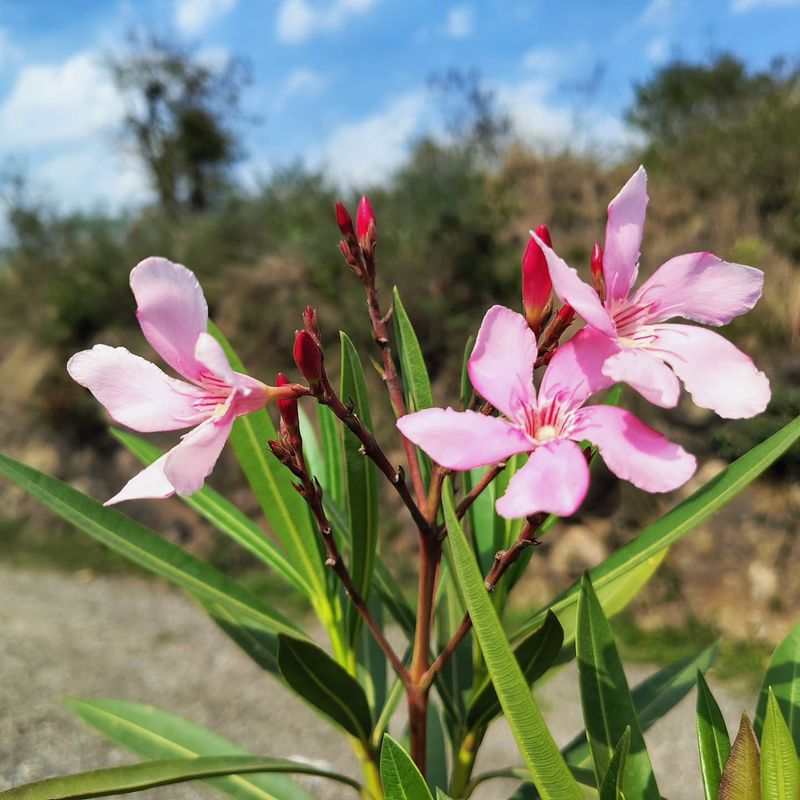
Oleander is everywhere in Arizona, lining roads, filling medians, and anchoring countless backyard landscapes. It handles brutal summer heat and drought better than almost anything else, which is exactly why so many people plant it.
Near lavender, though, oleander becomes a serious problem as it matures.
A fully grown oleander can reach eight to twelve feet tall and just as wide. Planted near lavender, it will eventually shade out the entire area where your lavender is trying to grow.
Lavender needs full sun for most of the day to bloom well and stay healthy, and oleander’s thick canopy makes that nearly impossible once the shrub fills in.
Root competition from oleander is aggressive too. Its root system spreads wide and pulls moisture from a large area of surrounding soil.
Lavender planted within several feet of an established oleander often shows signs of stress, with reduced blooms and woody, sparse growth.
If you already have oleander in your Arizona yard and want to grow lavender nearby, plant the lavender on the sun-facing side with at least six feet of clearance. Better yet, choose a completely separate garden bed away from any oleander.
Giving lavender its own dedicated space with full sun and no large shrubs competing nearby makes a noticeable difference in how well it performs season after season.
Oleander also drops dense leaf litter and spent flowers beneath the shrub over time, which can hold extra moisture around nearby lavender plants after irrigation or summer rain.
5. Bottlebrush Can Create Too Much Root Competition Nearby
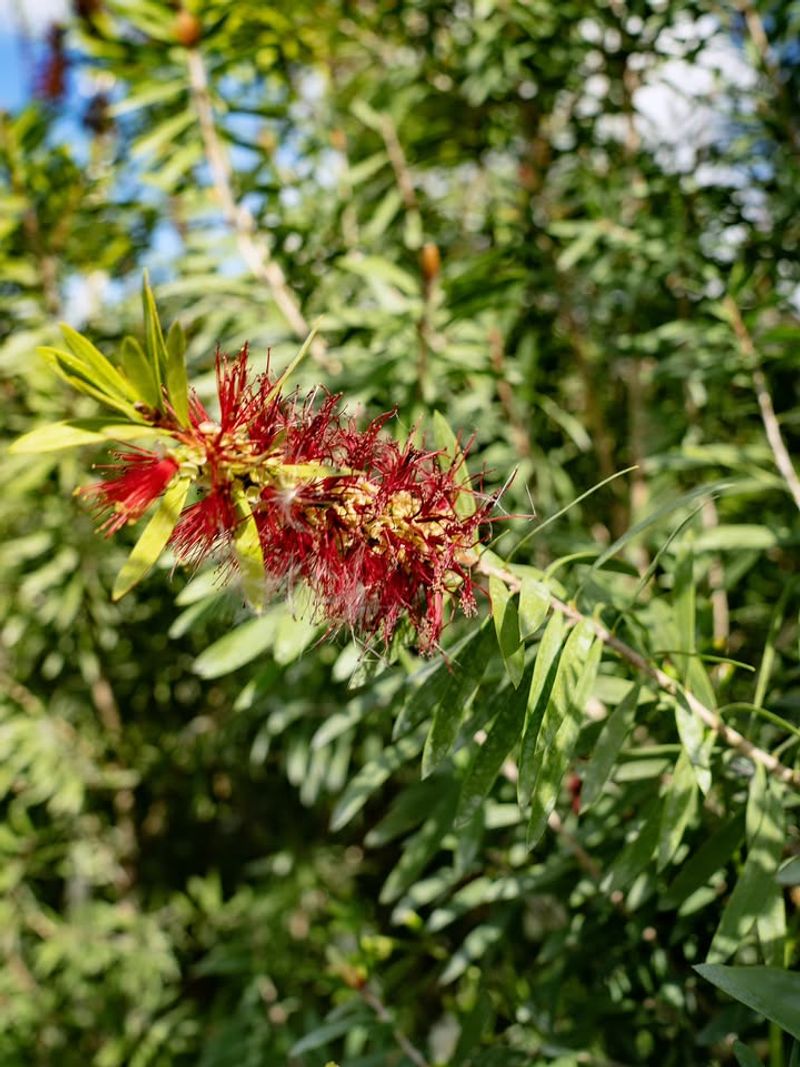
Bottlebrush shrubs are popular in Arizona for good reason. They attract hummingbirds, handle the heat well, and add a dramatic pop of red to the landscape.
Planted near lavender, though, they create a root competition that lavender rarely wins.
Bottlebrush develops a dense, fibrous root system that spreads aggressively through the top layers of soil. Lavender roots occupy that same zone, searching for nutrients and limited soil moisture.
When both plants are growing close together in Arizona’s often rocky or sandy soil, bottlebrush tends to dominate and gradually starves lavender of what it needs.
Overwatering is another risk. Bottlebrush can tolerate more water than lavender, so gardeners who irrigate generously to keep their bottlebrush healthy end up giving lavender far more moisture than it wants.
Wet roots in Arizona’s warm soil are a quick path to root rot for lavender.
Keeping a minimum of five to six feet between bottlebrush and lavender is a practical starting point.
If your bottlebrush is already established and large, planting lavender on the outer edge of its root zone rather than right beside the trunk gives lavender a better chance.
Separate drip zones for each plant also help Arizona gardeners manage watering needs without accidentally overwatering the lavender in the process.
As bottlebrush fills out over time, the lower branches can also crowd nearby plants and limit the open spacing lavender depends on for steady growth and healthy blooming.
6. Pampas Grass Starts Creating Space Problems Surprisingly Fast
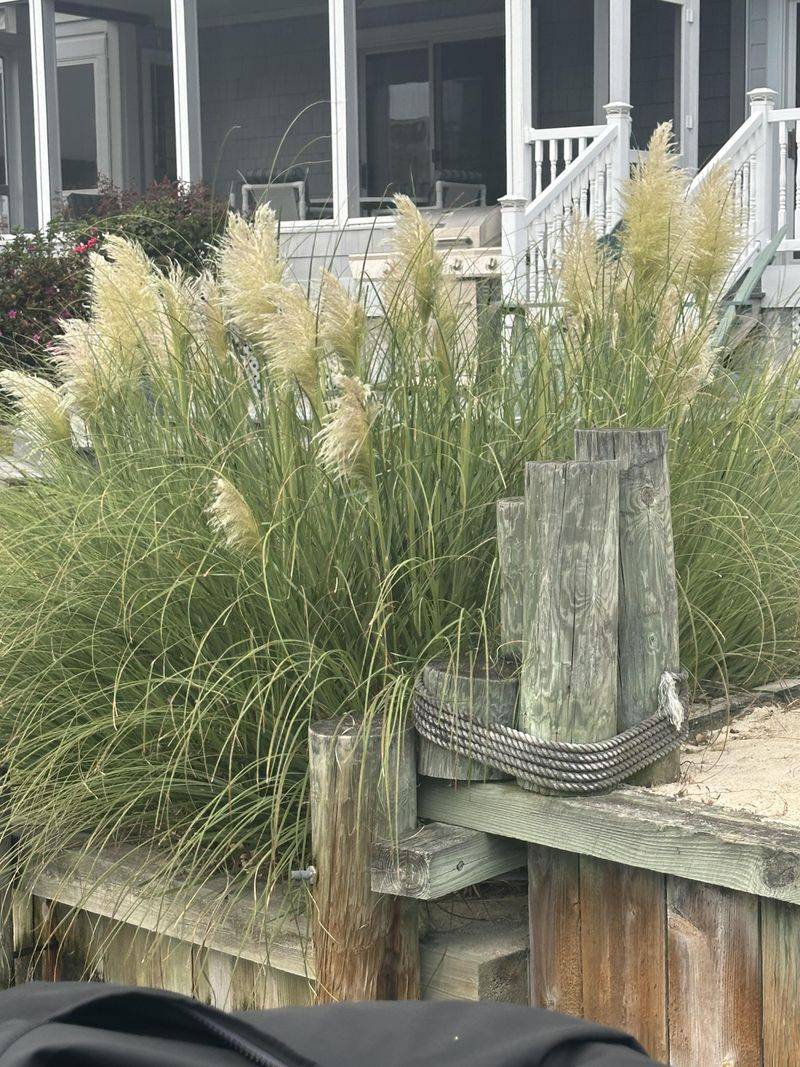
Few plants expand as dramatically or as quickly as pampas grass once it gets established in a warm climate.
In Arizona, where growing seasons stretch long and temperatures stay high, pampas grass can go from a modest clump to an enormous statement plant within just a couple of years.
Lavender needs open air circulation around its base to stay healthy. Pampas grass, with its dense, arching foliage that fans out several feet in every direction, eliminates that airflow quickly.
Reduced circulation around lavender in Arizona’s humid monsoon season raises the risk of fungal issues at the plant’s crown and base.
Sharp pampas grass leaves also make maintenance a challenge. Pruning or harvesting lavender near an established pampas grass clump becomes difficult and uncomfortable.
Many Arizona gardeners end up neglecting the lavender simply because accessing it gets harder each season as the grass expands.
Pampas grass belongs in a spot where it has room to grow without encroaching on anything else. A wide open corner of the yard, a standalone planting area, or a spot well away from garden beds works far better than placing it near lavender.
If you already have both plants close together in your Arizona yard, consider relocating the lavender while it is still small enough to transplant without much stress.
Once mature, pampas grass can also cast surprisingly heavy shade across nearby plants during parts of the day, especially in smaller yards where spacing is tighter
7. Bougainvillea Can Make Lavender Harder To Maintain
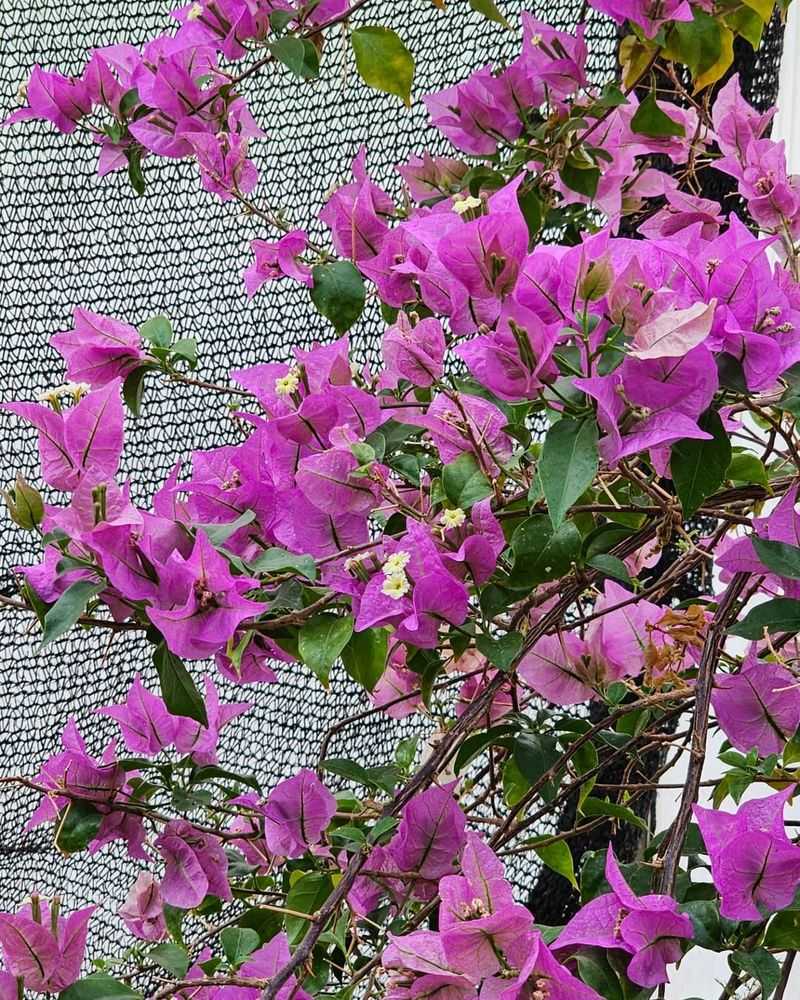
Bougainvillea is one of Arizona’s most iconic plants, and for good reason. It handles extreme heat, blooms in spectacular color, and can thrive in spots where almost nothing else will.
But plant it near lavender and you will quickly realize how much trouble it creates for the plants around it.
Bougainvillea grows fast and spreads aggressively, sending long thorny canes in every direction. When those canes reach nearby lavender, they can physically weigh it down, scratch the stems, and make simple tasks like pruning or harvesting feel like a battle.
Arizona gardeners who have made this mistake often describe spending more time untangling bougainvillea from lavender than actually tending either plant.
Water needs are another conflict. Established bougainvillea actually blooms better with less water, but younger plants need more irrigation to get started.
Lavender sitting nearby gets caught in the middle of inconsistent watering, which stresses it regardless of whether conditions are too wet or too dry.
Bougainvillea also tends to cast shade as it matures and climbs or sprawls outward. Lavender planted in its path gradually loses the full sun it needs.
Keeping bougainvillea trained on a wall, fence, or trellis away from your lavender planting area is the most practical solution for Arizona gardeners who love both plants and want them to perform well.
8. Texas Ranger Shrubs Often Outgrow Smaller Lavender Varieties
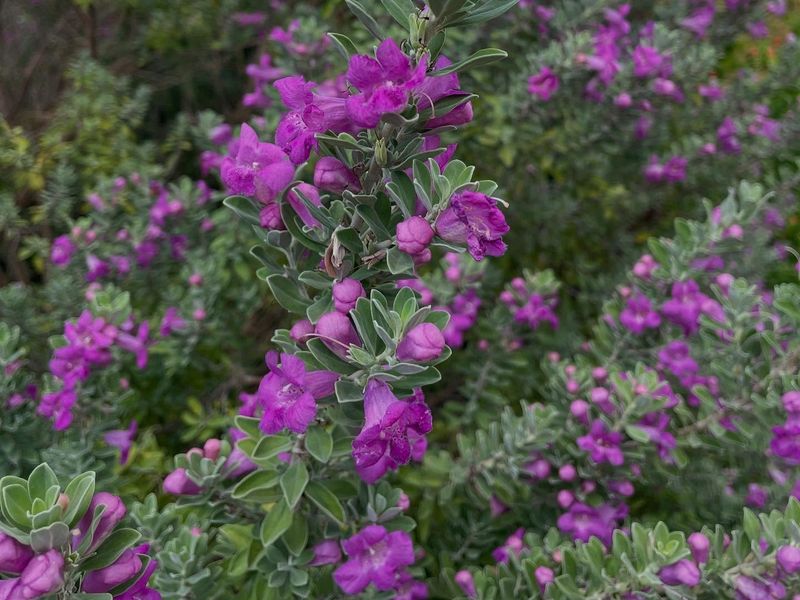
Texas ranger, also called purple sage or Leucophyllum, is a beloved shrub across Arizona landscapes. It handles drought, reflects the desert palette beautifully, and bursts into purple blooms after monsoon rains.
Next to lavender, though, it can become a problem that sneaks up on you slowly.
Texas ranger shrubs grow four to eight feet tall and equally wide depending on the variety. Smaller lavender types, like Hidcote or Munstead, simply cannot compete with that kind of size.
Over time, the Texas ranger shades the lavender, reducing the full sun exposure lavender needs to stay compact, fragrant, and productive.
Both plants prefer lean, well-drained soil with minimal water, which sounds like compatibility at first glance. But Texas ranger in Arizona can grow surprisingly quickly after monsoon season, putting on significant size in just a few months.
That burst of growth can catch gardeners off guard and leave lavender suddenly shaded or crowded before they have a chance to act.
Choosing larger lavender varieties like Phenomenal or Provence if you want them near Texas ranger gives lavender a better chance of holding its own. Even better, plant them in separate beds with at least five to six feet between them.
Giving each plant its own defined space in your Arizona garden prevents either one from undermining the other as the seasons progress.