7 Plants That Attract Cardinals In Florida
Picture stepping outside on a warm Florida morning and spotting a flash of brilliant red perched in your yard. The clear whistle of a Northern Cardinal cuts through the air and suddenly your backyard feels alive.
These iconic birds are not rare visitors when the right habitat is in place. With a few smart plant choices, Florida homeowners can turn ordinary landscapes into year-round cardinal magnets.
Native shrubs, seed-producing flowers, and dense cover provide the exact combination of food and shelter cardinals search for every season. When these elements come together, cardinals return again and again, bringing color, movement, and beautiful birdsong with them.
If you enjoy wildlife watching, natural gardening, or simply love seeing birds up close, the plants below can help transform your yard into one of the most rewarding outdoor spaces you will ever create.
1. Beautyberry (Callicarpa americana)
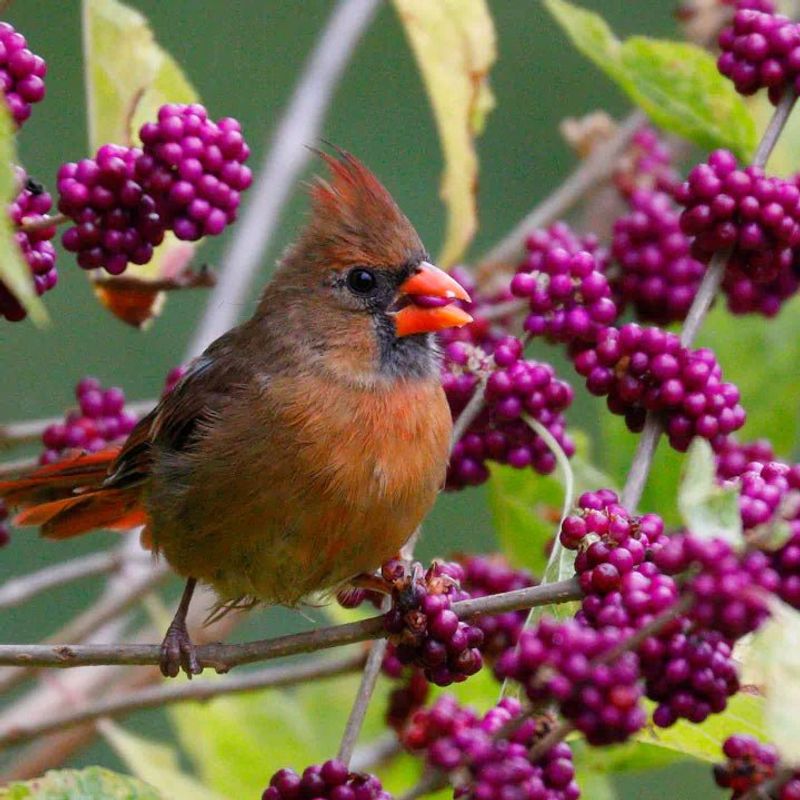
You might notice a female cardinal perched low in a shrub, plucking bright purple berries one by one in late summer. That shrub is likely a beautyberry, and it’s one of the most reliable native plants for attracting cardinals throughout Florida.
The clusters of vibrant magenta berries ripen just as fall approaches, offering a critical food source when other natural options start to fade.
Cardinals visit beautyberry plants repeatedly during autumn and winter, especially in North and Central Florida where the shrubs thrive in partial shade and well-drained soils.
The berries are high in nutrients and easy for cardinals to reach, making them a commonly used food source during seasonal feeding and pre-breeding periods.
You’ll often see cardinals hopping from branch to branch, sampling berries before moving on to forage elsewhere.
Beautyberry grows three to eight feet tall and wide, creating dense cover that cardinals use for shelter and escape from predators. The open branching structure also makes it easy for birds to navigate while feeding.
In South Florida, beautyberry performs best in shaded areas where it stays cooler and retains moisture.
Plant beautyberry in clusters rather than single specimens to maximize berry production and create more inviting habitat. Avoid trimming seed heads or pruning heavily in fall, as this removes the very food source cardinals depend on through winter months when insects and other seeds become scarce.
2. Firebush (Hamelia patens)
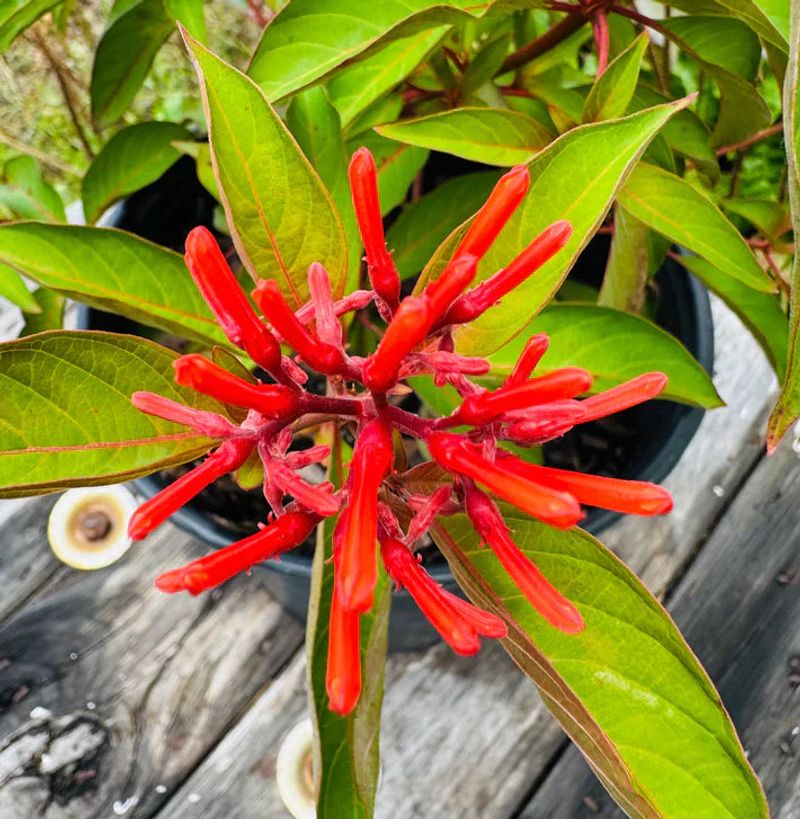
A male cardinal lands on the edge of a firebush in full bloom, not for nectar, but for the tiny insects attracted to the flowers. Firebush is a powerhouse native plant that serves double duty in your Florida yard by attracting both the insects cardinals love to eat and producing small berries later in the season.
This makes it one of the smartest choices for year-round cardinal activity.
During spring and summer, firebush blooms almost constantly, drawing bees, butterflies, and other pollinators that cardinals hunt for protein-rich meals. Watch closely and you’ll see cardinals darting through the foliage, snapping up small insects with quick, precise movements.
As the flowers fade, dark purple berries form, offering another food source that cardinals eagerly consume from late summer into fall.
Firebush thrives in full sun to partial shade and tolerates a wide range of soil conditions, making it adaptable across all Florida regions.
In South Florida, firebush remains evergreen and blooms nearly all year, while in Central and North Florida it may experience some frost dieback but quickly rebounds in spring.
Cardinals also appreciate the dense branching structure of mature firebush plants, which provides excellent cover for nesting and protection from hawks and other predators. Plant firebush near water sources or along property edges where cardinals naturally forage and you’ll create an irresistible habitat zone.
3. American Holly (Ilex opaca)
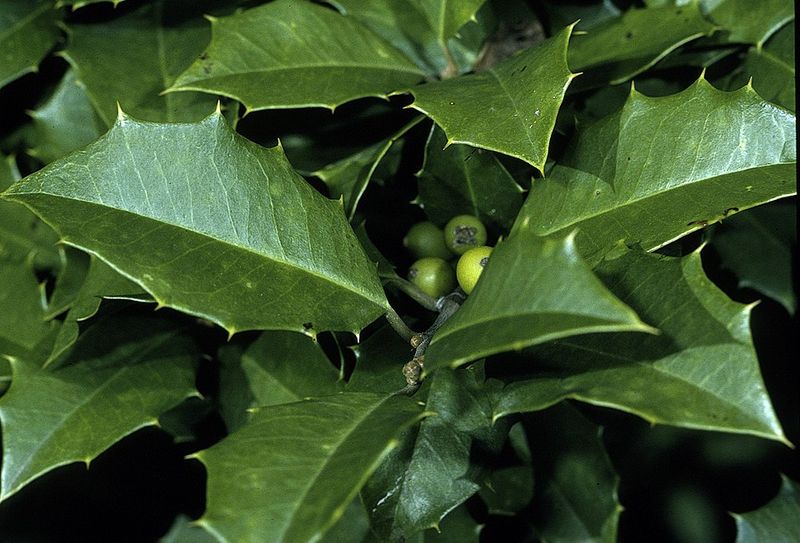
In the cool months of a North Florida winter, you might spot a cardinal pair sheltering deep inside an American holly, the glossy evergreen leaves providing perfect cover from wind and rain.
American holly is a classic native tree that offers cardinals year-round protection and a dependable winter food source through its bright red berries.
The dense foliage and sturdy branches make it an ideal nesting site as well.
Female American holly trees produce clusters of red berries that persist through winter, right when cardinals need them most. These berries are high in fat and provide essential energy during cold snaps and periods when insects and seeds are harder to find.
Cardinals often share holly trees with other songbirds, creating a lively feeding scene in your yard.
American holly grows slowly but can eventually reach 40 to 50 feet tall, making it a long-term investment in your backyard habitat. It prefers well-drained, slightly acidic soil and performs best in North Florida and parts of North-Central Florida where cooler winters encourage better berry production.
In South Florida, American holly can struggle with heat and humidity, so consider Yaupon holly as an alternative.
Plant both male and female American holly trees to ensure berry production, as only females produce fruit but they need a male nearby for pollination. Avoid using pesticides near holly trees, as cardinals rely on the insects that live in and around the foliage for feeding their young during nesting season.
4. Yaupon Holly (Ilex vomitoria)
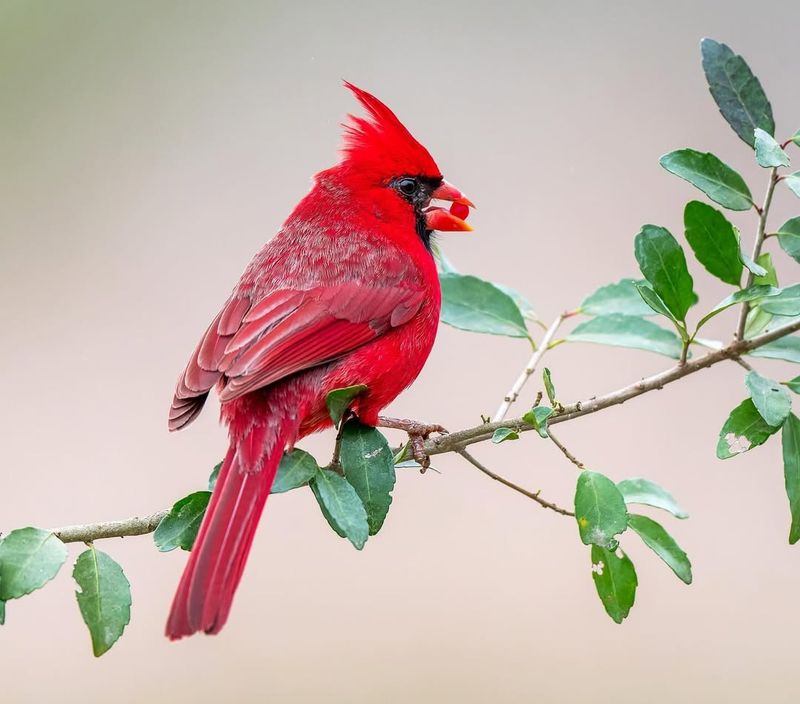
A flash of red catches your eye as a cardinal darts into a yaupon holly hedge, disappearing into the thick evergreen branches. Yaupon holly is one of the most versatile native plants for Florida landscapes, offering cardinals dense shelter, nesting habitat, and abundant red berries that persist well into winter.
Its compact growth habit makes it perfect for smaller yards or urban gardens where space is limited.
Yaupon holly produces clusters of bright red berries on female plants, and cardinals visit repeatedly throughout fall and winter to feed on them. The berries are small but plentiful, providing a reliable food source when other natural options have been consumed.
Cardinals also appreciate the tight branching structure, which offers excellent protection from predators and harsh weather.
This holly species thrives across most of Florida, from the Panhandle through coastal regions, and tolerates a wide range of soil conditions including sandy environments.
Yaupon holly grows well in full sun to partial shade and can be pruned into hedges or left to grow naturally as a small tree reaching 15 to 20 feet tall.
Plant yaupon holly along property lines or near windows where you can enjoy watching cardinals visit throughout the day. As with American holly, you’ll need both male and female plants for berry production, so check with your local native plant nursery to ensure you get the right mix.
Leave fallen berries and leaf litter beneath yaupon hollies, as cardinals often forage on the ground for seeds and insects hiding in the debris.
5. Black-Eyed Susan (Rudbeckia hirta)
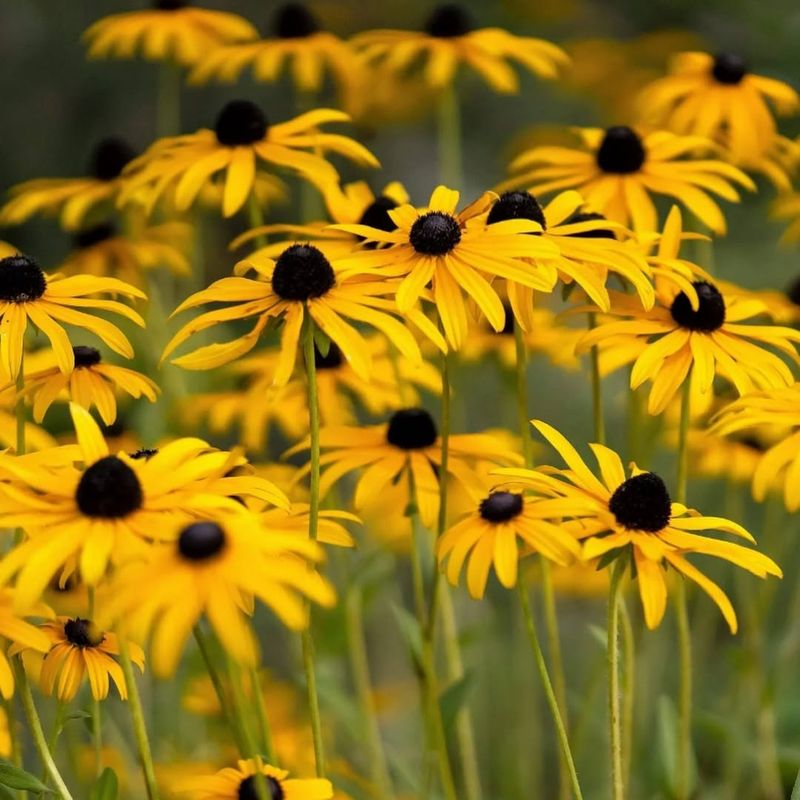
Late summer sunshine highlights a cardinal perched on a dried black-eyed Susan stem, methodically picking seeds from the dark cone center. Black-eyed Susans are cheerful wildflowers that bring color to Florida gardens while also serving as a valuable seed source for cardinals and other songbirds.
The bright yellow petals attract pollinators during blooming season, and once the flowers fade, the seed heads become a feeding station for hungry birds.
Cardinals have strong, cone-shaped beaks perfectly designed for cracking open seeds, and black-eyed Susan seed heads are among their favorites. You’ll often see cardinals clinging to dried flower stalks, carefully extracting seeds one by one and leaving behind empty husks.
This natural foraging behavior is most common in fall and winter when fresh seeds are abundant and other food sources have diminished.
Black-eyed Susans thrive in full sun and well-drained soil, making them ideal for open areas of your Florida yard. They grow as short-lived perennials or self-seeding annuals, returning year after year with minimal care.
In North and Central Florida, black-eyed Susans bloom heavily from late spring through fall, while in South Florida they are best grown during cooler months and do not persist as long-term perennials.
Resist the urge to deadhead or cut back black-eyed Susans in autumn. Leaving the seed heads intact through winter provides critical food for cardinals and supports natural habitat function.
Plant black-eyed Susans in drifts or mixed wildflower beds to create larger feeding areas that attract more birds and encourage longer visits.
6. Sunflower (Helianthus annuus)
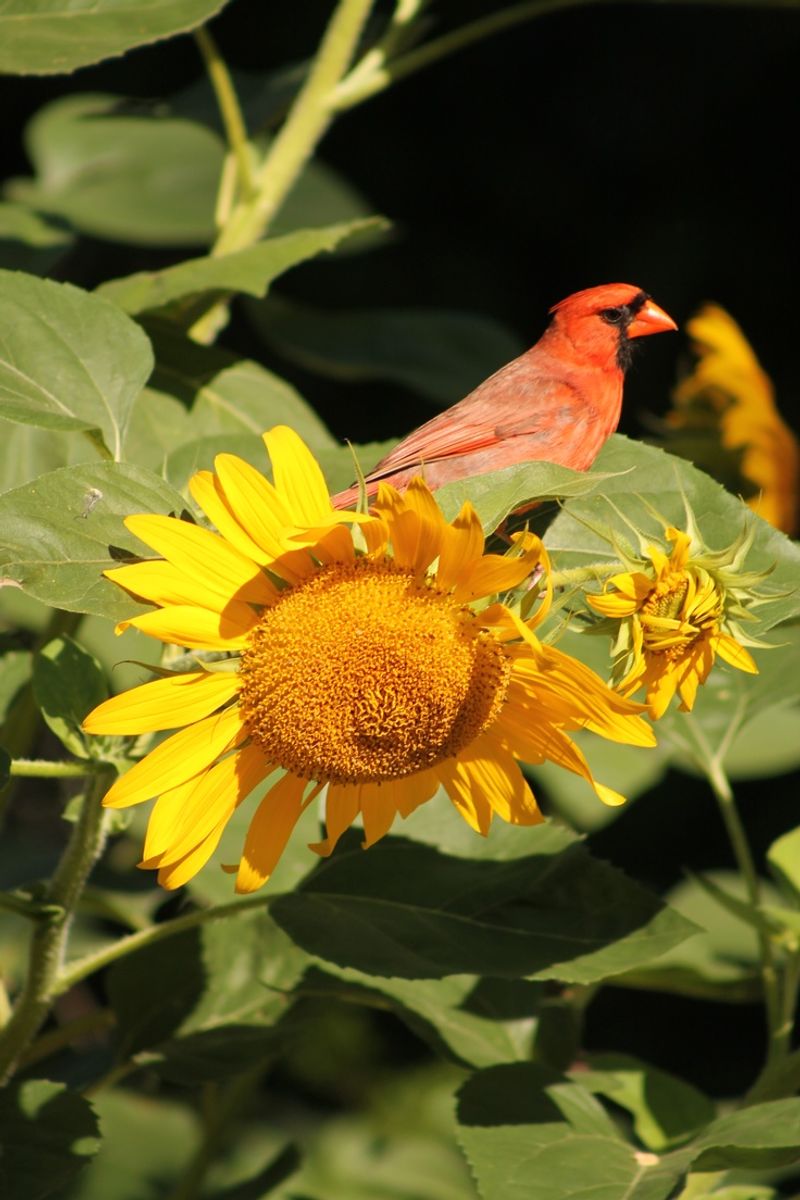
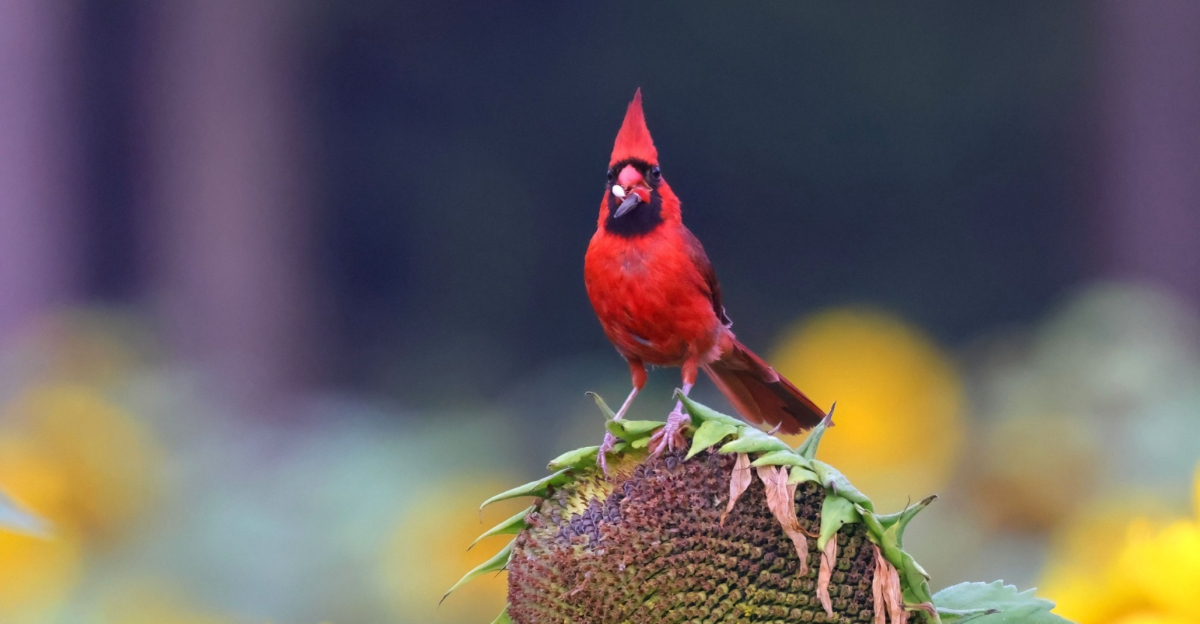
Few sights are more delightful than a bright red cardinal perched on a towering sunflower, pulling seeds from the massive flower head while morning light filters through the petals. Sunflowers are beloved by gardeners and birds alike, and cardinals are especially drawn to the large, oil-rich seeds that develop as the flowers mature.
Growing sunflowers in your Florida yard is one of the easiest ways to provide abundant food for cardinals during late summer and fall.
Cardinals visit sunflower patches daily once the seeds begin to ripen, often arriving in pairs or small family groups. They cling to the heavy flower heads, using their powerful beaks to crack open oil-rich sunflower seeds, especially black oil varieties, and extract the nutritious kernels inside.
Sunflowers also attract insects during their blooming period, offering cardinals additional protein sources for feeding nestlings and fledglings.
Sunflowers grow quickly in Florida’s warm climate and prefer full sun and well-drained soil. Plant seeds directly in the ground after the last frost in North Florida, or year-round in Central and South Florida where freezing temperatures are rare.
Choose native or heirloom sunflower varieties for the best seed production and avoid hybrids bred for ornamental purposes that may produce fewer or smaller seeds.
Allow sunflower heads to dry naturally on the stalk rather than harvesting them early. Cardinals and other songbirds will visit throughout fall and winter, gleaning every last seed.
Plant sunflowers in rows or clusters near shrubs and trees where cardinals can perch and survey the area before descending to feed.
7. Elderberry (Sambucus canadensis)
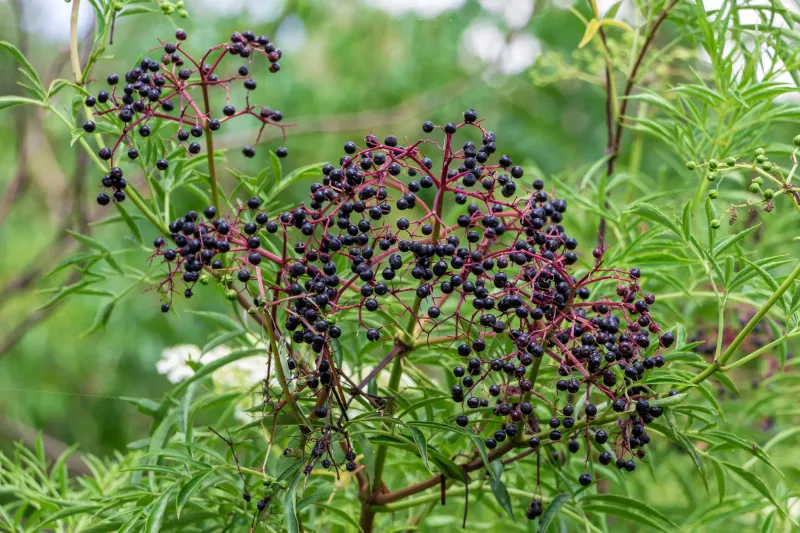
Cardinals move quietly through the branches of an elderberry shrub in early summer, plucking dark purple berries and occasionally pausing to scan the yard below. Elderberry is a fast-growing native shrub that produces clusters of small, nutrient-rich berries loved by cardinals and dozens of other bird species.
The abundant fruit ripens in waves, ensuring a steady food supply throughout the growing season.
Elderberry blooms in late spring with large, flat-topped clusters of white flowers that attract countless pollinators. As the flowers fade, green berries form and gradually darken to deep purple, signaling to cardinals that a feast is ready.
Cardinals feed heavily on elderberries during late spring and summer, with timing varying by region, often visiting multiple times per day when the fruit is at its peak.
This shrub thrives in moist, rich soil and tolerates partial shade, making it a good choice for low-lying areas or along pond edges in Florida landscapes. Elderberry grows quickly, reaching 10 to 12 feet tall and spreading through underground runners to form dense thickets.
In North and Central Florida, elderberry is especially vigorous, while in South Florida it benefits from regular watering and afternoon shade.
Plant elderberry in groups to maximize berry production and create larger habitat zones that support more cardinals and other wildlife. The dense branching structure also provides excellent nesting cover, and you may find cardinal nests hidden deep within elderberry thickets during breeding season.
Avoid pruning elderberry heavily in spring, as this removes the flower buds that will become the berries cardinals depend on later in the year.