7 Plants That Make Texas Homes Look Expensive (But Are Easy To Grow)
Creating a beautiful garden in Texas doesn’t have to mean spending a fortune or spending hours on maintenance.
Some plants have a natural elegance that makes any yard feel carefully curated and high-end, even if they’re surprisingly easy to grow.
These selections combine beauty, texture, and color to instantly elevate your outdoor space.
From flowering perennials to structured shrubs and ornamental grasses, the right plants bring a sense of sophistication to gardens, walkways, and entryways.
Many thrive in Texas heat, tolerate strong sun, and require minimal attention while still making a bold statement. Some even attract pollinators, adding movement and life to the landscape.
By choosing these low-maintenance, visually striking plants, homeowners can create a polished look that rivals professional landscaping.
With simple care and strategic placement, these plants make Texas homes look stylish and elegant, giving yards the kind of curb appeal that feels effortlessly upscale.
1. Boxwood (Buxus Spp.)
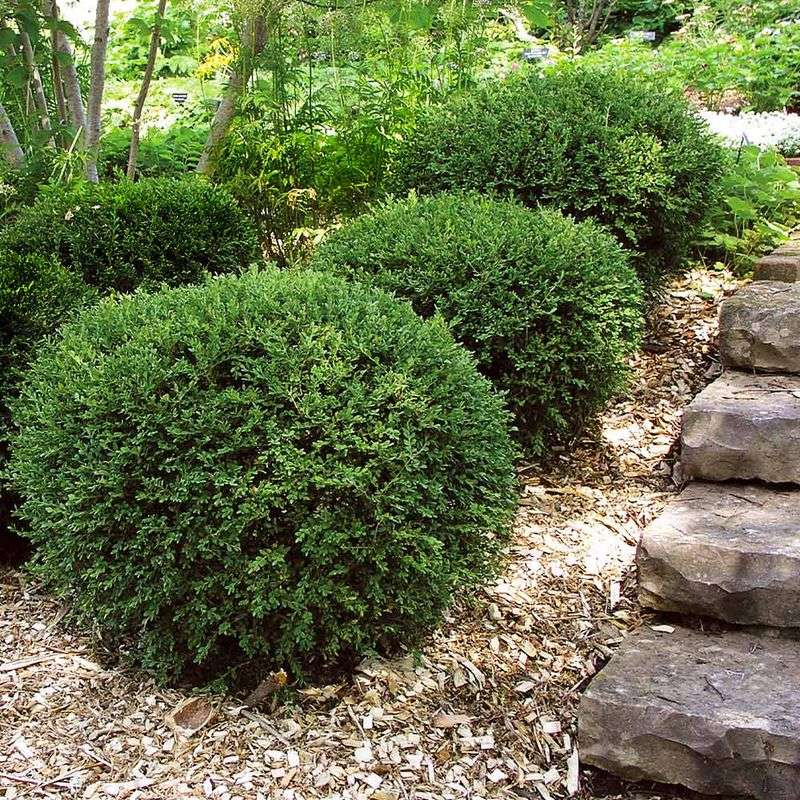
Walk past any luxury estate in Texas and you will almost always spot boxwoods. These compact, evergreen shrubs have been a staple of formal garden design for centuries, and it is easy to see why.
They stay green all year long, and they hold their shape beautifully after trimming.
Boxwoods are one of those plants that instantly make a yard look planned and polished. You can shape them into perfect spheres, neat squares, or clean hedges along a walkway.
That structured, tidy look signals to anyone passing by that someone put real thought into the landscape design.
In Texas, boxwoods do best in areas with some afternoon shade, especially during the brutal summer months. They prefer well-drained soil and need regular watering when young.
Once established, they become much easier to manage and require very little attention beyond occasional trimming.
Planting boxwoods in pairs on either side of your front door is one of the simplest and most effective ways to add curb appeal. You can also line them along a driveway or garden border for a clean, classic look.
Many Dallas and Austin homeowners use them to frame flower beds, giving the whole yard a finished, designer appearance.
Boxwoods are widely available at Texas nurseries and are very affordable. You do not need a landscaper to plant them.
With a little soil prep and consistent watering in the first season, these tough little shrubs will reward you with years of elegant, low-effort beauty.
2. Agave (Agave Americana And Compact Varieties)
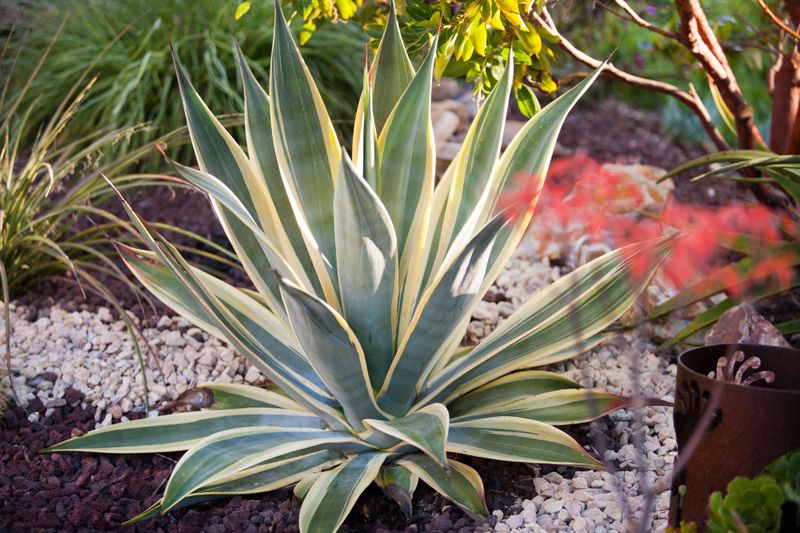
Few plants command attention the way agave does. With its thick, dramatic leaves and striking geometric shape, agave looks like something you would find outside a high-end hotel or a modern art museum.
The best part? It practically takes care of itself once it gets settled in.
Agave is made for Texas. It thrives in full sun, handles extreme heat without complaint, and barely needs any water once established.
Agave americana is the large, bold classic, while compact varieties like Agave parryi or Agave victoriae-reginae work well in smaller yards or container gardens. Both options deliver that high-end, architectural look.
This plant is a favorite in West Texas and San Antonio landscapes, where dry conditions make most other plants struggle. Designers use agave as a focal point because it draws the eye instantly.
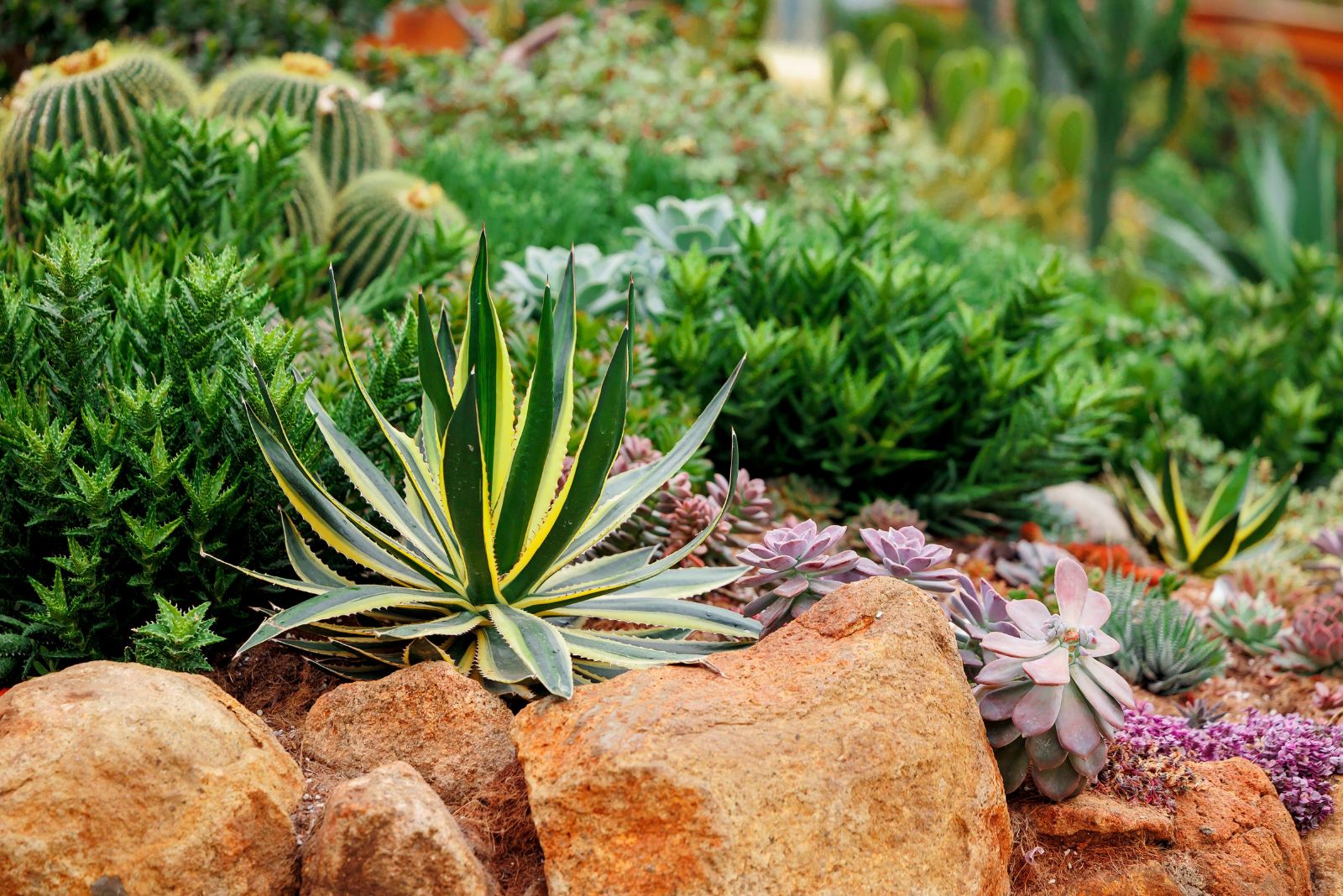
Place one in a gravel bed with some smaller succulents around it, and your yard suddenly looks like a professionally designed desert retreat.
Agave does have sharp tips, so plant it away from walkways and play areas. Wear gloves when handling it.
Other than that, the maintenance is almost nonexistent. No regular watering schedule, no pruning, and no fertilizing needed.
If you want a plant that screams modern luxury without any of the hassle, agave is your answer. It works beautifully in containers on a patio or as a bold statement plant in a front bed.
Texas homeowners across the state are embracing this stunning, low-effort plant for good reason.
3. Italian Cypress (Cupressus Sempervirens)
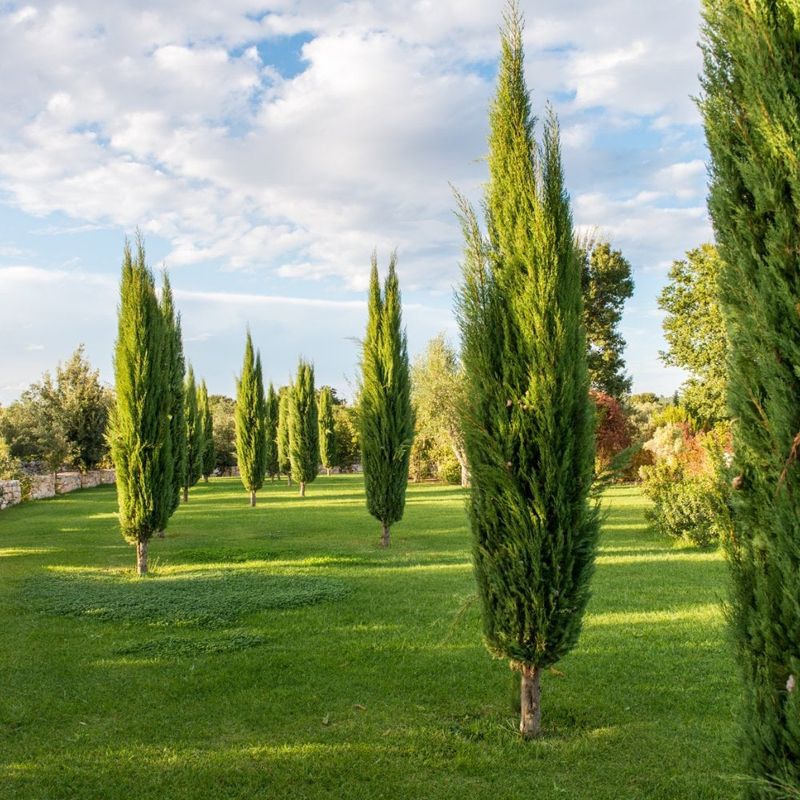
Imagine pulling up to a home with two or three tall, pencil-thin trees standing like elegant sentinels on either side of the front door.
That is exactly the effect Italian Cypress trees create. They bring a sense of grandeur and sophistication that few other plants can match.
Italian Cypress trees grow in a tight, columnar shape that makes them perfect for framing driveways, entrances, and garden paths.
They can reach impressive heights while taking up very little horizontal space, which makes them ideal for Texas properties of all sizes. Their deep green color stays rich and vibrant throughout the year.
One thing that surprises many Texas homeowners is how well these trees handle the heat. Once established, Italian Cypress trees are quite drought tolerant, which is a big advantage in a state where summers can feel relentless.
They do best in full sun and well-drained soil, which is easy to achieve in most parts of Texas.
Planting them in rows creates a formal, estate-style look that is hard to replicate with any other plant. Even a single Italian Cypress placed near a corner of the house adds vertical interest and a touch of European elegance.
Homeowners in the Dallas and Austin areas have been using them to create that upscale Mediterranean feel without a major renovation.
Growth is steady but manageable. You will not need to prune them into shape since they naturally maintain their elegant form. Just give them good drainage and plenty of sunshine, and they will do the rest beautifully.
4. Gardenia (Gardenia Jasminoides)
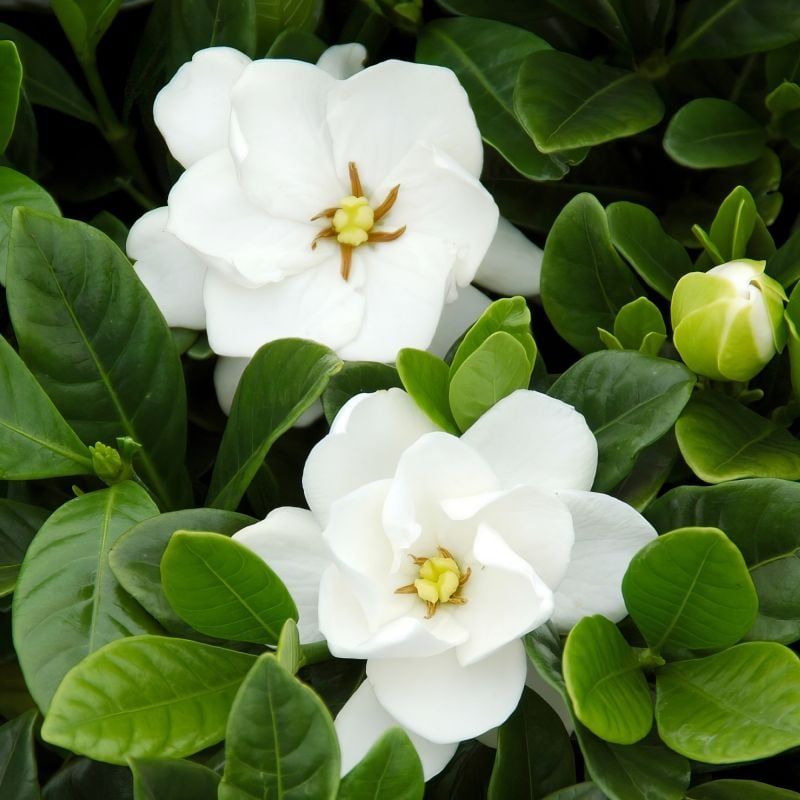
There is something almost magical about walking up to a home and catching the sweet, rich scent of gardenias in bloom. No other plant combines that level of fragrance with such stunning visual appeal.
Glossy, deep green leaves provide the perfect backdrop for bright white flowers that look like they belong in a luxury floral arrangement.
Gardenias are a classic choice in East and Central Texas, where the humidity and mild winters create conditions they love. They thrive in acidic, well-drained soil with some organic matter mixed in.
Morning sun with afternoon shade is their sweet spot, especially during the intense Texas summers.
Near a front door, patio, or window, gardenias work double duty. They look beautiful and smell incredible.
Guests will notice them immediately. That combination of elegance and sensory impact is exactly what makes gardenias feel like an upscale landscaping choice, even though they are far from expensive to buy or maintain.
Watering consistently and using an acid-forming fertilizer a couple of times a year will keep them healthy and blooming.
Watch out for yellowing leaves, which usually signal a need for more iron or better drainage. A small adjustment usually fixes the problem quickly.
Houston and Beaumont homeowners especially love gardenias because the climate there suits them so well. Plant them in clusters for a lush, layered look, or use a single large shrub as a standalone statement near your entryway.
Either way, gardenias bring a refined, Southern charm that genuinely elevates any home’s exterior.
5. Hydrangea (Hydrangea Macrophylla / H. Paniculata)
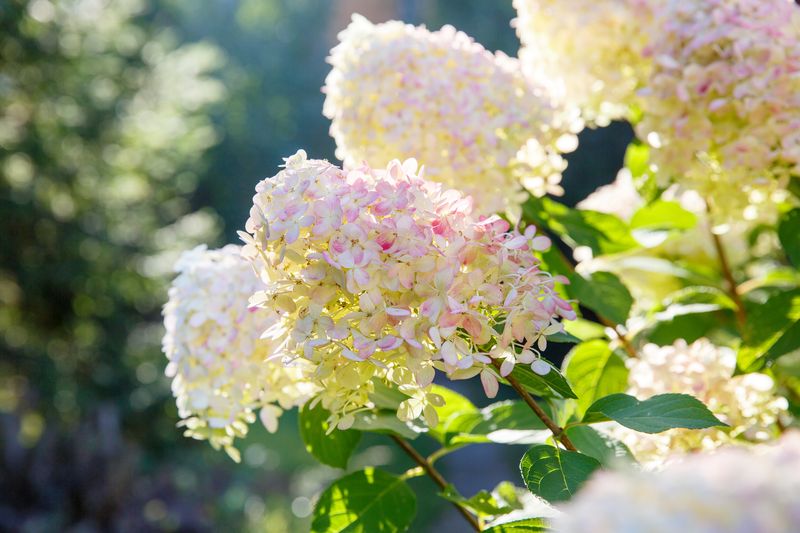
Nothing says “this yard was designed with care” quite like a big, fluffy hydrangea in full bloom. The oversized flower clusters look like something straight out of a Southern Living magazine spread.
They add softness, color, and serious visual drama to any landscape without requiring a professional to install them.
In Texas, the key is choosing the right variety for your location. Hydrangea macrophylla, the classic big-leaf type, does best in East and North Texas where summers are slightly milder and humidity is higher.
Panicle hydrangeas, like the popular Limelight variety, are more heat and sun tolerant, making them a better option for Central Texas gardens.
Planting hydrangeas along a home foundation creates a layered, full look that landscape designers charge big money to achieve. Their large blooms act as a natural focal point and draw the eye across the whole front of the house.
Even neighbors who do not know much about plants will stop to admire a well-placed hydrangea.
They need consistent moisture, especially during Texas summers, so a good layer of mulch around the base helps retain water and keep roots cool.
Morning sun and afternoon shade will keep the blooms from fading too quickly in the heat. A slow-release fertilizer in spring gives them a strong start for the season.
Hydrangeas also make stunning cut flowers for indoor arrangements. Growing them in your yard means you always have something beautiful to bring inside. For Dallas and Tyler homeowners, they are a must-have for a polished, high-end landscape.
6. Loropetalum (Loropetalum Chinense)
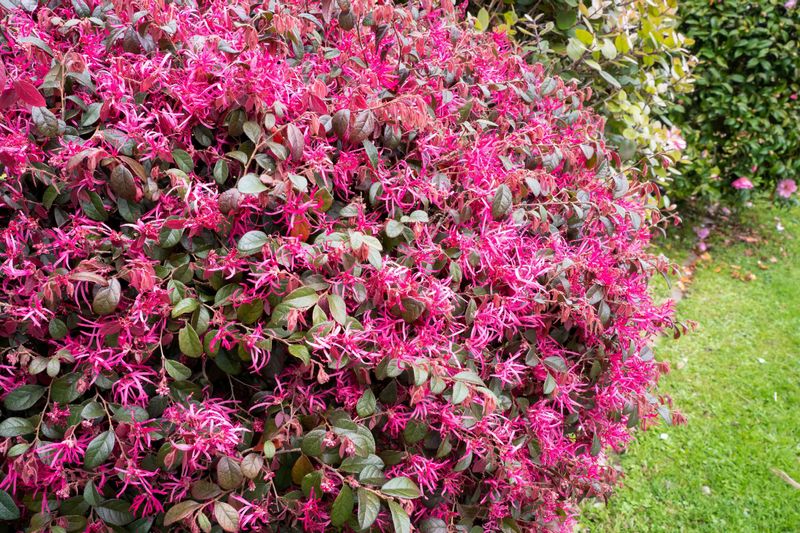
Purple plants have a way of making a yard look instantly more interesting, and loropetalum delivers that drama better than almost anything else.
The deep burgundy-purple foliage holds its rich color throughout the year, and in spring, the plant erupts in delicate, fringe-like hot pink flowers that create a jaw-dropping contrast.
Loropetalum is one of those plants that landscape designers reach for when they want bold color without a lot of effort. It is an evergreen shrub, so it never goes bare or dull.
The combination of year-round purple leaves and seasonal blooms means your yard always has something striking going on, no matter the time of year.
Texas heat does not slow this plant down. Once established, loropetalum handles the summer conditions across most of the state with ease.
It grows well in full sun to partial shade and prefers slightly acidic, well-drained soil. A little slow-release fertilizer in spring encourages healthy growth and vibrant color.
Use loropetalum as a hedge along a fence line, as a foundation plant below windows, or as a standalone accent shrub in a mixed garden bed. It pairs beautifully with green-leafed plants because the purple foliage creates a stunning visual contrast.
Many Houston and San Antonio homeowners mix it with ornamental grasses or boxwoods for a layered, high-design look.
Pruning keeps it tidy and at the size you want. You can let it grow naturally into a large, flowing shrub or trim it into a neat form. Either way, loropetalum brings a rich, designer energy to any Texas home exterior.
7. Windmill Palm (Trachycarpus Fortunei)
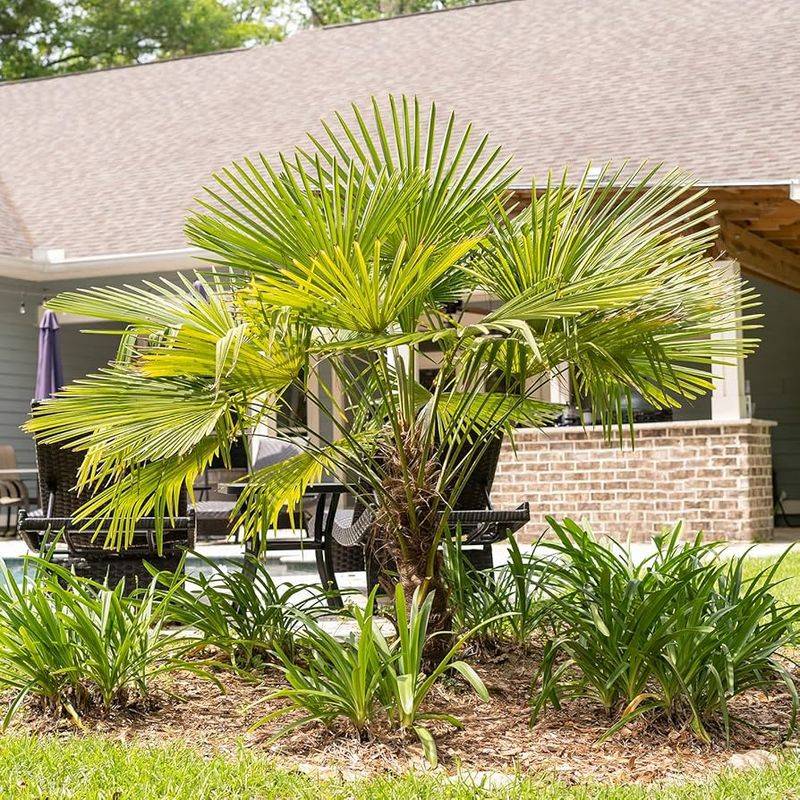
Picture a palm tree swaying gently in the breeze outside a beautiful home, and you have instantly imagined something that feels like a luxury resort.
Windmill palms bring exactly that feeling to Texas neighborhoods, and the best part is that they are far tougher than most people expect a palm to be.
Unlike tropical palms that struggle when temperatures drop, windmill palms are cold-hardy enough to survive in most parts of Texas, including North Texas and the Dallas area.
They can handle freezing temperatures that would finish off other palm species, which makes them a reliable choice for homeowners across the state who want that tropical, upscale look.
Windmill palms grow slowly but steadily, developing a shaggy brown trunk topped with large, fan-shaped fronds. That unique silhouette makes them perfect as a focal point in the front yard.
Plant one near the entrance of your home and it immediately becomes the centerpiece of the whole landscape.
Maintenance is refreshingly minimal. Remove old fronds as they brown and droop, and give the tree deep, infrequent watering during dry spells.
They prefer well-drained soil and do well in full sun to partial shade. Fertilizing once or twice a year with a palm-specific fertilizer keeps the fronds looking full and healthy.
From Houston to Fort Worth, Texas homeowners are using windmill palms to create resort-style curb appeal that makes the whole street take notice.
One well-placed palm can completely transform the look of an ordinary yard into something that feels genuinely luxurious and intentional.