Plants That Thrive In Northern California’s Spring
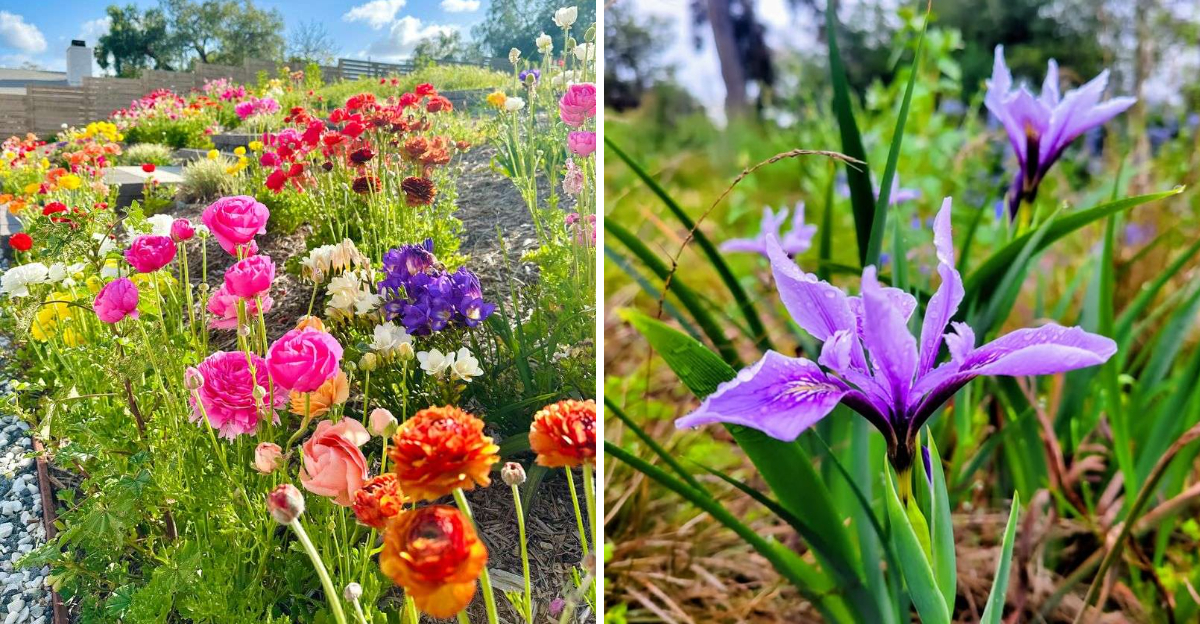
Spring in Northern California can feel like a garden waking up all at once. After winter rains soak the soil, plants seem to take off almost overnight, filling beds with fresh growth and color.
Those cool temperatures and longer, gentle days create a growing window that is hard to match in other regions.
It is often when gardens look their most vibrant before summer heat changes the pace.
Whether you are gardening along the foggy coast or in a warmer inland valley, certain flowers, greens, and legumes respond especially well to these spring conditions and reward you with strong, steady growth.
1. California Poppy Brings Bright Spring Color With Little Effort
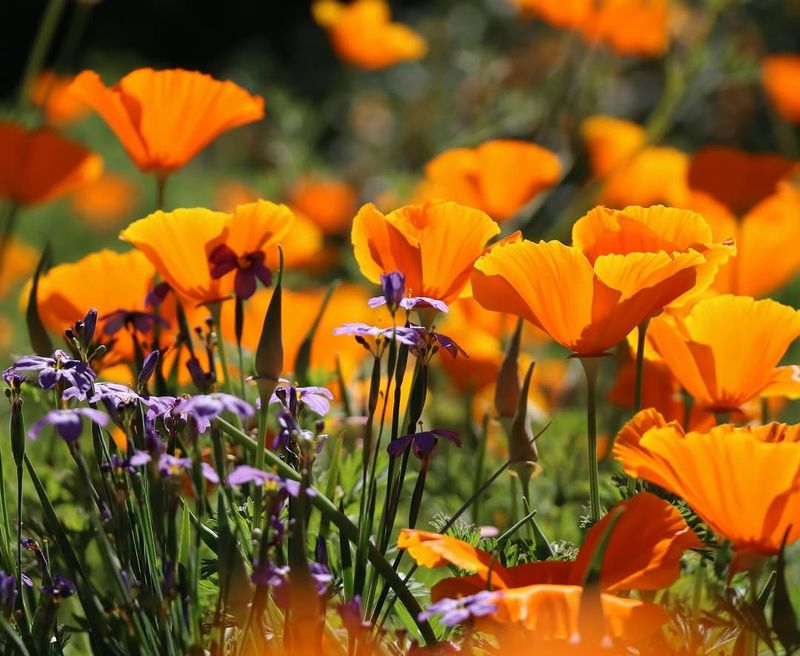
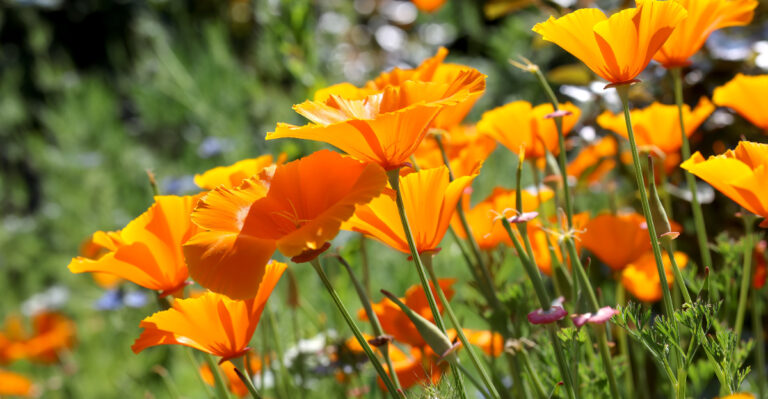
Few sights signal spring in Northern California quite like a hillside covered in blazing orange California poppies.
As the state flower, this plant has spent thousands of years adapting to exactly the kind of conditions Northern California delivers in spring – cool nights, occasional rain, and well-drained rocky or sandy soil.
It does not need much help from gardeners to get going.
Scatter seeds directly on the soil surface in late winter or very early spring, ideally between January and March. California poppies prefer full sun and actually perform better in poor soil than rich, amended beds.
Too much fertilizer pushes leafy growth at the expense of blooms, so resist the urge to feed them.
Coastal Northern California gardens tend to see longer bloom periods because temperatures stay cooler longer into the season.
Inland gardeners may find blooms fade faster once summer heat arrives, but a second round of scattered seed in fall can extend the show.
The flowers open wide on sunny days and close at night or on cloudy days, which is completely normal behavior.
Once established, California poppies need little to no supplemental watering thanks to their deep taproots. They reseed readily, meaning a single planting often returns year after year with minimal effort.
For gardeners who want reliable spring color without a complicated routine, this plant is genuinely hard to beat.
2. Douglas Iris Thrives In Cool Moist Spring Conditions
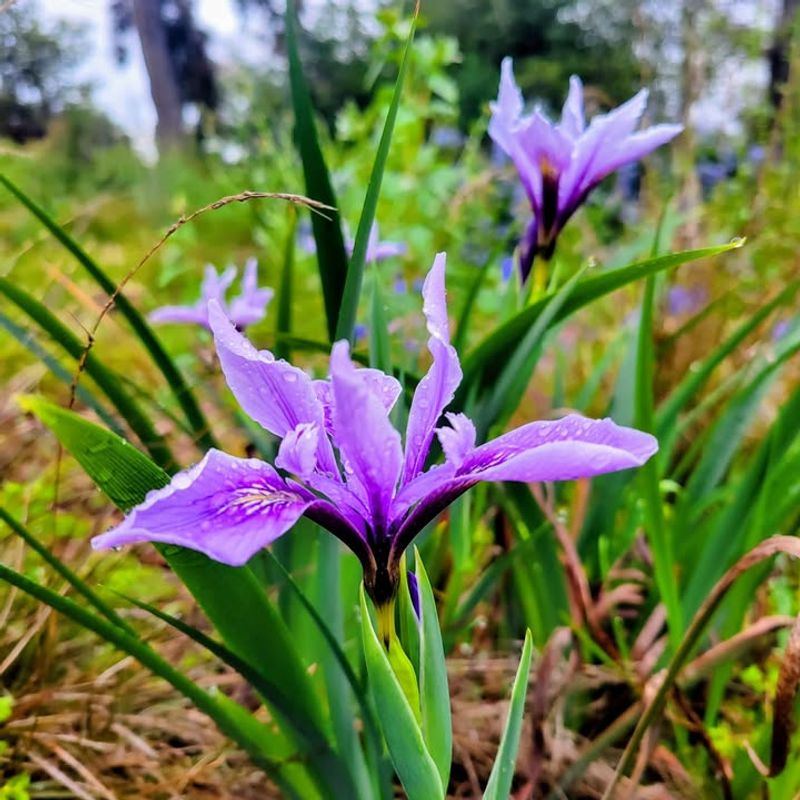
Walk through almost any coastal Northern California woodland in early spring and you are likely to spot the elegant blooms of Douglas iris catching the filtered light.
This native perennial has a reputation for being both beautiful and surprisingly adaptable, handling everything from full coastal sun to dappled shade under oaks and redwoods.
Douglas iris blooms most heavily from February through April in Northern California, timing its flowering to take full advantage of cool temperatures and residual soil moisture from winter rains.
The flowers range from pale lavender to deep purple and violet, often with intricate veining that makes each bloom look almost hand-painted.
In cooler coastal gardens, Douglas iris can handle more direct sun without stress. Inland Northern California gardeners should give it afternoon shade to keep foliage looking healthy once temperatures start climbing in late spring.
Either way, planting in well-drained soil with good organic matter gives roots the best start.
Watering needs are moderate during the growing season, but Douglas iris appreciates drying out somewhat in summer when it goes semi-dormant.
Dividing clumps every few years keeps plants vigorous and encourages better blooming.
Because it is a California native, it supports local pollinators including native bees that are active during the same cool spring window.
For low-maintenance beauty that fits right into a Northern California landscape, Douglas iris earns its place in any spring garden.
3. Snapdragons Add Early Season Color Before Heat Arrives
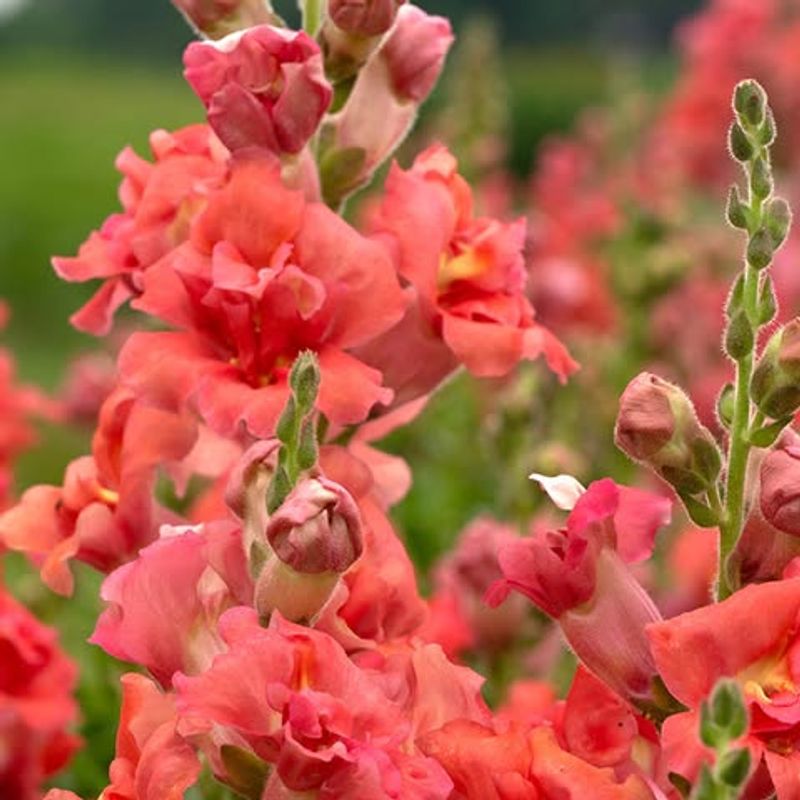
Snapdragons have a way of filling a spring garden with color that feels almost theatrical.
Their tall, densely packed flower spikes come in nearly every shade imaginable, from soft pastels to deep burgundy, and they bloom with remarkable enthusiasm during the cool weeks of Northern California spring before summer warmth shuts them down.
In Northern California, snapdragons are best planted as transplants or started from seed indoors in late fall or early winter for a head start.
They prefer full sun and cool air temperatures between 45 and 65 degrees Fahrenheit, which is exactly what Northern California delivers from roughly February through May depending on your location.
Coastal gardens often get an extended bloom window since marine air keeps temperatures in that sweet range well into early summer.
Inland Northern California gardeners should plan to enjoy snapdragons as a spring-only crop, pulling plants once heat causes blooming to slow.
Removing spent flower spikes regularly encourages new blooms and keeps plants looking tidy throughout the season.
Snapdragons prefer consistent moisture but do not tolerate waterlogged roots, so raised beds or well-drained garden spots work well. Taller varieties may need staking if spring winds pick up.
One fun detail many gardeners enjoy: the individual flowers on each spike open from the bottom up, creating a living calendar of the bloom cycle as the season progresses.
Few annual flowers deliver this much visual impact for the effort involved.
4. Sweet Peas Climb And Bloom In Cooler Spring Weather
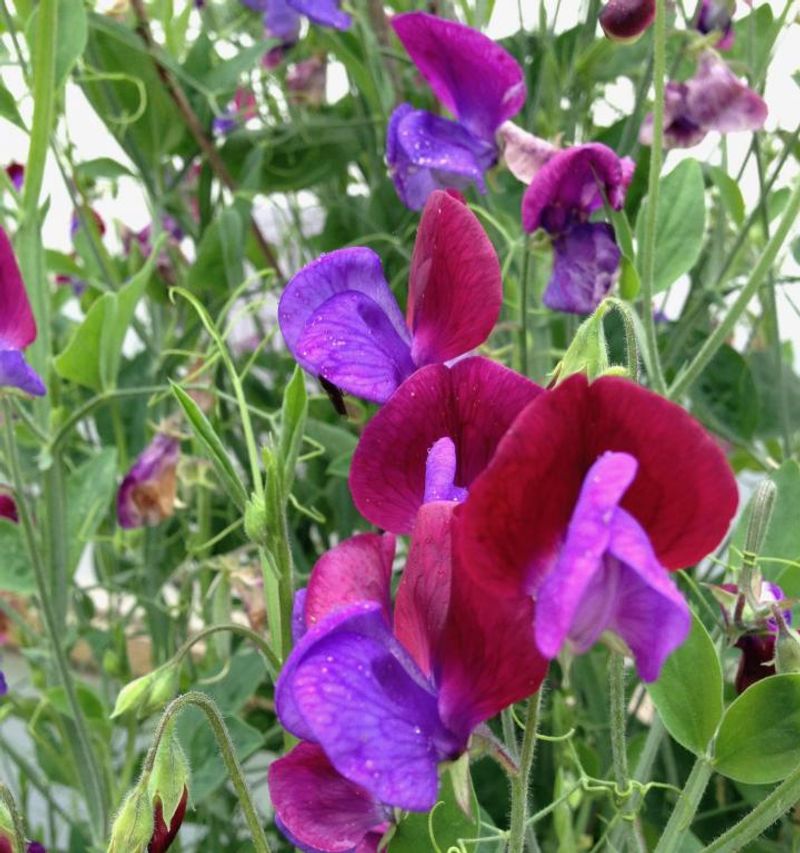
There is something genuinely nostalgic about sweet peas.
Their ruffled, almost tissue-paper blooms and intoxicating fragrance have made them a spring garden favorite for generations, and Northern California’s cool, moist spring conditions happen to match their needs almost precisely.
Sweet peas are cool-season climbers that struggle in heat but thrive when daytime temperatures stay between 55 and 65 degrees Fahrenheit.
In Northern California, this means planting seeds directly in the ground from November through February for best results.
Earlier planting gives roots time to establish before the plant puts energy into climbing and flowering.
Soak seeds overnight before planting to soften the seed coat and encourage faster sprouting. Provide a trellis, fence, or netting at least four to six feet tall, since sweet peas are vigorous climbers once they get going.
Full sun suits them well in Northern California’s spring, though afternoon shade in warmer inland areas can extend the bloom period by a few weeks.
Regular picking of cut flowers is actually beneficial – harvesting blooms prevents the plant from setting seed and keeps it focused on producing more flowers.
Consistent watering at the base of the plant, rather than overhead, helps reduce the chance of powdery mildew, which can appear during humid spring stretches.
Sweet peas generally wind down once June heat arrives in most Northern California locations, so appreciate them while the cool weather lasts. Their fragrance alone is worth the effort of growing them.
5. Lettuce Grows Fast In Northern California’s Mild Spring
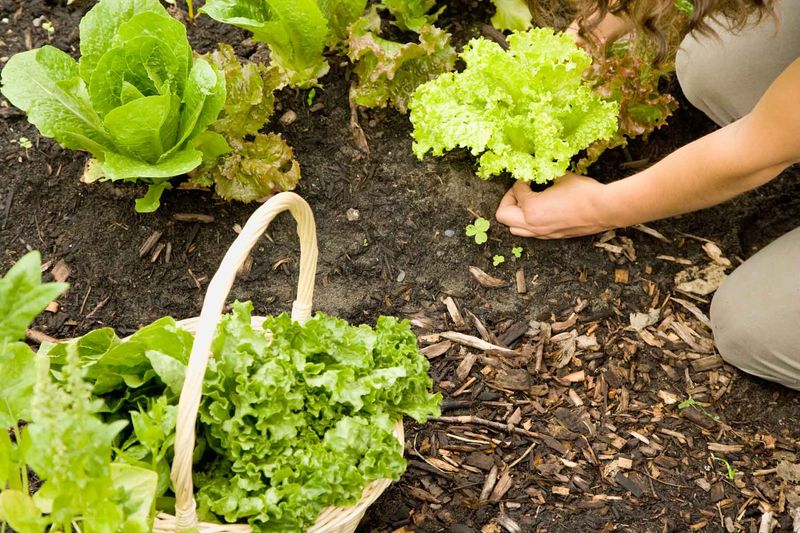
Spring in Northern California is prime time for lettuce.
Mild temperatures, steady soil moisture, and long daylight hours create the kind of growing environment where lettuce practically takes care of itself, producing tender, flavorful leaves faster than almost any other vegetable in the spring garden.
Lettuce grows best when daytime temperatures range between 60 and 70 degrees Fahrenheit – exactly the range Northern California delivers from roughly March through May.
Direct seeding works well starting in late February, and succession planting every two to three weeks keeps a continuous harvest coming.
Loose-leaf varieties like Red Sails, Black Seeded Simpson, and Oak Leaf tend to be among the most productive in spring conditions.
Full sun is ideal in early spring when temperatures are still cool. As late spring warms up, especially in inland Northern California valleys, moving lettuce to a spot with afternoon shade can delay bolting and keep leaves from turning bitter.
Raised beds and containers also work beautifully, offering good drainage and easier temperature management.
Water consistently and evenly since lettuce has shallow roots that dry out quickly. Mulching around plants helps retain soil moisture between waterings.
Harvest outer leaves regularly rather than pulling whole plants, and you can extend a single planting for several weeks.
Lettuce is also relatively resistant to common spring pests in Northern California, making it one of the most rewarding vegetables for gardeners of any experience level to grow during this season.
6. Kale Handles Cool Weather And Keeps Producing
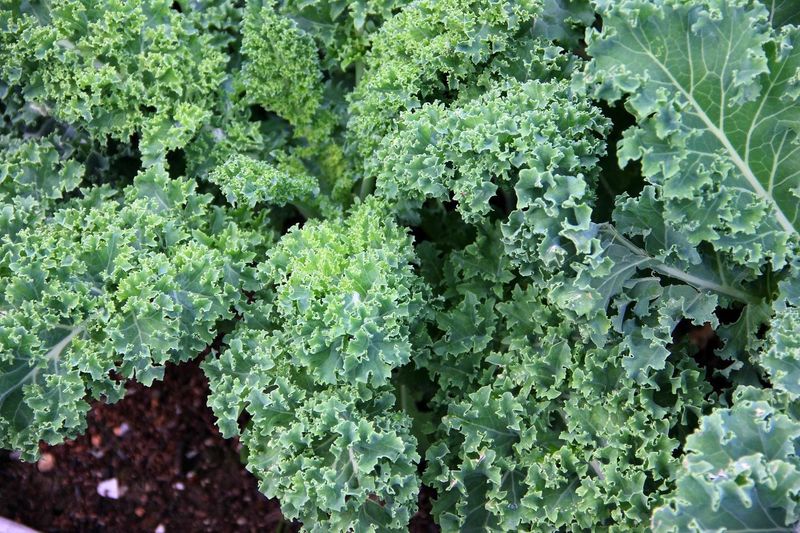
Kale is one of those vegetables that seems to thrive on conditions other plants find challenging.
Cold snaps, heavy dew, and the unpredictable temperature swings that Northern California spring can deliver do not slow kale down – they often make it taste better.
A light frost can actually increase the sweetness of kale leaves by triggering the plant to convert starches into sugars.
In Northern California, kale planted in fall or early winter is ready for serious spring harvesting by the time March arrives.
Spring-planted kale from transplants set out in February or March can also produce well before summer heat becomes a factor.
Lacinato kale, also called dinosaur kale, and Red Russian kale are particularly well-suited to Northern California’s spring conditions.
Kale prefers full sun and fertile, well-drained soil with consistent moisture. Feeding plants with a balanced fertilizer once or twice during the growing season supports the heavy leaf production that makes kale so productive.
Spacing plants about 18 inches apart allows good airflow, which reduces the risk of fungal issues during wet spring stretches.
Harvest by removing outer leaves first and leaving the central growing point intact. This approach lets a single plant produce for weeks or even months.
Aphids can appear on kale in spring, but a strong spray of water typically handles minor infestations without the need for chemical treatments.
For Northern California gardeners looking for a low-maintenance, high-reward spring crop, kale consistently delivers.
7. Fava Beans Grow Strong Before Summer Heat Sets In
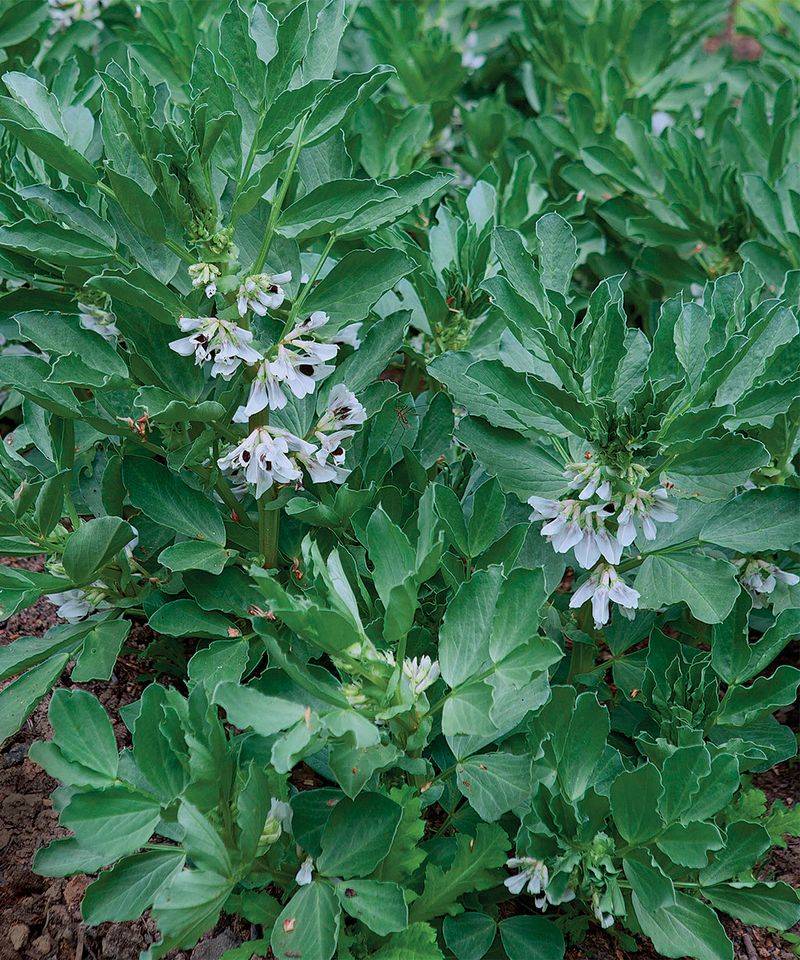
Fava beans have been grown in Mediterranean climates for thousands of years, and Northern California’s spring weather mirrors those conditions closely enough to make favas one of the most reliable cool-season crops a gardener can plant.
They are vigorous, productive, and genuinely interesting to grow from seed to harvest.
Seeds should go into the ground from October through February in most Northern California locations.
Fava beans can handle frost, making them one of the few crops that can be planted during Northern California’s cooler winter months and then hit their stride as spring temperatures climb into the 50s and 60s.
They grow upright and tall, reaching four to five feet in many cases, so planting along a fence or providing simple staking helps keep them tidy.
The flowers are striking – white with distinctive black markings – and they attract beneficial pollinators to the spring garden.
Pods develop quickly once flowering begins, and beans can be harvested young and tender or left to mature for drying.
Fava beans also fix nitrogen in the soil, improving soil fertility for crops that follow them in summer.
Water regularly but avoid waterlogging, as favas prefer well-drained soil. Aphids sometimes cluster on shoot tips in spring, and pinching off the affected tips is an effective and chemical-free way to manage them.
Harvesting should wrap up before sustained heat arrives in June, as favas tend to decline quickly once summer temperatures take hold across Northern California valleys.
8. Ranunculus Brings Full Color To Spring Garden Beds
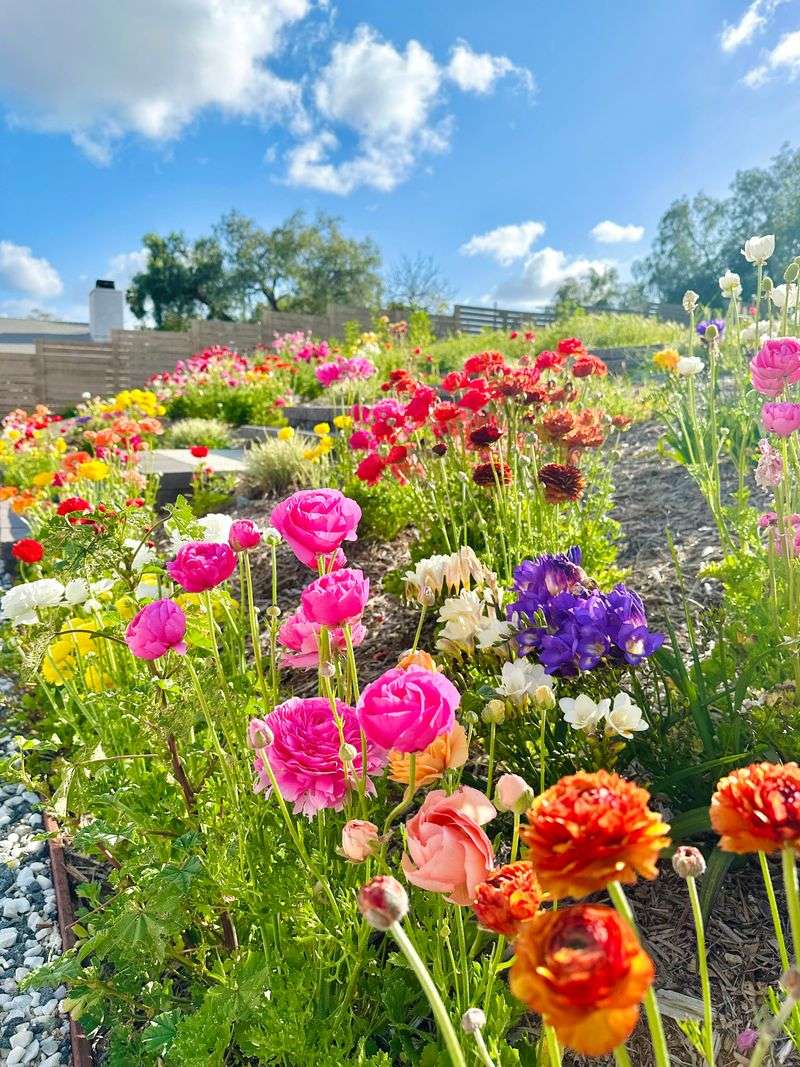
If you have ever seen a ranunculus in full bloom, you already know why so many Northern California gardeners make room for it every spring.
The flowers are layered with dozens of tissue-thin petals that stack up like a rose but with a brightness and range of color that few other flowers can match.
Reds, oranges, pinks, yellows, and creamy whites are all common, often appearing together in a single planting.
Ranunculus corms are typically planted in Northern California from October through January for spring blooms. They need cool soil temperatures to establish properly, and Northern California’s mild winters provide exactly that.
Full sun and well-drained soil are essential – corms planted in waterlogged ground will struggle, especially during rainy stretches.
Soak corms in water for a few hours before planting to rehydrate them, then plant with the claw-like side facing downward about two inches deep.
Spacing corms four to six inches apart gives each plant room to develop its full, rounded form.
Growth starts slowly in winter but accelerates noticeably as spring temperatures rise.
Blooms typically arrive from March through May in most Northern California locations, with coastal gardens often holding color well into June thanks to cooler air.
Cut flowers last impressively in a vase, making ranunculus a popular choice for home cutting gardens.
Once foliage yellows and fades after blooming, corms can be lifted and stored for replanting the following fall, giving Northern California gardeners a reliable annual spring tradition.