Plants You’ll Never Need To Replant In Your Arizona Garden
Many yards in Arizona start out full and colorful, then slowly turn into a cycle of replacing the same plants again and again. One rough summer can ruin expensive landscaping faster than people expect.
Some plants handle that pressure completely differently. They settle into the soil, adapt to intense sun, and keep growing without becoming constant maintenance projects.
Once established, many barely need extra attention to stay attractive year after year.
That is the part many homeowners overlook when planning a landscape. A plant that survives for decades often saves more time, money, and frustration than fast growing options that struggle every season.
Choosing plants built for dry heat can completely change how a yard performs long term. Some become stronger and more impressive with every passing year instead of fading out after a short time.
1. Red Yucca Survives Brutal Summers Without Constant Attention
Forget everything you think you know about high-maintenance gardens. Red Yucca laughs at triple-digit heat and keeps right on blooming.
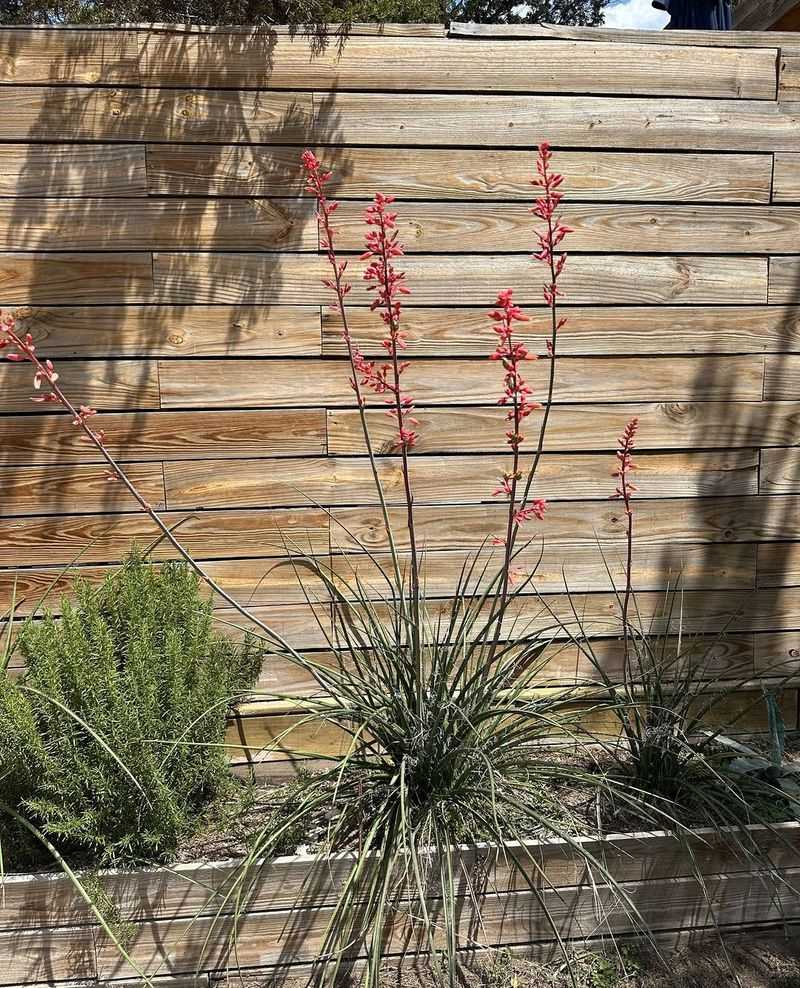
It produces tall, arching stalks loaded with tubular coral-pink flowers that hummingbirds absolutely love.
Native to Texas and the Chihuahuan Desert, it slots perfectly into Sonoran-style landscapes across the Southwest. Once established, it rarely needs supplemental watering.
Rainfall alone is usually enough to keep it thriving through summer.
Planting is straightforward. Choose a spot with full sun and well-draining soil.
Avoid areas where water pools after rain, since soggy roots cause more problems than dry ones ever will.
Growth is slow but steady. A single plant can eventually spread into a clump several feet wide, with multiple bloom stalks rising each spring and summer.
Each stalk can reach five to six feet tall without any staking.
Trimming is minimal. After blooms fade, cut the spent stalks down to the base.
Leave the strappy green leaves alone since they protect the crown and store energy for next season.
Red Yucca works well along walkways, in rock gardens, or as a bold accent near walls. Deer tend to avoid it, which is a bonus in areas where browsing is a problem.
It is one of the most dependable plants you can put in a low-water Southwest landscape.
2. Desert Spoon Endures Dry Conditions For Many Years
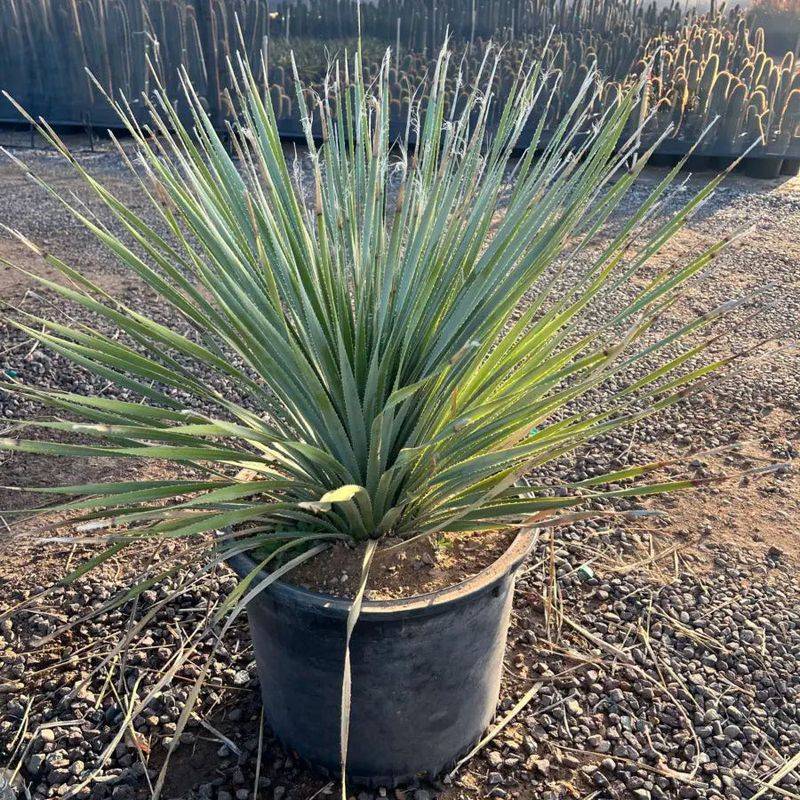
Some plants make you work for results. Desert Spoon is not one of them.
Once it roots into gravelly or sandy ground, it practically takes care of itself for decades.
Also called Sotol, this native Southwestern plant forms a tight, symmetrical rosette of long, narrow leaves edged with small teeth. Over time, the rosette matures into something that looks almost sculptural.
It brings strong visual structure to any dry garden.
Established plants push up a tall flower stalk every few years. That stalk can reach ten to fifteen feet and draws in pollinators during bloom season.
After flowering, the main rosette may slow down, but offsets around the base continue growing.
Watering needs are minimal once roots are set. During the first season, occasional deep watering helps the plant anchor itself.
Your Arizona Garden Changes Every Week. Your Plan Should Too.
Gardening in Arizona changes quickly throughout the season. Every Friday you’ll receive a simple weekly plan showing exactly what to plant, prune, fertilize, harvest, and protect so you never miss the right timing.
After that, natural rainfall in most low-desert areas is enough to sustain it.
Full sun is ideal. Desert Spoon can tolerate partial shade but tends to grow more open and less compact without direct light.
Reflected heat from walls or pavement does not bother it at all.
Soil drainage matters more than soil richness here. Amending with compost is not necessary.
In fact, overly fertile soil can cause soft, weak growth that looks out of place on such a naturally rugged plant. Keep it lean, keep it dry, and it will reward you with years of effortless presence in your landscape.
3. Autumn Sage Returns Quickly Once Warm Weather Arrives
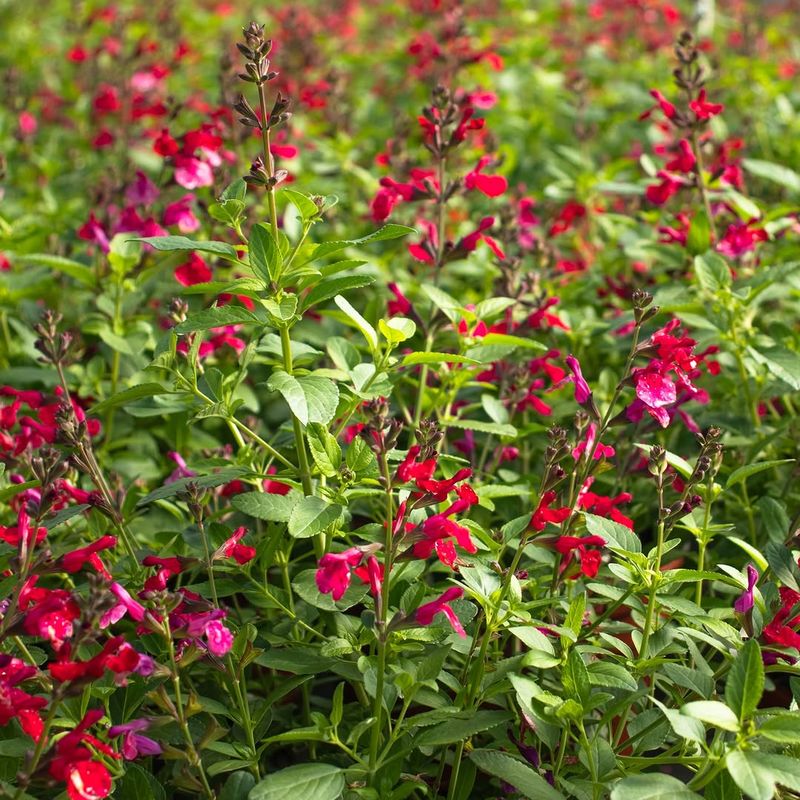
Watch a bare-looking Autumn Sage in early spring and you might wonder if it made it through winter. Give it two warm weeks and the answer becomes obvious.
New stems push out fast, and flowers follow close behind.
Autumn Sage is a small, mounding shrub that blooms heavily in spring and fall. Summer heat slows it down a bit, but it never fully stops.
Hummingbirds track it down reliably, especially during migration seasons.
Red is the most common flower color, but pink, coral, and white selections also exist. All perform well in hot, dry conditions as long as drainage is decent.
Waterlogged roots are the main thing to avoid.
Pruning makes a real difference with this plant. A light trim after each bloom cycle encourages fresh branching and more flowers.
Without any trimming, plants can get a bit leggy over time, though they still bloom.
Spacing matters too. Plants spread to about three feet wide.
Giving them room from the start prevents crowding and improves airflow, which reduces the chance of fungal issues during humid monsoon periods.
Autumn Sage pairs well with ornamental grasses, desert marigold, and low-water salvias. It fills mid-border space with reliable color and consistent texture.
In the low desert, it often blooms across nine or ten months of the year. That kind of performance is hard to beat in a plant that asks for almost nothing in return.
4. Baja Fairy Duster Settles Into Rugged Desert Soil Easily
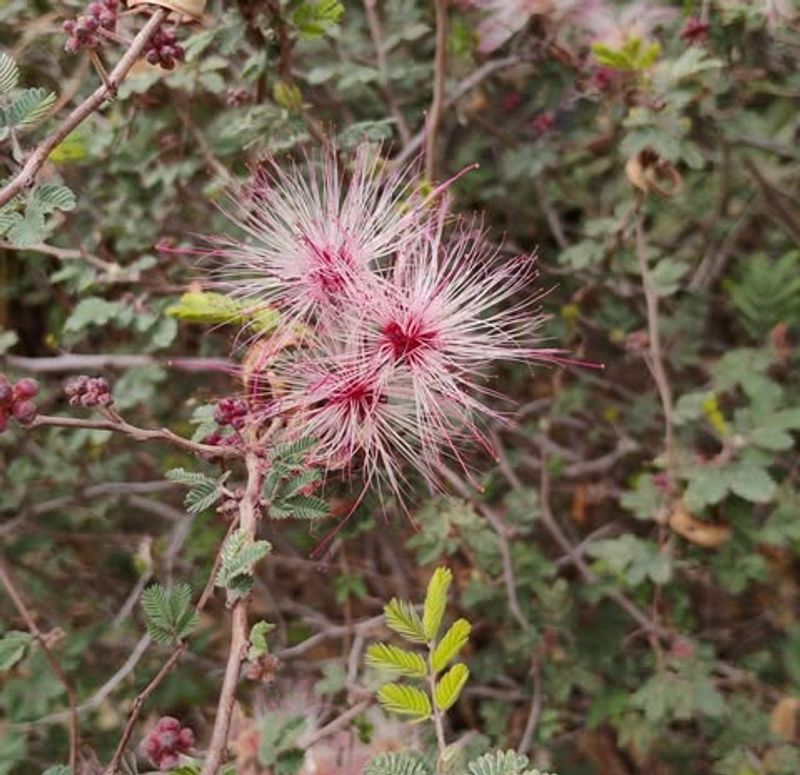
Powder-puff blooms on a tough desert shrub sounds too good to be true. Baja Fairy Duster pulls it off without any fuss.
Its feathery, hot-pink flowers show up reliably and last for weeks at a time.
Unlike its close relative the Red Fairy Duster, the Baja variety blooms heavily in winter and spring. That timing fills a gap when most other desert plants are still dormant or just waking up.
Hummingbirds and butterflies show up early because of it.
Growth is fast compared to many other low-water shrubs. Plants can reach four to six feet tall and wide within a few seasons.
That speed makes it useful for filling bare spots or creating a quick screen along a fence line.
Soil quality is not a concern. Rocky caliche, sandy loam, gravelly fill, it handles all of them without complaint.
Good drainage is the one non-negotiable. Sitting in wet soil for extended periods weakens the root system noticeably.
Water deeply but infrequently once established. In most low-desert areas, monthly irrigation during the dry season is sufficient.
During monsoon season, natural rainfall usually covers the need entirely.
Pruning after the main bloom cycle helps maintain a compact shape. Left unpruned, plants can get rangy, though they still bloom well.
A moderate trim in late spring keeps growth tidy without stressing the plant before summer heat fully arrives. It is a genuinely easy plant to grow well.
5. Red Bird Of Paradise Pushes Out Fresh Growth After Winter
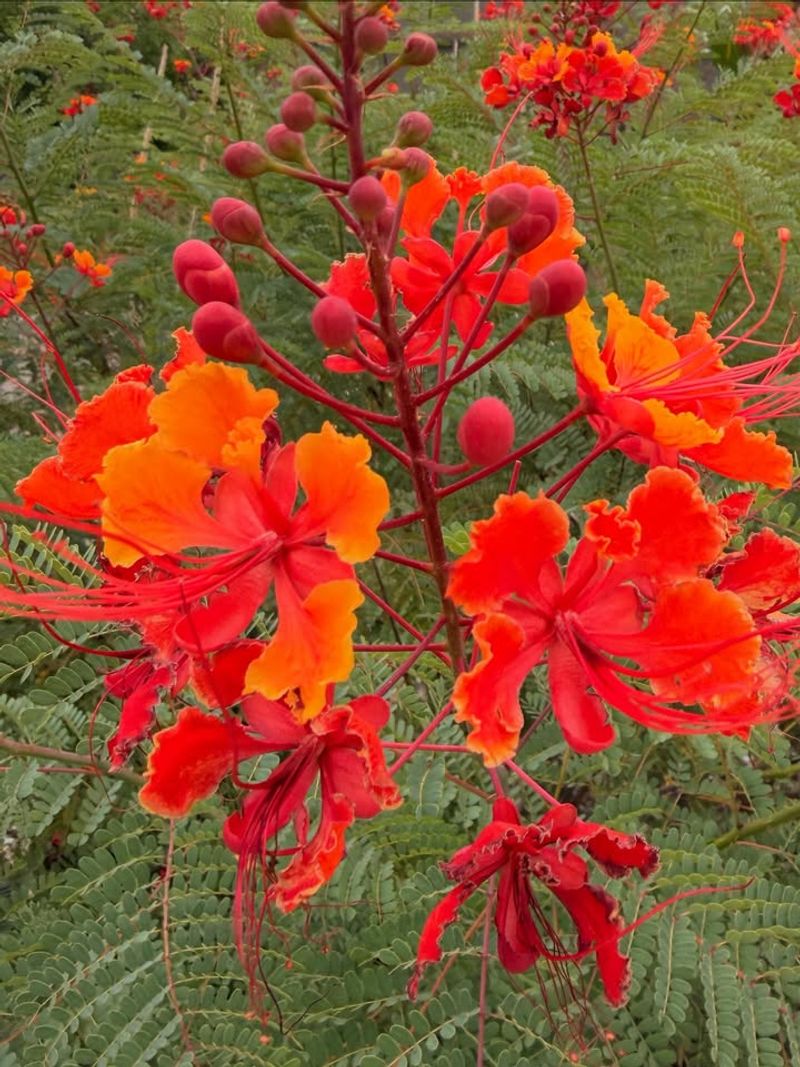
Summer heat stops a lot of plants cold. Red Bird of Paradise uses it as fuel.
By midsummer, when most gardens look scorched and tired, this shrub explodes with orange and red blooms that stop people in their tracks.
Technically a tropical plant, it behaves like a reliable perennial across the low desert. Stems may freeze back in a cold winter, but roots survive and push out vigorous new growth once temperatures climb again in spring.
That regrowth is often faster and fuller than the previous season.
Bloom season stretches from late spring through fall. Flowers are bold, tropical-looking, and attract hummingbirds consistently.
The feathery compound leaves add texture even when blooms are not present.
Spacing is worth thinking about at planting time. Red Bird of Paradise spreads wide, often reaching six to ten feet across at maturity.
Placing it too close to walkways or structures creates maintenance headaches later on.
Watering needs are low once established. Deep, infrequent irrigation encourages deep rooting, which improves drought tolerance over time.
Shallow, frequent watering produces weaker plants that need more attention long-term.
Pruning in late winter or early spring, before new growth starts, keeps plants tidy and removes any frost-damaged stems. Cutting back hard every few years also refreshes older plants and improves bloom density.
Few shrubs deliver this much visual impact with this little ongoing effort in a hot, dry landscape.
6. Chuparosa Handles Long Stretches Without Extra Irrigation
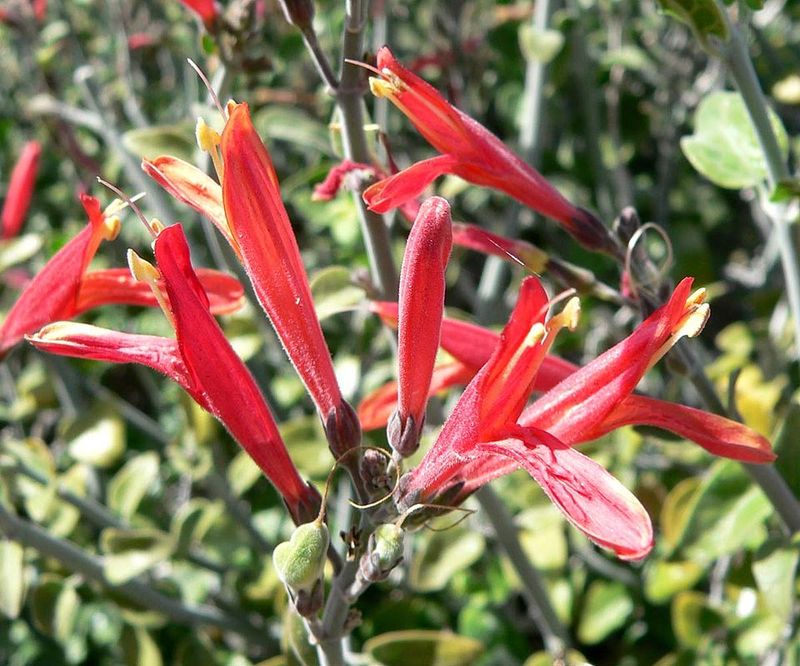
No leaves, no problem. Chuparosa blooms on bare green stems through the driest months of the year, and it does it without a single drop of extra water.
That combination is rare even among tough desert natives.
A true Sonoran Desert native, Chuparosa thrives in the rocky washes and sandy flats of the low desert. Hummingbirds depend on its winter and early spring blooms as a primary nectar source before other plants wake up.
Planting it near a window or patio gives you a front-row seat to that activity.
Growth habit is loose and arching, reaching about three to five feet tall and equally wide. It works well as a natural-looking accent or as part of a wildlife-friendly planting scheme.
Formal pruning is not necessary and actually removes the character that makes it appealing.
Establishment watering during the first summer matters. Deep, occasional soakings help roots extend down into cooler soil layers.
After the first full year, most plants in the low desert survive entirely on rainfall with no supplemental irrigation needed.
Reflected heat does not bother Chuparosa at all. South and west exposures suit it well.
Partial shade is tolerated but tends to reduce bloom density noticeably.
Frost causes stem tip damage in colder winters, but the plant bounces back quickly once temperatures stabilize. New growth fills in within weeks.
For a plant that asks so little, its contribution to a desert garden is genuinely impressive year after year.
7. Valentine Bush Keeps A Tidy Shape With Minimal Trimming
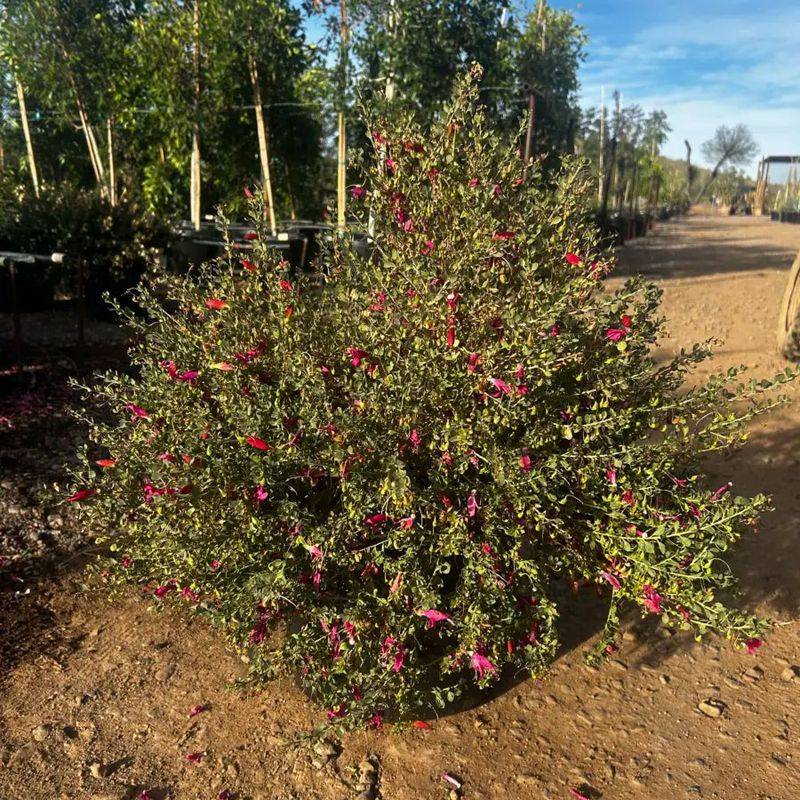
Bright magenta flowers in late winter turn heads every single year. Valentine Bush earns its name by blooming around February, right when most desert gardens are still looking bare and quiet.
It grows into a naturally rounded, compact shrub that rarely needs heavy pruning to stay in shape. The form stays clean on its own, which is not something you can say about many fast-growing desert plants.
Bloom color is one of the most intense in any dry-climate garden. Deep red-magenta flowers cover the plant densely for several weeks.
Hummingbirds arrive early in the season specifically because this plant is already blooming while others are not.
Sun exposure should be full or nearly full. Too much shade stretches the plant and reduces flower production significantly.
A south or east-facing spot with good air circulation works best for consistent performance.
Watering once established is minimal. In most low-desert areas, deep irrigation every two to three weeks during the dry season keeps plants healthy and full.
Monsoon rains typically handle summer moisture needs without any extra help.
Light pruning after bloom season removes spent flower clusters and keeps growth dense. Avoid cutting into old woody stems since recovery from heavy pruning is slow.
Valentine Bush rewards a hands-off approach more than most shrubs, making it an ideal choice for gardeners who want great results without constant upkeep.
8. Texas Ranger Flourishes In Fierce Afternoon Exposure
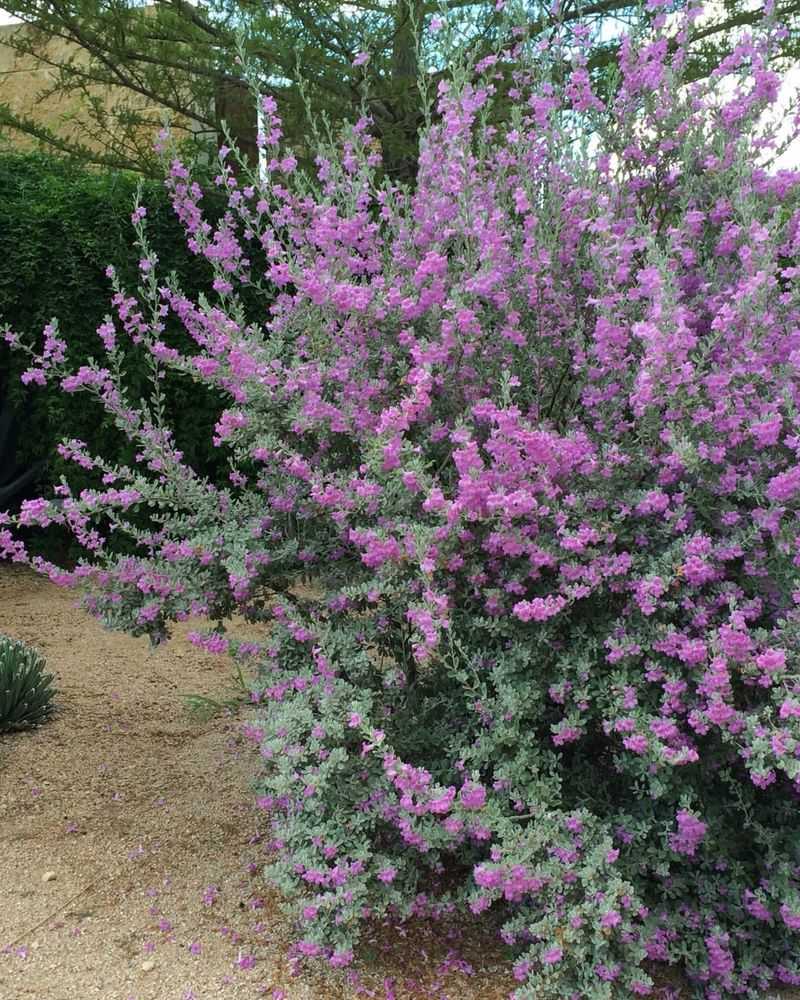
West-facing walls bake in the afternoon sun. Most plants struggle there.
Texas Ranger not only survives that exposure but actually seems to prefer it.
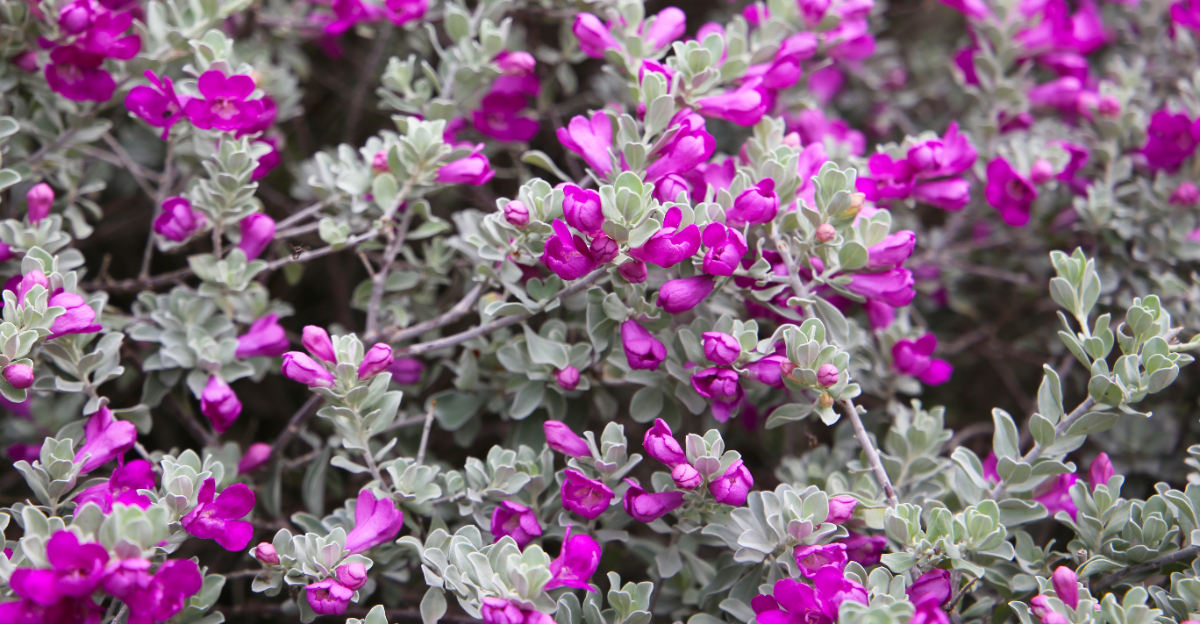
Commonly called Purple Sage or Cenizo, this silvery-leafed shrub bursts into bloom within days of a good rain. Purple or lavender flowers cover the plant almost overnight, then gradually fade until the next moisture event triggers another flush.
It is one of the most dramatic rain-response plants available for low-desert gardens.
Silver foliage works hard between bloom cycles. It reflects heat, reduces water loss, and gives the plant a soft, refined look even when flowers are absent.
Planted against a dark wall or among green-leafed neighbors, the contrast is striking.
Pruning should be light and infrequent. Heavy shearing removes the natural rounded form that makes this shrub so appealing.
A once-a-year trim to remove damaged wood and shape loose edges is usually enough.
Water needs drop sharply after the first year. Established plants survive on rainfall alone across most of the low desert.
Supplemental irrigation during extended dry spells helps maintain a fuller appearance but is not strictly required.
Texas Ranger grows slowly to about five or six feet tall and wide. Use it as a hedge, a backdrop plant, or a standalone specimen near an entry.
It attracts butterflies and bees during bloom periods and requires almost no intervention to stay healthy and attractive year after year.