These Are The Only Hydrangeas Worth Planting In Florida’s Heat And Humidity
Hydrangeas have a reputation in Florida, and not a great one. Most gardeners have tried them, watched them struggle through the first real heat wave, and quietly pulled them out by August.
The conventional wisdom says the heat and humidity just aren’t built for hydrangeas, and for a long time, that felt true. But that conventional wisdom has a gap in it.
Certain varieties don’t just tolerate the climate here, they genuinely perform in it. Big blooms, strong stems, consistent color through the summer months.
Gardeners who know which ones to reach for are getting results that would surprise anyone who wrote hydrangeas off years ago. So what separates a hydrangea that earns its spot from one that folds under pressure?
It comes down to variety, and most garden centers aren’t pointing you toward the right ones. That’s exactly what this list fixes.
1. Oakleaf Hydrangea Is The Florida-Friendly Starting Point
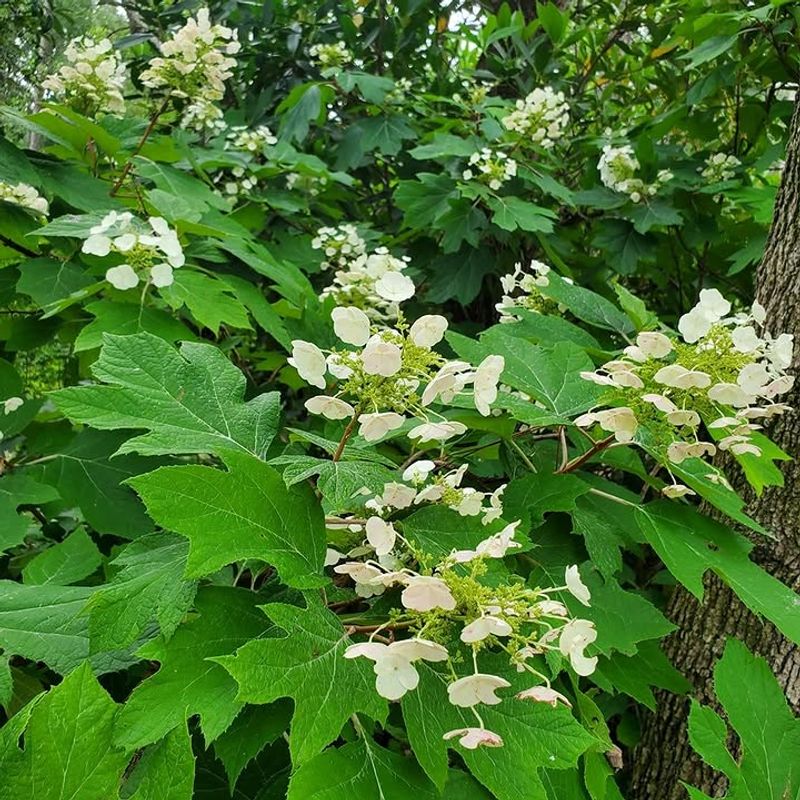
The smartest choice starts with the right species, and for gardeners in this state, that species is Hydrangea quercifolia, commonly called oakleaf hydrangea.
Unlike the popular bigleaf or mophead hydrangeas that many shoppers reach for first, oakleaf hydrangea is native to the southeastern United States.
That native status matters a great deal in local gardens.
Being native means this plant evolved in conditions similar to what it will face here. It is more familiar with humid summers, warm nights, and the kind of heavy rain followed by dry spells that many parts of this state experience regularly.
That said, native does not mean invincible. Oakleaf hydrangea still needs thoughtful placement to perform well.
Afternoon shade is one of the most important things you can give this plant. Harsh afternoon sun in summer can stress the foliage and reduce blooming.
Morning sun with filtered afternoon light is usually the sweet spot. A spot under tall pines or near the north or east side of a building often works well.
Soil moisture matters too. Oakleaf hydrangea prefers consistently moist, well-drained soil.
Sandy soils common across much of this state may need organic matter added at planting, plus a good layer of mulch to hold moisture between waterings. Without steady moisture, the plant can wilt quickly during hot stretches.
Compared to mophead hydrangeas, oakleaf tends to be more forgiving in heat and humidity when sited correctly.
It also offers attractive fall foliage and interesting peeling bark in winter, making it a multi-season plant worth the effort in the right shaded bed.
2. ‘Pee Wee’ Fits Smaller Shady Gardens
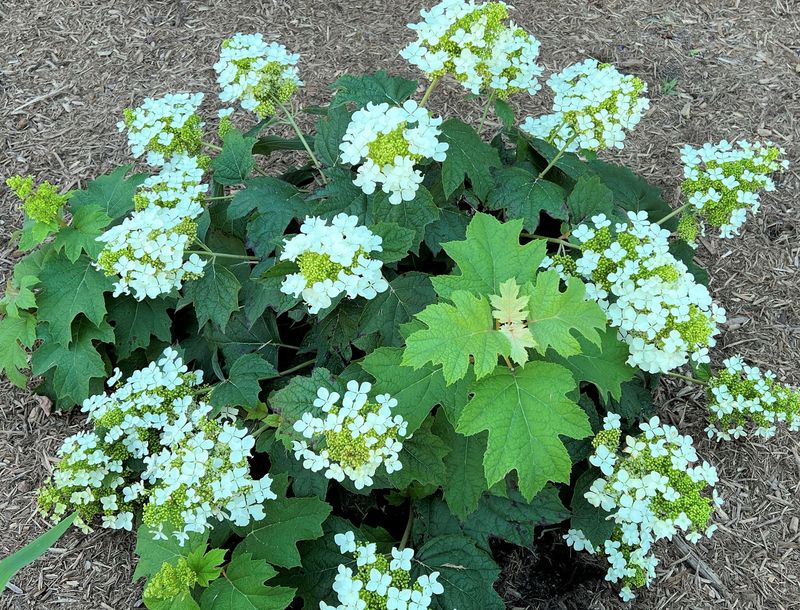
Small spaces need a cultivar that knows its limits. ‘Pee Wee’ is one of the more practical choices for gardeners who love the oakleaf look but do not have room for a large shrub.
Standard oakleaf hydrangeas can grow quite wide and tall over time, which can overwhelm a tight foundation bed or a small shaded corner.
‘Pee Wee’ stays more compact by comparison.
This cultivar is often recommended for smaller shaded borders, narrow beds along a fence, or spots near a porch or entry. A full-sized oakleaf would eventually crowd out everything around it.
Your Florida Garden Changes Every Week. Your Plan Should Too.
Gardening in Florida changes quickly throughout the season. Every Friday you’ll receive a simple weekly plan showing exactly what to plant, prune, fertilize, harvest, and protect so you never miss the right timing.
Its flower clusters follow the same cone shape as the species, but the overall plant footprint is more manageable for tighter situations.
Gardeners in northern parts of this state tend to have the best luck with oakleaf cultivars like ‘Pee Wee.’
Temperatures there are somewhat cooler than in central or southern regions. Farther south, the heat and humidity become more intense, and even compact cultivars may need extra attention to moisture and shade placement.
Like all oakleaf hydrangeas, ‘Pee Wee’ still needs consistent moisture and protection from harsh afternoon sun. Just because it is smaller does not mean it handles neglect or dry sandy soil on its own.
Mulching around the base, ideally two to three inches deep without touching the stems, helps retain soil moisture between rains or waterings.
Check the mature size listed for your source before planting. Cultivar sizes can vary slightly depending on the nursery stock and local growing conditions, so giving it a little extra room is always a sensible approach.
3. ‘Snow Queen’ Brings Strong White-To-Pink Blooms
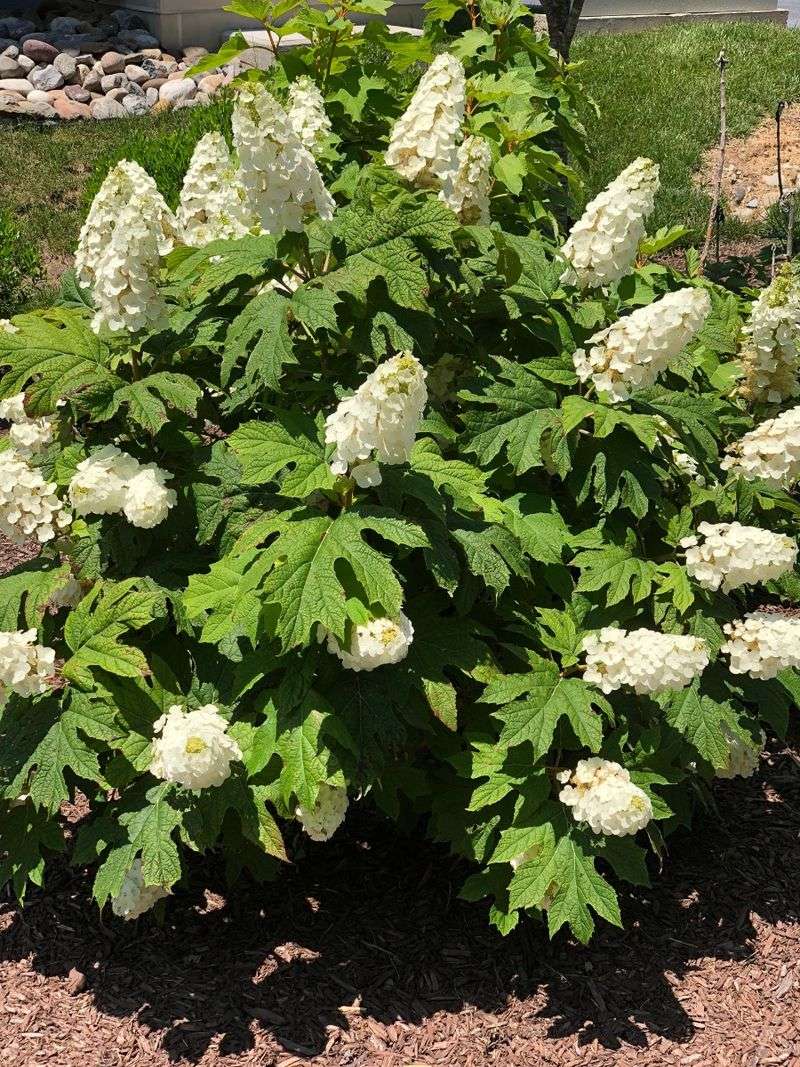
A stronger flower display needs the right backdrop, and ‘Snow Queen’ oakleaf hydrangea can provide exactly that when given enough room and shade to settle in.
This cultivar is well known for its large, upright flower clusters that open bright white and gradually take on soft pinkish tones as the season moves along.
That color shift gives the plant an extended period of visual interest beyond what simpler white bloomers offer.
The blooms on ‘Snow Queen’ tend to be showier and more substantial than those on some other oakleaf selections. That makes it a good candidate for a focal point in a shaded bed or a woodland-style garden corner.
However, that visual payoff comes with a size requirement. ‘Snow Queen’ is not a small shrub, and planting it in a tight space will eventually create crowding problems.
Before planting, check the expected mature size from your nursery or extension source and make sure the chosen spot can genuinely accommodate the plant at full growth.
Placing it too close to a walkway, a fence, or other shrubs often leads to unnecessary pruning that can reduce next season’s bloom.
Like the species, ‘Snow Queen’ performs best with morning sun and afternoon shade. Reflected heat from walls, driveways, or pavement nearby can stress the foliage even in a spot that looks shaded on paper.
Choosing a location with good airflow also helps manage the humid conditions common during summer months in this state.
Consistent soil moisture and organic mulch remain important for this cultivar, just as they are for every oakleaf hydrangea worth planting here.
4. ‘Snow Flake’ Adds Showy Double Flowers
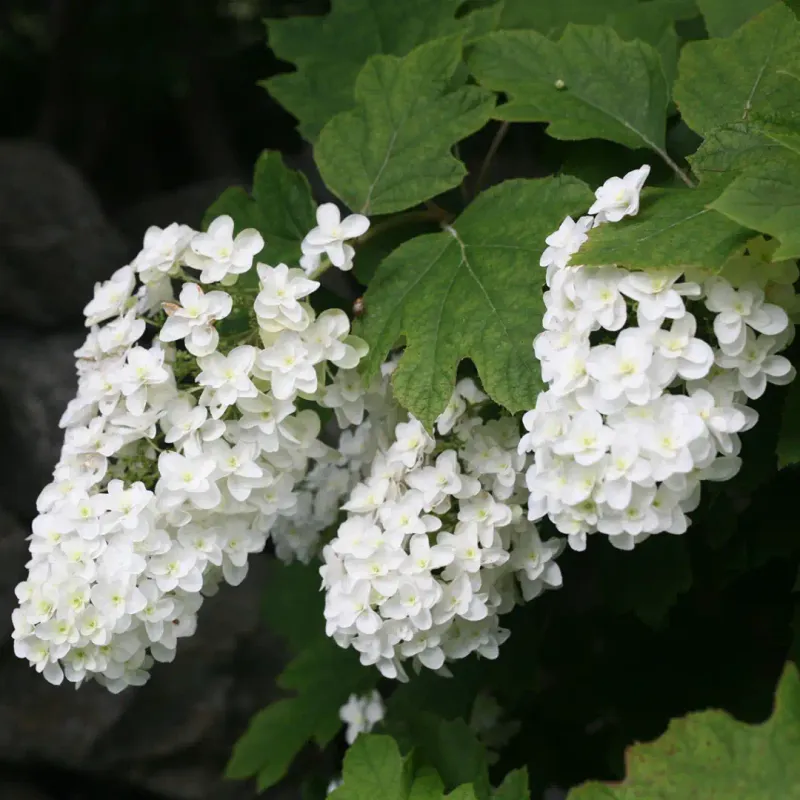
Double flowers bring a different kind of drama to the garden, and ‘Snow Flake’ oakleaf hydrangea is the cultivar that delivers it.
Most oakleaf hydrangeas have single-petaled florets in their cone-shaped clusters. ‘Snow Flake’ produces double flowers that give each bloom cluster a fuller, more layered appearance.
For Florida gardeners who want something that looks a little more ornamental and less wild, this cultivar stands out.
The fuller bloom clusters can make ‘Snow Flake’ feel like a more formal garden choice compared to the natural, open look of the straight species. It works well in shaded beds where you want a planting that draws the eye without needing a lot of color.
White blooms against dark mulch or rich green foliage can create a clean, elegant contrast that holds up through much of the blooming season.
That said, the same honest care requirements apply here. ‘Snow Flake’ still needs afternoon shade, steady moisture, and well-prepared soil to perform well. The double flowers do not make the plant tougher or more drought-tolerant.
If anything, a stressed plant under dry or overly sunny conditions may produce fewer blooms or smaller clusters than expected.
Mature size is worth confirming before you plant. ‘Snow Flake’ can grow into a fairly substantial shrub over time, so giving it adequate space from the start avoids problems later.
Northern parts of this state generally offer better growing conditions for oakleaf hydrangeas than central or southern regions.
Farther south, summer heat and humidity can be harder to manage even with careful siting.
Mulch, moisture, and shade remain the foundation of success with this cultivar.
5. ‘Harmony’ Works Where Heavy Flower Clusters Have Room
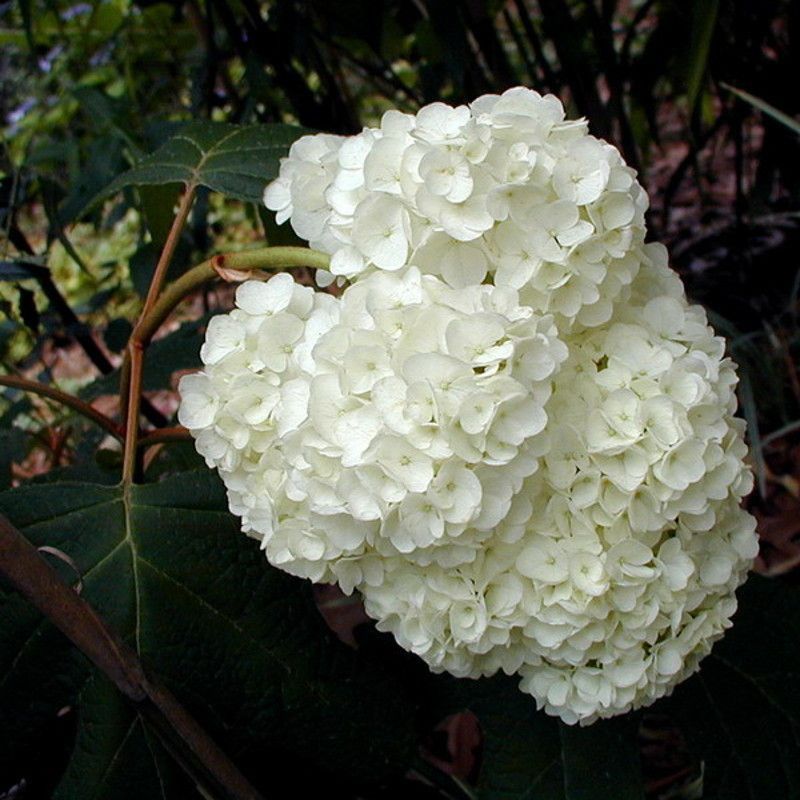
Big blooms need breathing room, and ‘Harmony’ oakleaf hydrangea makes that point very clearly once it reaches maturity. This cultivar is known for producing some of the largest flower clusters in the oakleaf family.
The blooms can be impressively large and heavy, which creates a bold visual statement in the right setting. In the wrong setting, those same heavy clusters can look weighed down or crowded.
Placing ‘Harmony’ in a spacious shaded border or a woodland garden area where it has room to spread gives the plant a chance to show what it can do.
A tight foundation bed or a narrow side yard will likely feel cramped once this shrub reaches its full potential.
Thinking ahead about mature size before planting saves a lot of corrective pruning later.
One practical note worth mentioning: the large, heavy flower heads on ‘Harmony’ can sometimes cause stems to bend or flop, especially after rain. This is a known characteristic of the cultivar rather than a sign of a problem with your plant.
Choosing a spot with some wind protection can help reduce the floppy appearance during the blooming season.
Soil preparation is especially worth the effort for this cultivar. Amending sandy soil with organic matter before planting improves moisture retention and gives the root system a better foundation.
Consistent mulching and regular watering during dry periods help keep the plant healthy through the hot months common across much of this state.
As with all oakleaf selections, afternoon shade is non-negotiable. Morning light with filtered afternoon protection gives ‘Harmony’ its best chance in local gardens.
6. ‘Ruby Slippers’ Gives Compact Size And Rich Color
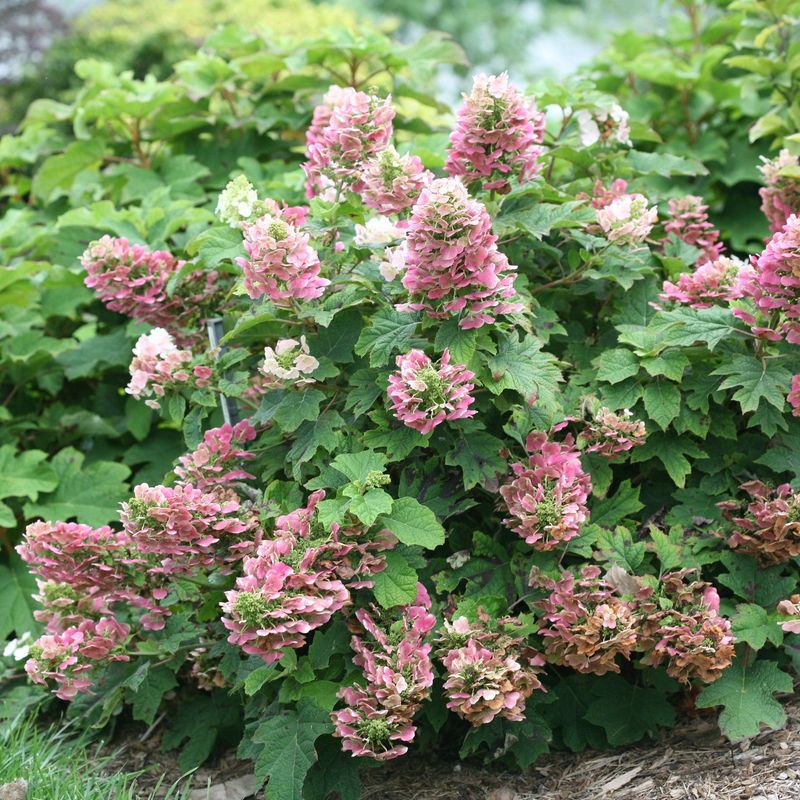
Compact color can be easier to place. ‘Ruby Slippers’ oakleaf hydrangea has become a popular choice for gardeners who want both a manageable size and a more colorful flower show.
This cultivar is known for blooms that open white and gradually deepen to pink and rosy tones as the season progresses.
The color shift can be quite appealing, especially in late summer when many other shrubs have already finished blooming.
‘Ruby Slippers’ was introduced by the U.S. National Arboretum and was developed from a cross between ‘Snow Queen’ and ‘Pee Wee.’ It tends to stay more compact than many full-sized oakleaf selections.
That makes it a reasonable fit for smaller shaded beds or spots where a medium-sized shrub is more appropriate than a large one.
Keep in mind that the depth of the pink and red tones can vary depending on the site, the season, local temperatures, and the amount of light the plant receives. Some gardeners report rich color, while others see lighter tones depending on conditions.
Avoiding exaggerated color expectations is wise, especially in warmer parts of this state where temperatures stay high longer into the fall season.
The care requirements for ‘Ruby Slippers’ follow the same pattern as other oakleaf cultivars. Afternoon shade, consistent moisture, organic mulch, and well-drained soil are all important.
Sandy soils benefit from added organic matter at planting time to improve moisture retention.
Northern regions of this state tend to offer better conditions for this cultivar than central or southern areas, where heat stays intense well into autumn.
7. Every Oakleaf Still Needs Shade And Steady Moisture
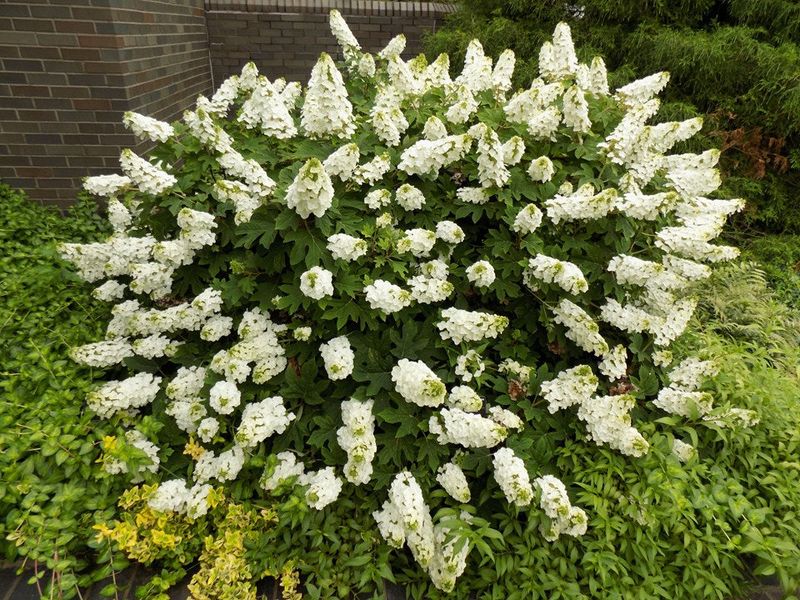
Even the best cultivar still has limits, and that honest reality is worth stating clearly before you plant any oakleaf hydrangea in this state.
Oakleaf hydrangea is the most practical hydrangea choice for local gardens, but it is not a heat-proof, drought-tolerant, full-sun shrub.
Every cultivar on this list depends on the same core conditions to stay healthy and bloom well.
Afternoon shade is the single most important factor. Morning sun is generally fine, but direct afternoon sun during summer can scorch leaves, stress the plant, and reduce flowering.
Spots on the east or north side of a structure, under tall trees with filtered light, or in a shaded garden bed away from reflected heat are usually the best choices.
Steady moisture is equally important. Oakleaf hydrangeas do not thrive in dry, neglected sandy soil.
Consistent watering during dry stretches, especially in the first two years after planting, helps the root system establish.
A two- to three-inch layer of organic mulch around the base of the plant, kept away from the stem, slows moisture loss and keeps soil temperatures more stable.
Good drainage matters just as much as moisture. Soggy, waterlogged soil can cause root problems over time.
The goal is soil that stays consistently moist but never stays wet for long periods after heavy rain.
Regional differences across this state are real. Northern areas generally offer cooler winters and somewhat milder summers, which tends to suit oakleaf hydrangeas better.
Central and southern regions bring more intense heat and humidity that can challenge even well-sited plants. Adjusting expectations based on your specific region helps avoid frustration and leads to a more realistic, rewarding garden experience.