Purple Berry Clusters On Bright Pink Stems Along Illinois Fences Look Tempting But Curious Pets Should Skip Them
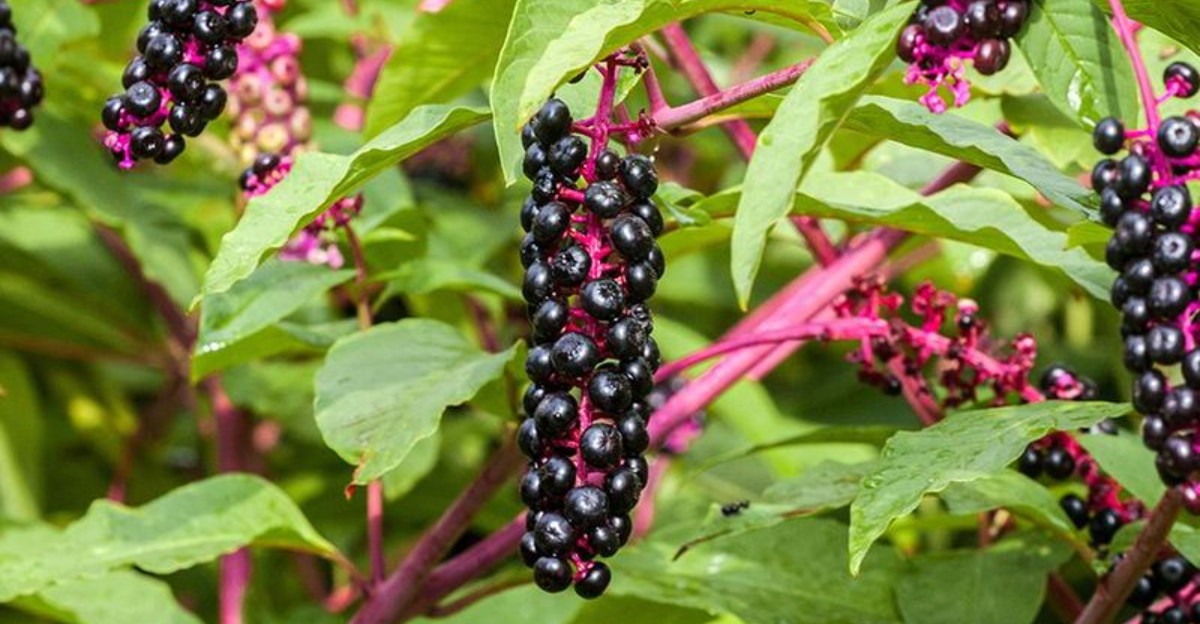
Songbirds can gulp down a whole cluster of these glossy purple berries and fly off just fine. Your dog cannot pull off the same trick.
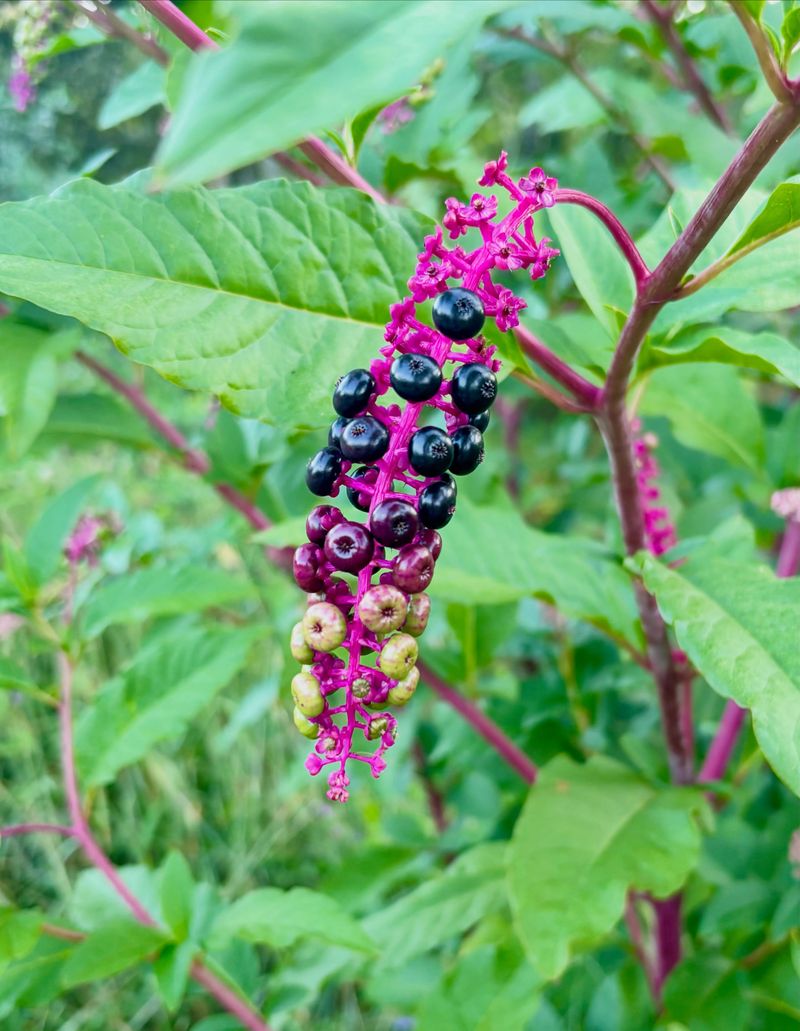
Last week I found a tall patch growing against my back fence in Illinois. The stems glowed hot pink, almost neon, and the berries hung down like tiny bunches of grapes. Squish one and your fingers turn a vivid magenta that early settlers once used as ink.
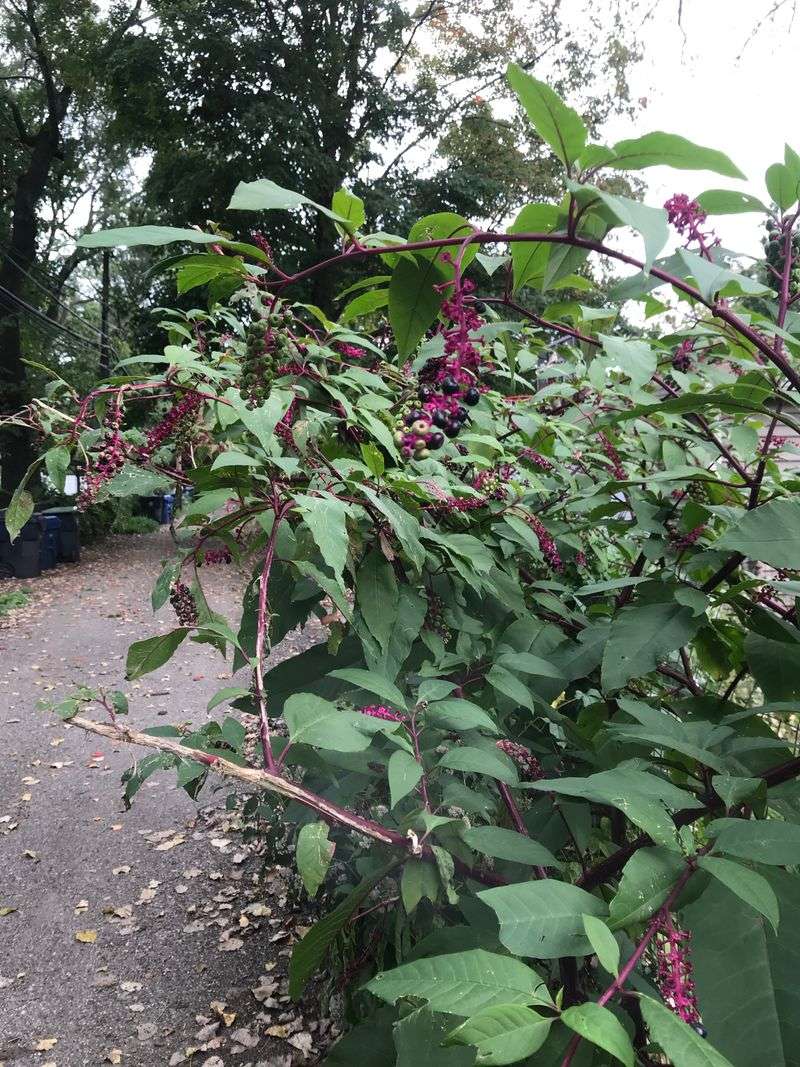
Across Illinois, the same plant shows up beside sheds, along alleys, and at the edge of cornfields. It seems to appear out of nowhere, often taller than you by late summer. My curious terrier noticed it first, nose twitching at the low branches.
This flashy fence-line visitor is pokeweed, and the birds’ favorite snack sits on nearly every vet’s list of plants to keep away from pets.
Those Glossy Purple Berries on Hot Pink Stems Have a Familiar Name
Old-timers in rural Illinois might call it poke, pokeberry, or inkberry. Botanists call it American pokeweed, or Phytolacca americana. It is a native perennial that comes back from a thick root every spring.
Spotting it gets easy once you know the signs. The plant often reaches 4 to 10 feet tall by late summer. Its smooth stems turn reddish purple to bright pink as the season moves along.
The leaves are large and oval, sometimes close to a foot long. Small white or pinkish flowers appear in long, narrow spikes from early summer onward.
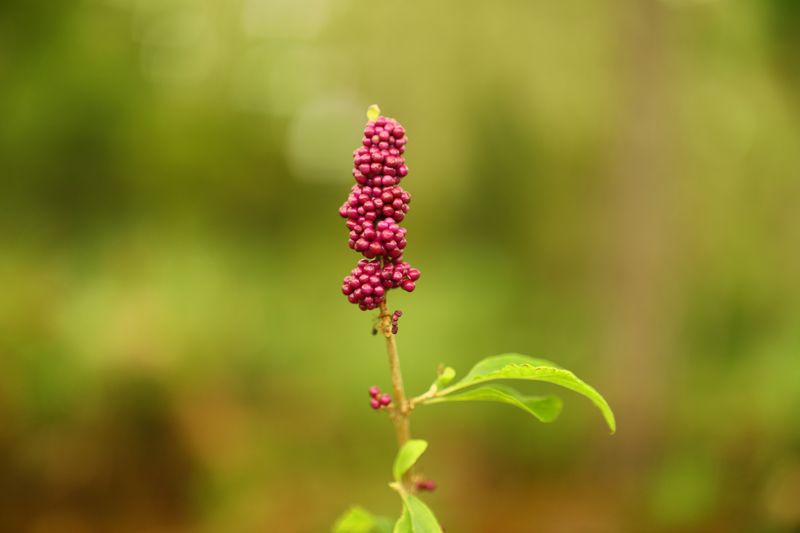
Those flowers slowly turn into green berries, then ripen to a deep purple-black from late summer into fall.
Each berry is about a quarter inch wide and looks slightly flattened, like a tiny pumpkin. The ripe fruit hangs in drooping clusters that bend the stems downward. Crush one, and a bright magenta juice stains whatever it touches.
Pokeweed sometimes gets confused with elderberry or wild grapes. Elderberry grows as a woody shrub with flat-topped fruit clusters.
Grapes climb with curly tendrils. Pokeweed has neither, and those candy-pink stems give it away nearly every time.
Every Part of the Pokeweed Plant Can Make Pets Sick
The ASPCA lists pokeweed as toxic to dogs, cats, and horses. The roots, stems, leaves, and berries all carry irritating compounds.
That includes saponins and oxalates that upset the gut. The root holds the highest concentration of these compounds. Mature leaves and stems come next.
The ripe berries are considered the least potent part, but they still pose real risk to pets, especially smaller ones. So why the extra worry about the berries? They are the part pets actually notice.
Low-hanging, juicy, and sweet-smelling clusters make a tempting target for a bored dog or a playful kitten swatting at things that dangle. Puppies are the biggest concern. They chew everything and swallow fast.
A young dog that pulls down a whole stalk might get berries, leaves, and stem in a single mouthful.
Cats tend to nibble less, but a curious indoor-outdoor cat can still sample a few. Pet rabbits, guinea pigs, and backyard chickens also deserve caution.
The safest rule is simple. Treat the whole plant as off-limits, keep pets away from it, and remove any stalks growing in spots where your animals spend time playing or resting.
Watch for These Tummy Troubles After a Dog Chews Pokeweed
My terrier once came inside with purple-tinted whiskers, and my heart sank. Luckily, a call to the vet sorted things out fast. Knowing what to watch for made that afternoon much calmer.
Symptoms usually show up within a few hours of eating pokeweed. Vomiting and diarrhea are the most common signs. Sometimes the stool or vomit contains blood, which needs prompt veterinary care.
Other clues include heavy drooling, stomach pain, and a pet that suddenly refuses food. Some animals seem weak, wobbly, or unusually sleepy. In severe cases, vets watch for low blood pressure, tremors, or breathing trouble.
Purple stains around the mouth or paws can tip you off. So can crushed berries or chewed stalks near the fence. Take a quick photo of the plant if you can.
Call your veterinarian right away if you suspect your pet ate any part of the plant. You can also contact the ASPCA Animal Poison Control Center at 888-426-4435 or the Pet Poison Helpline at 855-764-7661.
Fees may apply. Skip home remedies, and do not try to make your pet vomit unless a vet tells you to. Quick professional advice usually leads to the best outcome.
Fence Lines and Bird Perches Are Pokeweed’s Favorite Hangouts
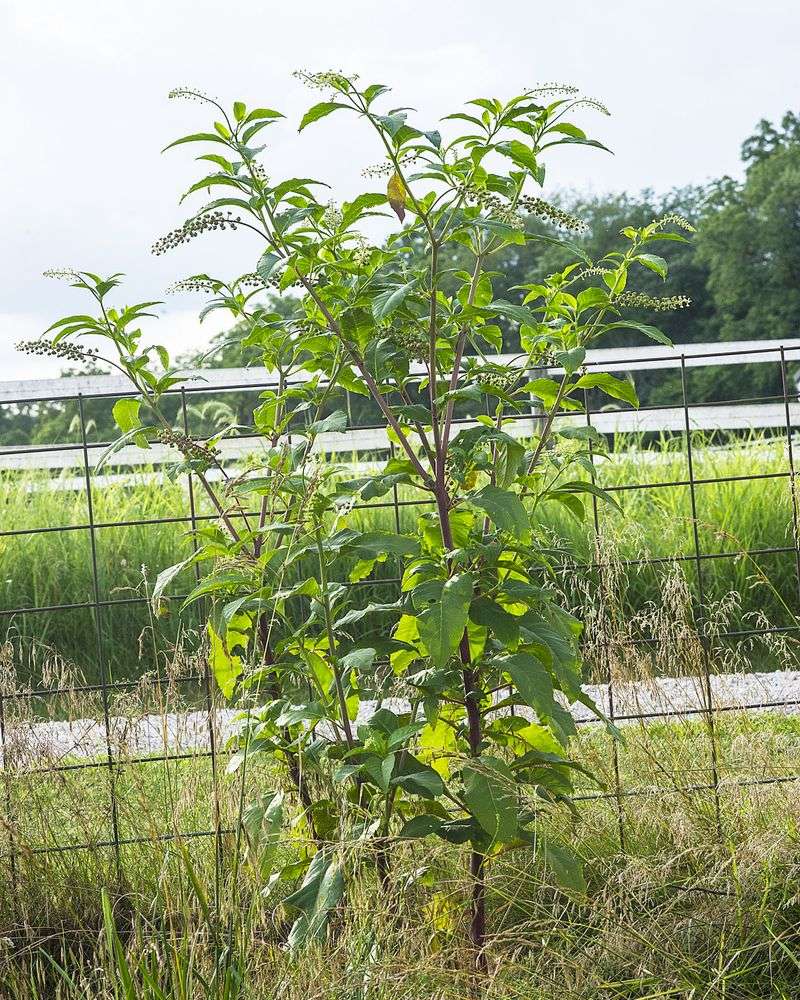
Ever wonder why pokeweed seems to sprout right along fences? Birds deserve the credit. They perch on fences, wires, and posts, and drop seeds from the berries they ate earlier.
Those seeds pass through unharmed and land in a perfect strip of undisturbed soil. Mowers rarely reach fence bottoms, so young plants grow undisturbed until they tower over the yard.
Across Illinois, pokeweed shows up in open woods, field edges, roadsides, vacant lots, and neglected garden corners. It loves disturbed soil and full sun to partial shade.
Recently dug beds and construction sites are common spots too. The seeds are tough little survivors. Experts note they can stay viable in soil for many years.
That explains why a plant appears in a spot where you never saw one before. Check these places in your own yard: Behind sheds and garages. Under bird feeders. Along chain link and wooden fences. Near brush piles and compost bins. Beneath trees where birds roost.
A quick walk each spring helps you catch seedlings early. Young pokeweed has smooth, bright green leaves and a reddish tinge at the stem base. Pulling it then is far easier than wrestling a six-foot plant later.
Pulling Pokeweed Roots Takes Gloves and a Sturdy Shovel
Grab your gloves before you grab the stem. The sap can irritate skin, and University of Illinois Extension and other sources advise wearing gloves when handling the plant.
Small seedlings pull out easily, especially after a good rain. Get as much root as possible, since leftover pieces can resprout.
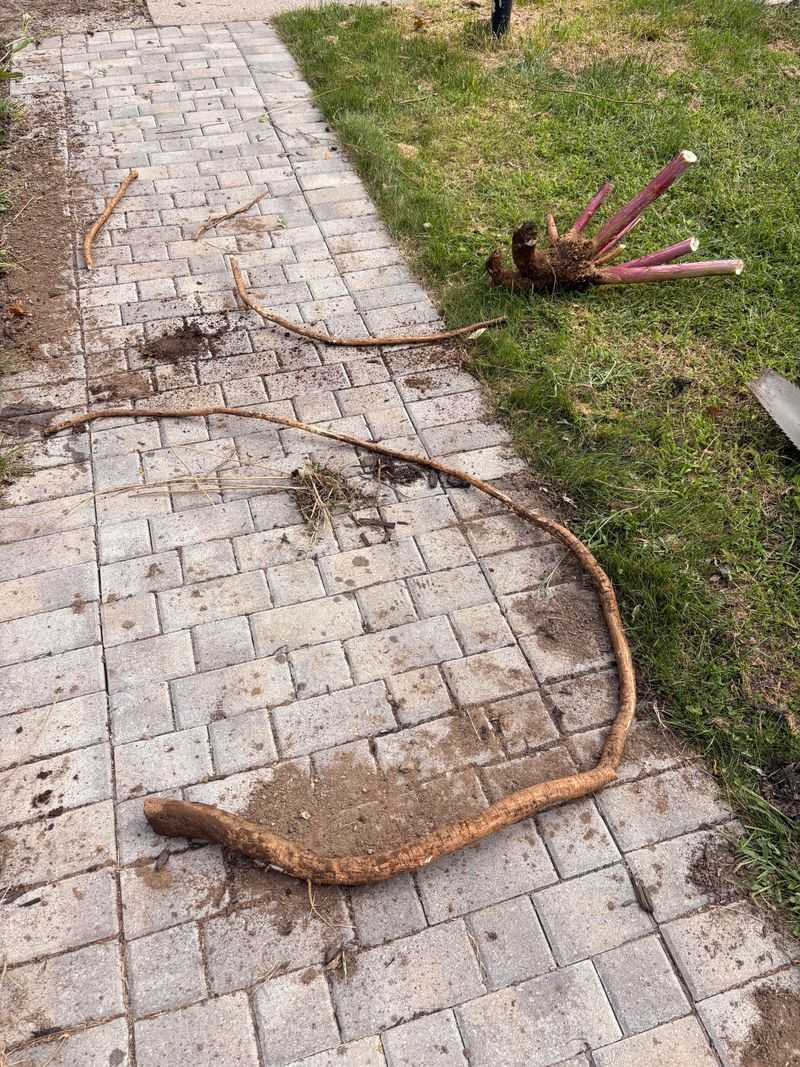
Bigger plants are a different story. Mature pokeweed grows a thick, white, carrot-like taproot that can be as big around as your wrist.
A sharp shovel or garden fork works best. Dig around the base and pry the root up. Can’t get the whole root? Cut the stalks to the ground repeatedly through the season. This drains the root’s stored energy over time.
Some gardeners spot-treat cut stems with an herbicide such as glyphosate. If you go that route, follow the label exactly and keep pets out of the area until it dries.
Timing matters too. Removing plants before berries ripen stops a new round of bird-spread seeds.
If berries are already present, bag the clusters and put them in the trash. Wash your tools and gloves afterward, and keep pets indoors while you work.
Cardinals and Catbirds Feast on Pokeberries Without a Problem
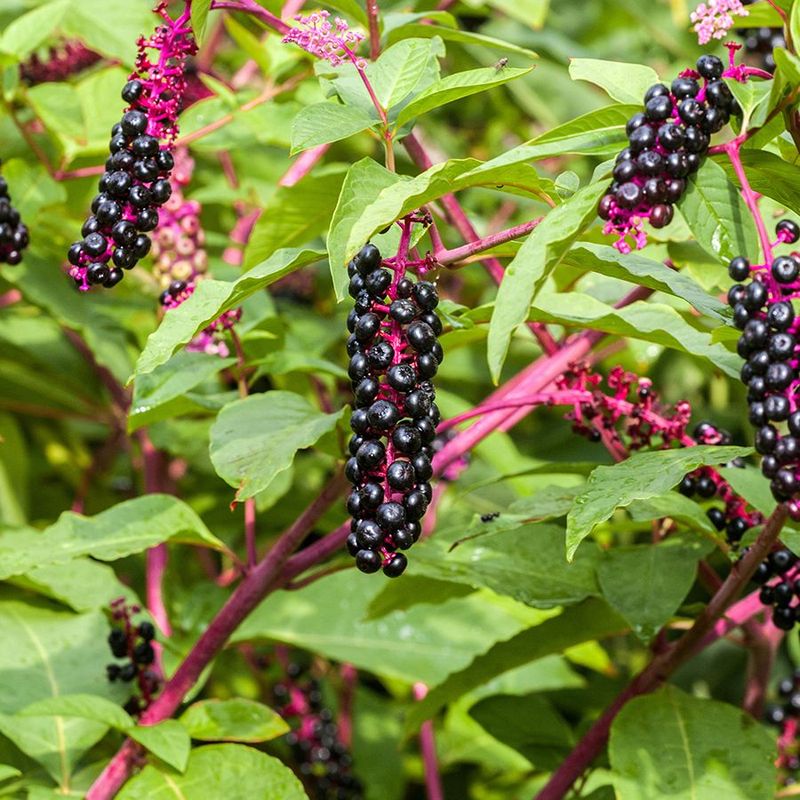
Here is a fun twist. The same berries that send dogs to the vet are a favorite fall snack for many songbirds.
Northern cardinals, gray catbirds, American robins, cedar waxwings, brown thrashers, and mourning doves all eat pokeberries. Birds handle the fruit differently than mammals do.
The seeds pass through quickly, and the birds carry on with their migration fuel. That is why pokeweed counts as a valuable native wildlife plant. Its flowers also attract bees and other pollinators during summer.
Some moths use it as a host plant too. Many Illinois naturalists happily leave pokeweed standing in wild areas and field edges. It feeds birds during a busy season and supports local wildlife.
So you face a choice, not a rule. If you have no pets, or the plant grows in a fenced-off wild corner, letting it stay can be a kind gesture to migrating birds.
Watching a flock of waxwings strip a cluster bare is pretty entertaining. They gobble berries with real enthusiasm.
Still, birds also spread seeds into nearby lawns and beds. Keep an eye out for new seedlings popping up where you would rather not have them.
Purple Juice Stains Tell a Story From Pioneer Ink to Poke Sallet
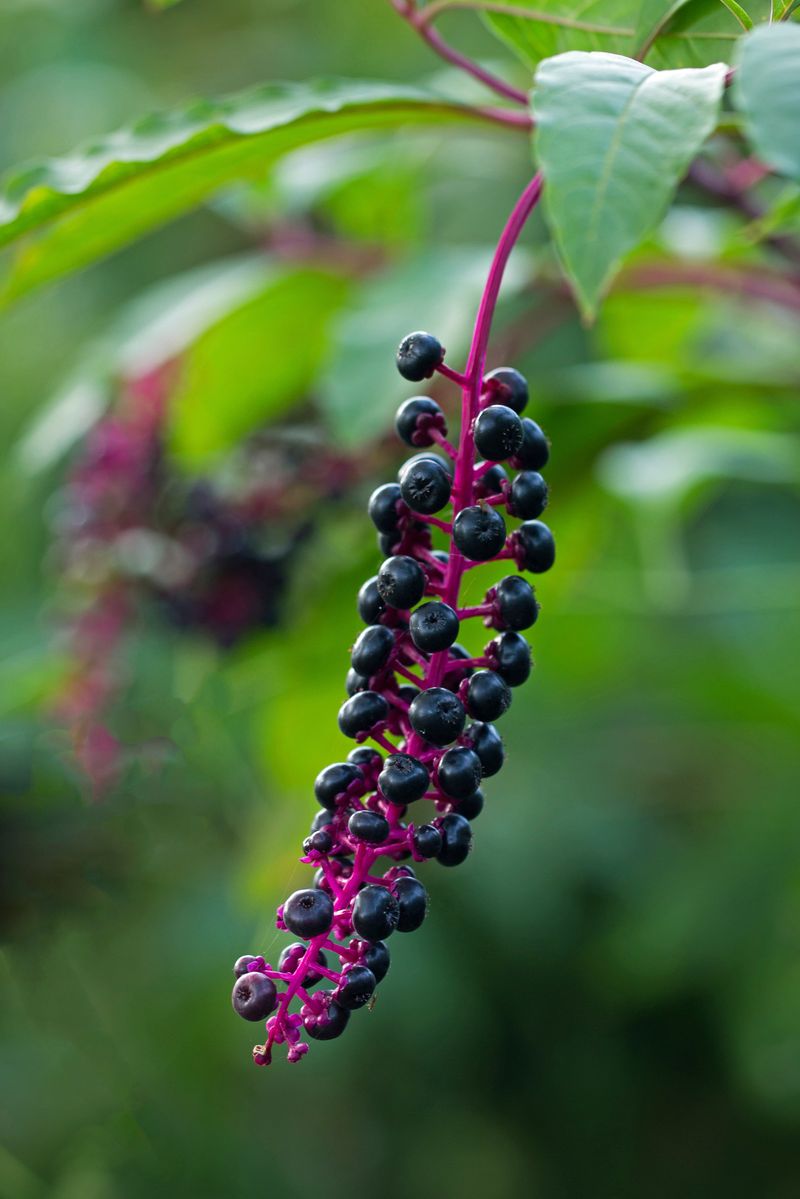
Did you know? Some historians say letters from the Civil War era were written in pokeberry ink. The juice made a cheap, handy dye, which explains the nickname inkberry.
Native American communities and early settlers also used the berries to color fabric and baskets. The bright stain fades over time, though, so it never became a lasting dye.
Then there is poke sallet. In parts of the South and lower Midwest, people traditionally picked very young spring shoots.
They boiled them several times, pouring off the water each round. Food safety experts strongly discourage this practice because mistakes can cause serious illness.
Kids sometimes squash the berries into play paint. Washing hands right away is wise, since the juice can irritate skin and children may put fingers in their mouths.
The plant has made headlines in science, too. Researchers have studied a protein from pokeweed called pokeweed antiviral protein for possible medical uses. That work happens in labs, not kitchens.
All this history makes pokeweed a great conversation starter on a backyard walk. Just let the stories be the souvenir, not the berries themselves.
A Quick Fence Walk Each Season Keeps Your Pets Safe From Pokeweed
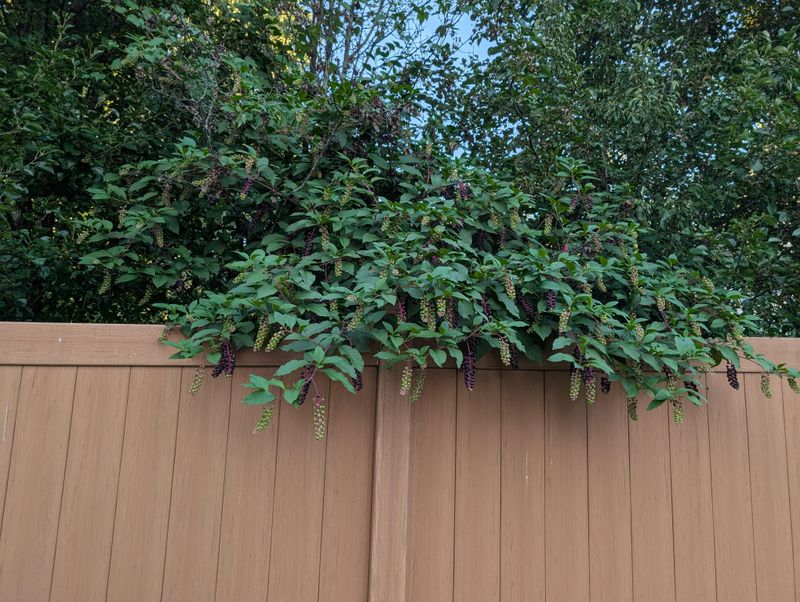
A five-minute stroll along the property line can save you an emergency vet bill. I now make it part of my routine every few weeks from spring through fall.
In Illinois, pokeweed sprouts in mid to late spring. Flowers appear in early summer, and berries ripen from about August into October. Those months deserve the closest look.
Walk the fence by yourself first to check for pokeweed, then walk it with your pet on a leash once the area is clear. Notice where your dog likes to sniff and dig. Those favorite spots are exactly where trouble can hide.
Teach a firm leave it command. It helps with pokeweed, mushrooms, dropped food, and plenty of other backyard surprises.
Save the poison control numbers in your phone. Snap photos of any unfamiliar plants and compare them with University of Illinois Extension resources or ask a local master gardener.
If you want to support birds, consider safer native fruiting shrubs such as serviceberry or gray dogwood in areas your pets cannot easily reach.
Pokeweed is a striking native with a real job in nature. With a little awareness, you can admire those pink stems from a distance while your four-legged friends stay happy and healthy.