Red Crape Myrtle Varieties That Stand Out In Florida Gardens
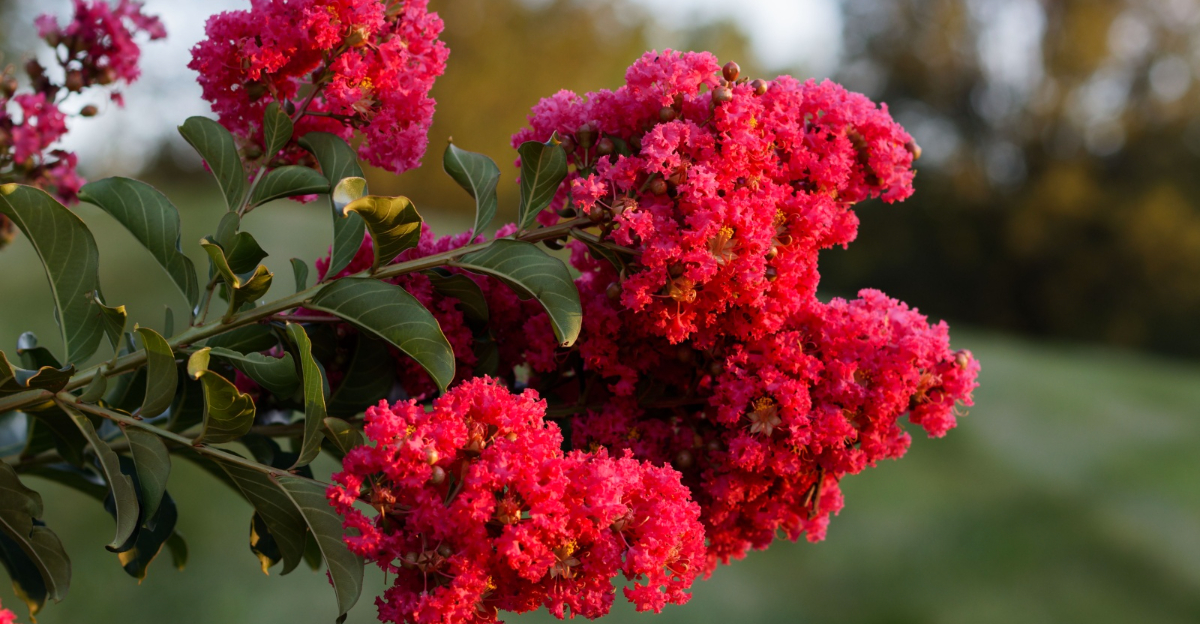
Red crape myrtles are hard to miss in Florida once summer arrives. Their bold red blooms light up streets, yards, and neighborhood corners right when the heat starts to build.
In a climate known for long, humid summers, these trees and shrubs have become a go-to for dependable color that lasts well into fall. Still, not every variety performs the same.
Florida’s conditions can highlight differences in size, growth habit, and disease resistance. Some stay compact and fit neatly into smaller yards, while others grow into tall, statement trees.
Choosing the right red crape myrtle can make a noticeable difference in how it looks and holds up through the season.
1. Petite Red Imp Brings Bright Red Blooms To Small Florida Spaces
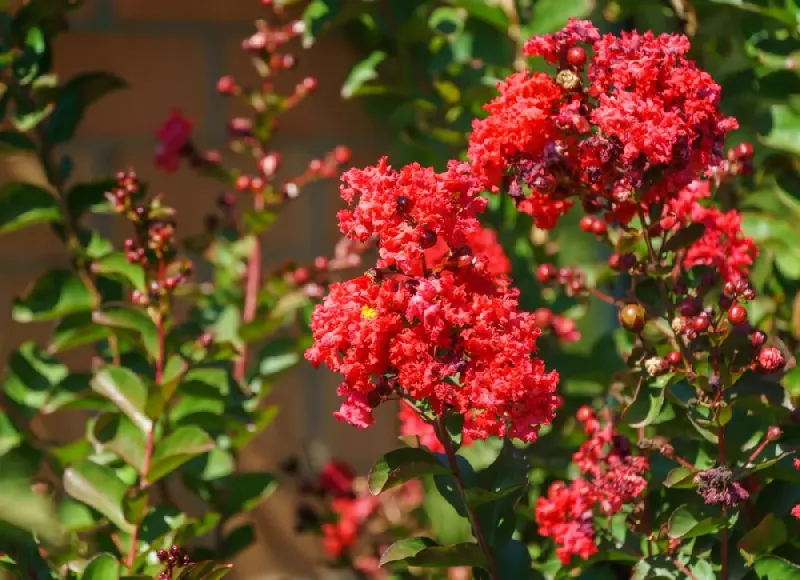
Gardeners working with tight spaces in Florida neighborhoods often struggle to find flowering shrubs that deliver real visual impact without outgrowing their spot. Petite Red Imp solves that problem beautifully.
This dwarf variety typically reaches just two to three feet tall, making it one of the smallest red crape myrtles available for Florida landscapes.
Its bright red blooms appear in summer and continue well into fall, giving small beds and borders a long season of color.
Because of its compact size, it works especially well along walkways, in container plantings on patios, or grouped together as a low flowering hedge near entryways.
In Florida’s sandy or clay-heavy soils, Petite Red Imp does best with well-draining conditions and full sun exposure of at least six hours daily.
Spacing plants about two to three feet apart encourages good airflow, which helps reduce moisture buildup around foliage and lowers the risk of powdery mildew.
Light pruning after each bloom cycle can encourage fresh flower clusters.
This variety is a strong choice for Florida homeowners who want big red color from a plant that stays well within its boundaries without constant trimming or management.
2. Tightwad Red Forms A Dense Shrub With True Red Flowers
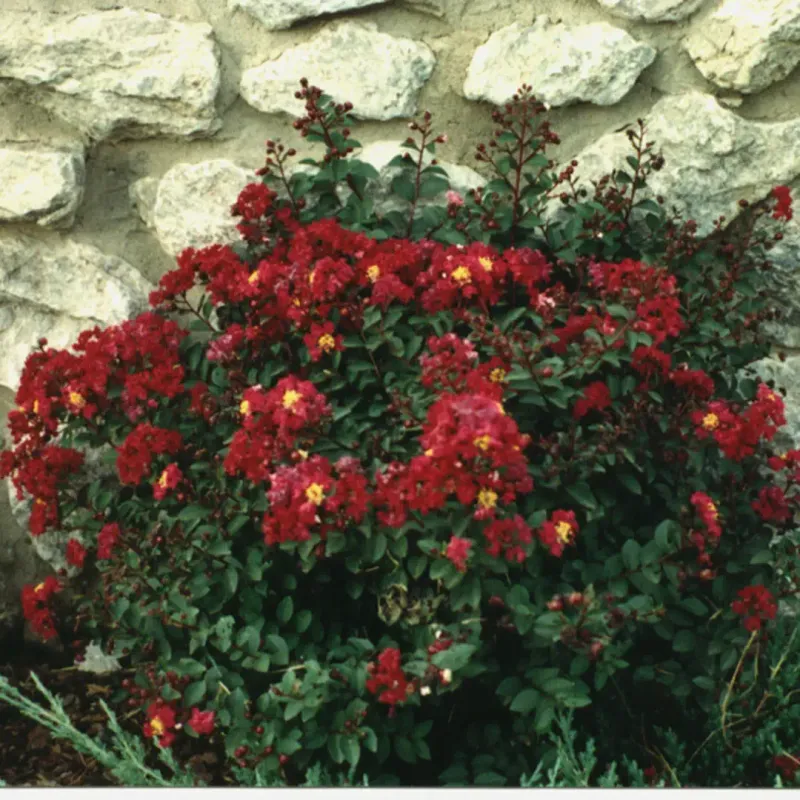
Some crape myrtles marketed as red actually bloom in shades closer to pink or magenta, which can be frustrating after you have already planted them.
Tightwad Red stands apart because it produces flowers that read as genuinely red, not a muddled in-between shade.
That true red color is one of the main reasons Florida gardeners keep coming back to this variety.
Tightwad Red grows as a dense, rounded shrub reaching roughly three to four feet in height and spread.
Its compact, tidy form makes it easy to place near foundations, in mixed shrub borders, or along fence lines without worrying that it will crowd neighboring plants.
The dense branching habit also gives it a fuller, more lush appearance compared to some other dwarf types.
In Florida’s warm climate, this variety responds well to full sun and consistent moisture during the establishment period. Once roots are settled in, it handles dry spells reasonably well.
Good soil drainage matters, especially during Florida’s rainy summer months when standing water can stress roots. Removing spent flower clusters occasionally through the blooming season may encourage additional flushes of color.
Tightwad Red is a reliable, low-maintenance option for Florida gardeners wanting a compact red bloomer with a clean, structured look.
3. Victor Fits Narrow Spaces With Bold Red Color
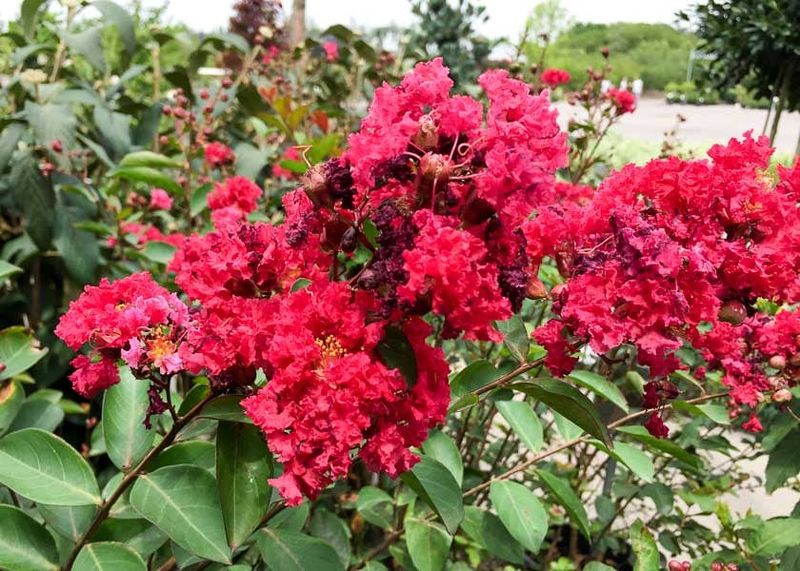
Narrow side yards, slim planting strips along driveways, and tight spots between structures are some of the most challenging areas to plant in Florida landscapes. Victor is a dwarf crape myrtle variety that was practically made for those situations.
Growing just three to four feet tall with a relatively upright, contained habit, it delivers bold red color without spreading into unwanted areas.
The blooms appear in summer and hold their color well through the heat of a Florida season.
Victor’s deep red flower clusters are eye-catching even from a distance, making it a smart choice for adding curb appeal to narrow beds near mailboxes, utility areas, or along narrow fence lines where larger plants simply would not fit.
Full sun is important for Victor to bloom at its best. In shadier spots, flower production tends to drop and the plant becomes more susceptible to fungal issues.
Florida gardeners should plant Victor in well-drained soil and avoid overhead watering, which can encourage powdery mildew on the foliage.
Mulching around the base helps retain moisture and regulate soil temperature during Florida’s hotter months.
This variety requires minimal pruning to maintain its shape, making it a practical and attractive solution for challenging landscape spots throughout Florida.
4. Cheyenne Offers Bright Red Blooms With Strong Disease Resistance
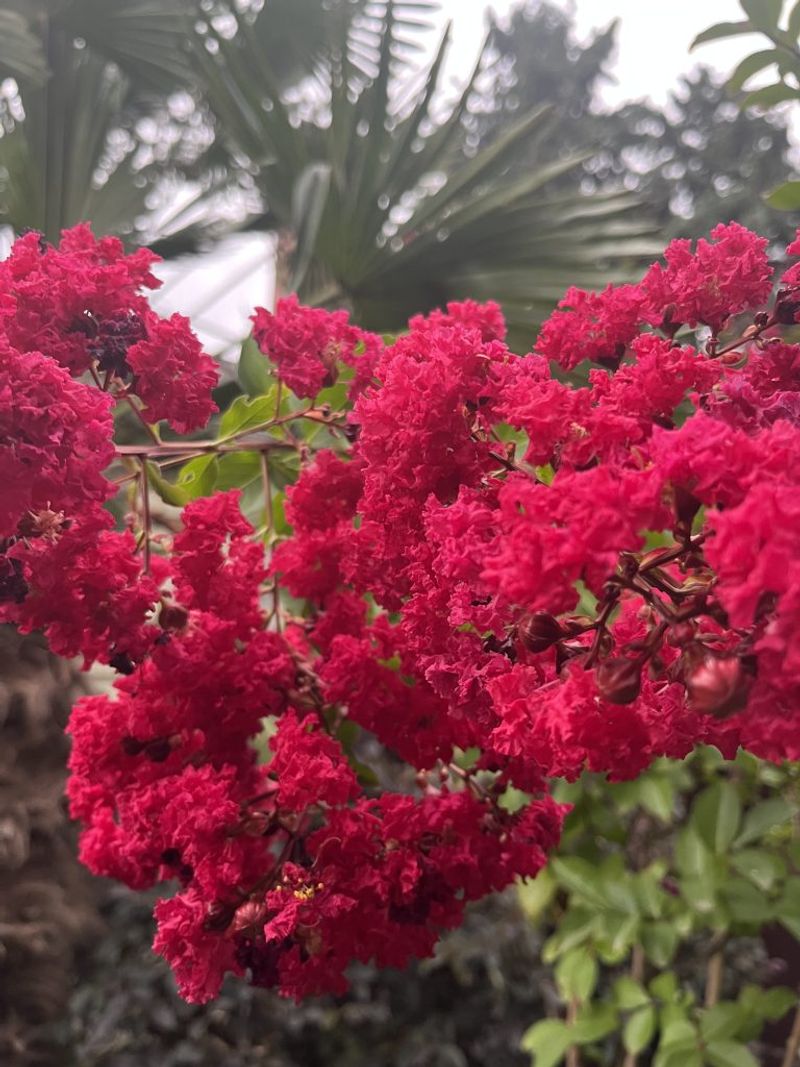
Florida’s summer humidity creates ideal conditions for powdery mildew, a fungal issue that plagues many crape myrtle varieties and leaves foliage looking dusty and unhealthy.
Cheyenne was developed with that challenge in mind, and its improved disease resistance makes it a standout choice for Florida gardeners who want low-maintenance beauty without constant fungal management.
This variety produces bright red blooms that emerge in summer and continue through fall.
Cheyenne typically grows to around eight to ten feet tall, placing it in the mid-sized range that works well as a specimen plant, a privacy screen, or a colorful backdrop in mixed landscape beds.
Its upright growth habit keeps the canopy fairly tidy without aggressive pruning.
Planting Cheyenne in full sun with adequate spacing between plants is one of the most effective ways to support its disease resistance.
Good airflow around the canopy reduces moisture buildup on leaves, which is especially important during Florida’s wet season.
Well-draining soil helps prevent root stress during heavy summer rains. Light pruning to remove crossing branches improves air circulation further.
Cheyenne is a solid performer across many Florida growing regions, and its combination of true red color and reliable health makes it one of the more practical choices in the mid-sized red crape myrtle category.
5. Christiana Blooms Early With Deep Red Flower Clusters
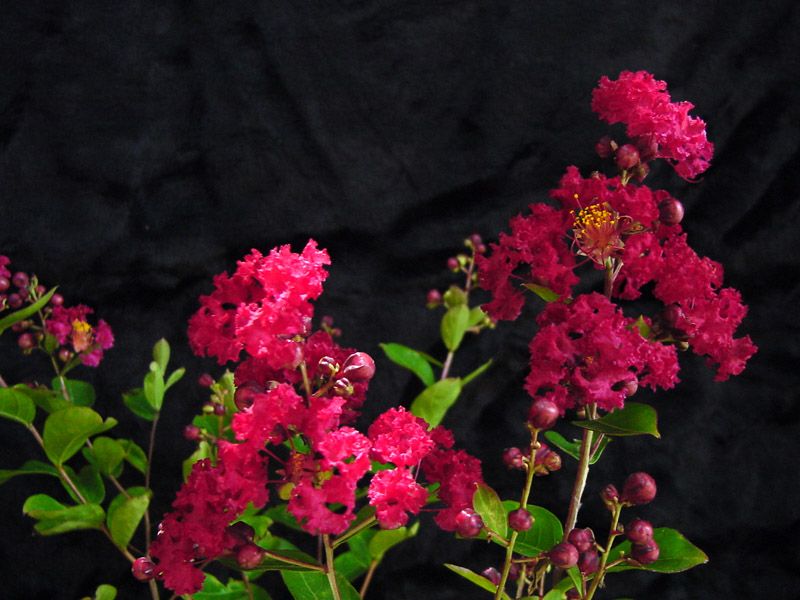
Most crape myrtles in Florida begin their bloom cycle in early to mid-summer, but Christiana has a reputation for getting started a bit earlier than many of its relatives.
For gardeners who want color in the landscape as soon as the warm season kicks off, that early bloom time is a real advantage.
The deep red flower clusters are rich and full, creating a striking display that draws attention from the moment buds open.
Christiana grows as a compact to mid-sized shrub, generally reaching around four to six feet in height depending on growing conditions.
Its manageable size suits it well for foundation plantings, mixed shrub borders, or as a standalone specimen in smaller Florida yards.
The deep red color holds up well even during the most intense summer heat Florida delivers.
Like most crape myrtles, Christiana performs best in full sun with well-draining soil. In Florida’s heavier clay soils, amending the planting area with organic material can improve drainage and root development.
Consistent watering during the first growing season helps the plant establish a strong root system. After that, Christiana handles Florida’s dry spells with reasonable resilience.
Removing spent blooms can extend the flowering season and keep the plant looking tidy throughout the summer months.
6. Siren Red Adds Rich Color On A Compact, Manageable Plant
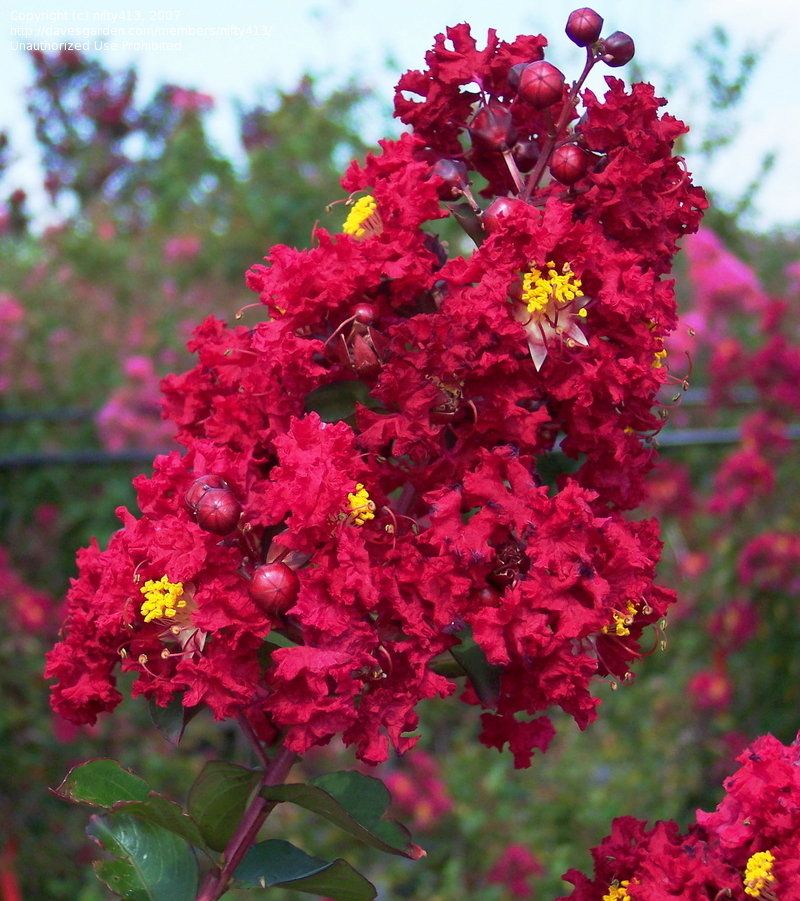
Walk through almost any Florida garden center in spring and you will likely spot Siren Red among the crape myrtle selections.
It has earned its place on nursery shelves through consistent performance and a rich red bloom color that looks polished in both formal and casual landscape styles.
The flowers carry a depth of color that stands out against Florida’s green summer foliage.
Siren Red grows as a compact shrub, typically reaching around three to five feet in height and spread. That size range makes it versatile enough for container gardening on patios, low border plantings, or grouped arrangements in landscape beds.
Because it stays relatively contained, it rarely requires heavy pruning to keep it looking proportional in smaller Florida outdoor spaces.
Full sun exposure brings out the best bloom production in Siren Red. In partially shaded spots, flowering becomes noticeably reduced and the plant may stretch toward available light, losing its naturally compact shape.
Florida gardeners should plant it in well-draining soil and apply a two-to-three inch layer of mulch to help regulate soil moisture during dry stretches. Avoiding overhead irrigation reduces leaf wetness and the risk of fungal problems.
Siren Red is a dependable, attractive option for Florida gardeners looking for rich red color in a plant that fits neatly into a well-organized landscape without constant upkeep.
7. Tonto Produces Reliable Red Blooms On A Rounded Shrub
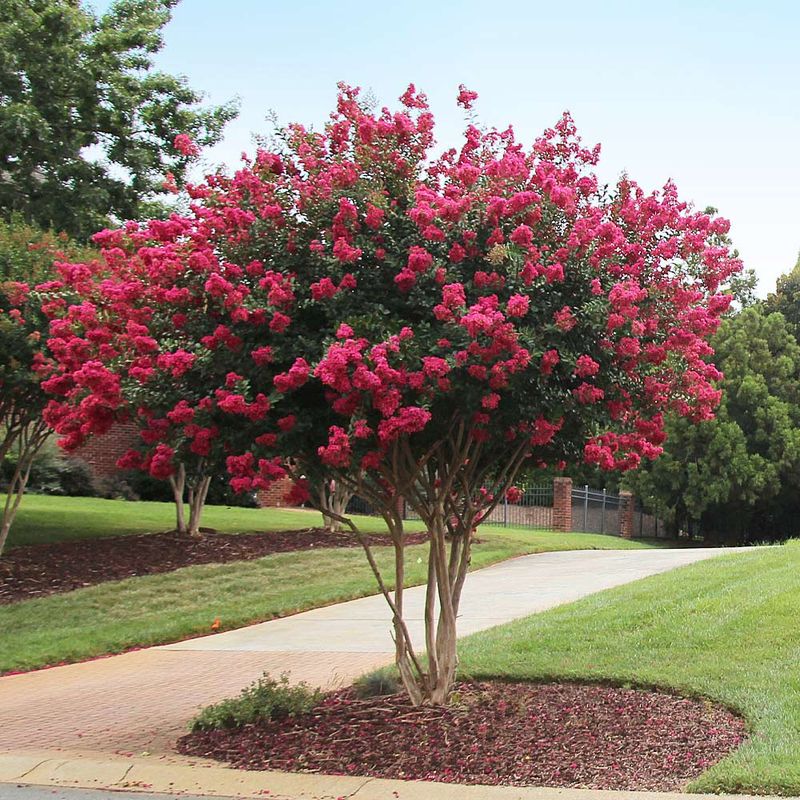
Reliability matters in Florida gardening, where summer heat, heavy rain, and humidity can push plants to their limits.
Tonto has built a strong reputation as one of the most dependable red crape myrtles available for Florida landscapes, delivering consistent bloom performance year after year with minimal fuss.
Its fuchsia-red flowers are bold and plentiful, covering the plant throughout summer and into early fall.
Tonto typically grows eight to twelve feet tall with a naturally rounded, well-balanced form. That shape makes it an attractive standalone specimen or a natural-looking privacy screen when planted in a row.
Its rounded habit requires less corrective pruning than more irregular growers, which is a practical benefit for homeowners who prefer low-maintenance landscaping in Florida.
This variety has shown good resistance to powdery mildew, which is a meaningful advantage given Florida’s humid conditions. Planting in full sun with room for air to move freely around the canopy supports that natural disease resistance.
Tonto adapts to a range of Florida soil types but performs best when drainage is adequate. Fertilizing lightly in early spring with a slow-release balanced fertilizer can support healthy growth and strong bloom production.
Tonto is a well-rounded choice that suits many different Florida landscape settings from suburban yards to larger property plantings.
8. Arapaho Delivers Classic Red Flowers On A Strong Tree Form
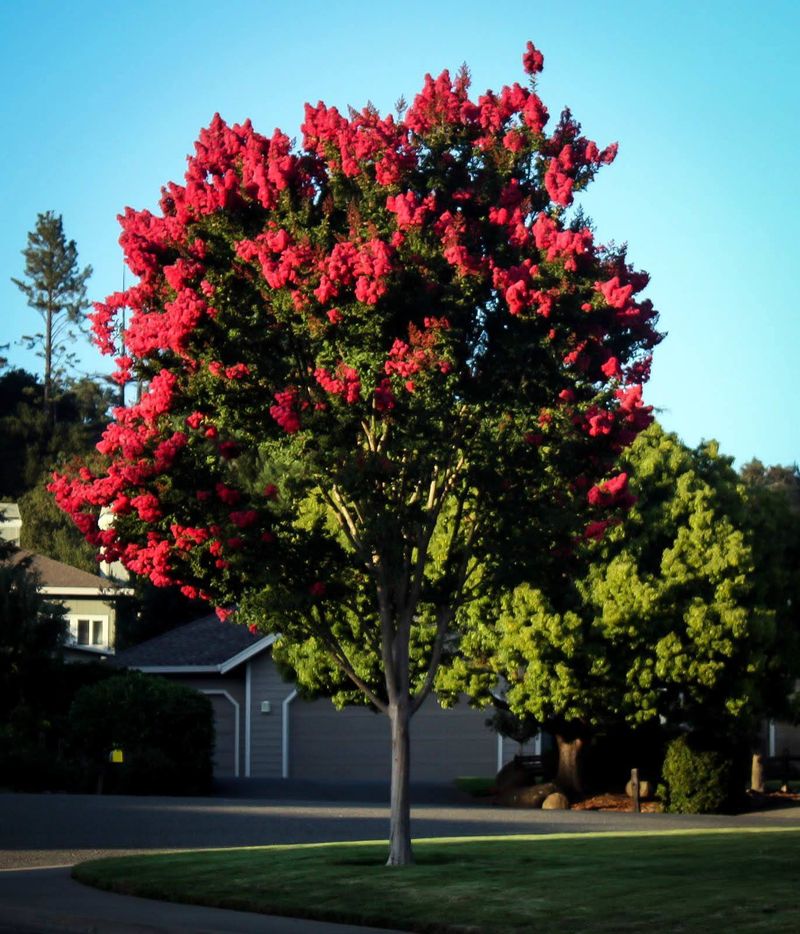
Some crape myrtles grow as shrubs, but Arapaho develops into a true multi-trunk tree form that gives Florida landscapes a strong vertical presence.
It typically reaches fifteen to twenty feet tall, making it a natural candidate for use as a shade tree, a focal point in larger yards, or a street-side planting where height and structure are both desirable.
The flowers are a classic red that reads cleanly and brightly without veering into pink or coral territory. Blooms appear in early summer and continue through fall, giving the tree months of color.
Beyond the flowers, Arapaho offers attractive peeling bark that adds visual interest during the winter months when the tree is dormant in cooler parts of Florida.
Arapaho was developed with disease resistance in mind, and it holds up well against powdery mildew even in Florida’s humid summer conditions. Planting in a full-sun location with plenty of room for the canopy to expand produces the best results.
Florida gardeners should avoid planting Arapaho too close to structures or utility lines given its mature height. Little pruning is needed beyond cutting out damaged or crossing branches to keep the tree looking its best.
Arapaho is one of the stronger choices when a tall, tree-form red crape myrtle is what a Florida landscape calls for.
9. Centennial Spirit Grows Tall With Deep Red Summer Blooms
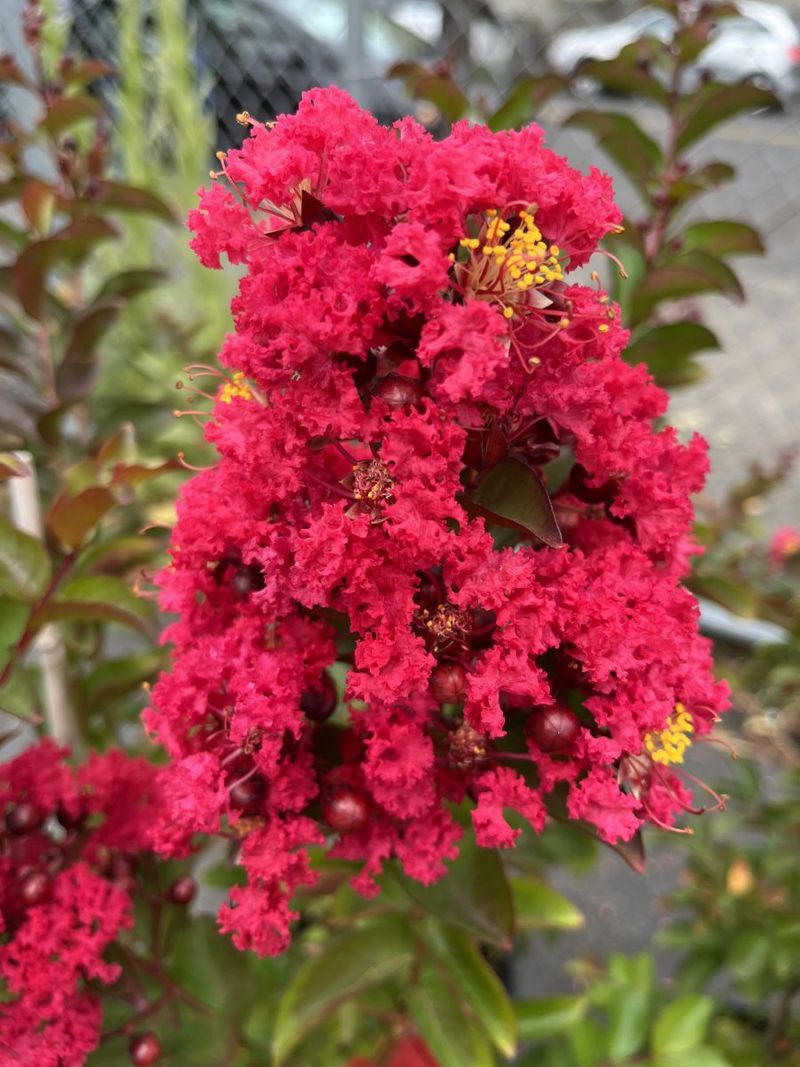
Tall, narrow landscapes sometimes need a flowering tree that grows up rather than out, and Centennial Spirit fills that role well in Florida gardens.
This variety develops a stiffly upright form, reaching fifteen to twenty feet or more in height while staying relatively narrow in spread.
That vertical silhouette suits it for planting near buildings, along property boundaries, or as a dramatic backdrop in larger landscape compositions.
The blooms are a deep, rich red that carries real intensity through Florida’s summer heat. Centennial Spirit typically begins flowering in midsummer and continues producing new bloom clusters through early fall.
The dark red color creates a striking contrast against the plant’s green foliage, and the tall panicles are visible from a considerable distance, adding impact to the surrounding landscape.
Centennial Spirit has performed well in terms of mildew resistance, which helps it stay looking healthy through Florida’s wet season. Full sun is important for this variety to achieve its characteristic upright form and strong bloom production.
Florida gardeners planting Centennial Spirit should allow adequate spacing from neighboring trees and structures to give the canopy room to develop naturally. Light fertilization in spring supports vigorous growth.
This is a reliable tall red crape myrtle that brings structure and color to larger Florida properties throughout the summer season.
10. Dynamite Stands Out With Vivid Red Flowers And Upright Growth
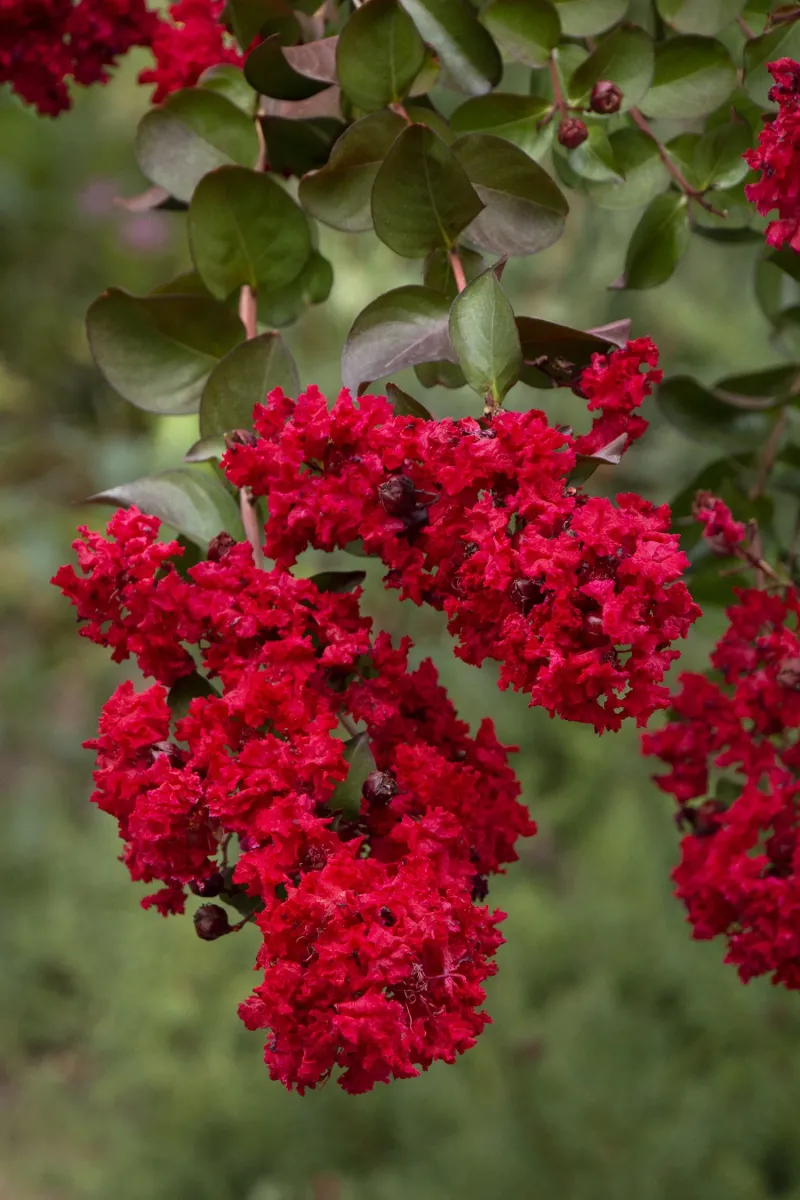
Introduced in 1997, Dynamite quickly became one of the most recognized red crape myrtles across the Southeast, and Florida gardeners have embraced it enthusiastically ever since.
The name fits well – this variety produces flower clusters in a vivid, unmistakable true red that looks bold and bright even on the hottest Florida summer days.
Few red crape myrtles match the intensity of color that Dynamite puts on display.
Dynamite grows ten to twenty feet tall with an upright, spreading canopy. That size range suits it for use as a large specimen tree, a shade planting near patios, or a colorful anchor in wide open landscape areas.
The upright growth habit keeps the canopy elevated, which is practical for planting near walkways or outdoor seating areas where clearance matters.
In Florida landscapes, Dynamite thrives in full sun and tolerates the heat and humidity that challenge many other flowering trees. It shows solid resistance to common crape myrtle diseases, making it a manageable plant for Florida homeowners.
Avoid heavy pruning, often called crape murder in gardening circles, as it disrupts the natural form and reduces bloom quality over time.
Light shaping after the bloom season is generally enough to keep Dynamite looking structured and attractive throughout the year in Florida gardens.
11. Red Rocket Produces Large Cherry-Red Clusters On A Tall Tree
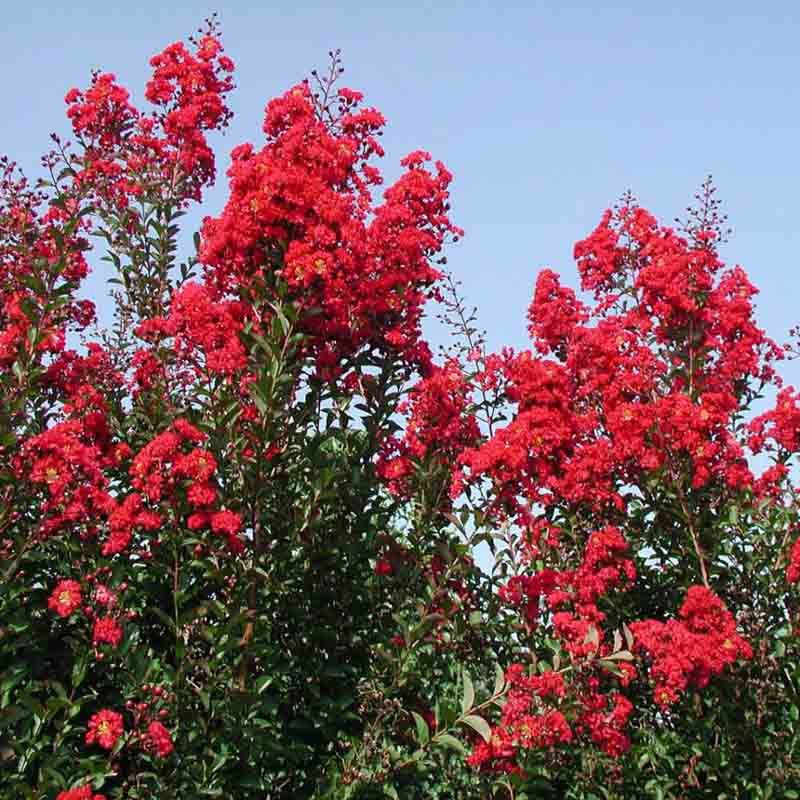
Red Rocket has earned considerable attention from Florida gardeners and landscape professionals for a straightforward reason – its flower clusters are impressively large and a distinctive cherry-red shade that stands out in almost any setting.
The blooms are generous in size and number, creating a full, lush floral display that continues from early summer well into fall across Florida’s long warm season.
This variety grows ten to twelve feet tall with an upright-rounded canopy, giving it a well-balanced tree form that suits a wide range of Florida landscape applications.
Red Rocket works well as a focal point in large beds, a street tree in residential neighborhoods, or planted in groups along property edges for a bold seasonal color display.
The canopy fills in nicely without becoming too wide or unruly.
Red Rocket shows good resistance to powdery mildew and other common crape myrtle diseases, which matters in Florida’s humid climate. Planting in full sun with well-draining soil gives this variety the best chance to perform at its potential.
Florida gardeners should water regularly during the first growing season to support root establishment, then reduce irrigation frequency as the plant matures. Minimal pruning helps maintain the natural upright-rounded form.
Red Rocket is one of the most reliable tall red crape myrtles available for Florida landscapes today.