Screech Owls May Become Easier To Spot Around Georgia Yards This Fall
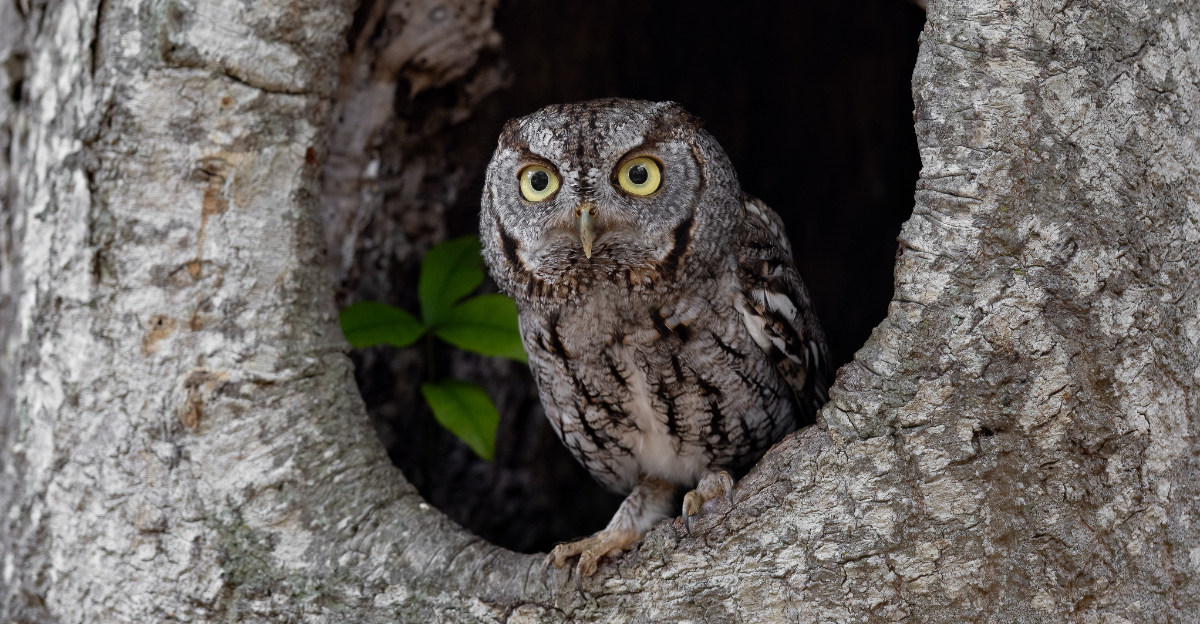
Screech owls can spend months near your yard without drawing much attention, but fall can make their presence easier to notice. Knowing what to watch for gives you a better chance of catching one nearby.
That does not necessarily mean more owls have suddenly moved into the neighborhood.
Seasonal changes can affect their activity and make familiar birds stand out in ways they did not during summer. Around Georgia yards, cooler evenings can also make spending time outside more comfortable for anyone watching.
Once you start paying attention, subtle clues can lead your eyes in the right direction.
Listen carefully after sunset, then check quiet tree cover where these small owls can easily blend into their surroundings. Patience matters more than searching constantly.
This fall, a nearby screech owl might finally become easier to notice.
1. That Small Owl In Your Yard May Be Easier To Notice This Fall
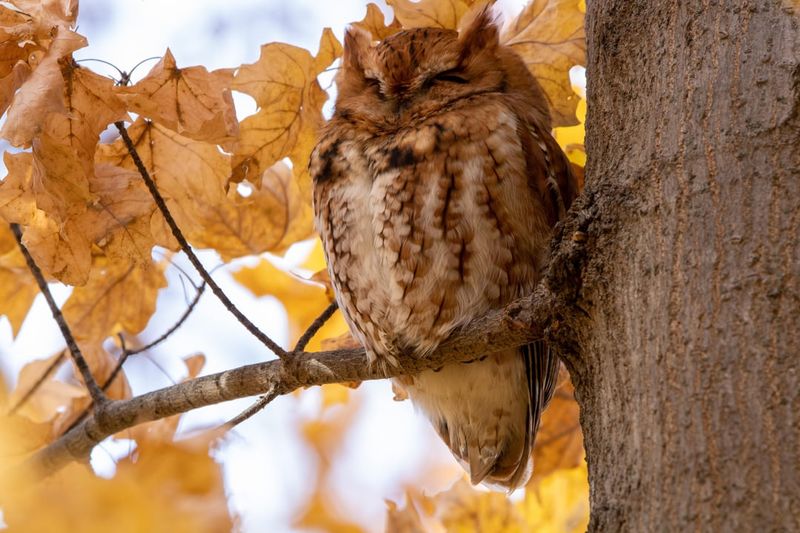
Bare branches change everything. Once summer foliage drops, a bird that was invisible in June suddenly sits in plain view.
Eastern screech owls do not migrate, so the owl you notice in November was likely nearby all along. Cooler air also pushes people outside at dusk, right when these owls start moving.
Daylight hours shrink through fall, which matters more than most folks expect.
Sunset arrives earlier, so owls become active while you are still awake and outdoors. That overlap alone explains a lot of autumn sightings across Georgia neighborhoods.
Size works against you, though.
Screech owls stand roughly six to ten inches tall and their feathers mimic bark almost exactly. Gray morphs vanish against oak trunks, while rusty red morphs blend into pine bark and fallen leaves.
Look for shape rather than color.
A short, upright lump with ear tufts at the top of a limb usually stands out once you train your eye. Songbirds can help too, since chickadees and titmice often scold loudly when they find a roosting owl.
Follow that racket when you hear it.
Mobbing birds cluster around one spot and refuse to leave, which points you straight to the owl. Results vary by yard, and some seasons simply produce more sightings than others.
Patience beats searching hard.
2. Screech Owls Stay In Georgia Throughout The Year
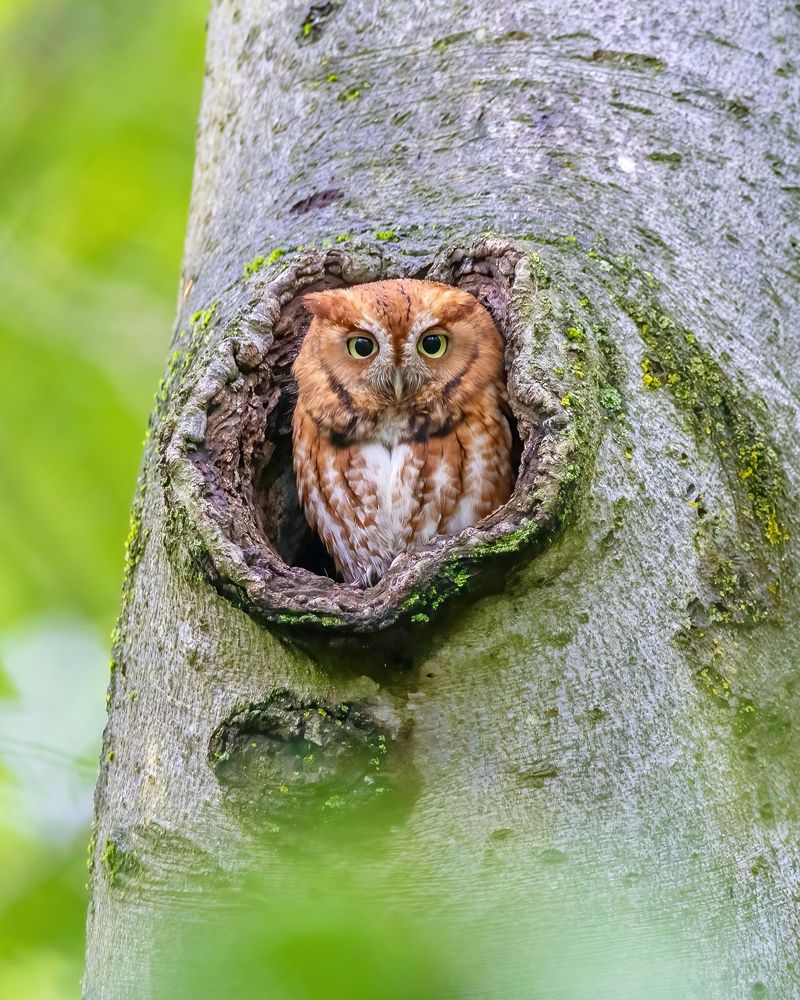
No suitcases, no long flights. Eastern screech owls are permanent residents across most of the Southeast, and that includes nearly every county in this state.
Their year-round presence means fall is not an arrival season. It is simply a season when they get easier to detect.
Territories tend to stay small.
A pair may use the same few acres for years, hunting the same hedgerows and returning to familiar cavities. That loyalty is good news for backyard watchers, since one confirmed sighting often leads to more.
Diet keeps them anchored in one place.
Insects, mice, small birds, earthworms, and frogs all show up on the menu, and Georgia yards supply plenty of each. When cold snaps reduce insect activity, they lean harder on rodents and small birds.
Pair bonds usually hold through winter.
Your Georgia Garden Changes Every Week. Your Plan Should Too.
Gardening in Georgia changes quickly throughout the season. Every Friday you’ll receive a simple weekly plan showing exactly what to plant, prune, fertilize, harvest, and protect so you never miss the right timing.
Courtship calling picks up in late winter, but both birds often roost near each other well before that. You might hear two owls trading soft trills on a still night in October or November.
Weather affects activity more than season does.
Windy or rainy nights tend to be quiet, while calm, cool nights bring more calling. Expect variation, because individual owls behave differently and no yard follows a script.
Consistency over weeks reveals far more than one lucky evening ever will.
3. Mature Trees Give These Small Owls Places To Roost
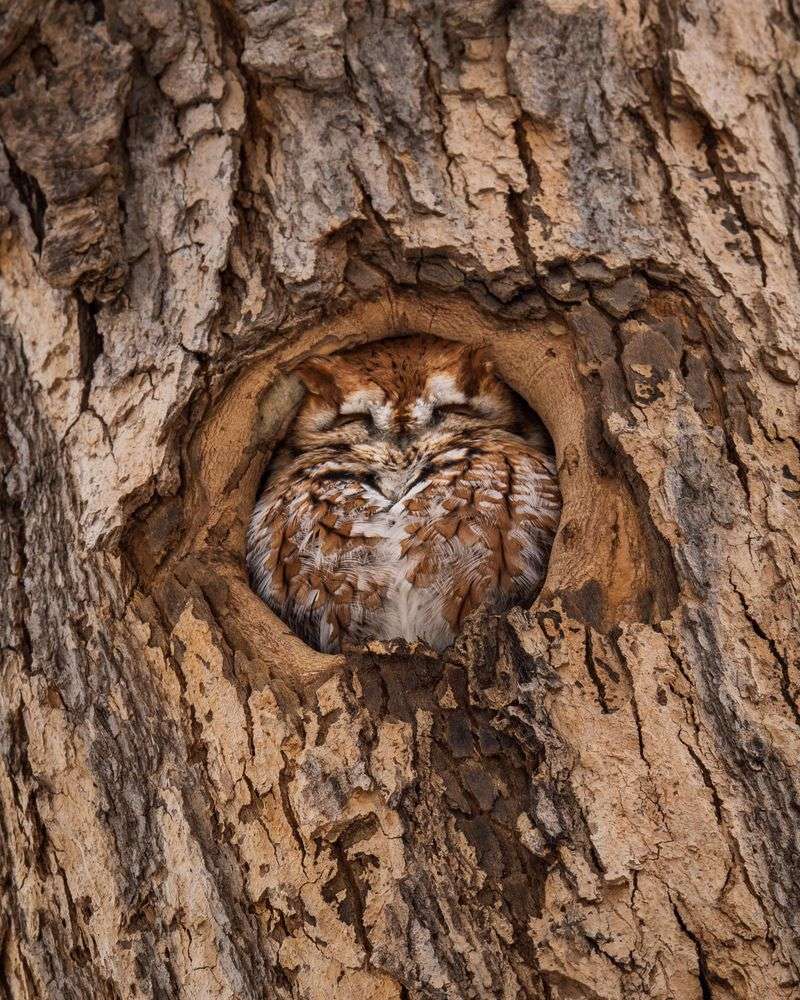
Old trees do the heavy lifting. A yard with mature oaks, pines, or hickories offers far more owl habitat than a lot planted five years ago.
Thick trunks and heavy limbs create shade, cover, and eventually cavities. Young landscape trees rarely provide any of that.
Roost spots tend to be simple.
Screech owls often press flat against a trunk, tucked beside a branch junction where shadow hides their outline. Dense cedars, hollies, and magnolias also work well as daytime cover.
Evergreens matter more once leaves fall.
A single eastern red cedar can shelter an owl through the coldest weeks of a Georgia winter. Broadleaf trees still help, but their bare structure offers less concealment.
Standing snags and hollow branches hold real value for cavity users, though safety comes first near houses and walkways. An arborist can often shorten a risky limb instead of removing the whole tree.
Layered planting helps too.
Shrubs beneath canopy trees give perching spots for hunting and cover for the prey owls chase. Bare lawn under a single tree does far less.
Growth takes time, and no planting plan produces owls on schedule.
Protecting what is already tall usually beats starting over, especially on older suburban lots where big trees still stand.
4. Their Nighttime Calls May Give Away A Hidden Visitor
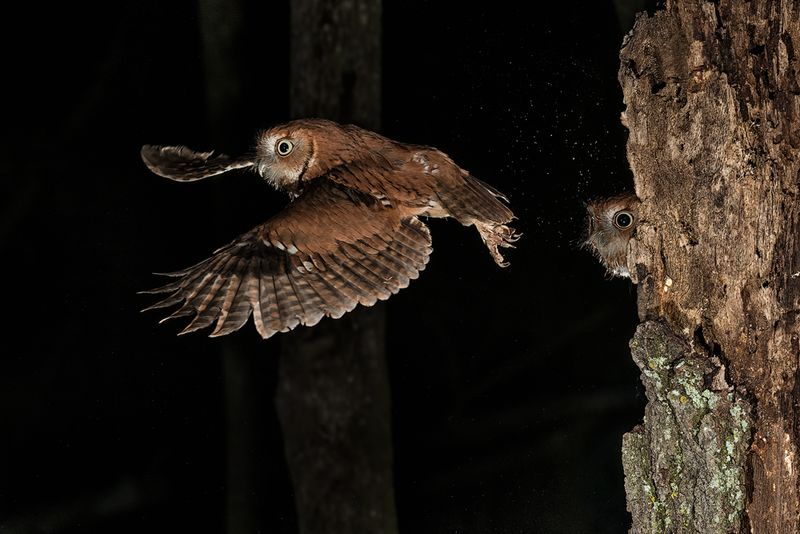
Forget the classic hoot. Screech owls make a soft descending whinny and a steady trill that sounds more like a horse or a small motor than an owl.
Neither call carries the volume people expect. Both fade quickly across open ground.
Evening and pre-dawn hours produce the most sound.
Step outside about thirty minutes after sunset and just stand still for ten minutes. Traffic noise, air conditioners, and wind all mask these calls easily.
Cool, calm nights work best.
Sound travels farther when the air is still, which is one reason fall listening pays off across this part of Georgia. Humid summer evenings full of insect noise make detection harder.
Two owls sometimes answer each other.
Trills traded back and forth usually mean a pair holding a territory nearby. Single whinnies often signal contact between birds or a mild territorial warning.
Recordings can help you learn the sounds.
Free birding apps include both calls, and a few listens usually stick. Playing recordings outdoors is a different matter, since repeated playback can stress birds and is discouraged in many places.
Keep a simple log of what you hear.
Dates, times, and rough direction build a picture over a few weeks. Silence on any given night means nothing, so do not read too much into one quiet evening.
5. Tree Cavities Can Reveal Where An Owl Spends The Day
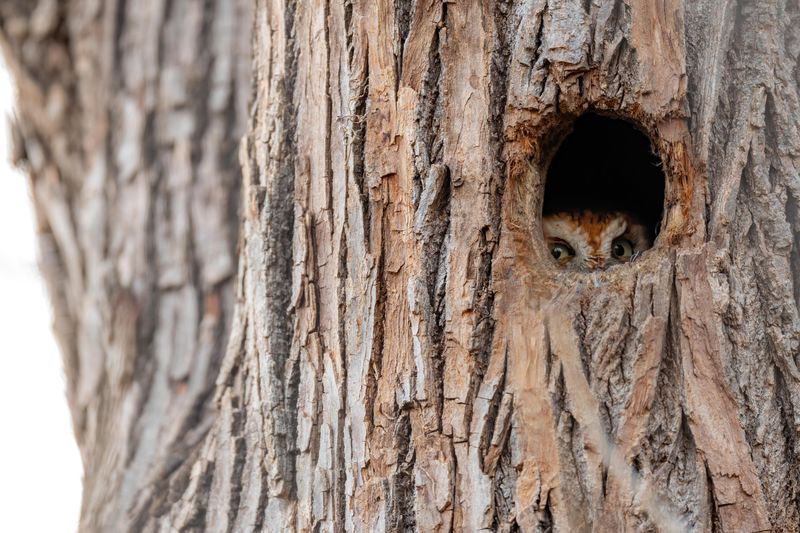
Holes in trunks are worth a slow look. Screech owls cannot excavate their own cavities, so they borrow what woodpeckers and decay leave behind.
Old flicker holes, pileated woodpecker cavities, and natural hollows from broken limbs all get used. Openings around three inches wide fit them nicely.
Sunny mornings are prime viewing time.
Owls often sit at the cavity entrance and soak up warmth with their eyes half closed. Once you spot that rounded head filling a hole, it becomes hard to unsee.
Height varies quite a bit.
Cavities anywhere from six to thirty feet up can work, though ten to twenty feet seems common in yards. Scan trunks at eye level and above, not just the treetops.
Check the same holes repeatedly.
An owl may use one cavity for days, skip a week, then return without warning. Squirrels, wood ducks, and other birds compete for the same spaces, so occupancy shifts.
Keep your distance while watching.
Standing under a cavity or tapping the trunk can push an owl into leaving a good roost. Binoculars from thirty feet away work far better than a close approach.
Georgia neighborhoods with older hardwoods usually offer the best odds here.
Cavity trees take decades to form, which makes each one genuinely hard to replace.
6. Wooded Backyards Give Screech Owls The Habitat They Need
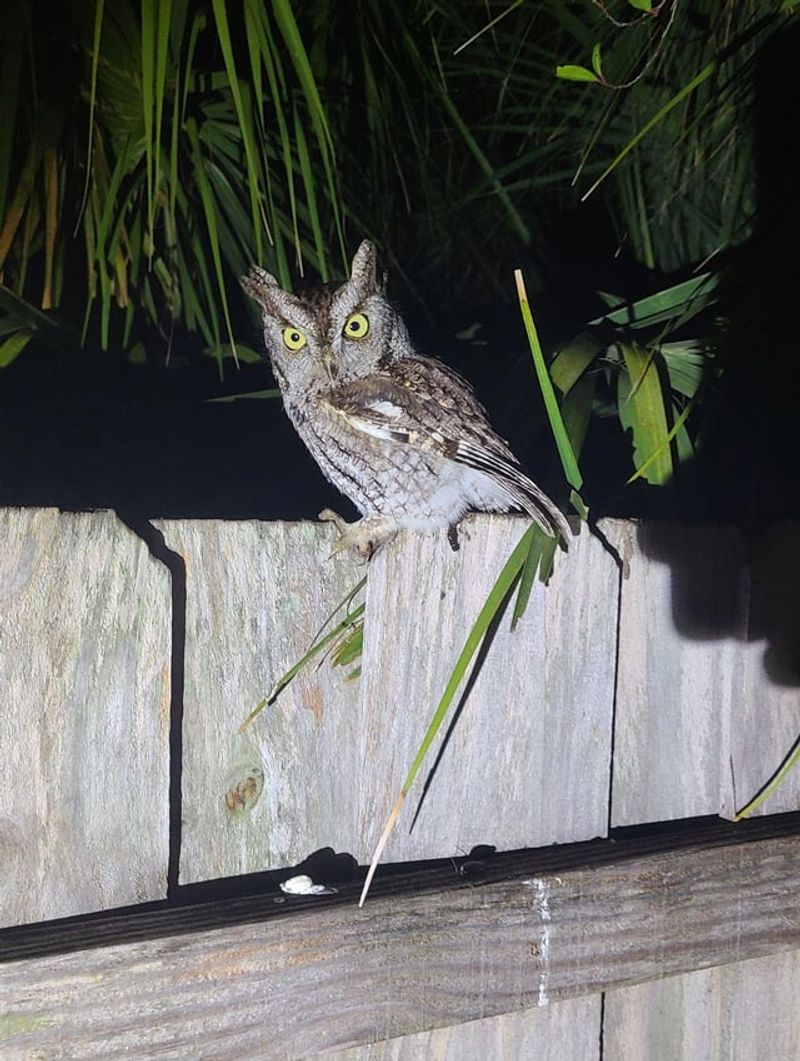
Edges beat deep forest. Screech owls do well where trees meet open ground, which describes an enormous number of yards across this state.
Hunting happens in the open spaces. Roosting happens in the trees beside them.
Leaf litter feeds the whole system.
Beetles, moths, crickets, and earthworms all thrive under fallen leaves, and those insects draw owls in. Raking every leaf to bare soil removes a big chunk of that food supply.
Brush piles add cover for prey.
Mice and voles use them, which puts hunting owls nearby. A modest pile in a back corner does the job without looking messy.
Rodent control products create real risk.
Owls that catch poisoned rodents can be harmed by those chemicals, so snap traps or exclusion work are safer choices around Georgia homes. Sealing gaps in sheds and crawl spaces reduces the problem at the source.
Outdoor lighting deserves attention too.
Bright floodlights left on all night can change how owls and their prey behave. Motion sensors and warm, shielded fixtures cut glare while keeping walkways usable.
Water helps in dry stretches.
A shallow birdbath kept clean serves owls, songbirds, and everything in between. Habitat improvements shift odds rather than promise results, and some yards simply sit outside an active territory.
7. Nest Boxes Can Add Another Useful Cavity To The Yard
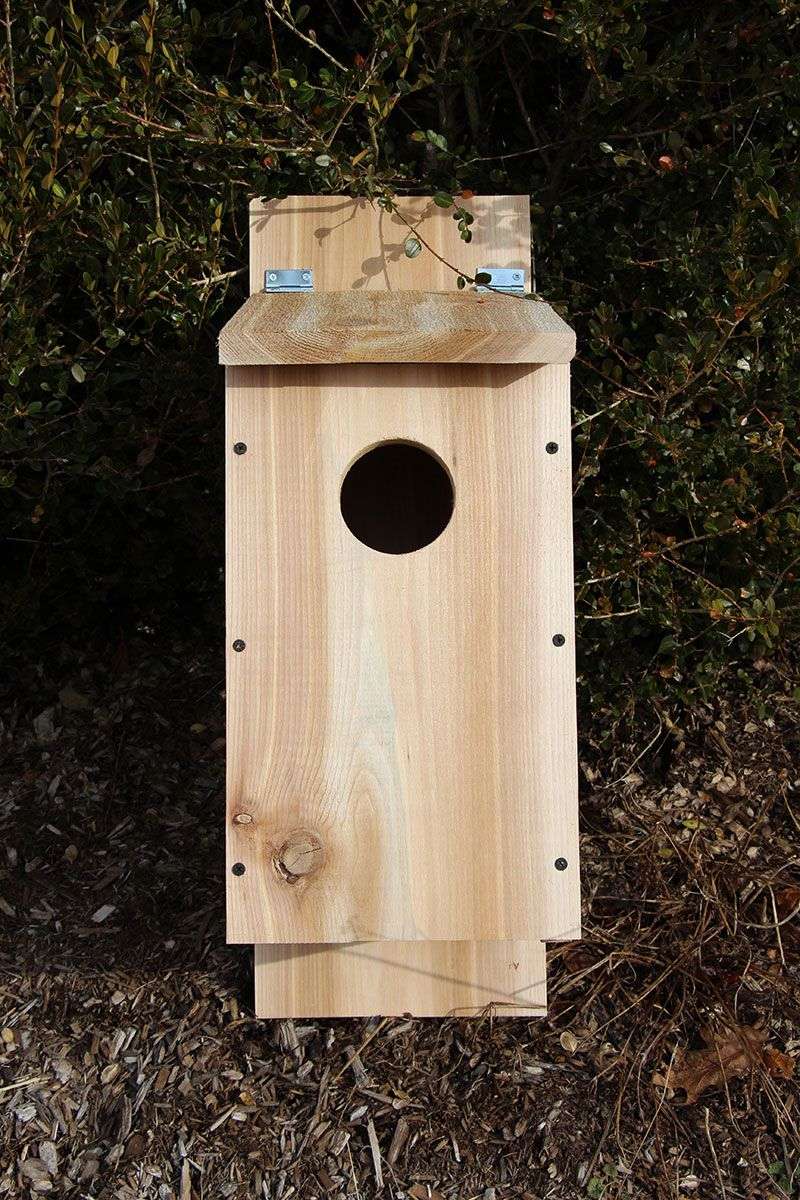
A good box mimics a rotten limb. Screech owls readily use nest boxes when natural cavities are scarce, and plenty of suburban lots fall into that category.
Interior dimensions matter most. Aim for a floor around eight by eight inches and a depth of roughly twelve to fifteen inches.
Entrance size should be about three inches across.
Smaller holes exclude the owls, while larger ones invite squirrels and larger birds. Rough interior walls or a strip of hardware cloth give young owls something to grip when climbing out.
Mounting height usually falls between ten and twenty feet.
Pick a trunk with some open flying space in front and shade during afternoon hours. Facing the entrance away from prevailing storms helps keep the inside dry.
Skip the perch entirely.
Perches mostly help predators and competitors reach the opening. Two or three inches of wood shavings on the floor works better than an empty box.
Timing favors an early installation.
Boxes hung in fall often get used as winter roosts, then reused for nesting in late winter or early spring. Owls in Georgia frequently begin laying eggs sometime in March, depending on local weather.
Clean it out once a year, after the young have left.
Occupancy is never certain, and some boxes sit empty for several seasons before anything moves in.