Should You Trim Palm Trees Before Spring In Florida
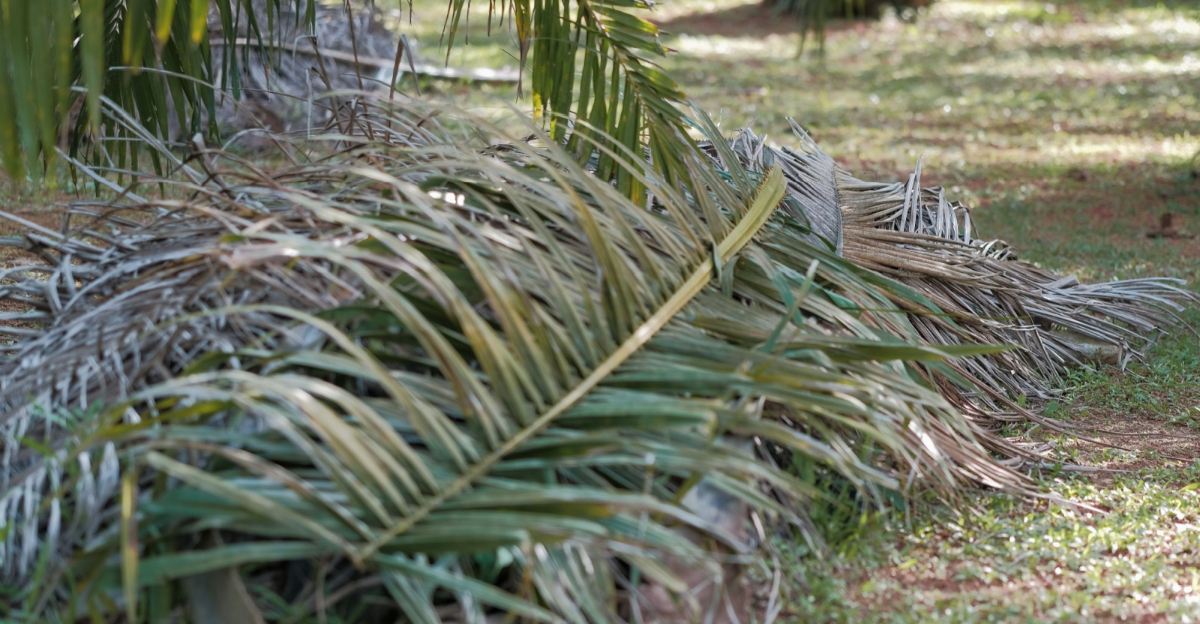
Every spring in Florida, I see neighbors step outside, stare up at their palms, and reach for the pruning saw. Brown fronds hang low, seed stalks dangle, and the tree suddenly looks rough after winter.
The instinct feels simple. Trim it now and start fresh for the season ahead.
Palms play by different rules. A cut made too soon can weaken the crown, expose tender growth, and leave the tree vulnerable just as heat and storms build strength.
I have watched beautiful palms lose their full shape from one early trim meant to “clean things up.”
The timing of that decision can shape how your palm looks all year. Before you slice away those fronds, pause and consider what your tree truly needs as spring settles across Florida.
1. Not All Brown Fronds Need To Be Removed
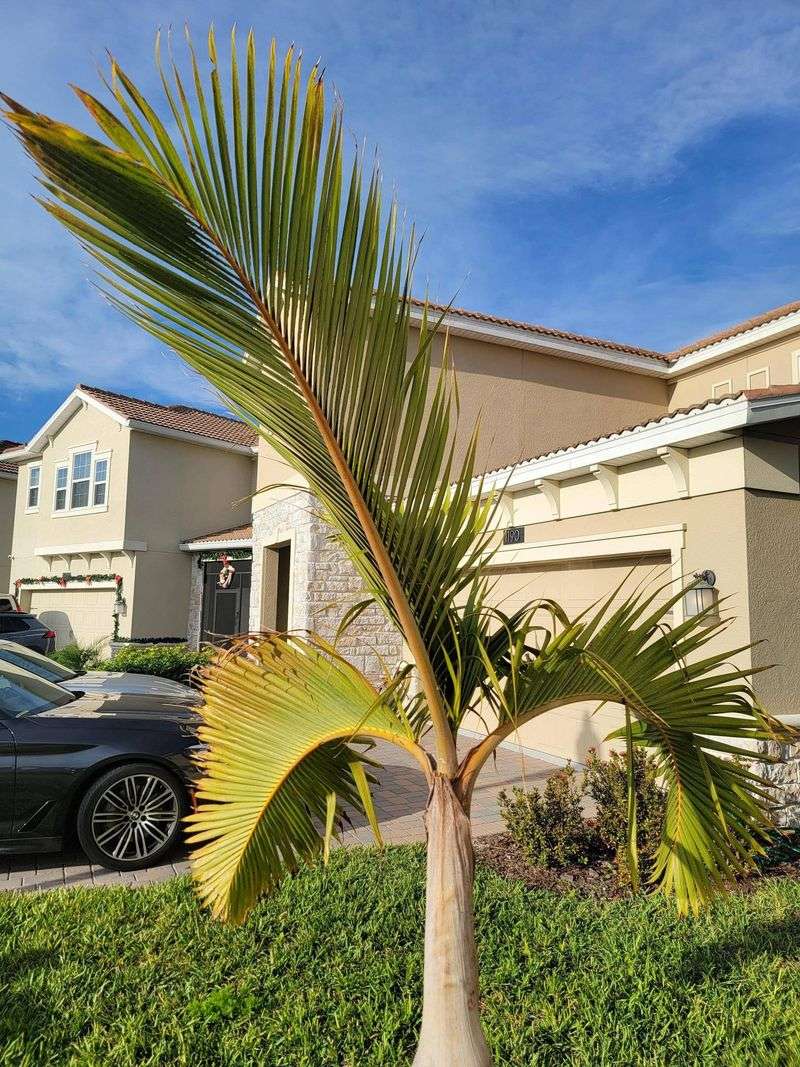
Many Florida homeowners see brown fronds and immediately reach for pruning tools. That instinct feels right, but those aging fronds often still benefit your palm.
Lower fronds naturally turn brown as the tree redirects nutrients upward to support new growth.
Removing fronds that are only partially brown forces your palm to use stored energy reserves it needs for other functions. Palms move nutrients from older fronds back into the trunk before fully releasing them.
Cutting too soon interrupts that process.
Brown fronds also create a protective layer around the trunk that shields it from sun damage and temperature extremes. In Florida, where intense sun and sudden cold fronts occur, that natural barrier matters more than in milder climates.
The right time to remove a frond is when it is completely brown and no longer providing benefit to the palm, whether loose or firmly attached. If you need to tug or cut to remove it, the palm is not finished with that frond yet.
Focus your trimming efforts only on fronds that pose safety risks, like those hanging over walkways or near power lines. Otherwise, let your palm decide when fronds are truly ready to go.
Patience protects the health of your tree better than aggressive pruning schedules.
2. Over Pruning Weakens Palm Health
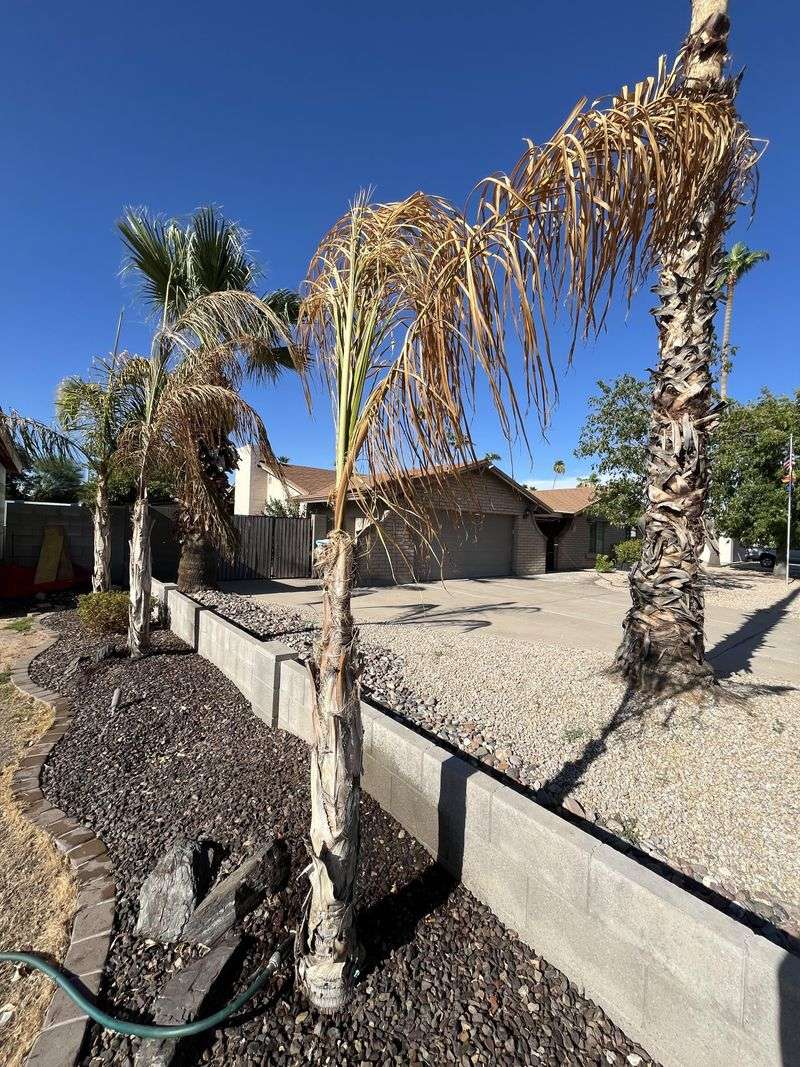
Cutting away too many fronds at once creates serious stress for palms growing in Florida conditions. Each frond produces food through photosynthesis, and removing healthy green growth reduces the energy your palm can generate.
Trees respond to excessive pruning by slowing growth and becoming more vulnerable to pests and disease.
A common mistake is trimming palms into a hurricane cut, removing all but the newest fronds. University of Florida IFAS Extension research shows this practice severely weakens palms rather than protecting them.
The tree loses its ability to produce enough nutrients to support healthy development.
Palms store nutrients in their trunks and use those reserves when stressed by cold, drought, or damage. Over pruning depletes those reserves faster than the remaining fronds can replenish them.
In Florida, where summer heat and occasional winter cold already stress palms, maintaining adequate frond coverage is essential.
Healthy palms should keep a full, rounded canopy. As a general rule, remove only fully brown fronds or those hanging well below the canopy, avoiding removal of green or functional fronds.
Anything above that line is still actively contributing to tree health.
If you feel tempted to remove more, step back and wait. Your palm needs those fronds more than your yard needs the manicured look.
Protecting long term health always outweighs short term aesthetics.
3. Cold Damaged Fronds Still Protect The Crown
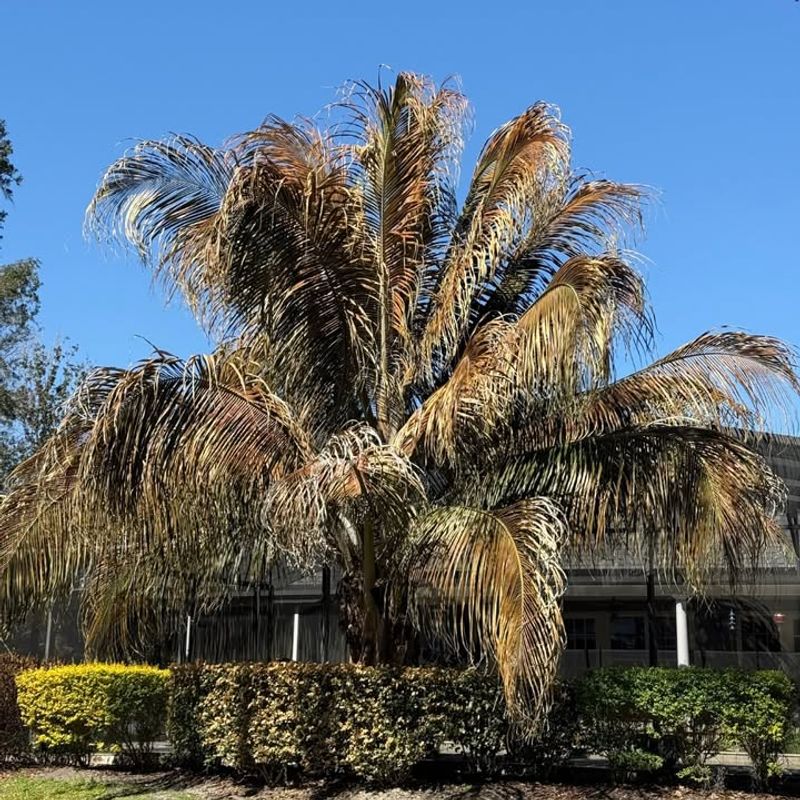
After a cold snap, brown or damaged fronds might look terrible, but they serve a critical protective function. The growing point at the top of your palm, called the crown or heart, is the most vulnerable part of the tree.
Those damaged fronds create insulation that shields the crown from further temperature drops.
Removing cold damaged fronds too quickly exposes the tender growing point to additional stress from sun, wind, and any remaining cold weather. Florida winters can bring multiple cold events, and premature trimming leaves your palm defenseless against the next freeze.
The crown needs time to recover and begin producing new growth before you remove the damaged outer fronds. That recovery period varies depending on palm species and how severe the cold damage was.
Most palms need several weeks to a few months before showing clear signs of new growth.
Watch for a new spear emerging from the center of the crown. Once you see healthy new growth pushing upward, the palm has recovered enough that removing damaged fronds becomes safer.
Until then, those brown fronds are working protection, not just cosmetic problems.
Resist the urge to clean up your palms immediately after cold weather. Patience during recovery makes the difference between a palm that bounces back strong and one that struggles for months.
4. Hurricane Season Is Not A Reason To Rush
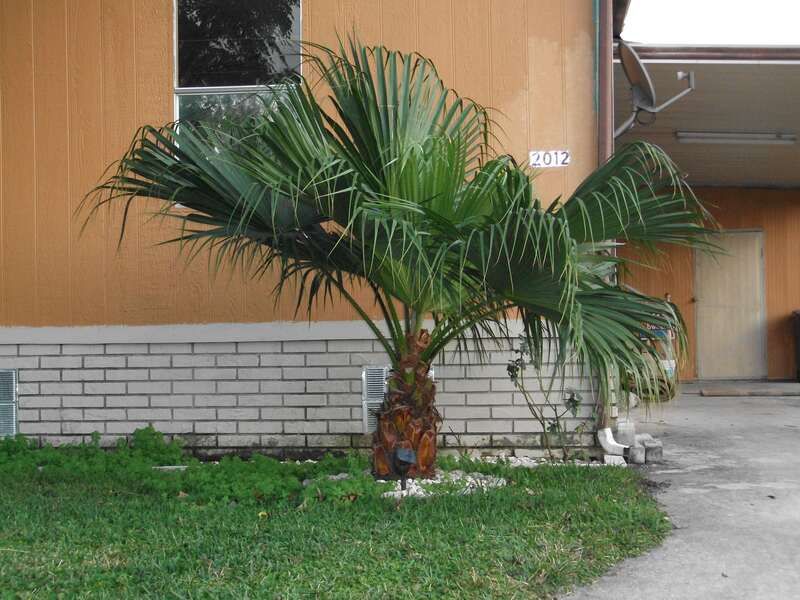
A persistent myth suggests that trimming palms heavily before hurricane season makes them safer during storms. Homeowners worry that fronds will become dangerous projectiles, so they cut palms back aggressively in late winter or early spring.
Research from University of Florida shows that approach actually increases storm damage rather than preventing it.
Palms evolved in windy tropical environments, and their natural form provides the best wind resistance. A full canopy allows wind to pass through and around the fronds, reducing the force on the trunk.
Over trimmed palms lose that natural flexibility and become more likely to sustain trunk damage during high winds.
Hurricane season runs from June through November in Florida, and heavy pruning months earlier does not improve storm resistance and may increase damage risk. By the time severe weather arrives, palms have already grown new fronds to replace what you removed.
The real preparation for storms involves removing declined fronds that hang loose and could detach, along with any seed pods or flower stalks that add unnecessary weight. That work should happen closer to hurricane season based on the actual condition of your palms, not on a predetermined spring schedule.
Focus on maintaining healthy, well fed palms with strong root systems. Proper nutrition and watering create storm resilience far better than aggressive pruning ever could.
5. Spring Growth Signals The Right Timing
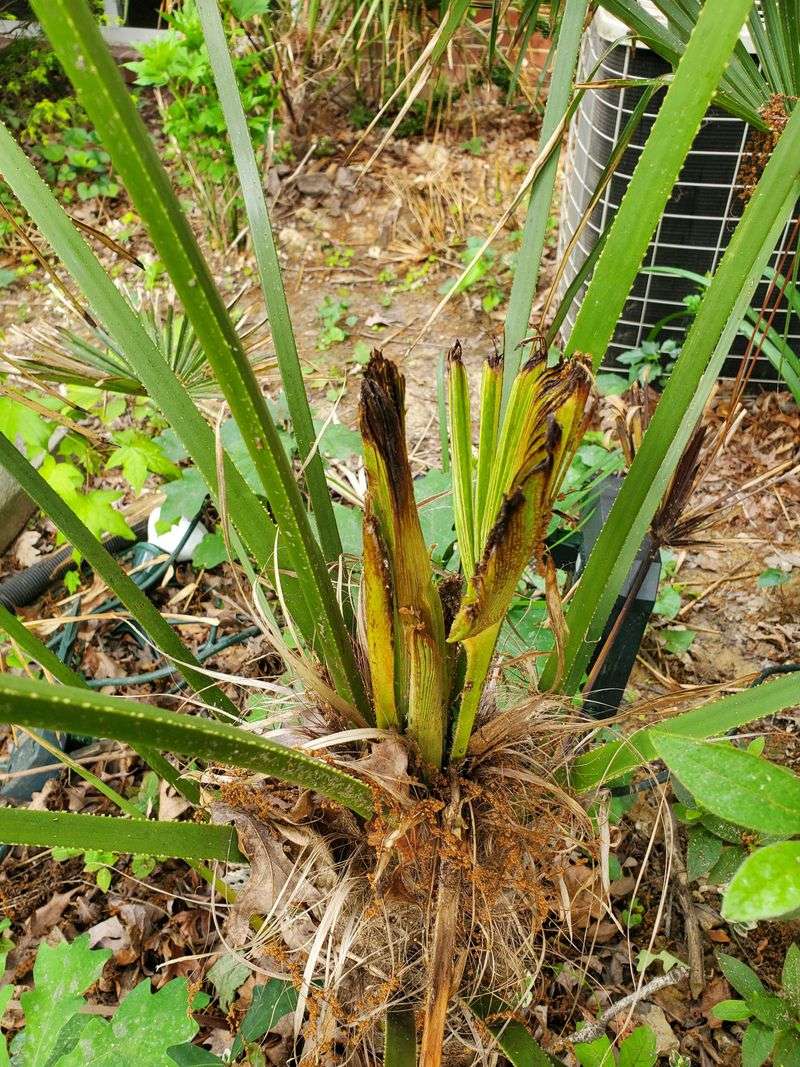
Palms communicate their readiness for trimming through visible new growth. When you see a fresh green spear pushing up from the crown center, your palm has entered its active growing phase.
That new growth indicates the tree has recovered from winter stress and is directing energy into development rather than just survival.
In most of Florida, palms begin showing spring growth between late March and early May, depending on location and weather patterns. South Florida palms typically start earlier than those in northern parts of the state.
Your specific microclimate and the winter your area experienced also affect timing.
Active growth means your palm can recover quickly from pruning and seal cut areas efficiently. The tree is producing new tissue and moving nutrients rapidly, so removing old fronds causes minimal disruption to overall health.
Waiting for these visual signals ensures you trim when conditions favor quick healing.
Check your palms weekly as temperatures warm up. Look for that telltale new spear and watch for older fronds beginning to droop more noticeably as the palm prepares to shed them naturally.
These signs tell you more than any calendar date ever could.
Once you see consistent new growth and daytime temperatures stay reliably warm, your palms can handle careful trimming. Always remove only the fronds that hang completely brown and loose, leaving the rest to support continued healthy growth.
6. Nutrient Deficiencies Can Look Like Damage
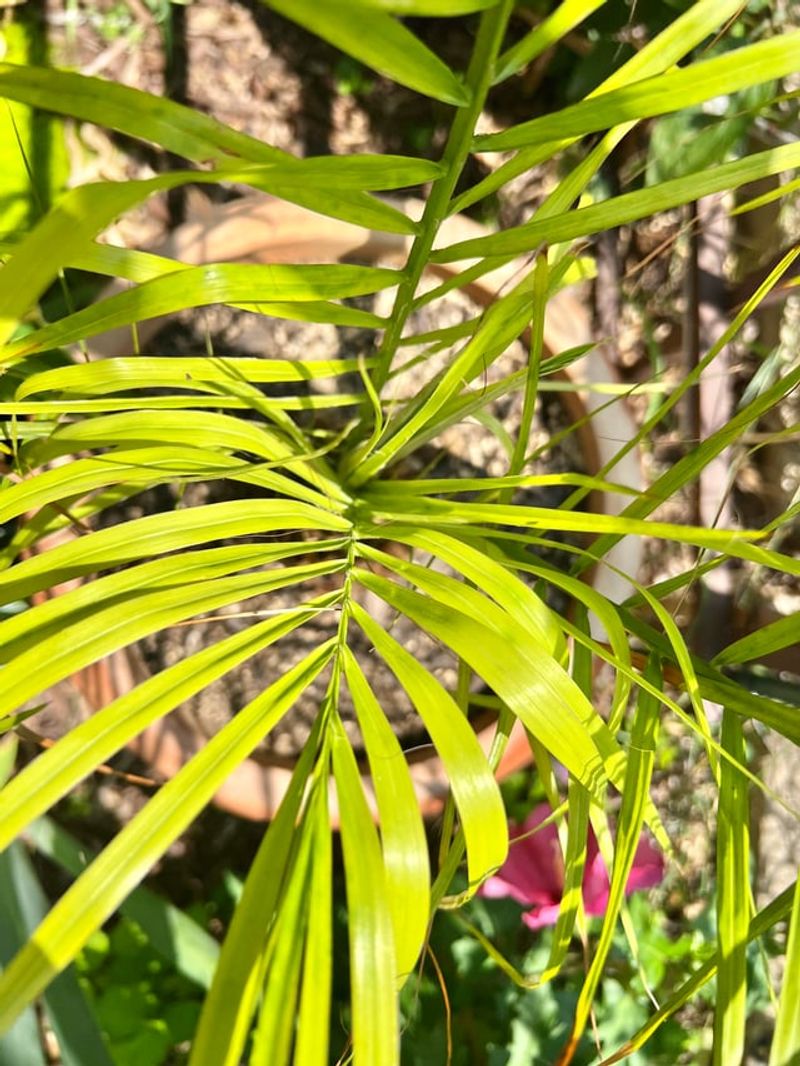
Yellowing fronds or unusual spotting often get mistaken for cold damage or signs that trimming is needed. In reality, many Florida palms suffer from nutrient deficiencies that create similar visual symptoms.
Manganese and potassium deficiencies are especially common in Florida sandy soils and cause distinctive yellowing patterns.
Manganese deficiency creates a condition called frizzle top, where new fronds emerge small, twisted, and yellow. Potassium deficiency causes older fronds to develop yellow or orange spots that progress to brown necrotic areas.
Both conditions make palms look unhealthy, but trimming does nothing to solve the underlying problem.
Before you prune fronds that look damaged, examine the pattern of discoloration. Nutrient issues typically show up on specific frond positions and create symmetrical patterns.
Cold damage usually affects the outer canopy more randomly and appears after a known freeze event.
Addressing nutrient deficiencies requires proper fertilization with a palm specific product containing manganese, potassium, and magnesium. Florida palms need regular feeding, typically three to four times per year, to maintain healthy green growth in our nutrient poor soils.
If you see yellowing or spotting, test your soil or consult with a local extension office before trimming. Removing affected fronds does not fix deficiency problems and may remove foliage the palm needs while it recovers from nutritional stress.
Proper feeding produces better results than pruning ever will.
7. Different Palm Species Respond Differently
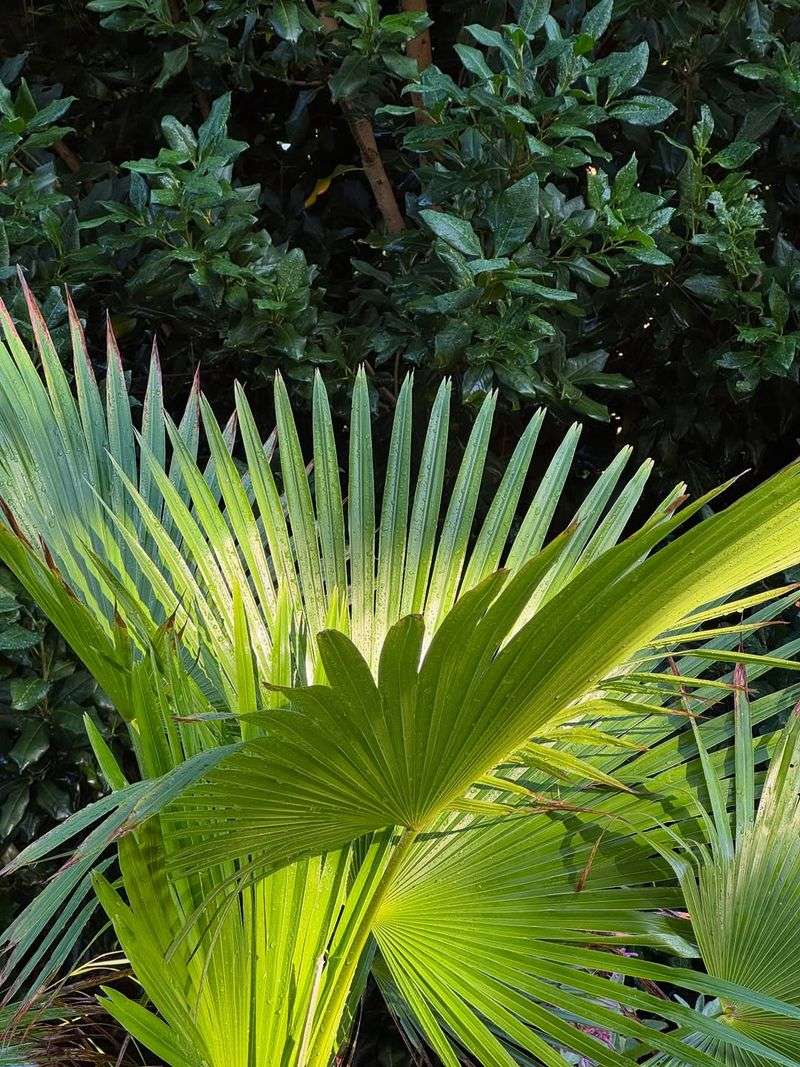
Florida landscapes feature dozens of palm species, and each one has different tolerances for trimming. What works safely for a tough sabal palm might harm a more sensitive queen palm.
Understanding your specific palm type helps you make better decisions about if and when to prune.
Sabal palms, including the native sabal palmetto, tolerate pruning better than most other species. These hardy palms recover quickly and handle occasional over trimming without severe long term effects.
They are the most forgiving choice for homeowners learning proper palm care.
Queen palms and majesty palms are far more sensitive to pruning stress. Removing too many fronds from these species can trigger decline that takes years to reverse.
They need more fronds left intact to maintain health, especially in Florida where they already struggle with nutrient deficiencies.
Areca palms and foxtail palms fall somewhere in between, handling moderate trimming but suffering if pruned too aggressively. Phoenix palms like the Canary Island date palm can tolerate heavier pruning but still benefit from conservative approaches.
Before trimming any palm, identify the species and research its specific care needs. University of Florida IFAS Extension provides detailed guides for common Florida palms.
Knowing what you are working with prevents mistakes that could compromise your tree for years to come.
8. When A Professional Trim Actually Makes Sense
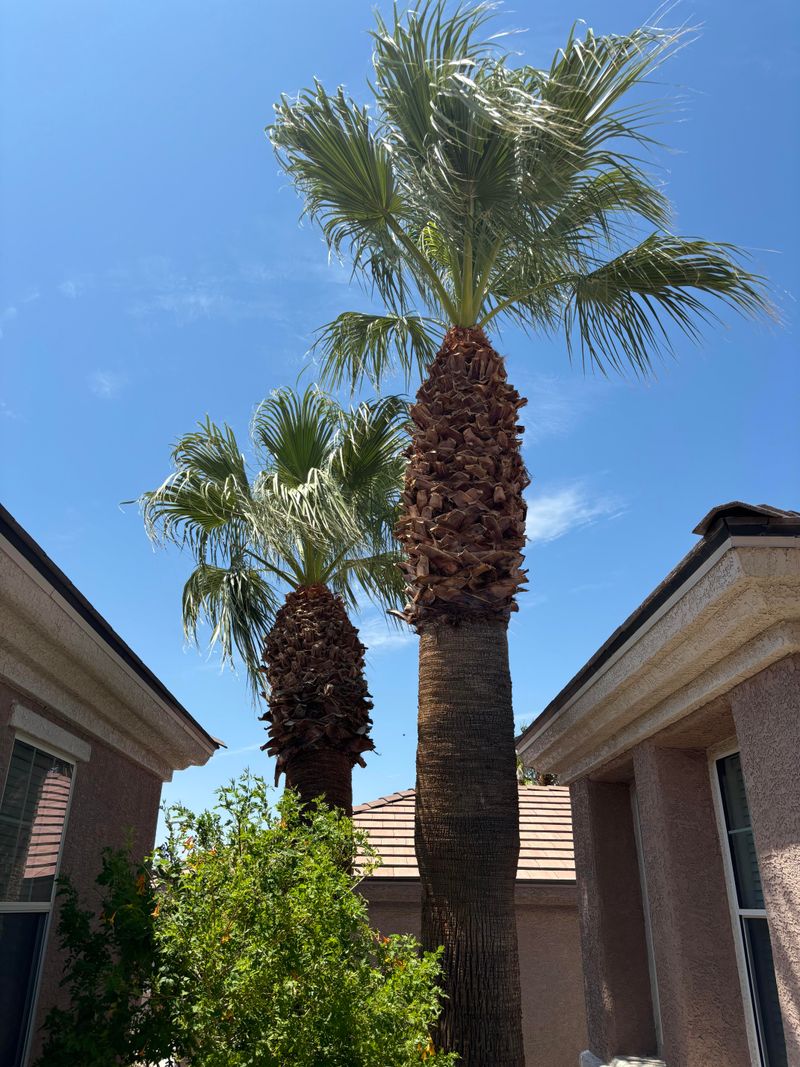
Sometimes hiring an experienced professional makes more sense than attempting palm trimming yourself. Safety concerns top the list of reasons to call in experts.
Tall palms require specialized equipment and training to trim safely, and falling fronds or tools can cause serious injuries.
Palms growing near power lines always require professional attention. Attempting to trim near electrical wires risks electrocution and should never be done by homeowners.
Licensed tree services have the training and equipment to work safely around utilities.
Disease issues also warrant professional diagnosis and treatment. If your palm shows signs of lethal bronzing, fusarium wilt, or other serious diseases, an arborist can identify the problem and recommend appropriate action.
Some diseases spread through contaminated pruning tools, making proper sanitation essential.
Heavy accumulations of declined fronds that create fire hazards or pest habitat justify professional removal. Certified arborists can efficiently remove problematic growth while preserving palm health.
They understand species specific needs and proper pruning techniques that minimize stress.
When choosing a tree service, verify they hold proper licenses and insurance. Ask about their familiarity with Florida palm species and whether they follow University of Florida IFAS guidelines.
Reputable professionals will explain what they plan to remove and why, never suggesting excessive hurricane cuts or other harmful practices. Quality care from knowledgeable experts protects your investment in your landscape palms.