9 Shrubs South Florida Homeowners End Up Pruning Too Often
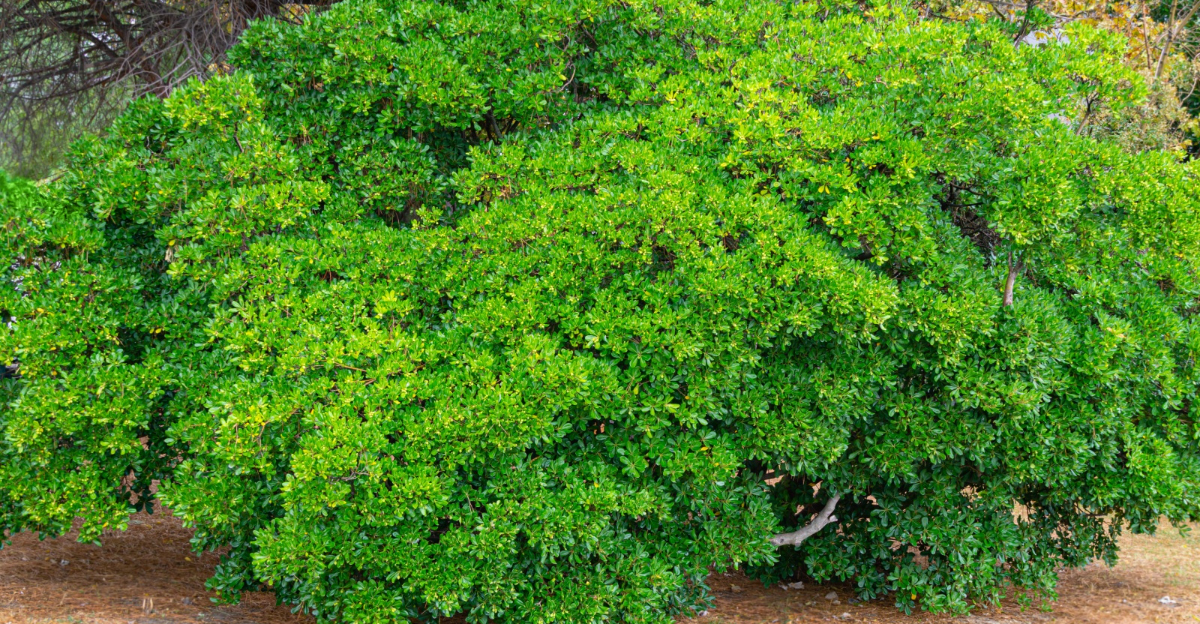
By the time many South Florida homeowners realize a shrub was the wrong pick, the clippers are already part of the weekly routine.
What started as a clean, attractive planting ends up swelling past windows, crowding walkways, and throwing off the whole look of the yard almost as soon as it gets cut back.
In a climate where growth barely slows down, some shrubs refuse to stay in bounds for long. That constant pruning does more than eat up time.
It turns a landscape feature into a chore. A yard that should feel finished starts feeling like it is always one trim away from looking under control again.
The problem is not always poor maintenance. Sometimes the plant itself was never a low-effort choice to begin with.
That is why certain shrubs keep testing homeowners long after planting day. They may look polished in the beginning, but over time, they ask for far more shaping, cutting, and cleanup than most people expect.
1. Podocarpus Outgrows Its Spot Fast
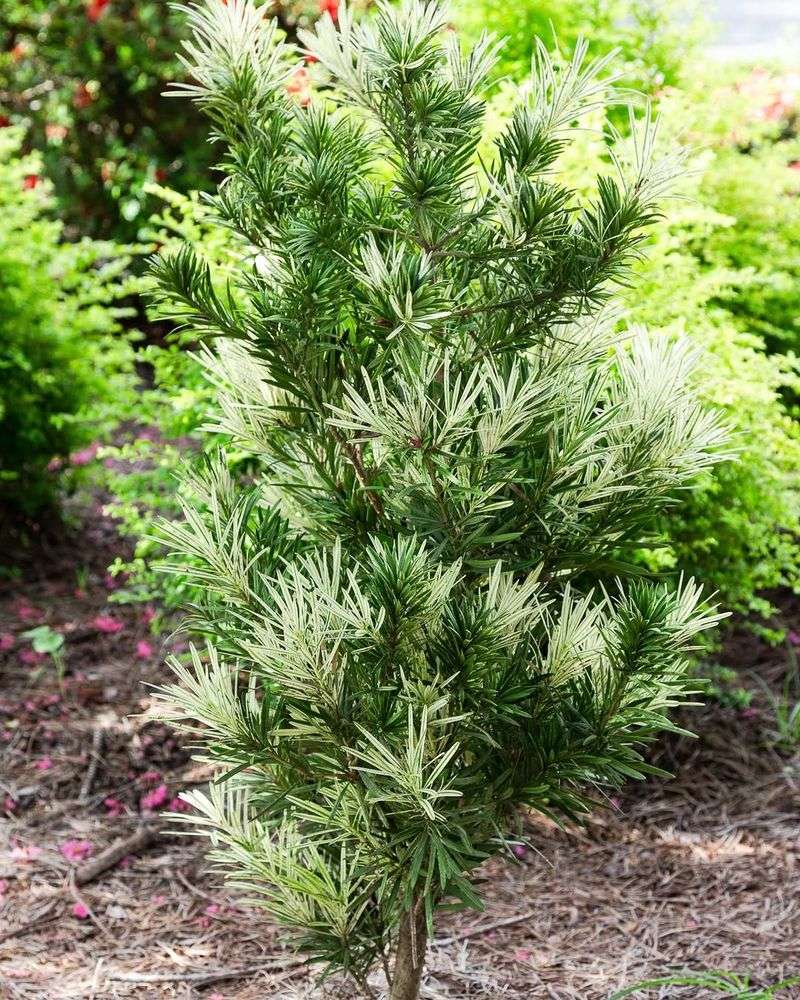
Planted as a tidy hedge along a fence or driveway, Podocarpus looks like an easy, low-maintenance choice. Nurseries often sell it as a compact, manageable screen, which is exactly what draws so many South Florida homeowners to it.
The problem is that Podocarpus can grow into a large tree or a very tall, wide shrub if left unchecked in the warm, humid conditions that South Florida provides year-round.
According to UF/IFAS, Podocarpus macrophyllus can reach heights of 40 feet or more at maturity, though regular pruning keeps most landscape specimens much smaller. That regular pruning, however, is the catch.
Homeowners who plant it in narrow side yards or tight foundation spaces quickly find themselves trimming it every few weeks just to keep it from crowding walkways, windows, or neighboring plants.
The shrub responds well to shearing and bounces back quickly, which sounds like a benefit until you realize that fast recovery means it needs attention again before long. Choosing a spot with room to grow upward and outward, or selecting a dwarf cultivar, can reduce how often you end up with hedge trimmers in hand.
Placement really is everything with this one.
2. Clusia Rarely Stays Neat For Long
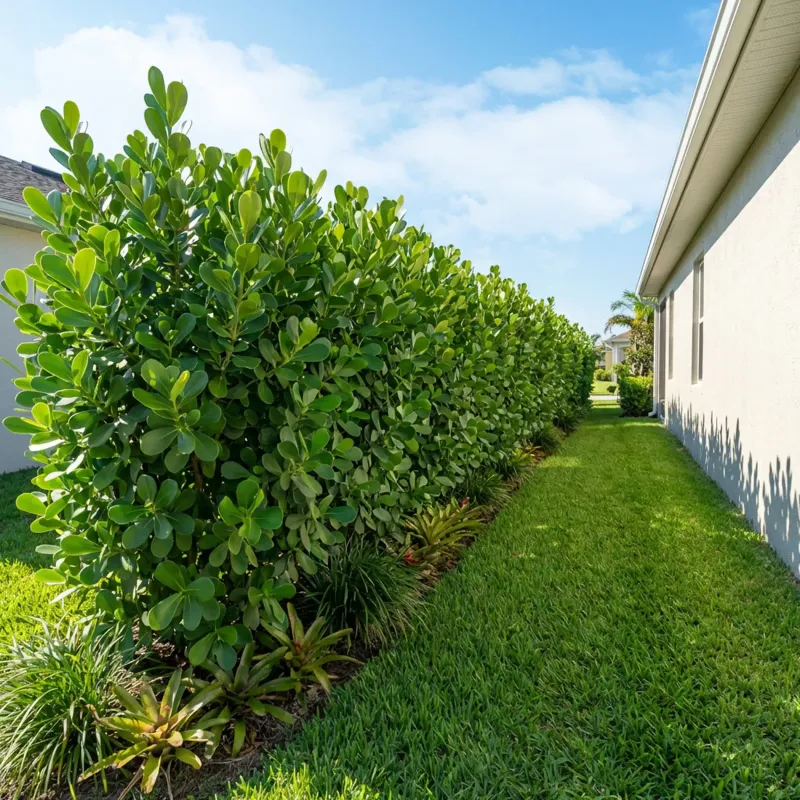
Few shrubs say South Florida landscaping quite like Clusia. Its thick, waxy leaves and naturally dense growth habit make it a go-to choice for privacy screens and property borders.
Homeowners love how quickly it fills in, creating a solid green wall that blocks noise, wind, and neighbors’ views in a relatively short amount of time.
That fast fill-in rate, though, is exactly what makes Clusia such a frequent pruning commitment. Clusia guttifera, the smaller-leafed variety commonly used as a hedge, can push out new growth rapidly during the warm months, and South Florida’s growing season is essentially year-round.
A hedge that looks sharp after a trim in January can already look shaggy and uneven by March or April.
UF/IFAS notes that Clusia performs well in South Florida’s climate and is tolerant of salt spray and drought once established, making it genuinely useful in the landscape. The trade-off is that keeping it at a specific height and width takes consistent effort.
If you plant it with enough space to reach its natural size, around 6 to 20 feet depending on the variety, you can reduce how often trimming becomes urgent. Tight spaces turn Clusia into a constant project.
3. Duranta Turns Into A Trimming Job Fast
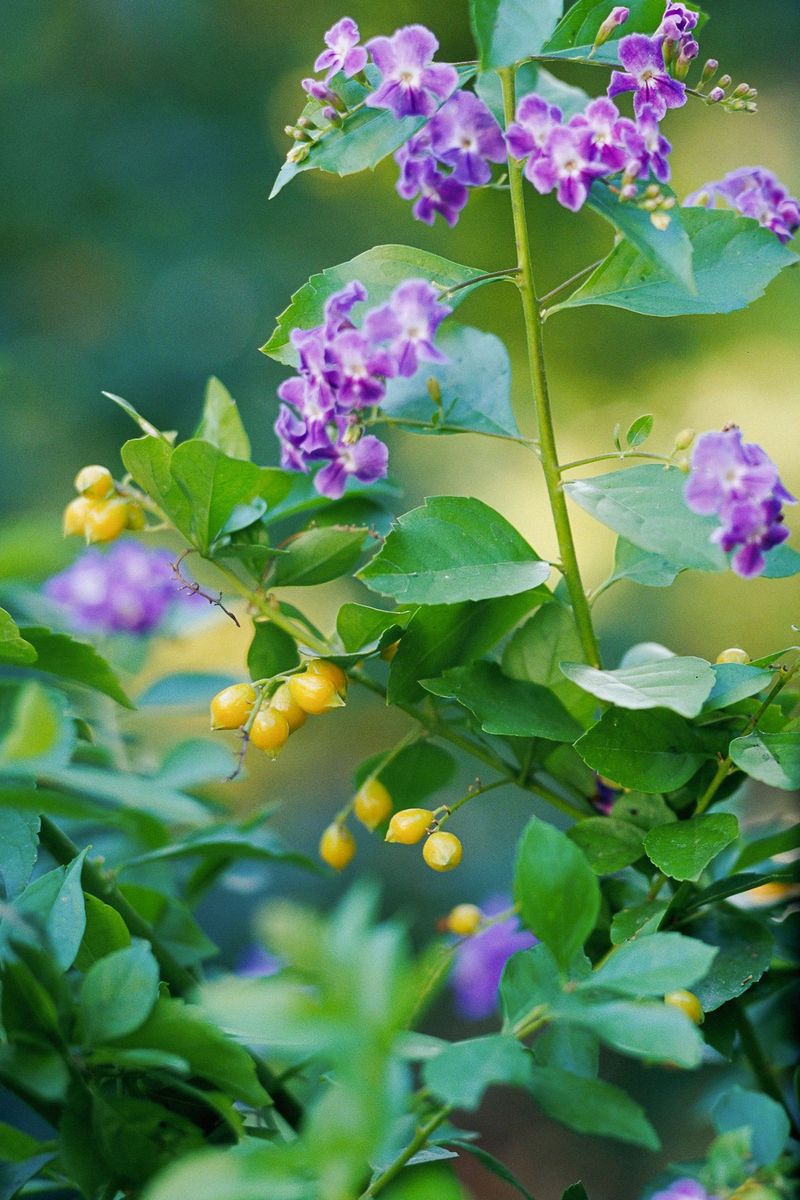
Duranta erecta earns fans fast. Its clusters of small purple or white flowers are charming, the golden berries that follow are eye-catching, and the whole plant hums with activity when butterflies and birds show up.
It sounds like the perfect low-effort addition to a South Florida garden bed, and in the right setting, it can be.
The reality is that Duranta is a vigorous grower that can reach 10 to 15 feet in height and spread considerably wider without regular pruning. In South Florida’s climate, where warmth and rain push growth hard through much of the year, Duranta does not take long to go from a neat little accent plant to a sprawling, arching shrub that swallows neighboring plants or hangs over walkways.
Many homeowners plant it expecting a compact flowering shrub and are surprised by how assertively it expands.
Selective pruning rather than heavy shearing is the smarter approach, since hard cuts can temporarily reduce flowering and leave the plant looking sparse. Light, consistent trimming throughout the growing season keeps Duranta looking intentional rather than wild.
Giving it a generous amount of space at planting and checking its growth every few weeks during summer can prevent it from becoming more work than it is worth.
4. Viburnum Becomes A Hedge You Keep Chasing
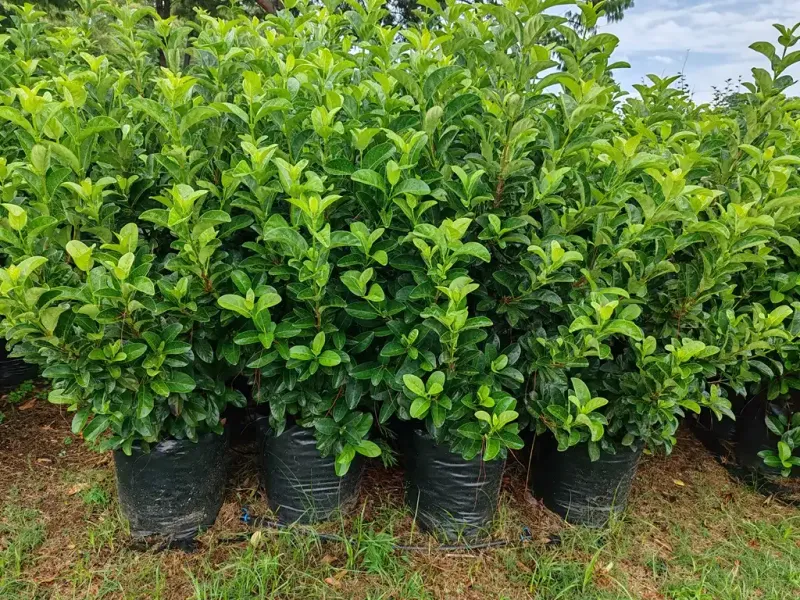
Viburnum odoratissimum, commonly called Sweet Viburnum, is one of the most widely planted hedge shrubs across South Florida. Walk through almost any suburban neighborhood in Miami-Dade, Broward, or Palm Beach County and you will spot it lining driveways, fences, and property edges.
Its dense foliage and fast establishment make it a practical choice for homeowners who want privacy without waiting years for a hedge to fill in.
Fast establishment, however, comes with fast growth, and that is where the pruning cycle begins. Sweet Viburnum can grow several feet per year under good conditions, and South Florida’s warm climate provides plenty of encouragement.
A hedge that gets trimmed in the spring can easily push past its intended height and width by midsummer, requiring another round of cutting before fall even arrives.
UF/IFAS describes Sweet Viburnum as capable of reaching 15 to 20 feet at maturity, which gives a sense of how much energy this plant has. Homeowners who want a hedge under six or eight feet will be trimming consistently to hold it there.
Allowing it to grow a bit taller and shaping it less aggressively can reduce the workload. Trying to keep a vigorous Viburnum hedge very short is essentially a part-time job.
5. Ixora Looks Compact Until It Doesn’t
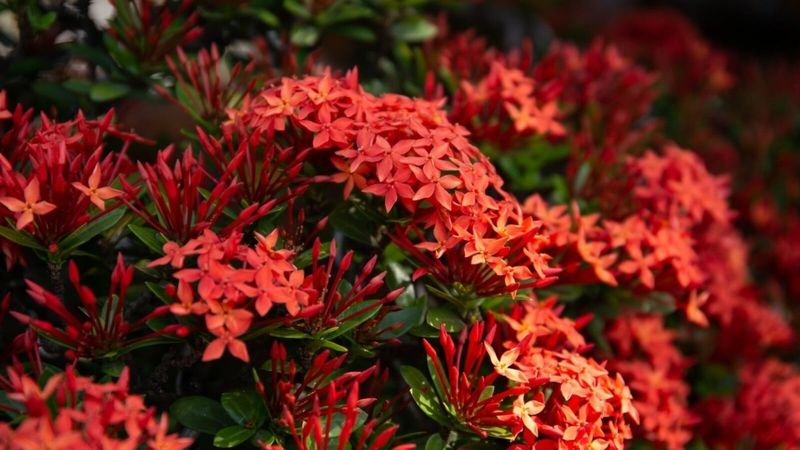
Ixora is one of those shrubs that looks absolutely perfect in a container at the garden center. Neat, round, covered in cheerful clusters of red, orange, or pink flowers, it seems like a no-fuss plant that will stay tidy with minimal effort.
That impression holds for a while, especially with compact cultivars, but it does not always last.
The issue often comes down to variety. Maui Ixora and other larger-growing types can reach five to eight feet or more, and in South Florida’s warm conditions, they push that growth steadily.
Homeowners who plant a large Ixora variety in a small bed or tight border often find themselves shearing it repeatedly to keep it from overwhelming the space around it. Over time, heavy and frequent shearing can stress the plant, reduce flowering, and create a dense outer shell with sparse growth inside.
UF/IFAS recommends choosing the right Ixora cultivar for the space, since compact varieties like Nora Grant are far more manageable in smaller areas. Ixora also prefers acidic soil, and South Florida’s alkaline soils can cause nutrient deficiencies that make the plant look worse over time.
Matching the variety to the available space from the start saves a lot of frustration and reduces how often the hedge trimmers come out.
6. Firebush Brings Color And Extra Cutting
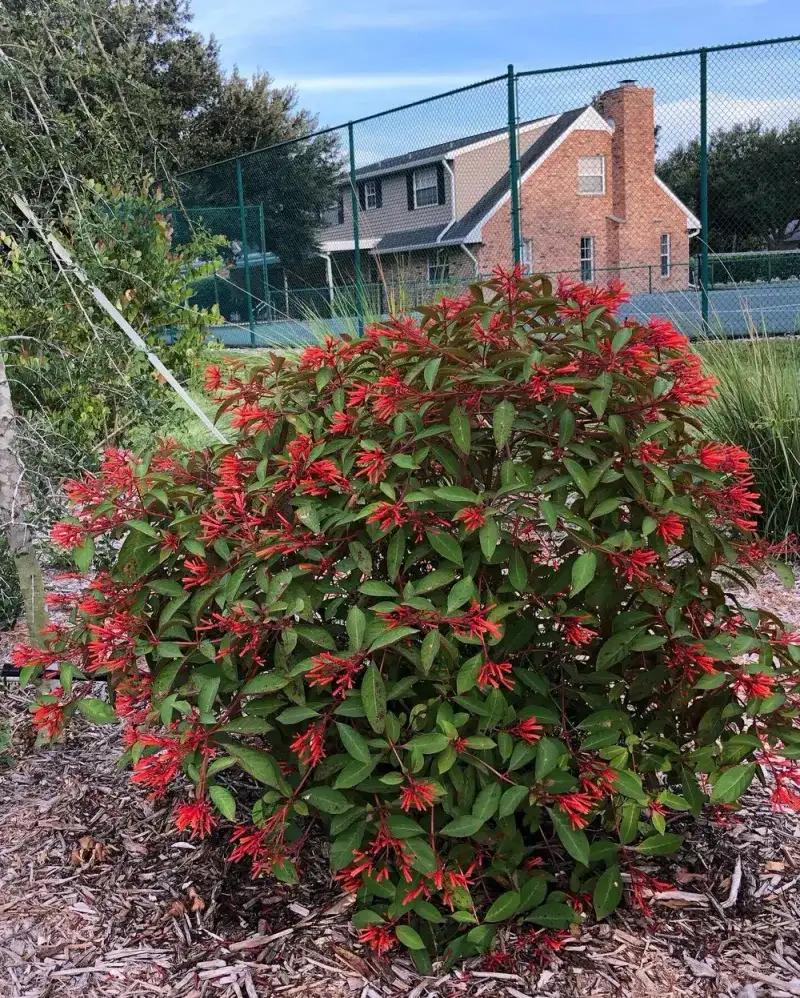
Firebush is hard to resist. The clusters of tubular orange-red flowers practically glow in the South Florida sun, hummingbirds and butterflies flock to it, and it thrives in heat that would stress less tough plants.
Nurseries and native plant enthusiasts recommend it often, and for good reason. It genuinely earns its place in a South Florida garden.
What surprises many homeowners is how large and loose Firebush can become. Hamelia patens is a native Florida shrub that can reach eight to fifteen feet in height under favorable conditions, and South Florida’s warm, wet summers are very favorable.
A plant that starts out as a tidy two-foot accent can become a sprawling, open-structured shrub within a single growing season if it is not monitored. Some homeowners end up cutting it back hard multiple times a year just to keep it fitting the space they originally imagined for it.
Selective pruning rather than shearing keeps Firebush looking more natural and helps it maintain better flowering. Removing older woody stems and letting new growth come in refreshes the plant without stripping it of blooms.
Giving it a generous planting spot and accepting some of its natural looseness reduces the pressure to over-prune and keeps the hummingbirds coming back all season long.
7. Schefflera Keeps Stretching Past Its Shape
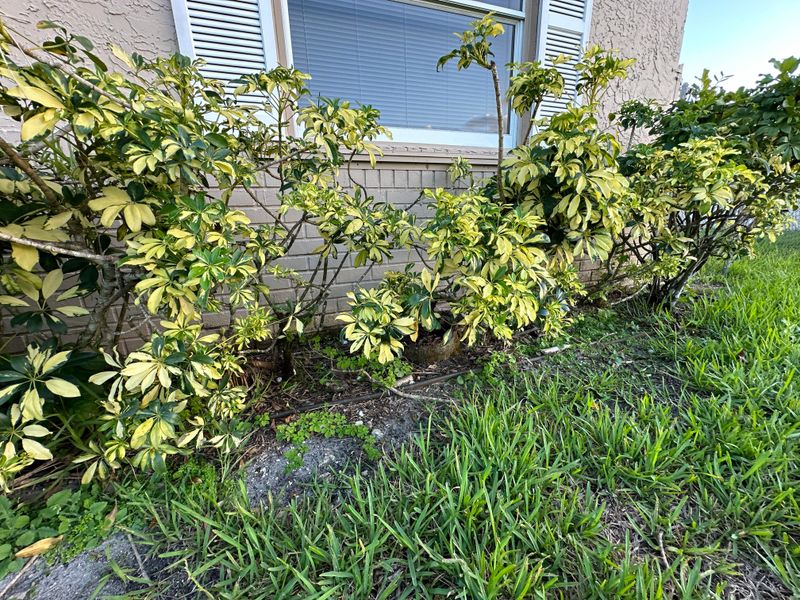
Schefflera actinophylla, sometimes called the Umbrella Tree, gets planted as a shrub fairly often in South Florida landscapes. Its large, glossy compound leaves create quick coverage, and it fills in fast in warm conditions.
For homeowners who want a bold, tropical-looking screen or backdrop, it seems like a solid option.
The challenge is that Schefflera does not naturally want to stay shrub-sized. Left to its own pace, it pushes upward and outward with real determination, and South Florida’s climate gives it plenty of growing season to work with.
Homeowners who use it as a foundation planting or a space-filler near structures often find that it starts blocking windows, lifting pavement with surface roots, or crowding out other plants within a few years of planting.
Frequent trimming can keep it smaller, but the plant responds to cuts by sending out multiple new shoots from each cut point, which can make the canopy denser and harder to manage over time. UF/IFAS also flags Schefflera as invasive in some Florida natural areas, which is worth knowing before planting.
Choosing a non-invasive alternative for tight spaces and reserving Schefflera for spots where it has genuine room to expand makes far more sense than committing to constant cutbacks just to hold its shape.
8. Croton Gets Leggy And Hard To Rein In
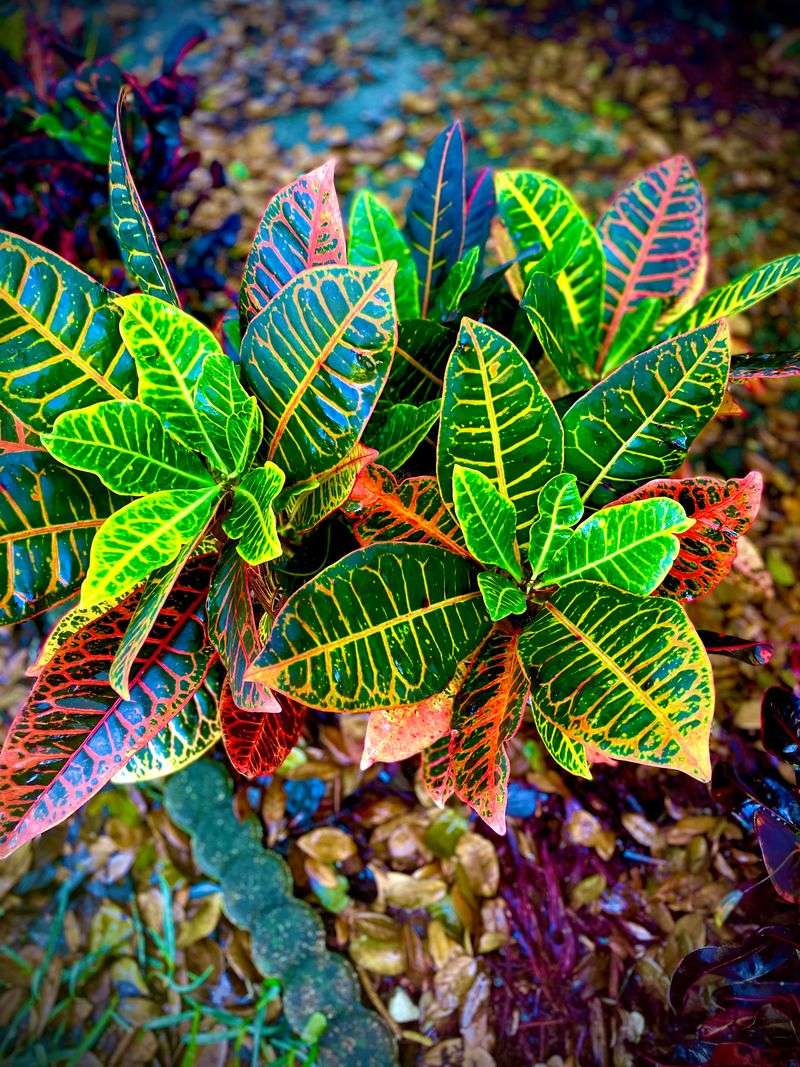
Nobody plants Croton for subtlety. The bold, multicolored leaves in shades of red, orange, yellow, and green make it one of the most visually striking shrubs in any South Florida yard.
It thrives in full sun, handles the heat well, and adds a tropical energy to garden beds and entryways that few other plants can match so easily.
Over time, though, Croton has a tendency to get leggy. Lower leaves drop off, stems stretch upward, and what was once a full, rounded shrub can start to look more like a cluster of tall sticks with color only at the top.
This happens faster in shadier spots, but even well-placed Crotons can develop an uneven, open structure that prompts homeowners to start cutting in search of a fuller shape.
The good news is that Croton responds well to pruning and pushes out new growth from cut stems fairly readily in South Florida’s warm conditions. Pinching back stem tips when the plant is young encourages branching and helps it stay fuller longer.
Cutting leggy stems back to a lower leaf node can stimulate fresh growth lower on the plant. Consistent light pruning throughout the growing season works much better than waiting until the plant looks completely overgrown and then cutting it back hard all at once.
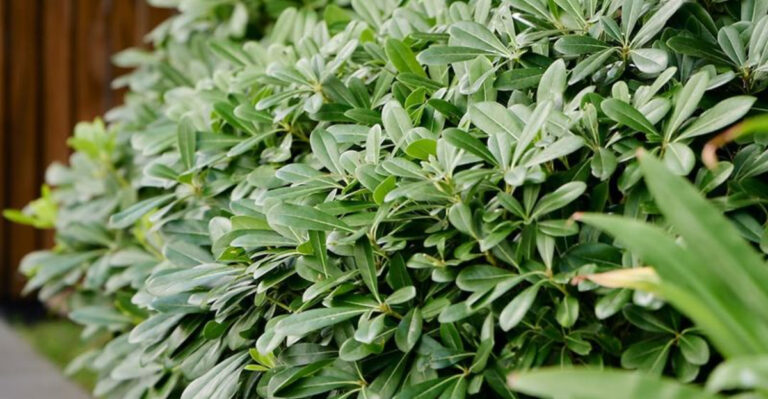
9. Pittosporum Quickly Gets Bigger Than Expected
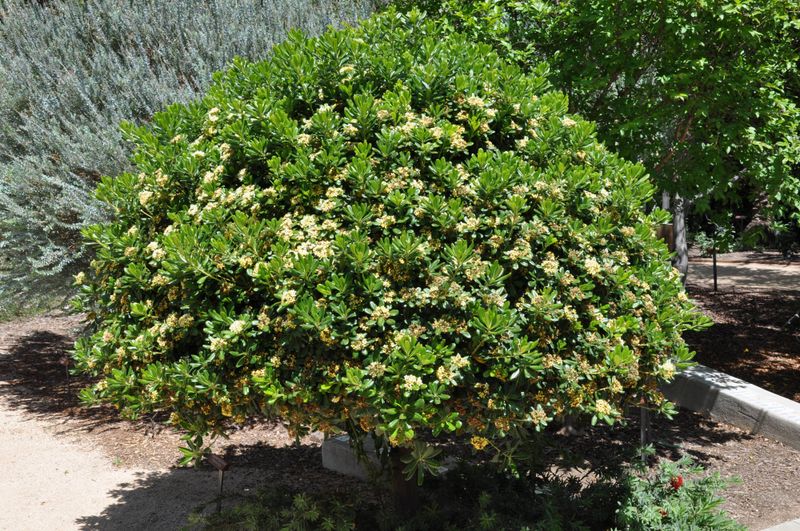
Pittosporum tobira shows up in South Florida landscapes regularly, and it is easy to see why. The dense, glossy foliage looks polished, it tolerates a range of conditions including salt spray and some drought, and it holds its shape reasonably well for a while.
Homeowners often reach for it when they want a refined-looking foundation planting or a formal hedge along a walkway.
The part that catches people off guard is the eventual size. Standard Pittosporum tobira can reach 10 to 12 feet tall and spread just as wide under good growing conditions, and South Florida’s climate is generous enough to push it toward those dimensions steadily.
A shrub planted under a window or beside an entryway can start blocking views and crowding architecture within a few years, turning what felt like a neat landscape choice into a repeated trimming commitment.
Dwarf cultivars like Pittosporum tobira ‘Wheeler’s Dwarf’ stay much more compact and are a smarter pick for tight foundation spaces. Matching the right cultivar to the available space is the single most effective way to avoid turning Pittosporum into a constant project.
For homeowners already dealing with an oversized standard variety, regular pruning in late winter and again mid-season can keep it manageable, but expect to stay consistent with it throughout the year.