9 Shrubs That Bloom More When Pruned In Winter In Virginia
In Virginia gardens, winter may seem like a quiet season, yet it holds secret power for shrubs.
Proper pruning now sets the stage for bursts of blooms that surprise and delight come spring.
Many shrubs respond to winter cuts by sending energy straight into flower production, rather than wasted on old or crowded growth.
Miss this window, and the season arrives with weaker blooms or tangled branches that steal the show for all the wrong reasons.
Timing, technique, and plant choice all matter—Virginia’s climate rewards careful planning and punishes guesswork.
From early-flowering classics to showy favorites that dominate landscapes, the right winter pruning keeps shrubs healthy, balanced, and eager to perform.
1. Butterfly Bush (Buddleia davidii)

Butterfly bush stands out as one of the most rewarding shrubs for winter pruning in Virginia gardens.
This fast-growing plant produces flowers on new wood, which means cutting it back hard in late winter encourages vigorous new stems packed with blooms.
Most gardeners cut their butterfly bushes down to about 12 inches from the ground between February and early March.
This aggressive pruning might look severe, but the shrub responds by sending up multiple strong shoots that will be covered in fragrant flower spikes by midsummer.
These cone-shaped blooms attract butterflies, hummingbirds, and bees, creating a lively garden scene.
Without winter pruning, butterfly bushes can become leggy and produce fewer flowers on thin, weak branches.
The blooms come in purple, pink, white, and yellow varieties, giving gardeners plenty of color options.
Virginia’s climate suits this shrub perfectly, and with proper winter pruning, you can expect flowers from July through the first frost.
Regular pruning also keeps the plant manageable in size and prevents it from becoming too woody.
Many Virginia gardeners consider this shrub essential for pollinator-friendly landscapes.
2. Crape Myrtle (Lagerstroemia indica)
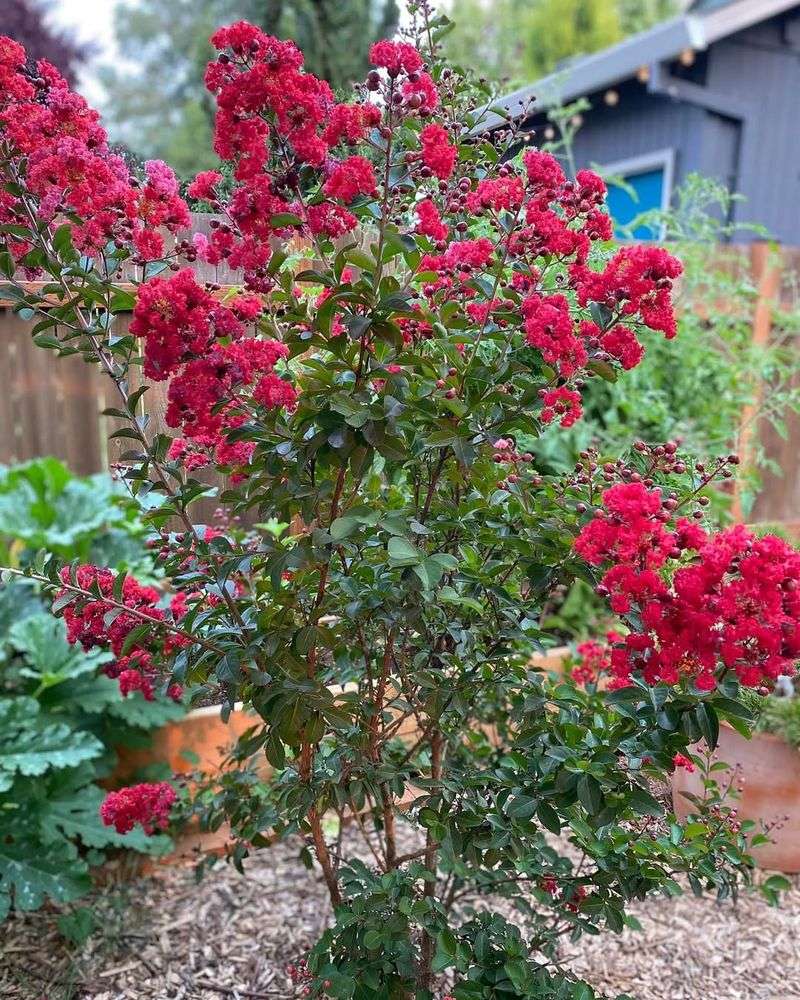
Few shrubs respond as dramatically to winter pruning as crape myrtle, a beloved staple in Virginia gardens.
Pruning during dormancy, typically in late February or early March, promotes explosive bloom production on the current season’s growth.
The key is removing crossing branches, thinning out crowded areas, and cutting back to strong lateral branches rather than topping the plant.
Proper winter pruning creates an open structure that allows air circulation and sunlight to reach the center of the shrub.
This results in healthier growth and more abundant flower clusters in shades of pink, red, purple, or white.
Crape myrtles bloom from mid-summer through fall, providing months of color in the landscape.
Virginia gardeners should avoid the common mistake of severe topping, sometimes called crape murder, which creates weak growth and fewer blooms.
Instead, selective pruning encourages the natural vase shape and produces stronger branches that support heavy flower clusters.
The smooth, peeling bark adds winter interest even when the plant is dormant.
With consistent winter pruning, crape myrtles become more floriferous each year, rewarding patient gardeners with spectacular summer displays.
3. Rose of Sharon (Hibiscus syriacus)

Rose of Sharon transforms from a simple shrub into a flowering powerhouse when given proper winter attention.
This hardy hibiscus blooms on new wood, making late winter the perfect time to shape and rejuvenate the plant.
Pruning in February or early March, before buds swell, encourages the shrub to produce more flowering shoots.
Gardeners can cut back up to one-third of the old growth, focusing on removing weak or damaged branches.
This stimulates fresh growth that will carry large, tropical-looking flowers in late summer when many other shrubs have finished blooming.
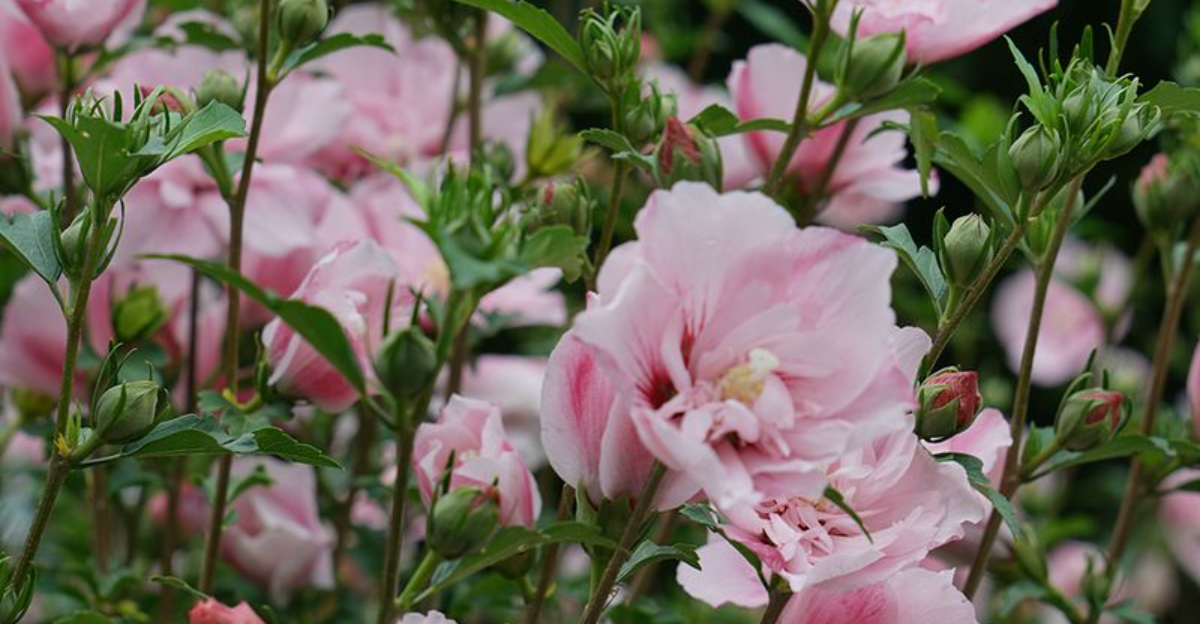
The flowers resemble hollyhocks and come in colors ranging from white to pink, purple, and blue, often with contrasting centers.
Without winter pruning, Rose of Sharon can become tall and sparse with flowers concentrated at the top.
Regular pruning keeps the shrub compact and covered in blooms from top to bottom.
Virginia’s climate provides the perfect growing conditions for this adaptable plant.
Each flower lasts only a day, but the plant produces so many buds that the display continues for weeks.
Winter pruning ensures maximum flower production throughout the blooming season.
4. Smooth Hydrangea (Hydrangea arborescens)
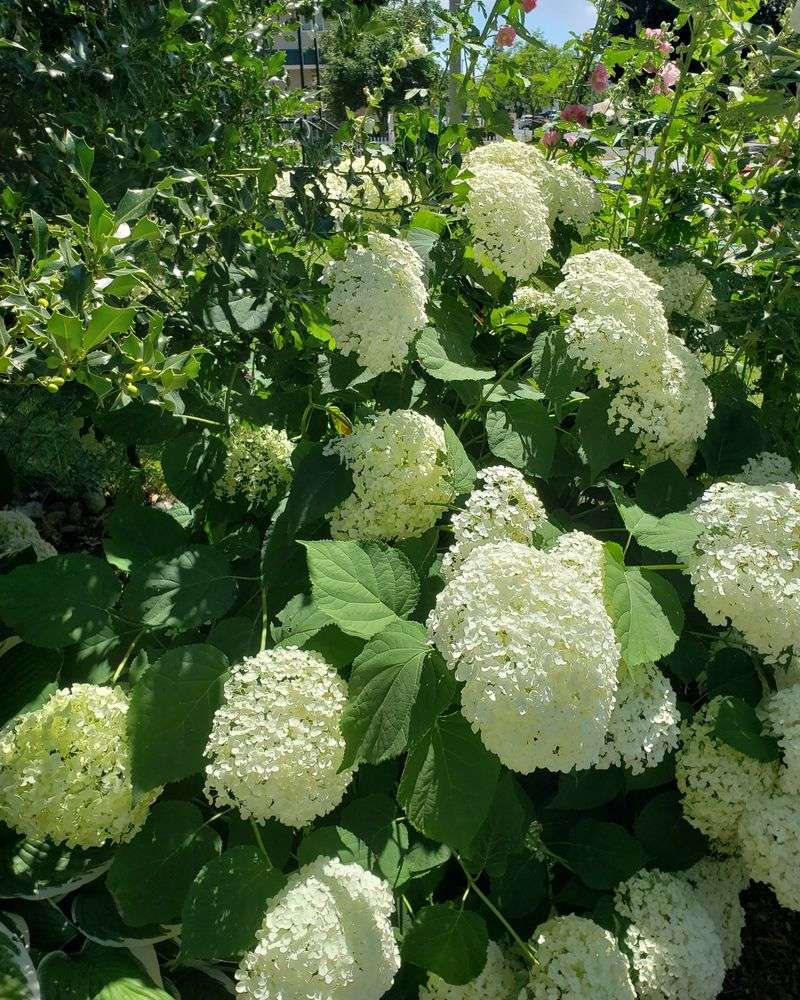
Smooth hydrangea varieties like the popular Annabelle produce their impressive flower heads on current season’s growth.
Cutting these shrubs back hard in late winter, around late February or early March, results in stronger stems and larger blooms.
Many Virginia gardeners prune smooth hydrangeas down to about 6 to 12 inches from the ground each year.
This aggressive approach might seem extreme, but it prevents the floppy stems that can’t support the weight of those massive white flower heads.
The new growth that emerges after winter pruning is sturdy and upright, capable of holding the blooms without staking.
Smooth hydrangeas bloom from early summer through fall, providing months of garden interest.
The large, rounded flower clusters start out lime green, mature to bright white, and then fade to an attractive tan that persists into winter.
Without regular winter pruning, these shrubs become woody at the base and produce fewer, smaller flowers on weak stems.
Virginia’s growing season gives pruned smooth hydrangeas plenty of time to develop strong new growth before flowering begins.
This native shrub tolerates shade better than many other hydrangeas, making it valuable for woodland gardens.
5. Panicle Hydrangea (Hydrangea paniculata)
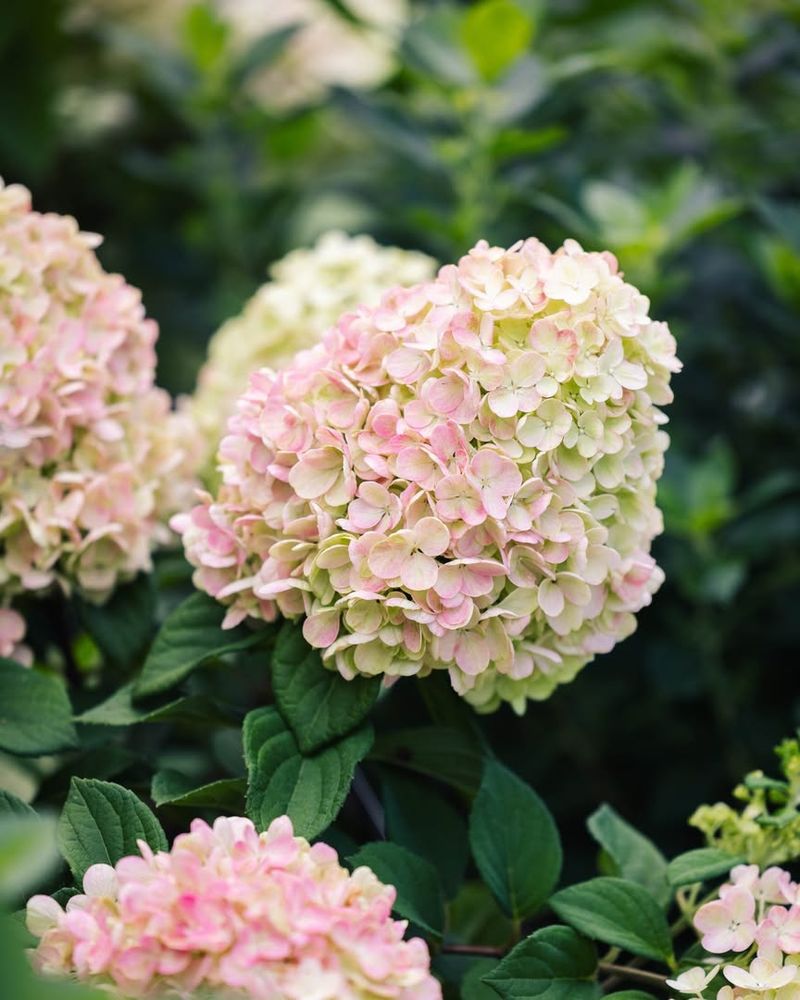
Panicle hydrangeas reward winter pruning with an abundance of cone-shaped flower clusters that age through beautiful color transitions.
Popular varieties like Limelight and Quick Fire bloom on new wood, making late winter pruning essential for maximum flower production.
Pruning in February or early March encourages vigorous new growth that will support the large panicle-shaped blooms.
Gardeners can remove about one-third of the oldest stems at ground level and cut back remaining stems by one-third to one-half.
This selective pruning creates a balanced framework that produces numerous flowering branches.
The flowers emerge in early to mid-summer and continue through fall, often changing from white to pink as they mature.
Panicle hydrangeas are among the most sun-tolerant hydrangeas, thriving in Virginia’s hot summers when properly pruned.
The sturdy stems produced after winter pruning hold up the heavy flower clusters without drooping.
Unpruned panicle hydrangeas tend to become leggy with sparse flowering, while regularly pruned specimens develop into full, floriferous shrubs.
Virginia gardeners appreciate how these hydrangeas adapt to various soil conditions and maintain their ornamental value even as flowers fade to attractive dried forms.
6. Bluebeard (Caryopteris × clandonensis)
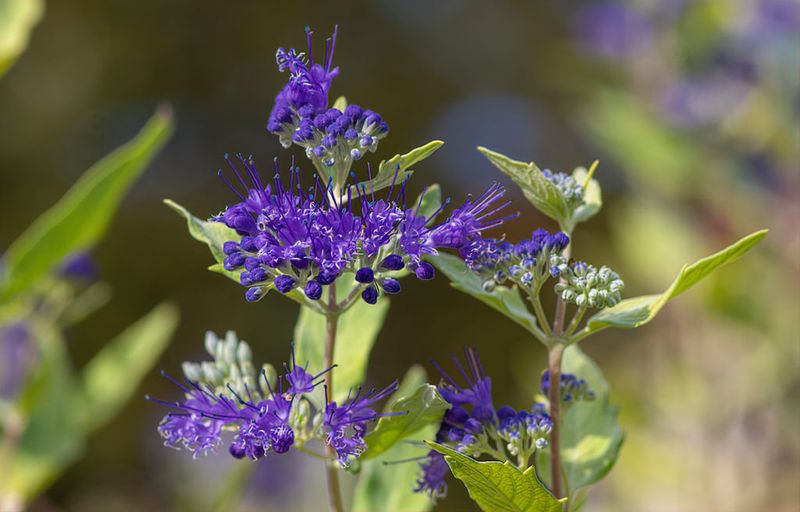
Bluebeard brings a welcome splash of true blue color to Virginia gardens in late summer, but only when pruned correctly in winter.
This compact shrub blooms exclusively on new growth, making late winter pruning absolutely necessary for flower production.
Cut the entire plant back to about 6 to 12 inches from the ground in late February or early March, before new growth begins.
This severe pruning might look harsh, but bluebeard responds by producing numerous new stems covered in aromatic gray-green foliage.
By late summer, these stems will be topped with clusters of fuzzy blue-purple flowers that attract bees and butterflies.
Without winter pruning, bluebeard becomes woody and produces minimal flowering on weak, straggly growth.
The plant naturally has a somewhat loose, mounding habit that benefits from the structure created by annual hard pruning.
Virginia’s climate suits this shrub well, though it appreciates good drainage and full sun for best flowering.
The late-season blooms fill a gap when many spring and early summer bloomers have finished.
Regular winter pruning keeps the plant compact and ensures it remains covered in flowers rather than becoming a tangle of old wood with sparse blooms.
7. Summersweet (Clethra alnifolia)
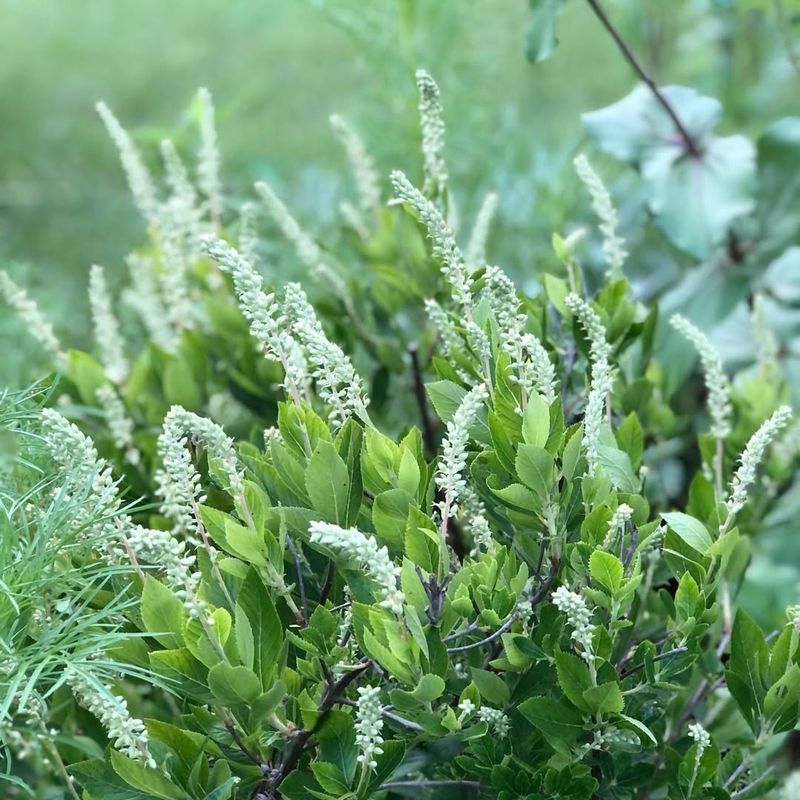
Summersweet produces its wonderfully fragrant flower spikes on new wood, making winter pruning beneficial for abundant blooms.
This native Virginia shrub naturally grows in woodland edges and moist areas, where it blooms in mid to late summer.
Pruning in late winter, around February or early March, encourages the production of fresh flowering stems.
Remove about one-third of the oldest stems at ground level to rejuvenate the shrub and promote new growth from the base.
You can also tip back the remaining stems to encourage branching, which results in more flower spikes.
The spicy-sweet fragrance of the white or pink bottlebrush-shaped flowers fills the garden and attracts butterflies and bees.
Summersweet tolerates shade better than many flowering shrubs, making it valuable for woodland gardens where winter pruning helps maintain vigor.
Without periodic pruning, older stems become less productive and the shrub can look congested.
Winter pruning opens up the center, improves air circulation, and stimulates the production of strong new stems that will bloom profusely.
Virginia gardeners value this native plant for its adaptability to wet soils and its reliable late-season flowers that appear when many other shrubs have finished blooming.
8. Abelia (Abelia × grandiflora)
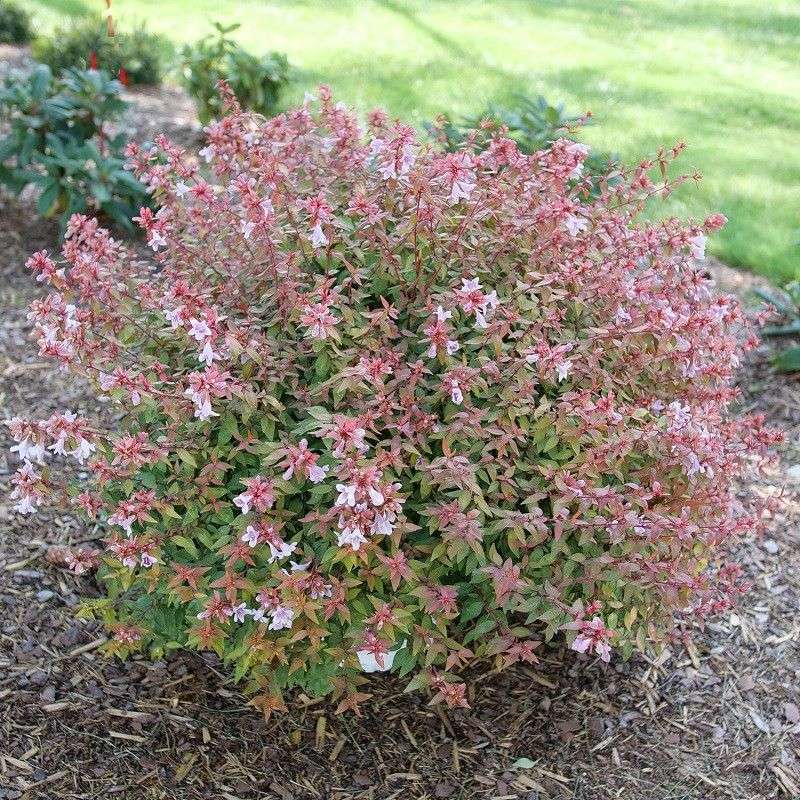
Abelia produces its delicate tubular flowers continuously throughout the growing season, especially when shaped during winter dormancy.
This semi-evergreen shrub blooms on new growth, so late winter pruning in February or early March promotes fresh flowering stems.
Selective pruning involves removing the oldest stems and cutting back overgrown branches to maintain a compact, rounded shape.
The shrub responds by producing numerous new shoots that will bloom from late spring through fall.
Abelia flowers are small but abundant, creating a cloud of pink-tinged white blooms that attract hummingbirds and butterflies.
The glossy foliage often develops bronze tints in fall and winter, adding multi-season interest.
Without winter pruning, abelia can become leggy and open in the center with reduced flowering.
Regular pruning keeps the plant dense and covered in blooms rather than sparse and woody.
Virginia’s climate allows abelia to retain much of its foliage through winter in milder areas, though it may drop leaves during harsh cold spells.
The extended bloom period makes this shrub valuable for continuous color, and winter pruning ensures maximum flower production throughout the long growing season.
Many gardeners appreciate how abelia adapts to various garden conditions while maintaining its ornamental appeal.
9. Vitex (Vitex agnus-castus)
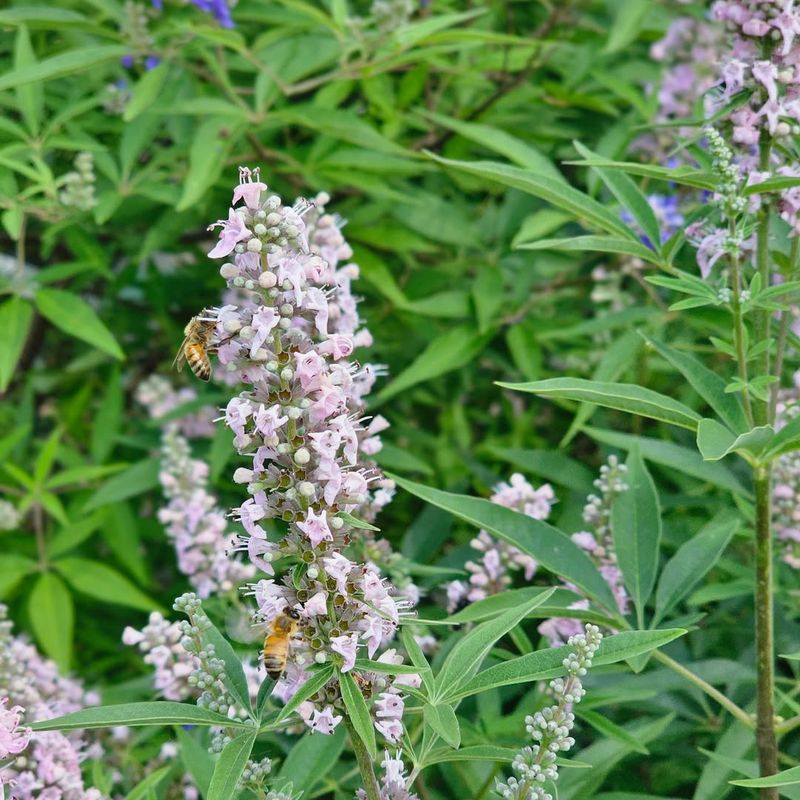
Vitex, commonly called chaste tree, produces spectacular spikes of lavender-blue flowers on current season’s growth.
Winter pruning is essential for this shrub in Virginia, where it often behaves more like a perennial that regenerates from the base each spring.
Cut the entire plant back to about 12 inches from the ground in late February or early March, before new growth emerges.
This hard pruning eliminates any winter-damaged wood and stimulates vigorous new shoots that will bloom in mid to late summer.
The aromatic palmate leaves emerge on the new growth, followed by tall spikes of fragrant flowers that attract butterflies and bees.
Without winter pruning, vitex can become a tangled mess of old wood with sparse flowering on weak stems.
Regular hard pruning keeps the plant manageable in size and ensures abundant flower production.
Virginia’s growing season gives pruned vitex plenty of time to reach flowering size, typically blooming from July through September.
The flowers appear in shades of blue, purple, pink, or white depending on the variety.
Many gardeners treat vitex as a large herbaceous perennial rather than a woody shrub, cutting it back annually for best results and maximum blooms throughout the summer months.