8 Shrubs That Quickly Create A Natural Privacy Screen For Georgia Yards
Open views in Georgia yards can feel comfortable at first, then quickly turn into a lack of privacy once neighbors, streets, and nearby activity become part of the daily backdrop. That shift becomes more noticeable as outdoor spaces get used more often, especially during warmer months.
Many look for a solution that feels natural instead of closed off, yet not every option fills in the way it should. Gaps stay visible, growth comes in uneven, and the space never quite feels fully enclosed.
Certain shrubs change that experience in a clear way. They fill out with purpose, create a more solid boundary, and shape the yard into something that feels more private without losing its character.
With the right choices in place, that open feeling fades, and the yard starts to feel more settled, more comfortable, and far more complete.
1. Wax Myrtle Fills In Fast With Dense Evergreen Growth
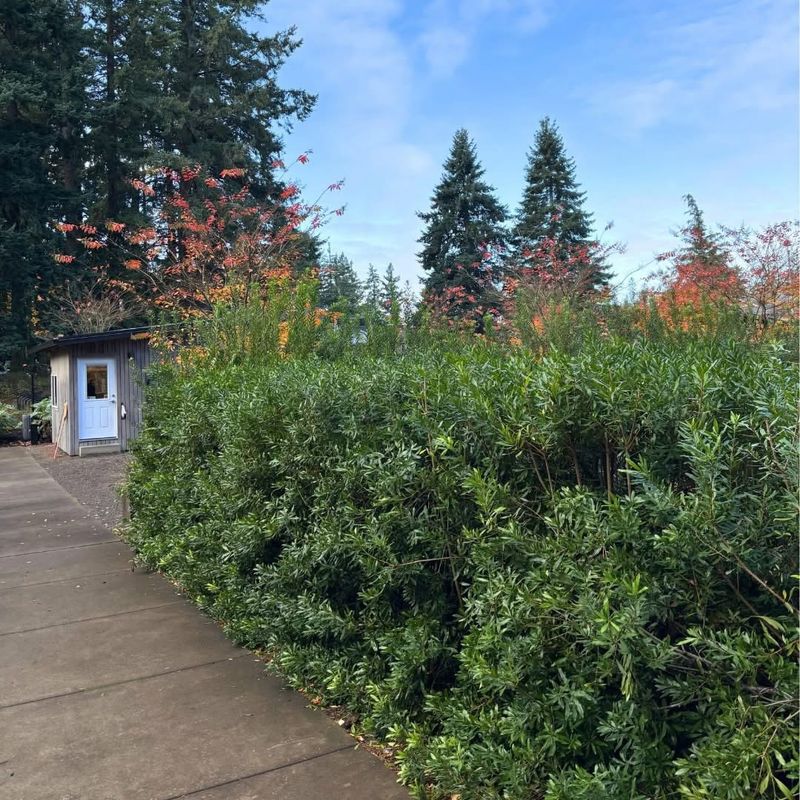
Wax Myrtle is one of those shrubs that actually earns its reputation. Planted in a Georgia yard, it can push out several feet of new growth in a single season under decent conditions, especially when given full sun and regular water during the first year.
It typically reaches anywhere from 8 to 15 feet tall at maturity, and the canopy fills in thick enough to block most sightlines without much help from pruning.
The leaves have a light, pleasant scent when brushed, and the small blue-gray berries that form in late summer pull in birds, which is a nice bonus if you enjoy wildlife in your yard.
Wax Myrtle handles a surprising range of soil types, from sandy coastal soil to heavier clay found in many parts of Georgia. It tolerates both wet spots and dry stretches better than most shrubs in this size range.
Spacing plants about six to eight feet apart gives each one enough room to spread while still allowing the canopy to close up over time. If you want a tighter screen faster, five-foot spacing works too, though you may need to thin things out later.
One thing worth knowing: Wax Myrtle can sucker from the base, sending up new shoots around the main stems. Keeping those trimmed back prevents the planting from getting too wide and keeps the hedge looking intentional rather than wild.
2. Cherry Laurel Forms A Thick Screen With Glossy Leaves
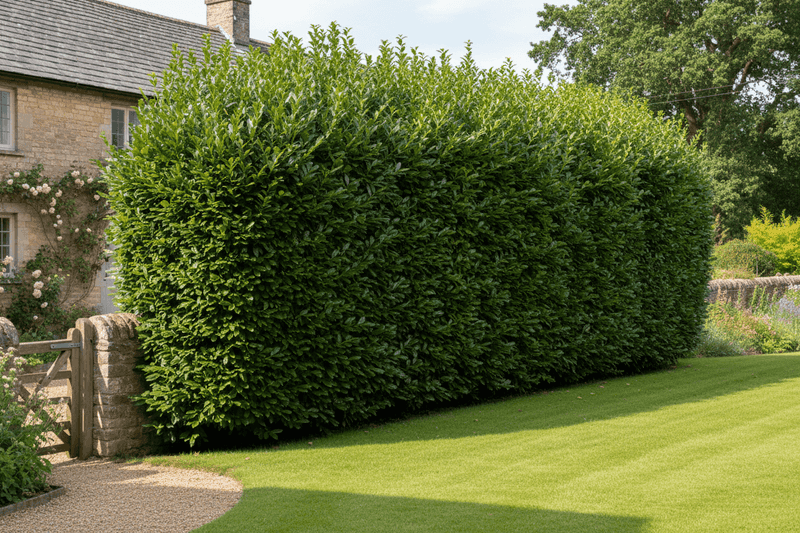
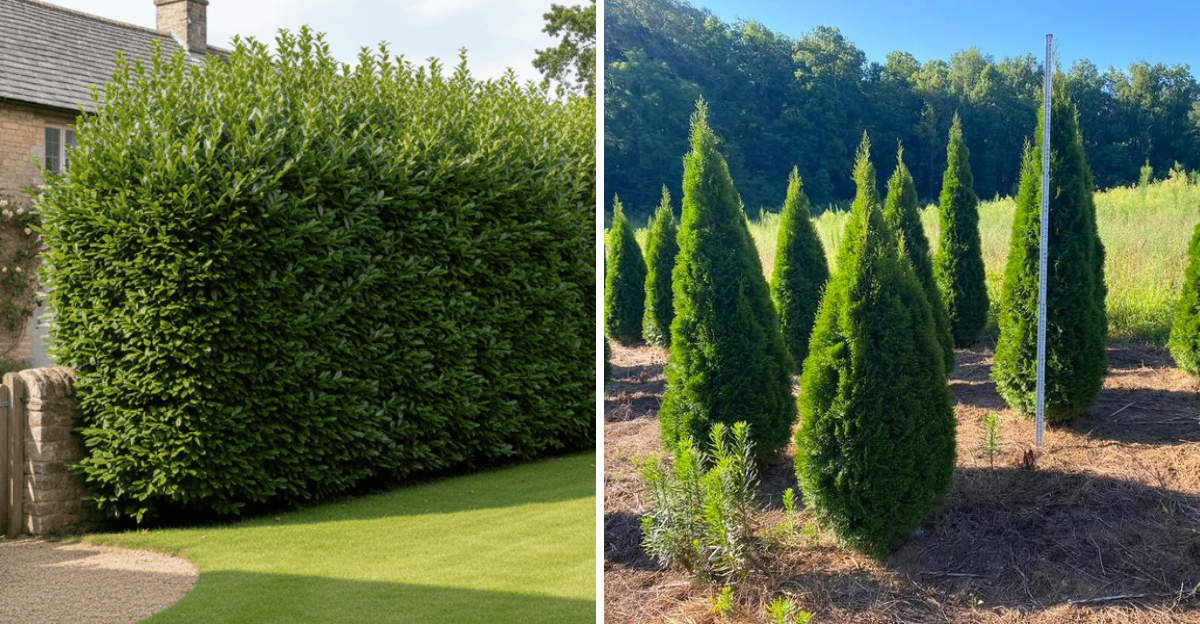
Few shrubs match Cherry Laurel when it comes to sheer density. The glossy, dark green leaves overlap tightly as the plant fills out, creating a wall of foliage that holds up year-round across most of Georgia without much fuss.
Height-wise, Cherry Laurel can reach 10 to 18 feet depending on the variety and growing conditions. Skip Laurel, one of the more popular types, stays a bit more compact and columnar, which makes it a smart pick for narrower spaces where you need height without too much width.
Growth rate is genuinely solid. In Georgia’s climate, you can expect two to three feet of new growth per year when the plant is settled in and getting adequate sun.
Your Georgia Garden Changes Every Week. Your Plan Should Too.
Gardening in Georgia changes quickly throughout the season. Every Friday you’ll receive a simple weekly plan showing exactly what to plant, prune, fertilize, harvest, and protect so you never miss the right timing.
Partial shade works too, though growth slows a bit compared to full sun spots.
Spacing around five to six feet apart is a good starting point for most privacy applications. Planted in a straight line, a row of Cherry Laurel starts looking like a real screen within two to three seasons rather than a scattered collection of individual plants.
Soil drainage matters more with this shrub than some people realize.
Cherry Laurel does not do well sitting in standing water for extended periods, so if your yard has low spots that stay soggy after rain, amending the soil or choosing a slightly elevated planting line will help the plants stay healthy and keep growing steadily.
3. Arborvitae Builds Height Quickly For Full Coverage
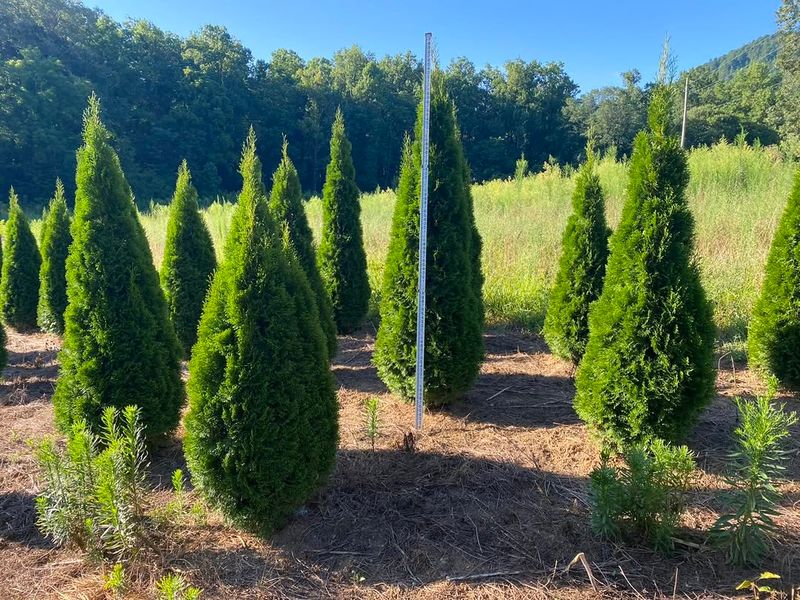
Straight, tall, and reliably dense, Arborvitae is one of the most recognizable privacy plants in American yards, and it performs reasonably well across much of Georgia when planted in the right conditions.
Emerald Green Arborvitae is the variety most homeowners reach for first.
It stays narrow, topping out around 10 to 15 feet tall with a spread of just three to four feet, which makes it a practical option along fences, property lines, or anywhere you need vertical coverage without sacrificing too much horizontal space.
Growth rate runs about one to two feet per year under normal conditions, so patience is part of the deal. That said, planting a row of them six feet apart and giving them a good start with proper watering during the first summer sets you up for a solid screen within four to five years.
One honest caveat for Georgia gardeners: Arborvitae prefers well-drained soil and does not love the combination of high humidity and heavy clay that shows up in parts of the state. Root rot can become a problem in poorly draining spots, so raised planting beds or amended soil help considerably in those situations.
Bagworms are also something to watch for during summer. They are manageable if caught early, but they can strip foliage quickly if left alone.
A quick inspection every few weeks from June through August keeps that issue under control before it becomes serious.
4. Viburnum Thickens Into A Wide, Natural Barrier
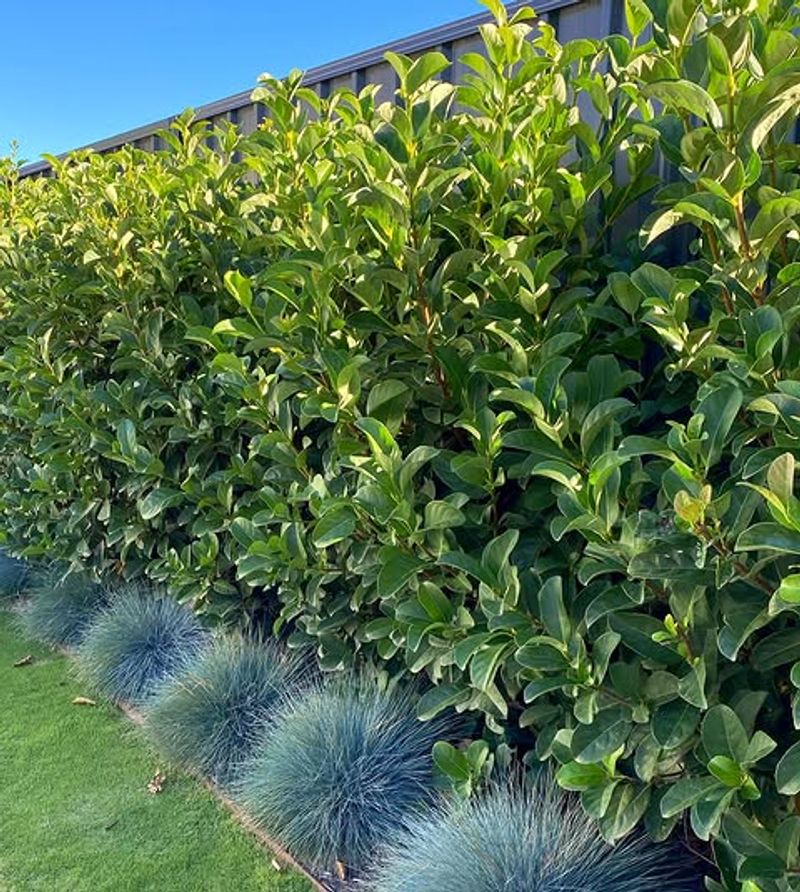
Viburnum does not just grow tall, it grows wide, and that spreading habit is exactly what makes it so effective as a natural barrier. Planted with enough room to do its thing, a mature Viburnum fills in both directions and leaves very little visible gap between plants.
Several varieties perform well in Georgia. Arrowwood Viburnum handles sun and partial shade without complaint, typically reaching six to ten feet in both height and spread.
Sweet Viburnum pushes taller, sometimes hitting 12 feet or more, and holds its leaves through Georgia winters in most parts of the state.
Spring brings clusters of small white flowers that smell pleasant and attract pollinators, which is a nice seasonal detail in a hedge that otherwise just sits there looking green. Dark berries follow in late summer and pull in birds through fall.
Spacing depends on how quickly you want coverage. Planting five feet apart speeds things up noticeably, though six to eight feet gives each shrub enough room to develop its natural shape without crowding.
A crowded hedge can trap moisture and reduce airflow, which creates problems over time.
Viburnum is fairly forgiving about soil as long as drainage is reasonable. Clay-heavy soil is manageable with some organic amendment mixed in at planting.
Watering consistently during the first full growing season after planting makes a real difference in how aggressively the plants fill out and start forming that thick, layered barrier.
5. Loropetalum Grows Dense With Year-Round Foliage
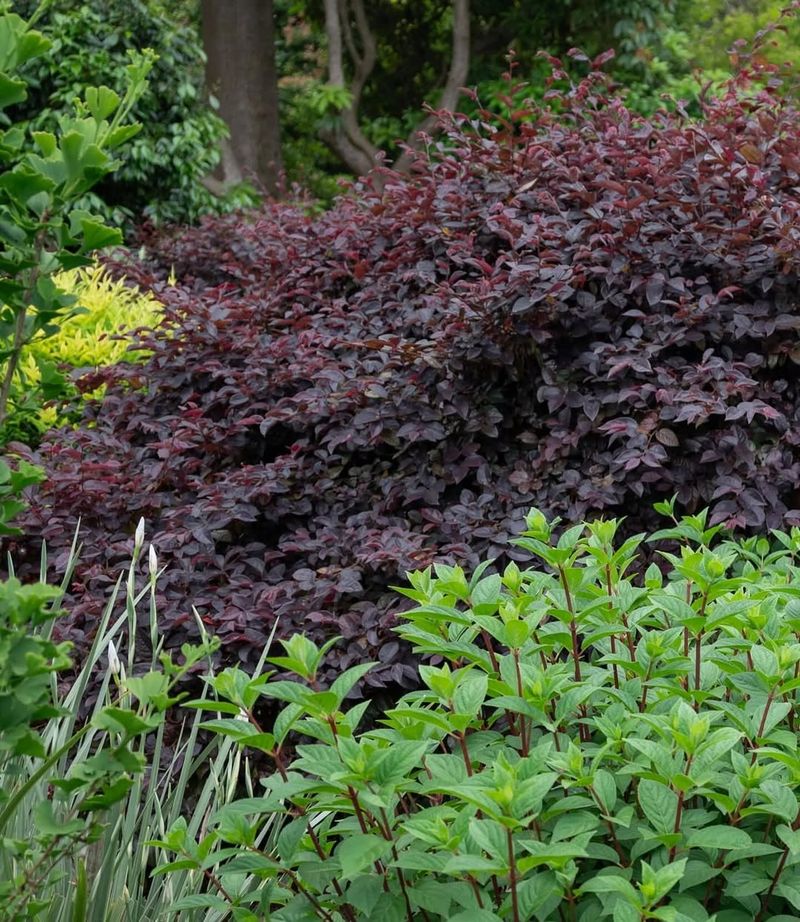
Burgundy leaves and hot pink flowers on a privacy hedge sounds like a lot, but Loropetalum pulls it off without looking overdone.
It is one of the few shrubs that gives you real color and real coverage at the same time, and it holds that foliage through Georgia winters without dropping a leaf.
Depending on the variety, Loropetalum ranges from compact four-foot mounding types all the way up to 15-foot specimens that work as true privacy screens.
For hedge use, larger varieties like Natchez or Purple Daydream in the taller selections are the ones worth looking at if height is the goal.
Growth rate is moderate, averaging roughly two to three feet per year in good conditions. Full sun brings out the deepest burgundy color in the foliage, while plants in heavy shade tend to go more green than purple, which changes the look considerably.
Loropetalum does well in Georgia’s acidic soils, which is a genuine advantage since many yards in the state naturally run on the acidic side without needing much amendment. Good drainage is still important, as waterlogged roots slow growth and weaken the plant over time.
Pruning right after the main spring bloom keeps the shape tight without cutting off next season’s flowers. Skipping pruning entirely lets the plant develop a more natural, layered form, which actually reads quite well as a privacy screen when multiple plants are grown close together in a row.
6. Holly Forms A Strong Screen With Evergreen Foliage
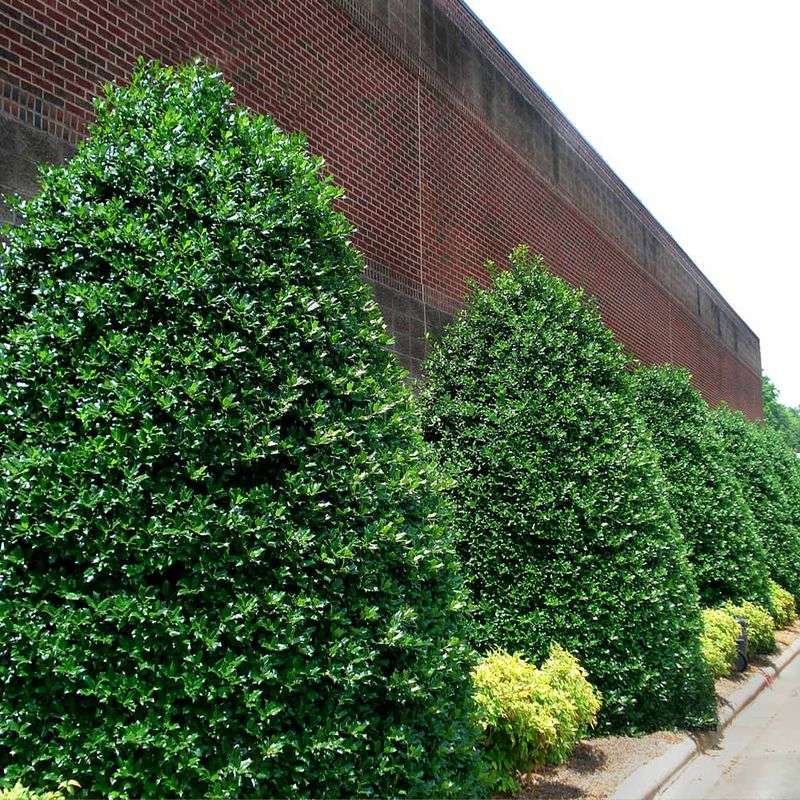
Nellie Stevens Holly is the kind of plant that takes its job seriously. Planted along a property line in Georgia, it grows into a dense, upright screen that holds its dark green leaves all year and eventually gets tall enough to block second-story views if that is what you need.
Mature height typically falls between 15 and 20 feet, with a spread of around eight to ten feet. Growth moves at a reasonable pace, usually two to three feet per year when the plant is getting full sun and consistent moisture during establishment.
Red berries appear in fall and last well into winter, which adds some visual interest to what is otherwise a very green plant. Birds tend to clean them off by late winter, so the show is seasonal but reliable most years in Georgia.
Spacing plants six to eight feet apart creates a solid row that fills in over three to four seasons. Tighter spacing speeds up coverage but can lead to competition for nutrients and light as the plants mature, so six feet is generally the practical minimum for long-term health.
Holly tolerates clay soil better than many shrubs, which matters in Georgia where heavy clay is common in yards that have been graded or developed.
Adding a few inches of mulch around the base helps retain moisture and keeps the root zone cooler during hot summers, which Georgia yards see plenty of from June straight through September.
7. Abelia Spreads Into A Soft, Semi-Evergreen Hedge
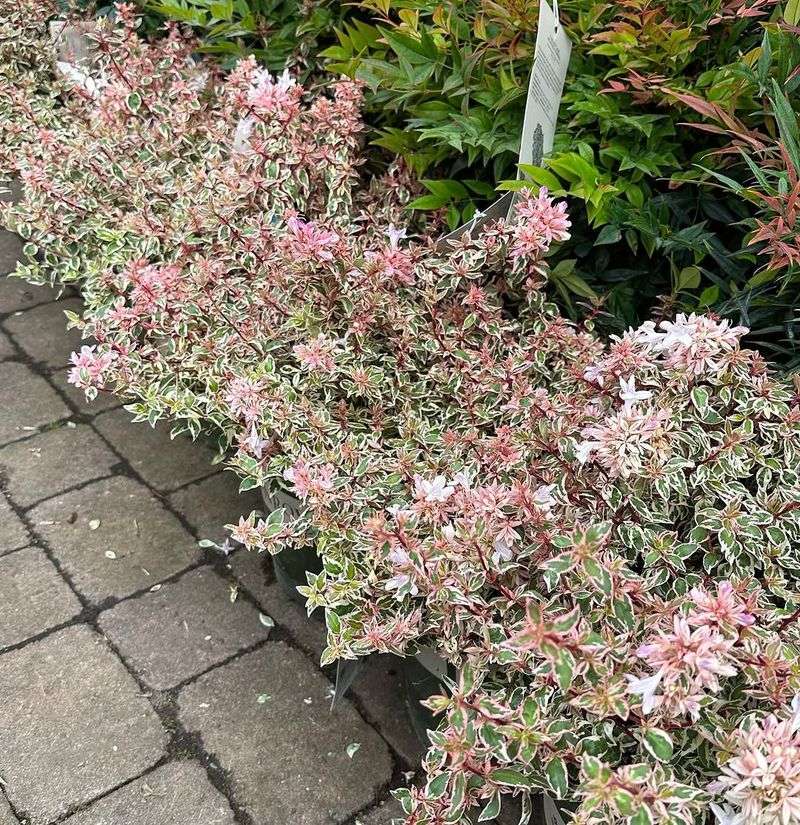
Abelia does not try to be a wall. Instead, it builds a softer, more layered kind of privacy that looks like it grew there naturally rather than being planted on purpose, which is exactly the appeal for yards where a rigid formal hedge would feel out of place.
Glossy Abelia is the most common variety in Georgia, and it earns that spot through consistent performance.
Arching branches covered in small white and pink tubular flowers through summer and into fall give it a lighter, more relaxed look compared to the denser hedging shrubs on this list.
Height tops out around five to six feet for most standard varieties, with a spread that can match or slightly exceed the height. Compact cultivars stay closer to three to four feet if you want something lower along a patio edge or walkway.
Growth rate is moderate, around one to two feet per year, so Abelia is not the fastest option available. Planted three to four feet apart and given a full growing season to settle in, a row of Abelia starts closing up into a recognizable hedge by the second or third year.
Abelia holds most of its leaves through Georgia winters, though some leaf drop happens during colder stretches, especially in the northern parts of the state. New growth comes back quickly in spring and the plant fills back in without much intervention.
Regular light pruning after the main summer bloom keeps the arching habit tidy without removing too much of the flowering wood.
8. Tea Olive Creates A Fragrant And Dense Privacy Screen
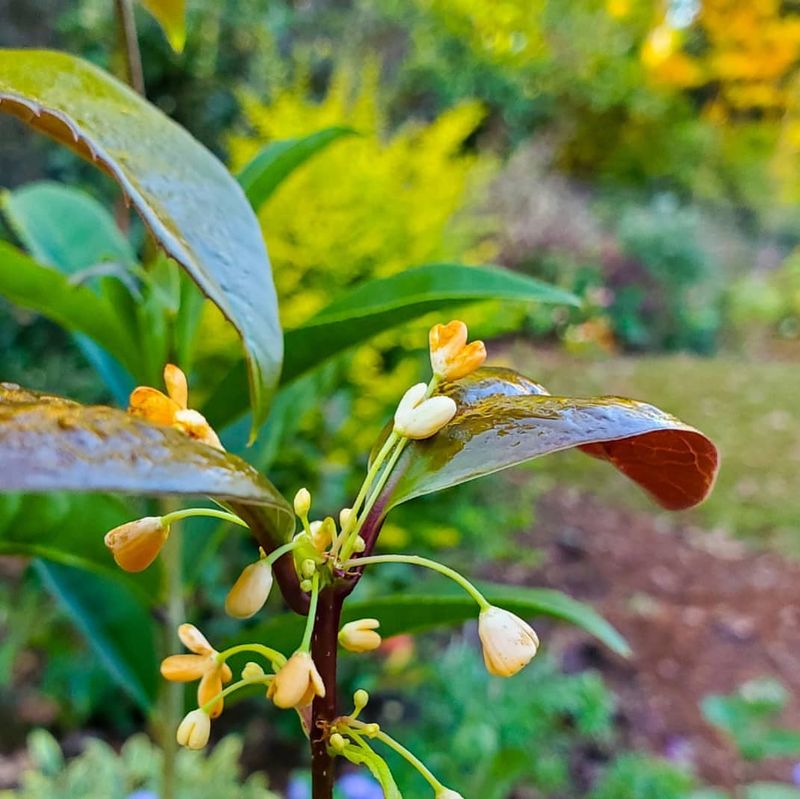
Walk past a Tea Olive in bloom and you will stop in your tracks.
The tiny white flowers put out a sweet, almost fruity fragrance that carries across a yard, and because Tea Olive blooms multiple times a year in Georgia, that scent shows up in fall, winter, and again in spring.
Beyond the fragrance, Tea Olive is a genuinely solid privacy plant. It can reach 8 to 20 feet tall depending on the variety and growing conditions, with a dense canopy of dark, glossy leaves that stay on the plant year-round.
Fortune’s Tea Olive tends to push taller and faster, while Fragrant Tea Olive stays a bit more compact and rounded.
Growth rate is moderate rather than fast, so plan for three to five years before a newly planted row reaches its full screening potential. Full sun speeds things up; partial shade produces acceptable results but noticeably slower growth.
Spacing plants six to eight feet apart gives each one room to develop its natural form while still allowing the canopy to close into a connected screen over time. Closer spacing works if you need faster coverage, though the plants may need thinning later.
Tea Olive performs well in Georgia’s acidic soils and handles the heat of a full southern summer without much stress.
Consistent watering during the first growing season after planting helps roots get established before the plant faces its first real summer drought stretch, which can show up fast in Georgia from July onward.