Signs Your California Lawn Has Chinch Bugs Instead Of Drought (And What To Do About It)
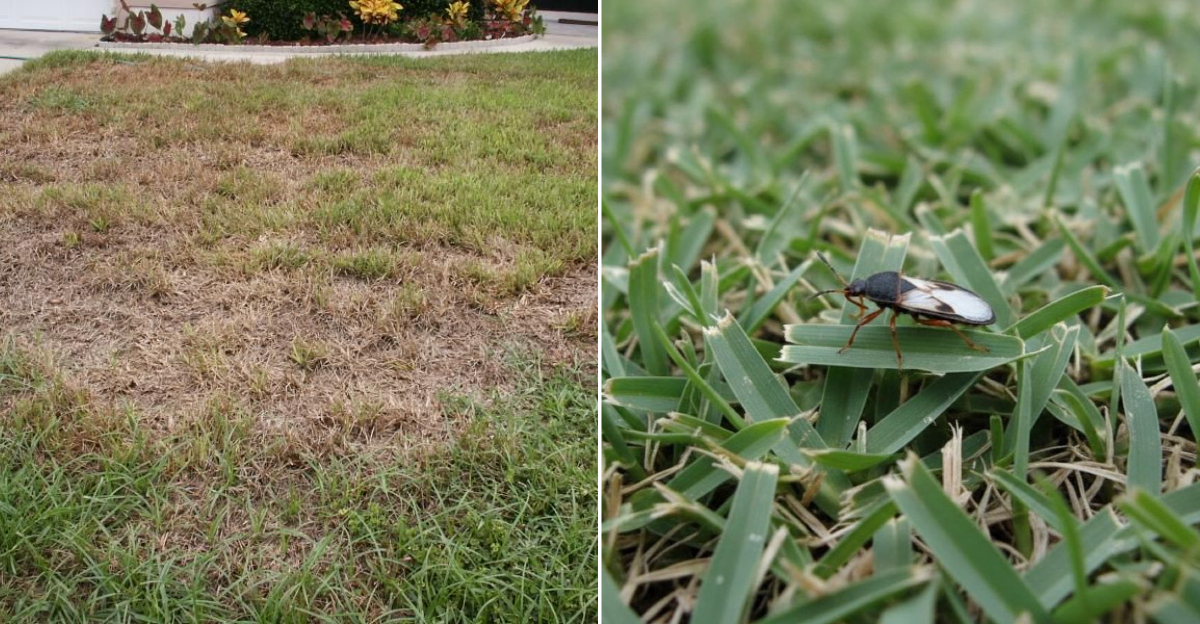
A brown lawn in California summer is easy to blame on drought. Most homeowners do exactly that, cut back watering, wait for cooler weather, and wonder why the brown patches keep spreading instead of recovering.
Drought and chinch bug damage look almost identical on the surface, and that is what makes this particular problem so easy to misread. The difference matters a lot because the response to each one is completely opposite.
Water a drought stressed lawn and it bounces back. Water a chinch bug infested lawn and you are actually making their environment more comfortable.
By the time most people figure out what they are actually dealing with, the damage has spread well beyond where it started.
Knowing how to tell the two apart early is what stops a small patchy area from turning into a much bigger and more expensive problem before the end of summer.
1. Watering Doesn’t Bring The Brown Spots Back
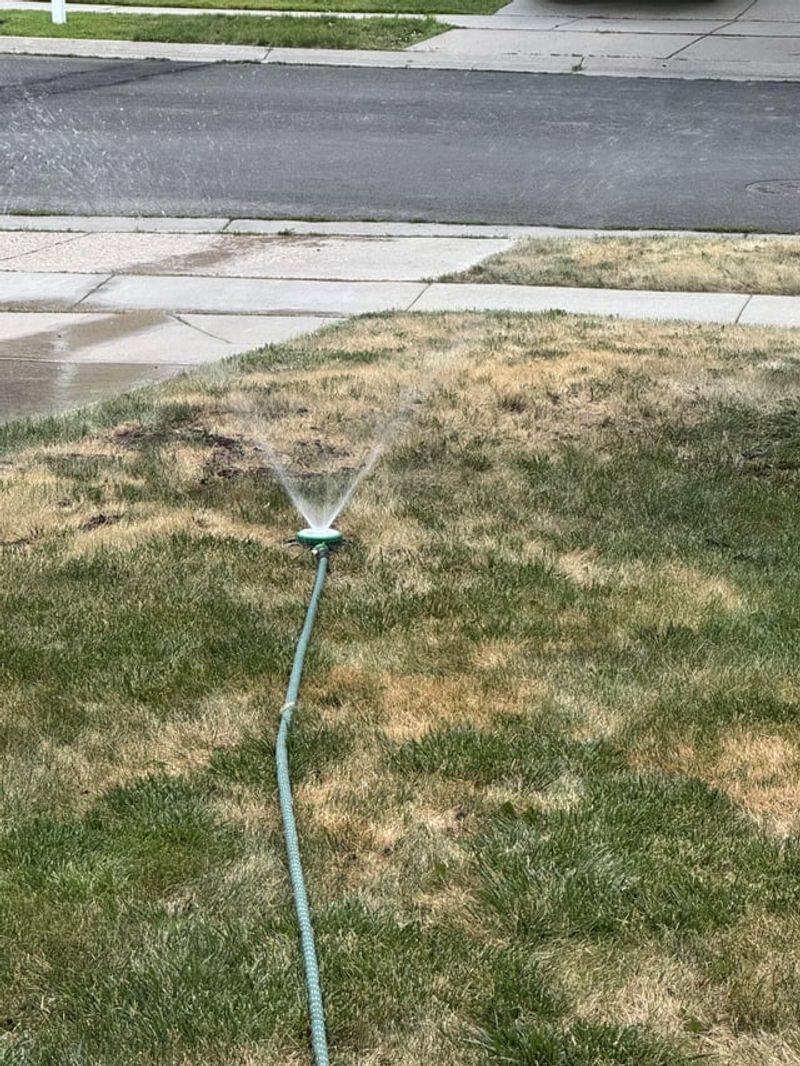
Most people assume brown grass just needs water. So they turn on the sprinklers, wait a few days, and expect to see green coming back.
With drought stress, that often works.
Chinch bug damage is different. The grass stays yellow, brown, or completely wrecked even after several deep watering sessions.
That happens because chinch bugs do not just dry out the grass. They feed at the crown and stem area, injecting a substance that blocks the grass from moving water through its own tissue.
Even when the roots get moisture, the grass cannot use it properly. The damage looks like drought, but watering does not fix it.
That is one of the biggest clues you are dealing with bugs, not just dry weather.
UC IPM lists chinch bugs among the insects that can damage lawns in our state. Their turfgrass guidance also says treatment should only happen after monitoring confirms a real infestation.
So before reaching for a pesticide, take time to observe the lawn carefully over several watering cycles. If the brown spots stay brown no matter how much water you give them, start looking for other signs of chinch bug activity in those same areas.
2. Sunny Hot Spots Are The First Places To Check
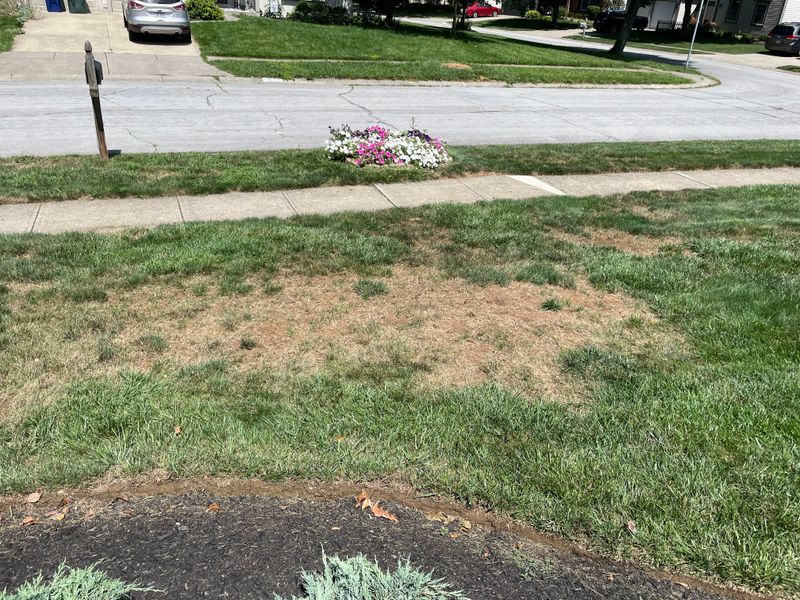
Walk your yard on a hot afternoon and notice which spots look the worst. Chinch bugs love warmth.
They are most active in sunny, dry areas of the lawn, especially along sidewalks, driveways, and fence lines that absorb heat.
That is exactly why chinch bug damage gets confused with drought stress so often. Both problems show up first in the hottest, driest-looking parts of the yard.
It feels like a natural fit to blame the sun and the lack of rain.
But here is what sets chinch bug damage apart. Drought stress tends to spread more evenly across the whole lawn.
Chinch bug injury is more concentrated in those specific warm zones, and it keeps getting worse even when nearby shaded areas look fine.
During late spring and summer in our state, sunny yards become prime territory for these pests. Temperatures in exposed lawn areas can climb well above the air temperature, which is exactly the kind of environment chinch bugs prefer.
Your California Garden Changes Every Week. Your Plan Should Too.
Gardening in California changes quickly throughout the season. Every Friday you’ll receive a simple weekly plan showing exactly what to plant, prune, fertilize, harvest, and protect so you never miss the right timing.
If you notice the damage is always worst in the sunniest corners, and watering those spots does not help, that is a strong reason to start checking for bugs rather than just blaming the weather.
3. Moist Soil With Crispy Grass Is A Red Flag
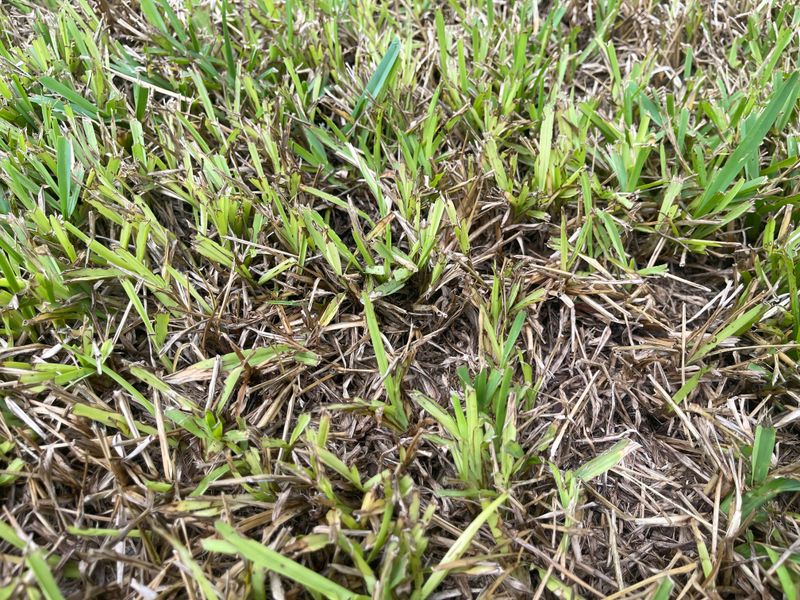
Here is something that should stop you in your tracks. You push your finger into the soil under a brown patch, and the dirt feels damp.
But the grass above it looks completely dried out and crispy.
That combination does not make sense if drought is the cause. Drought stress tracks with dry soil.
When the ground is dry, the grass suffers. When the ground gets water, the grass starts recovering.
That is the normal pattern.
Chinch bug damage flips that pattern. The root zone can have plenty of moisture, but the grass still looks like it has not seen rain in weeks.
That happens because chinch bugs block the grass from moving water through its own vascular system. The water is there, but the grass cannot access it.
Finding moist soil beneath crispy grass is one of the most reliable early warning signs of chinch bug activity. It tells you the irrigation system is working and the soil is holding water.
The problem is happening above ground, at the crown and stem where the bugs are feeding. Once you spot this combination, move on to a closer inspection of the thatch layer and the edges of the damaged patch to look for the insects themselves.
4. Chinch Bug Damage Spreads In Weird Patches
Drought stress usually affects a lawn in a fairly predictable way. Low spots stay greener longer.
High spots dry out first. The whole lawn tends to look uniformly stressed when water is short.
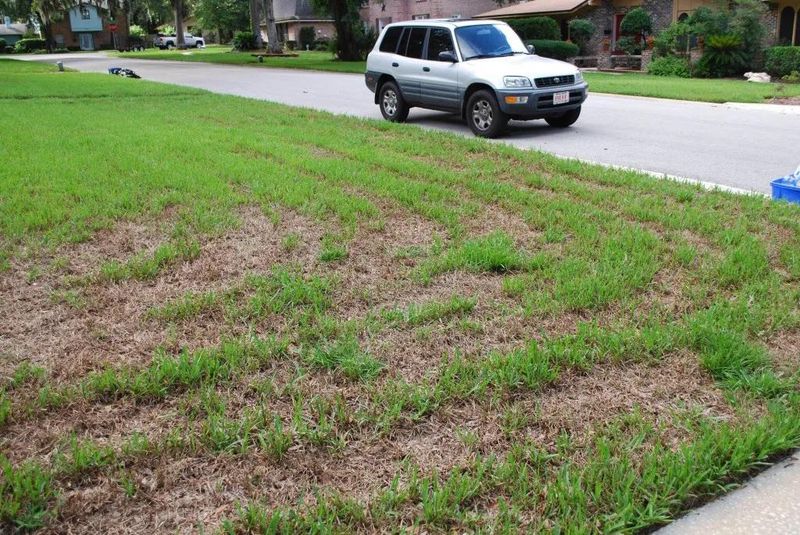
Chinch bug damage looks nothing like that. The patches are irregular, uneven, and oddly shaped.
They start small and then expand outward in strange directions. One patch might grow toward the driveway while another spreads into the middle of the lawn.
That spreading pattern happens because chinch bugs move in groups. The Pacific Northwest Handbook notes that these insects tend to aggregate, meaning they cluster together and feed in the same area before spreading outward.
As the population grows, the damage zone grows with it.
Watching how the damage moves over time is a useful diagnostic tool. Take a photo of the affected area and check it again a week later.
If the brown zone has expanded outward from its edges in an uneven, creeping pattern, that behavior points strongly toward an insect problem rather than drought. Drought patches do not typically expand during periods when you are still watering.
Chinch bug patches can keep growing even when you are running the sprinklers regularly, which is another reason they cause so much confusion for homeowners.
5. Tiny Bugs In The Thatch Can Give Them Away
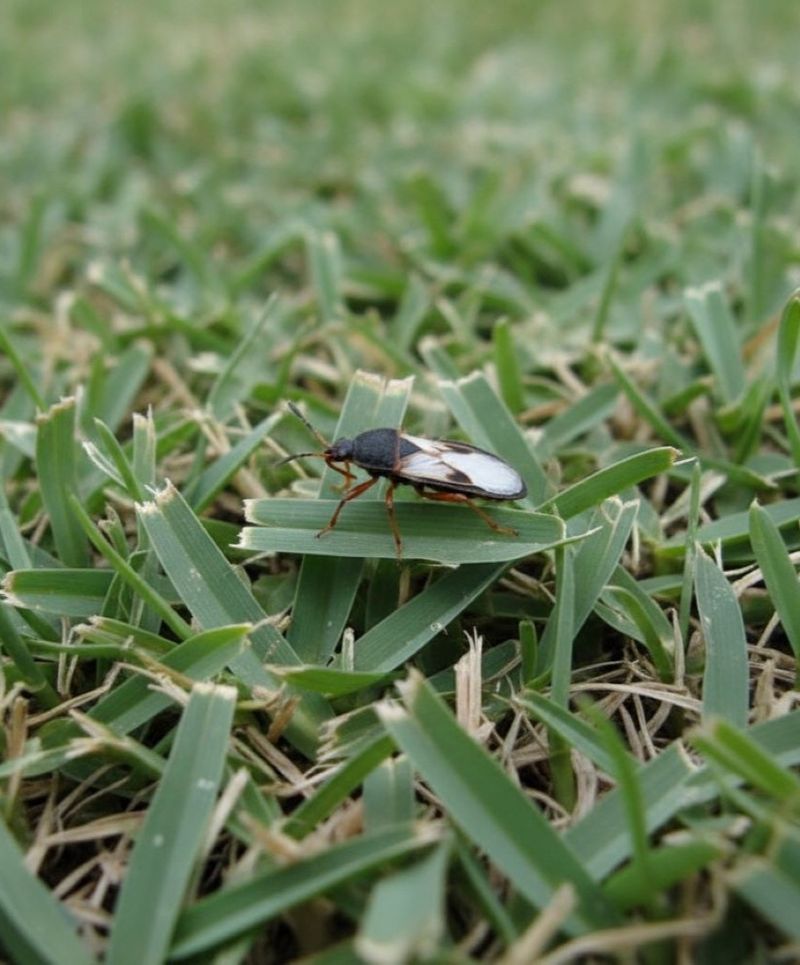
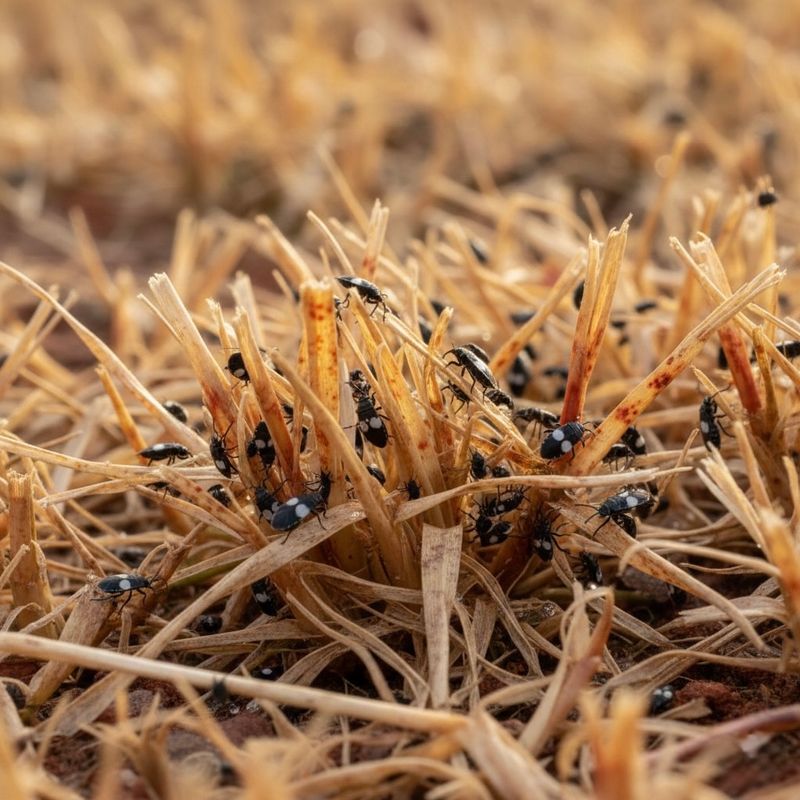
Adult chinch bugs are small, but they are visible if you know where to look. They measure about one-fifth of an inch long.
Adults are dark with pale wings that have a distinctive small triangular marking.
Nymphs look different from adults. They start out reddish or orange with a pale stripe across their back, and they darken as they mature.
Both stages feed close to the soil surface and hide in the thatch layer, which makes them easy to miss during a casual glance at the lawn.
The best place to search is not in the dead center of a brown patch. By the time grass is completely brown in the middle, the bugs have usually already moved on to fresher feeding territory.
Look instead at the border where healthy green grass meets the damaged yellow or brown zone. That edge is where active feeding is happening.
Part the grass with your fingers and look down near the soil. You might need to get on your hands and knees to see them clearly.
A magnifying glass helps. If you spot small, fast-moving dark bugs scurrying away from the light, you likely have your answer.
Even a few bugs per square foot can signal an active infestation worth addressing.
6. St. Augustine Lawns Are Especially Vulnerable
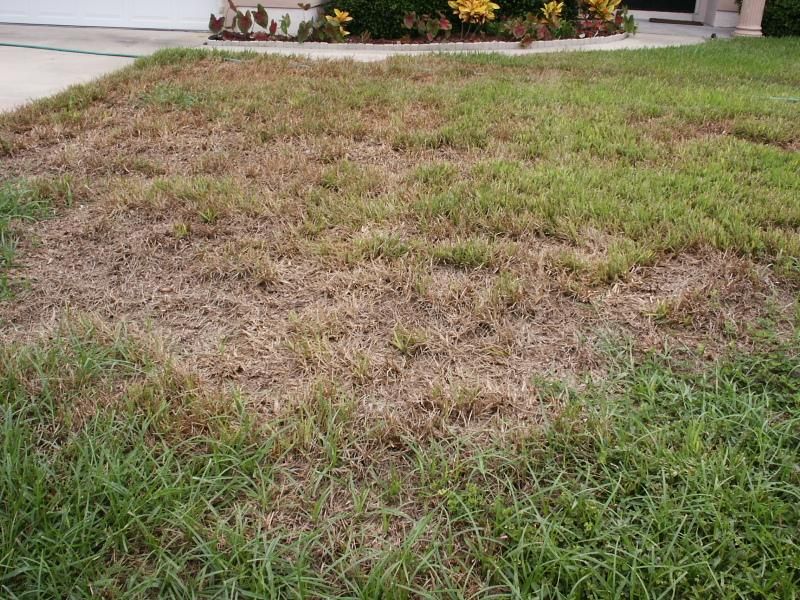
Not all grass types are equally at risk. If your yard is planted with St. Augustinegrass, pay extra attention to the signs in this article.
This is the grass most commonly targeted by the southern chinch bug in our state.
UC IPM specifically notes that St. Augustinegrass is usually the only turfgrass significantly damaged by this pest here. That does not mean other grass types are completely safe, but St. Augustine lawns carry a much higher risk, especially in warm coastal and inland areas where this grass is widely used.
St. Augustinegrass spreads through stolons, which are above-ground runners. Chinch bugs target those runners and the crown area, which is why the damage can spread quickly along the growth pattern of the grass.
Once a population gets established, it can move fast across a St. Augustine lawn.
One thing that makes St. Augustine lawns harder to protect is their thick thatch. This grass naturally builds up a dense thatch layer that chinch bugs love to hide in.
Keeping thatch under control through regular dethatching is one of the best long-term ways to reduce chinch bug habitat. Pair that with proper watering and avoid over-fertilizing to make your St. Augustine lawn less attractive to these pests throughout the season.
7. Check Where Damaged Grass Meets Healthy Grass
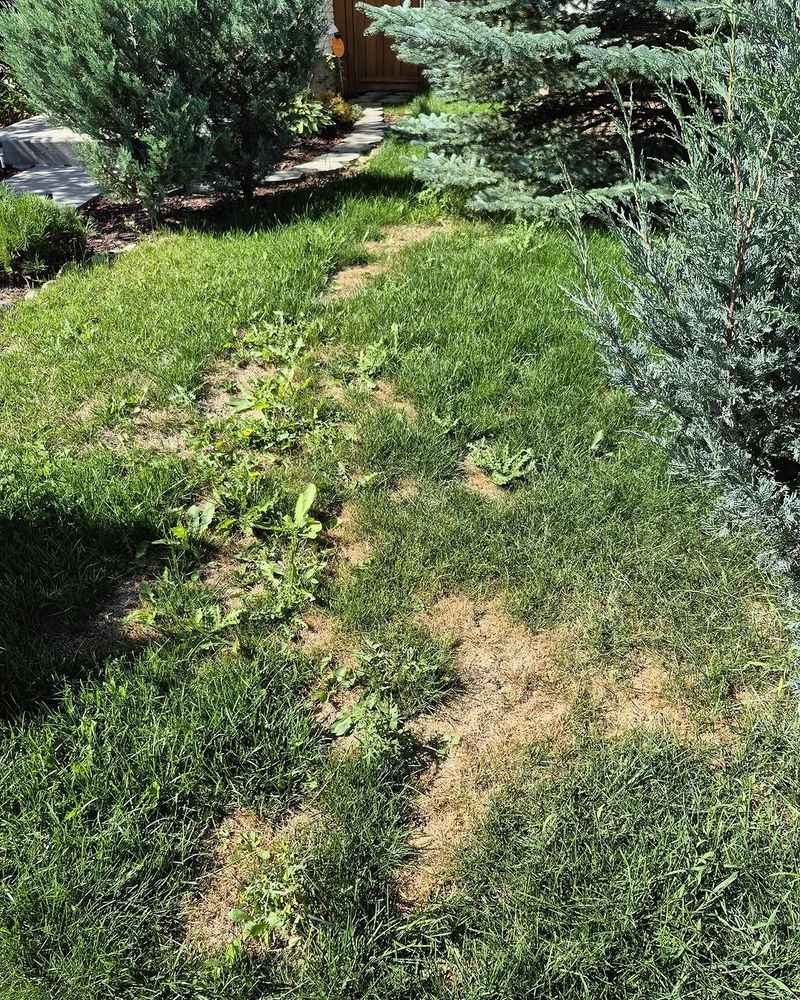
A lot of people make the mistake of looking for bugs in the wrong place. When they see a brown patch, they walk to the middle of it and start digging around.
By then, the active bugs are long gone from that spot.
Chinch bugs are always moving toward fresh food. Once they have damaged an area enough that the grass stops being useful to them, they push outward to healthier turf nearby.
That is why the action is always at the edges, not the center.
Get down low and look carefully at the transition zone between brown and green. Part the grass at that border and look toward the soil surface.
Watch for small, quick-moving insects trying to escape the light. You might also notice yellowing blades that are just starting to show damage, which is a sign feeding is actively happening right there.
This edge-checking habit is useful not just for finding bugs but also for tracking how fast the damage is spreading. If the border has moved noticeably since the last time you checked, the population is likely growing.
Mark the edge with a small flag or a few sticks so you can measure the spread over a few days. That information helps you decide how urgently you need to act and whether a treatment is truly needed.
8. The Coffee Can Test Can Solve The Mystery
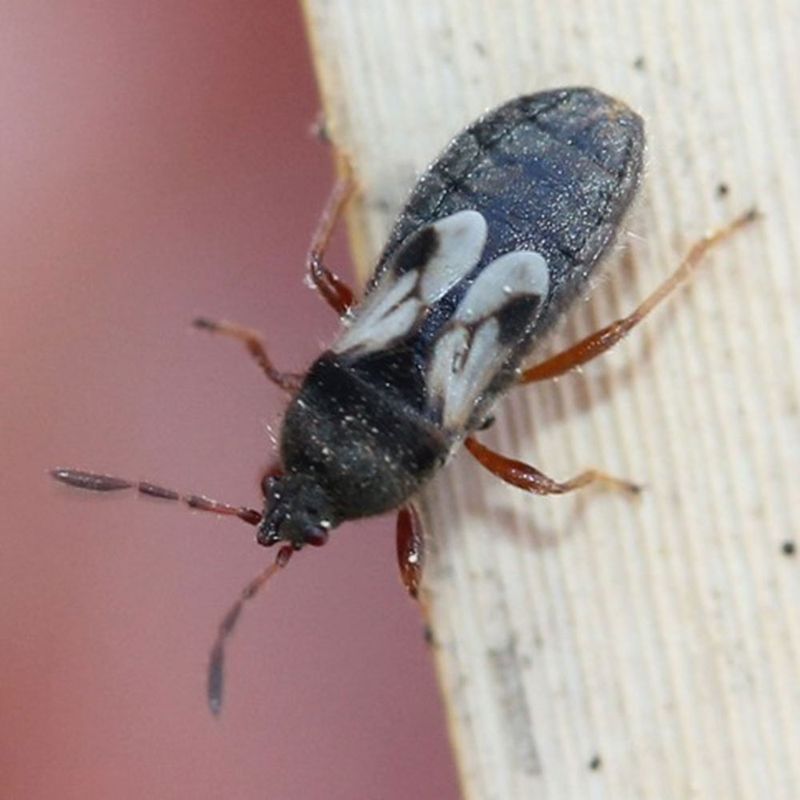
Sometimes the best tools are the simplest ones. The coffee can float test is one of the most practical ways to find out whether chinch bugs are living in your lawn, and all you need is an old metal can and some water.
Remove both ends of the can so you have an open cylinder. Push it about two inches into the soil at the edge of a damaged patch, right where the brown grass meets the green.
Fill the can with water and keep it filled for about five minutes. Watch the surface of the water carefully.
Chinch bugs are light enough to float. As the water rises through the thatch, any bugs present will come up to the surface where you can see them.
Even a few floating insects confirms their presence. UC IPM and many extension resources recommend this method as a reliable field test before committing to any treatment plan.
Try the test in several spots around the damaged area, not just one. Chinch bug populations are not always evenly spread.
Testing multiple locations gives you a better picture of how widespread the infestation actually is. If you find bugs in three or more spots, the problem is likely established enough to warrant action.
If you find none, drought or another issue may be the real cause, and you can adjust your approach accordingly.
9. Too Much Fertilizer Can Make Things Worse
When a lawn looks bad, the instinct for many homeowners is to feed it. More fertilizer feels like a solution.
But when chinch bugs are the problem, extra fertilizer can actually make things much worse.
High nitrogen fertilizer produces lush, soft, fast-growing grass. That kind of growth is exactly what chinch bugs prefer.
Soft, nitrogen-rich tissue is easier for them to feed on and supports faster population growth. Pouring on fertilizer in response to a chinch bug problem is essentially setting out a buffet for the pests.
UC IPM recommends reducing fertilizer rates when southern chinch bug activity is present. Alongside that, maintaining adequate soil moisture without overwatering is also part of the management approach.
Healthy grass that is not stressed by drought but also not pumped full of nitrogen is more resilient against these insects.
If you have already applied heavy fertilizer before identifying the problem, do not panic. Focus on consistent, moderate watering and hold off on any additional feeding until the infestation is under control.
Consider a slow-release fertilizer in the future, which delivers nutrients more gradually and avoids the surge of soft growth that attracts pests. Managing fertilizer is one of the most overlooked but effective cultural practices for keeping chinch bug populations from exploding in your yard.