7 Simple Jade Plant Tricks For Better Flowering
I used to think my jade plant was just a leafy sidekick, happy to grow but never willing to bloom.
Year after year, it stayed green and sturdy, yet flowers felt like a long shot.
Then I learned that jade plants are a bit like people.
Treat them right, and they show their appreciation in their own time.
Once I made a few small changes, things finally clicked. Jade plants do not bloom by accident.
They respond to light, timing, and a little tough love.
Too much water or fuss can hold them back, while the right balance gives them a gentle push in the right direction.
I found that simple tweaks worked better than fancy tricks.
Moving the plant, changing how I watered, and paying attention to the seasons made a real difference.
Flowering jade plants reward patience, not perfection.
When blooms finally appear, it feels like striking gold after playing the long game.
With a few smart habits and a watchful eye, these plants can surprise you.
Sometimes, less effort and better timing are all it takes to turn steady growth into a full-blown show.
1. Give Your Jade Plant A Winter Rest Period
Your jade plant needs a little vacation during the colder months to prepare for flowering.
Think of it like hibernation for plants.
When temperatures drop in fall and winter, your jade is naturally programmed to slow down and rest.
During this rest period, which typically runs from late fall through early spring, you want to reduce watering significantly.
Only water when the soil is completely dry, maybe once every three to four weeks.
This might feel wrong because we often want to pamper our plants, but trust the process.
Also, move your jade to a cooler spot in your home, somewhere that stays between 50 and 55 degrees Fahrenheit at night.
A spare bedroom or enclosed porch works perfectly.
The combination of cooler temperatures and less water signals to your plant that it should start preparing flower buds.
You might notice your jade looking a bit less perky during this time, and that is completely normal.
The leaves might even develop a slight reddish tinge around the edges, which actually indicates your plant is getting the right conditions.
Once spring arrives and temperatures warm up, gradually increase watering again.
This transition from dormancy to active growth is when those flower buds start forming.
Many gardeners skip this crucial rest period and wonder why their jade never blooms, so giving your plant this winter break really makes all the difference.
2. Let Sunlight Work Its Magic

Bright light is absolutely essential if you want your jade plant to produce flowers.
These succulents come from sunny South Africa, so they crave lots of direct sunshine.
Without enough light, your jade will grow just fine and produce lovely leaves, but those blooms will never appear.
Place your jade in the sunniest window you have, preferably one that faces south or west.
Your plant needs at least four to six hours of direct sunlight each day to trigger flowering.
If you notice your jade stretching toward the light or developing long spaces between leaves, that means it needs even more sun.
During summer months, you can even move your jade plant outdoors to a sunny patio or deck.
Just make sure to transition it gradually so the leaves do not get sunburned.
Start with a few hours of morning sun and slowly increase the exposure over a week or two.
Some people worry about their jade getting too much sun, but these tough plants can handle intense light once they are acclimated.
You will know your jade is getting proper light when the leaves develop a reddish edge and the plant looks compact and sturdy.
If you do not have a bright enough window, consider using a grow light.
Position it about six to twelve inches above your plant and leave it on for twelve to fourteen hours daily.
Adequate light truly is the secret ingredient that transforms your jade from a foliage plant into a blooming beauty.
3. Master The Art Of Strategic Watering
Watering your jade plant correctly might be the trickiest part of encouraging flowers, but once you get the hang of it, everything clicks into place.
Jade plants are succulents, which means they store water in their thick leaves and stems.
They actually prefer to dry out between waterings, and this slight stress can help trigger blooming.
The biggest mistake people make is watering too frequently.
Your jade does not need water every week like many houseplants.
Instead, wait until the soil is completely dry before watering again, which might mean every two to three weeks during the growing season.
Here is a simple test you can try.
Stick your finger about two inches into the soil.
If it feels even slightly damp, wait a few more days before watering.
When you do water, give your jade a thorough soaking until water runs out the drainage holes.
Then let all the excess drain away completely.
Never let your jade sit in standing water, as this can lead to root problems that prevent flowering.
During that important winter rest period we talked about earlier, cut back watering even more dramatically.
Your jade might only need water once a month or even less during these cooler months.
Watch your plant for clues about its water needs.
Slightly wrinkled leaves mean it is thirsty, while soft or mushy leaves indicate too much water.
Finding that perfect balance encourages your jade to focus energy on producing those delicate flowers instead of just growing more leaves.
4. Choose The Right Pot Size
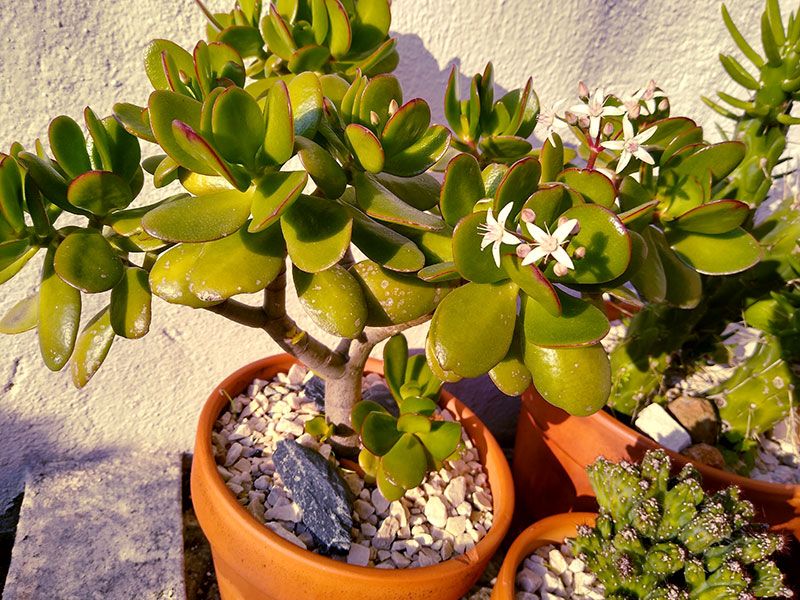
This might surprise you, but jade plants actually bloom better when they are a bit cramped in their pots.
While many plants need regular repotting into larger containers, jade plants seem to flower more readily when their roots are somewhat crowded.
Being slightly rootbound creates a mild stress that encourages flowering rather than vegetative growth.
If your jade is in a huge pot with lots of extra soil around the roots, it will focus all its energy on growing bigger and producing more leaves.
That is great if you want a large foliage plant, but not so helpful if you are hoping for flowers.
A snug pot redirects that energy toward reproduction, which means blooms.
When selecting a pot for your jade, choose one that is only slightly larger than the root ball.
There should be about an inch of space around the roots, no more.
Terracotta pots work especially well because they are porous and allow the soil to dry out more quickly.
Make absolutely sure your pot has drainage holes in the bottom.
This is not negotiable for jade plants.
Without proper drainage, excess water sits around the roots and causes problems that definitely prevent flowering.
You really only need to repot your jade every three to four years, or when you see roots growing out of the drainage holes.
Even then, only go up one pot size.
Many successful jade plant growers keep mature plants in the same pot for years.
This controlled environment seems to be part of the secret formula for encouraging those charming clusters of star-shaped flowers to finally appear on your plant.
5. Feed Your Plant Strategically

Fertilizing your jade plant properly can make a real difference in whether or not it blooms.
However, more fertilizer is definitely not better when it comes to encouraging flowers.
Too much feeding actually pushes your jade to produce lots of leafy growth instead of flower buds.
During the active growing season, which runs from spring through early fall, feed your jade plant about once a month.
Use a balanced liquid fertilizer diluted to half the strength recommended on the bottle.
Some growers prefer a fertilizer formulated for cacti and succulents, which typically has lower nitrogen levels.
Lower nitrogen is actually beneficial for flowering because nitrogen promotes leaf growth.
Look for a fertilizer with a higher middle number, which represents phosphorus.
Phosphorus is the nutrient that encourages blooming in plants.
Stop fertilizing completely during the fall and winter months when your jade enters its rest period.
Your plant is not actively growing during this time, so it does not need extra nutrients.
This break from feeding is another piece of the puzzle that helps trigger flowering.
Some experienced jade growers even recommend withholding fertilizer for a few weeks before you expect blooms to appear.
This slight nutrient stress, combined with the other conditions we have discussed, can give your plant that final push it needs.
Pay attention to how your jade responds to feeding.
If you notice rapid, leggy growth with lots of space between leaves, you are probably fertilizing too much.
A slow, steady growth pattern with compact leaves is exactly what you want to see in a jade plant that is preparing to bloom.
6. Be Patient With Plant Maturity
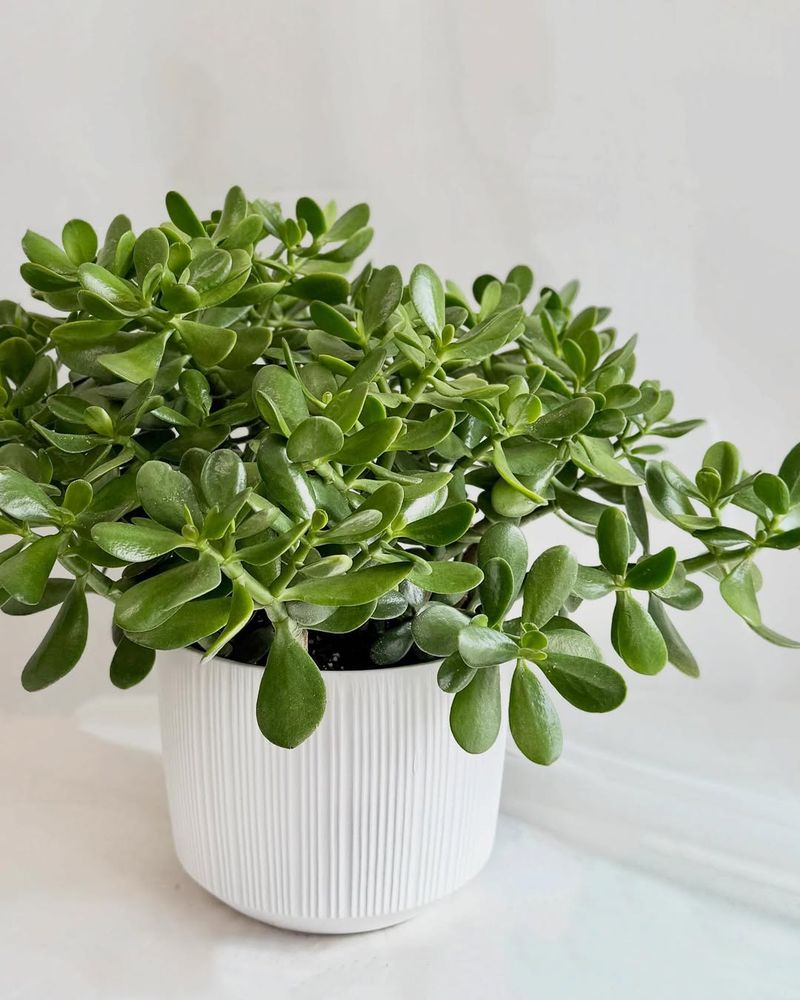
Here is something important that many new jade plant owners do not realize.
Your plant needs to reach a certain age and size before it can produce flowers.
Even with perfect care and ideal conditions, a young jade plant simply will not bloom because it is not mature enough yet.
Most jade plants need to be at least three to five years old before they are capable of flowering.
Some varieties take even longer, sometimes up to ten years.
This waiting period can feel frustrating, but there is really no way to rush plant maturity.
You will know your jade is reaching maturity when the main stem starts developing a woody, bark-like appearance.
Young jade plants have green, fleshy stems, but older plants develop a brown, woody trunk that looks almost like a miniature tree.
This transformation is a good sign that flowering might be possible soon.
Size matters too.
Your jade plant should be fairly substantial, with multiple branches and a well-established root system.
Tiny jade plants that are only a few inches tall simply do not have the energy reserves needed to produce flowers.
If you recently purchased or propagated your jade plant, do not expect blooms right away.
Focus instead on providing excellent care so your plant grows strong and healthy.
Those flowers will come eventually when your jade is ready.
Meanwhile, enjoy watching your plant mature and develop its unique character.
The wait makes those first flowers even more special when they finally appear, like a reward for your patience and consistent care over the years.
7. Maintain Consistent Care Year After Year
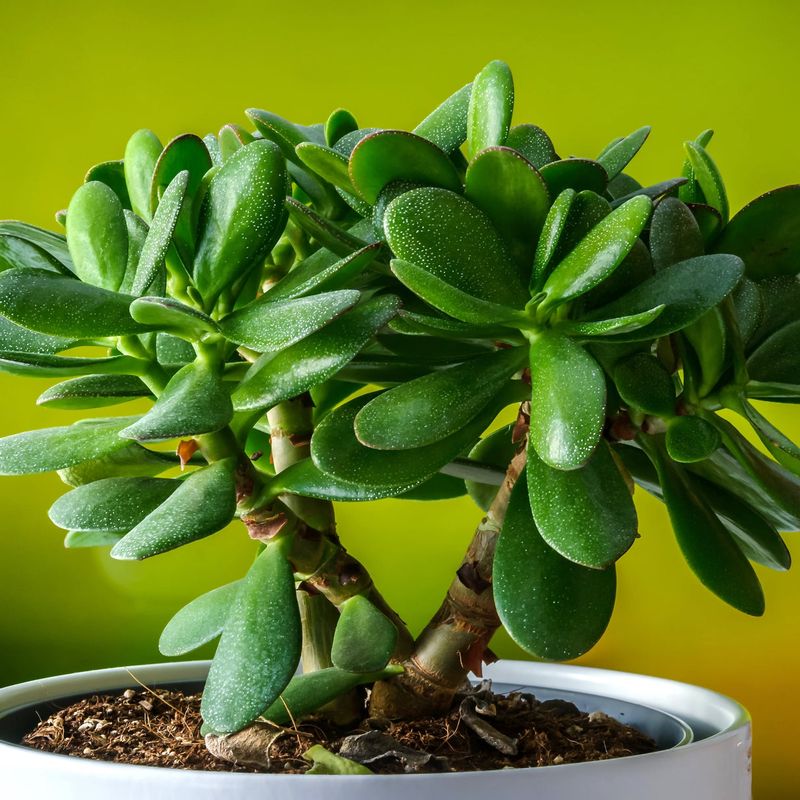
Getting your jade plant to flower is not usually a one-time achievement.
Consistency in care from year to year is what separates gardeners who occasionally see a few blooms from those whose jade plants flower reliably every season.
Your plant remembers how you treat it and responds accordingly.
Establish a yearly routine that includes that crucial winter rest period, proper summer growing conditions, and the right balance of water and light.
Jade plants thrive on predictability.
When they experience the same seasonal changes year after year, they settle into a natural rhythm that includes regular blooming.
Avoid making drastic changes to your jade plant care routine once you find what works.
Moving your plant to different locations frequently or constantly adjusting your watering schedule can confuse it.
Plants do best when their environment stays relatively stable.
Keep notes about when you water, fertilize, and notice any changes in your plant.
This might seem excessive, but tracking your care routine helps you identify patterns.
You might discover that your jade blooms exactly two months after you move it to a cooler location, or that it flowers best when you skip fertilizer in January.
Remember that even with perfect care, some years might produce more flowers than others.
Environmental factors beyond your control can affect blooming.
Do not get discouraged if your jade skips a year or produces fewer flowers than usual.
The key is maintaining those good care habits consistently.
Over time, your jade plant will reward your dedication with increasingly impressive displays of those charming little flowers that make all your efforts worthwhile.