Simple Pennsylvania Backyard Changes That Protect Birds During Heat Waves
The birds that visit your Pennsylvania backyard every summer are depending on you more than you realize. It is not about feeders. It is not about the bird houses lined up along the fence.
Those things help, sure. But during a brutal heat wave, birds are dealing with something far more serious than an empty feeder, and the average yard offers almost no relief.
Birds cannot sweat. They cannot crack open a window or step into the air conditioning. When temperatures spike in July, they usually depend on what your yard gives them, and many yards give them almost nothing useful.
The good news? A handful of simple, low-cost changes can completely transform your outdoor space into a genuine cool-weather refuge.
Pennsylvania summers are no joke, and the birds navigating them need more support than most people realize. What actually makes a backyard safe and livable for birds in extreme heat might surprise you.
1. Set Out Fresh Water For Drinking And Bathing
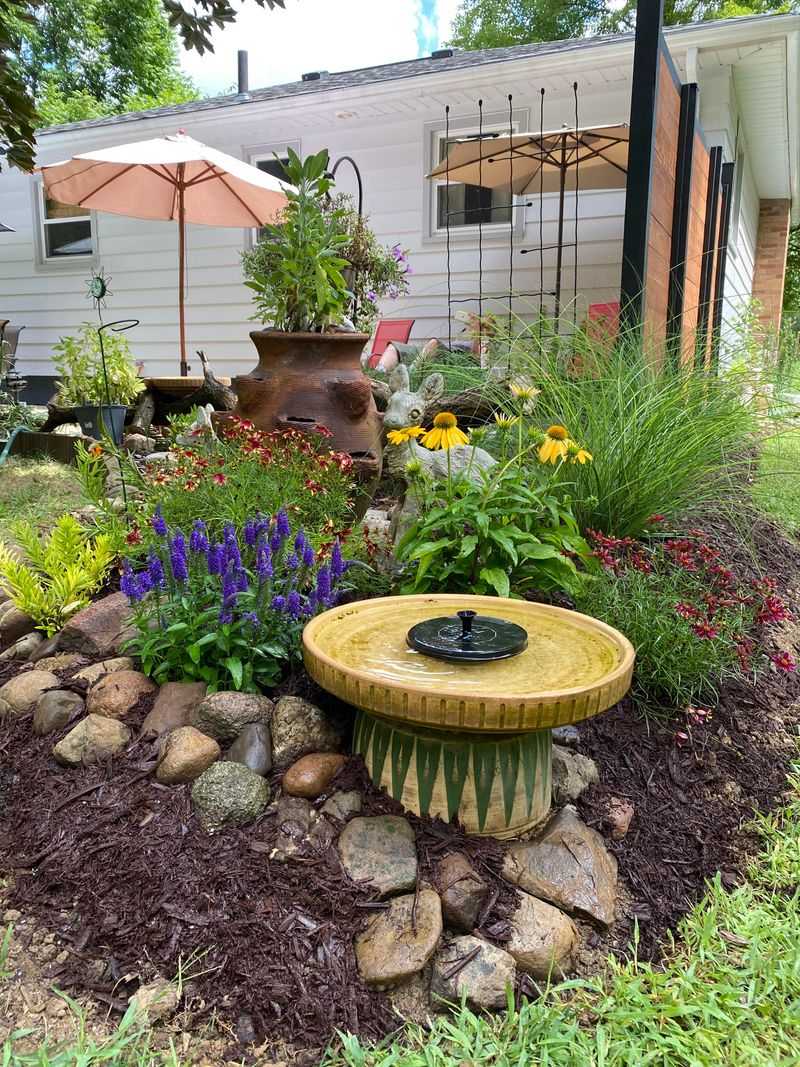
Hot July in Pennsylvania. Somewhere out there, a robin is desperately searching for relief. Your bird bath might be the most important real estate in the neighborhood right now.
Clean water and bathing can help birds cope with heat, especially when paired with shade and native cover.
Bathing keeps feathers in working order, which matters more than most people realize. Well-maintained feathers help birds manage body temperature far more effectively.
Penn State Extension points to reliable water sources as one of the foundations of backyard wildlife habitat. A shallow dish, a saucer, or a classic bird bath all work well.
Keep the depth at two to three inches or less. Smaller birds like warblers and chickadees tend to prefer very shallow edges where they can wade in without any drama.
Placement counts too. Position the bath near shrubs so birds feel protected, but leave enough open space around it that a lurking cat cannot turn your oasis into an ambush.
Refresh the water every day or two. Stagnant water loses its charm fast, and during a heat wave, fast is an understatement. Fresh water costs almost nothing. For a bird baking in summer heat, it can mean everything.
2. Keep Bird Baths Clean For Safer Sips
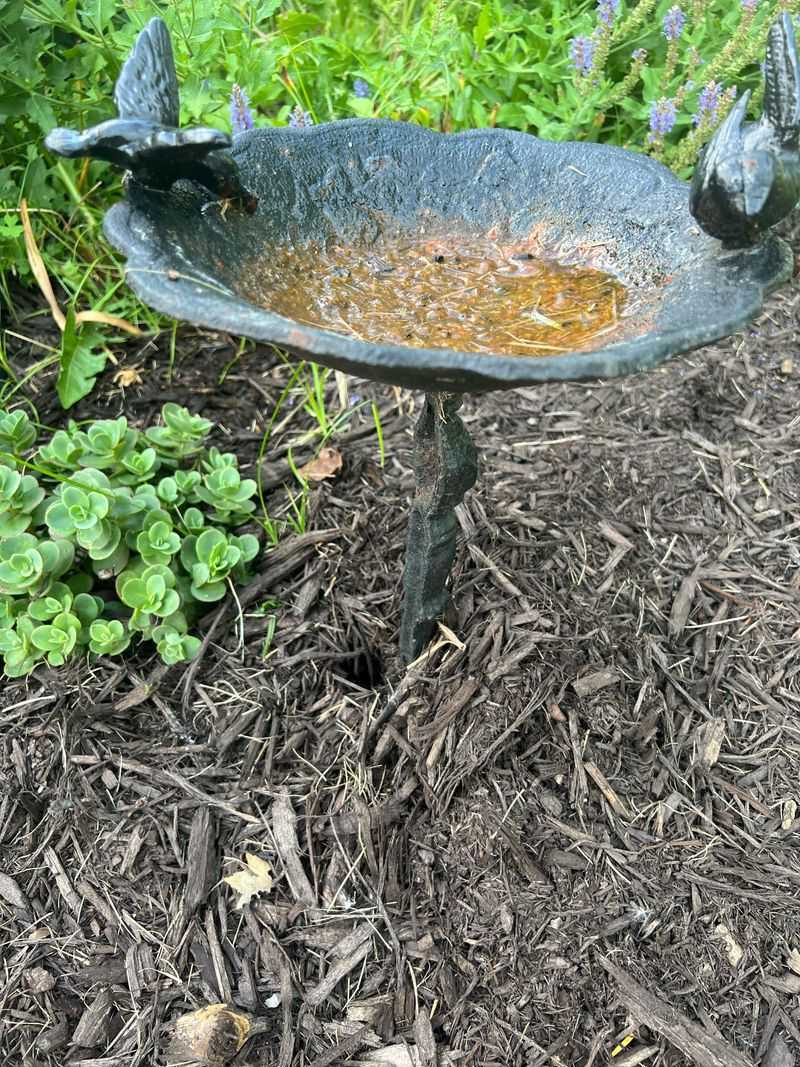
Do not let your bird bath become a swamp with good intentions. A basin that looks fine from across the yard can be hiding algae, bacteria, and debris that birds would rather avoid. In warm weather, things go south quickly.
The heat that makes birds thirsty is the same heat that turns standing water into a science experiment. Cornell Lab of Ornithology recommends scrubbing bird baths every few days during summer.
A stiff brush and a diluted bleach solution, roughly one part bleach to nine parts water, does the job well.
Scrub, rinse thoroughly, and refill. That simple routine removes algae and knocks back bacteria before they become a real problem.
Skip the soap entirely. Soap residue can harm birds that drink from the basin, and no amount of rinsing fully guarantees it is gone.
Your Pennsylvania Garden Changes Every Week. Your Plan Should Too.
Gardening in Pennsylvania changes quickly throughout the season. Every Friday you’ll receive a simple weekly plan showing exactly what to plant, prune, fertilize, harvest, and protect so you never miss the right timing.
Frequent water changes also work against mosquitoes. Mosquitoes need standing water to breed, and swapping out the water every one to two days interrupts that cycle before it gets started.
Bird baths in direct sun tend to need cleaning more often. Heat accelerates algae growth noticeably, so expect to scrub two or three times a week during peak summer heat rather than once.
A clean bath is not just more appealing. It is genuinely safer, and the birds that visit your yard deserve both.
3. Add Moving Water To Draw Birds In
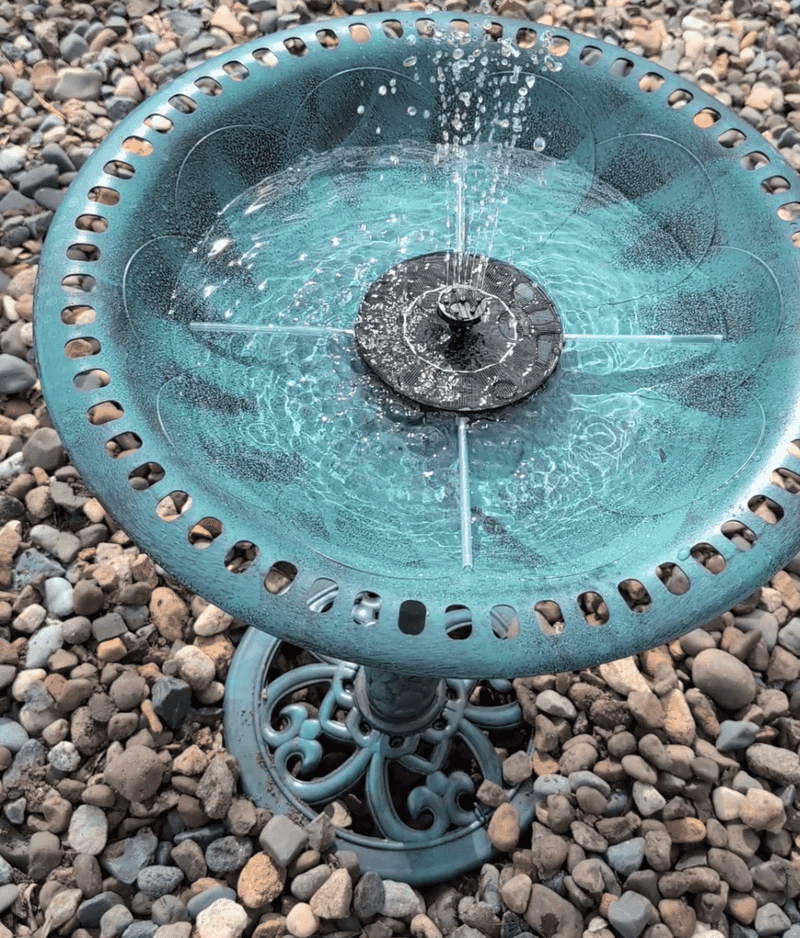
Still water is fine. Moving water is basically a neon sign. Birds notice the sound and shimmer of flowing water from a surprising distance.
That gentle trickle or soft drip cuts through a hot afternoon and pulls birds toward your yard in a way that a silent basin simply can’t. Think of it as nature’s most effective advertisement.
Moving water is a key feature of a well-designed backyard habitat. A dripper, a mister, a small recirculating fountain, or even a basic bubbler can transform an ordinary bird bath into the most popular spot on the block.
Misters tend to be especially popular with warblers, hummingbirds, and small birds that love to dart through a fine spray rather than wade in. A dripper clipped to the edge of a bath creates a steady, appealing drip that keeps the surface active all day.
Solar-powered fountains are also worth considering for Pennsylvania backyards. No electricity needed, no complicated setup. They run on sunlight and keep water moving throughout the day with minimal effort on your part.
There is a practical bonus, too. Moving water stays cleaner longer because circulation slows algae growth. Regular cleaning is still necessary, but flowing water gives you a small but welcome head start. One modest trickle can make your yard the talk of the treetops.
4. Place Bird Baths In Shade To Keep Water Cooler
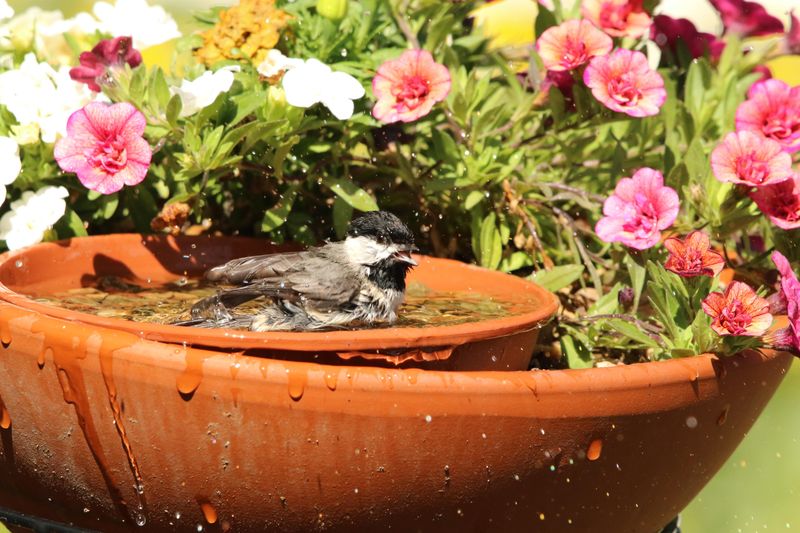
Location, location, location. It matters for real estate, and it turns out it matters quite a bit for bird baths, too.
A bath sitting in full afternoon sun can heat up to a temperature that defeats the entire purpose. Birds looking for relief during a heat wave are not interested in a warm soak. Shade changes everything.
Moving a bird bath under a tree canopy, near a tall shrub, or along a fence line can keep the water noticeably cooler for longer stretches of the day. Cooler water is more refreshing, and it tends to stay cleaner a bit longer since direct sun speeds up algae growth.
Morning shade works particularly well in Pennsylvania summers. Positioning a bath on the east side of a building or under a canopy that blocks the harsh afternoon sun can make a real difference by midday.
However, safety still comes first in shaded spots. Birds need clear sightlines in multiple directions. A spot near a shrub gives them a quick escape route and a place to preen after bathing.
But the bath itself should not be tucked so tightly into cover that predators can approach unseen.
Shade helps, but it does not replace regular water changes. Plan to refresh every day or two, regardless. Cool water in a shady spot might just be the most underrated upgrade in backyard birding.
5. Plant Native Trees For Shelter And Shade
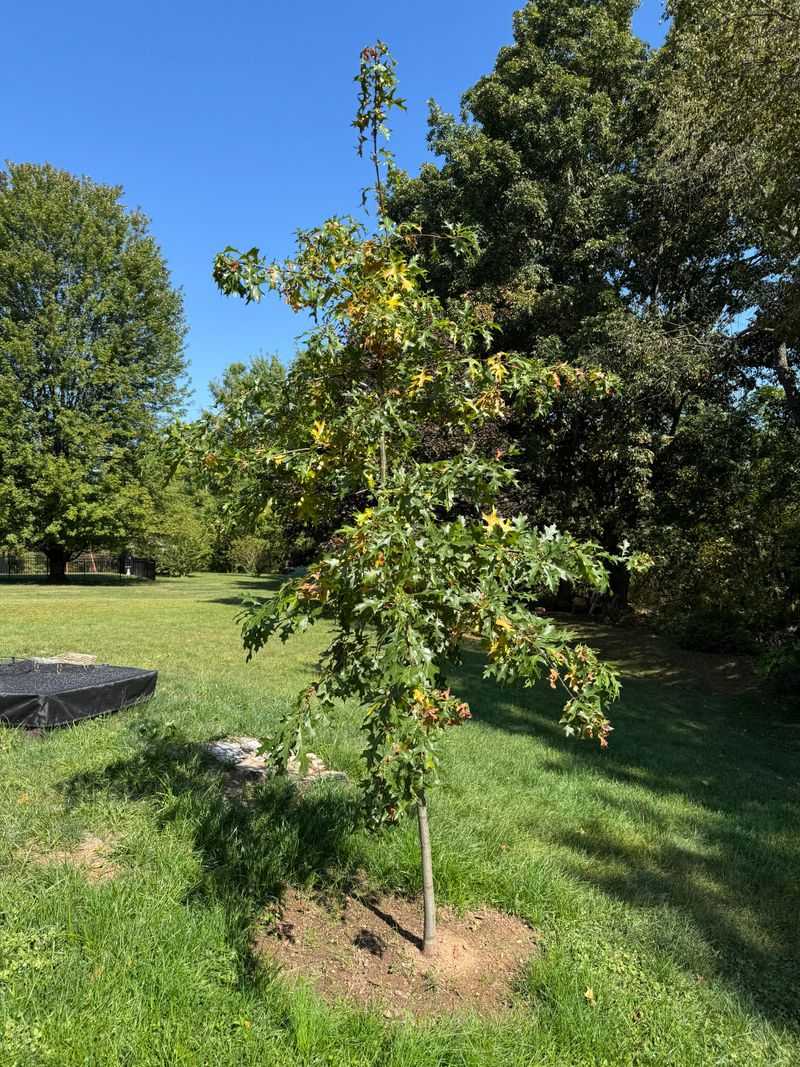
A good native tree does not just sit there looking nice. It works overtime. Shade, shelter, nesting sites, and a built-in insect buffet, a well-placed native tree delivers all of it at once.
Penn State Extension singles out native oaks as standout wildlife trees, and for good reason. A single mature oak can support hundreds of species of caterpillars and insects, which is exactly what songbirds need when summer heat pushes their limits.
Other excellent Pennsylvania-friendly options include hickory, American beech, native dogwood, eastern redbud, river birch, and American holly.
Dogwood and redbud stay on the smaller side, making them smart picks for tighter yards or spots close to the house. Oaks and hickories take longer to reach their full potential but pay off more generously with every passing season.
Shade from a mature tree can lower ground temperatures in meaningful ways, creating cooler microclimates that birds, insects, and even your lawn appreciate during a brutal heat wave.
Birds use tree canopies as resting stops between bathing and foraging, so a shady perch close to a water source is a genuinely powerful combination.
Starting with a native redbud or dogwood is completely reasonable. Both can go in over a weekend and start providing real cover within a few growing seasons. Plant a tree today. The birds will not know your name, but they will know your yard.
6. Grow Native Shrubs That Offer Food
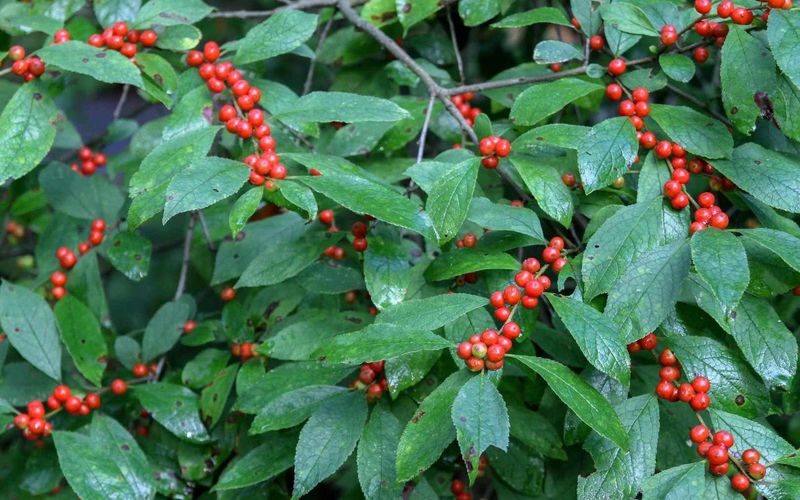
A lawn and a feeder is a start. But birds need more layers than that. Native shrubs fill in the critical middle ground between trees and the ground, and that zone is more valuable than most people give it credit for.
Rest stops, hiding spots, foraging opportunities, nesting cover, and shrubs handle all of it at once. During a heat wave, a dense native shrub can be the difference between a bird that survives the afternoon and one that does not.
Penn State Extension recommends layered plantings as a core strategy for backyard wildlife habitat.
Pennsylvania-native options worth knowing include winterberry, viburnum, spicebush, chokecherry, and American holly. Each one pulls double duty, offering protective cover alongside seasonal food.
Spicebush supports spicebush swallowtail caterpillars, which birds actively hunt, and produces small red berries in late summer that thrushes find hard to pass up.
Winterberry holly puts on a show with bright red berries that attract robins, cedar waxwings, and bluebirds.
Viburnum brings dense branching and berry clusters that many species seek out. Chokecherry reliably draws fruit-eating birds every season.
Grouping two or three shrubs together tends to work better than a single isolated plant. A small thicket in a corner of your yard becomes a legitimate destination, not just an afterthought.
Once established, native shrubs generally ask very little in return. Plant them, let them settle, and let the birds do the rest.
7. Add Elderberry For Berries And Insect Snacks
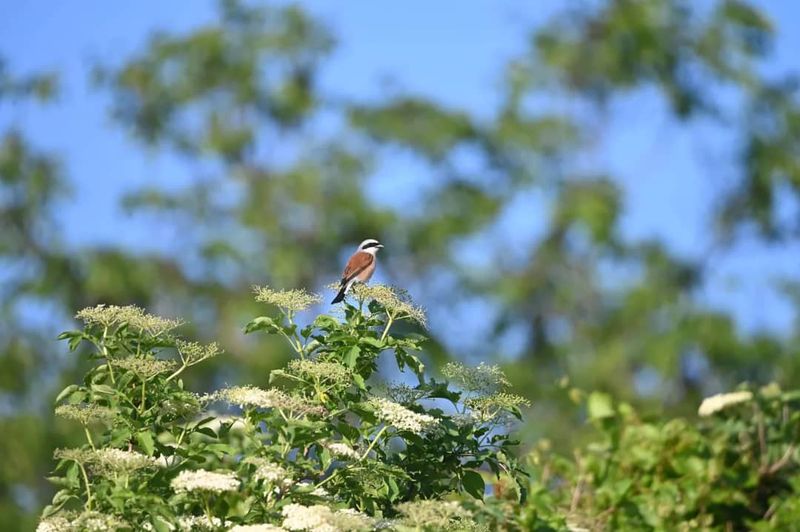
Few plants cause quite as much excitement in the bird world as a ripe elderberry. American elderberry is a Pennsylvania native that earns its reputation fast.
The clusters of small, dark berries ripen in July and August, landing at precisely the moment when birds need the most nutritional support. Heat waves drain energy, and elderberries show up right on time.
Elderberry can attract more than 50 bird species across North America. Catbirds, thrushes, robins, orioles, and bluebirds all rank among its regulars.
The berries are nutrient-dense and arrive when natural food sources can be stressed by summer conditions. Timing, it turns out, is very important.
However, there is more to the elderberry story than fruit. The plant also supports a wide range of insects, which gives insect-eating birds an entirely separate reason to visit.
Flowers attract pollinators, and the foliage hosts caterpillars and beetles. One shrub, two food sources. That is a strong value proposition by any measure.
Elderberry grows vigorously and can reach six to twelve feet tall, so it needs room to do its thing. It thrives in moist areas, making it a smart solution for low spots in the yard that tend to stay damp.
A sunny location with consistent moisture produces the best berry output. Plant one and step back. The birds will not need a formal invitation.
8. Plant Coneflowers For Summer Seeds
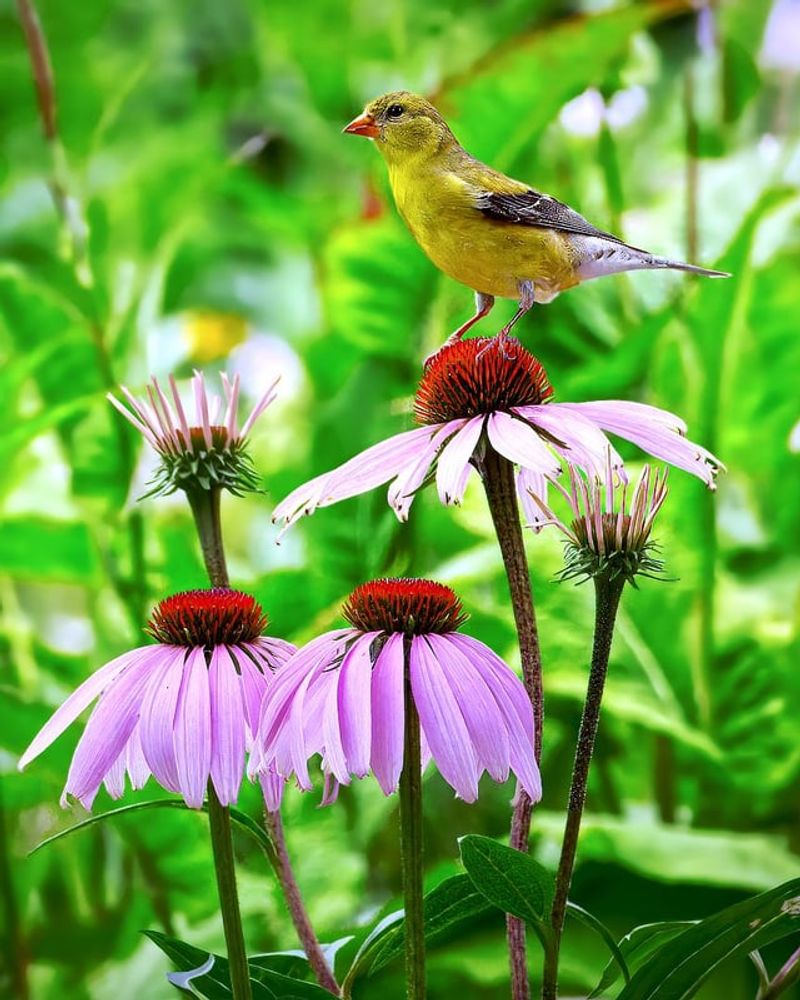
Purple coneflower has figured something out that a lot of garden plants have not. It does not stop being useful once summer ends.
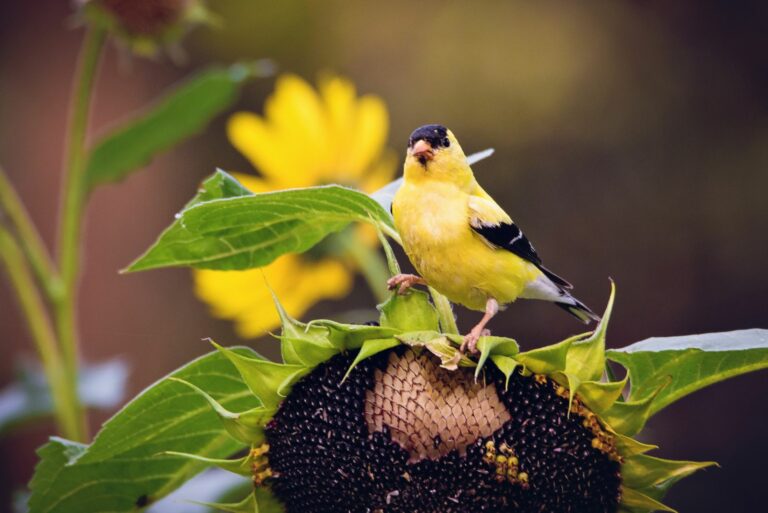
The blooms carry through the hottest stretch of the season, but the real gift comes later. When the petals drop, the spiky seed heads stay standing. And that is when the goldfinches arrive.
Goldfinches are devoted coneflower fans. You can watch them cling to the dried heads and work through seeds with quick, methodical precision.
Chickadees, cardinals, and Carolina wrens join in regularly, too. One plant, several species, weeks of activity.
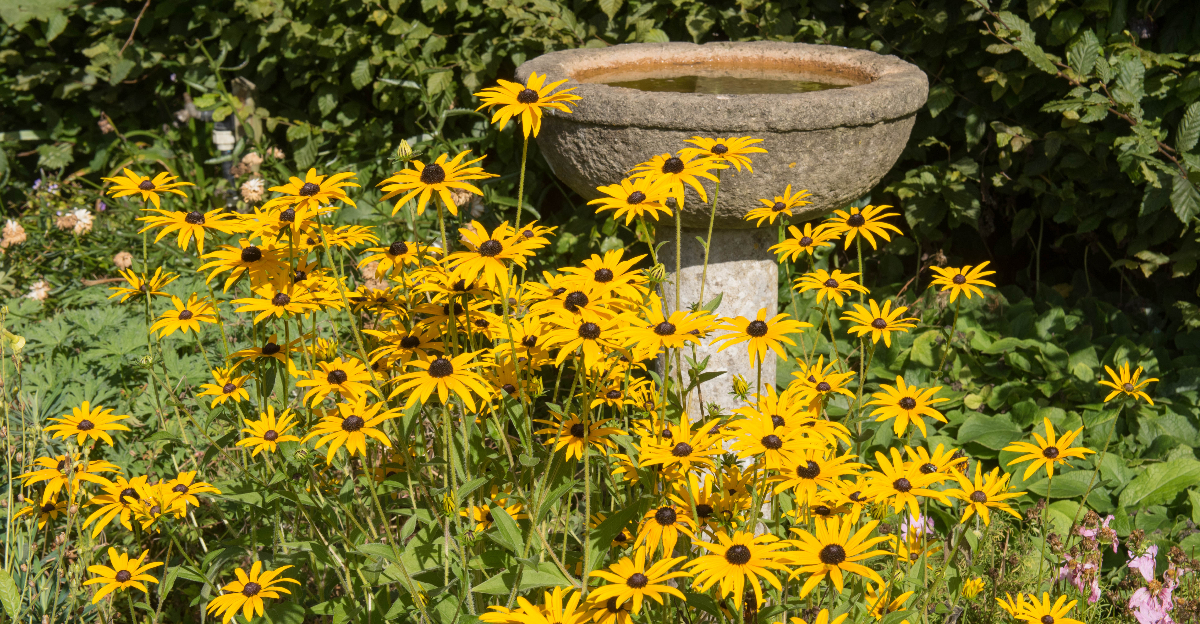
Coneflowers are native to much of the eastern United States, Pennsylvania included, and they thrive in sunny beds with well-drained soil. Once established, they handle drought impressively well, which makes them reliable even during the dry heat waves.
The only rule worth following: do not trim them. Leave the seed heads up through fall and into winter.
Birds will steadily work through the supply, and the dried stems add structure to the garden long after the growing season wraps up.
Plant in groups of three or more for the best results. They spread naturally over time, slowly filling in with color and consistent wildlife value. Coneflowers are the gift that keeps on seeding.