7 Simple Ways To Grow Tomatoes In Containers In Georgia
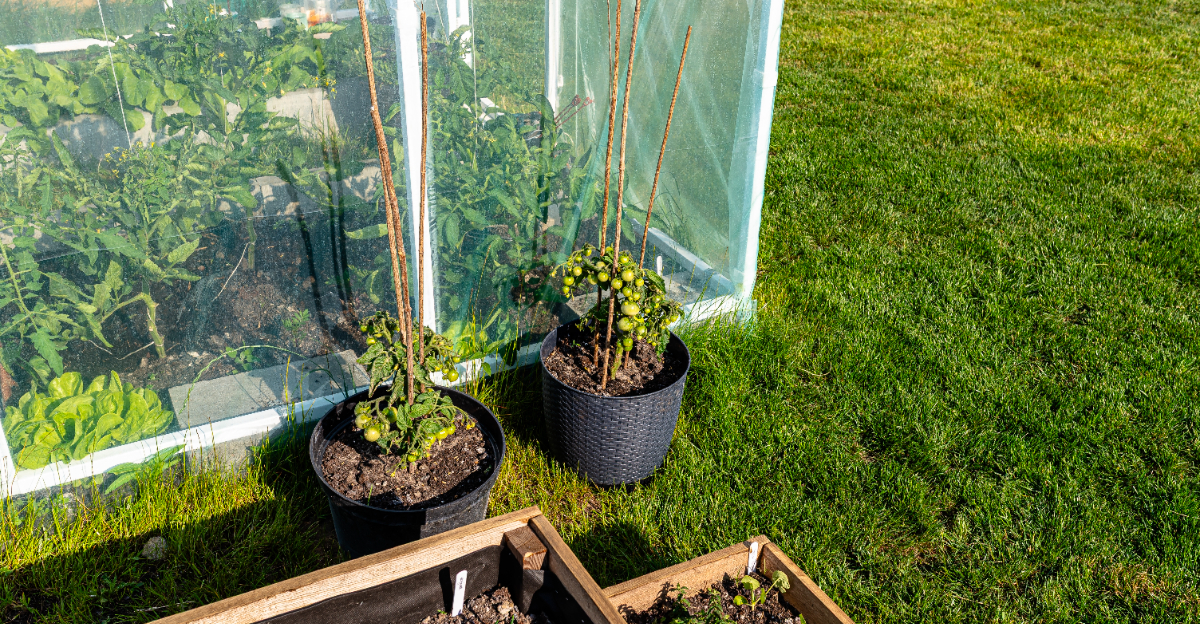
Tomatoes in Georgia do not always go as planned, especially once heat and humidity start building at the same time. Plants can look strong early on, then suddenly slow down, drop flowers, or struggle to keep up as conditions shift.
It can feel unpredictable when the same routine does not bring the same results.
Containers change that in a big way. They give more control over soil, watering, and placement, which makes it easier to adjust as the season moves forward.
A simple shift in setup can make the difference between plants that barely hang on and ones that stay productive longer.
Small adjustments tend to matter more than most expect. With the right approach, container tomatoes can stay steady, handle the heat better, and keep producing well into the tougher part of the Georgia season.
1. Choose Varieties That Handle Heat Well
Not every tomato is cut out for Georgia summers, and picking the wrong variety is one of the most common mistakes container gardeners make.
Temperatures here regularly push past 90°F from June through August, and some tomato varieties simply stop setting fruit when the heat gets that intense.
Varieties like Heatmaster, Solar Fire, and Celebrity were specifically bred to keep producing even when the thermometer climbs.
Heatmaster, in particular, was developed partly through research at the University of Georgia and has a track record of performing well across the state.
Celebrity is another solid pick — it handles humidity and heat without dropping its blossoms as easily as some other types.
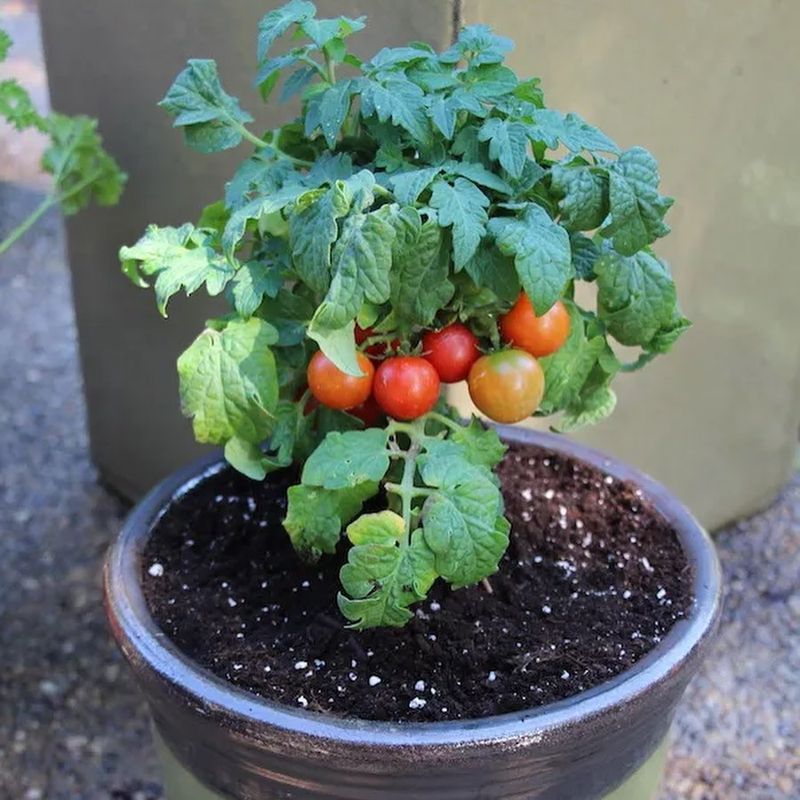
For container growing specifically, look for determinate or compact indeterminate varieties. These stay more manageable in size and tend to put their energy into fruit production rather than endless vine growth.
Patio Princess and Bush Early Girl are worth trying if you want something smaller that still delivers decent harvests.
Avoid planting heat-sensitive heirloom varieties as your only option during Georgia’s peak summer months. Some heirlooms struggle badly when nighttime temperatures stay above 75°F, which happens frequently here.
You can still grow them, but plant them early — late February through March under protection — so they fruit before the worst heat arrives.
2. Use Large Containers To Support Strong Roots
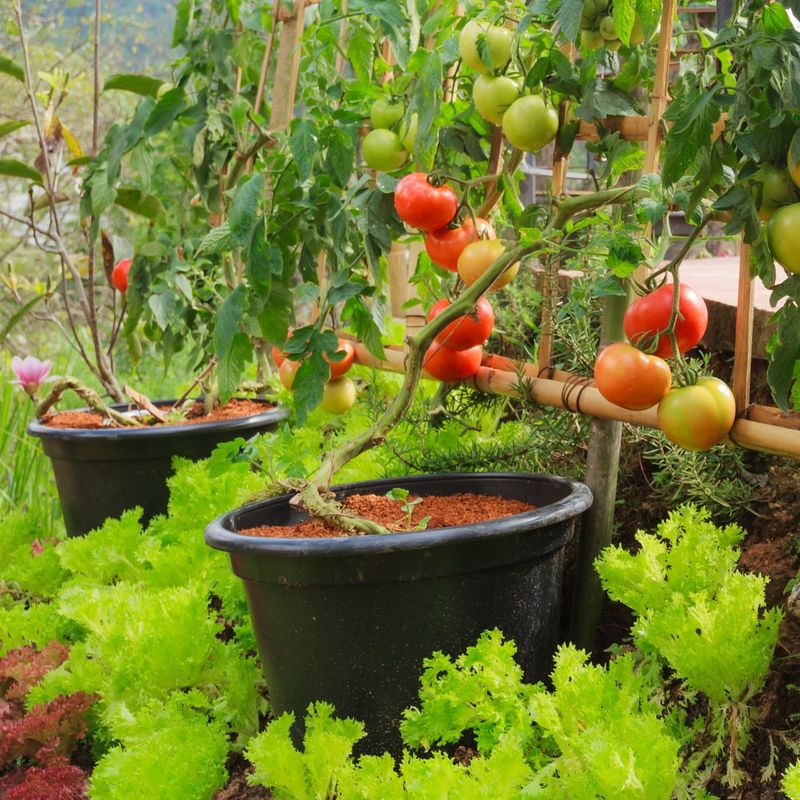
Container size matters more than most people realize when growing tomatoes in Georgia. A pot that is too small will restrict root growth, cause the soil to dry out too fast in the summer heat, and leave your plant struggling to support even a modest amount of fruit.
Aim for containers that hold at least 15 to 20 gallons for most standard tomato varieties. A 5-gallon bucket might seem like enough, but in Georgia’s heat, small containers can reach dangerously high soil temperatures within hours of being in direct sun.
Larger pots hold moisture longer and buffer against extreme temperature swings that smaller containers simply cannot handle.
Black plastic containers absorb heat quickly, which can stress roots on the hottest days. If that is what you have, wrapping the outside with burlap or placing them inside a slightly larger decorative pot can help keep soil temperatures more moderate.
Your Georgia Garden Changes Every Week. Your Plan Should Too.
Gardening in Georgia changes quickly throughout the season. Every Friday you’ll receive a simple weekly plan showing exactly what to plant, prune, fertilize, harvest, and protect so you never miss the right timing.
Light-colored or fabric grow bags are worth considering — they breathe better and tend to keep roots cooler during Georgia’s peak summer heat.
Make sure every container has drainage holes at the bottom. Without them, water pools at the root zone and creates conditions that lead to root rot, especially during Georgia’s rainy stretches in early summer.
At least two to four drainage holes per container is a reasonable starting point.
3. Pick Well Draining Soil To Prevent Root Problems
Soil choice can quietly make or break your container tomato garden, and it is one of those things that does not get enough attention.
Regular garden soil pulled from your yard is a poor fit for containers — it compacts over time, drains poorly, and can introduce pathogens that thrive in Georgia’s warm, moist conditions.
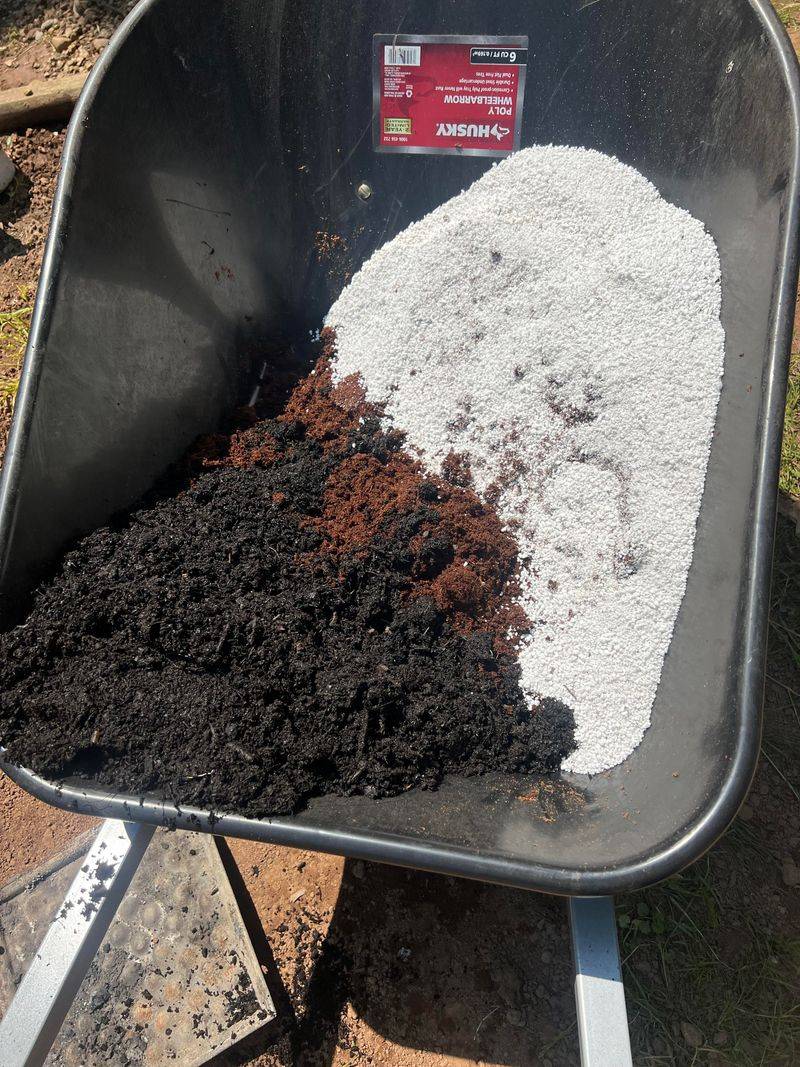
A quality potting mix designed for vegetables is the better starting point. Look for mixes that include perlite, coconut coir, or coarse compost — these ingredients keep the mix loose and allow water to move through freely without leaving roots sitting in soggy conditions.
Drainage is especially critical during Georgia’s rainy season, which often overlaps with the early part of the growing season in spring.
Adding extra perlite to a standard potting mix is a simple upgrade. A ratio of roughly 25 percent perlite to 75 percent potting mix improves drainage noticeably without sacrificing moisture retention entirely.
Roots need both air and water, and a well-structured mix provides both.
Avoid potting mixes that contain large amounts of water-retaining crystals or heavy clay-based amendments. In Georgia’s heat and humidity, those additives can keep the root zone wetter than tomatoes prefer, especially during stretches of frequent summer rain.
Refreshing or replacing your potting mix each season is also worth doing. After one growing season, the mix breaks down and compacts, reducing its ability to drain properly.
Starting fresh gives your plants the best possible foundation right from transplant day.
4. Water Deeply And Keep It Consistent
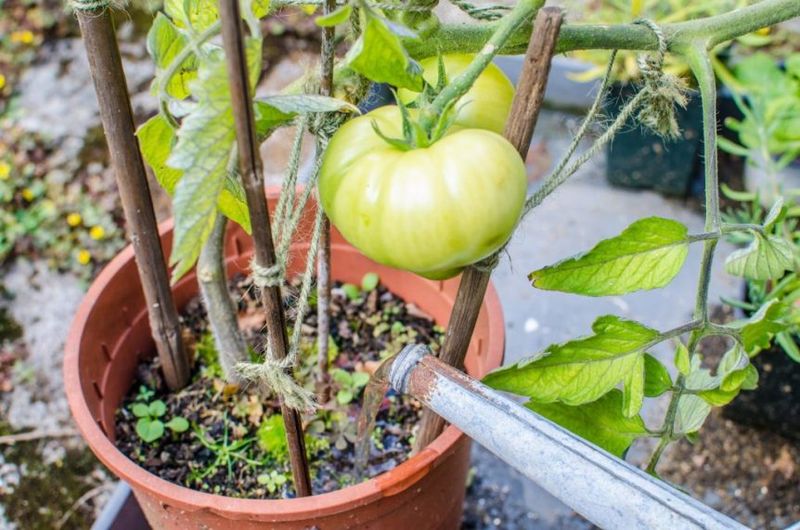
Watering container tomatoes in Georgia is genuinely different from watering them in cooler states, and underestimating that difference leads to problems fast.
Containers dry out much faster than garden beds, and during Georgia’s peak summer months, a large pot can go from moist to bone dry within a single hot day.
Deep watering encourages roots to grow downward rather than staying near the surface. Shallow, frequent splashes of water train roots to stay near the top of the container, which makes plants far more vulnerable to heat stress.
Water until you see it running freely from the drainage holes at the bottom — that is how you know the entire root zone got a drink.
Checking soil moisture before watering is a simple habit that prevents both underwatering and overwatering. Push a finger two inches into the soil — if it feels dry at that depth, it is time to water.
If it still feels damp, wait another day and check again. Consistency matters more than any fixed schedule.
Mulching the top of your containers with a thin layer of straw or shredded leaves can slow moisture evaporation noticeably during Georgia’s hottest stretches. It is a small step that makes a real difference when temperatures are climbing past 95°F.
5. Place Containers In Full Sun Each Day
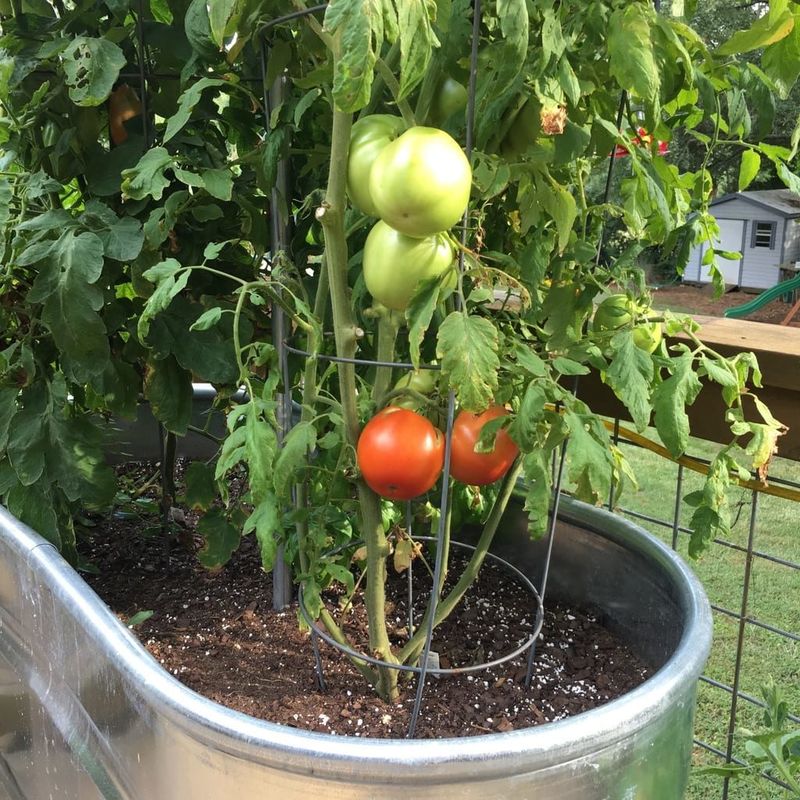
Sunlight is non-negotiable when growing tomatoes, and one of the biggest advantages of containers is that you can move them to chase the best light.
In Georgia, most yards and patios get plenty of sun, but the quality and angle of that light shifts throughout the season, so it pays to pay attention.
Tomatoes need at least six to eight hours of direct sun each day to produce fruit reliably. Less than that and plants may grow fine but flower poorly and set little fruit.
South-facing spots tend to offer the most consistent sun exposure throughout the day, especially during the spring and fall shoulder seasons when the sun sits lower in the sky.
Morning sun is particularly valuable in Georgia because it dries dew from the foliage quickly, which helps reduce fungal problems that spread in humid conditions.
Afternoon shade during the very hottest part of the day — roughly 2 to 5 p.m. — can actually be helpful during peak summer, especially in areas like Atlanta or Savannah where heat index values regularly climb well above 100°F.
Avoid placing containers near reflective surfaces like white walls or metal fences without some buffer. Reflected heat can push soil temperatures in containers to levels that stress roots and reduce fruit set, even when air temperatures seem manageable.
6. Feed Regularly To Support Growth And Fruit
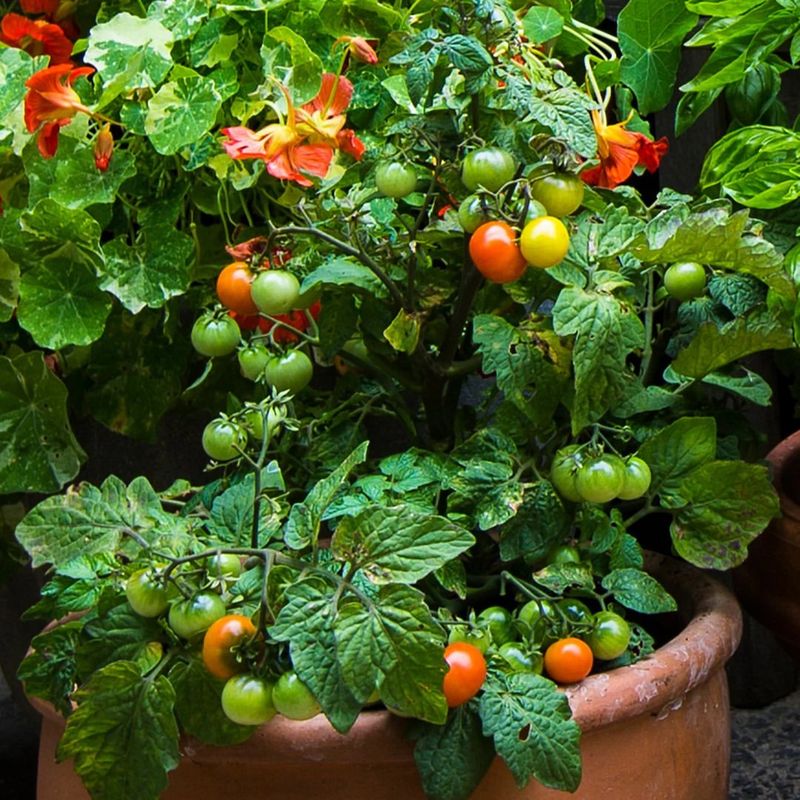
Container tomatoes are heavy feeders, and in Georgia’s growing season they burn through nutrients faster than most people expect. Every time you water — which in summer can be daily — you flush a small amount of nutrients out through the drainage holes.
Without regular feeding, plants start to look pale, growth slows, and fruit production drops off noticeably.
Starting with a balanced slow-release fertilizer at planting time gives plants a steady baseline of nutrients. Something in the range of a 10-10-10 or similar balanced ratio works for the early growth phase when plants are establishing and pushing out new leaves and stems.
Follow package directions carefully — more fertilizer does not mean faster growth, and overfeeding causes its own set of problems including burned roots and excessive leafy growth at the expense of fruit.
Once flowers appear, the plant’s nutritional needs shift. Switching to a fertilizer lower in nitrogen and higher in phosphorus and potassium helps support flower development and fruit set.
Too much nitrogen at this stage tends to push leafy growth instead of encouraging the plant to put energy into producing tomatoes.
Liquid fertilizers work well as a supplement every one to two weeks during the active growing season. They absorb quickly and give you more precise control over what the plant is getting at any given time.
Fish emulsion and liquid kelp are options that many Georgia gardeners use alongside dry fertilizers without issue.
Keeping a loose feeding schedule and watching how your plants respond is more practical than following a rigid calendar. Plants will show you when something is off.
7. Add Support Early To Keep Plants Upright
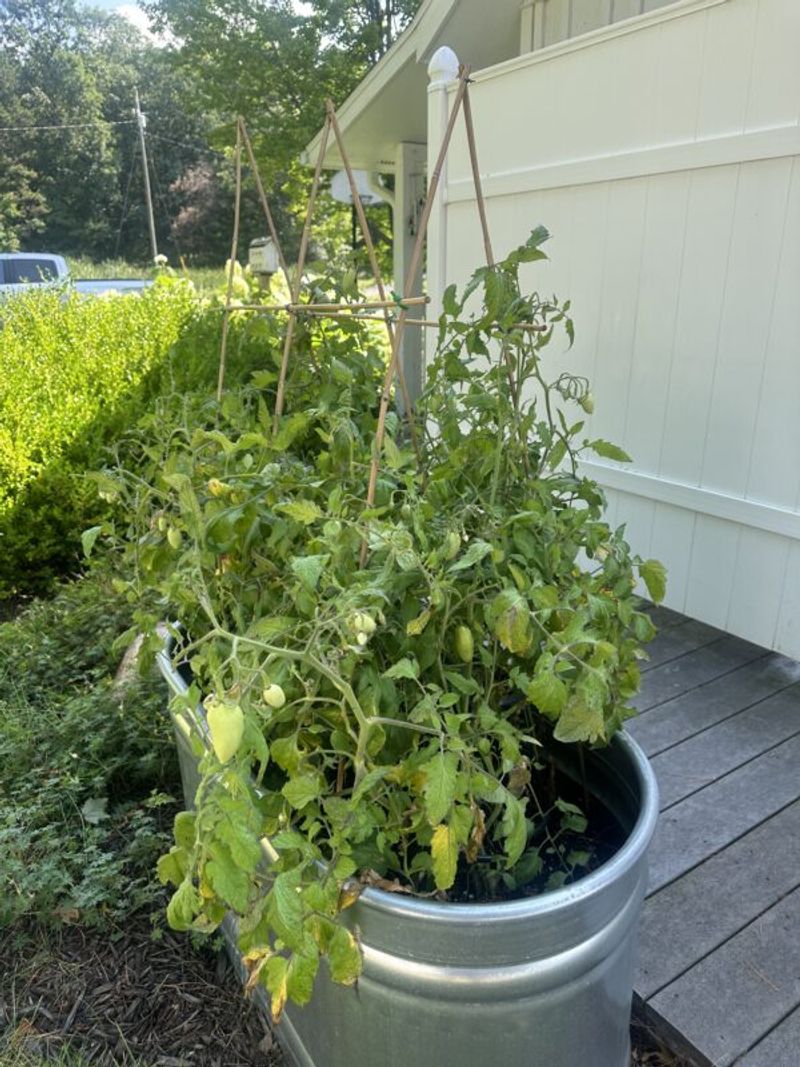
Putting support in place before you actually need it is one of those lessons most container gardeners learn the hard way.
Waiting until a tomato plant is already flopping over and heavy with fruit makes installing a cage or stake much more difficult and risks snapping stems in the process.
Cages work well for compact determinate varieties and most bush-type tomatoes grown in containers across Georgia. A sturdy wire cage placed at transplant time gives the plant something to grow into naturally, and it requires less ongoing attention than staking.
Just make sure the cage is tall enough — some tomato cages sold at garden centers are too short for even medium-sized plants.
For indeterminate varieties that keep growing throughout the season, a single strong stake or a Florida weave system works better than a cage. Drive the stake deep into the container at planting time so it has a firm anchor.
As the plant grows, tie stems loosely to the stake using soft ties, strips of old fabric, or tomato clips. Avoid anything that cuts into the stem under the weight of the plant.
Georgia’s afternoon thunderstorms add another reason to prioritize support early in the season. Strong gusts can snap unsupported plants or tip over containers entirely if the plant acts as a sail catching the wind.
Heavier containers with proper staking handle those storms much better than lightweight setups.