Stunning Native Texas Shrubs To Plant Instead Of Crape Myrtle
Texas neighborhoods are full of crape myrtles, and it is easy to see why. They flower for a long stretch, fit into all kinds of landscapes, and have been a familiar sight for so many years that people almost stop noticing them.
Still, more gardeners are starting to look around and wonder whether there are better options with a little more regional character.
That is where native shrubs start getting attention. They can bring color, texture, and seasonal interest without feeling so expected, and many of them are better suited to Texas conditions than people realize.
For homeowners who want something beautiful but also more connected to the local landscape, this is a really appealing shift.
A yard does not have to copy the same planting formula as every house on the block. The native shrubs ahead offer a fresh look, and several of them have the kind of presence that makes old favorites feel a little tired.
1. Texas Mountain Laurel Brings Spring Drama
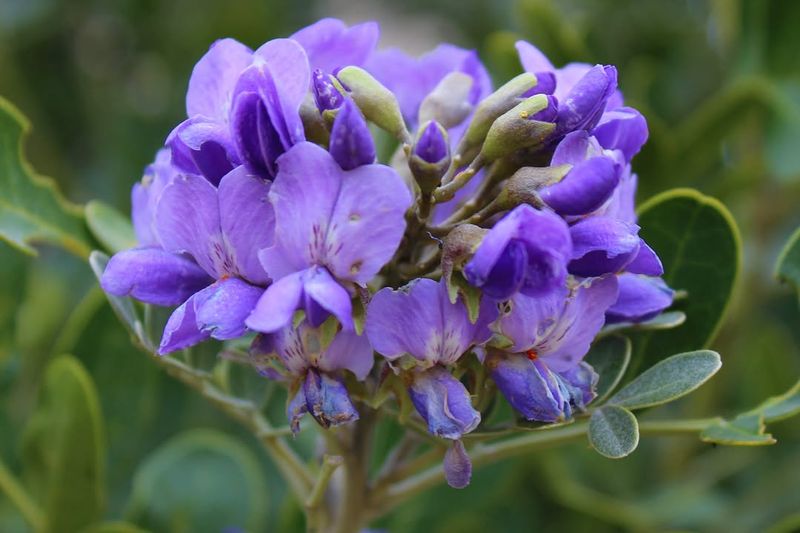
Every spring, this evergreen shrub bursts into clusters of deep purple flowers that smell exactly like grape soda. That sweet, unmistakable fragrance drifts through the air and can perfume an entire yard in seconds.
Botanically known as Dermatophyllum secundiflorum, this tough native thrives across Central and West Texas. It handles poor, rocky, dry soils with ease and barely needs supplemental watering once it gets established.
Gardeners who want a low-maintenance showstopper will absolutely love this plant.
Texas Mountain Laurel grows slowly but steadily, eventually reaching 10 to 15 feet tall. Its glossy, dark green leaves stay on the plant year-round, giving your landscape structure even in the coldest months.
Pollinators, especially native bees, go absolutely wild for those purple flower clusters each spring.
One thing to keep in mind is that its bright red seeds are toxic if eaten, so plant it thoughtfully if young children play nearby. Other than that, this shrub is remarkably easy to care for and incredibly rewarding.
As a true Texas native, it supports local ecosystems in ways that non-native crape myrtle simply cannot match.
2. Cenizo Shines In Heat
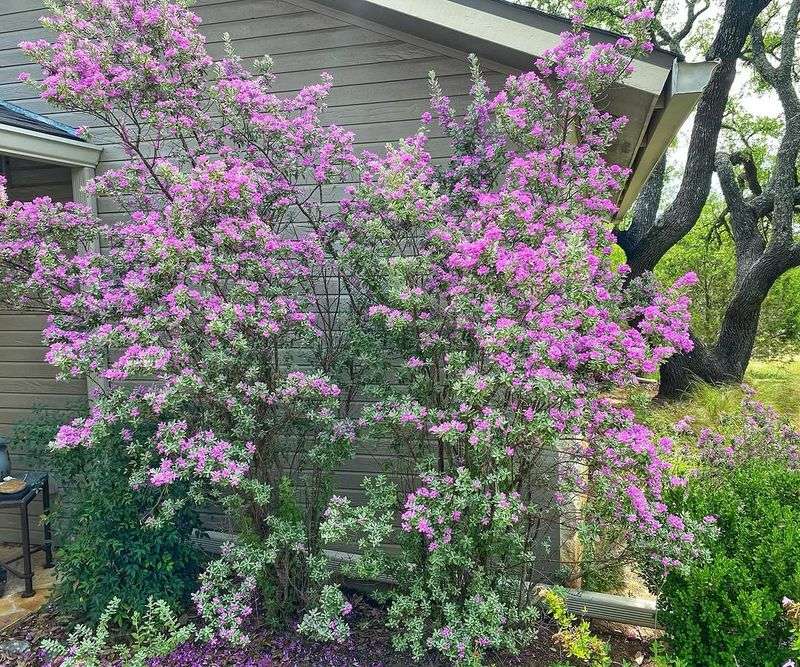
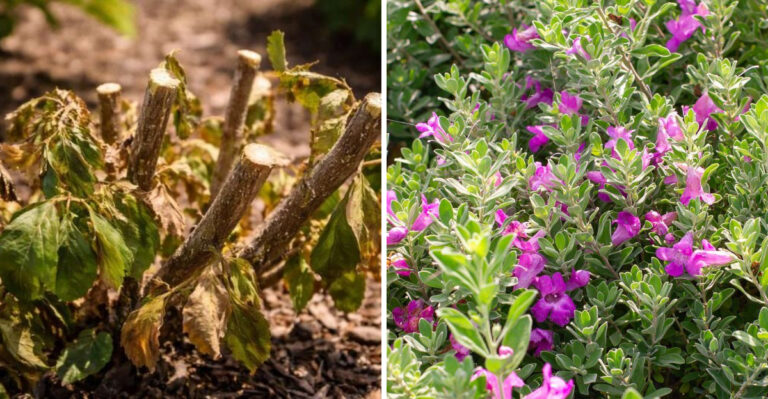
Walk through the Texas Hill Country after a summer rainstorm and you might notice a magical thing happening along the roadsides. Silvery-leaved shrubs suddenly explode with lavender-pink blooms almost overnight.
That plant is Cenizo, also called Texas Sage or Purple Sage, and it is one of the most beloved native shrubs in the entire state.
Cenizo, scientifically known as Leucophyllum frutescens, earns its nickname “barometer bush” because it blooms in response to humidity and rain. Watching it flower is like reading nature’s own weather forecast.
Gardeners across South and West Texas have grown to rely on this quirky seasonal show.
The silvery-gray foliage is beautiful on its own, adding a soft, almost luminous texture to dry landscapes. Cenizo grows well in full sun and thrives in well-drained, alkaline soils, which makes it perfectly matched to Texas conditions.
Once established, it is remarkably drought-tolerant and needs almost no irrigation.
Reaching about 5 to 8 feet tall and wide, Cenizo works wonderfully as a privacy hedge, a foundation planting, or a colorful accent shrub. Butterflies and bees are drawn to its blooms, making it a genuine asset for pollinators.
Your Texas Garden Changes Every Week. Your Plan Should Too.
Gardening in Texas changes quickly throughout the season. Every Friday you’ll receive a simple weekly plan showing exactly what to plant, prune, fertilize, harvest, and protect so you never miss the right timing.
Replacing crape myrtle with Cenizo means choosing a plant that truly belongs in Texas soil.
3. Flame Acanthus Lights Up The Yard
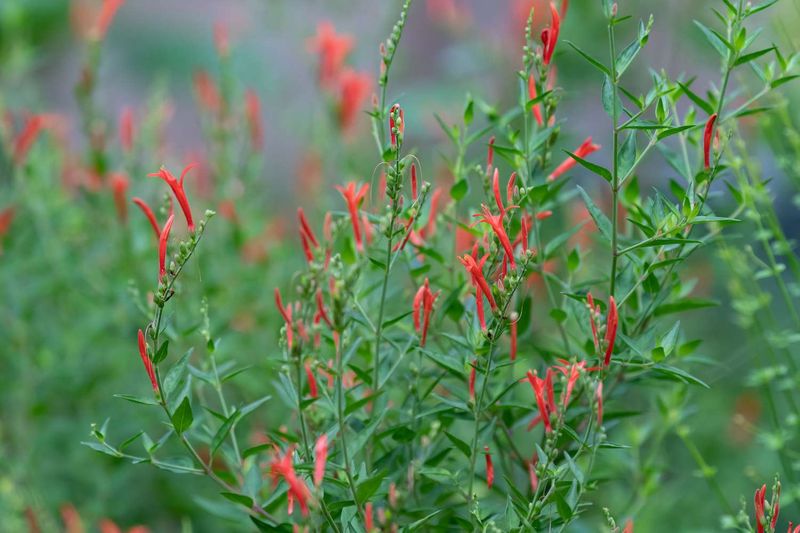
If hummingbirds are your thing, Flame Acanthus might just become your favorite plant in the entire yard. Known scientifically as Anisacanthus quadrifidus var. wrightii, this fiery native shrub produces an explosion of narrow, tubular orange-red flowers from summer straight through fall.
Hummingbirds cannot resist it.
Native to Central and West Texas, Flame Acanthus is built for heat and drought. It thrives in full sun and well-drained soils, asking for very little once it roots in.
Even during the brutal Texas summers when other plants struggle, this shrub keeps right on blooming without missing a beat.
Growing to about 3 to 5 feet tall, it fits naturally into mixed borders, wildlife gardens, and xeriscape designs. The slender, arching stems give it a relaxed, natural look that pairs beautifully with grasses and other native perennials.
Come fall, the foliage turns a warm golden yellow before the plant goes dormant for winter.
One of the best things about Flame Acanthus is how quickly it rebounds each spring, often sending up fresh growth before you even realize winter is over. Butterflies also visit the blooms regularly alongside the hummingbirds.
For Texas gardeners looking to replace crape myrtle with something both stunning and wildlife-friendly, Flame Acanthus is an outstanding choice that delivers season after season.
4. Turk’s Cap Adds Easy Color
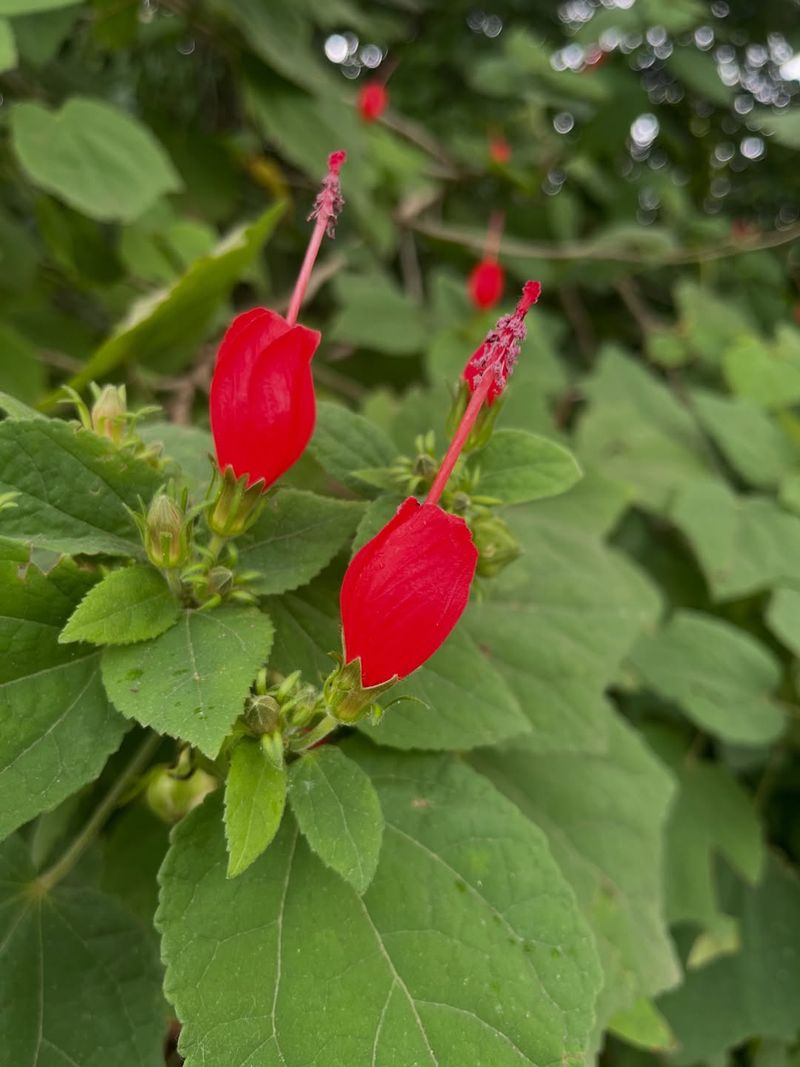
Not every garden spot gets full sun all day, and that is exactly where Turk’s Cap shines. This adaptable native shrub handles everything from deep shade to full sun, which makes it one of the most flexible plants in the Texas native palette.
Its bright red, twisted flowers look like tiny turbans perched on the stems, which is exactly how it got its colorful name.
Turk’s Cap, or Malvaviscus arboreus var. drummondii, is a Texas native that grows vigorously in the humid eastern regions of the state as well as in Central Texas landscapes. It can reach 3 to 9 feet depending on conditions, and it spreads generously over time to fill in a garden bed beautifully.
Hummingbirds and butterflies absolutely flock to the blooms from summer through fall, making your yard feel alive with movement and color. The small red fruits that follow the flowers are edible and attract a variety of birds as well.
Gardeners who want year-round wildlife activity will find Turk’s Cap delivers it reliably.
Unlike crape myrtle, Turk’s Cap is deeply rooted in Texas ecology, supporting native insects and birds that have evolved alongside it for centuries. It needs little fertilizer and tolerates periods of drought once established.
For shaded spots under large oaks or along fence lines, few native shrubs can compete with its cheerful, generous performance.
5. American Beautyberry Stands Out Fast
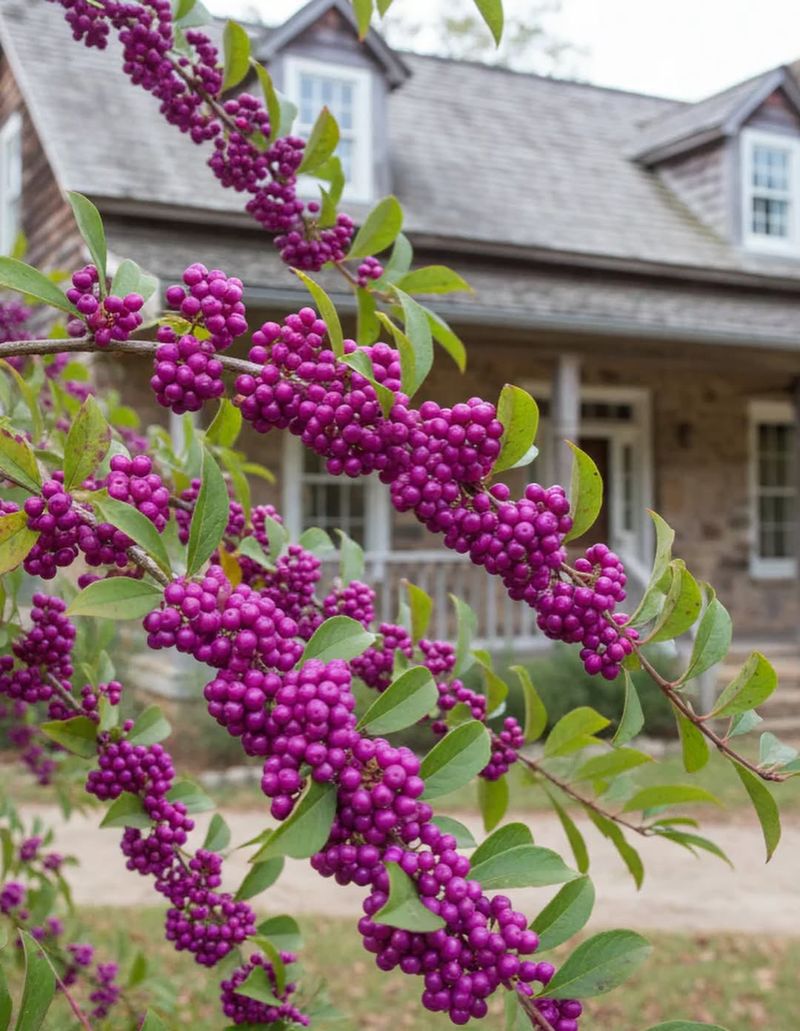
Bold, bright, and almost unbelievably vivid, American Beautyberry is one of those plants that makes visitors stop and ask, “Is that real?” The clusters of electric magenta-purple berries that wrap tightly around the arching stems in late summer and fall are absolutely stunning. No other native shrub in Texas produces quite that shade of purple.
Callicarpa americana is native to East Texas and thrives in partial shade, though it tolerates full sun with adequate moisture. It grows quickly, reaching 4 to 6 feet tall, and spreads into a graceful, arching form that looks beautiful in naturalistic garden designs.
The large, soft leaves have a pleasant texture and add lushness to shaded spots.
Birds go absolutely wild for those berries in fall and winter, with mockingbirds, robins, and cedar waxwings among the enthusiastic visitors. Even deer occasionally browse the foliage, though the plant bounces back quickly.
Gardeners in East Texas especially love how well it fills in woodland edges and shaded borders.
Did you know that early American settlers used crushed beautyberry leaves as a natural insect repellent? That fun piece of history makes this shrub even more interesting to grow.
Swapping crape myrtle for American Beautyberry means trading ordinary for extraordinary, especially in fall when those impossible purple berries put on their unforgettable show.
6. Yaupon Holly Brings Year Round Appeal
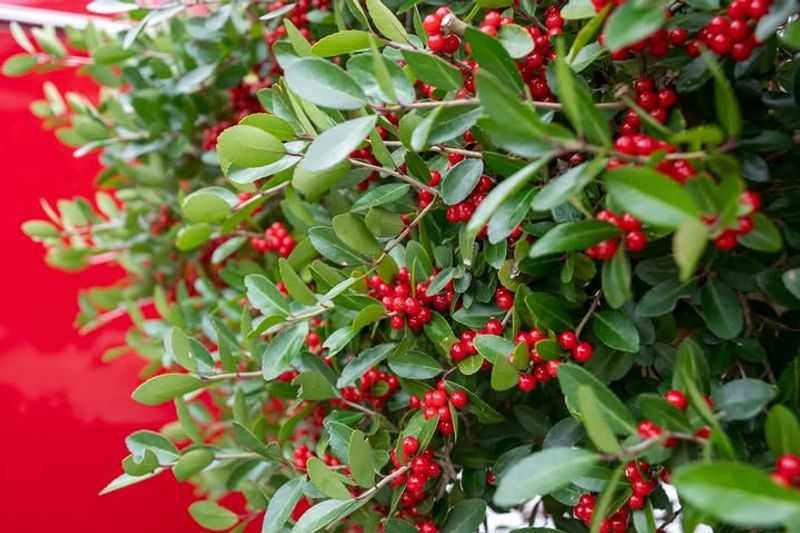
Yaupon Holly might be the most underrated native shrub in all of Texas, and it is long overdue for the spotlight it deserves. Ilex vomitoria is an incredibly tough, versatile evergreen that grows naturally across East and Central Texas, thriving in everything from deep shade to blazing full sun.
Few plants can honestly claim that kind of adaptability.
In fall and winter, female plants produce masses of bright red berries that cling to the branches for months. Those berries are a critical food source for birds like cedar waxwings, bluebirds, and mockingbirds during the colder months when food is scarce.
Planting a Yaupon Holly is essentially setting out a bird feeder that refills itself every year.
Yaupon Holly is also the only native North American plant known to contain caffeine. Indigenous peoples across the Southeast brewed its leaves into ceremonial teas for centuries, a fact that makes it one of the most historically fascinating native shrubs in the region.
That bit of trivia alone makes it a great conversation starter in any Texas garden.
From a practical standpoint, Yaupon Holly is nearly indestructible. It tolerates poor soils, flooding, drought, salt spray, and heavy pruning equally well.
Whether you shape it into a formal hedge or let it grow naturally, this tough Texas native delivers year-round beauty, wildlife value, and easy care that crape myrtle simply cannot match.
7. Agarita Handles Tough Spots Beautifully
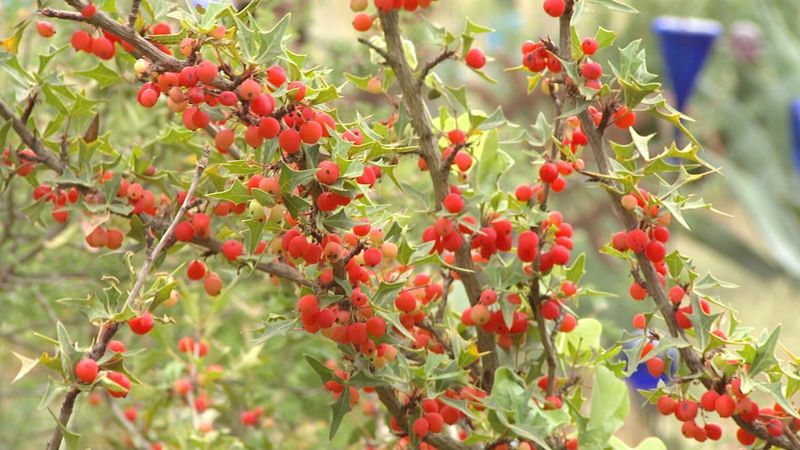
Tough as nails and beautiful in its own spiky way, Agarita is one of the most iconic native shrubs of the Texas Hill Country. Mahonia trifoliolata features stiff, three-lobed leaves with sharp points that give it a silvery-blue-green color and a bold, architectural texture unlike anything else in the Texas native plant world.
Each spring, Agarita produces small, fragrant yellow flowers that bloom before most other plants have even woken up from winter. Those early blooms are a critical nectar source for native bees and other pollinators emerging in late winter.
After the flowers come bright red berries that ripen in early summer, and they make a genuinely delicious jelly that has been a Texas tradition for generations.
Agarita thrives in rocky, alkaline soils with excellent drainage, which makes it perfectly suited to the limestone-heavy landscapes of Central and West Texas. It handles drought like a champion and rarely needs supplemental water once established.
Full sun brings out its best color and most prolific berry production.
Growing 3 to 6 feet tall and wide, Agarita works beautifully as a barrier planting, wildlife habitat shrub, or natural garden anchor. Birds nest inside its protective spiny branches, sheltered from predators.
For gardeners who want a plant with deep roots in Texas ecology, rich history, and genuine year-round interest, Agarita is an exceptional choice.
8. Fragrant Sumac Adds Soft Texture
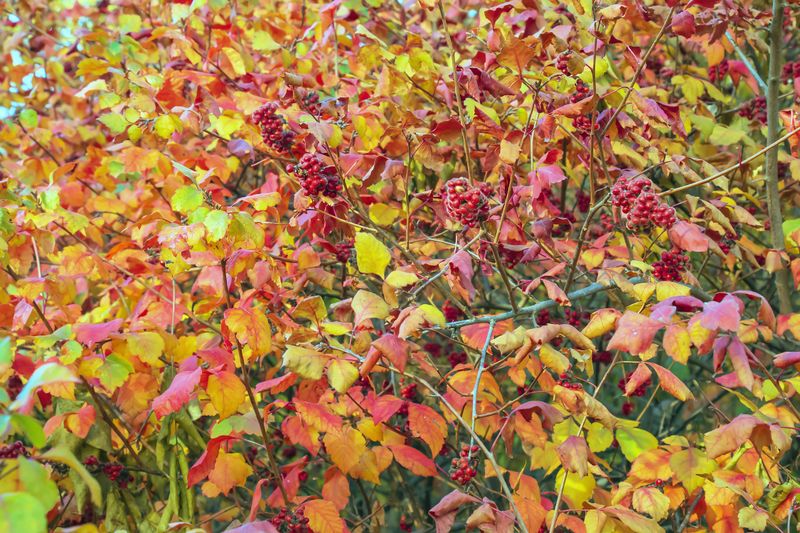
Autumn color is something Texas gardeners do not always expect, but Fragrant Sumac delivers it in a big way. Rhus aromatica is a spreading native shrub that puts on a spectacular fall show, with leaves shifting from green to brilliant shades of orange, red, and burgundy as temperatures cool.
It rivals any ornamental plant for seasonal color.
Native to rocky slopes and open woodlands across Central and North Texas, Fragrant Sumac is a rugged, drought-tolerant shrub that asks very little from its gardener. It grows 3 to 6 feet tall and spreads wider than it is tall, making it an excellent ground-covering shrub for slopes, berms, and naturalistic garden spaces.
Erosion control is one of its most practical strengths.
In early spring, small yellow flower clusters appear before the leaves, offering early-season nectar for pollinators. By summer, clusters of small fuzzy red berries develop, providing food for birds and small mammals throughout the warmer months.
The entire seasonal cycle of this shrub is genuinely impressive from start to finish.
Crush a leaf and you will notice a pleasant, slightly citrusy fragrance, which is exactly how this shrub earned its common name. That aromatic quality makes it a sensory delight in the garden.
For Texas landscapes that need low-water, high-impact plants with real ecological value, Fragrant Sumac is a wonderfully underused gem worth planting today.
9. White Fringetree Steals The Show
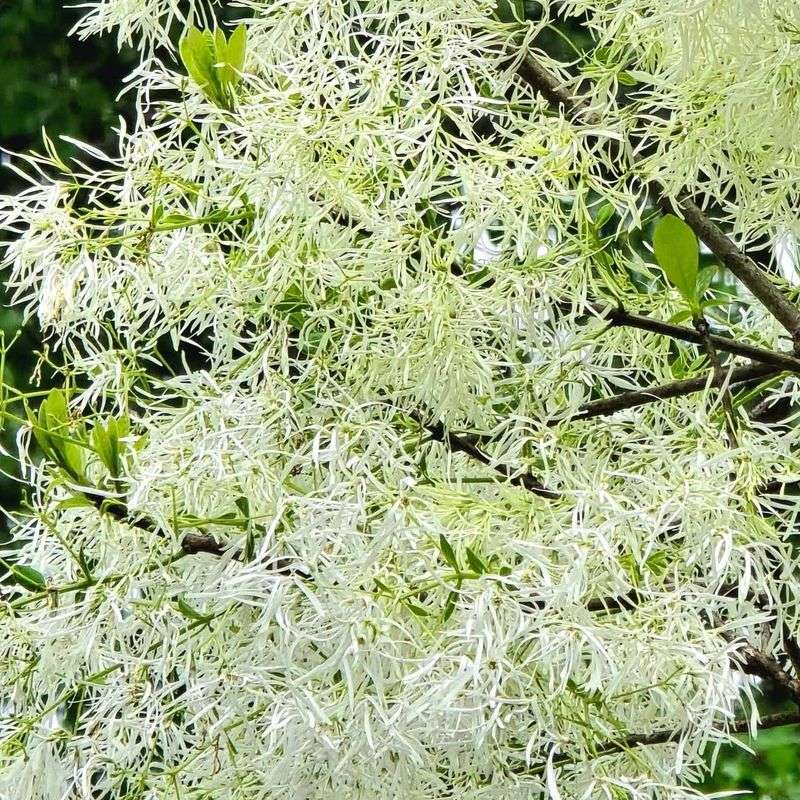
Imagine a shrub so covered in white blooms each spring that it looks like it is draped in soft, flowing lace. That is exactly the effect White Fringetree creates, and it is genuinely one of the most breathtaking native flowering plants in all of Texas.
Chionanthus virginicus produces long, airy clusters of fragrant white flowers in spring that seem to float above the foliage like a cloud.
Native to East Texas, White Fringetree grows naturally along stream banks and woodland edges where it enjoys moist, rich soils. It tolerates partial shade well, making it a great choice for spots under taller trees or along the shaded sides of buildings.
In full sun with adequate moisture, the flower display becomes even more spectacular.
Growing 12 to 20 feet tall over time, White Fringetree can function as a large shrub or a small multi-trunk tree depending on how it is pruned and trained. Female plants produce small blue-black fruits in late summer that birds find irresistible.
The foliage turns a soft yellow in fall before dropping cleanly, adding one more layer of seasonal interest.
Pollinators are strongly attracted to the fragrant spring blooms, and the dense branching provides good nesting habitat for songbirds. For East Texas gardeners looking for a truly stunning native alternative to crape myrtle, White Fringetree offers elegance, wildlife value, and a spring flower show that is simply unforgettable.