Slugs That Trouble Oregon Gardens And How To Control Them Naturally
Slugs have a way of making themselves known without ever looking dramatic. A few ragged leaves here, a shiny trail there, and suddenly the garden feels under attack after sunset.
In damp Oregon beds, these soft-bodied pests can chew through young greens and tender flowers faster than most gardeners expect. The annoying part?
They often hide all day, so the damage shows up before the culprit does. What makes them so hard to manage is their love of cool, moist spots where mulch and crowded growth give them cover.
Still, control does not have to mean harsh chemicals. Natural methods can work well when they are used early and repeated often.
Smarter watering helps. So does clearing hiding places, setting simple barriers, hand-picking at night, or using traps that target slugs without turning the whole yard into a battleground.
Even small changes can help, especially when beds stay tidy and vulnerable plants get extra attention during wet stretches. The key is knowing which slugs are causing trouble and why they keep coming back.
Once you understand their habits, it becomes much easier to protect young plants and keep those chewed-up leaves from becoming the garden’s main story every single week.
1. Gray Garden Slug
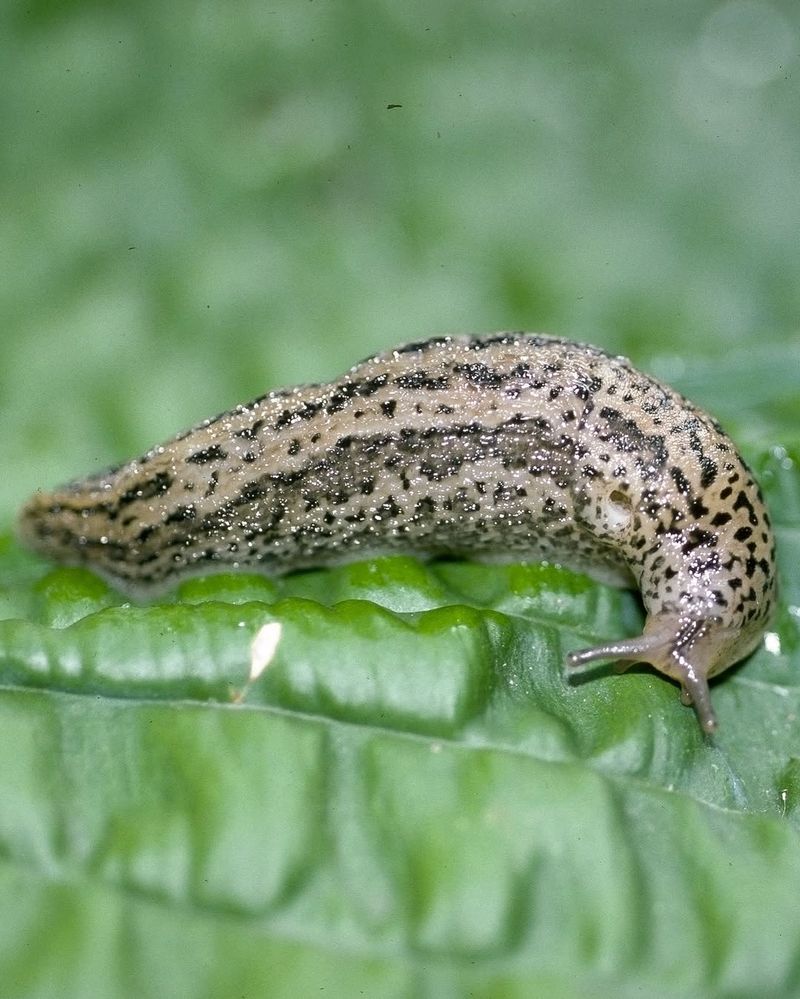
Most Oregon gardeners have come face to face with the gray garden slug without even knowing its name. This is the most common slug found in Pacific Northwest gardens, and it causes a surprising amount of damage for something so small.
The gray garden slug typically measures about one to two inches long and ranges in color from pale gray to brownish-gray. Its body is soft, moist, and covered in a thin layer of slime that helps it glide across surfaces.
You will often find this slug feeding at night or on cloudy, damp days. It loves tender seedlings, lettuce, strawberries, and young vegetable plants.
In Oregon, where rainfall is plentiful for much of the year, conditions are nearly perfect for this species to thrive. Gardens in the Portland metro area and along the coast tend to see especially high populations.
Natural control methods work very well against gray garden slugs. Sprinkling diatomaceous earth around plant bases creates a rough barrier that damages their soft bodies.
Placing copper tape around raised beds also deters them, since copper creates a mild reaction with slug slime. You can set up shallow traps filled with beer near problem areas, as slugs are attracted to the yeast and will fall in.
Encouraging natural predators like ground beetles, ducks, and toads in your Oregon garden also makes a big difference over time.
Removing debris, boards, and dense mulch where slugs hide during the day is another simple but effective strategy.
2. Threeband Garden Slug
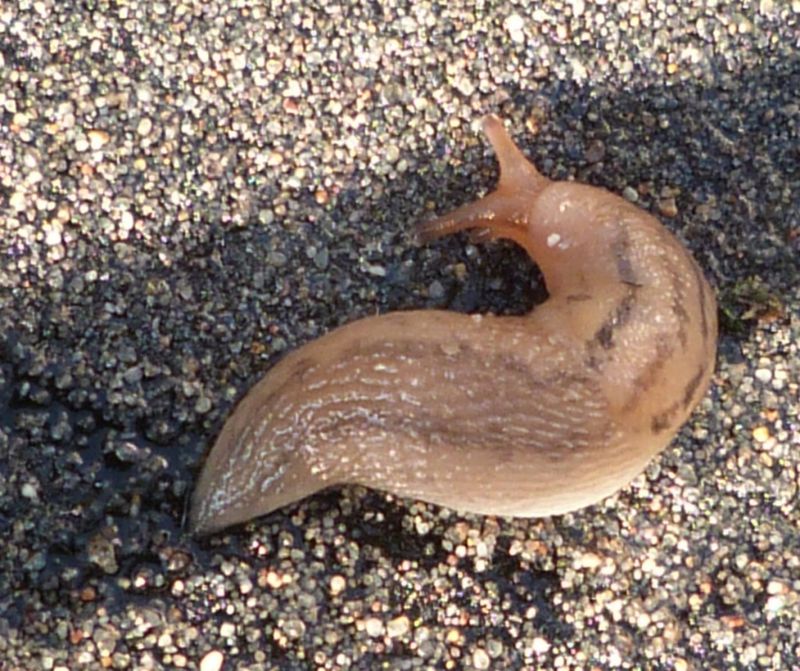
Spotted with three dark stripes running along its body, the threeband garden slug is easy to identify once you know what to look for. This species is originally from Europe but has made itself very comfortable in Oregon gardens over the decades.
It tends to be smaller than some other local slugs, usually growing to about one inch in length. Its pale yellowish or grayish body with those three distinct bands makes it stand out from other species.
Your Oregon Garden Changes Every Week. Your Plan Should Too.
Gardening in Oregon changes quickly throughout the season. Every Friday you’ll receive a simple weekly plan showing exactly what to plant, prune, fertilize, harvest, and protect so you never miss the right timing.
What makes this slug tricky is its habit of feeding underground as well as on the surface. It will chew into potato tubers, carrot roots, and bulbs without you noticing until you dig up your harvest.
Oregon gardeners who grow root vegetables should pay close attention to signs of underground feeding, such as small holes in tubers or wilting plants with no obvious surface damage.
Iron phosphate-based slug baits are a great natural option for controlling threeband garden slugs. These baits are safe for pets, wildlife, and the environment, making them a popular choice across Oregon.
Sprinkling crushed eggshells around vulnerable plants creates a scratchy surface that slugs prefer to avoid. Rotating crops each season also helps break the cycle, since threeband slugs often stay close to the same soil areas.
Watering your garden in the morning rather than the evening reduces overnight moisture, which is key to making your Oregon garden less inviting to this persistent little pest.
3. European Black Slug
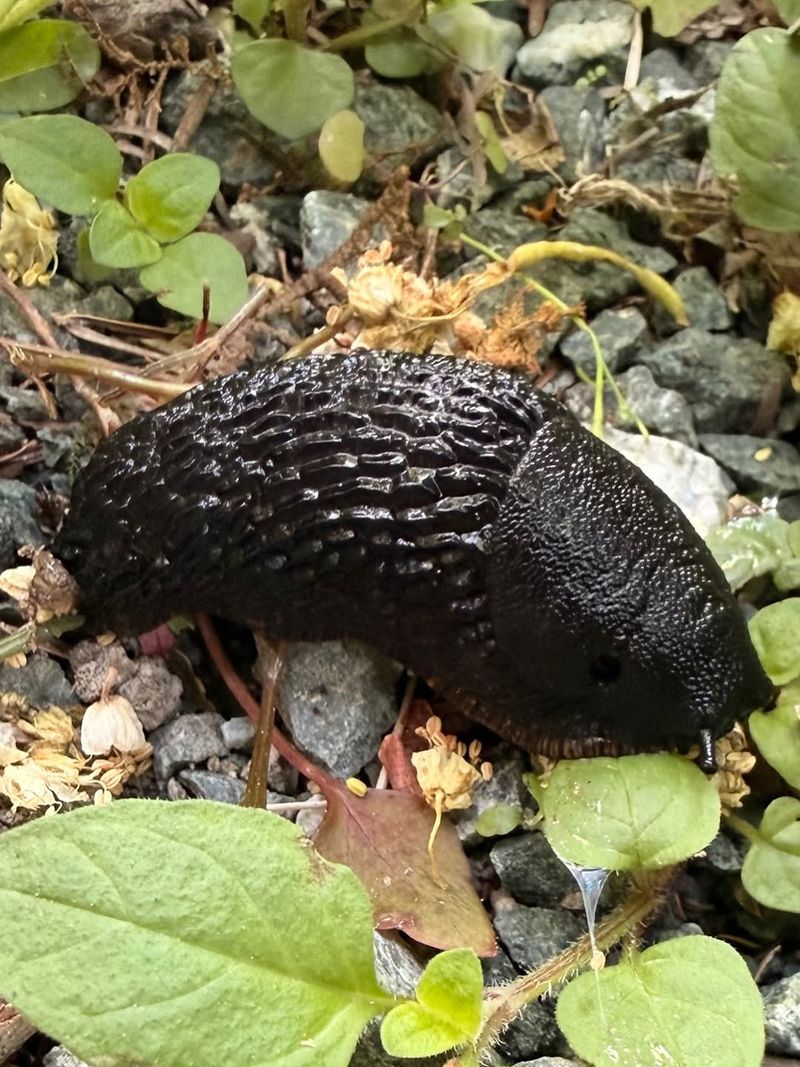
Few things startle a gardener more than spotting a slug the size of a hot dog in their flower bed. The European black slug, also called the large black slug, can grow up to eight inches long and is one of the most dramatic-looking garden visitors in Oregon.
Despite its intimidating size, it is actually less destructive to living plants than many smaller slug species. It tends to prefer decaying plant matter, fungi, and compost over fresh greenery.
Still, large populations can cause real problems, especially in vegetable gardens and areas with tender new growth. Young seedlings are especially at risk when European black slug numbers are high.
In Oregon, this species is most common in wetter areas like the coast, the Willamette Valley, and forested neighborhoods where moisture stays high year-round.
Because this slug is large and slow-moving, handpicking is one of the most effective control methods. Heading out after dark with a flashlight and a bucket of soapy water lets you collect a large number quickly.
Wearing gloves makes the task much easier. You can also reduce habitat by cleaning up leaf piles, old wood, and dense ground cover where this slug loves to rest during the day.
Adding a layer of sharp gravel or coarse sand around garden beds discourages movement.
Planting slug-resistant herbs like rosemary, sage, and fennel around the edges of your Oregon garden can also act as a natural buffer against this oversized visitor.
4. Leopard Slug
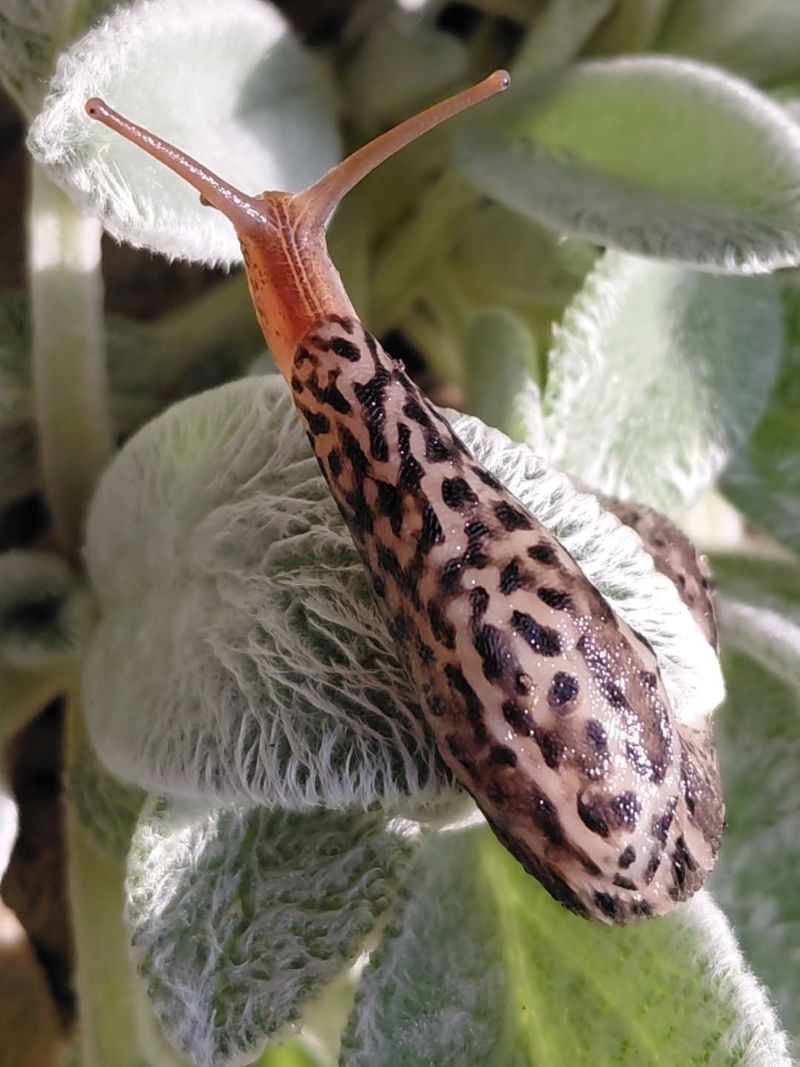
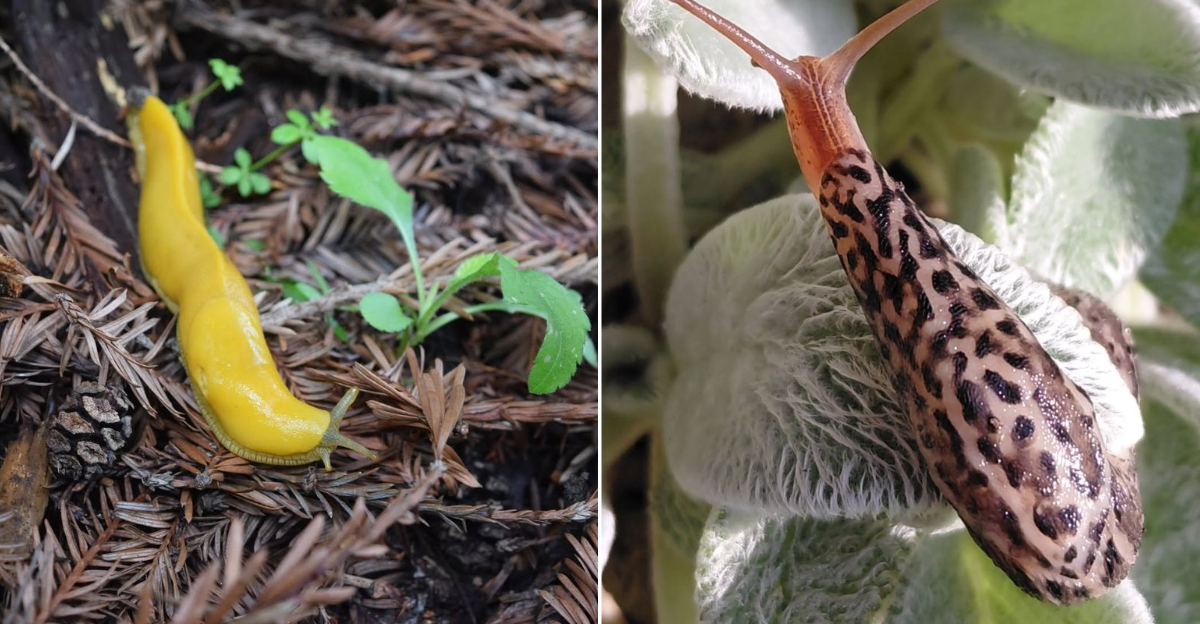
With a pattern that looks almost like a work of art, the leopard slug is one of the most visually striking creatures you might find in an Oregon garden. Its pale gray or tan body is covered in dark spots and streaks that give it a wild, almost exotic appearance.
Leopard slugs can grow quite large, sometimes reaching five or six inches, and they move with surprising speed compared to other slug species.
Here is something interesting about the leopard slug that most gardeners do not know. It actually preys on other slugs, including the gray garden slug and the threeband garden slug.
This makes it something of a natural ally in your garden rather than purely a pest. However, it does also eat fresh plant material, mushrooms, and decaying matter, so it is not entirely innocent when it comes to garden damage.
Because of its predatory habits, many Oregon gardeners choose to leave leopard slugs alone and let them help manage other slug populations naturally. If you do want to reduce their numbers, focus on removing hiding spots like flat rocks, old boards, and dense leaf litter.
Keeping your garden tidy and well-aerated limits the damp, sheltered spaces they prefer. If populations become too high and plant damage increases, iron phosphate baits can be used safely without harming beneficial garden wildlife.
Appreciating the leopard slug’s role in Oregon’s garden ecosystem often leads to a smarter, more balanced approach to natural pest management overall.
5. Marsh Slug
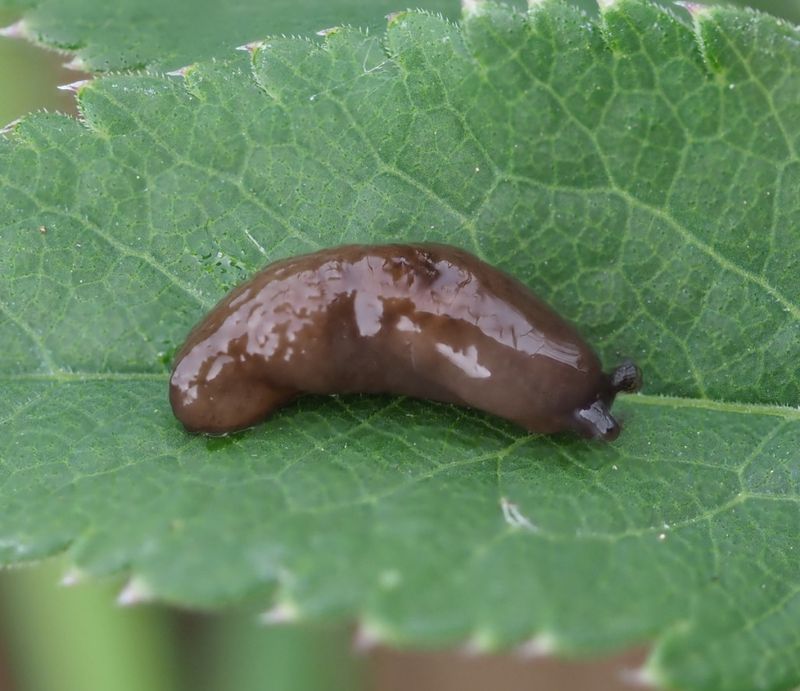
Quiet and easy to overlook, the marsh slug is a smaller species that thrives in the wettest parts of Oregon gardens. It rarely grows longer than two inches, and its brownish or olive-colored body blends easily into damp soil and wet mulch.
A pale keel, which is a ridge running along the back toward the tail, helps identify this species up close. You are most likely to encounter it near water features, bog gardens, or low-lying areas that stay consistently moist.
Marsh slugs tend to target soft-leafed plants, mosses, algae, and decomposing plant matter. In ornamental gardens near ponds or rain gardens, which are very popular in Oregon landscaping, this species can become a recurring nuisance.
It also feeds on young vegetable seedlings when other food sources are limited, especially in early spring when fresh growth is just emerging.
Managing moisture is the most powerful tool against the marsh slug. Improving soil drainage in problem areas reduces the wet conditions this species depends on.
Using raised beds with good drainage keeps plant roots healthier and makes the environment less appealing to marsh slugs. Ground-level barriers made from sharp sand or diatomaceous earth around raised beds help block their movement.
Attracting Pacific tree frogs and ground-foraging birds to your Oregon garden is another excellent natural strategy, as these animals actively feed on small slugs like this one.
Consistent garden tidying, especially around water features, goes a long way toward keeping marsh slug numbers manageable.
6. Yellow Garden Slug
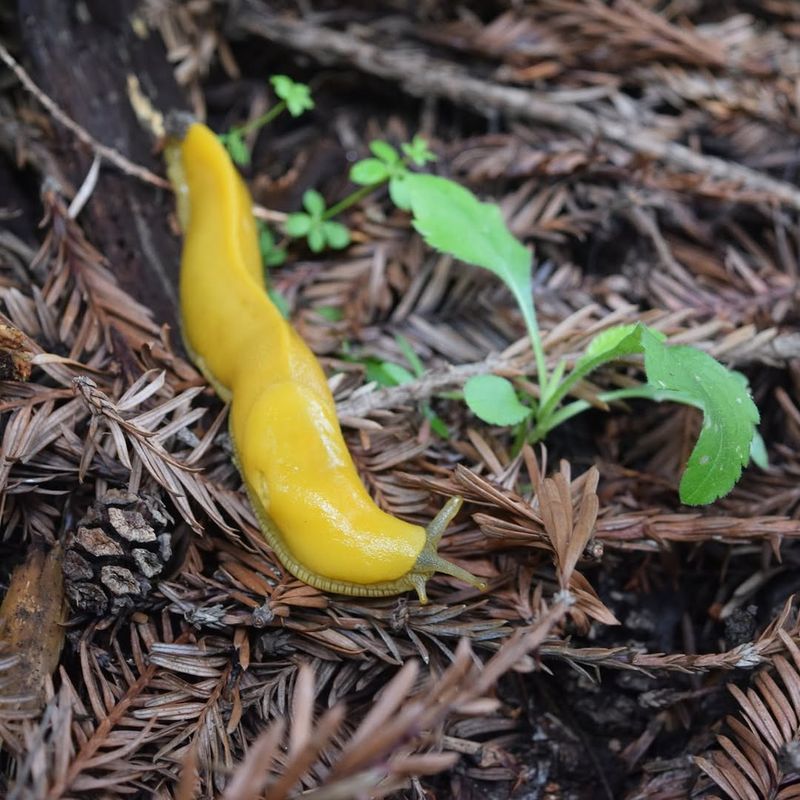
Bright and surprisingly cheerful-looking for a garden pest, the yellow garden slug stands out immediately with its pale yellow or cream-colored body and vivid orange or yellow sole. It is a medium-sized slug, usually growing between two and three inches long, and it is quite common in Oregon vegetable gardens and flower beds.
Its coloring can vary slightly depending on age and diet, sometimes appearing more orange or tan, but the yellow tones are usually distinctive enough for easy identification.
Yellow garden slugs are active feeders that target a wide range of plants. Hostas, lettuce, basil, young bean plants, and strawberries are among their favorites.
In Oregon, where home vegetable gardens are incredibly popular, this slug can cause significant losses if populations are not managed early in the season. It feeds most aggressively during mild, wet nights, which describes much of Oregon’s spring and fall weather perfectly.
One of the most effective natural controls for yellow garden slugs is encouraging hedgehogs, ground beetles, and song thrushes to visit your garden, as all three actively feed on slugs. Planting strong-scented herbs like thyme, mint, and lavender around garden beds creates a natural deterrent.
Coarse barriers like crushed oyster shells or pine needle mulch make movement difficult for soft-bodied slugs.
Setting out cardboard traps during the day, then collecting and relocating the slugs that hide underneath, is a simple and surprisingly effective hands-on method for Oregon gardeners managing this bright little pest.