9 Smells That Drive Voles Away From Your Lawn
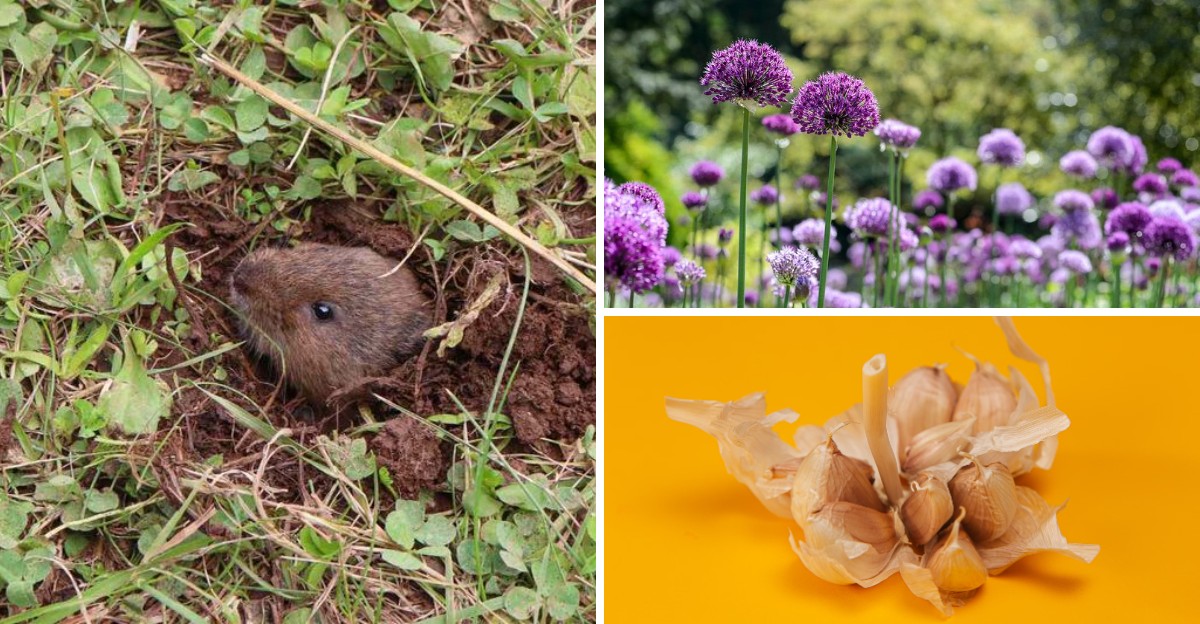
One tiny lawn rodent can start raising babies of her own when she is barely a month old. That fast family life explains how a few winding trails in the grass can turn into a maze by spring.
I found my first set of those trails after the snow melted in March. They looked like someone had drawn shallow highways across the yard with a pencil eraser. Hostas nearby had chewed stems, and a few tulip bulbs were simply gone.
Turns out these little diggers rely heavily on their noses. Scent helps them find roots, avoid hunters, and pick safe places to tunnel. You can use that sharp sense of smell to your advantage without harsh poisons.
Some scents honestly work better than others, and a few popular tricks fade fast. Which smells actually earn a spot in your yard?
1. That Sticky Oil In Mole Repellent Bottles Works On Voles Too
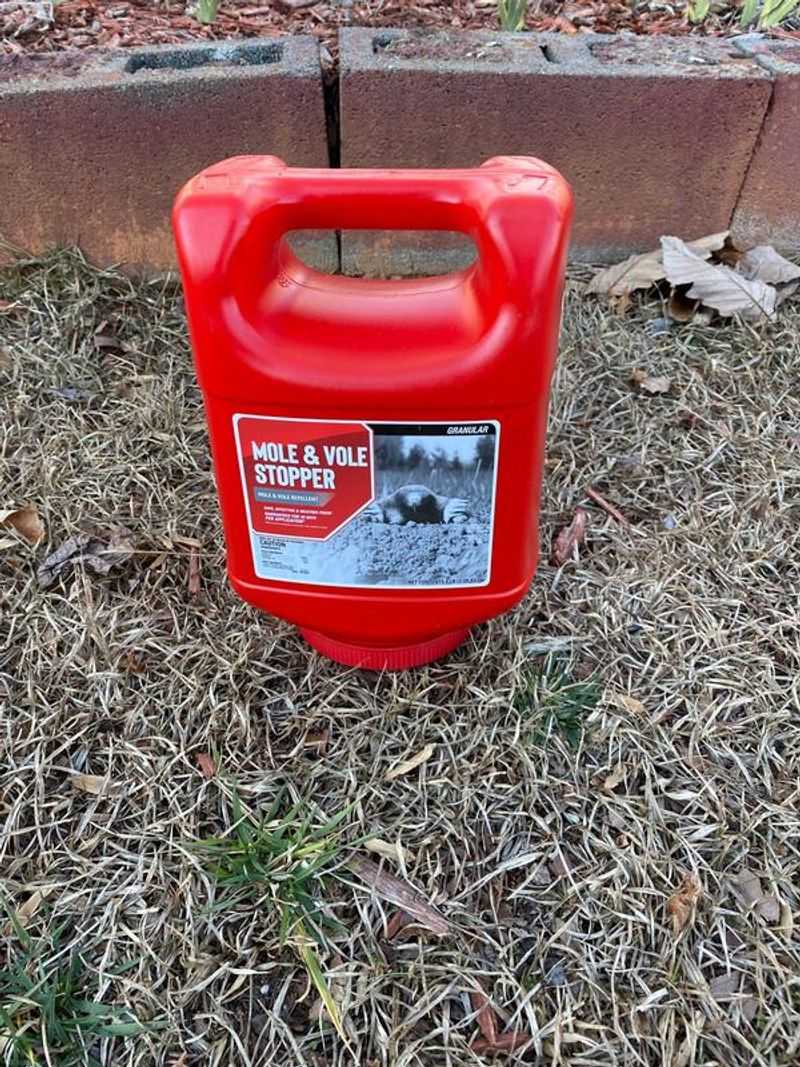
Most garden centers sell a bottle of mole and vole repellent, and if you flip it over, the main ingredient is usually castor oil. It comes from castor bean seeds, and it leaves soil and roots smelling and tasting unpleasant to small burrowing animals.
Of all the scent options, it has the most commercial products built around it. Voles mostly stay near the surface, running along narrow grass trails called runways.
A good soaking along those paths and around bed edges makes the area feel less welcoming. Watering the product in matters, because a light mist on top of the grass does very little.
A common homemade mix uses castor oil, a little dish soap to help it blend, and plenty of water in a hose-end sprayer. Follow label rates on store products, since strengths vary quite a bit.
Expect to reapply every few weeks and after heavy rain. University wildlife specialists point out that repellents tend to give short-term or partial relief rather than a permanent fix.
Still, castor oil works nicely as the first layer in a bigger plan. Keep pets and kids off treated spots until the area dries, and wash your hands after mixing.
2. A Whiff of Fox Urine Tells Voles a Hunter Is Close
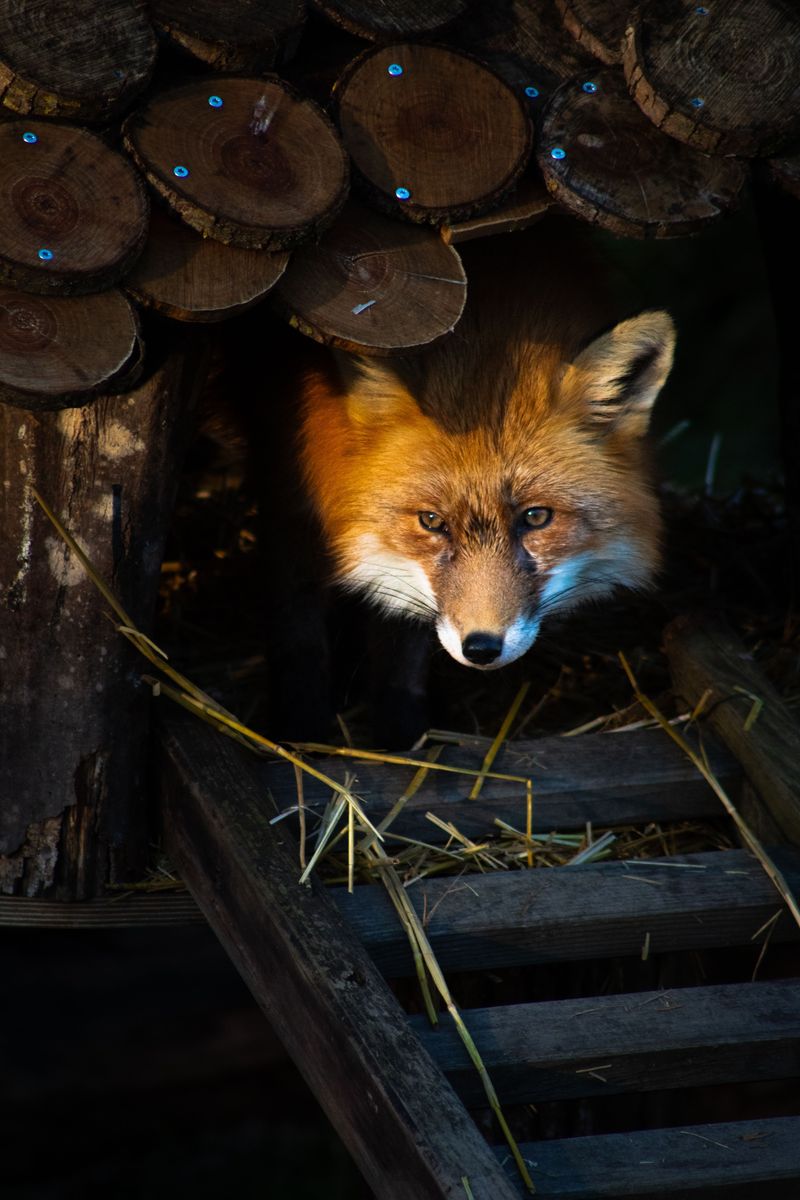
Foxes, hawks, owls, snakes, and house cats all eat voles, so these little rodents live on high alert. Their noses pick up predator scent quickly, and that warning can be enough to send them somewhere quieter.
Researchers have tested predator odors on voles for decades. Some studies, including work with fox and weasel scents, found voles avoided treated areas or changed their behavior.
Other trials showed weaker results, especially once the animals got used to the smell with no real threat nearby.
Garden shops sell fox and coyote urine as liquids and granules. Granules last a bit longer outdoors and are easier to scatter along runways, near holes, and at the base of shrubs where you see bark chewing.
I like to think of predator scent as a bluff. It works best when it changes often, so try rotating it with castor oil or garlic every couple of weeks. Rain washes it away fast, so plan to reapply after storms.
Encouraging real predators helps too. A nest box for American kestrels or a perch post near a field edge invites hawks and owls to patrol for you. A single owl family can catch a surprising number of rodents in one season.
3. Daffodil Bulbs Carry a Bitter Warning Voles Respect
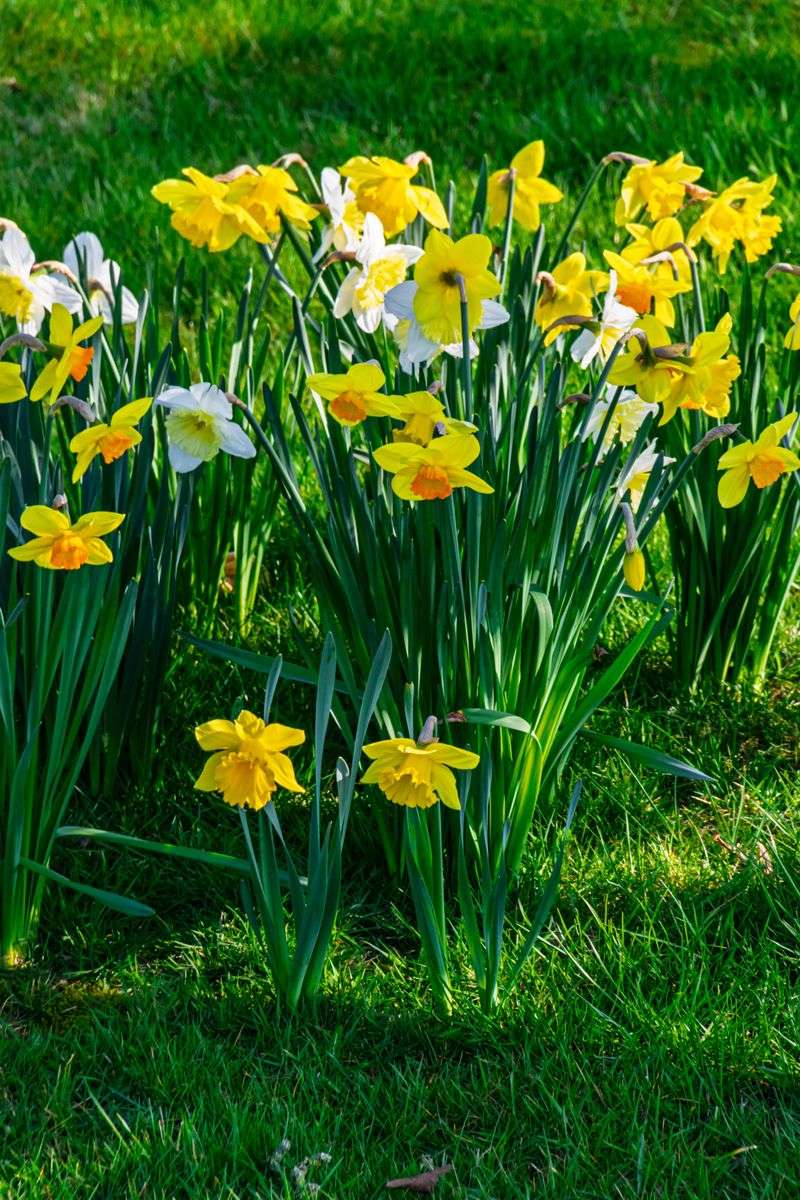
Plant tulips and you might as well ring a dinner bell. Plant daffodils and the voles usually walk right past.
Narcissus bulbs contain lycorine and other bitter alkaloids, and they give off an earthy, slightly sharp scent.
Rodents tend to leave them alone, which is why bulb growers and extension gardeners recommend them for vole-prone yards. Truthfully, the protection comes more from taste than smell, but voles learn quickly and steer around the patch.
Fall is the time to act. In most areas, aim to plant bulbs from late September through October, when soil cools but before it freezes hard.
Set them about 6 inches deep, pointy end up. Choose a spot with full sun to partial shade and soil that drains well, since bulbs sitting in soggy ground can rot over winter.
For a bit of extra help, ring a group of tulips or crocuses with daffodils. Some gardeners also tuck crushed gravel into each planting hole, which makes digging uncomfortable for tunneling rodents.
Daffodils return year after year with very little care. Let the leaves yellow naturally in late spring so the bulb can store energy.
Every part of the plant is toxic if eaten, so plant away from spots where dogs like to dig. Fun fact: daffodil stems release a sap that can make other cut flowers droop in the same vase.
4. Garlic Spray Gives Vole Trails a Sharp Kitchen Smell
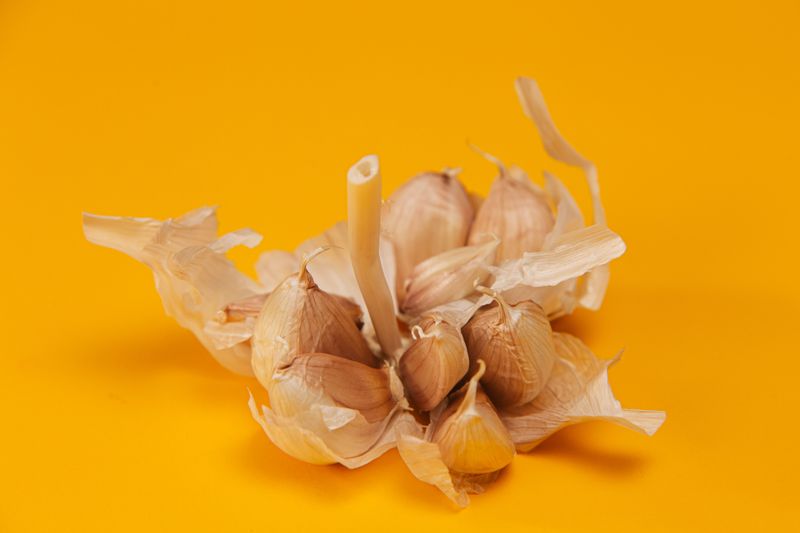
Anyone who has chopped a pile of garlic knows that smell clings to everything. Voles notice it too, and many commercial rodent repellents include garlic oil alongside castor oil.
Garlic gets its punch from sulfur compounds that form when cloves are crushed. To small mammals with sensitive noses, that strong odor masks the tasty scents of roots and bulbs and makes an area feel off.
You can blend a few crushed bulbs with water, let it steep overnight, then strain it and add a squirt of dish soap. Spray it along runways, around young trees, and over bed edges. A watering can works just as well for soaking the soil.
Homemade sprays fade within days, so I keep a jar in the fridge and refresh trails weekly during busy seasons. Store-bought granules with garlic last longer and are easier to spread.
Garlic tastes bitter on leaves too, so skip spraying vegetables you plan to harvest soon. Rinse produce well if a little drift lands on it.
Planting garlic cloves in fall around bed borders adds a living version of this barrier. Expect modest results, though, since a hungry vole may still push through when food runs low in winter.
5. Crown Imperial Bulbs Smell Like a Skunk Wandered Through

Brush past a crown imperial in April and your nose will flinch. Gardeners describe the scent as musky, foxy, or skunky, and it comes from the bulb as well as the leaves.
This tall Fritillaria imperialis holds a ring of orange or yellow bells under a tuft of green leaves, almost like a tiny palm tree. Many bulb suppliers recommend it as a rodent-resistant choice.
Scientific studies on its repellent power are limited, so think of it as helpful but not guaranteed.
Planting takes a little care. The large bulbs have a hollow center that can collect water and rot, so set them on their sides about 8 inches deep in loose, well-drained soil.
Full sun suits them best, and they handle cold winters in zones 5 through 8, which covers a wide range of home gardens.
Plant them in early fall alongside the beds that see the most vole trouble. A few bulbs at corners make a bold spring show.
They can sulk in heavy clay, so mix in compost first. They are also pricey compared to daffodils, so start with three or four and see how they settle in before buying a whole bag.
6. Ornamental Allium Globes Add a Purple Onion Barrier
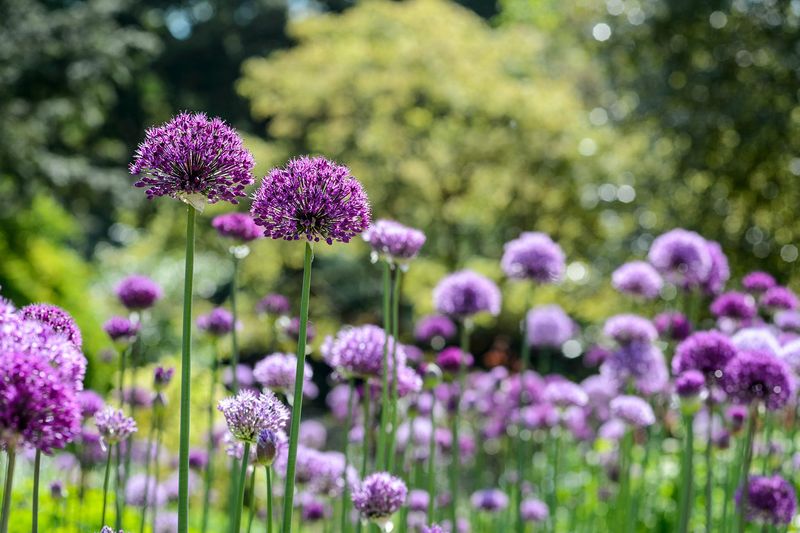
Those big purple pom-poms that bob above spring gardens belong to the onion family. Bruise a leaf and you will smell it right away.
Ornamental alliums carry the same sulfur compounds as garlic and chives. Rodents and deer usually leave them alone, which makes them a smart pick for beds where voles snack on perennials.
Their effect on nearby plants is mild, so plant them close to what you want to protect. Mix sizes for a longer show. Varieties such as Purple Sensation and Globemaster bloom in late spring, while drumstick alliums follow in summer.
Plant bulbs in fall, two to three times as deep as the bulb is tall, in sunny spots with good drainage. Water them well right after planting, then let the soil dry out between rains.
Pollinators adore them. Bumblebees climb all over the starry little flowers, so your vole plan doubles as a bee buffet.
One thing to watch: the foliage often turns yellow and floppy right as the blooms open. Tuck them behind leafy neighbors like catmint or hardy geraniums to hide the mess.
Choose clump-forming garden types rather than wild garlic or field garlic, which spread aggressively into lawns. Nobody needs a new weed while chasing off rodents.
7. Peppermint Oil Cotton Balls Freshen Up Vole Holes
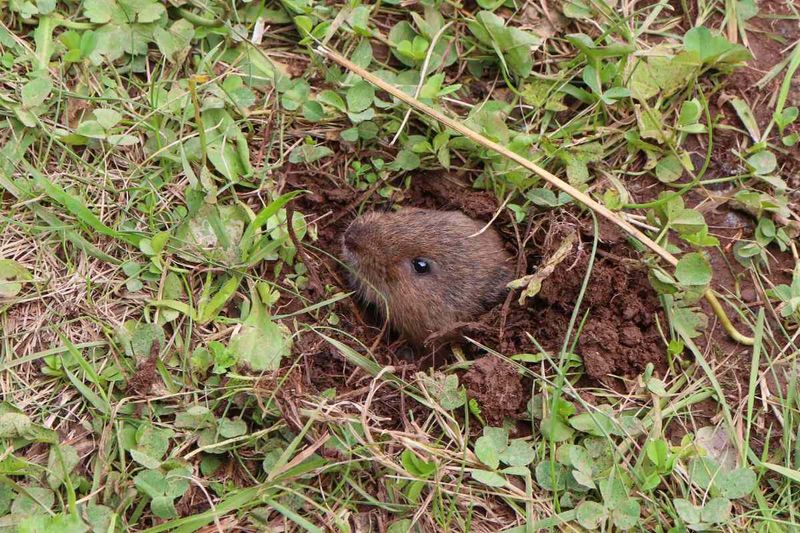
Open a bottle of peppermint essential oil and your sinuses wake up fast. Rodents seem to dislike that blast of menthol even more than we enjoy it.
Lab studies show strong mint odors can change how mice and rats behave, at least for a short while. Field results with voles are thinner, so peppermint works best as a quick, low-cost add-on.
Try soaking cotton balls with 10 to 15 drops and tucking them into holes or along runways under mulch. Swap them every few days, since the oil evaporates quickly outside, especially in warm weather.
Growing mint is another route, but mint spreads by runners and can swallow a flower bed in a summer or two. Plant it in containers or in pots sunk into the soil with the rim sticking up an inch.
Essential oils can bother cats and dogs, so keep soaked cotton balls where pets can’t chew them.
I like peppermint best in tight spaces, such as a garden shed, a cold frame, or under a deck where voles hide. Out in the open lawn, it fades too fast to carry the load alone, so pair it with longer-lasting options.
8. Cayenne Pepper Stings Vole Noses, but a Tidy Lawn Seals the Deal
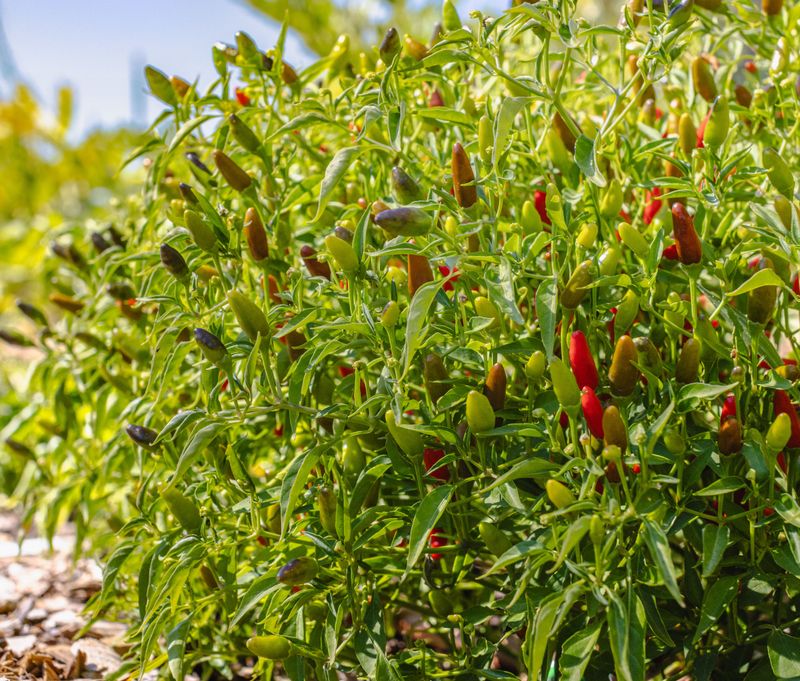
Sprinkle cayenne near a vole hole and step back with a sneeze. Capsaicin, the hot compound in chili peppers, irritates the nose and mouth of mammals, including rodents.
Hot pepper repellents come as sprays and granules, and some blend capsaicin with garlic or castor oil. A homemade version uses crushed red pepper steeped in water with a few drops of dish soap.
Spray it on bulbs, stems, and bark that voles chew, then reapply after rain or irrigation. Birds don’t feel capsaicin the way mammals do, so pepper won’t bother the cardinals at your feeder. Wear gloves and keep it away from your eyes.
Smells alone rarely solve a vole problem, though. Extension experts point out that habitat control matters most.
Mow grass short in fall, rake up thick thatch, and pull mulch a few inches back from tree trunks before winter.
Hardware cloth cylinders around young trees give real protection. Sink the mesh a few inches into the soil.
Stack those habits together, then rotate your scents so the critters struggle to settle in. A tidy lawn with an unpleasant smell gives them every reason to move next door.
9. Rosemary Sprigs Fill Vole Paths With a Piney Scent
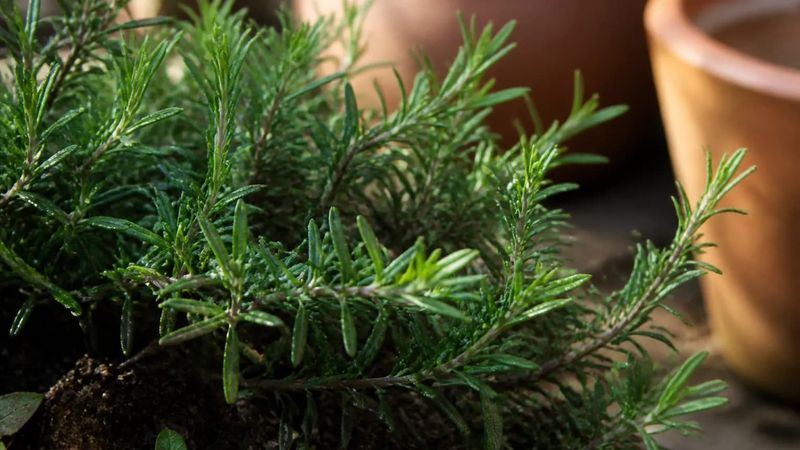
Rub a sprig of rosemary between your fingers and the air fills with a sharp, piney fragrance. That scent comes from oils such as cineole and camphor, which strong-nosed animals tend to find overwhelming.
Gardeners often tuck rosemary along bed borders because rodents and deer rarely nibble it. Research on rosemary and voles is thin, so treat it as a gentle helper rather than a guarantee.
A simple spray is easy to make. Simmer a big handful of fresh sprigs in two cups of water for about ten minutes, let it cool, strain it, and add a small squirt of dish soap.
Pour it over runways, around bulb beds, and near the foot of young shrubs. Like most homemade sprays, it fades within a week, so plan to refresh it often, especially after rain.
Growing the plant itself adds a longer-lasting layer. Rosemary loves sun and sharp drainage, so it suits sunny edges and raised beds. In colder climates, keep it in a pot and bring it indoors for winter.
As a bonus, the flowers draw bees, and the leaves taste wonderful on roasted potatoes. Snip a few fresh stems whenever you need them.