Snakes Texas Homeowners Often Mistake For Harmless Ones
Spotting a snake in your yard can be a scary moment for many Texas homeowners. At first glance, it’s easy to assume a snake is harmless, especially if it looks calm or familiar.
But in Texas, several snake species closely resemble non-venomous ones, which can lead to dangerous misunderstandings. Making the wrong guess can put people, pets, and even the snakes themselves at risk.
That’s why knowing the difference is so important. Some snakes may look threatening but are completely harmless, while others appear harmless and should be avoided.
Understanding these look-alikes can help you stay safe and avoid unnecessary panic. Whether you enjoy gardening, hiking, or spending time outdoors, learning to recognize common snake mistakes is a smart step.
1. Copperhead
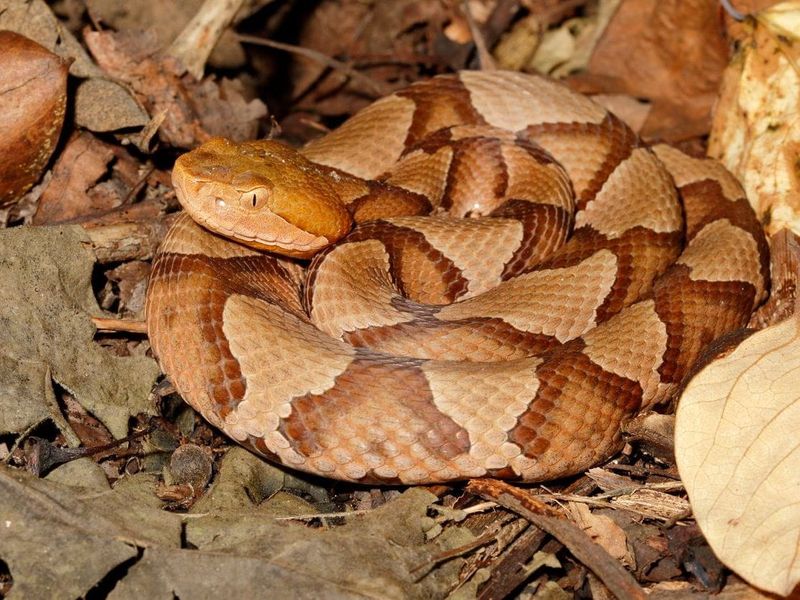
Copperheads cause more accidental encounters in Texas backyards than almost any other venomous snake.
Their copper-tan coloring blends perfectly into fallen leaves, mulch beds, and garden debris. Homeowners often step dangerously close before noticing them.
These snakes prefer to stay still rather than slither away when humans approach. This defensive strategy makes them nearly invisible against natural backgrounds.
Many people mistake them for harmless rat snakes or young racers because of similar body sizes and earthy tones.
The real danger comes from their patient behavior. While other snakes flee at the first sign of movement, copperheads rely on camouflage.
They wait motionless, trusting their pattern to keep them hidden. This works incredibly well in Texas yards filled with landscaping materials.
Juvenile copperheads add another layer of confusion. Young ones have bright yellow-green tail tips that fade as they mature.
People sometimes think these youngsters are completely different species. The hourglass-shaped bands on their bodies provide the best identification clue.
Texas homeowners working in flowerbeds or moving firewood stacks often get bitten because they don’t see copperheads until it’s too late.
The snakes don’t always rattle or hiss warnings like other species might. They simply strike when they feel threatened or cornered.
Copperheads live throughout most of Texas, from wooded areas to suburban neighborhoods. They hunt small rodents and insects, which brings them close to homes.
Always wear gloves and boots when working outdoors. Check carefully before reaching into leaf piles or under decorative stones.
These snakes aren’t aggressive, but they will defend themselves when surprised. Knowing their appearance and habits helps Texas residents avoid dangerous misidentifications and stay safe in their own yards.
2. Cottonmouth
Dark water ripples, and you spot a thick-bodied snake gliding through your pond. Most Texas homeowners assume it’s just another harmless water snake.
That assumption can be dangerous because cottonmouths share the same habitat and similar appearance with nonvenomous species.
Both cottonmouths and harmless water snakes swim in creeks, ponds, and drainage ditches across Texas. They both have dark coloration ranging from brown to nearly black.
Their body shapes look remarkably similar from a distance, especially when they’re moving through water.
The confusion makes perfect sense. Nonvenomous water snakes vastly outnumber cottonmouths in most Texas waterways.
Odds favor the snake being harmless, so people relax their guard. This creates problems when the one venomous snake appears among dozens of safe ones.
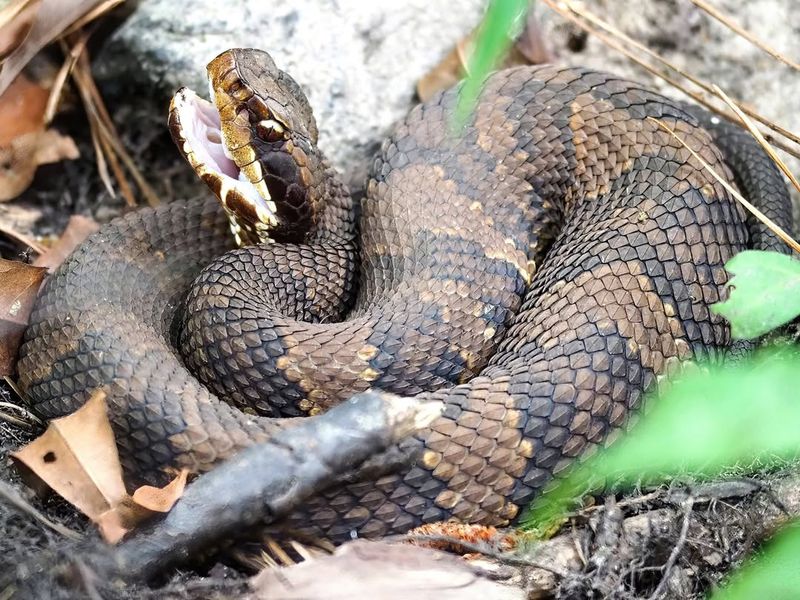
Cottonmouths get their name from the white interior of their mouths, which they display when threatened. This defensive posture serves as a warning signal.
However, many people never see this behavior because they approach too quickly or the snake doesn’t feel immediately threatened.
These snakes prefer slow-moving or still water throughout East and Central Texas. They hunt fish, frogs, and small mammals near the water’s edge.
Unlike many water snakes that flee immediately, cottonmouths often hold their ground or swim toward perceived threats.
The thick, muscular body provides the best visual clue for identification. Cottonmouths appear stockier than most harmless water snakes.
Their heads look distinctly triangular and blocky compared to the narrow heads of nonvenomous species.
Texas residents fishing or walking near water should keep their distance from any snake they encounter. Never try to catch or handle water snakes without proper training.
The majority might be harmless, but one wrong guess could lead to a serious medical emergency requiring immediate attention.
3. Texas Coral Snake
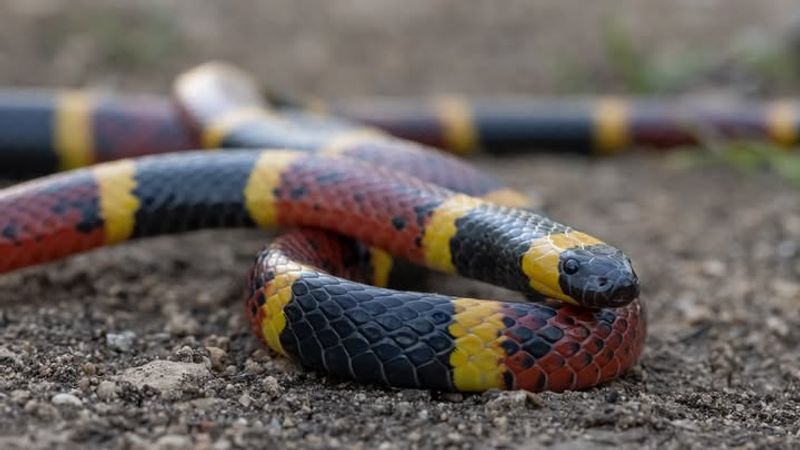
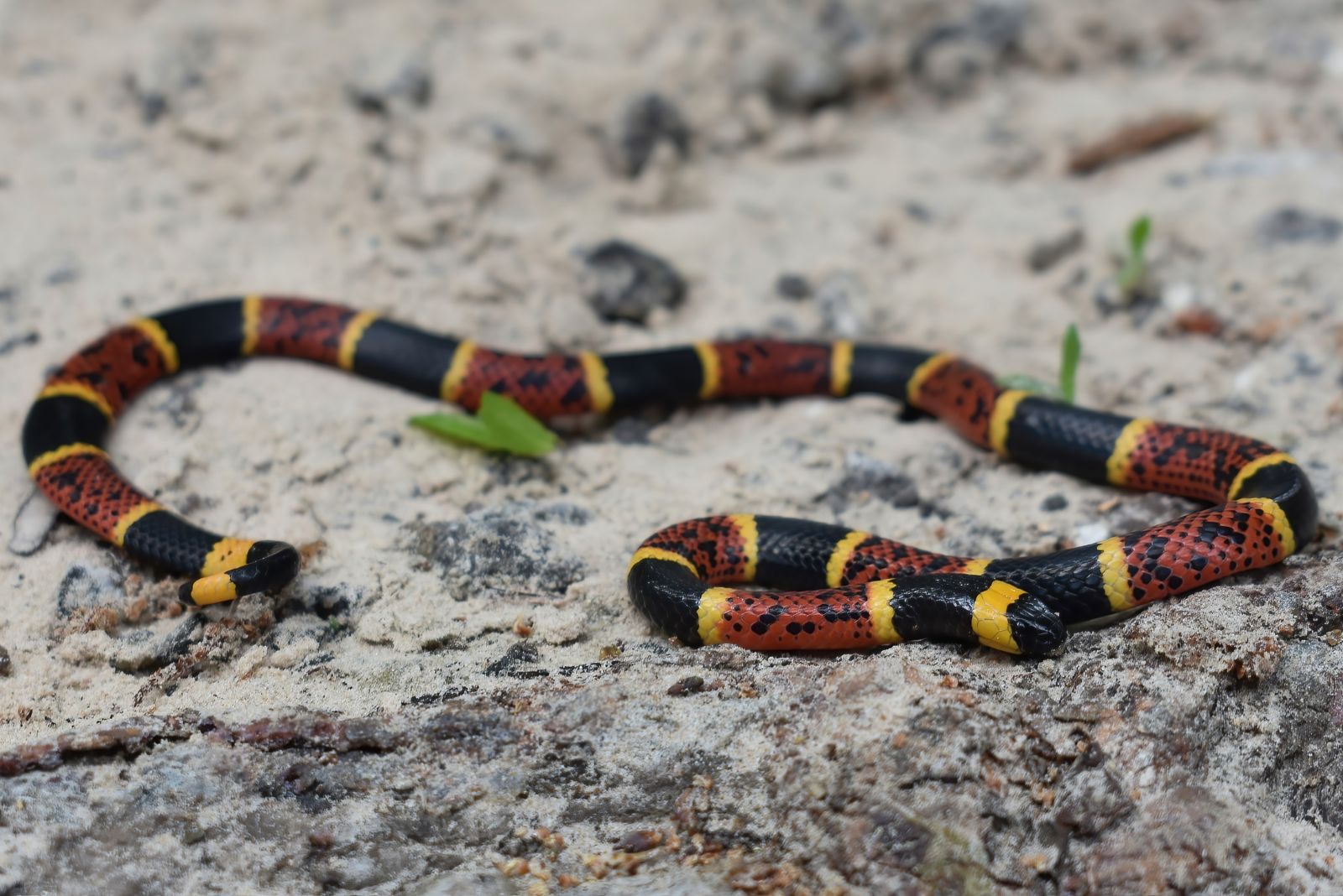
Bright bands of red, yellow, and black catch your eye in the garden. Your first thought might be that it’s a pretty, harmless kingsnake.
But in Texas, this colorful pattern could belong to one of the most venomous snakes in North America.
Texas coral snakes look remarkably similar to scarlet kingsnakes and milk snakes. All three species sport bold red, yellow, and black rings around their bodies.
The main difference lies in the order of those colors, which many people struggle to remember under pressure.
The old rhyme “red touch yellow, it’ll hurt a fellow” helps with identification. On coral snakes, red bands touch yellow bands directly.
On harmless mimics, red bands touch black bands instead. This small detail makes an enormous difference.
Coral snakes appear small and slender, which makes them seem less threatening. Many homeowners think such a tiny snake couldn’t possibly be dangerous. This misconception leads to careless handling and preventable bites across Texas.
These snakes rarely appear during the day, preferring to hunt at dawn, dusk, or nighttime. Their secretive nature means most Texas residents never encounter them.
When sightings do occur, the rarity increases the chance of misidentification because people lack experience with them.
Coral snakes possess potent neurotoxic venom that affects the nervous system differently than other Texas venomous snakes. They don’t strike and release like rattlesnakes. Instead, they tend to hold on and chew, which allows more venom to enter the wound.
Found throughout most of Texas except the far western regions, coral snakes prefer areas with leaf litter and loose soil. They burrow frequently and eat other small snakes and lizards.
If you spot a brightly banded snake, admire it from a safe distance. Never attempt to pick it up or move it yourself. The beautiful pattern serves as nature’s warning sign.
4. Western Diamondback Rattlesnake
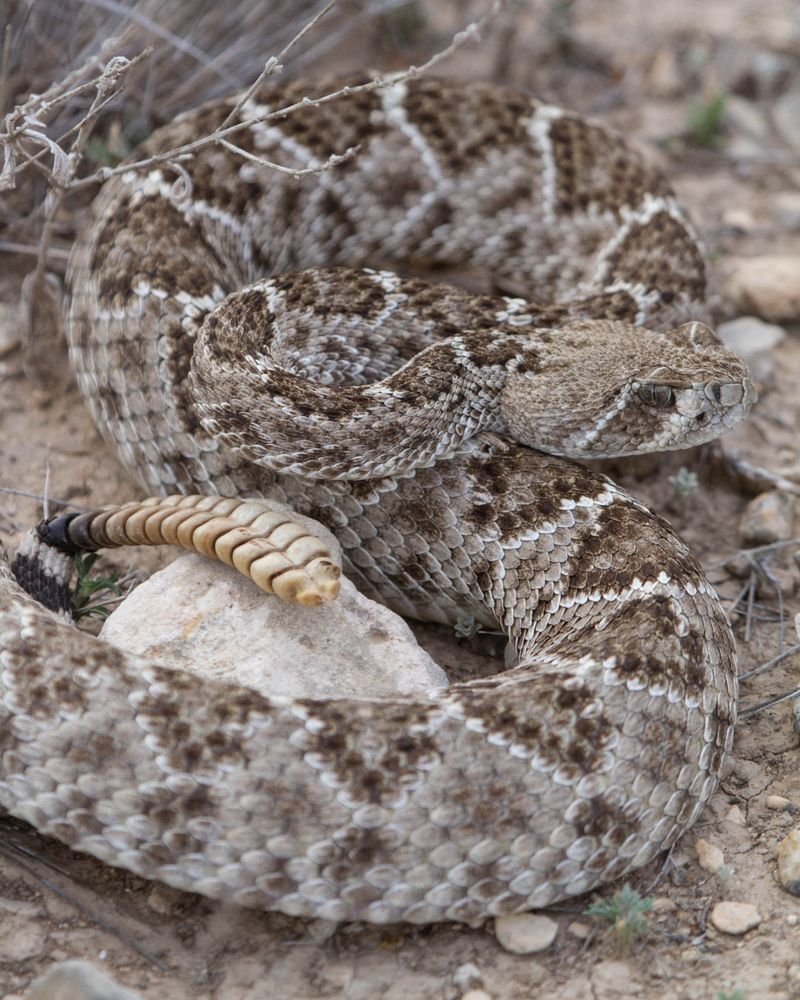
A large snake crosses your driveway with a thick body and bold pattern. You might think it’s just a bullsnake trying to scare you with defensive behavior.
Bullsnakes and gopher snakes do an excellent job imitating rattlesnakes, but the real thing causes the majority of venomous snakebites in Texas.
Western diamondback rattlesnakes and nonvenomous bullsnakes share similar sizes and body thickness. Both can reach five to six feet in length.
Both have tan or gray coloring with darker markings that help them blend into Texas landscapes.
When threatened, bullsnakes flatten their heads to appear triangular and vibrate their tails rapidly. In dry leaves or grass, this tail vibration sounds remarkably similar to a rattle.
The defensive display fools many people into thinking they’ve encountered a rattlesnake, while others make the opposite mistake.
The confusion becomes dangerous when someone assumes a real rattlesnake is just a harmless bullsnake putting on a show. Not all rattlesnakes shake their rattles before striking.
Young rattlesnakes might have small rattles that produce little sound. Some older snakes lose rattle segments over time.
Western diamondbacks display distinctive diamond-shaped patterns along their backs with black and white banded tails. Their triangular heads appear clearly separated from their necks.
Vertical pupils and heat-sensing pits between the eyes and nostrils mark them as venomous pit vipers.
These rattlesnakes live throughout most of Texas, from deserts to prairies to suburban areas. They hunt rodents, rabbits, and ground-dwelling birds.
During hot summer months, they become more active at night, which increases unexpected encounters.
Texas homeowners should never approach or attempt to handle any large snake with bold patterns. Even experienced snake handlers occasionally make identification mistakes.
The consequences of guessing wrong can require emergency medical care. Give all large snakes plenty of space and call wildlife professionals if removal becomes necessary.
5. Timber Rattlesnake
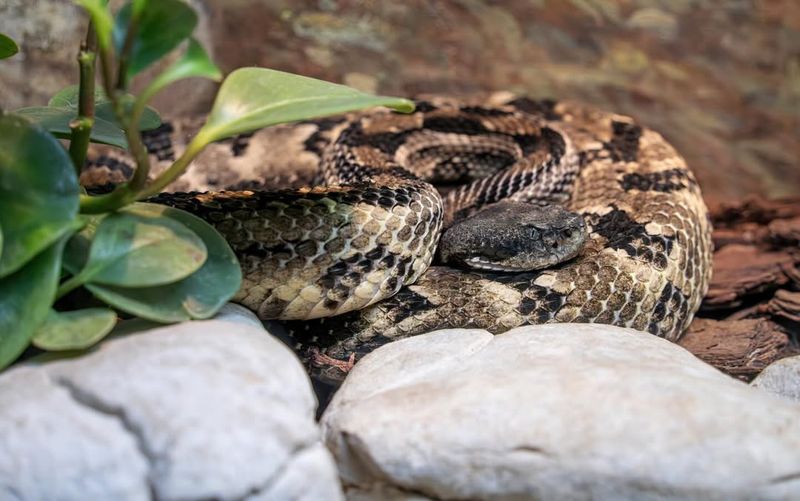
Forest floors in East Texas hide one of the region’s most overlooked venomous snakes. Timber rattlesnakes move slowly through wooded areas with muted colors that blend perfectly into leaf litter.
Their patient hunting style makes them easy to confuse with common rat snakes. Both species prefer similar habitats in heavily wooded regions. Both can grow to impressive lengths of four to six feet.
Both display patterns that break up their outlines against natural backgrounds, making them difficult to spot.
Timber rattlesnakes show much more subtle coloring than their western diamondback cousins. Soft grays, tans, and browns replace the bold diamonds.
Dark chevron-shaped bands run down their backs, but these markings often appear faded or indistinct, especially on older individuals.
Their calm demeanor adds to the confusion. Timber rattlesnakes rarely act aggressively unless directly threatened or stepped on.
They prefer to remain motionless and let potential threats pass by. This behavior matches how rat snakes often react to human presence.
These rattlesnakes inhabit primarily East Texas and some parts of Central Texas. They favor rocky outcrops, fallen logs, and dense forest undergrowth.
Unlike some rattlesnake species that bask openly, timber rattlesnakes often stay hidden under cover.
The population of timber rattlesnakes has declined in many areas, making encounters less common.
This rarity means fewer Texas residents develop the experience needed to identify them quickly. When someone does spot one, they might not recognize the danger.
Hikers and homeowners in wooded Texas regions should watch where they step and place their hands.
Never reach under logs or into rock crevices without looking first. Timber rattlesnakes won’t chase people, but they will defend themselves when surprised.
The presence of a rattle provides the clearest identification feature, but you shouldn’t get close enough to check. If you encounter any snake in Texas forests that displays a thick body and patterned coloring, treat it as potentially dangerous until proven otherwise.
6. Mojave Rattlesnake
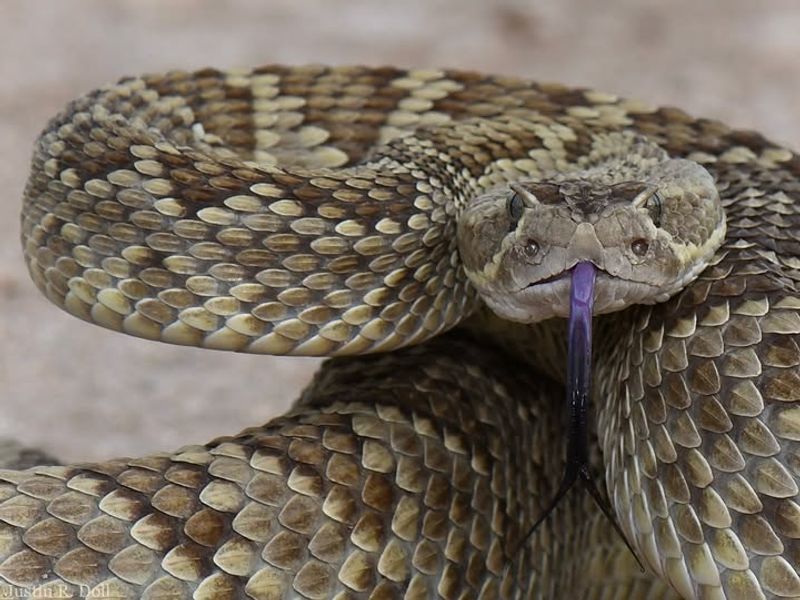
West Texas deserts present a special identification challenge. Mojave rattlesnakes look nearly identical to prairie rattlesnakes and other desert species.
Even wildlife experts sometimes need close examination to tell them apart. This similarity creates serious problems because Mojave rattlesnakes possess some of the most potent venom of any North American snake.
Both Mojave and prairie rattlesnakes display similar greenish-gray or brownish coloring. Both show diamond-shaped patterns down their backs.
Both live in the same desert and grassland habitats across West Texas where their ranges overlap.
The Mojave rattlesnake’s venom contains powerful neurotoxins in addition to the tissue-damaging compounds found in other rattlesnakes. This combination affects both the nervous system and local tissue.
Bites require immediate medical attention and often more intensive treatment than other rattlesnake species.
Subtle differences exist, but they’re difficult to spot in field conditions. Mojave rattlesnakes typically have narrower white bands on their tails compared to black bands.
The scales above their eyes appear slightly larger. These details help trained professionals but offer little help to homeowners who encounter snakes unexpectedly.
These snakes prefer open desert areas, grasslands, and scrubland in far West Texas. They hunt small mammals, lizards, and occasionally birds.
Like most rattlesnakes, they’re more active during cooler parts of the day in summer months.
The key message for Texas homeowners is simple: don’t try to identify which type of rattlesnake you’ve encountered. All rattlesnakes deserve the same respectful distance and cautious treatment.
The specific species matters to medical professionals treating bites, but it shouldn’t matter to your immediate response.
If you live in or visit West Texas, assume any rattlesnake could be a Mojave. Keep your distance, watch where you walk, and never attempt to catch or handle them.
The desert landscape makes snakes easier to spot than in wooded areas, but it also means fewer places to retreat if an encounter goes wrong.