10 Stone Landscaping Ideas That Help Florida Yards Survive Heavy Rain
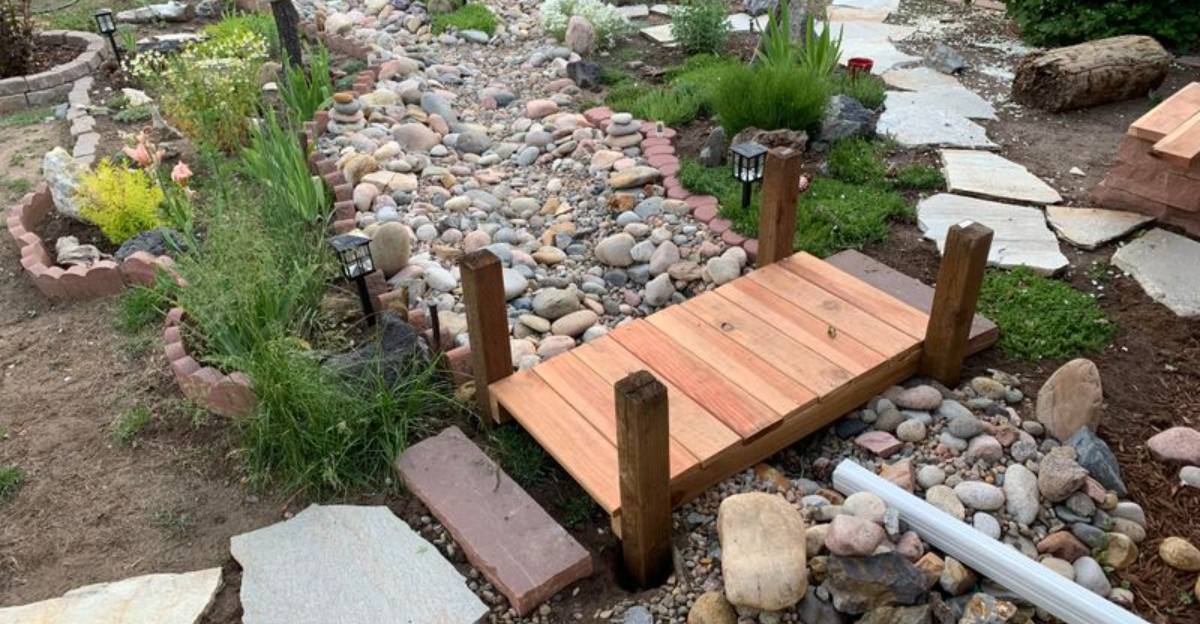
Florida rainstorms do not just water your lawn. They test it.
One heavy downpour can turn peaceful yards into muddy messes, wash mulch into driveways, flood low spots, and carve ugly channels through flower beds.
Many homeowners spend years fighting these problems without realizing the solution often starts with smart stone landscaping.
The right stone features can slow rushing water, protect soil, guide runoff away from foundations, and keep outdoor spaces looking good even after severe storms.
From gravel drainage paths to rock swales and permeable walkways, small design changes can make a huge difference in how your yard handles Florida’s intense rainfall.
With the proper setup, your landscape can work with the rain instead of battling against it, saving time, money, and frustration season after season.
1. Gravel Drainage Paths
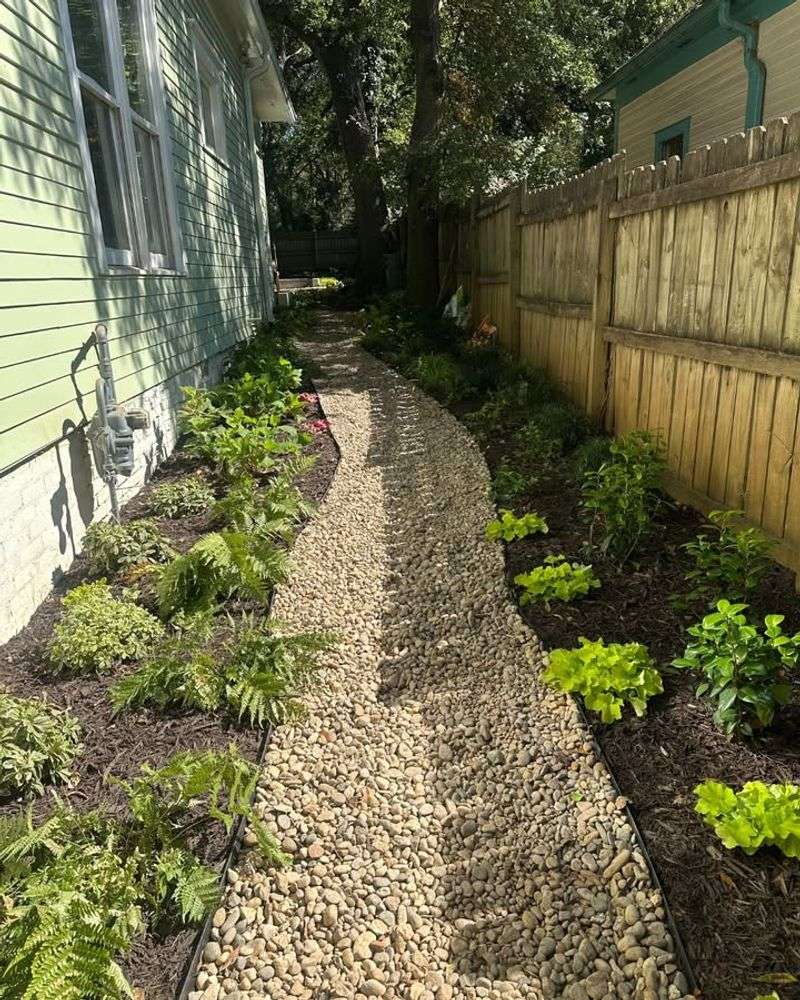
After a typical summer downpour, you notice water streaming down your driveway and pooling against the garage. A gravel drainage path intercepts that flow and gives it somewhere productive to go.
Instead of flooding one area, the water soaks through the stones into the sandy soil below.
Gravel works well in much of Florida because our typically sandy soils drain quickly once water gets past the surface and is not blocked by compaction. When you install a three to four inch layer of crushed granite or pea gravel along problem drainage routes, runoff slows down and spreads out.
The stones create countless tiny gaps that let water percolate downward instead of racing across your yard.
Most homeowners place these paths along fence lines, beside driveways, or connecting downspouts to street drainage. You can edge them with larger stones or plastic borders to keep gravel contained.
Maintenance stays simple because leaves and debris sit on top where you can rake them away. Occasionally you might need to add a fresh layer as stones settle, but overall these paths handle Florida storms year after year without much fuss.
2. River Rock Swales
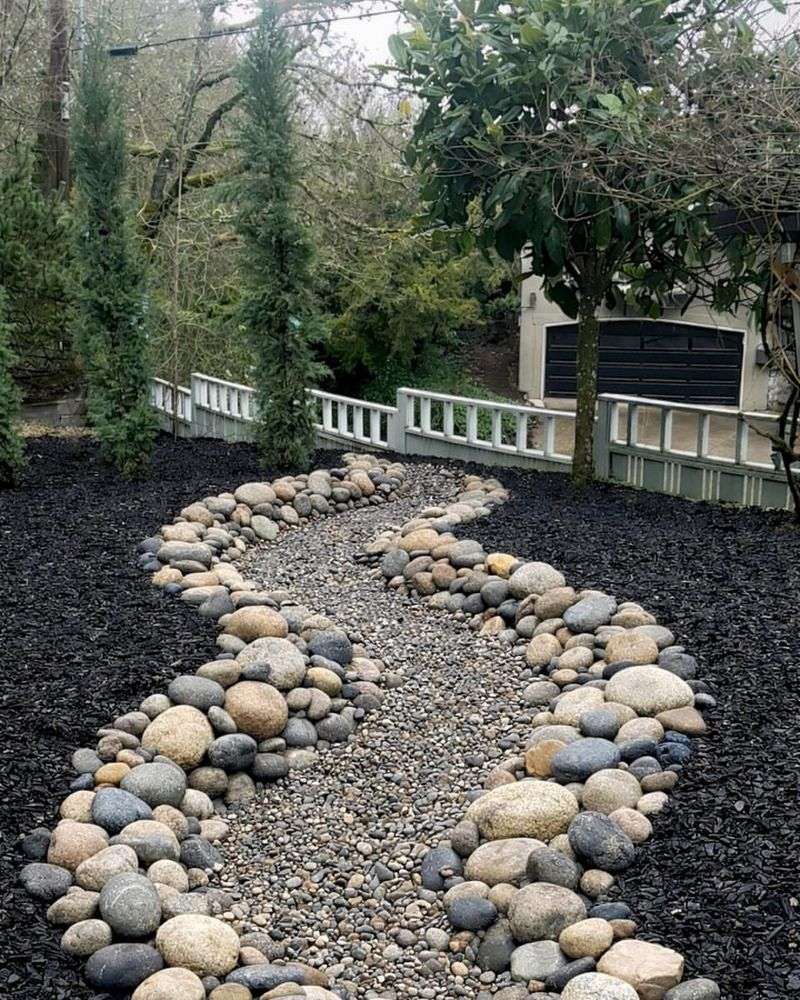
Walk through a Central Florida neighborhood after a thunderstorm and you will see shallow ditches full of rushing water. River rock swales turn those temporary streams into attractive landscape features that control erosion while moving water safely away from your foundation.
The smooth rounded stones stay in place even when water flows fast.
Swales work by creating a gentle depression that channels runoff along a specific route. When you line the bottom and sides with river rock, the stones absorb the energy of flowing water and prevent soil from washing away.
In sandy Florida soils, this protection matters because unprotected swales can quickly deepen into gullies. River rock also filters sediment and debris before water reaches storm drains or retention ponds.
Your swale should follow the natural slope of your property, curving around trees and garden beds. Many homeowners plant native grasses or ferns along the edges to soften the look.
Between storms, swales stay dry and blend into your landscape. Maintenance involves removing leaves and checking that stones have not shifted, especially after major weather events when flow rates spike.
3. Stone Mulch Beds
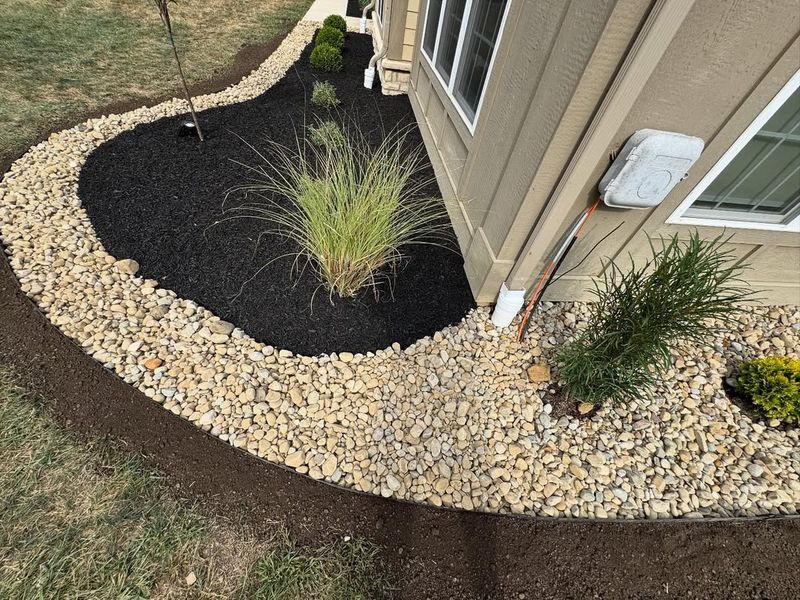
Traditional wood mulch floats away during heavy rain, leaving bare soil exposed and your plants vulnerable. Stone mulch stays in place far better than wood mulch, even during heavy rain.
After a storm passes, your beds still look tidy with plants protected and soil erosion prevented. This durability makes stone mulch a smart long term investment for Florida gardens.
Stone mulch works by creating a protective barrier that breaks the impact of falling rain before it hits soil. Without this buffer, heavy drops compact the surface and create runoff.
Stones also reduce evaporation between storms, which helps plants survive our intense heat. River rock, lava rock, and crushed granite all work well depending on your color preferences and the style of your landscape.
Most homeowners use stone mulch around foundation plantings, in front yard beds, and anywhere erosion has been a problem. You want a two to three inch layer for good coverage.
Weeds can still sprout, so laying landscape fabric underneath helps control growth. Stone mulch does not decompose like organic mulch, so it rarely needs replacement compared to wood mulch.
Just rinse it occasionally to remove dust and debris buildup.
4. Permeable Paver Walkways
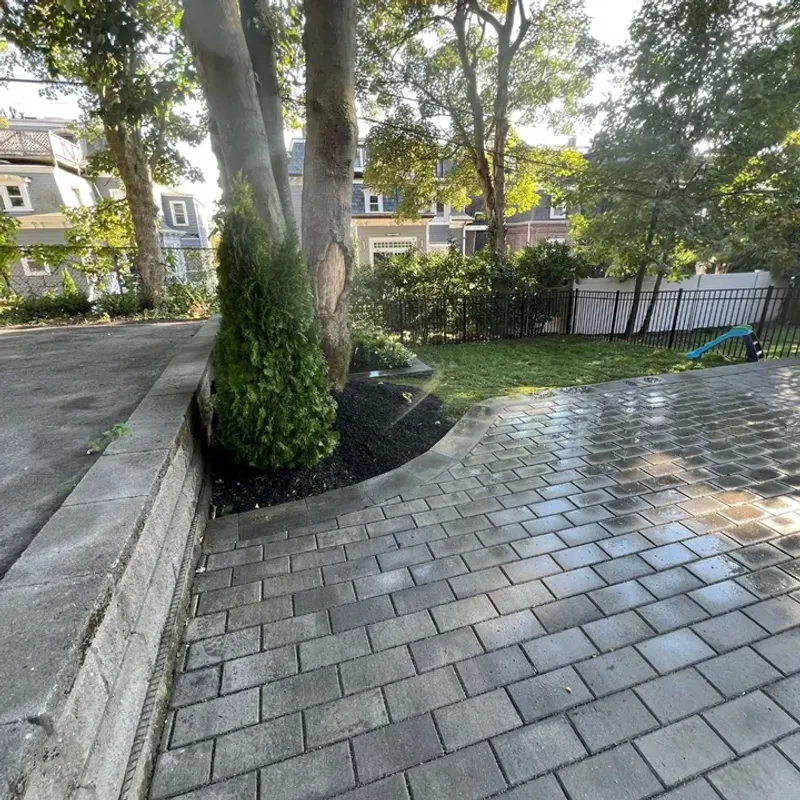
Solid concrete walkways send every drop of rain racing toward your lawn edges, creating soggy borders and puddling problems. Permeable pavers let water soak through the joints between stones, spreading it evenly into the ground below.
Your walkway stays dry and usable while helping your whole yard manage stormwater better.
These pavers sit on a gravel base with gaps between each stone filled with sand or small aggregate. When rain falls, water filters down through those gaps instead of running off.
This system works especially well in South Florida where flat terrain and heavy rainfall create drainage headaches. Permeable walkways reduce the total volume of runoff leaving your property, which helps prevent neighborhood flooding and protects local waterways from pollution.
You can use permeable pavers for main walkways, side paths, or patio areas. Installation requires proper base preparation to ensure long term drainage performance.
Grass and weeds occasionally grow in the joints, so you will need to pull them or apply targeted weed control. Every few years, sweeping or pressure washing the surface keeps pores open and drainage working efficiently through countless Florida rainy seasons.
5. Dry Creek Beds
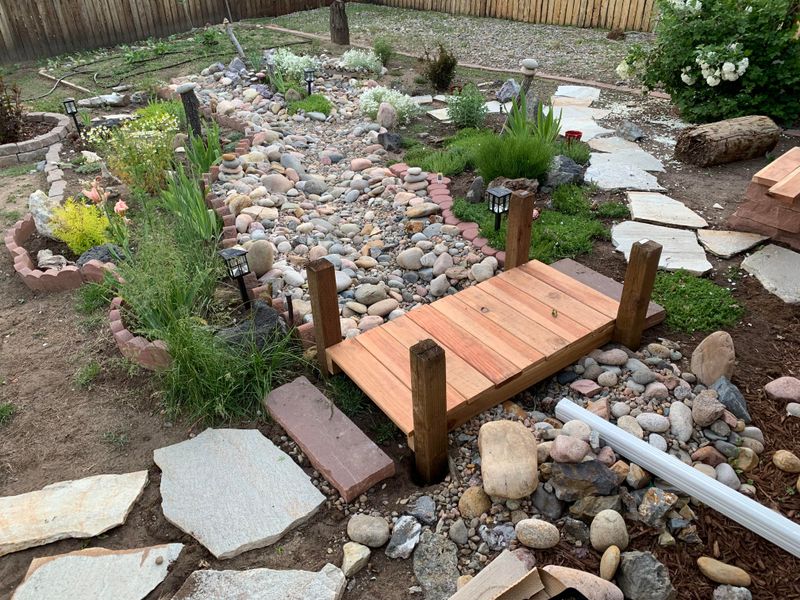
Some Florida yards have natural low spots where water collects after every storm. Fighting that water flow never works as well as working with it.
Dry creek beds turn drainage problems into beautiful landscape features that look like natural stream beds. Between storms they add visual interest, and during downpours they safely channel water exactly where you want it to go.
Building a dry creek bed means excavating a shallow meandering channel and lining it with landscape fabric, then filling it with a mix of river rock sizes. Larger boulders along the edges anchor the design, while smaller stones fill the center where water actually flows.
The varied stone sizes create a natural appearance and help slow water movement, giving it time to soak into surrounding soil.
Creek beds work well running from downspouts to street drainage, crossing low areas in your yard, or connecting to rain gardens. Many homeowners plant moisture loving native plants along the banks to enhance the natural look.
Maintenance involves repositioning stones after major storms and removing debris that washes in.
University of Florida IFAS stormwater guidelines support the use of rock-lined drainage channels and swales, which function similarly to dry creek beds and help manage stormwater while improving landscape appearance.
6. Terraced Stone Slopes
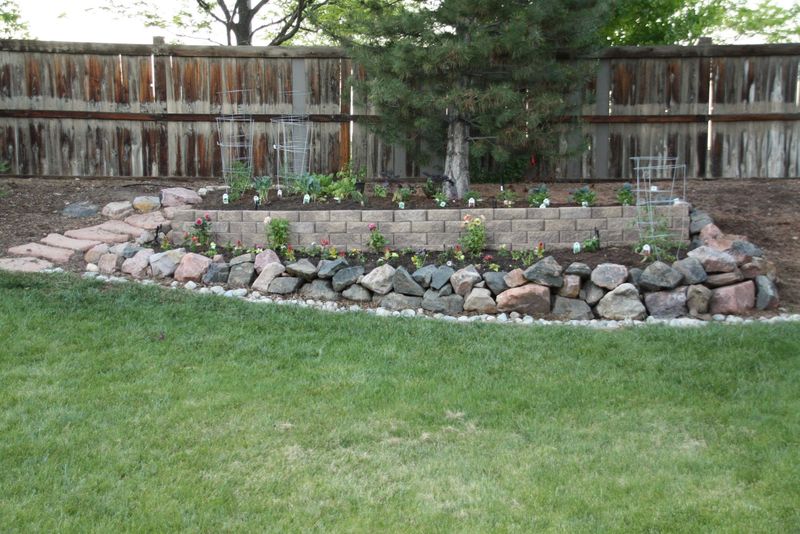
North Florida properties often have slopes where water picks up speed and carves ugly erosion channels through grass and mulch. Terracing those slopes with stone retaining walls transforms a problem area into usable planting space while dramatically slowing runoff.
Each terrace level catches water and gives it time to soak in rather than racing downhill.
Terraced slopes work by breaking one steep grade into several gentler steps. Stone walls hold back soil on each level, creating flat planting areas that absorb rainfall.
Water that does overflow moves from terrace to terrace rather than gaining destructive momentum. In Florida’s sandy soils, proper drainage behind each wall prevents pressure buildup that could cause failure during heavy rain events.
You can build terraces using stacked stone, concrete block faced with stone veneer, or large boulders depending on your budget and style preferences. Plant each level with native groundcovers or shrubs that further stabilize soil and soak up moisture.
Terraces need occasional inspection to ensure stones remain stable and drainage systems stay clear. This investment pays off by turning unusable slopes into attractive functional landscape areas that handle Florida storms beautifully.
7. Rock Border Edging
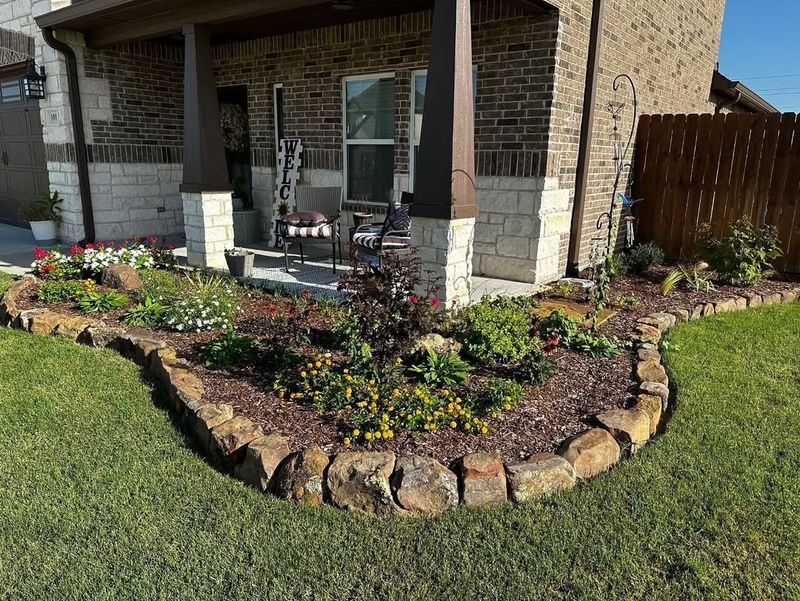
When heavy rain pounds your flower beds, soil and mulch wash out onto your lawn creating messy borders and exposing plant roots. Rock border edging holds soil and mulch in place even during heavy rain events.
The solid stone barrier keeps beds defined and prevents erosion while adding a finished look that lasts for years without replacement or repair.
Border rocks work by creating a physical dam between your beds and surrounding areas. When runoff tries to carry soil away, the stones block it and force water to slow down and soak in.
This protection matters especially in Central Florida where sandy soils erode easily. You can use large river rocks, cut stone blocks, or natural fieldstone depending on the style you want to achieve.
Most homeowners install rock edging around all planting beds, along driveway edges, and bordering mulched areas. Setting stones partially into the ground ensures stability during storms.
Unlike plastic or metal edging that eventually breaks down or bends, stone borders stay attractive and functional indefinitely. Maintenance involves occasionally resetting stones that may shift and removing debris that collects against them.
This simple addition makes a noticeable difference in how well your beds survive Florida’s rainy season.
8. Rain Garden Stone Channels
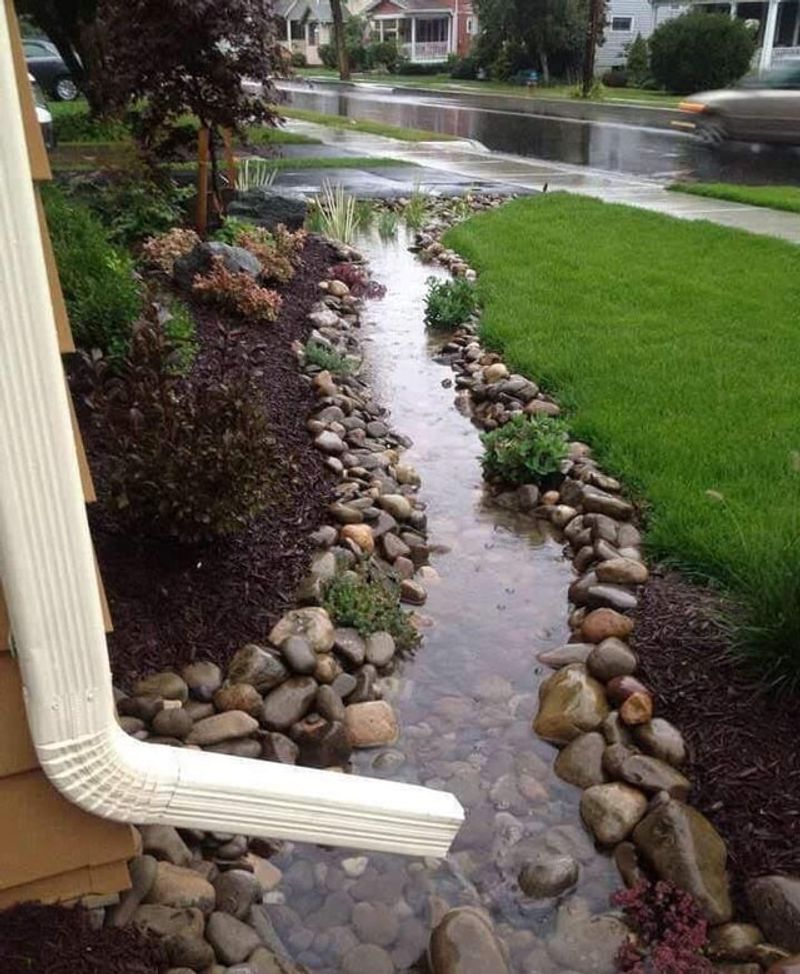
Rain gardens collect and filter stormwater runoff using specially selected plants that tolerate both wet and dry conditions. Adding stone channels to your rain garden helps direct water into the planted area and prevents erosion as water enters and exits.
The stones guide flow patterns and create attractive transitions between your regular landscape and the rain garden basin.
Stone channels work as both functional drainage and visual design elements. When water flows down your driveway or across your yard, the channel intercepts it and funnels it gently into the rain garden where plants and soil filter out pollutants.
Stones prevent the rushing water from gouging channels or washing away soil. This guidance system works particularly well in South Florida where intense downpours create high volume runoff that needs careful management.
You typically place stone channels at the inlet where water enters your rain garden and sometimes at the overflow outlet. River rock or fieldstone arranged in a shallow trough creates an effective channel.
The Florida Friendly Landscaping Program recommends rain gardens as excellent stormwater management tools. Maintenance involves removing debris that washes into channels and occasionally repositioning stones.
Combined with appropriate native plants, these stone features help your rain garden handle even the heaviest Florida storms effectively.
9. Stepping Stone Pathways
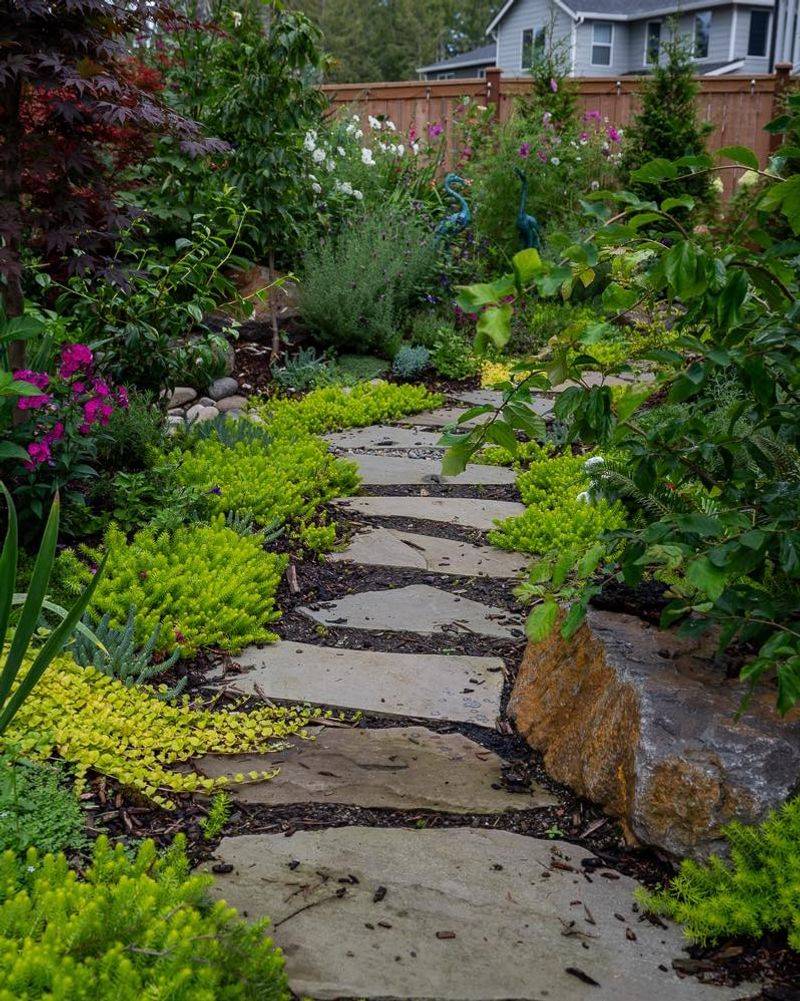
Solid walkways create impervious surfaces that contribute to runoff problems. Stepping stone pathways give you a practical route through your yard while letting rainwater soak into the ground between stones.
After a storm, these paths drain quickly and stay usable while the surrounding lawn absorbs moisture. Your yard gets the walkway it needs without creating additional drainage challenges.
Stepping stones work by minimizing impervious surface area. Each stone provides a dry place to step, but the gaps between allow water to reach soil and percolate downward.
This design works especially well for secondary paths through garden areas, shortcuts across side yards, or routes to sheds and gardens. In Florida’s sandy soils, proper base preparation keeps stones level and prevents them from sinking over time.
You can use flagstone, cut pavers, or large flat river rocks spaced comfortably for walking. Most homeowners set stones on a sand base with gravel underneath for stability.
Plant low growing groundcovers between stones to further enhance drainage and prevent weeds. Stepping stone paths need occasional releveling as soil settles, but they require far less maintenance than solid walkways.
This approach aligns with University of Florida recommendations for reducing residential stormwater runoff through smart landscape design.
10. Stone Retaining Features
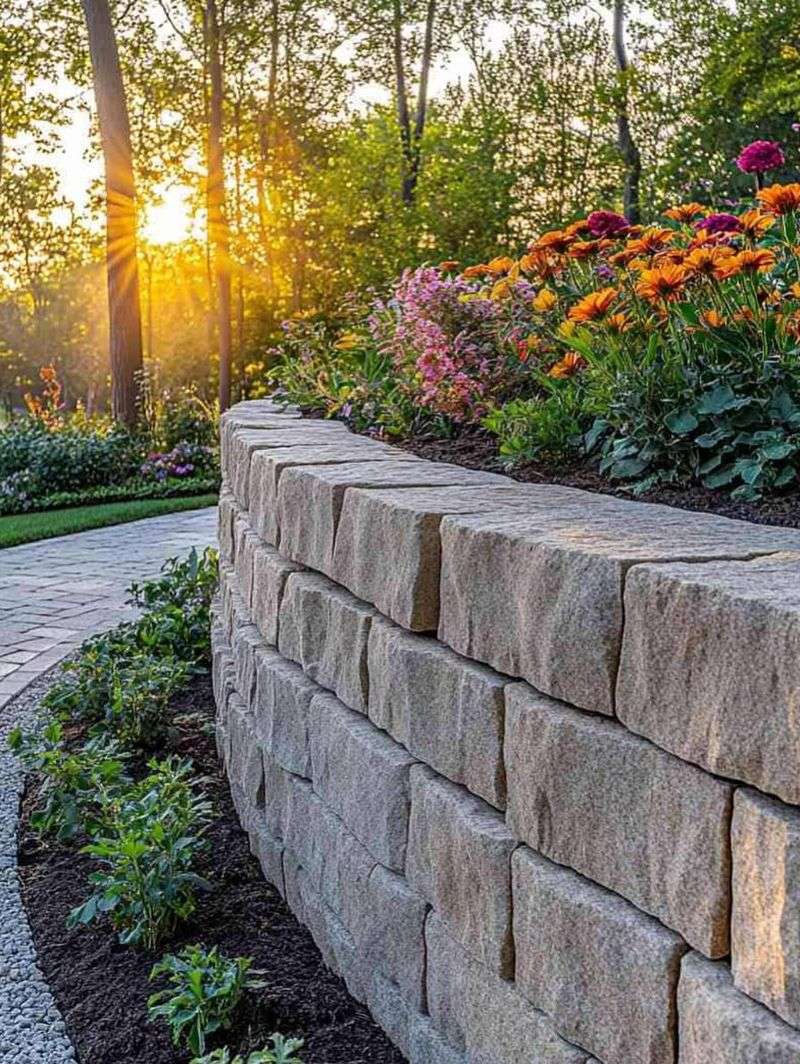
Properties with elevation changes face serious erosion risks when heavy rain hits. Stone retaining features hold soil in place, create level planting areas, and manage water flow on sloped terrain.
Whether you need a full retaining wall or just a small raised bed, stone construction withstands Florida weather while preventing the washouts that plague unsupported slopes.
Retaining features work by supporting soil on the uphill side while allowing controlled drainage through and around the structure. Properly built stone walls include gravel backfill and drainage pipes that prevent water pressure buildup during storms.
This engineering matters because saturated soil becomes heavy and can push walls over if drainage fails. In Florida, where intense rainfall can saturate soil quickly, good drainage design separates successful retaining features from failures.
You might need retaining features along driveway cuts, around patio areas, or anywhere your property has grade changes. Natural stacked stone creates a rustic look, while manufactured retaining blocks offer easier installation.
Walls over three feet tall often require professional design or permitting to ensure stability, depending on local codes. Maintenance involves checking drainage outlets, removing debris, and watching for any movement or tilting.
When built correctly, stone retaining features protect your property from erosion while creating attractive usable spaces that enhance your landscape for decades.