Stop Planting Knock Out Roses In Texas (These Alternatives Bloom Longer)
Knock Out roses have dominated Texas landscapes for so long that planting them has become less of a conscious choice and more of a default setting.
They’re at every nursery, they’re in every neighborhood, and for years they delivered exactly what gardeners needed – reliable color without constant maintenance.
The reputation was earned, and nobody is going to pretend otherwise. But something has shifted.
Knock Out roses across Texas are showing increased susceptibility to rose rosette disease, a virus spread by tiny mites that has been working its way through Knock Out populations with alarming consistency.
Entire hedges that looked healthy one season are gone the next, and the replant-with-more-Knock-Outs approach just puts more plants in the path of the same problem.
The good news is that the alternatives have genuinely caught up and in many cases surpassed what Knock Out roses were doing for Texas gardens. Longer bloom periods and more interesting looks are all on the table if you’re willing to make the switch.
1. Belinda’s Dream Rose
Some roses were practically made for Texas, and Belinda’s Dream is one of them. Developed at Texas A&M University, this rose was bred specifically to thrive in the South’s punishing heat and humidity.
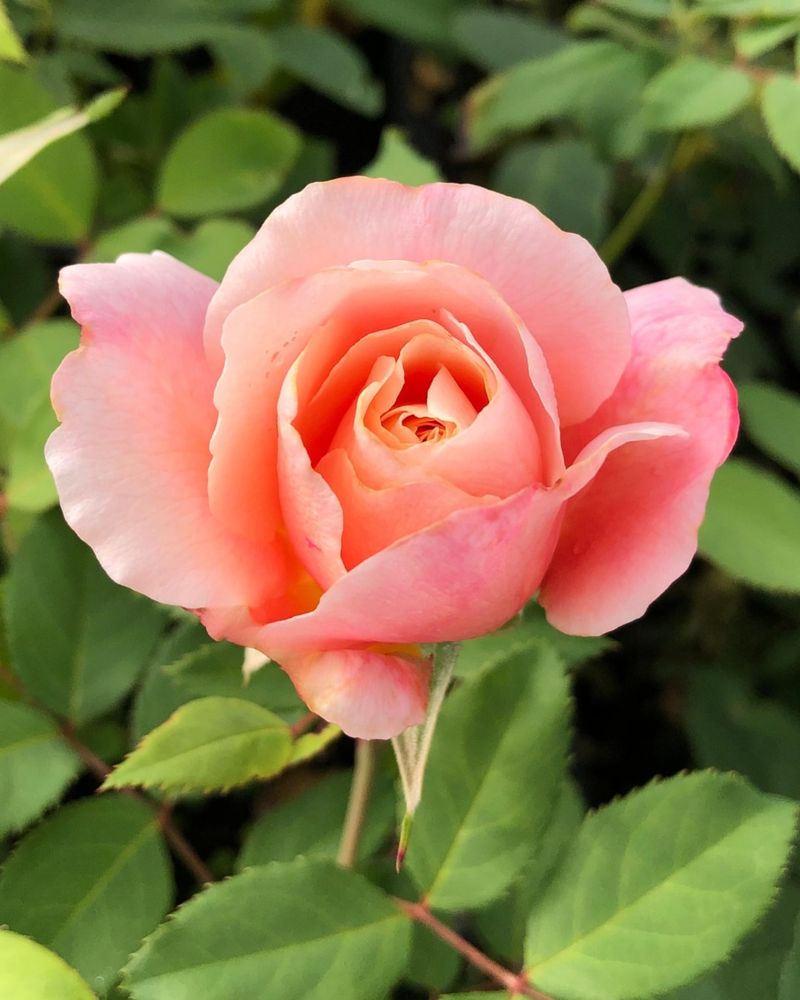
It earns its place in any Texas garden without much fuss at all. The blooms are stunning. Each flower is large, full, and a rich shade of pink that almost glows in the afternoon sun.
Unlike some roses that put on one big show and then disappear, Belinda’s Dream keeps producing flowers from spring through fall. That kind of repeat blooming is exactly what Texas gardeners need.
One of the biggest reasons to choose this rose over Knock Out varieties is its resistance to rose rosette disease, which has been spreading rapidly across neighborhoods.
Belinda’s Dream has shown much stronger resistance, giving gardeners more confidence in their investment. That alone makes it worth a serious look.
Care is refreshingly simple. This rose handles clay soil, which is common across much of Texas, and it tolerates periods of drought once it gets established.
You do not need to spray it constantly or baby it through the summer. A little water, some fertilizer in spring, and good pruning habits are usually enough to keep it thriving.
Plant it in a sunny spot with at least six hours of direct light each day. In Texas, that is rarely hard to find.
Pair it with ornamental grasses or salvias for a layered, colorful landscape that looks great all season long.
2. Esperanza
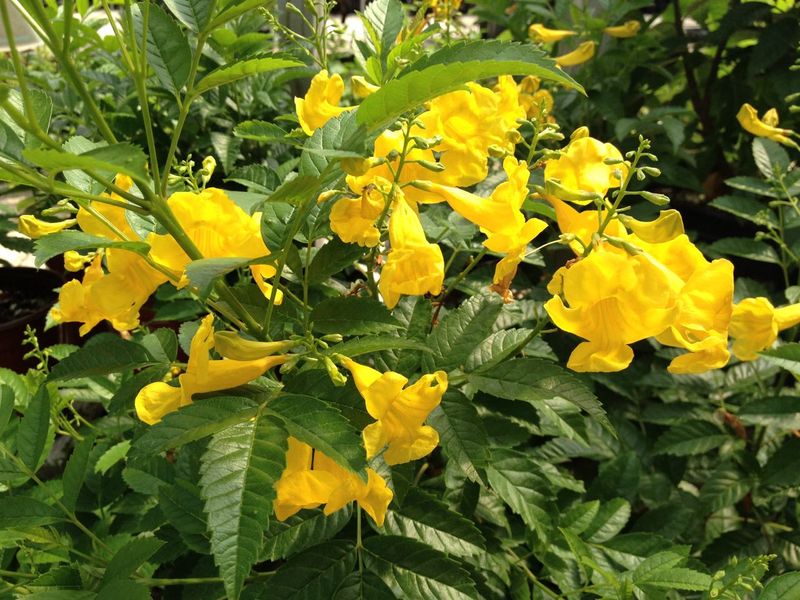
Walk through any well-planted Texas garden in the middle of August and you might spot a burst of golden yellow that seems almost too cheerful for the heat. That is Esperanza, also known as Yellow Bells, doing exactly what it does best.
This plant genuinely thrives when temperatures climb past 100 degrees, which makes it a standout performer across the state.
Esperanza is a Texas Superstar plant, a designation given by Texas A&M AgriLife Extension to plants that have proven themselves across multiple Texas regions.
Your Texas Garden Changes Every Week. Your Plan Should Too.
Gardening in Texas changes quickly throughout the season. Every Friday you’ll receive a simple weekly plan showing exactly what to plant, prune, fertilize, harvest, and protect so you never miss the right timing.
That badge of honor means it has been tested in Houston humidity, San Antonio heat, and the drier climates of West Texas. It passes every test with flying colors.
The flowers are trumpet-shaped and bright yellow, appearing in clusters at the tips of the branches. What makes Esperanza especially exciting is that it does not take a break during summer.
While many plants slow down or stop blooming in July and August, Esperanza just keeps going. Hummingbirds and butterflies absolutely love it, which adds even more life to your yard.
Growing Esperanza is not complicated. It prefers full sun and well-drained soil, and once it is established, it handles dry spells with ease.
In South Texas, it can grow into a large shrub reaching six feet tall or more. In colder parts of the state, it may freeze back in winter but usually returns strong in spring.
If you want nonstop summer color with almost no effort, Esperanza belongs in your Texas landscape.
3. Lantana
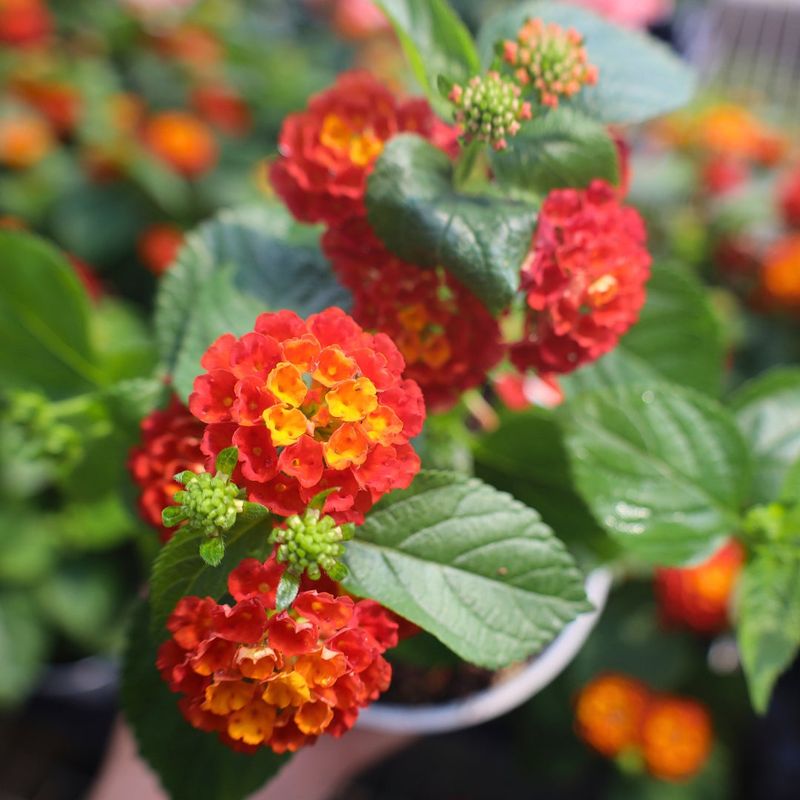
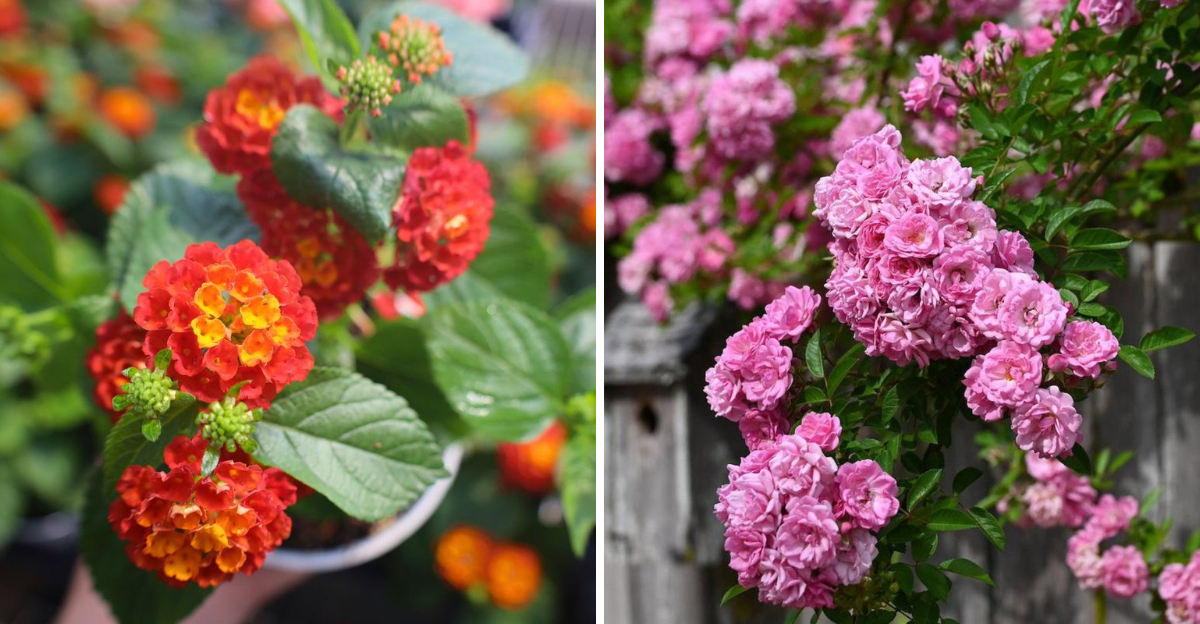
Few plants match Lantana when it comes to sheer endurance in the Texas heat. This tough, cheerful plant blooms from late spring all the way through the first frost, which in many parts of Texas means color well into November.
Gardeners across the state have relied on it for decades, and for very good reason. The flower clusters come in a wild mix of colors including yellow, orange, red, pink, and purple. Some varieties even change color as the blooms age, giving a single plant multiple shades at once.
That kind of visual interest is hard to find in any other low-maintenance plant. Butterflies flock to Lantana like it is the best restaurant in town, making your garden feel alive and buzzing all season.
Did you know Lantana is actually considered a Texas Superstar plant by Texas A&M AgriLife? It earned that title by proving itself across the state’s wildly different growing conditions.
From the Gulf Coast to the Hill Country, Lantana holds up where other plants give up. Watering needs are minimal once the plant settles in. Lantana actually performs better in dry conditions than in overly wet soil.
Too much water can lead to root problems, so it is best to water deeply but infrequently. Full sun is a must, and the more sun it gets, the more it blooms.
Pruning back the plant occasionally helps encourage fresh growth and even more flowers. Lantana is one of those rare plants that rewards a little neglect with spectacular results.
4. Drift Rose
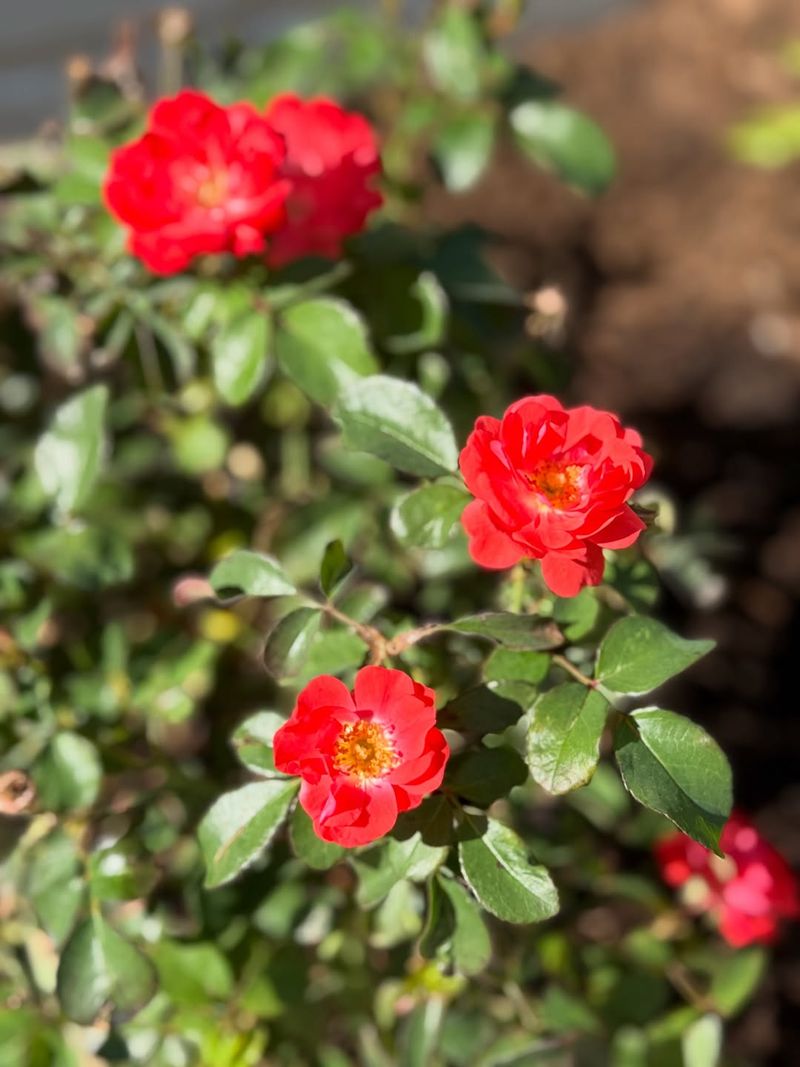
Not every Texas gardener has room for a big sprawling rose bush, and that is exactly where Drift Roses come in.
These compact, ground-hugging roses were bred as a cross between miniature roses and groundcover roses, giving them a tidy growth habit that works beautifully in smaller spaces, along walkways, or in front of larger shrubs.
Drift Roses bloom repeatedly from spring through fall without needing much deadheading. That continuous color is a big deal in Texas, where the summer heat can shut down many flowering plants.
These roses keep producing clusters of small but plentiful blooms even when temperatures are high. They come in shades of pink, red, white, peach, and coral, so there is a color to fit almost any garden style.
Heat tolerance is one of their strongest qualities. Drift Roses were specifically developed to handle tough growing conditions, and they perform well across much of Texas.
They are also more resistant to common rose diseases than many traditional varieties, which is a huge advantage given how quickly rose rosette disease has been spreading through Texas landscapes.
These roses stay relatively small, usually reaching only one to two feet tall and spreading two to three feet wide. That makes them easy to maintain and great for edging garden beds.
Full sun is important for the best bloom production, and well-drained soil helps prevent root issues.
Fertilize in spring and again mid-summer for the strongest performance. A light trim in late winter sets them up for a great season ahead in your garden.
5. Duranta
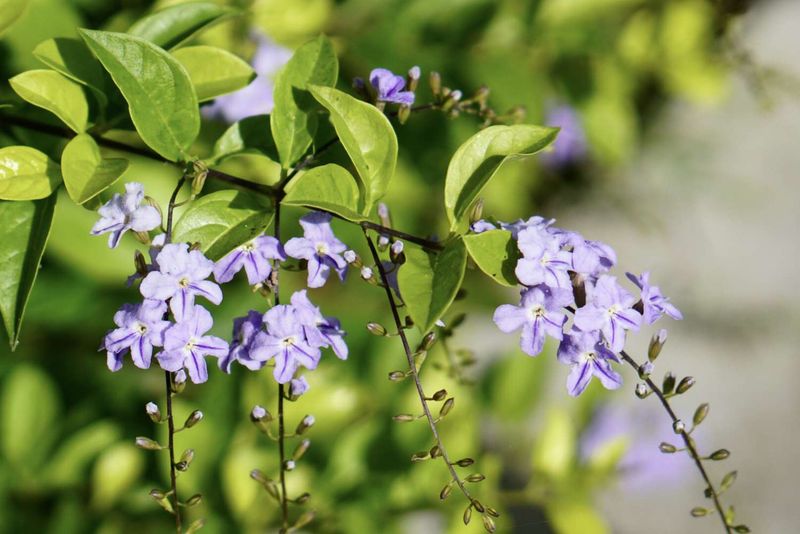
There is something almost tropical about Duranta, and that feeling fits right in with the warm, lush energy of a Texas summer garden.
Also called Golden Dewdrop or Sky Flower, this fast-growing shrub puts on a serious show from late spring through fall with cascading clusters of delicate purple and white flowers. It is bold, beautiful, and surprisingly easy to grow.
One of the things that makes Duranta so eye-catching is that it often carries flowers and golden-yellow berries at the same time.
The combination of purple blooms and bright berries hanging together on the same branch creates a layered, jewel-like effect that few other shrubs can match.
Birds are drawn to the berries, which adds even more activity and life to your outdoor space.
Duranta loves heat, which makes it a natural fit for Texas. It grows quickly in warm weather, sometimes reaching six to ten feet tall in a single season if left unpruned.
That vigorous growth means it fills in a space fast, making it great for privacy screens or large accent plantings. Regular pruning keeps it at a manageable size if you prefer a tidier look.
Full sun brings out the best in Duranta. It can handle partial shade, but bloom production drops significantly without strong sunlight.
Watering needs are moderate, and established plants handle short dry spells reasonably well. In colder parts of Texas, it may freeze back in winter but typically returns from the roots when warm weather arrives again.
For a dramatic, high-impact plant that blooms heavily all summer, Duranta is a fantastic choice.
6. Autumn Sage
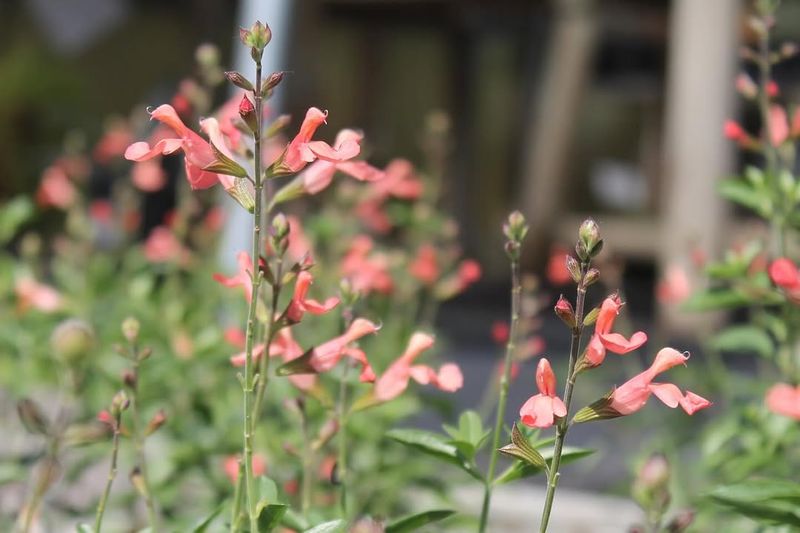
Texas has a deep collection of native plants, and Autumn Sage stands out as one of the most reliable and rewarding of the bunch.
Native to the limestone hills of Central Texas and northern Mexico, this tough little shrub has been blooming in rocky, dry soil long before anyone thought to put it in a garden bed. It knows how to survive here because it was born here.
Autumn Sage blooms from early spring all the way through fall, and sometimes even into early winter during mild years. The flowers are small but plentiful, and they come in shades of red, pink, coral, and white depending on the variety.
Hummingbirds absolutely cannot resist them. If you have ever wanted to attract hummingbirds to your yard, planting a few Autumn Sage shrubs is one of the fastest ways to make it happen.
Drought tolerance is where this plant really earns its reputation. Once established, Autumn Sage can survive on rainfall alone in most parts of Texas.
It actually prefers lean, well-drained soil and does not like being overwatered. That makes it a smart choice for water-conscious gardeners across the state who want beauty without a high water bill.
The plants stay fairly compact, usually reaching two to three feet tall and wide. That size works well in mixed borders, rock gardens, or as a low hedge along a pathway.
Full sun is ideal, though it tolerates a bit of afternoon shade in the hottest parts of South Texas. Autumn Sage is a true Texas native that gives back far more than it asks for.
7. Peggy Martin Rose
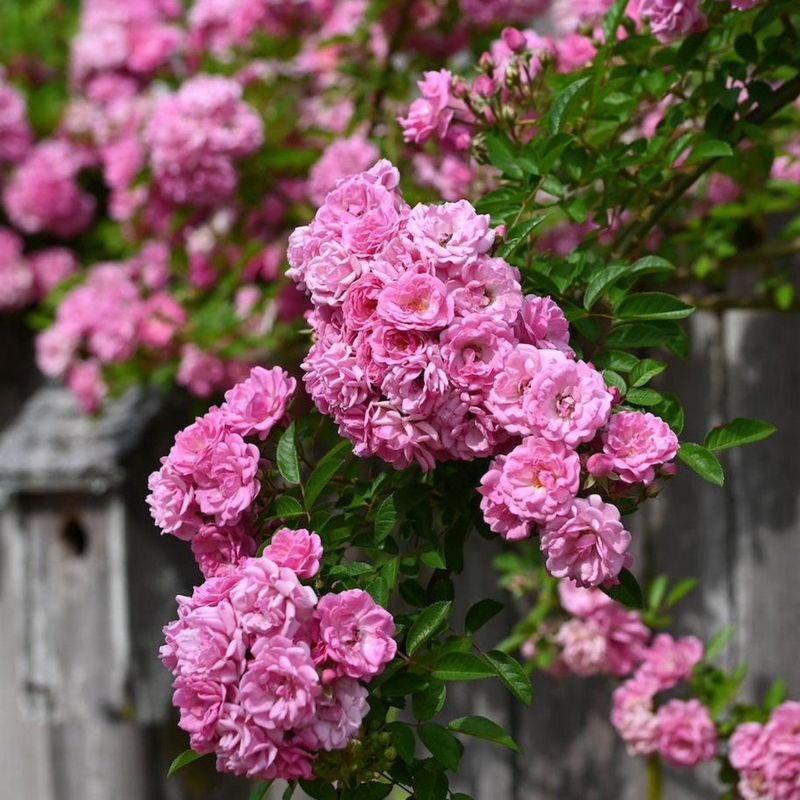
If a rose could have a legend attached to it, Peggy Martin’s would be one for the books. This climbing rose survived Hurricane Katrina in 2005, sitting completely submerged under saltwater for two weeks in a Louisiana garden.
When the floodwaters receded, every other plant around it was gone. The Peggy Martin Rose came back blooming. That kind of toughness is exactly what gardeners need.
Named after the Louisiana gardener whose plant survived the storm, this rose has become a symbol of resilience across the South. It is a once-blooming rose, meaning it puts on a single massive display in spring rather than reblooming through the season.
But what a display it is. The canes become completely covered in thousands of small, double pink flowers that create a breathtaking waterfall of color. Nothing else looks quite like it.
In Texas, Peggy Martin thrives in the heat and humidity that makes other roses struggle. It is highly resistant to black spot and other fungal diseases that plague traditional roses, which means less time spraying and more time enjoying.
The plant grows vigorously and can easily reach fifteen to twenty feet, making it ideal for covering fences, arbors, or pergolas.
Pruning after the spring bloom helps manage its size and encourages healthy new growth for the following year. It prefers full sun but tolerates some light shade.
Watering needs are modest once established, and it adapts well to a range of Texas soil types including clay and sandy loam.
Peggy Martin is not just a rose. It is a piece of Southern gardening history growing right in your yard.