10 Strange And Rare Houseplants You Probably Never Knew Existed
I still remember the moment I realized houseplants could be more than leafy green sidekicks on a windowsill.
One glance at a plant with twisted stems and alien-looking leaves, and it felt like stumbling onto a secret club.
Strange and rare houseplants live in that sweet spot between science project and living art, and they never fail to stop people in their tracks.
I’ve noticed that these plants tend to spark more conversation than any trendy fiddle leaf or pothos.
Friends lean in, eyebrows raised, asking where on earth something so unusual came from.
Each one feels like a story waiting to be told, with shapes, textures, and colors that look too wild to be real.
What draws me in most is the surprise factor.
These plants break all the rules, growing in ways that feel unexpected and bold.
They turn ordinary rooms into showpieces and give plant lovers something truly different to care for.
Once the door opens to rare houseplants, there’s no unseeing them.
I found that learning about them changes the way everyday plants look, making the whole indoor garden world feel bigger, weirder, and far more exciting.
1. Monilaria Obconica (Bunny Succulents)

Imagine tiny bunny ears poking out of the soil, and you’ve got Monilaria Obconica.
This South African succulent has stolen hearts all over the internet with its adorable appearance.
When the plant is actively growing, it sends up pairs of plump, curved leaves that look just like little rabbit ears standing at attention.
During the growing season in fall and winter, those bunny ears are bright green and full of life.
Come summer, the plant goes dormant and the leaves dry up, leaving behind what looks like a bare stem.
Don’t panic though, because it’ll bounce back when cooler weather returns.
Growing Monilaria requires a bit of patience since they follow a specific seasonal rhythm.
Water them during their active months but let them rest completely dry in summer.
They need plenty of sunlight and sandy, well-draining soil to thrive.
These aren’t the easiest plants for beginners, but they’re absolutely worth the effort if you want something truly unique.
Just picture a whole pot of tiny bunnies greeting you every morning.
Kids especially go crazy for these, making them a fun addition to a family plant collection.
2. Trachyandra (Medusa Plant)

If plants could have bad hair days, Trachyandra would be having one permanently, and honestly, it looks amazing.
This South African native has long, skinny leaves that spiral and twist in every direction like a head full of wild curls.
Some people say it looks like Medusa’s hair, while others think it resembles green ramen noodles.
Either way, it’s impossible to ignore.
The leaves grow from a central base and can reach several inches long, creating a fountain of spiraling greenery.
In spring, it sometimes produces small white flowers on tall stalks.
Trachyandra prefers cooler temperatures and grows best during fall and winter months.
During hot summer weather, it goes semi-dormant and needs less water.
Give it bright, indirect light and avoid overwatering, especially when it’s resting.
The soil should dry out between waterings to prevent root rot.
This plant isn’t super common in garden centers, so you might need to hunt online or visit specialty nurseries.
Once you get your hands on one, though, you’ll have a showstopper that makes every other houseplant look ordinary.
It’s definitely a plant that starts conversations and gets people asking where you found such a weird and wonderful thing.
3. Lithops (Living Stones)

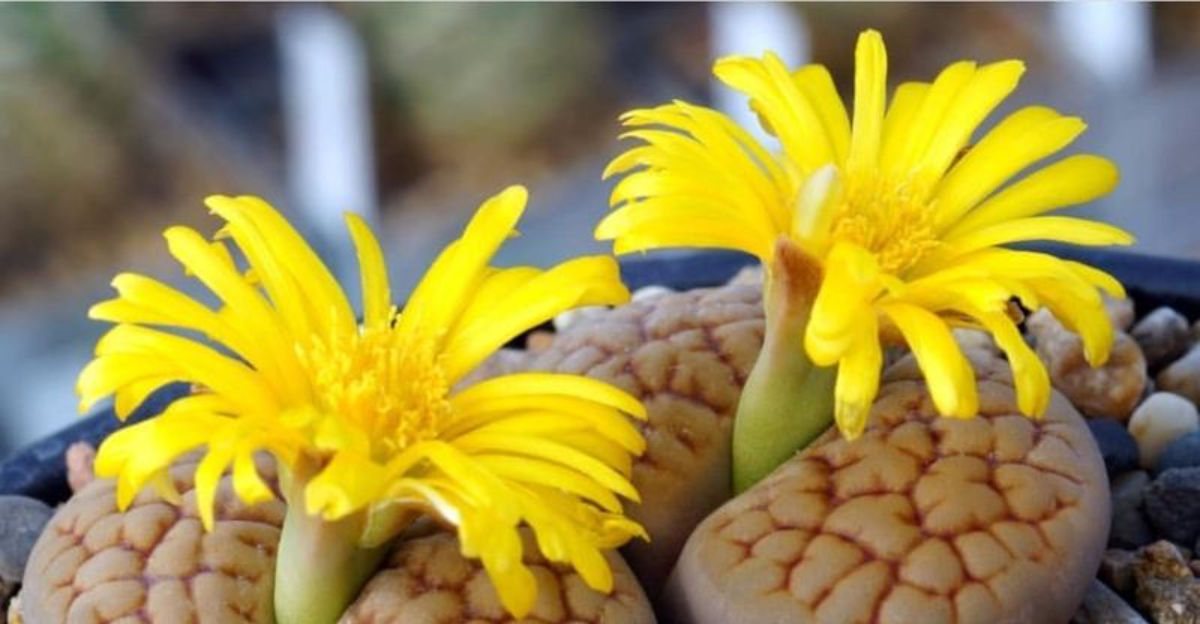
Walking past these little guys, you’d swear someone dropped a handful of pebbles into a planter by mistake.
Lithops are succulents from South Africa that have mastered the art of disguise.
They look exactly like small stones sitting in the soil, which is actually their survival trick in the wild to avoid being eaten by animals.
Each plant has two thick, fleshy leaves that meet in the middle with a small split on top.
That’s where a daisy-like flower pops up once a year, usually in white or yellow.
The whole thing is pretty magical to watch.
These quirky plants need very little water, especially during their dormant period in summer.
Overwatering is the fastest way to turn them to mush, so it’s better to forget about them than fuss too much.
They love bright light and well-draining soil, like a cactus mix.
If you’re the type who travels a lot or forgets to water plants, Lithops might just be your new best friend.
They’re small enough to fit on any sunny windowsill and make great conversation starters when guests lean in for a closer look.
4. Albuca Spiralis (Frizzle Sizzle)

With a name like Frizzle Sizzle, you know this plant has personality.
Albuca Spiralis is a bulbous plant from South Africa that sends up leaves shaped like perfect corkscrews.
The tight spirals look almost too perfect to be real, like someone spent hours curling each leaf with a tiny curling iron.
In spring, it produces yellow flowers on tall stems that smell faintly like vanilla or butter, which is a sweet bonus.
The leaves are most tightly coiled when the plant gets plenty of bright sunlight.
If it doesn’t get enough light, the leaves will straighten out and lose their signature look, so a sunny windowsill is essential.
This plant grows during the cooler months and goes dormant in summer, losing its leaves completely.
During dormancy, cut back on watering and let the bulb rest in dry soil.
When fall arrives, new spirals will emerge and the whole show starts again.
Frizzle Sizzle isn’t fussy about soil as long as it drains well, and it doesn’t need much fertilizer.
It’s compact enough for small spaces and quirky enough to make people smile.
If you love plants that look like they came from a Dr. Seuss book, this one’s calling your name.
5. Platycerium (Staghorn Fern)
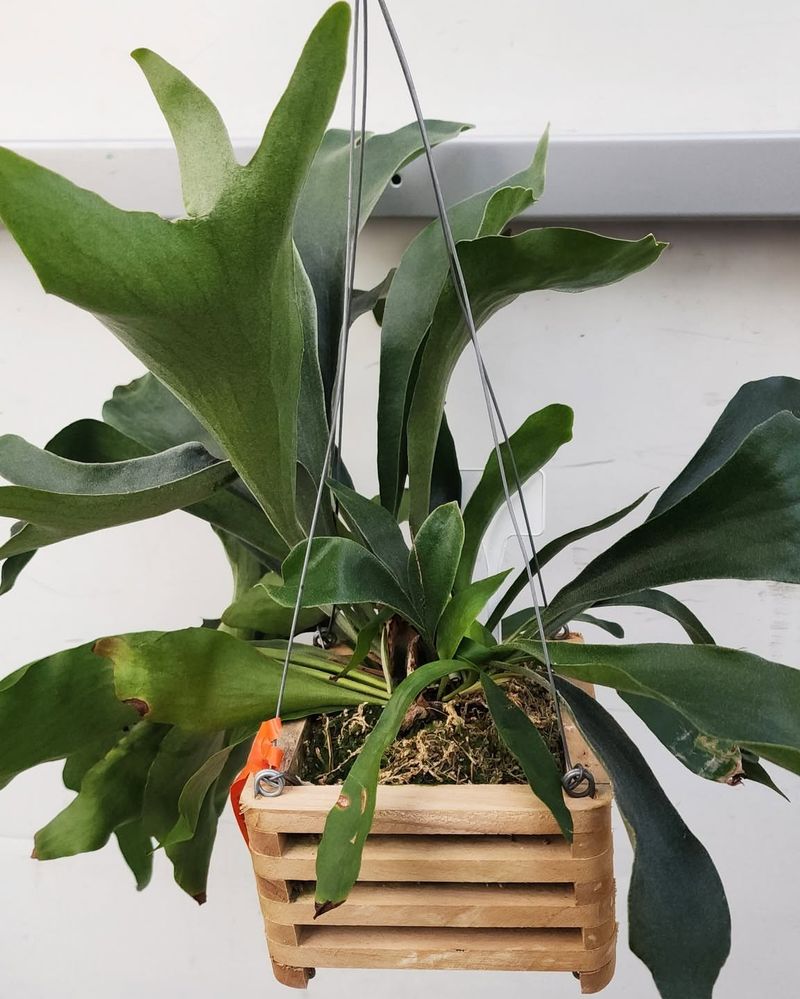
Most ferns are delicate and lacy, but Platycerium decided to go bold instead.
Commonly called Staghorn Ferns, these plants have thick, leathery fronds that look exactly like deer antlers branching out from the center.
They’re epiphytes in nature, meaning they grow on trees rather than in soil, so they’re often mounted on wooden boards or hung in baskets.
The plant has two types of fronds.
The flat, shield-like ones at the base turn brown and papery, which is totally normal and actually protects the roots.
The forked, antler-shaped fronds grow outward and can get quite large over time, making a dramatic statement on any wall.
Staghorn ferns like bright, indirect light and high humidity, so bathrooms or kitchens work well.
Water them by soaking the base thoroughly, then letting it drain.
If mounted, you can take the whole board down and soak it in a sink or tub.
They don’t need much fertilizer, just a weak dose during the growing season.
These ferns are surprisingly low-maintenance once you get the hang of their watering needs.
They’re also pet-friendly, which is a nice bonus if you have curious cats or dogs around.
6. Crassula Umbella (Wine Cup)

Picture a stack of tiny green umbrellas or wine glasses lined up on a stem, and you’ve got Crassula Umbella.
This South African succulent has round, disc-shaped leaves that grow in neat layers along upright stems.
Each leaf wraps around the stem like a little platform, creating a staircase effect that’s both geometric and organic.
The whole plant looks almost architectural, like something a miniature fairy might use as furniture.
In late spring or summer, small yellow flowers cluster at the top of the stems, adding a pop of color.
Crassula Umbella is pretty easygoing as long as you don’t drown it.
Like most succulents, it prefers bright light and well-draining soil.
Water it thoroughly, then let the soil dry out completely before watering again.
Overwatering leads to root rot, which is the main way people accidentally harm this plant.
It stays relatively compact, making it perfect for desks, shelves, or small windowsills.
The unusual leaf arrangement makes it a favorite among succulent collectors who want something a bit different from the usual rosette shapes.
If you’re building a collection of oddball plants, Wine Cup definitely deserves a spot.
It’s quirky, sculptural, and surprisingly easy to care for once you get into a routine.
7. Euphorbia Obesa (Baseball Plant)

Ever seen a plant that looks exactly like a baseball?
Euphorbia Obesa is a South African succulent that’s almost perfectly round with subtle ridges running from top to bottom.
It’s green with faint purple or reddish stripes, and honestly, if you painted it white and added stitching, you could probably fool someone from across the room.
This plant is slow-growing and stays relatively small, usually reaching about the size of a softball over several years.
It doesn’t have traditional leaves or spines, just smooth, round perfection.
Tiny flowers appear at the top during the growing season, but they’re pretty understated compared to the plant’s striking shape.
Baseball plants are endangered in the wild due to over-collection, but they’re widely cultivated now, so buying one from a reputable source helps support conservation.
They need bright light, minimal water, and excellent drainage to thrive.
Water sparingly during winter when the plant is resting.
Too much water causes them to split or rot, so it’s better to underwater than overdo it.
These plants are perfect for people who want something unusual but don’t have a lot of time for maintenance.
They’re conversation pieces that practically take care of themselves.
Just give them sun and forget about them most of the time.
8. Haworthia Cooperi (Crystal Ball Plant)

Some plants look like they belong in a sci-fi movie, and Haworthia Cooperi is definitely one of them.
This small succulent has plump, translucent leaves that look like little glass beads or water droplets clustered together.
Light passes through the leaf tips, giving them a glowing, almost magical appearance.
People often call it the Crystal Ball Plant because of this unique see-through quality.
In nature, these plants grow partially buried in the soil with just the translucent leaf tips exposed to catch sunlight.
Indoors, they prefer bright, indirect light and can actually sunburn if placed in harsh, direct sun.
They’re native to South Africa and adapted to survive in tough conditions, so they don’t need much fussing.
Water them when the soil is dry, and use a well-draining mix like cactus soil.
During winter, they slow down and need even less water.
Haworthia Cooperi stays small and compact, making it ideal for tiny spaces or terrariums.
It occasionally sends up a tall, thin flower stalk with small white blooms, though the real star is the foliage.
These plants are relatively easy to find online and are perfect for beginners who want something unusual.
They’re also safe around pets, which is always a relief for animal lovers.
9. Pseudolithos Cubiformis (Cube Succulent)

If you thought Lithops looked like stones, wait until you see Pseudolithos Cubiformis.
This rare succulent from Somalia and Yemen looks like a rough, grayish-green cube sitting in the soil.
It has a bumpy, textured surface that resembles weathered rock, and honestly, you’d probably walk right past it thinking it was a decorative pebble.
The plant stays small, usually just a few inches across, and grows incredibly slowly.
During the growing season, tiny maroon or purple flowers appear on the surface, adding a surprising splash of color to the otherwise drab appearance.
Pseudolithos is one of the trickier succulents to grow, so it’s not the best choice for beginners.
It needs excellent drainage, minimal water, and warm temperatures to survive.
Overwatering or cold drafts can quickly destroy it, so it’s more of a collector’s plant than an everyday houseplant.
Bright, indirect light works best, and watering should be very infrequent, especially in winter.
Some growers only water a few times a year.
Because of its rarity and difficulty, Pseudolithos Cubiformis commands high prices and can be hard to find.
But if you love a challenge and want something truly unusual, this bizarre little cube is worth tracking down.
It’s a trophy plant for serious succulent enthusiasts.
10. Anthurium Warocqueanum (Queen Anthurium)
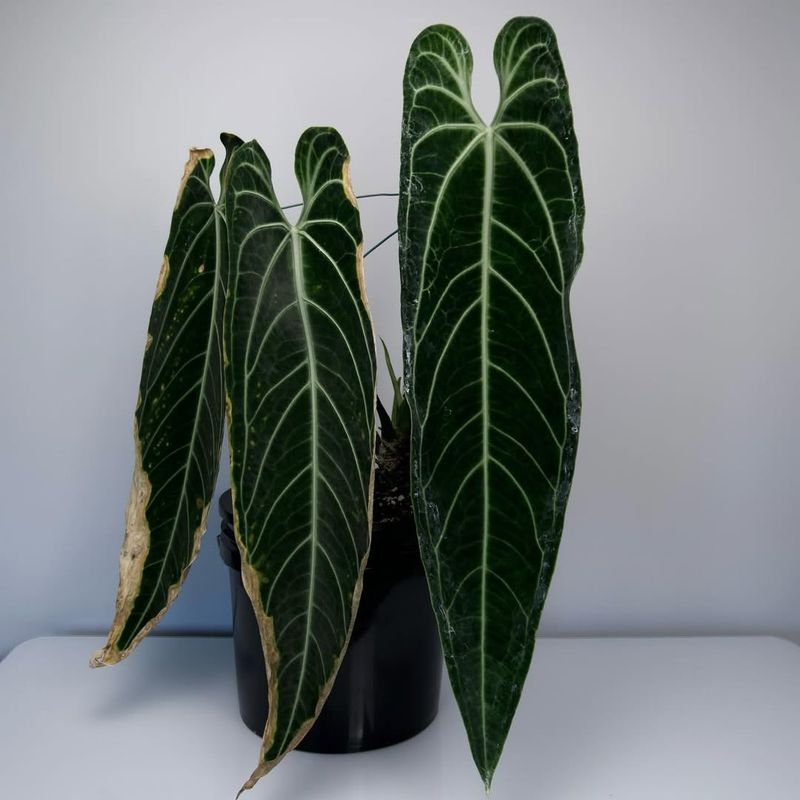
Most anthuriums are known for their bright, waxy flowers, but Anthurium Warocqueanum is all about the foliage.
Nicknamed the Queen Anthurium, this rare plant from Colombia has long, velvety leaves that can grow over three feet long in ideal conditions.
The leaves are deep green with striking white or silvery veins that stand out like lightning bolts across the surface.
The texture is soft and almost suede-like, making you want to reach out and touch it every time you walk by.
This plant is a bit of a diva and needs high humidity to truly thrive, so it’s best suited for terrariums, greenhouses, or very humid homes.
It prefers bright, indirect light and well-draining soil that stays slightly moist but never soggy.
Regular misting or a humidifier helps keep the leaves looking their best.
Because of its specific care requirements and rarity, Queen Anthurium isn’t cheap or easy to find.
It’s more of an investment plant for serious collectors or people who love a challenge.
If you can meet its needs, though, it rewards you with stunning, dramatic foliage that makes every other houseplant look plain.
It’s definitely a showstopper that commands attention and respect in any plant collection.