7 Texas Backyard Micro-Oasis Ideas For Small Outdoor Spaces
There’s a special kind of satisfaction in making the most of a small backyard in Texas, especially when space is tight but the heart for gardening is big.
Afternoon tea on the patio, watching grandkids chase lizards, listening to birds sing, or a quiet moment with a book can all feel better with a little green escape nearby.
Even in a compact yard, you can create a mini oasis that invites butterflies, hummingbirds, bees, and your own moments of calm.
Clever container layouts, vertical plantings, colorful flowers, and tiny water features can transform what once felt cramped into a personal retreat right outside your door.
If your outdoor space has felt limited, these small-scale garden ideas will help you reimagine every corner. You’ll see how even the tiniest Texas yard can become an inviting, peaceful oasis.
1. Vertical Garden To Maximize Greenery
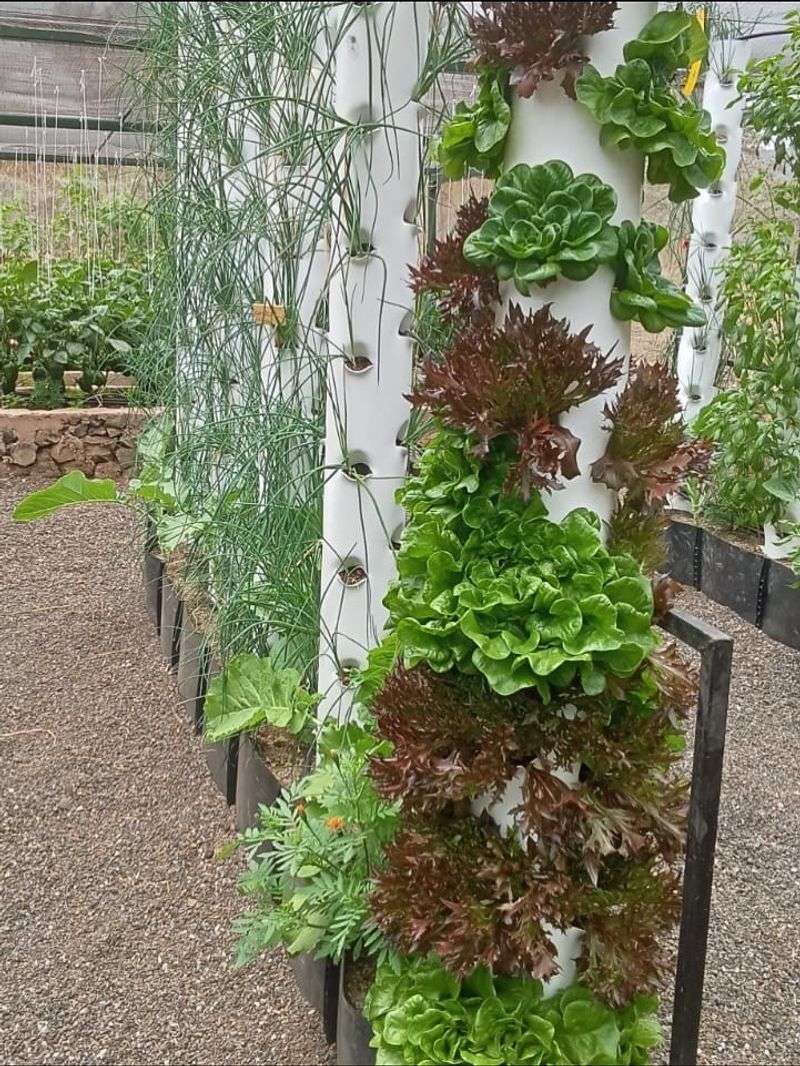
Wall space is some of the most underused real estate in any small Texas backyard, and a vertical garden makes excellent use of that unused square footage by turning bare fences or exterior walls into productive plant zones. A vertical garden, often called a “living wall” or green wall, involves attaching planters, trellis panels, or other supports to a sturdy surface so plants can grow upward rather than spreading outward in the ground.
These installations not only add visual interest but can help shade a hot wall and even cool the area around your home.
Choosing the right plants for a Texas vertical garden means thinking about heat, sun exposure, and soil moisture. Many herbs like oregano, basil, mint, and thyme handle Texas sun beautifully and spill over their pockets or planters with fragrant foliage and flowers.
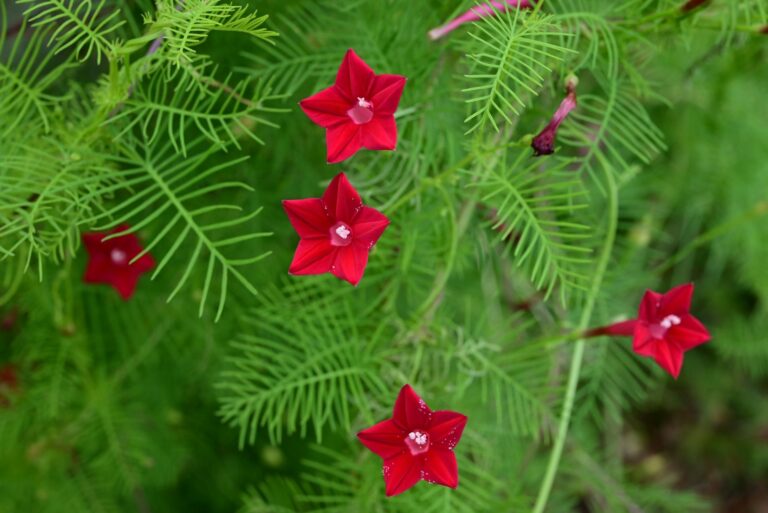
Vegetables and vines such as cucumbers, pole beans, and vining tomatoes can also be trained on vertical supports so you get fresh produce without taking up much ground space. For color and fragrance, flowering vines like coral honeysuckle, Carolina jessamine, and passion vine are excellent choices for walls where they can climb and bloom, attracting pollinators and adding seasonal interest.
Setting up a vertical structure does not have to be expensive. DIY options often use repurposed pallets, wall‑mounted grid panels, or modular pocket planters that are affordable and space efficient.
Once installed, adding a simple drip irrigation line or self‑watering system makes regular watering easy, which is especially important in Texas where heat and sun can quickly dry out soil. With thoughtful plant selection and proper watering, your vertical garden becomes a standout feature in your outdoor space and a source of fresh herbs, vegetables, and blooms year after year.
2. Multi-Level Container Plantings
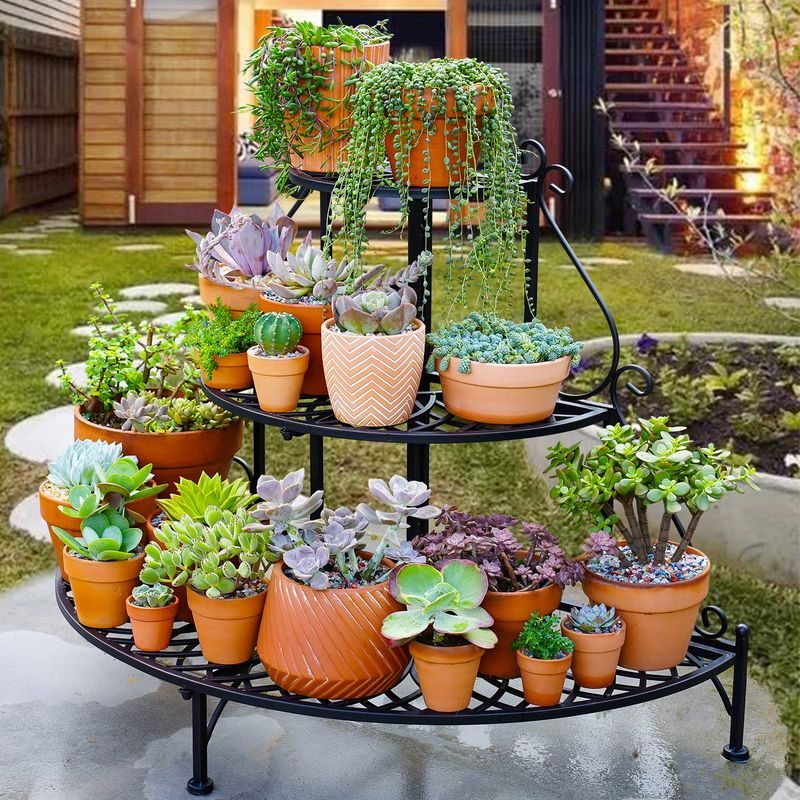
Stacking your garden upward through tiered containers is one of the smartest moves you can make in a compact Texas backyard because it makes the most of limited space while keeping plants healthy and productive. Instead of spreading plants across the ground where space is tight, stacking them on stands, shelves, or tiered platforms lets you fit more greenery into a small patio or deck area without crowding.
This layered design not only looks lush and abundant but also ensures that each plant gets better access to sunlight and airflow, which is especially important when Texas summer sun can be intense.
Choosing the right containers matters a lot in Texas where the climate ranges from hot and dry to humid and variable. Because unglazed clay pots dry out extremely quickly in strong sun, using glazed ceramic, thick plastic, or other materials that hold moisture longer will reduce how often you need to water and help protect plant roots from heat stress.
Good drainage holes are essential in any container to prevent root rot, and choosing quality potting mix designed for containers will keep water and nutrients available where roots can reach them.
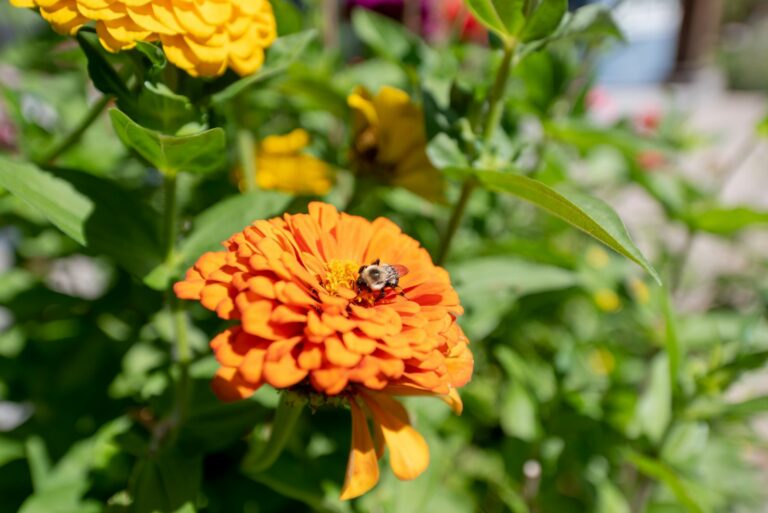
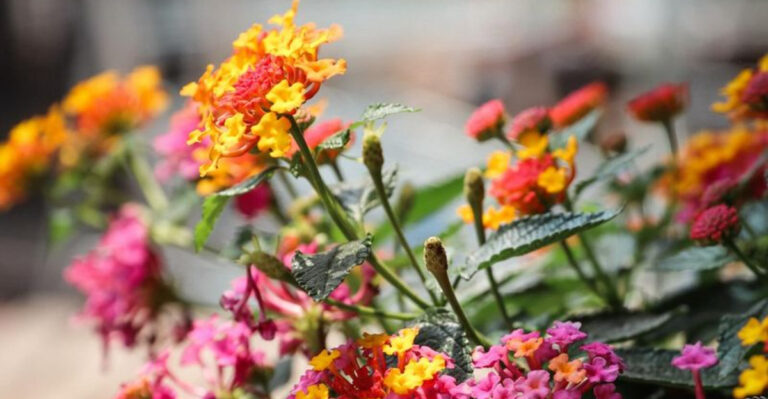
Great plant choices for multi-level Texas containers include heat-tolerant annuals and ornamentals like lantana, zinnias, angelonia, basil, oregano, and ornamental peppers that thrive in full sun and handle hot spells. Trailing varieties such as sweet alyssum, dichondra ‘Silver Falls,’ or creeping jenny spill over the edges of higher tiers and add soft texture and color.
Herbs and compact vegetables such as bush beans, small peppers, or dwarf tomatoes also perform well in containers when given proper sunlight and consistent watering.
Placing taller plants on lower shelves and letting cascading varieties drape over the edges of upper tiers creates a dynamic waterfall effect that transforms even the most basic patio into a lively, colorful garden corner worth spending time in.
3. Compact Water Feature Or Fountain
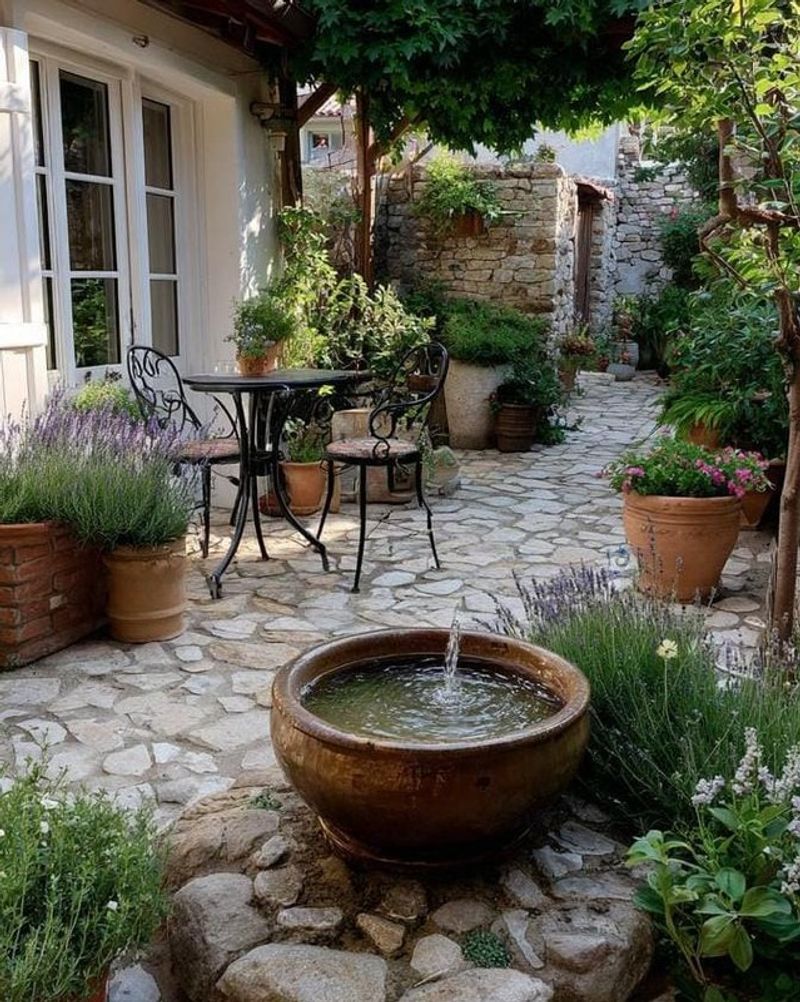
Few things make a small outdoor space feel more like a peaceful retreat than the sound of running water. Adding a compact fountain or water feature can instantly transform a Texas backyard into a calming garden escape.
Fountains and bubblers are ideal because they require very little ground space and recirculate water through an internal pump, creating a gentle trickle that masks street noise and invites birds and butterflies to visit. These features work beautifully on patios, decks, and small planting corners, adding a soothing auditory layer to your outdoor environment.
For small Texas yards, self-contained fountain units are especially practical. Many plug in or run on solar power, which is perfect given the abundant Texas sunshine, and they require minimal installation.
Solar-powered fountains can operate all day without using electricity, while plug-in models offer consistent water flow regardless of sun exposure. Styles range from modern ceramic bowls to rustic stacked stone designs, allowing you to choose a fountain that complements your existing outdoor decor.
Even a small tabletop fountain on a side table can bring the calming effect into a cozy seating area.
Surrounding your water feature with moisture-loving plants enhances the oasis effect while adding texture and visual interest. Plants such as caladiums, elephant ears, ferns, and hostas thrive in the damp microclimate near a fountain and create a lush, garden-like feel.
Ornamental grasses like purple fountain grass add movement and help integrate the water feature naturally into the landscape. This combination of water and greenery attracts pollinators, provides soothing sound, and makes your backyard feel lively and magical.
Even in a small space, a fountain paired with carefully chosen plants can make your Texas backyard a true micro-oasis that feels vibrant and serene every day.
4. Hanging Planters To Save Space
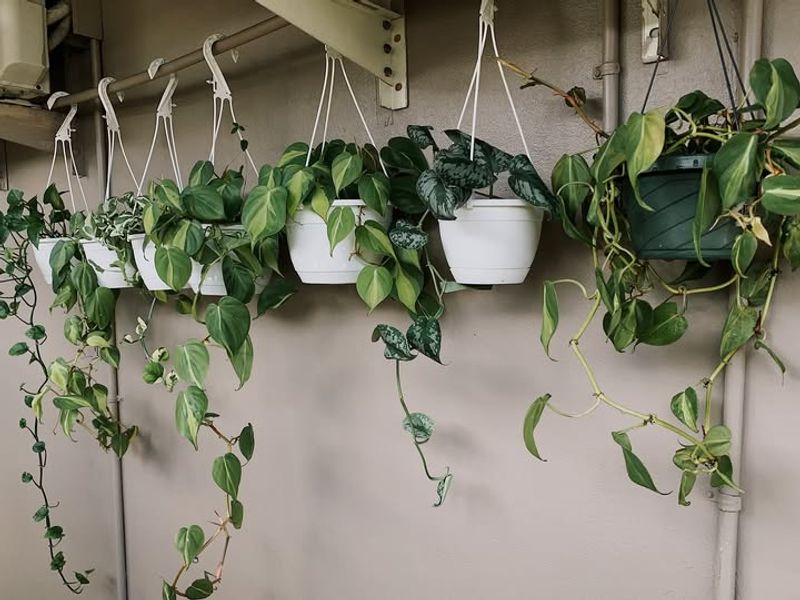
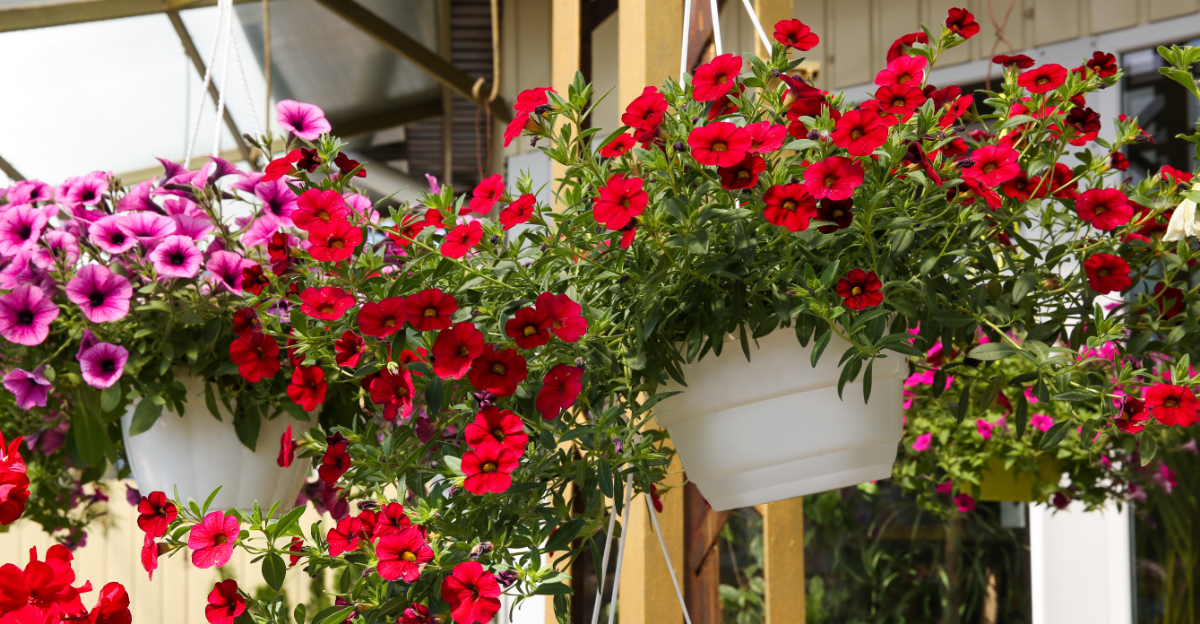
Overhead space is often overlooked in small backyard designs, but hanging planters turn that concept into a major advantage. By suspending plants from pergola beams, fence tops, tree branches, or wall-mounted hooks, you lift your garden off the ground entirely, freeing up valuable floor space for seating, walking paths, or entertaining areas.
In a compact Texas patio, this approach makes the area feel much lusher without crowding the ground. Hanging planters also create visual layers, drawing the eye upward and adding depth to even the smallest backyard.
Trailing plants are the ideal choice for hanging baskets because they cascade gracefully over the edges, creating a curtain of color and texture. In Texas, heat-tolerant annuals like petunias, bacopa, nasturtiums, and fuchsia perform well in full sun.
Trailing herbs such as thyme, oregano, and creeping rosemary add both fragrance and culinary use. Using coconut coir liners or other moisture-retentive materials helps keep soil hydrated and reduces how often you need to water, which is especially important during the hot summer months.
Choosing well-draining potting mix designed for containers ensures roots stay healthy and plants thrive despite the heat.
Grouping hanging planters at different heights amplifies the layered effect, creating a canopy that makes your backyard feel enclosed and intimate, almost like a private secret garden. You can mix flowering plants with trailing herbs or small edibles for a combination that delights the senses with color, texture, and scent.
Hanging planters are affordable, easy to rotate seasonally, and surprisingly low-maintenance. In addition to providing functional green space, they attract pollinators like bees and butterflies, adding movement and life to your backyard.
With this technique, even a modest Texas outdoor space can be transformed into a vibrant, multi-dimensional micro-oasis.
5. Mini Herb Kitchen Garden
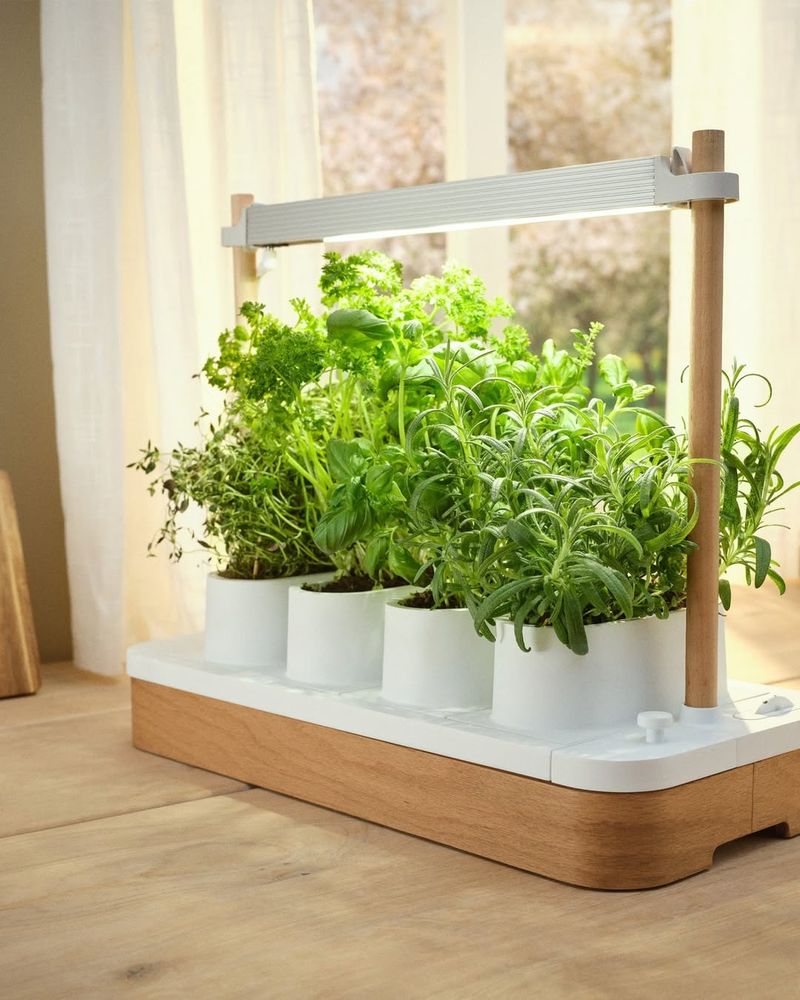
Growing your own herbs in a small Texas backyard is one of the most satisfying ways to make the most of limited outdoor space. Fresh herbs can be expensive in grocery stores, but homegrown varieties offer superior flavor when harvested just before cooking.
They also take up very little room, making them perfect for patios, balconies, or small garden corners. A cluster of pots near your back door or on a small shelf keeps fresh ingredients within easy reach, encouraging frequent use while adding greenery and fragrance to your outdoor space.
Texas has a long growing season, which benefits herb gardeners who want year-round harvests. Heat-tolerant perennials such as rosemary, thyme, oregano, and sage thrive in the Texas climate and will return each year with minimal care.
Annuals like basil and cilantro prefer slightly cooler weather and are best planted in spring or fall when temperatures are moderate. Because mint spreads aggressively, it should always be grown in its own container to prevent it from overtaking nearby plants.
Good container choice and well-draining potting mix are important for keeping roots healthy, especially during hot summer months.
Arranging herb containers on a tiered shelf, wall-mounted rack, or raised planter maximizes vertical space and keeps everything organized and accessible. Labeling each pot with a chalkboard marker, wooden stake, or painted tag adds a decorative, farmhouse-inspired touch.
Watering in the morning ensures that plants absorb moisture before the afternoon heat sets in, and regular pruning encourages bushier growth and higher yields. With thoughtful plant selection, container choice, and placement, your mini herb garden becomes a functional, fragrant, and inviting micro-oasis that enhances both cooking and your small Texas backyard experience.
6. Pocket Zen Garden With Succulents
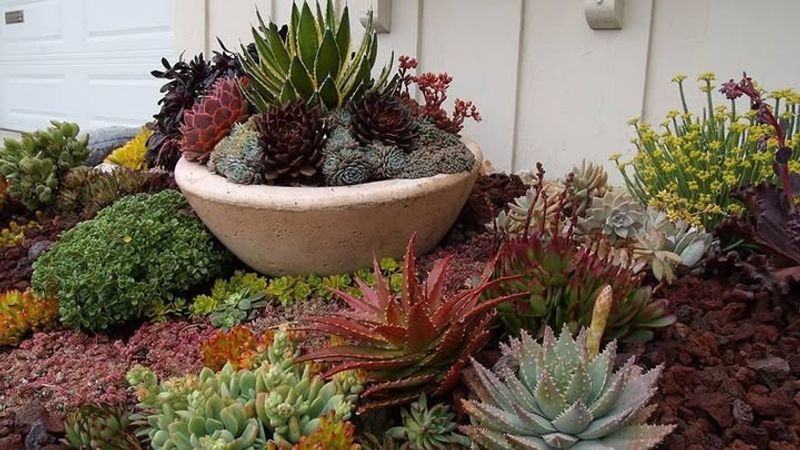
Sometimes less really is more, and a pocket zen garden proves that beautifully. Inspired by traditional Japanese garden design, this concept uses fine gravel, smooth stones, and minimal plantings to create a small outdoor space that feels calm, ordered, and visually satisfying.
In Texas, pairing the zen aesthetic with native succulents and cacti works perfectly because these plants are naturally adapted to the region’s heat, strong sun, and drought conditions, making maintenance easy while maintaining a clean, minimalist look.
You do not need a large area to create a meaningful zen-inspired corner. Even a small four-foot-by-four-foot section of a patio, deck, or yard can be transformed with a layer of decomposed granite, sand, or white gravel, a few carefully positioned river rocks, and a handful of striking succulents like agave, echeveria, yucca, or prickly pear.
Arranging the stones and gravel in simple patterns can create a meditative effect, and raking the gravel is both decorative and calming, offering a sensory activity that helps reduce stress while adding beauty to your space.
Framing the area with flat stones, natural boulders, or simple wooden edging gives the garden a polished, intentional appearance. Small focal points such as a bamboo water feature, sculptural stone, or a single ornamental cactus can anchor the design and draw the eye.
Native succulents and cacti are drought-tolerant, require little supplemental water, and can withstand Texas heat, making this style practical for even the busiest backyard gardener. Creating a pocket zen garden offers a quiet, low-maintenance retreat where you can pause, enjoy the textures and forms, and bring a sense of balance and peace to a small Texas outdoor space.
7. Privacy Screens With Planters
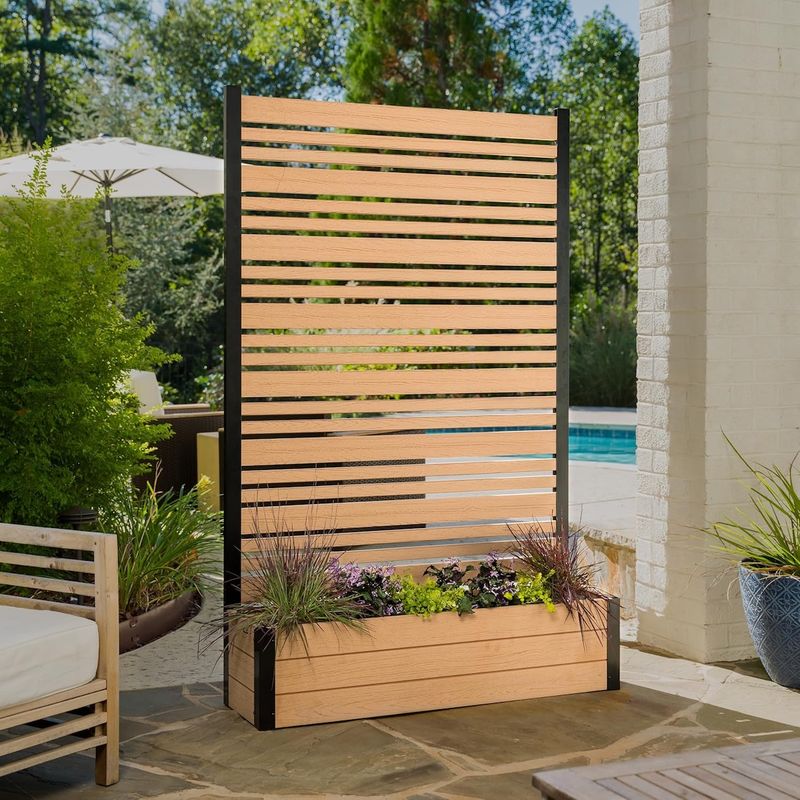
One of the biggest challenges in a small Texas backyard is creating privacy without building a solid wall that makes the space feel cramped or closed off. Privacy screens paired with planters offer a perfect solution.
These screens block sightlines from neighbors or the street while still allowing airflow and sunlight to filter through, keeping the yard feeling open, airy, and inviting rather than boxed in. By combining structure with living plants, you can achieve both function and beauty in a limited space.
Popular materials for privacy screens in Texas include wooden lattice panels, bamboo screens, and powder-coated metal grids. These structures are durable, weather-resistant, and suitable for the state’s hot sun and occasional heavy rains.
Adding planter boxes at the base of each screen allows climbing plants to grow upward, softening the lines of the screen and blending it into the garden. Heat-tolerant climbers such as coral honeysuckle, Confederate jasmine, crossvine, and mandevilla thrive in full sun to partial shade and reward gardeners with vibrant flowers, fragrant blooms, and a natural backdrop that enhances the sense of seclusion.
Placement is key for both aesthetics and functionality. Position screens strategically around seating or dining areas to create a sense of enclosure and intimacy.
A single panel can serve as a striking focal wall behind a bench, while multiple panels arranged in an L-shape or U-shape can wrap around a corner, framing the space and creating a resort-inspired micro-oasis. Regular pruning keeps climbing plants healthy and encourages dense growth, which enhances both privacy and visual appeal.
With the right combination of structure, climbers, and planters, a small Texas backyard can feel layered, private, and luxurious without sacrificing space or light. Privacy screens transform even a compact yard into a welcoming, polished retreat where you can relax, entertain, and enjoy the outdoors in style.