Texas Trees That Can Get Homeowners In Trouble If They Are Not Removed
In Texas, trees are a wonderful part of the landscape, providing shade, beauty, and a natural backdrop for your property. However, some trees, while charming at first, can quickly become a liability if not properly managed.
Over time, even sturdy trees can start to lean too close to power lines, foundations, or fences, leading to costly repairs. Others may spread aggressively or develop structural issues like rotting or unstable limbs, making them dangerous during storms or high winds.
The problem is that these trees don’t always show their true nature until it’s too late. What seems like a healthy, strong tree today could be a disaster waiting to happen tomorrow.
Identifying which trees might cause issues, from weakening roots to excessive growth, can help homeowners take action before the damage is done.
Knowing when to remove a tree and choosing the right replacement can keep your property safe and your yard looking great for years.
1. Tree-Of-Heaven
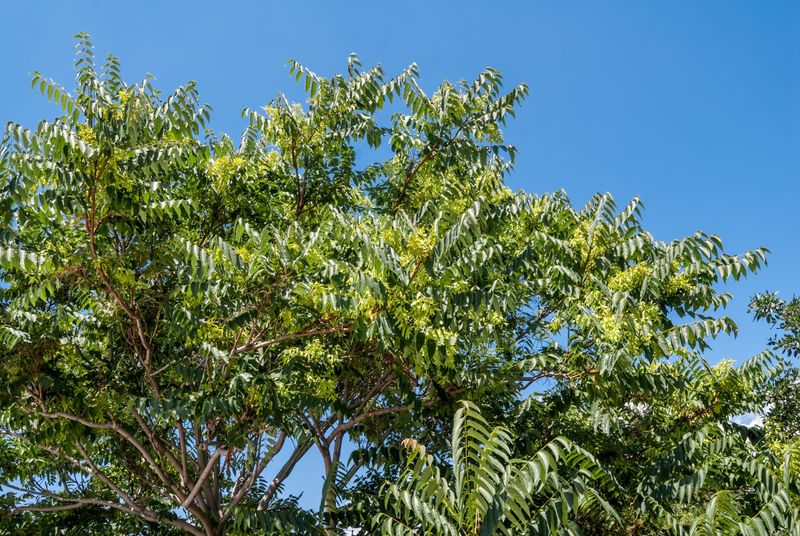
Do not let the name fool you. The Tree-of-Heaven is one of the most troublesome invasive trees you can have growing on your Texas property.
Originally from China, this tree was brought to the United States in the 1700s and has been causing problems ever since.
One of its biggest issues is its root system. The roots grow fast and spread far, sneaking into sewer lines, cracking sidewalks, and undermining home foundations.
Repairs from this kind of damage can cost thousands of dollars. Many Texas homeowners have been shocked to discover their plumbing problems trace back to a nearby Tree-of-Heaven.
Beyond the roots, this tree also releases chemicals into the soil that stop nearby plants from growing. Gardeners and landscapers call this allelopathy, and it can ruin the plants and grass around your home.
The Tree-of-Heaven also spreads through seeds and underground suckers at a rapid pace. Cutting it down is not always enough. If the stump is not properly treated, it will send up new shoots quickly.
Some Texas cities have already classified it as a noxious weed, meaning removal may not just be a good idea but a legal requirement.
The spotted lanternfly, an invasive pest that threatens agriculture, is also known to be attracted to this tree, adding another layer of concern for Texas homeowners. Acting early is always the smartest move.
2. Chinese Tallow
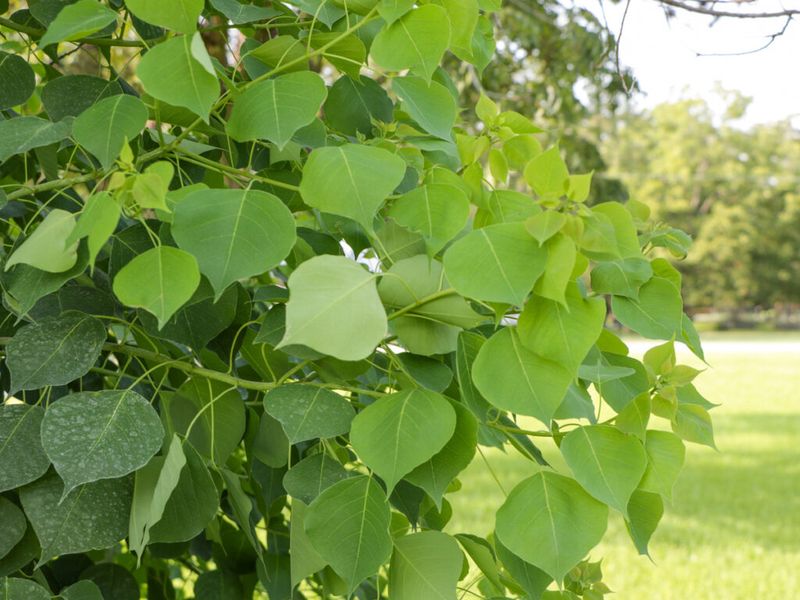
Walk through almost any Texas neighborhood in the fall and you might spot a Chinese Tallow tree showing off its brilliant red and orange leaves.
It looks gorgeous, but underneath that pretty exterior is one of the most aggressive invasive trees in the Lone Star State.
Chinese Tallow spreads fast. Birds eat its waxy white berries and scatter seeds across wide areas, which means one tree can quickly turn into dozens.
In many parts of Texas, this tree has taken over fields, forests, and wetlands, pushing out native plants that local wildlife depend on for food and shelter.
Several Texas counties have already placed Chinese Tallow on their list of prohibited invasive species. That means if you get an official notice from your county and do not remove it, you could face fines.
Ignoring a removal order is never a good idea, especially when the cost of a fine can far exceed the cost of tree removal.
The roots of Chinese Tallow can also invade garden beds and damage nearby plants by competing aggressively for water and nutrients. Its seeds are toxic to many animals, including some livestock, making it especially dangerous in rural areas of Texas.
If you have this tree on your property, consult a local arborist about safe and proper removal. Getting ahead of this problem before it spreads further into your yard or your neighbor’s yard is the responsible choice for any Texas homeowner.
3. Siberian Elm
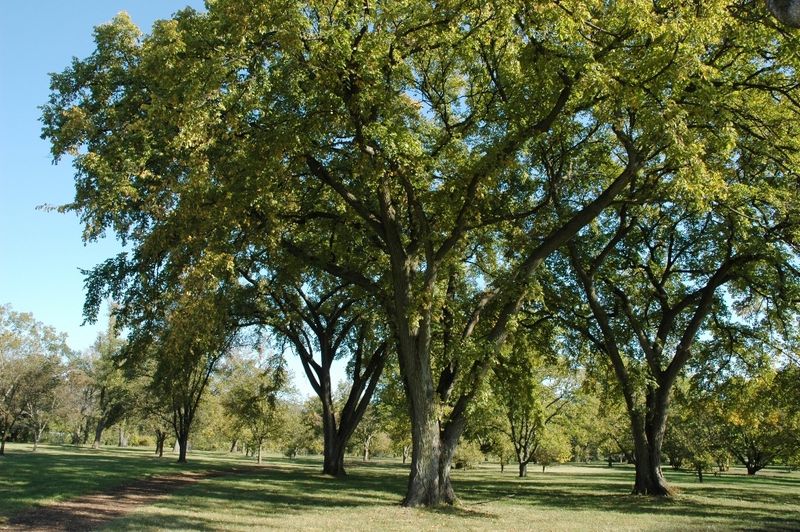
Picture this: a big Texas thunderstorm rolls in overnight, and by morning, a heavy branch from your Siberian Elm has crashed through your fence or landed on your car.
Siberian Elm is notorious for its weak, brittle wood, and Texas storms give it plenty of chances to cause damage.
Unlike stronger native trees, the Siberian Elm grows fast but does not develop the sturdy wood needed to handle high winds, ice, or heavy rain. Branches snap off regularly, even during moderate weather.
This makes it a real liability for homeowners who have the tree growing near structures, vehicles, or power lines.
On top of the storm risk, Siberian Elm is also highly susceptible to disease and pests. Dutch elm disease, elm leaf beetles, and various fungal infections frequently attack this species.
Once a tree becomes diseased, it weakens even further, increasing the chance that a large limb or the entire tree could fail unexpectedly.
Siberian Elm also spreads aggressively. Its seeds travel easily on the wind, and seedlings pop up in gutters, garden beds, fence lines, and even cracks in pavement.
Letting it grow unchecked in your Texas yard can mean dealing with dozens of new sprouts every season. Many Texas arborists recommend replacing this tree with a stronger, native alternative like a live oak or Texas redbud.
Removing a problem tree before storm season arrives is always a smarter and safer plan than waiting for the damage to happen first.
4. Black Locust
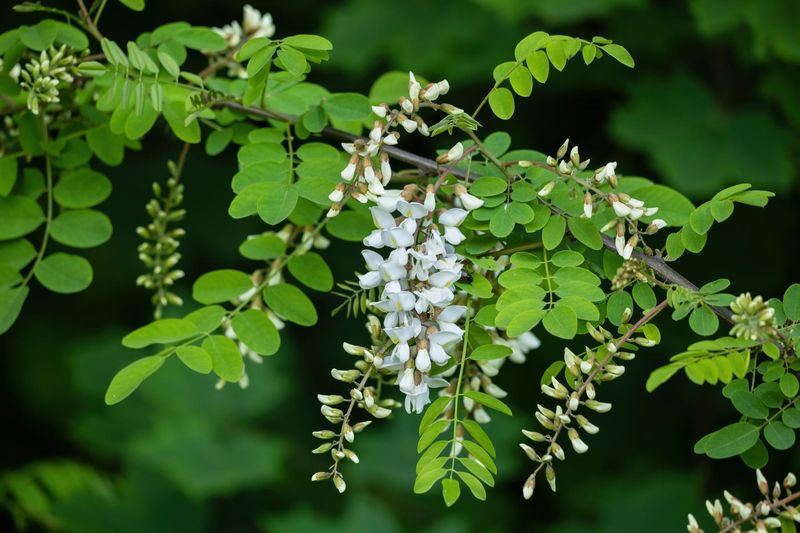
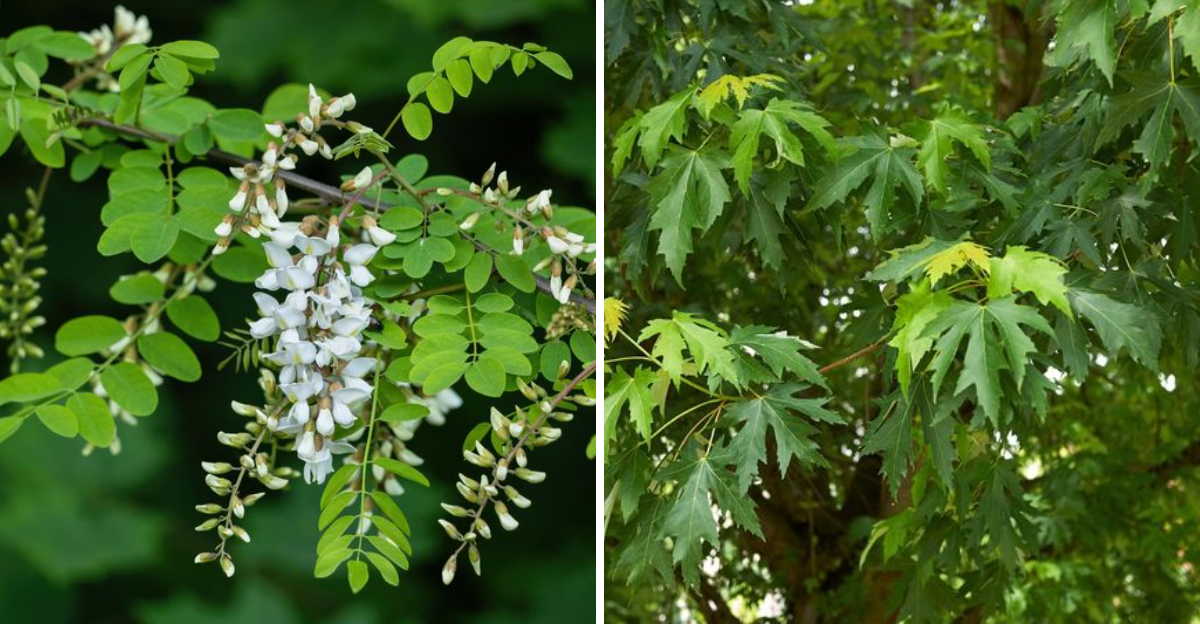
At first glance, Black Locust seems like a charming tree. It produces clusters of fragrant white flowers in the spring and has a rugged, textured bark that looks great in a landscape. But charm does not cancel out the serious problems this tree can bring to a Texas property.
Black Locust wood is brittle and prone to breaking during storms. Texas weather, with its powerful thunderstorms and occasional ice events, is not kind to trees with weak structure.
A falling limb from a Black Locust can damage rooftops, vehicles, fences, and outdoor structures. Homeowners near these trees often face expensive repair bills after severe weather rolls through.
The root system of Black Locust is equally aggressive. It spreads through underground suckers, sending up new shoots far from the original tree.
Once it gets established, clearing it from a yard becomes a serious challenge. In some regions of Texas, it outcompetes native plants and disrupts the natural balance of local ecosystems.
Maintenance is another headache. Black Locust branches are lined with sharp thorns, making pruning and cleanup a painful and dangerous task without proper protective gear.
Homeowners who try to manage this tree on their own often end up injured or frustrated. Hiring a professional is usually necessary, but that adds to the overall cost of keeping the tree.
If a Black Locust is already established on your Texas property, getting a professional assessment sooner rather than later can help you decide whether removal is the right path forward.
5. Cedar Elm
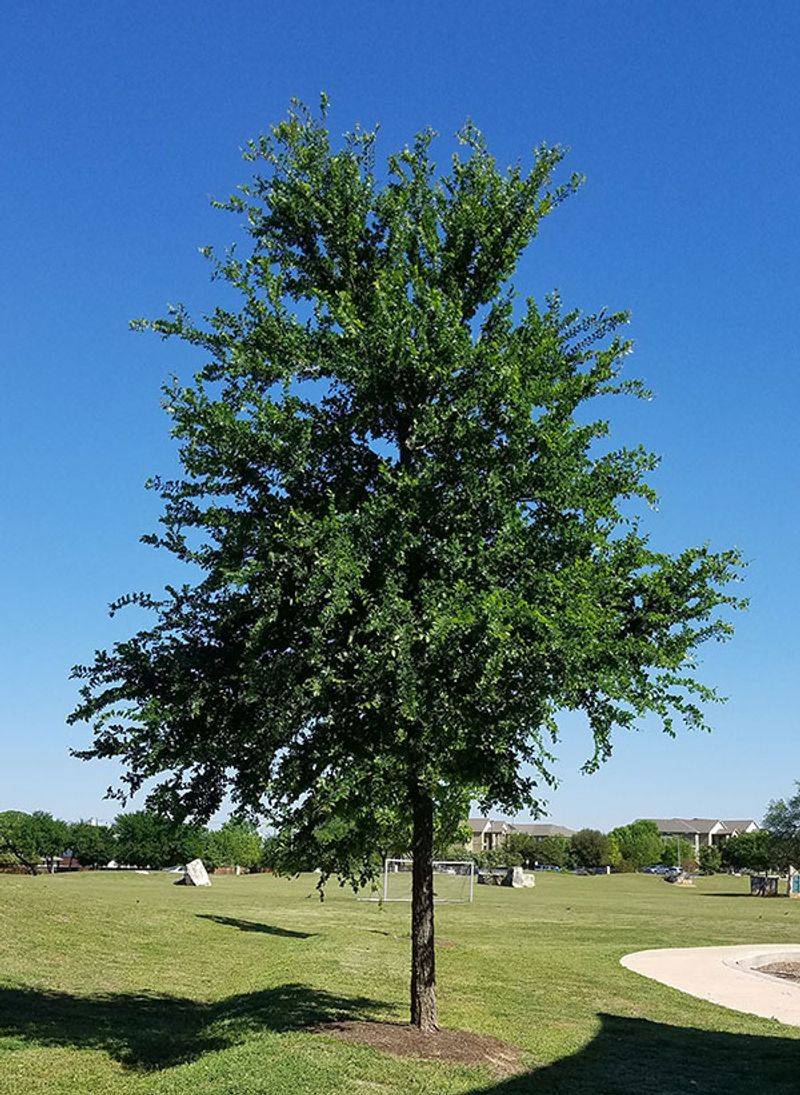
Cedar Elm is one of the most common trees found across Texas, and many homeowners actually enjoy having one in their yard. It provides shade, it looks natural, and it fits right into the Texas landscape.
But common does not mean trouble-free, and Cedar Elm comes with its own set of challenges.
The wood of a Cedar Elm is not as strong as it might appear. During Texas storms, branches break off more easily than expected, especially on older trees or those that have not been regularly pruned.
Fallen limbs can damage fences, vehicles, garden structures, and even the roof of your home if the tree grows too close.
Cedar Elms also produce a dense canopy that drops a heavy load of leaves and sticky sap throughout the year. This debris builds up on lawns, driveways, gutters, and garden beds.
The sap can stain surfaces and damage nearby plants by blocking sunlight and trapping moisture against the soil. Cleaning up after a Cedar Elm can feel like a part-time job for Texas homeowners.
Pests and fungal diseases also target Cedar Elms regularly. Elm leaf beetles, mistletoe infestations, and various fungal issues are all common problems that weaken the tree over time.
A weakened Cedar Elm becomes a much greater risk during storm season. Regular maintenance, including professional pruning and health checks, is essential for keeping this tree from becoming a liability.
If your Cedar Elm is already showing signs of decay or storm damage, consulting a Texas arborist about removal is the smartest step you can take.
6. Silver Maple
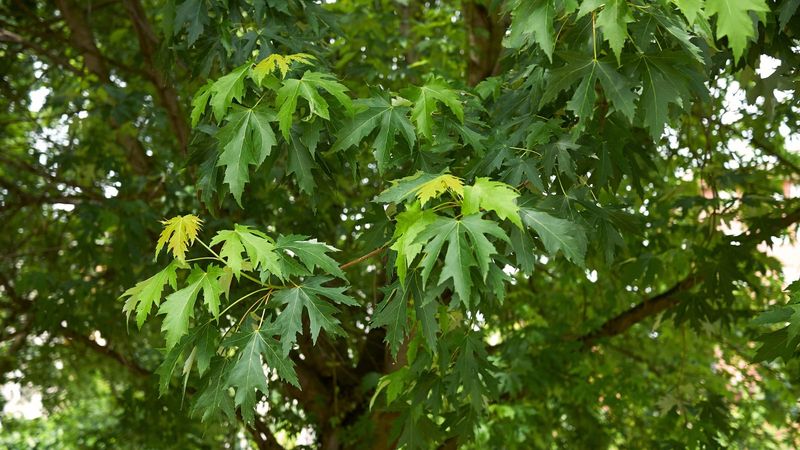
Speed is not always a good thing when it comes to trees. Silver Maple is one of the fastest-growing shade trees you can plant in Texas, and that rapid growth is exactly what makes it such a problem.
Trees that shoot up quickly tend to develop soft, weak wood that simply cannot handle the demands of Texas weather.
The branches of a Silver Maple snap easily in strong winds, heavy rain, and ice storms. Even a routine summer thunderstorm can send large limbs crashing down.
When those limbs fall near a home, the results can be costly. Roof damage, broken fences, cracked driveways, and dented vehicles are all common outcomes for Texas homeowners who have Silver Maples growing too close to their property.
The root system is another major concern. Silver Maple roots are shallow and spread outward aggressively in search of water.
Over time, these roots crack sidewalks, lift driveways, and push against home foundations. In some cases, the roots work their way into underground water and sewer lines, causing expensive plumbing damage that is difficult to detect until it becomes a serious emergency.
Silver Maples also drop a significant amount of seeds, which sprout quickly and create new seedlings throughout your yard and garden. Keeping up with the cleanup and maintenance of this tree is a constant effort.
Many Texas landscaping professionals advise homeowners to replace Silver Maples with stronger, more suitable native trees. A certified arborist can help you assess the risk level of any Silver Maple on your property and guide you through safe removal options.