That Webby Mess On Texas Trees Looks Like Spiders Took Over, But That’s Not What’s Happening
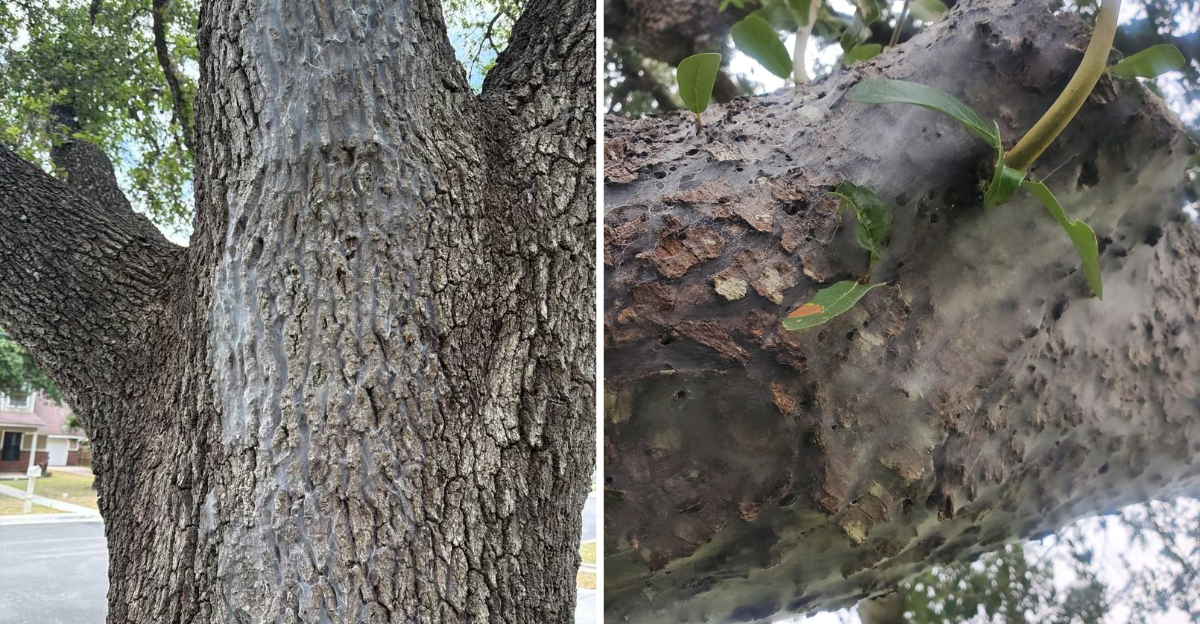
You step outside on a sticky August morning and something has draped your tree trunk in gray lace. It clings to the bark, catches the early light, and looks like a prop from a horror movie.
Your first thought involves eight legs and far too many of them. Your second thought is usually about where the spray bottle went.
Hold that thought, because the silk is telling a different story than you think. Something is living under there, and it is not what most Texas gardeners guess.
Neighbors will swear something strange has taken over the yard, and the internet will hand you plenty of bad advice. A few minutes of close looking sorts the whole thing out, and the real answer is stranger and calmer than the webbing suggests.
Behind The Silk Sits A Tiny Bark-Dwelling Insect
Adults run about an eighth of an inch long, with soft bodies, long antennae, and wings held over the back like a little pitched roof. The younger nymphs are smaller, wingless, and they drift across bark in tight clusters. Long-time Texas gardeners nicknamed them tree cattle because of that herding habit.
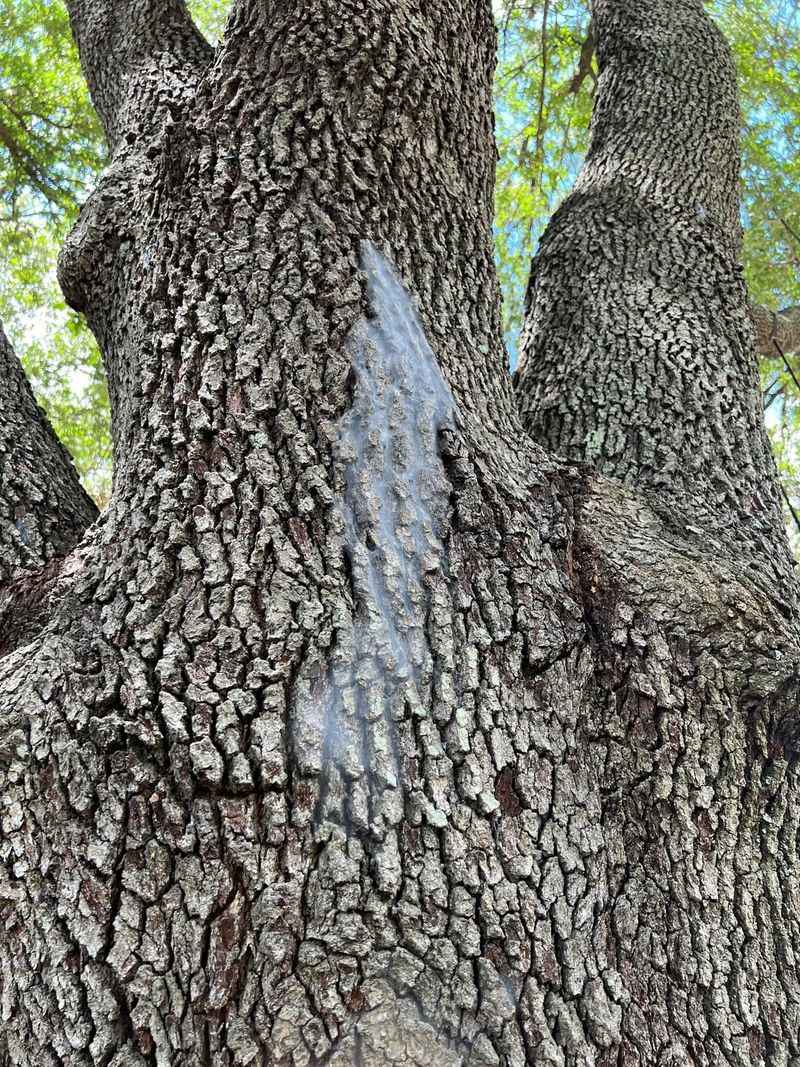
Their silk comes from glands near the mouth rather than from spinnerets at the rear, which is how spiders manage it. The result is a broad, flat sheet that hugs trunks and big branches on mature trees.
A busy colony can wrap several feet of bark within a week when the weather cooperates. That sheet works like a shared tent, buffering the group from birds, wasps, wind, and dry air.
Here is the part that surprises people: leaves, sap, and wood are not on the menu. The insects graze on algae, lichen, fungal spores, pollen, and the general film of grime that collects on bark during humid stretches.
So the scene looks alarming while the reality stays gentle. What you have is a small grazing herd with a taste for tidy bark and a flair for dramatic decoration.
Give the colony a few weeks and the whole production packs itself up. Texas summers are prime season for the show, and it runs on its own schedule.
Spider Webs And Barklice Sheets Are Not The Same Thing
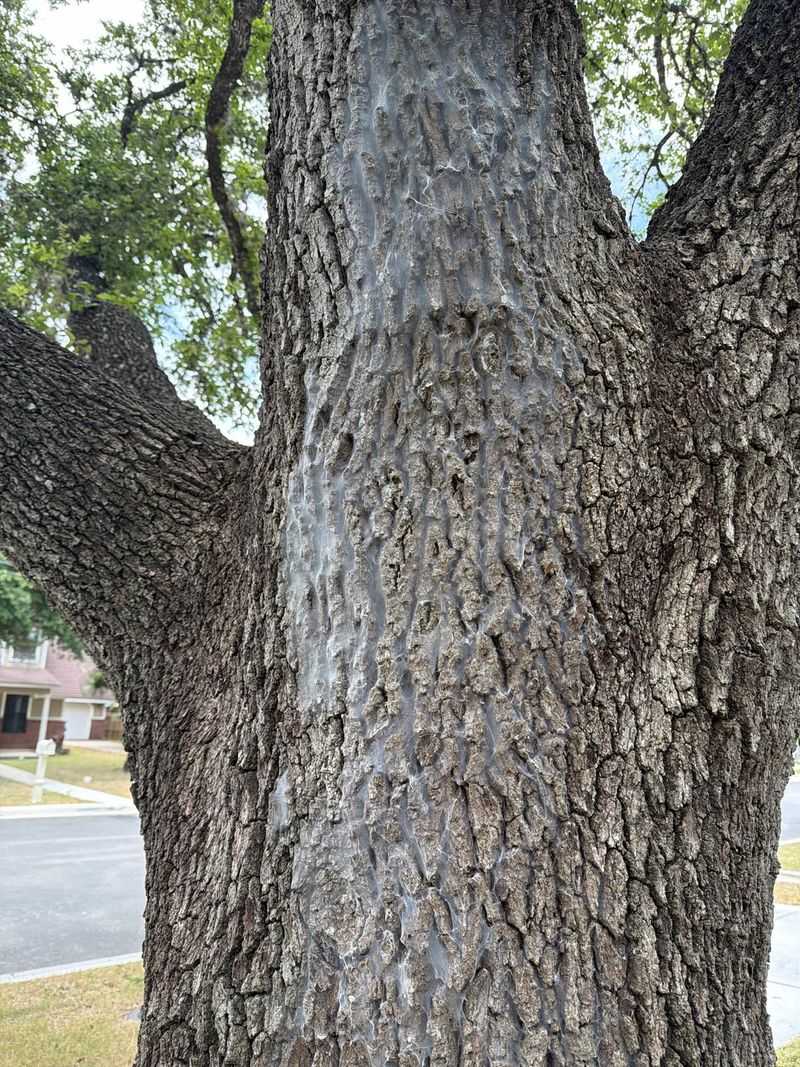
Real spider silk has structure you can read. Orbweavers build spokes and spirals, funnel weavers leave a flat mat with a tunnel at one end, and cobweb spiders make tangled clutter in corners.
Barklice silk skips the architecture entirely. It goes on like shrink wrap, smooth and papery, following every curve of the stem instead of stretching between branches.
Touch test time: spider webbing feels tacky or springy and often holds trapped gnats, wing bits, and dust. Barklice sheets feel dry and thin, tear like tissue, and hold no leftover prey.
Population is another giveaway. A spider web usually has one resident, maybe with an egg sac, while barklice cover bark with dozens or hundreds of small insects moving as a group.
Tap a covered branch gently and watch what follows. The herd scatters in a quick fan pattern, then regroups within a minute or two, a behavior spiders do not show.
Your Texas Garden Changes Every Week. Your Plan Should Too.
Gardening in Texas changes quickly throughout the season. Every Friday you’ll receive a simple weekly plan showing exactly what to plant, prune, fertilize, harvest, and protect so you never miss the right timing.
Location helps as well. Silk that runs up a trunk and out along limbs, wrapping the wood itself, points to barklice, while silk suspended in open air between twigs points to spiders.
Check the leaves last. Barklice leave foliage untouched, so chewed, speckled, or curled leaves mean something else deserves your attention.
One more clue sits in the color. Fresh barklice sheets look silvery gray and slightly cloudy, and after a rain they turn ragged and flake off the bark in strips. Five minutes of looking answers the question.
A Free Bark-Cleaning Crew Hiding Under The Silk
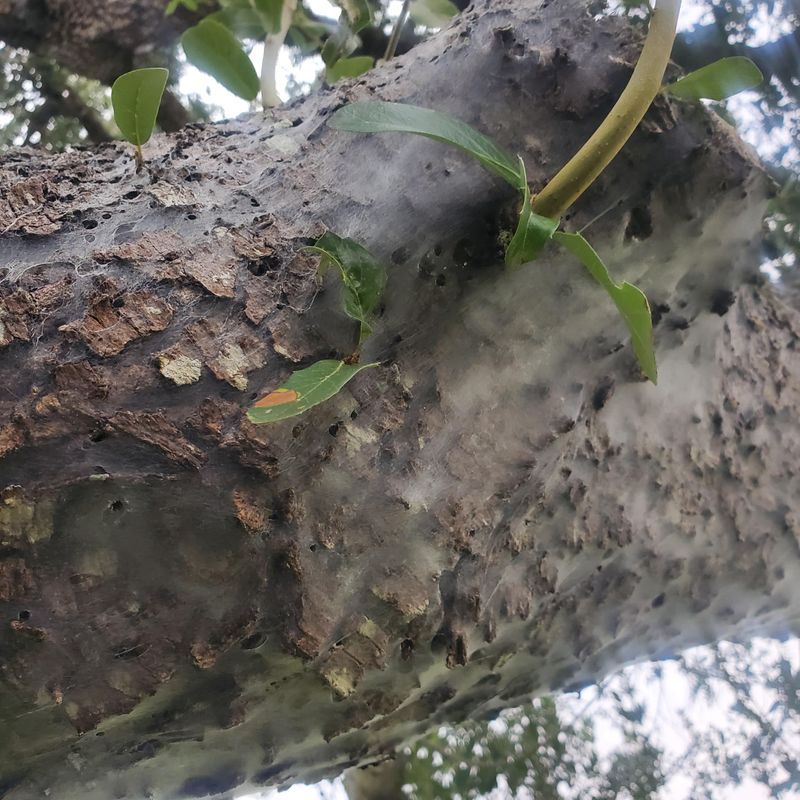
Free labor rarely shows up in a garden, yet that is roughly what happens here. The colony spends its days scraping algae, sooty mold, lichen bits, and spore dust off bark that no gardener would ever bother to scrub.
Nothing about the process injures the plant. Barklice have chewing mouthparts built for surface grazing, not for piercing tissue or boring into wood.
They also feed other yard residents. Insect-eating birds and predators like assassin bugs and paper wasps often take an interest in a barklice colony, which turns your tree into a small buffet.
Some researchers suspect the grazing may slow the spread of certain bark fungi, though that benefit is modest rather than magical. The bigger win stays simple: a temporary guest that asks nothing of your plants.
Some gardeners have started calling them nature’s power washers. Considering how much silk they use, the nickname fits better than it sounds.
Tolerating them costs nothing and saves you a trip to the garden center. Money stays in your pocket, helpful insects stay in your yard, and the tree keeps growing right on schedule.
If a visitor asks about the webbing, you get to explain something most people have not heard of. That alone is worth leaving the sheets alone for a few weeks.
Peak Season And Hotspots Across Texas
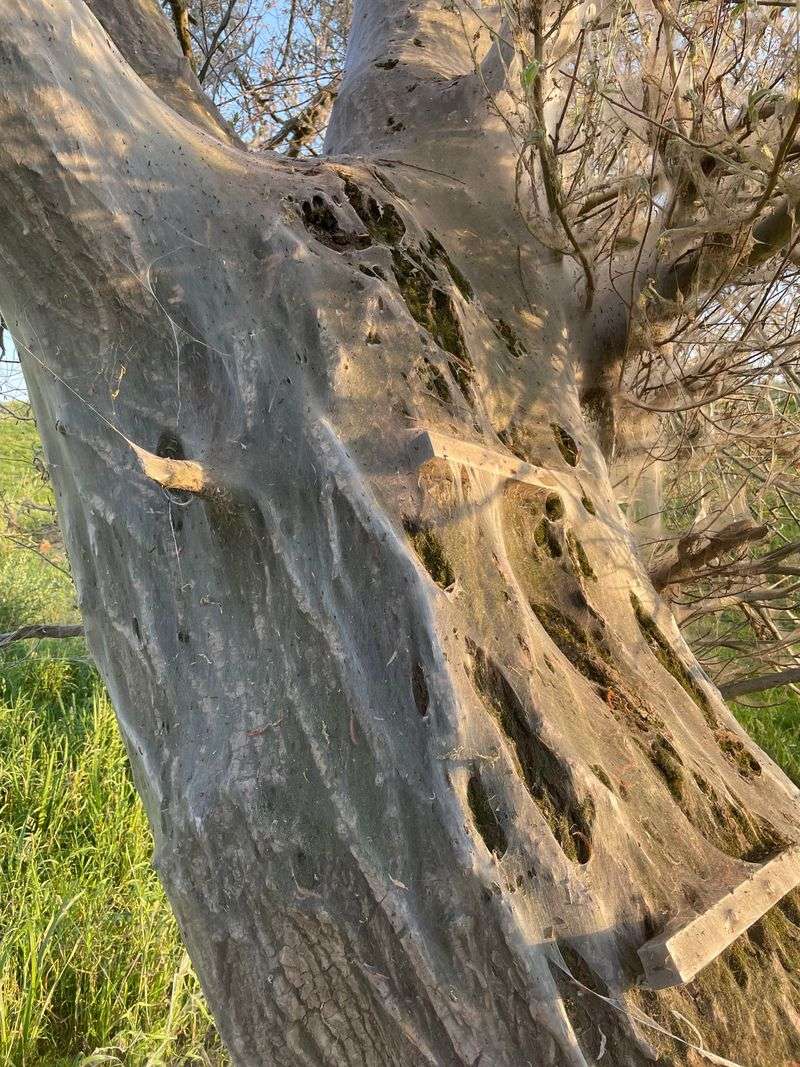
Timing follows moisture. Sheets of barklice silk appear most often from midsummer into fall, especially after stretches of rain and heavy humidity along the Gulf Coast and through Central and East Texas.
Houston, Beaumont, and the Piney Woods see the heaviest displays. Drier country out west gets far fewer reports because bark there rarely grows the algae film these insects graze on.
Certain trees attract more attention than others. Live oaks lead the list, followed by water oaks, crepe myrtles, pecans, and elms with rough, broad bark.
Smooth young twigs hold little interest, since the buildup they feed on takes years to accumulate. Shady, sheltered spots with poor air movement tend to host bigger colonies than sunny, breezy corners.
Most colonies run their course in two to six weeks. Adults mature, mate, disperse, and the abandoned silk breaks down under the next few rain showers.
Cooler, drier fall weather usually ends the show without any help from you. By winter the bark looks normal again, with maybe a stray shred of silk tucked in a crevice.
Repeat visits happen in the same yard, sometimes on the same trunk, year after year. Steady humidity and mature bark make certain spots reliable real estate.
Keep a photo on your phone with the date attached. Next summer, when the gauze returns, you will recognize the pattern instantly and skip the panic step. That kind of record turns a mystery into a predictable seasonal habit.
Look-Alike Web Makers That Steal The Blame
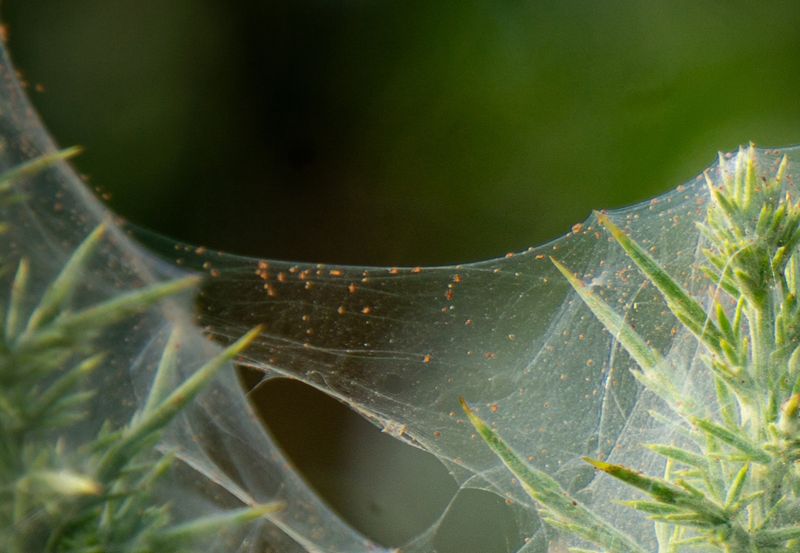
Barklice take the blame for plenty of webbing they had nothing to do with. Sorting the look-alikes keeps you from treating the wrong problem, or treating a problem that is not there.
Fall webworms build baggy, dirty-looking nests at branch tips, packed with fuzzy caterpillars and chewed leaves. Pruning out an affected tip usually handles small outbreaks.
Eastern tent caterpillars work in spring instead, spinning silk in the crotches where branches meet. Their nests look dense and cottony rather than flat and papery.
Spider mites are the sneaky ones. Fine webbing shows up on leaf undersides during hot, dry spells, and foliage turns dull, speckled, and bronzed, a common sight on junipers, boxwood, and roses.
Bagworms carry cone-shaped cases decorated with bits of foliage, dangling from branches like tiny ornaments. Funnel weaver spiders, meanwhile, toss sheet webs across low shrubs that sparkle with morning dew.
The deciding question comes down to the foliage. Chewed, stippled, or discolored leaves point toward a feeder that matters, while healthy leaves plus silk on bark point toward harmless grazers.
Snap a few close photos before deciding anything. County extension offices across Texas identify garden mysteries at no charge, and their answer beats guessing.
Correct identification also protects plants. A treatment that helps with mites does little for caterpillars, and neither one belongs on a trunk full of barklice. Ten minutes of detective work saves both your tree and your weekend budget, so keep a hand lens in the shed.
Gentle Ways To Tidy Up The Webbing
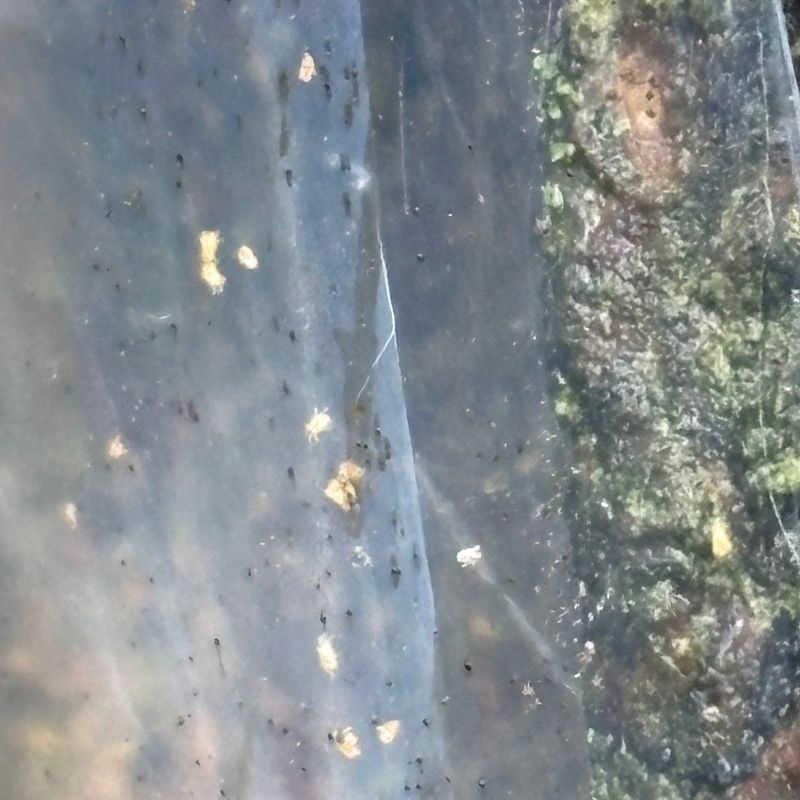
Sometimes the silk just bothers you, especially near a front walkway or right before company arrives. A garden hose handles it in about two minutes.
Use a regular nozzle on a medium spray and work from the top of the trunk downward. The sheets peel away in wet strips, and the insects relocate to a quieter branch nearby.
Pressure washers are overkill and can strip bark or wound the living layer underneath. Gentle water pressure does the job without leaving lasting marks.
A soft broom, an old paintbrush, or a rag wrapped around a stick also works well on smooth trunks like crepe myrtle. Sweep with the grain of the bark instead of scrubbing in circles.
Doing nothing remains a perfectly good strategy. Rain, wind, and sun break the silk down within a few weeks, and no gardener has to lift a finger.
Avoid pruning healthy branches simply because they are wrapped. Removing sound wood for a cosmetic reason costs the tree more than the webbing ever did.
Here is a quirky option: leave one patch and turn it into a teaching moment for kids in the neighborhood. Hand them a magnifying glass and let them watch the herd scatter and regroup.
Afterward, keep an eye on the plant for a week or two. New leaves, steady color, and normal growth confirm what the silk already suggested, which is that your tree was fine the whole time. Then log the date and get back to the fun parts of gardening.