The 10 Set-And-Forget Shrubs Ohio Gardeners Plant For Winter Color
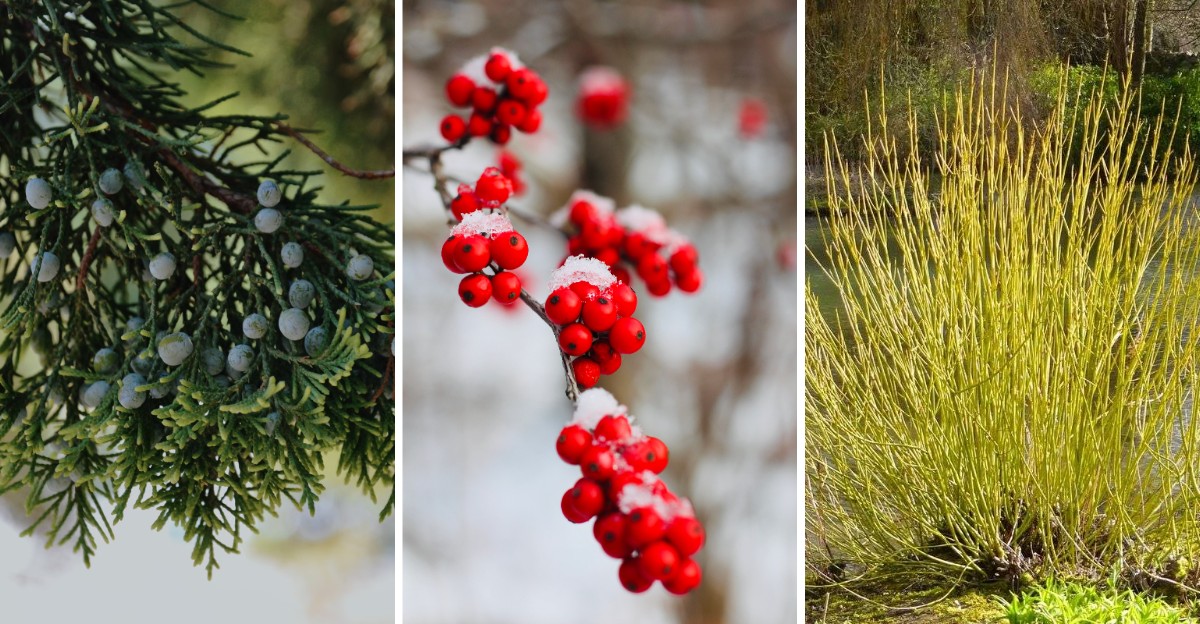
One native shrub in our woods saves its blooming for November, when its spidery yellow petals unfurl beside falling leaves. Another holds bright red berries on bare branches until hungry robins finally arrive in the late winter months.
Ohio winters can feel long and gray, with weeks of slushy snow and skies the color of dishwater. I have to admit that my garden used to look pretty sad from Thanksgiving straight through early March.
Then I started planting shrubs that glow with berries or colorful bark while everything else takes a long nap. You might notice the best ones ask for almost nothing once their roots settle into your yard.
November is a smart month to plan, since nurseries clear out stock and cool soil helps new roots grow. So which tough, low-fuss shrubs do Ohio gardeners trust to brighten the coldest stretch of the year?
1. Winterberry Holly
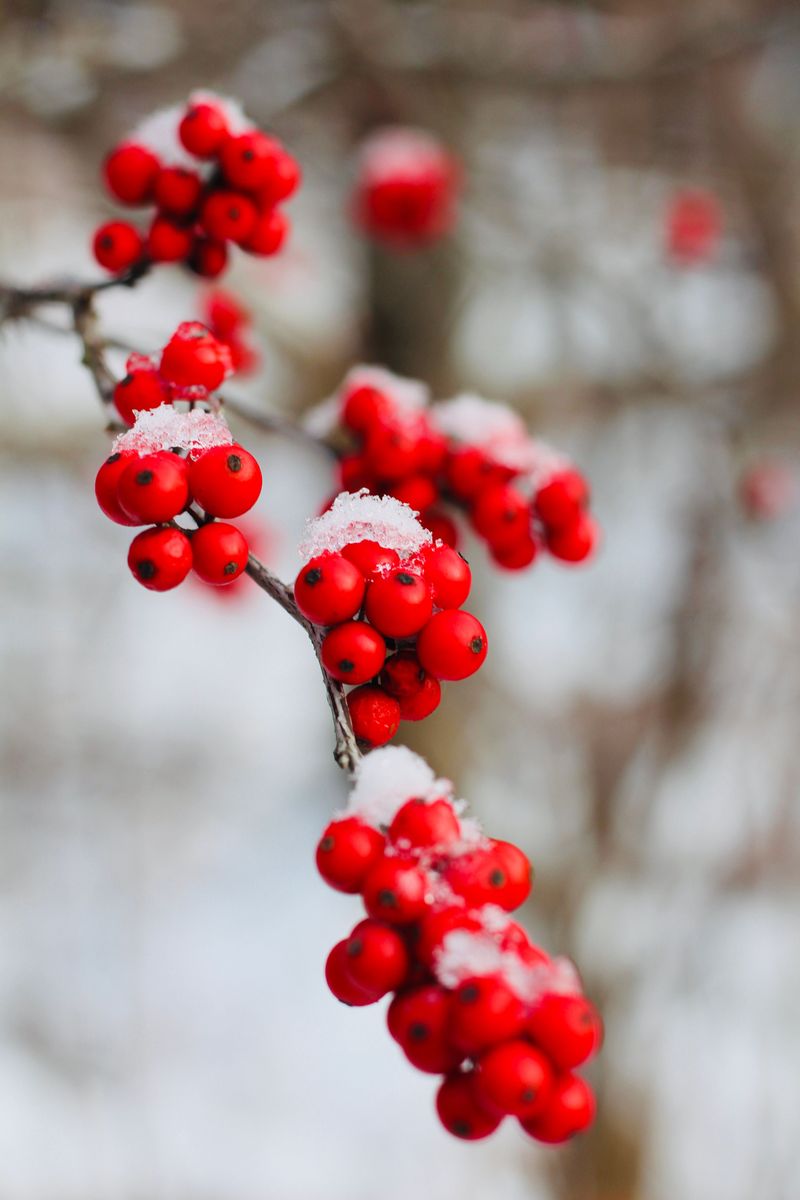
Robins and cedar waxwings treat a winterberry holly like a snack bar once the deep cold finally sets in. Those glossy red berries cling to bare gray twigs for months, and I love how they pop against snow.
Unlike most hollies, Ilex verticillata drops its leaves in fall, which makes the fruit look even brighter and bolder. It is native to eastern North America, including Ohio, and handles USDA zones 3 through 9 without complaint.
You need to know one quirky detail before shopping, because only female plants produce those famous berries. Plant one male shrub of a matching bloom time within about fifty feet of several females for good pollination.
Wet spots are no problem, since this shrub naturally grows in swamps and along soggy stream banks. Give it full sun to part shade and slightly acidic soil, and it rewards you with heavy fruit.
Pruning is optional, though a light trim in late winter keeps the shape tidy without sacrificing next year’s berries. Personally, I snip a few berry-covered branches in November for porch pots and holiday wreaths indoors.
Keep curious kids and dogs away from the fruit, since the berries are toxic if anyone eats them. Birds handle them just fine, and late winter flocks usually strip the branches clean before spring.
Compact cultivars like ‘Red Sprite’ stay around three to four feet tall, which suits smaller foundation beds nicely. Pair it with the male partner ‘Jim Dandy’ so your berry show stays reliable every single winter.
2. Red Twig Dogwood
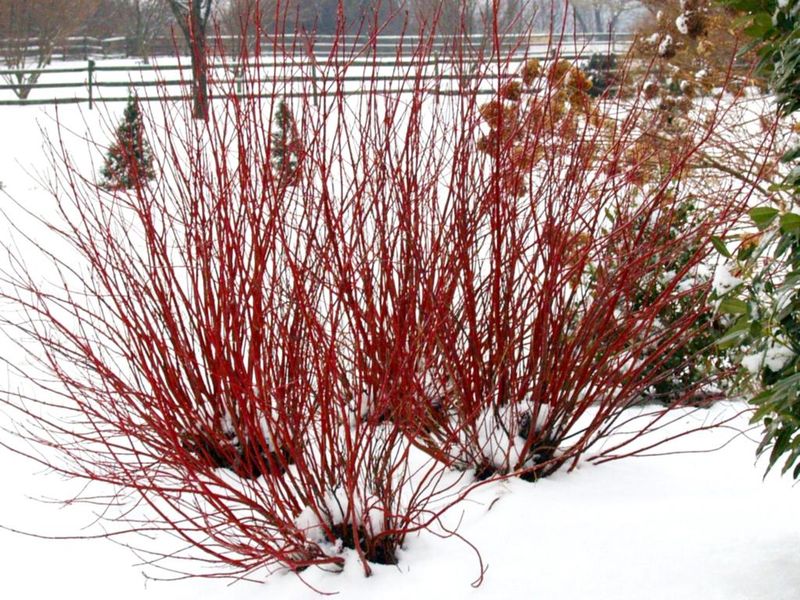
Nothing wakes up a snowy backyard quite like a clump of red twig dogwood glowing beside the driveway. Those stems look almost painted, and the color deepens once cold weather arrives and the leaves fall away.
Botanists call it Cornus sericea, and you may also hear the older name redosier dogwood at local nurseries. It is a native shrub that grows across much of North America, handling zones 2 through 8.
I believe it might be the easiest shrub for soggy clay, since it happily soaks up wet ground. Rain gardens and low drainage spots are perfect homes, though it also tolerates average garden soil fine.
Your Ohio Garden Changes Every Week. Your Plan Should Too.
Gardening in Ohio changes quickly throughout the season. Every Friday you’ll receive a simple weekly plan showing exactly what to plant, prune, fertilize, harvest, and protect so you never miss the right timing.
Full sun brings the richest stem color, while heavy shade tends to produce duller twigs and weaker growth. Plants usually reach six to nine feet tall and spread wider over time through creeping underground stems.
A little pruning keeps the show bright, because young stems carry the reddest bark on the plant. Each late winter or early spring, cut about one third of the oldest, thickest stems right to the ground.
Older wood fades to a grayish brown, so this simple habit refreshes the shrub without much effort. You can also cut the whole plant down every few years if it gets leggy and crowded.
Birds enjoy the small white berries in late summer, and the flowers feed many native bees in spring. I love tucking cut stems into winter planters, where they hold their color for weeks outdoors.
3. Yellow Twig Dogwood
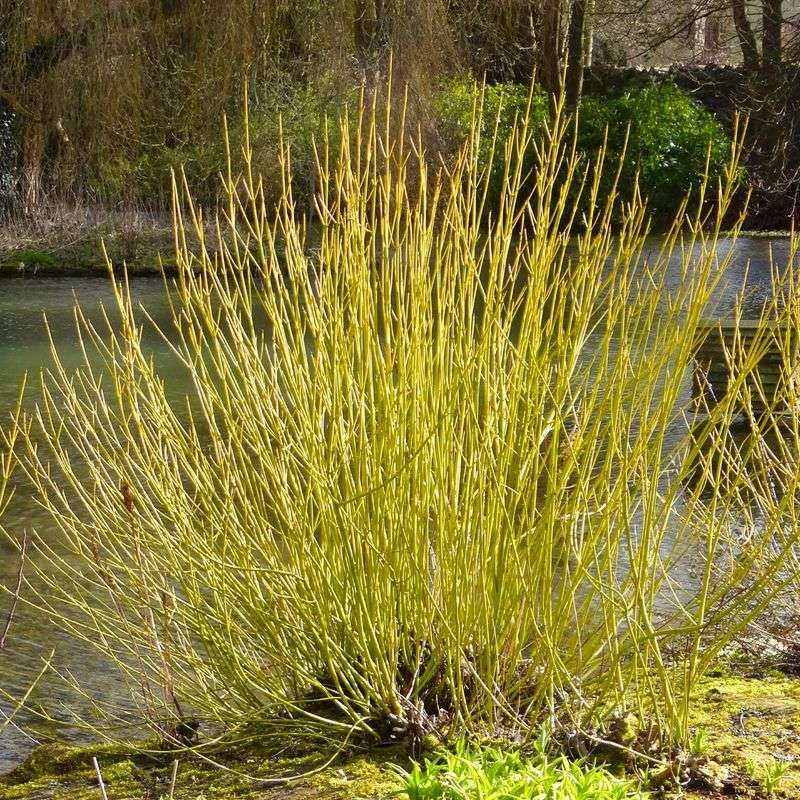
Planting yellow twig dogwood next to its red cousin creates a winter combo that looks like a sunrise. The chartreuse stems almost glow against fresh snow, and I can’t imagine my back border without them now.
This shrub is a cultivar called Cornus sericea ‘Flaviramea’, so it shares the same tough native roots. It handles cold zones easily and usually grows around six to eight feet tall with a similar spread.
You’re in for a surprise in fall, because the leaves often turn reddish purple before dropping away. Once they fall, those golden stems take over and stay bright from November until new leaves appear.
Moist soil suits it best, though established plants tolerate brief dry spells better than many people expect. Full sun gives the strongest yellow, while partial shade still works if you accept a softer color.
Renewal pruning matters even more here, since older yellow stems turn greenish and lose their cheerful punch. Remove the oldest canes at ground level in late winter, and fresh shoots will rise quickly in spring.
Watch for twig canker or leaf spot in crowded spots, because good airflow keeps these problems mostly away. Spacing plants a few feet apart and thinning old stems handles both issues with very little fuss.
Birds love the white berries, but they are mildly toxic to people, so teach kids to leave them alone. I like planting a row along a fence, where the stems catch low winter sunlight every afternoon.
4. Coralberry
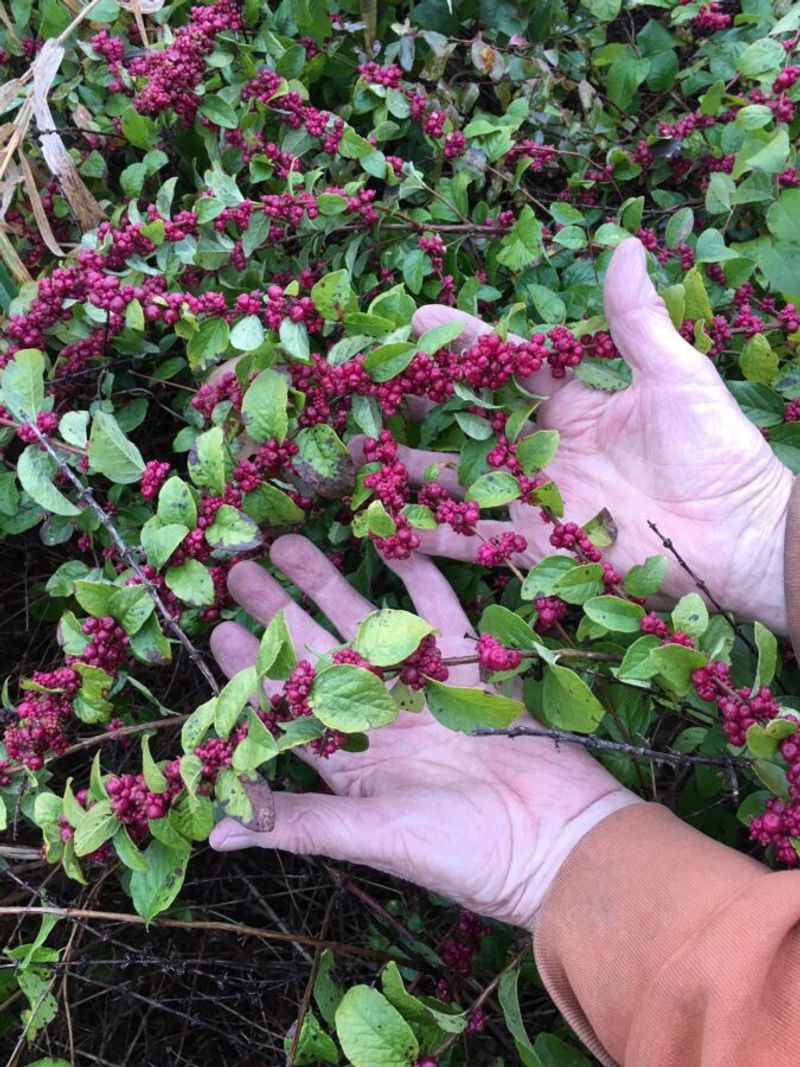
Purple-toned fruit is rare in a winter garden, yet coralberry strings its bare stems with clusters of rosy-purple beads. They look like tiny sugared candies, and I love how they glow when frost settles on them.
Its botanical name is Symphoricarpos orbiculatus, and you may also hear it called Indian currant or buckbrush. It is native to Ohio and handles USDA zones 2 through 7, so cold winters are no trouble at all.
Small pinkish-white flowers appear in summer, and bees happily work them while most spring bloomers are long finished. The berries ripen in fall and often hang on through winter, since birds usually save them for late in the season.
This shrub stays fairly low, usually two to five feet tall, and spreads slowly by creeping stems into a loose thicket. That habit makes it a smart choice for holding soil on slopes or filling a tricky bare corner.
It tolerates clay, dry spells, and partial shade better than many shrubs, though full sun brings the heaviest fruit. Good airflow helps prevent powdery mildew, which can dust the leaves in humid summers but rarely does lasting harm.
Pruning is simple because it flowers and fruits on new wood, so you can cut stems back in late winter. I trim mine every few years to keep it tidy, and it bounces back quickly each spring.
The berries are mildly toxic to people, so teach kids to admire them rather than taste them. Snip a few fruiting stems in November, and they make a charming native touch in winter planters and vases.
5. Blue Holly
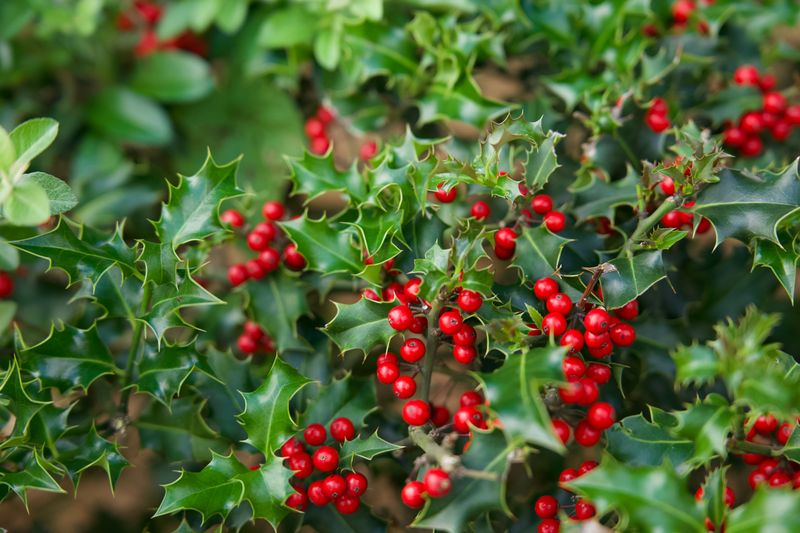
Those classic holiday cards with spiny green leaves and scarlet berries look a lot like a blue holly. Its foliage has a deep blue-green tint that stays glossy through ice storms, and I adore that moody shade.
Also called Meserve holly, Ilex x meserveae was bred by Kathleen Meserve on Long Island in the 1950s. She wanted a hardy holly for cold northern gardens, and her crosses succeeded beautifully in zones 5 through 8.
Like winterberry, these shrubs come as separate male and female plants, so berries need a partner nearby. Pair ‘Blue Princess’ with ‘Blue Prince’ for a dependable crop of bright red fruit each winter.
Moist, slightly acidic soil with good drainage keeps the leaves dark and healthy rather than pale and yellowish. Plant in sun or part shade, and shelter it from harsh winter wind to prevent leaf scorch.
One of my favorite traits is how neatly it holds a rounded or pyramid shape with little help. Minimal pruning also protects older wood, which is where the flowers and berries form each spring and fall.
Water new plants deeply through November until the ground freezes, since evergreens lose moisture all winter long. A two-inch layer of shredded bark mulch helps hold that moisture and keeps roots evenly cool.
Deer usually avoid the prickly leaves, which makes this a smart choice near woods or open fields. Snip a few sprigs for your mantel, and the shrub will barely notice the difference by spring.
6. Juniper
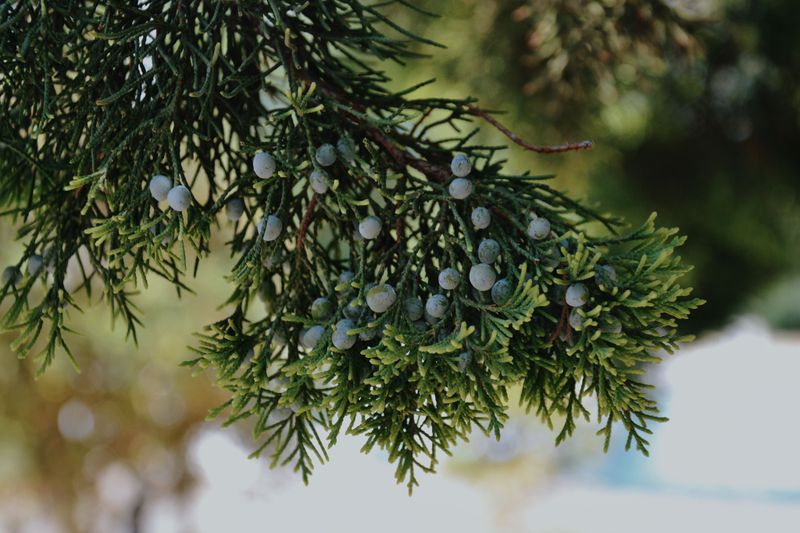
Some evergreens turn a dull olive in winter, but certain junipers shift to rich gold or deep plum. I love how a single golden juniper can light up a snowy corner like a small porch lamp.
Junipers belong to the genus Juniperus, and many compact types thrive in zones 3 through 9 nationwide. ‘Gold Coast’ is a Chinese juniper with soft yellow tips, while ‘Saybrook Gold’ spreads low and nicely wide.
For purple tones, look for ‘Andorra Compact’, a creeping juniper whose needles blush plum once frost arrives. That color change is normal and fades back to green as spring temperatures warm the soil again.
Drainage matters more than anything, because junipers struggle quickly in soggy soil or heavy, waterlogged clay. Choose a sunny slope or raised bed, and these tough shrubs will handle drought and road salt well.
Full sun keeps the foliage dense, while shady spots lead to thin, floppy branches with weak color. Deer generally leave junipers alone, which is a real relief for gardeners living near wooded neighborhoods.
Pruning is rarely necessary if you pick the right size for the space from the very beginning. Avoid cutting into bare inner wood, since junipers seldom sprout new growth from those older brown sections.
Keep junipers away from apple trees when possible, because cedar-apple rust moves between the two plants. Otherwise, these hardy shrubs ask only for plenty of sunshine and decent drainage to look sharp all winter.
7. Common Witch Hazel
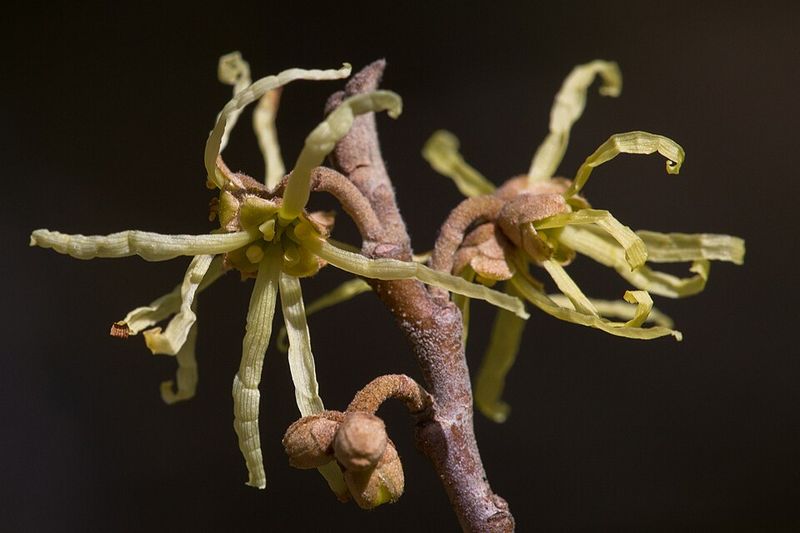
While most shrubs are tucking in for winter, common witch hazel picks November to throw its flower party. Thin, ribbon-like yellow petals curl along bare branches, and they smell faintly spicy on a sunny afternoon.
Its scientific name is Hamamelis virginiana, and this native shrub grows wild in woodlands across Ohio. It handles zones 3 through 8 and often reaches fifteen to twenty feet as a small multi-stemmed tree.
What surprises me most is the seed pods, which snap open and fling seeds as far as thirty feet. Kids find that trick hilarious, and you can sometimes hear the pods pop on quiet fall days.
Some winter moths and late flies visit the blooms, since few other flowers are open this late. The golden fall leaves sometimes hide the flowers at first, but the petals stand out once leaves drop.
Plant it in full sun to part shade, where moist, rich soil helps it settle in quickly. It adapts to clay and other tricky soils, and pest problems are uncommon for established plants.
Prune only when needed, and do it right after flowering so you avoid removing next year’s buds. Mostly, you can let it grow naturally along a woodland edge or behind shorter shrubs in a border.
I believe it deserves a spot near a window, since the blooms are easy to miss from far away. The famous skin toner comes from this plant, which gives it a fun bit of medicine cabinet history.
8. Japanese Pieris
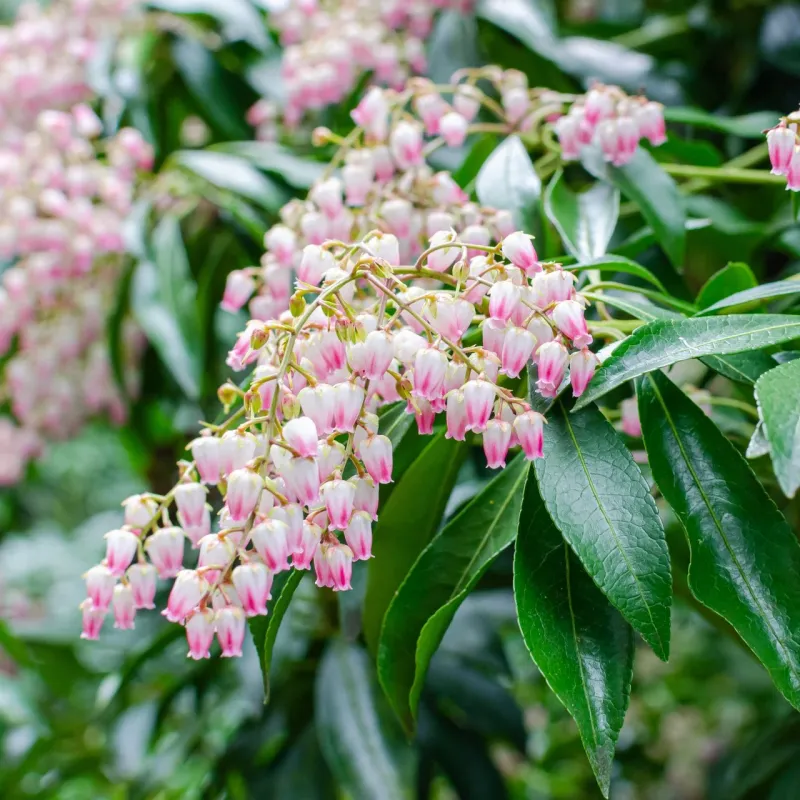
Long before spring arrives, Japanese pieris dangles strings of tiny bell-shaped buds that look like beaded jewelry. Those buds form in fall and hang on all winter, so the shrub looks decorated even in January.
Also called andromeda, Pieris japonica is a broadleaf evergreen with glossy leaves and a tidy mounded shape. It grows in zones 5 through 8, and many compact cultivars stay around three to six feet tall.
White or pink blooms open in late winter to early spring, often weeks before most shrubs wake up. Many cultivars also push bright red new leaves in spring, which adds a second round of color.
You need to treat it like a rhododendron, since both enjoy acidic soil rich in organic matter. Morning sun with afternoon shade works best, along with steady moisture and good drainage around the roots.
Shelter from harsh winter wind helps prevent browned leaf edges, so a spot near the house is ideal. A layer of pine needle or bark mulch keeps roots cool and holds moisture during dry spells.
Pruning is rarely needed, but any light shaping should happen right after the flowers fade in spring. Cutting later removes the developing buds, which means you lose much of next winter’s beaded display.
All parts of the plant are toxic if eaten, so keep it away from pets that chew leaves. On the bright side, deer usually skip it, and I have to admit that feels like a small victory.
9. Boxwood
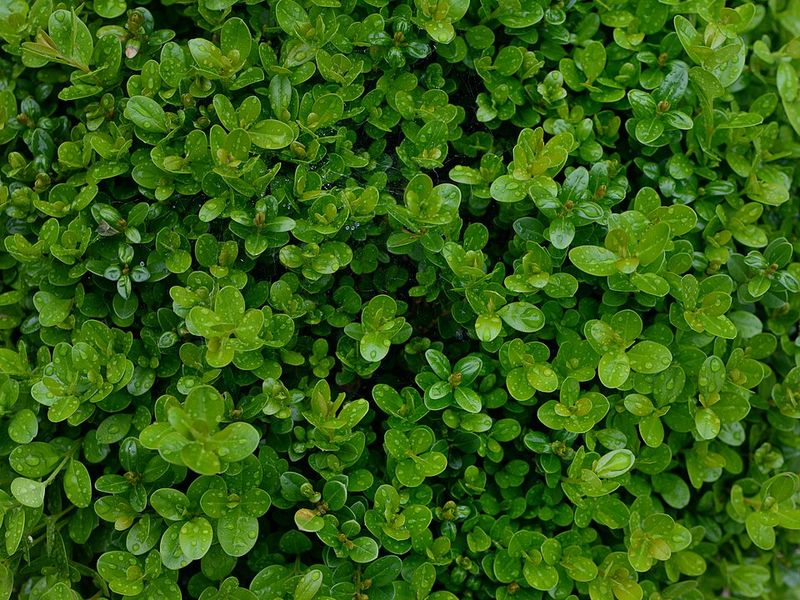
Every snowy holiday scene seems to include a neat green boxwood, and there is a good reason for that. Its small glossy leaves hold their color through winter, giving bare garden beds a crisp green frame.
Most boxwoods belong to Buxus sempervirens or Buxus microphylla, and hardy types grow in zones 4 through 9. Korean boxwood and hybrids like ‘Green Velvet’ are favorites in colder areas because they resist winter bronzing better.
Wind and bright winter sun can scorch the leaves, so choose a spot with some protection from both. An east-facing bed or a corner shielded by the house usually keeps the foliage looking fresh green.
Well-drained soil is a must, since soggy roots lead to decline faster than almost anything else. Water deeply in November before the ground freezes, then add a thin layer of mulch around the base.
I like how little trimming it needs unless you want formal shapes like balls or tidy low hedges. A light shearing in late spring keeps it neat without stressing the plant during hot summer weather.
You do need to stay alert, because box tree moth was found established in Ohio in 2023 and is spreading. Boxwood blight is another concern, so buy healthy plants and check leaves for spots or sudden leaf drop.
Deer generally ignore boxwood, which helps keep hedges looking intact through the hungry winter months near wooded lots. All parts are toxic if eaten, so keep chewing pets and curious toddlers away from the leaves.
10. Gold Mop False Cypress
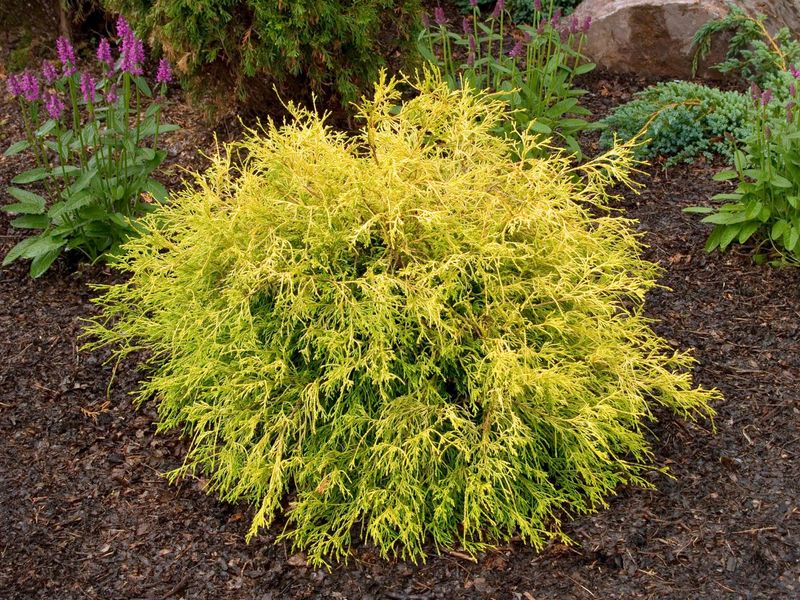
Some shrubs look like they had a very bad hair day, and ‘Gold Mop’ false cypress wears it proudly. Its shaggy, threadlike golden foliage spills over in a loose mound that brightens any gloomy winter bed.
This dwarf evergreen is a form of Chamaecyparis pisifera, also called Japanese false cypress or Sawara cypress. It grows in zones 4 through 8 and usually stays around three to five feet tall over many years.
New growth shines bright gold, while older inner foliage settles into a softer lime green color. That mix gives the plant depth, and I love how it glows beside dark green hollies or boxwoods.
Full sun brings the strongest gold, though afternoon shade helps prevent summer leaf burn in hot spots. In deep shade, the foliage turns more green, so give it at least half a day of sunshine.
Moist, well-drained soil keeps it happy, and a layer of mulch protects the shallow roots in winter. Water regularly during its first year, then established plants usually manage with occasional deep soakings in drought.
Pruning is mostly unnecessary, which makes this one of the easiest evergreens you can add to a border. If a stray branch sticks out, trim it lightly in spring rather than cutting deep into bare wood.
Deer tend to pass it by, and it tolerates city air better than many fussy ornamental conifers. Plant one by your front steps, and you might catch neighbors smiling at that cheerful golden mop.