7 Plant Pairings That Make an Arizona Front Yard Look Professionally Landscaped
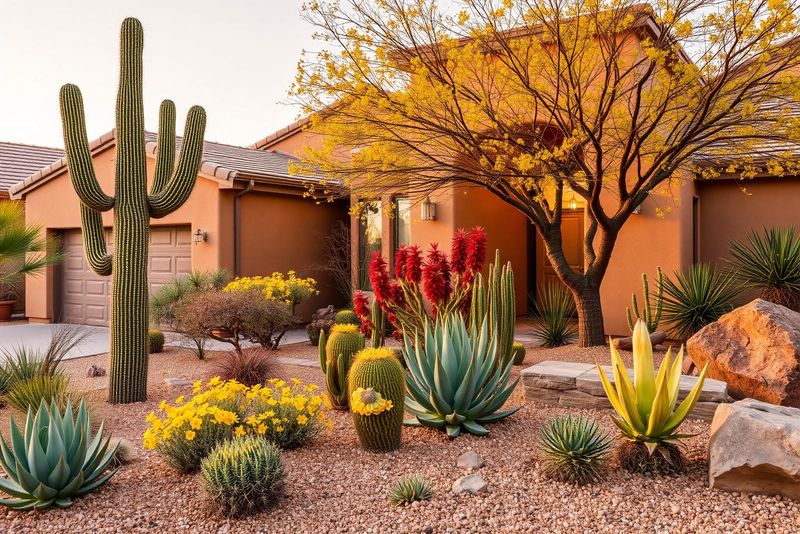
Ever notice how some desert yards look like a designer planned every inch, while others just look like gravel with a few lonely shrubs? The secret is usually not more plants but smarter partners, where a tall plant, a low plant, and a splash of color work as a team.
In the Phoenix and Tucson heat, the right pairings can also bring in hummingbirds, shade your walls, and save water. Here are seven native and desert-tough combos that make a front yard look polished while doing real work for you.
1. Blue Palo Verde and Parry’s Penstemon
Picture a cloud of yellow hovering over your driveway every spring. A Blue Palo Verde in full bloom stops traffic, and Parry’s Penstemon underneath turns that moment into a layered scene that looks planned by a pro.
The tree does the heavy lifting. Its airy canopy offers filtered shade that can help cool the ground and soften harsh afternoon sun on a west-facing wall.
Green bark even photosynthesizes, which is one reason the tree handles drought so well. Once it settles in, deep watering every few weeks in summer is often plenty.
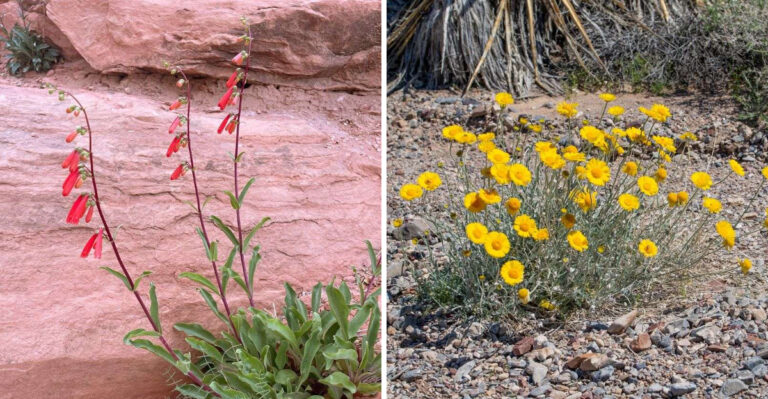
Penstemon fills the space below with tall spikes of rosy pink flowers from late winter into spring. Hummingbirds treat those tubular blooms like a drive-through, and native bees show up too.
Plants reseed gently, so you may find bonus seedlings popping up in the gravel.
For the best look, plant three to five penstemons in a loose cluster near the edge of the canopy rather than right against the trunk. They like a little shade in the low desert but still need bright light.
Get both in the ground in October or November so roots grow strong before the 110 degree days arrive.
2. Parry’s Agave and Purple Trailing Lantana
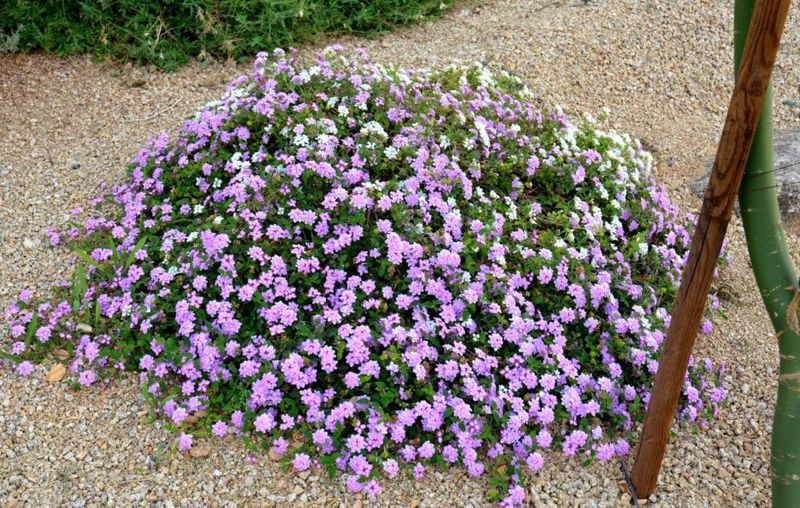
Landscape designers love one trick above all others: put something bold next to something soft. Parry’s Agave and Purple Trailing Lantana are that trick in plant form.
The agave is a living sculpture. Its tight, silvery blue rosette with dark tips stays crisp all year, giving your yard a strong focal point even in January.
It needs almost no water once established and shrugs off full sun. Keep it a few feet away from walkways, though, because those spines are sharp.
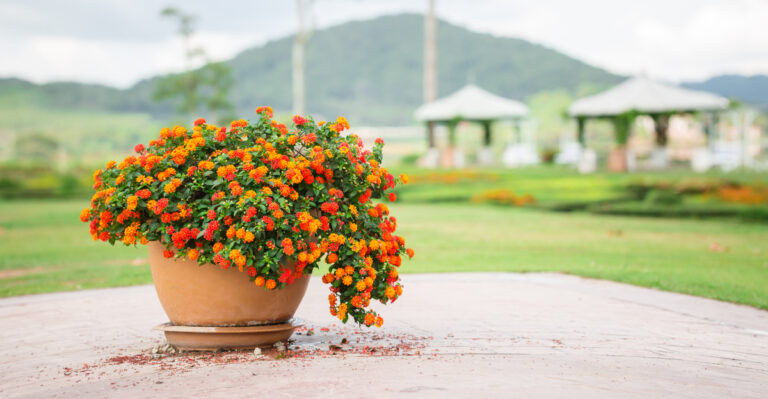
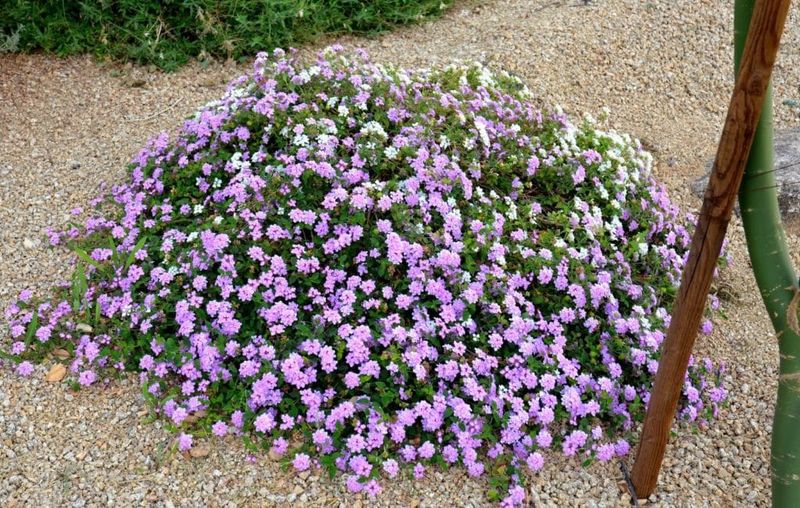
Lantana spills around the base like a purple skirt. It covers bare soil, which helps reduce weeds and keeps the ground cooler, and it blooms for months.
Butterflies and hummingbirds visit often, so your front yard gets a little motion along with color.
Here is a fun bit of trivia. Parry’s Agave grows slowly for many years, then sends up a towering flower stalk that can reach 15 feet, a show that bats and hummingbirds both enjoy.
After flowering, the main plant fades, but pups usually appear nearby to carry on.
Trim lantana back in late winter after any frost to keep it tidy and fresh. Mature spread of about four feet means one or two plants per agave is enough.
Your Arizona Garden Changes Every Week. Your Plan Should Too.
Gardening in Arizona changes quickly throughout the season. Every Friday you’ll receive a simple weekly plan showing exactly what to plant, prune, fertilize, harvest, and protect so you never miss the right timing.
3. Creosote Bush and Desert Marigold
After a summer monsoon, the whole Sonoran Desert smells like rain. That scent comes from Creosote Bush, and having one in your front yard brings that familiar perfume right to your porch.
Creosote may look humble, but it is tough as nails. It thrives on rainfall alone in many spots, needs no fertilizer, and keeps a soft green color through brutal heat.
Some creosote rings in the Mojave are thought to be thousands of years old. Its branches give lizards and birds cover, and the insects it draws become food for roadrunners, which are happy to snack on scorpions too.
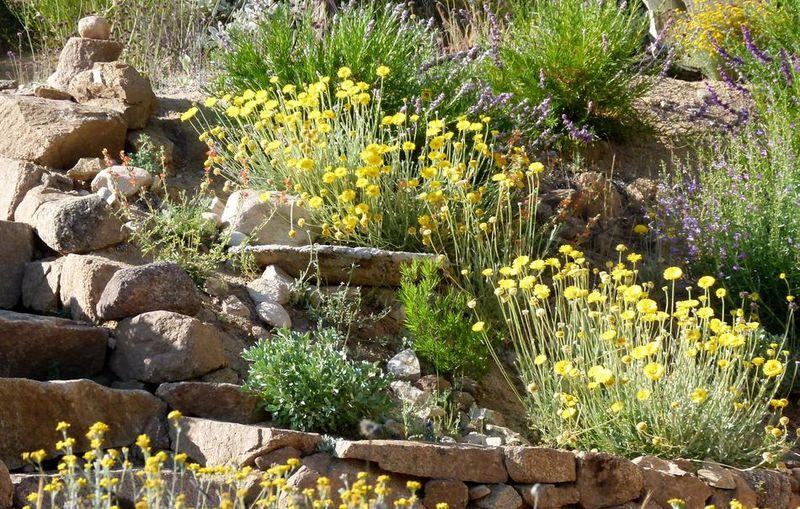
Desert Marigold brings the sunshine. Its gray leaves and yellow daisy flowers bloom on and off for much of the year when it gets a little moisture.
Small beneficial insects visit, and the plant reseeds on its own, filling gaps without fuss.
To keep things looking designed instead of wild, prune creosote lightly to an open, natural shape and give it some breathing room. Open ground with fewer leaf piles near the house can be less inviting to scorpions looking for hideouts.
Then let marigolds drift between shrubs in loose groups. Sow seeds or plant in fall for strong spring color.
4. Red Yucca and Damianita
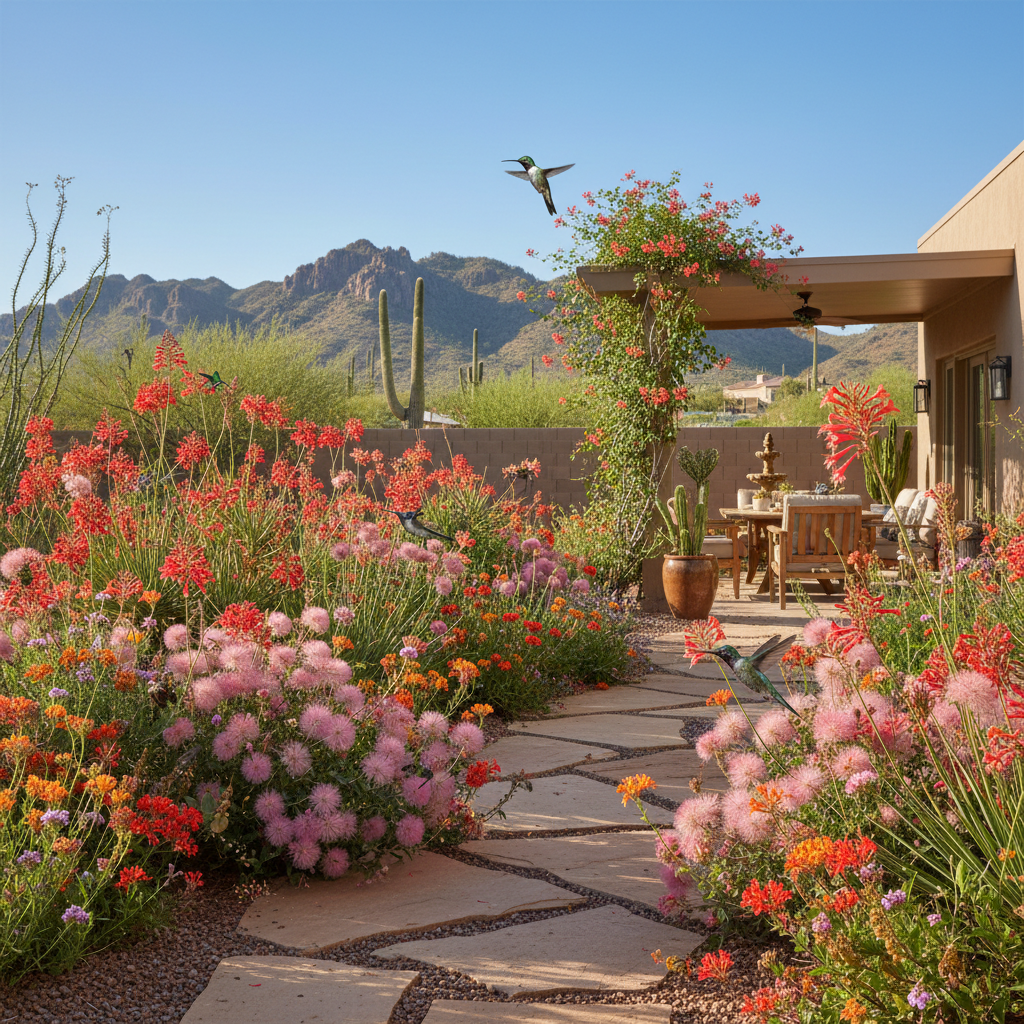
Want curb appeal that holds up even when you forget the hose? Red Yucca and Damianita might be the lowest effort duo on this list, and they still look sharp next to a front walk.
Red Yucca is not actually a true yucca. It forms grassy clumps of arching leaves with no sharp spines, so it is safe near paths and kids.
From spring through fall, slender stalks rise up with coral red flowers that hummingbirds visit again and again. In winter the foliage often blushes a purplish tone, keeping interest going.
Damianita forms low, tidy mounds of needle-like leaves that smell faintly sweet when brushed. In spring it explodes with golden yellow blooms, and it often reblooms in fall.
It handles reflected heat from concrete and rock better than most small shrubs.
Place red yucca in a repeating row or zigzag along the walk, then tuck damianita mounds in front to hide the bare base of the yucca. Repeating the same pairing two or three times is what makes a yard read as professional.
Water deeply every week or two during the first summer, then cut back. Avoid rich soil and heavy watering, since damianita prefers lean, well-drained ground.
5. Desert Willow and Autumn Sage
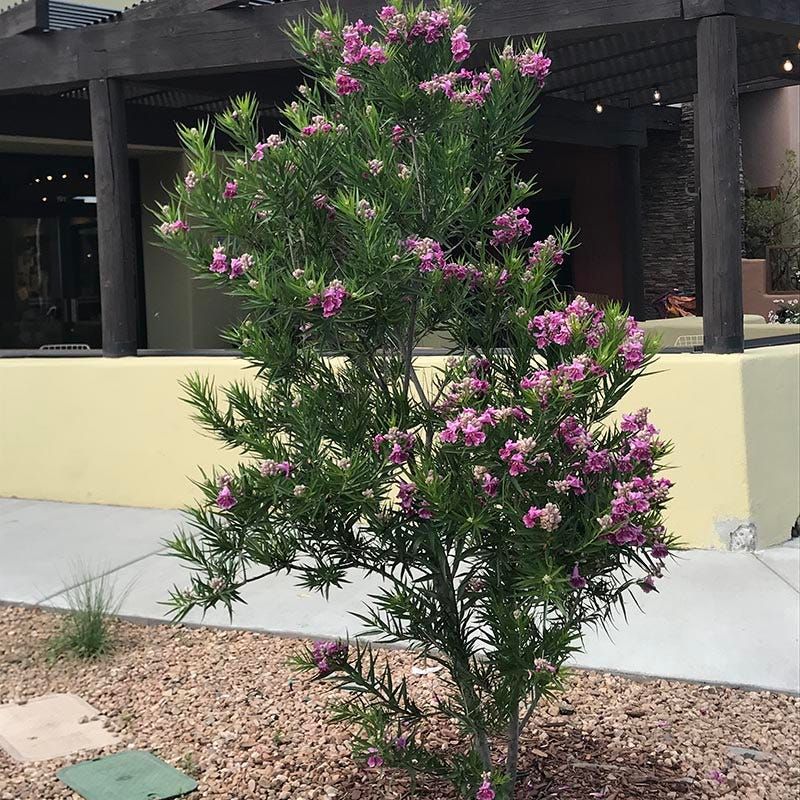
My neighbor calls her Desert Willow the hummingbird hotel. Every summer evening, you can watch tiny birds zip from flower to flower while she sits on the porch with iced tea.
Despite the name, Desert Willow is not a willow at all. It is a small native tree with narrow leaves and orchid-like trumpet flowers in pink, lavender, burgundy, or white.
Blooms keep coming from late spring into fall, right through the hottest months. It stays a manageable size, making it ideal for smaller front yards where a big shade tree would crowd the house.
Autumn Sage carries the color closer to the ground. Its red, pink, or coral flowers peak in spring and fall, which fills the gap when the willow slows down.
Native bees and hummingbirds both rely on it, and the leaves have a light minty scent that most critters leave alone.
Plant three sages in a soft triangle on the sunny side of the tree. Prune the sage by about a third in late winter so it stays dense instead of woody.
Both prefer full sun and low to moderate water, so they can share one drip line. Choose a seedless willow variety if you want less cleanup.
6. Desert Spoon and Black Dalea
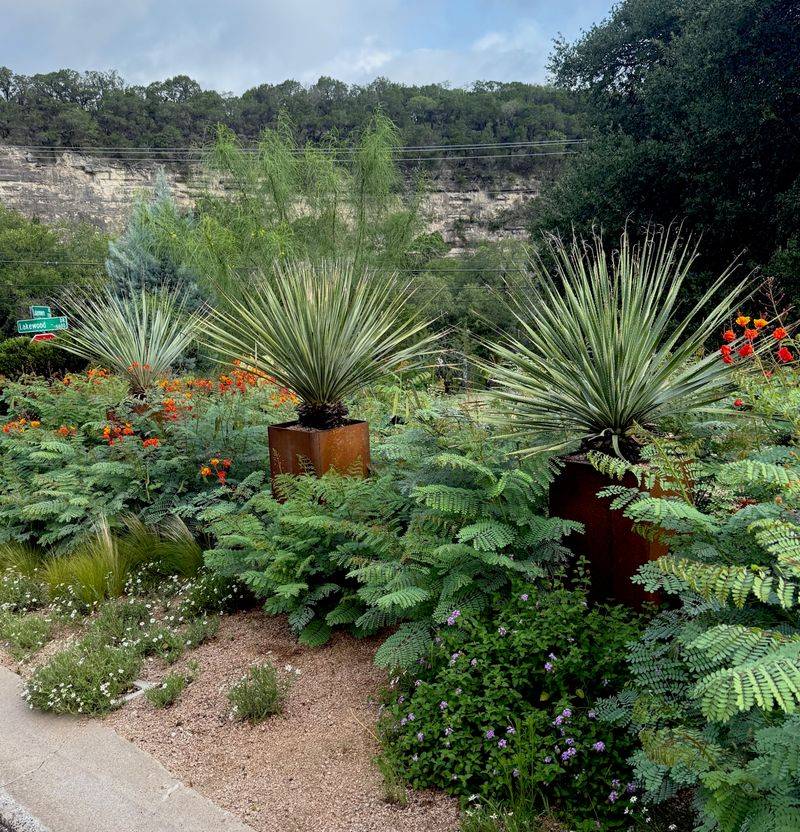
Some yards look busy. Others look calm and confident, and texture contrast is often the reason why.
Desert Spoon and Black Dalea create that grown-up look with very little water.
Desert Spoon forms a big, round burst of thin, silvery green leaves edged with tiny teeth. It glows when backlit by morning or evening sun, almost like a firework frozen in place.
Fun fact: the name comes from the spoon-shaped leaf base, which people have long used for crafts and decorations.
Black Dalea is the soft partner. It is a loose, small shrub with fine leaves and little purple pea flowers in fall, when many other plants are resting.
Bees and butterflies pile onto those blooms. As a legume, it can also add nitrogen to the soil, helping nearby plants in tough caliche ground.
Set one desert spoon beside a large boulder, then place a dalea or two on the opposite side. The rock ties them together and adds a natural, finished feel.
Both are native and need only occasional deep watering once settled. Plant in fall, keep the spoon away from walkways because of its toothed edges, and let the dalea grow into its relaxed shape.
7. Velvet Mesquite and Globemallow
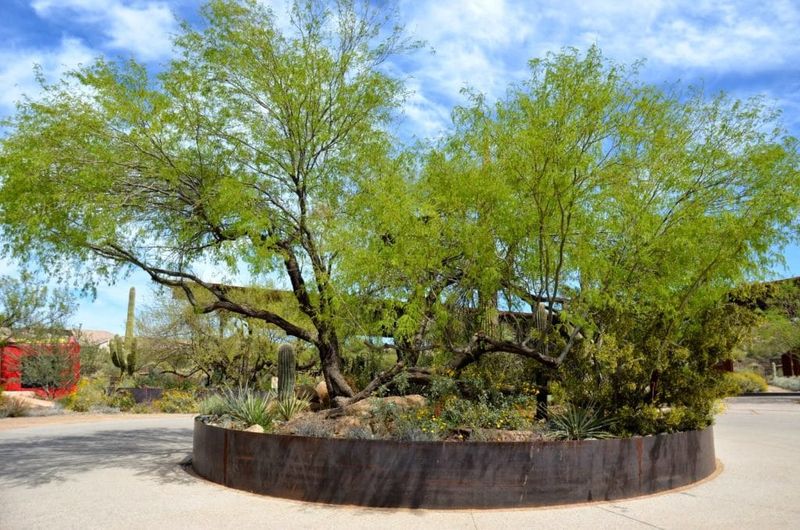
When it is 112 degrees outside, the shady spot under a mesquite can feel like a different planet. A native Velvet Mesquite is one of the best ways to beat the heat in a low-desert front yard, and Globemallow makes the space beneath it come alive.
Mesquite grows a wide, graceful canopy that can shade a driveway, a window, or the whole entry. Shade like that may help lower surface temperatures and cooling bills.
Its roots dig deep for water, so once established it needs little help. Birds nest in the branches, and the seed pods have fed desert people and animals for centuries.
Globemallow answers with bright orange cup-shaped flowers in spring, plus a lighter show after monsoon rains. It feeds native bees, and its fuzzy gray leaves look great against dark mulch or red rock.
Quail and other small critters use the clumps for cover.
Plant globemallow along the drip line of the tree, where it gets sun for part of the day. Cut it back hard after spring bloom to keep it neat.
Together, these two build a layered habitat that looks intentional, stays cool, and asks for very little water.