The Best Native Flowers To Plant In West Texas This Spring
Ever notice how West Texas can go from a burst of color after rain to dry, rugged ground in just a few days?
That contrast is what makes gardening here both challenging and rewarding.
With warm days, cool nights, and soils that don’t hold much moisture, not every plant can keep up. That is where native flowers really stand out.
These plants are built for West Texas conditions, handling the shifts while still delivering color when it matters most.
By working with the landscape instead of against it, you can enjoy a garden that needs less effort and still looks vibrant through the spring season.
1. Bluebonnets Bring Iconic Texas Spring Color
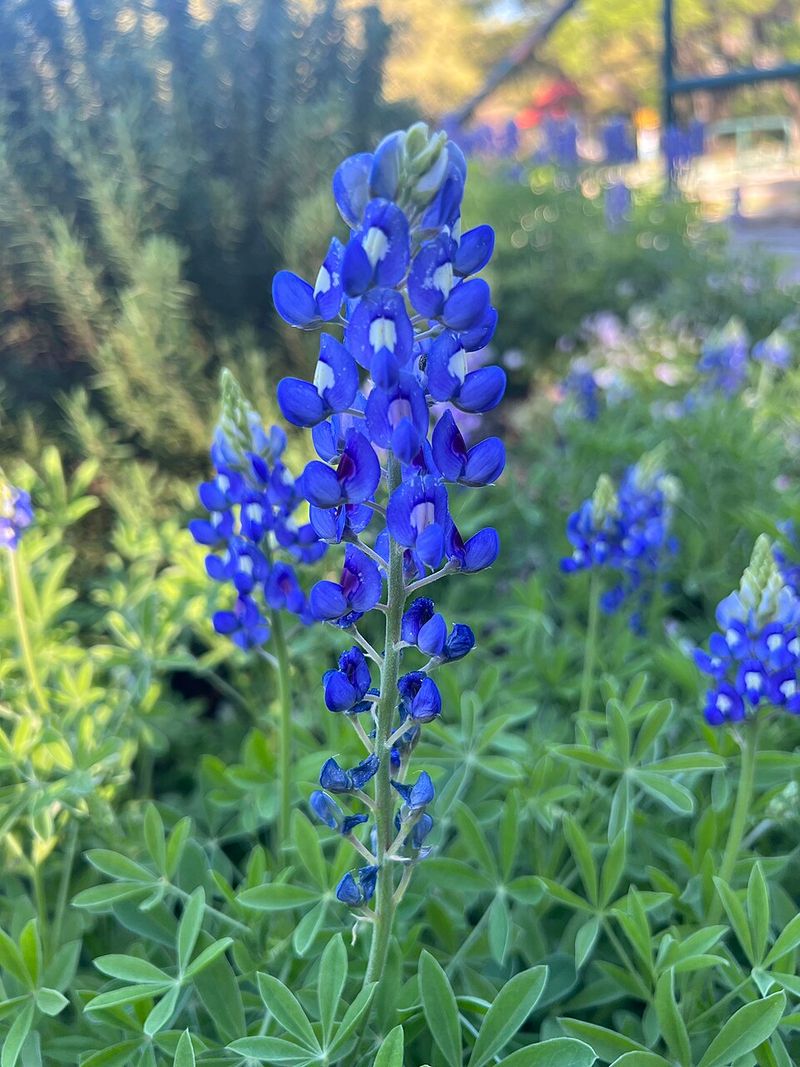
Few sights in spring gardening carry the same emotional weight as a field of bluebonnets stretching toward a wide West Texas sky.
As the official state flower of Texas, Lupinus texensis has earned its reputation through decades of roadside beauty and backyard gardens alike.
Bluebonnets thrive in full sun and well-drained soil, two conditions that West Texas delivers in abundance throughout the spring season.
Planting bluebonnet seeds in late fall or very early spring gives them the best chance of germinating before summer heat arrives. Scratching the seed coat lightly before sowing can improve germination rates.
Once established, these plants need very little supplemental water, making them well suited to the dry spells that West Texas gardeners know all too well.
Bluebonnets grow roughly one to two feet tall and produce dense clusters of blue-violet flowers with a small white tip. They tend to attract bees and butterflies, adding ecological value alongside their visual appeal.
After blooming, they set seed naturally, which means a well-managed patch can return year after year with minimal effort on your part.
2. Indian Blanket Thrives In Heat And Dry Soil
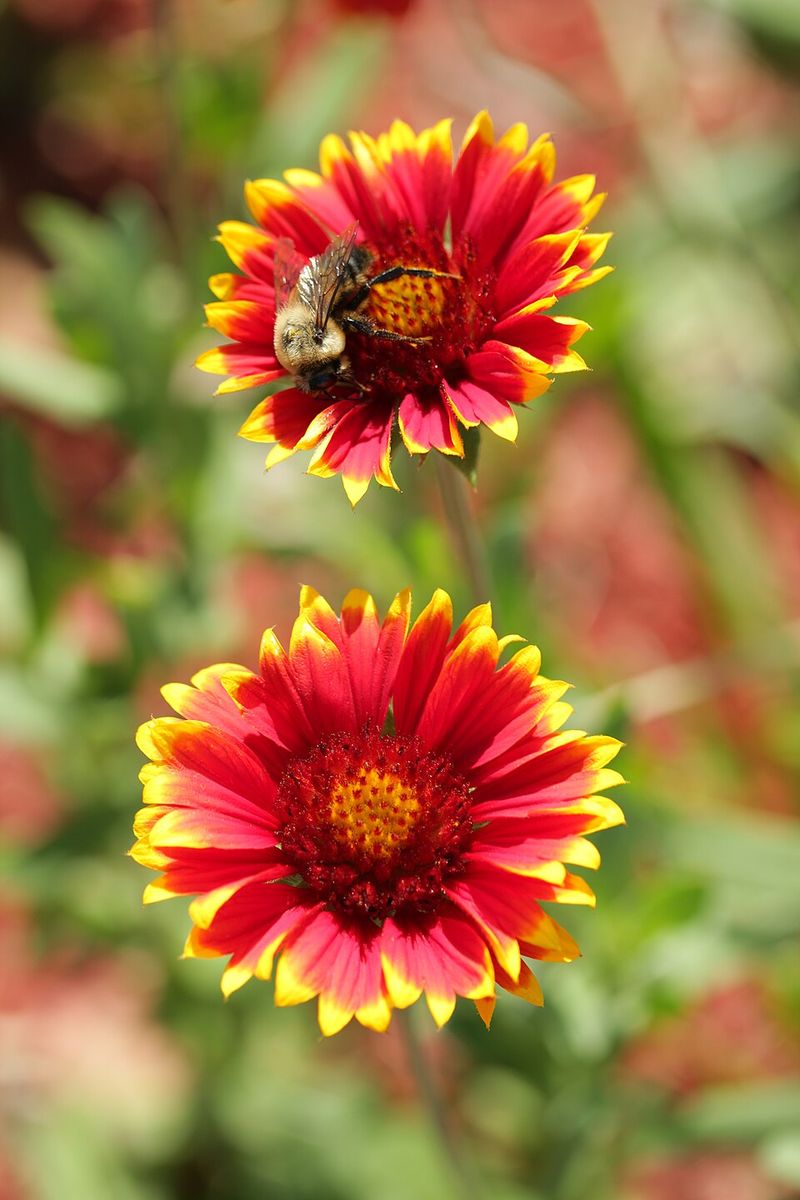
Bright red petals tipped in golden yellow make Indian Blanket one of the most visually striking wildflowers you can grow in West Texas.
Known botanically as Gaillardia pulchella, this annual wildflower earned its common name from the bold, woven-blanket pattern of its blooms.
It handles the kind of intense sun and low moisture that would stress most ornamental plants without much trouble at all.
Indian Blanket performs well in poor, sandy, or rocky soils, which describes much of the West Texas terrain. It does not need rich amended beds or regular fertilizing.
In fact, overly fertile soil can cause it to produce more foliage than flowers, so planting it in native ground often yields the best results.
Sow seeds directly in a sunny spot after the last frost date, typically in mid-spring across most of West Texas. Once the plants are established, they bloom from late spring through summer and reseed themselves reliably.
Pollinators, especially native bees, visit the blooms frequently throughout the season. For gardeners looking for color with very low maintenance, Indian Blanket is a dependable choice that rarely disappoints in dry landscapes.
Your Texas Garden Changes Every Week. Your Plan Should Too.
Gardening in Texas changes quickly throughout the season. Every Friday you’ll receive a simple weekly plan showing exactly what to plant, prune, fertilize, harvest, and protect so you never miss the right timing.
3. Blackfoot Daisy Handles Tough West Texas Conditions
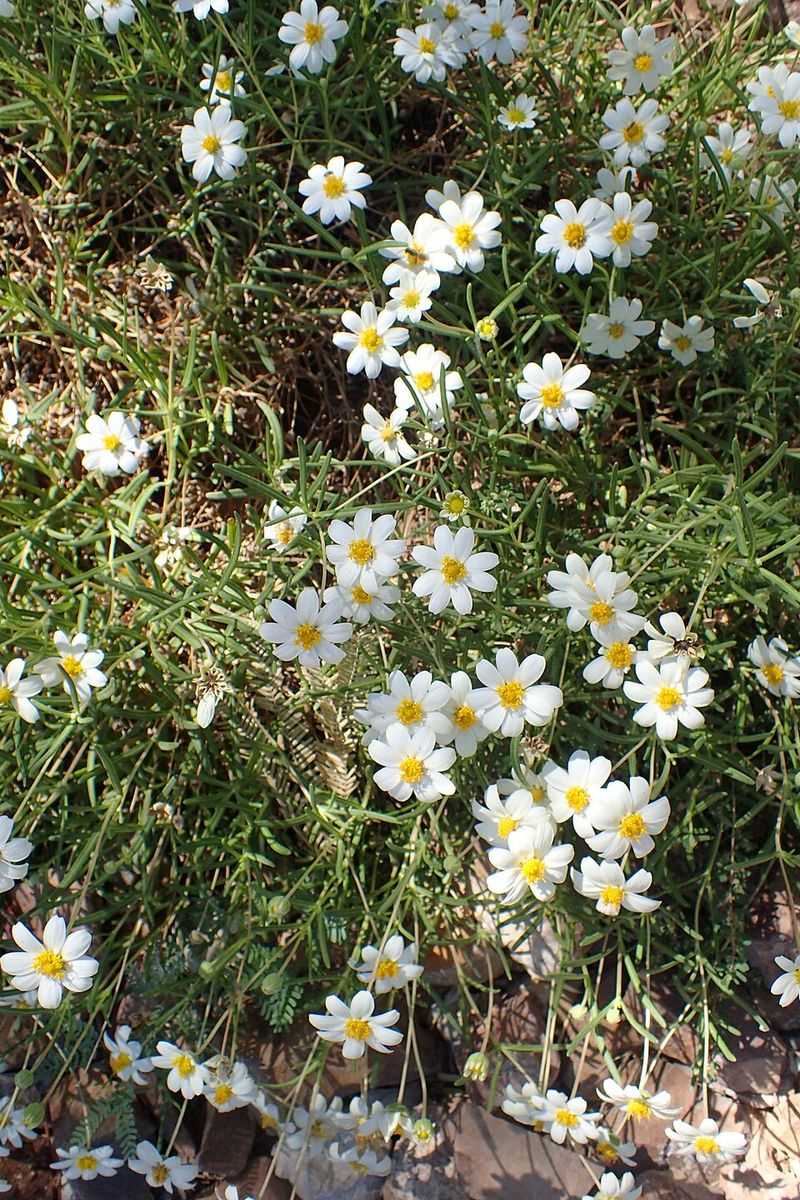
Rocky slopes and alkaline soils that challenge most plants are exactly where Blackfoot Daisy tends to flourish.
Melampodium leucanthum is a low-growing perennial that produces cheerful white flowers with bright yellow centers from spring all the way through fall.
It is one of the longer-blooming native plants available to West Texas gardeners, offering consistent color across multiple seasons.
Blackfoot Daisy grows best in fast-draining soils and full sun locations. It handles the heat and dry spells of a West Texas summer with notable resilience, rarely showing stress during extended dry periods once it has established a root system.
Planting in spring gives it enough time to settle in before temperatures climb in July and August.
Mature plants typically reach about one foot tall and spread up to two feet wide, forming a rounded mound of blooms that looks tidy without much pruning. Occasional light trimming after heavy bloom cycles can encourage fresh flowering.
It attracts small bees and butterflies and has a faint honey-like scent that becomes noticeable on warm afternoons.
For a low-fuss perennial that delivers long-season color in difficult conditions, Blackfoot Daisy is hard to overlook in any West Texas garden plan.
4. Desert Marigold Adds Bright Color In Dry Landscapes
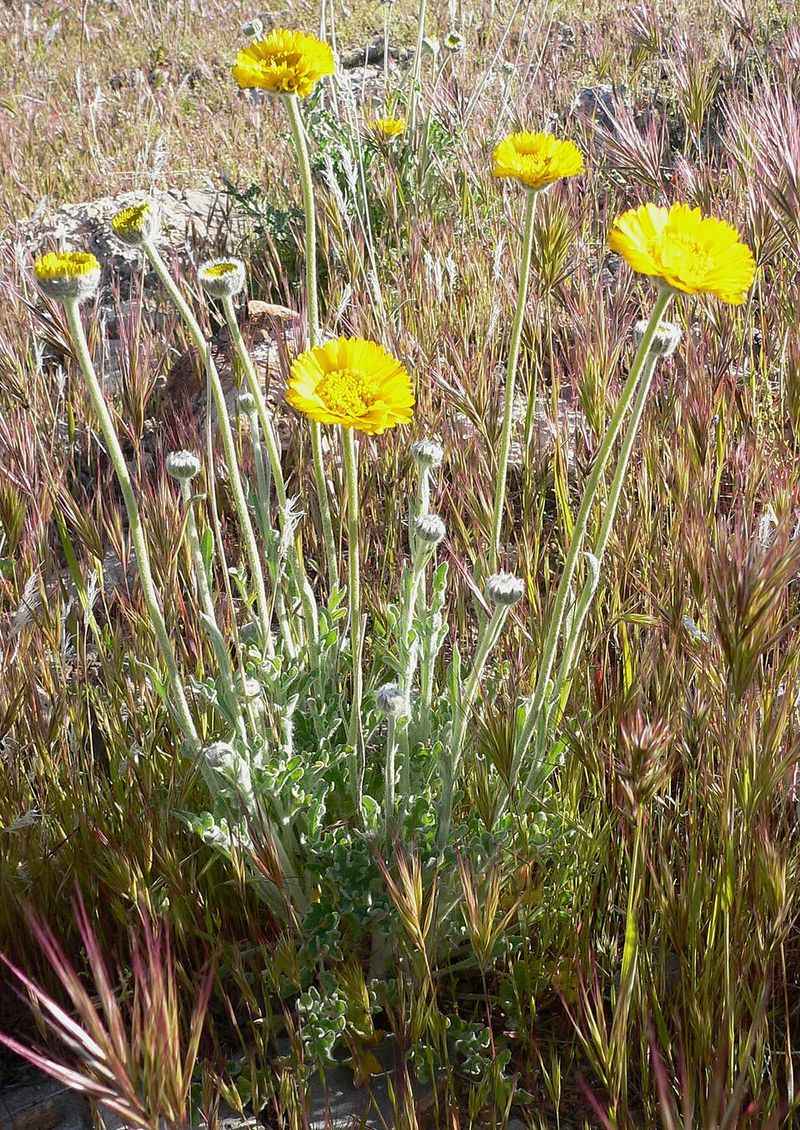
Against the muted tones of a dry West Texas landscape, the electric yellow blooms of Desert Marigold stand out like small bursts of sunlight scattered across the ground.
Baileya multiradiata is a native perennial or biennial that produces an almost continuous display of golden flowers from spring through fall, especially when given full sun and well-drained soil.
What makes Desert Marigold particularly valuable in West Texas gardens is its extraordinary tolerance for drought and heat.
The silvery-gray foliage is covered in fine woolly hairs that help the plant retain moisture and reflect intense sunlight, a clever adaptation to desert conditions.
It grows naturally in gravelly desert flats and rocky slopes, which mirrors many West Texas planting sites.
Plants typically reach one to two feet in height and spread to about the same width. They look especially striking when grouped in drifts along walkways, garden borders, or rocky slopes.
Deadheading spent blooms can extend the flowering period, though the plant will continue producing new flowers even without regular attention.
Bees visit the flowers regularly, and the plant holds up well through dry spells that would stress most other flowering plants in the region.
5. Mexican Hat Stands Out In Sunny Open Spaces
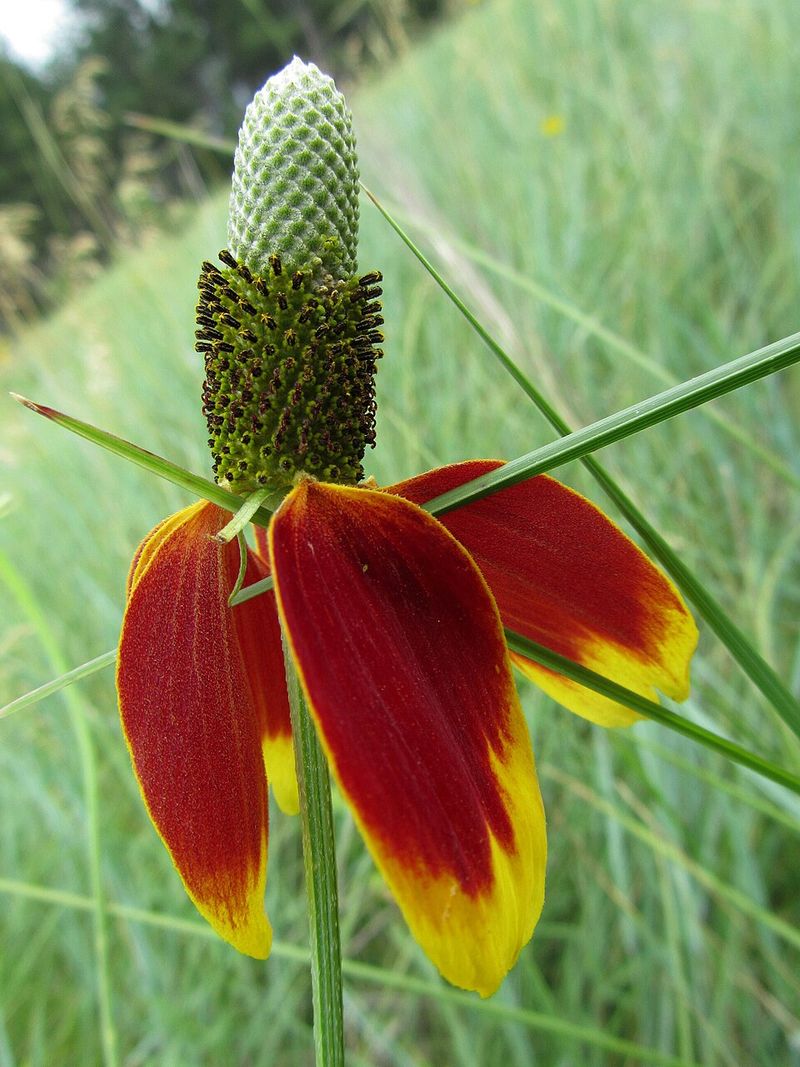
Named for its resemblance to a traditional sombrero, Mexican Hat is one of the most distinctive-looking wildflowers you will find blooming across West Texas in spring and early summer.
Ratibida columnifera features a tall, elongated central cone surrounded by drooping petals in shades of red, yellow, or a combination of both.
The unusual shape makes it easy to identify from a distance in open meadows and roadsides.
Mexican Hat grows well in full sun and tolerates a wide range of soil types, including the alkaline and clay-heavy soils found across much of West Texas. It handles drought with ease and does not require supplemental irrigation once established.
Planting seeds in early spring or allowing established plants to reseed naturally are both effective approaches in this region.
Plants can grow two to four feet tall, giving the garden some vertical interest alongside lower-growing native species.
The blooms attract a variety of native bees and butterflies, contributing to pollinator health in the broader landscape.
Mexican Hat also tends to naturalize well, spreading gradually over time to fill open spaces with seasonal color. It pairs nicely with Indian Blanket and Blackfoot Daisy in mixed native plantings across the West Texas region.
6. Plains Coreopsis Brings Quick And Easy Color
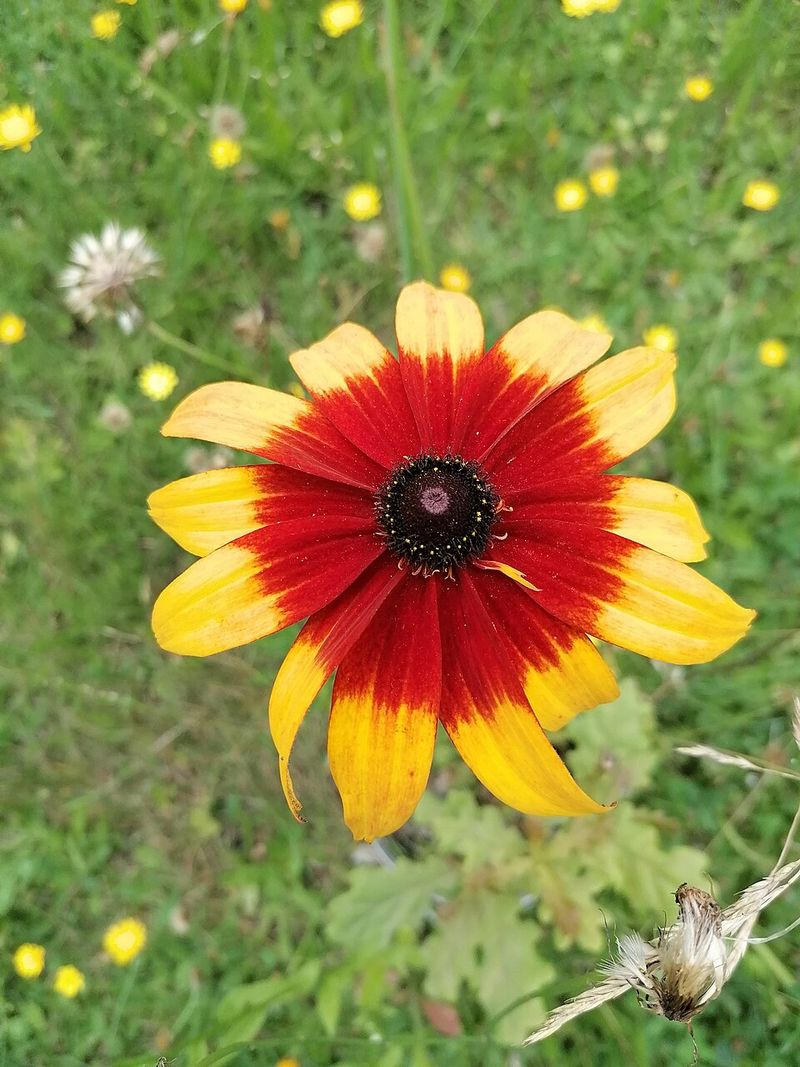
For gardeners who want fast results without a lot of fuss, Plains Coreopsis may be one of the most satisfying native flowers to grow in West Texas.
Coreopsis tinctoria germinates quickly and can go from seed to bloom in as little as six to eight weeks under good spring conditions.
The bright yellow flowers with deep burgundy centers create a bold two-tone display that reads beautifully across a sunny bed or open field.
Plains Coreopsis is an annual that thrives in full sun and tolerates dry, sandy, or gravelly soils with minimal complaint. It does not need rich soil or regular feeding to perform well, which makes it an excellent fit for West Texas growing conditions.
Sowing seeds directly in a prepared bed after the last frost gives the plants a strong start before summer heat arrives.
The blooms attract butterflies and small bees throughout the season, and the plants reseed generously, often returning the following year without any additional planting effort.
At one to three feet tall, Plains Coreopsis works well as a mid-border plant or as part of a wildflower meadow mix.
It is also one of the more forgiving native flowers for beginner gardeners exploring West Texas native plant gardening for the first time.
7. Purple Coneflower Handles Heat And Attracts Pollinators
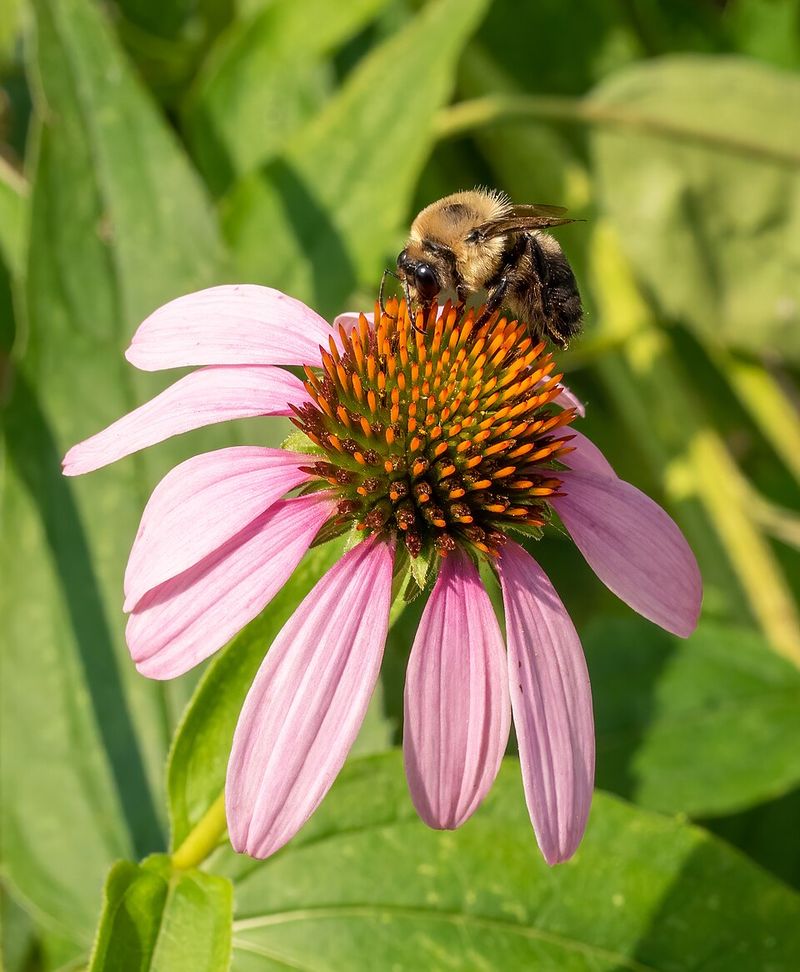
Walk through any thriving West Texas native garden in late spring or early summer and you are likely to spot the rosy-purple petals of Purple Coneflower nodding in the afternoon breeze.
Echinacea purpurea has become a favorite among native plant enthusiasts across the region because it delivers reliable seasonal color while also supporting a wide range of pollinators.
Bees, butterflies, and even goldfinches are drawn to its spiky orange-brown center cones.
Purple Coneflower grows best in full sun but can tolerate some light afternoon shade in hotter microclimates. It prefers well-drained soil and handles drought reasonably well once its root system has developed through the first growing season.
In West Texas, planting in early spring gives the roots time to establish before midsummer heat peaks.
Mature plants typically reach two to four feet tall and produce multiple flower stems per clump, which means a single established plant can create a meaningful visual impact.
Leaving the seed heads intact after blooming provides food for birds heading into fall and winter.
Purple Coneflower also tends to spread slowly over time through self-seeding, gradually building a fuller clump that delivers more blooms with each passing season in the West Texas garden.
8. Damianita Delivers Reliable Color In Dry Conditions
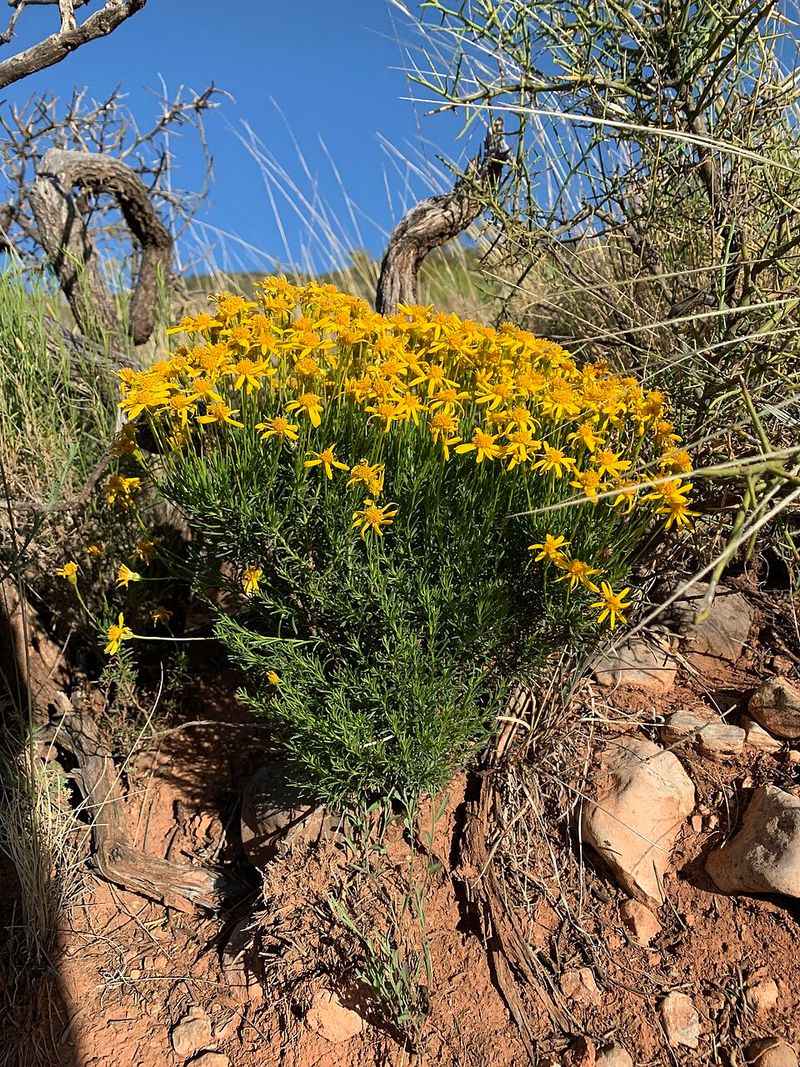
Some plants earn their place in a West Texas garden through sheer stubbornness, and Damianita is one of them.
Chrysactinia mexicana is a compact, aromatic shrub that produces bright yellow daisy-like flowers across its fine-textured, needle-like foliage.
It blooms most heavily in spring and again in fall, giving the garden two distinct bursts of color during the seasons when West Texas temperatures are most manageable.
Damianita is native to the Chihuahuan Desert region, which overlaps significantly with the far western and southern portions of West Texas. That origin means it is naturally adapted to thin, rocky, alkaline soils and extended dry periods.
It needs full sun and excellent drainage to perform at its best, and it should not be overwatered, especially during the hot summer months.
The plant typically grows one to two feet tall and wide, forming a tidy mound that works well along borders, in rock gardens, or on dry slopes. Its aromatic foliage has a distinctive herbal scent when brushed or crushed.
Pollinators visit the flowers regularly during bloom periods.
Damianita requires very little pruning or supplemental watering once established, making it one of the lower-maintenance native options for West Texas gardeners seeking long-term dependability.
9. Globe Mallow Thrives In Harsh Desert Climates
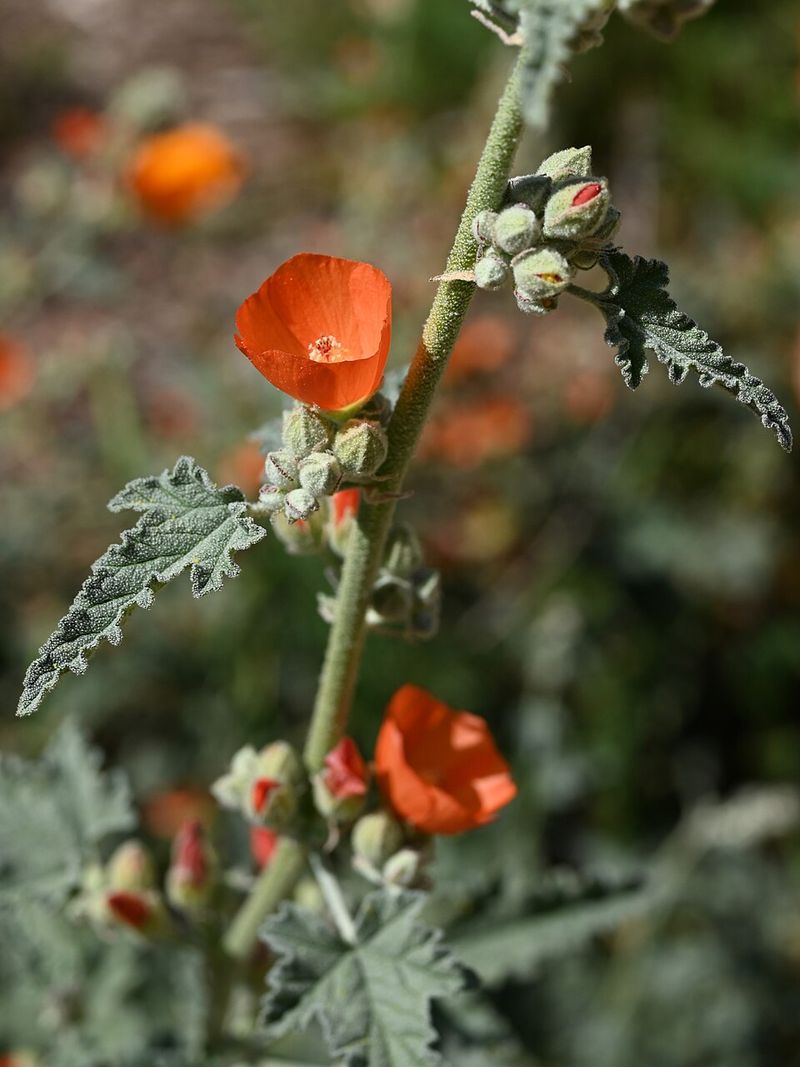
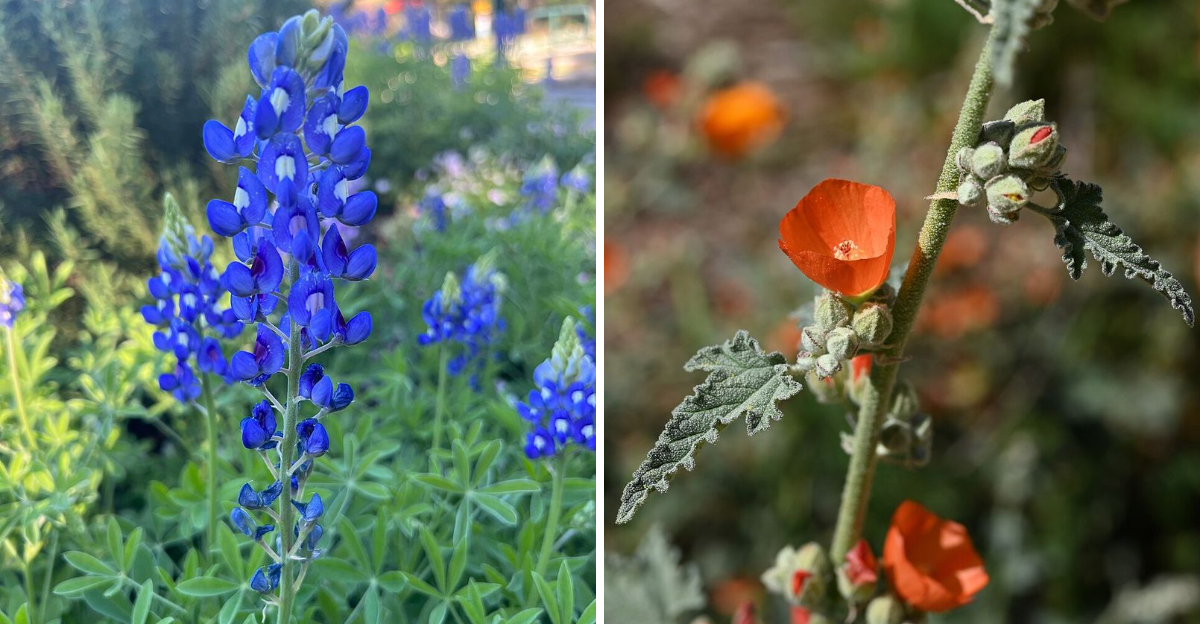
Burnt orange blooms rising from silvery-gray foliage against a backdrop of dry West Texas rock and caliche soil – that is the kind of image Globe Mallow delivers season after season.
Sphaeralcea ambigua is a tough native perennial that has adapted to some of the most demanding desert conditions in the Southwest, making it a natural choice for West Texas gardeners working with challenging sites.
Globe Mallow blooms primarily in spring and can produce a second flush of flowers in fall when temperatures cool. The cup-shaped flowers come in shades of orange, red, pink, and occasionally lavender, depending on the variety.
Full sun and well-drained, lean soils bring out the best performance, and the plant handles alkaline conditions without any special soil amendments.
Plants grow two to three feet tall and spread to a similar width, creating a bushy mound of flowers and soft, lobed leaves.
Established plants are highly drought-tolerant and rarely need supplemental irrigation in West Texas once they have settled into the ground through their first season.
Native bees visit the blooms frequently, and the plant holds up through summer heat with minimal care. Globe Mallow is a rewarding choice for anyone serious about building a resilient, low-water native garden in West Texas.