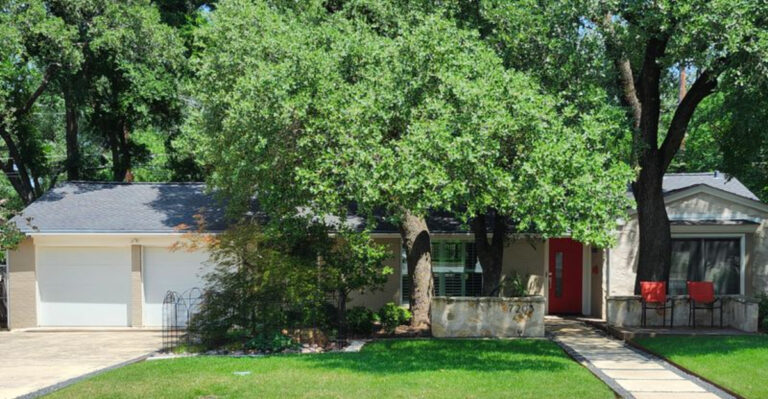
The Best Shade Trees To Plant In Austin, Texas
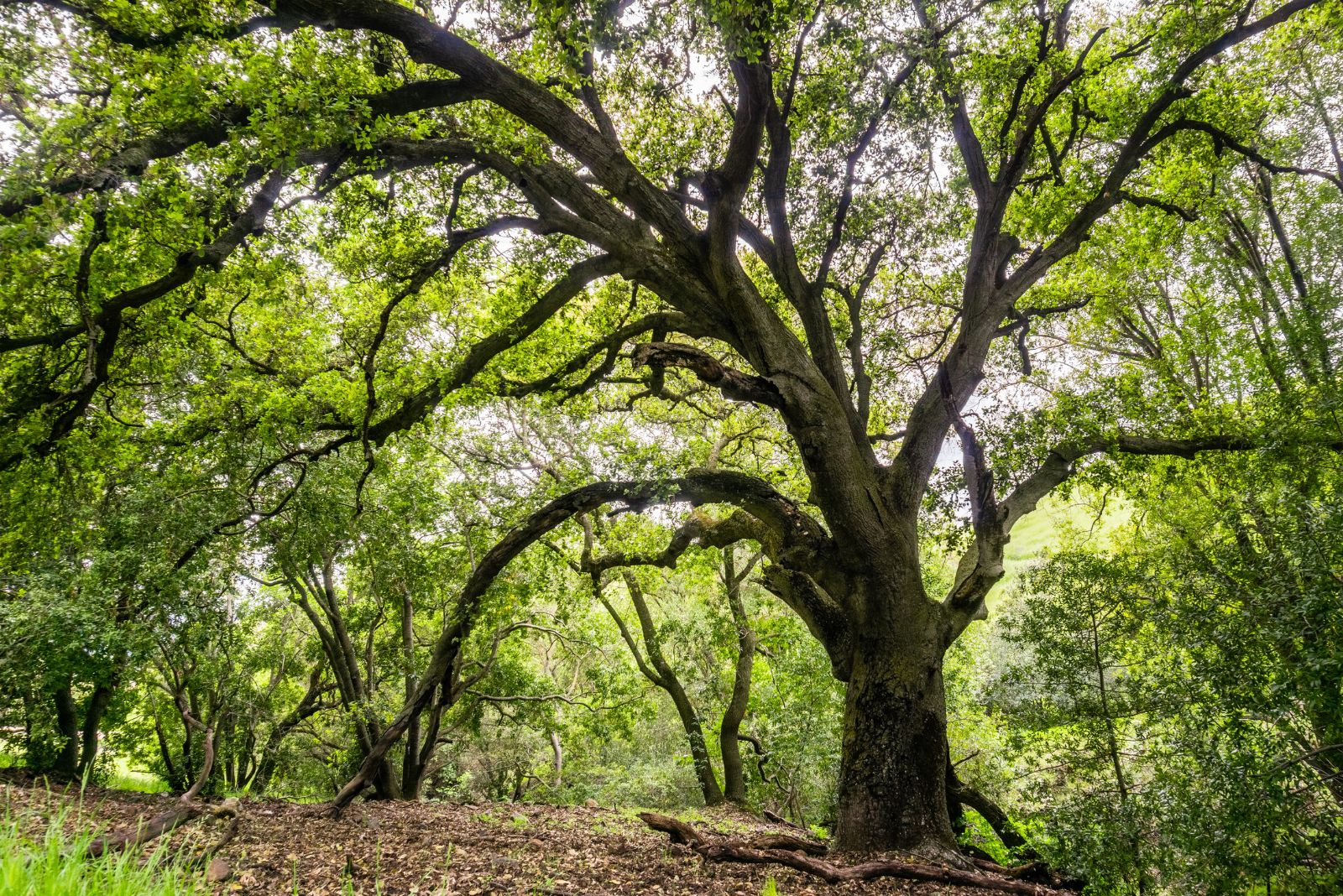
In Austin, shade is not a luxury. It is a lifesaver. When summer settles in and the sun starts baking everything in sight, a good shade tree can completely change the way your yard feels.
It can cool down the space, make outdoor time more comfortable, and turn a patch of grass into a spot where people actually want to sit and stay awhile.
Of course, not every tree is up for the job. Austin’s heat, dry stretches, sudden storms, and stubborn soil can be tough on the wrong pick.
A tree might look beautiful at the nursery, then struggle once it has to deal with real Central Texas conditions. That is why choosing the right shade tree matters so much.
You want something that can handle the climate, grow well in local soil, and provide the kind of canopy that makes a noticeable difference.
The best options do more than block the sun. They add beauty, boost curb appeal, and bring long-term value to your landscape.
Pick wisely, and that tree can become one of the hardest-working features in your entire yard.
1. Live Oak
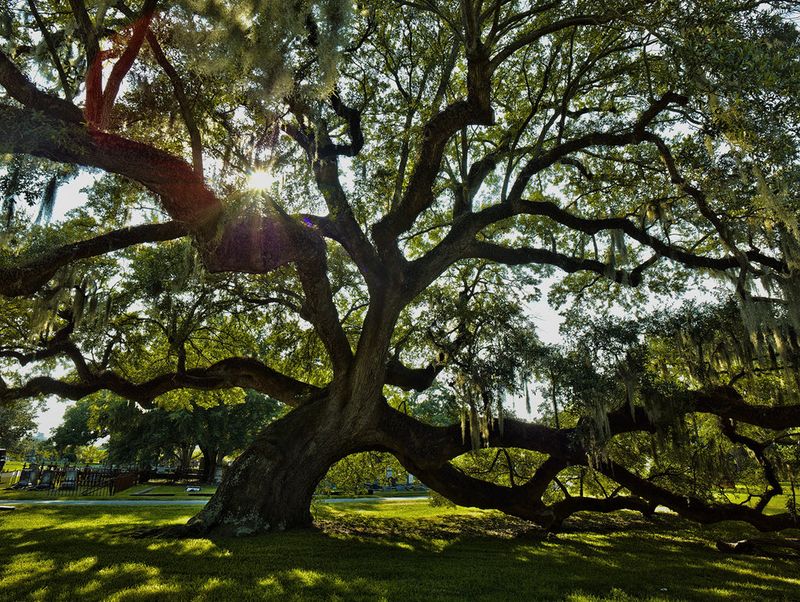
Few trees in Central Texas carry the kind of legend that the Live Oak does. Walk through almost any older Austin neighborhood, and you will spot these wide, majestic trees stretching their arms across entire yards, driveways, and even streets.
They are as much a part of Austin’s identity as the music scene on Sixth Street.
Live Oak, known scientifically as Quercus virginiana, is an evergreen tree, which means it holds onto most of its leaves year-round. That makes it one of the best options for people who want consistent shade in every season.
The canopy can spread up to 60 feet wide, so one well-placed tree can shade a large portion of your yard.
Once established, Live Oaks are incredibly drought-tolerant. Austin summers can be brutal, with weeks going by without rain, but a mature Live Oak handles that stress with ease.
Young trees do need regular watering during their first couple of years, so be patient during that early stage.
These trees grow slowly but live for an incredibly long time. Some Live Oaks in Central Texas are hundreds of years old.
Planting one is truly a gift to future generations. They also provide habitat for birds and wildlife, making your yard feel like a small nature reserve.
Live Oaks prefer well-drained soil and full sun, both of which Austin has in abundance. They do shed their old leaves in late winter, so expect a brief cleanup period. Overall, the Live Oak is arguably the single best shade tree you can plant in Austin.
2. Cedar Elm
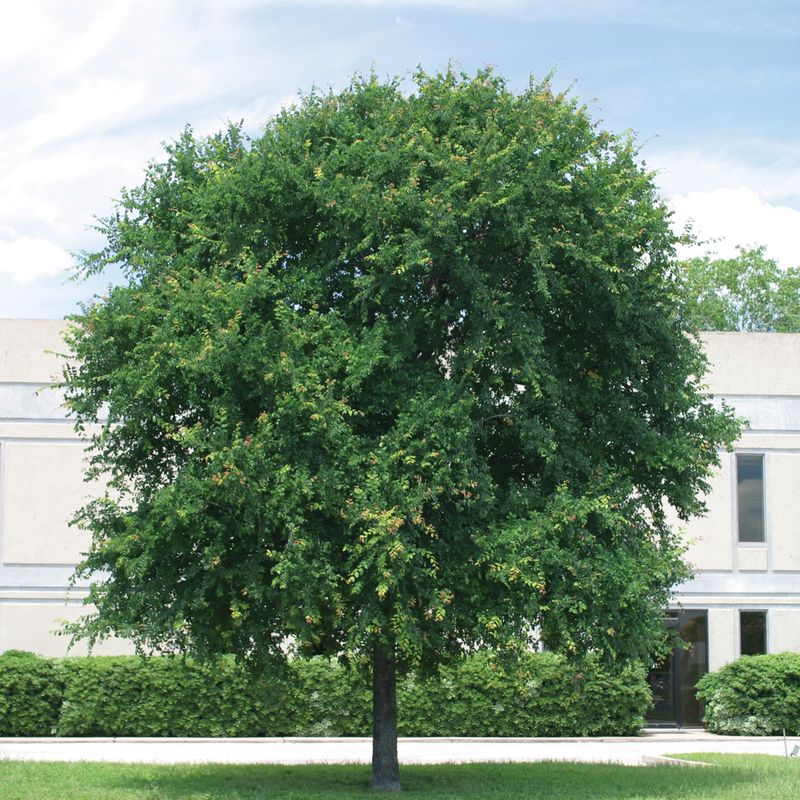
If you have rocky, clay-heavy soil in your Austin yard, the Cedar Elm might just become your new best friend.
This tough native tree is built for exactly the kind of challenging ground conditions that Central Texas is famous for. It does not ask for perfect soil or special care. It simply grows and thrives.
Cedar Elm, or Ulmus crassifolia, is one of the most common native trees across Central Texas.
You can spot them growing naturally along creek beds and open fields throughout the Austin area. Bringing one into your landscape means you are working with nature rather than against it.
One of the standout features of this tree is its speed. Cedar Elms grow relatively quickly compared to many native oaks, which means you will start enjoying real shade sooner.
The canopy is dense and full, blocking a solid amount of sunlight and keeping the ground underneath noticeably cooler on hot afternoons.
In the fall, Cedar Elms turn a lovely golden yellow before dropping their leaves. That seasonal color is a nice bonus for Austin homeowners who want a little autumn charm.
The tree is also resistant to many common urban stressors, including compacted soil, heat, and occasional flooding.
Did you know Cedar Elms bloom and produce small seeds in late summer and fall, unlike most elms that do so in spring? That unique timing sets them apart.
They are also a host plant for certain butterfly species, adding ecological value to your yard. For a low-maintenance, high-reward shade tree in Austin, Cedar Elm is a rock-solid choice.
3. Mexican White Oak / Monterrey Oak
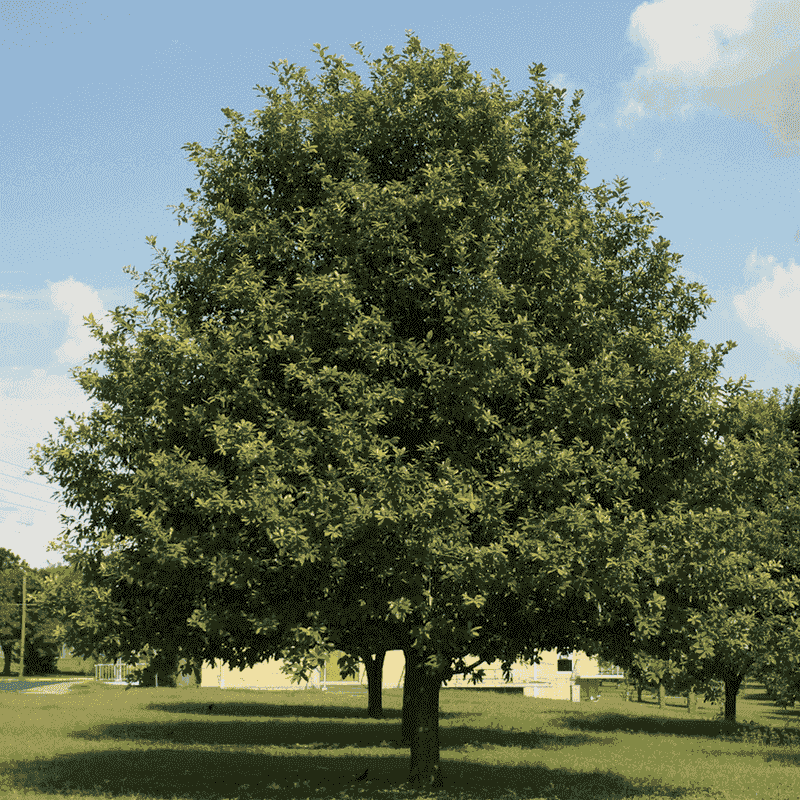
Not every homeowner wants to wait decades for a shade tree to grow up. If you want faster results without sacrificing toughness, the Monterrey Oak deserves a serious look.
It has quickly become one of the most popular landscape trees across Austin and the surrounding Hill Country region, and it is easy to understand why.
Also called Mexican White Oak, Quercus polymorpha is technically semi-evergreen. In mild Austin winters, it holds onto most of its large, attractive leaves.
When a cold snap hits, it may drop them briefly before pushing out fresh new growth in early spring. Either way, you get a full, lush canopy for the majority of the year.
Growth rate is one of this tree’s biggest selling points. Compared to many native oaks, the Monterrey Oak puts on height and width at a noticeably faster pace.
Homeowners in Austin who plant one can expect meaningful shade within just a few years rather than waiting a decade or more.
Heat and drought tolerance are also strong suits. Austin summers test every plant in the landscape, but established Monterrey Oaks handle the heat with confidence. They prefer well-drained soil, which suits most of Austin’s rocky terrain quite well.
Another advantage worth mentioning is disease resistance. Monterrey Oaks show good resistance to oak wilt, a serious disease that affects many oak species in Central Texas.
That makes them a smarter long-term investment for Austin homeowners who want to avoid costly tree problems down the road. With its speed, toughness, and good looks, this oak earns its spot on any Austin planting list.
4. Mexican Sycamore
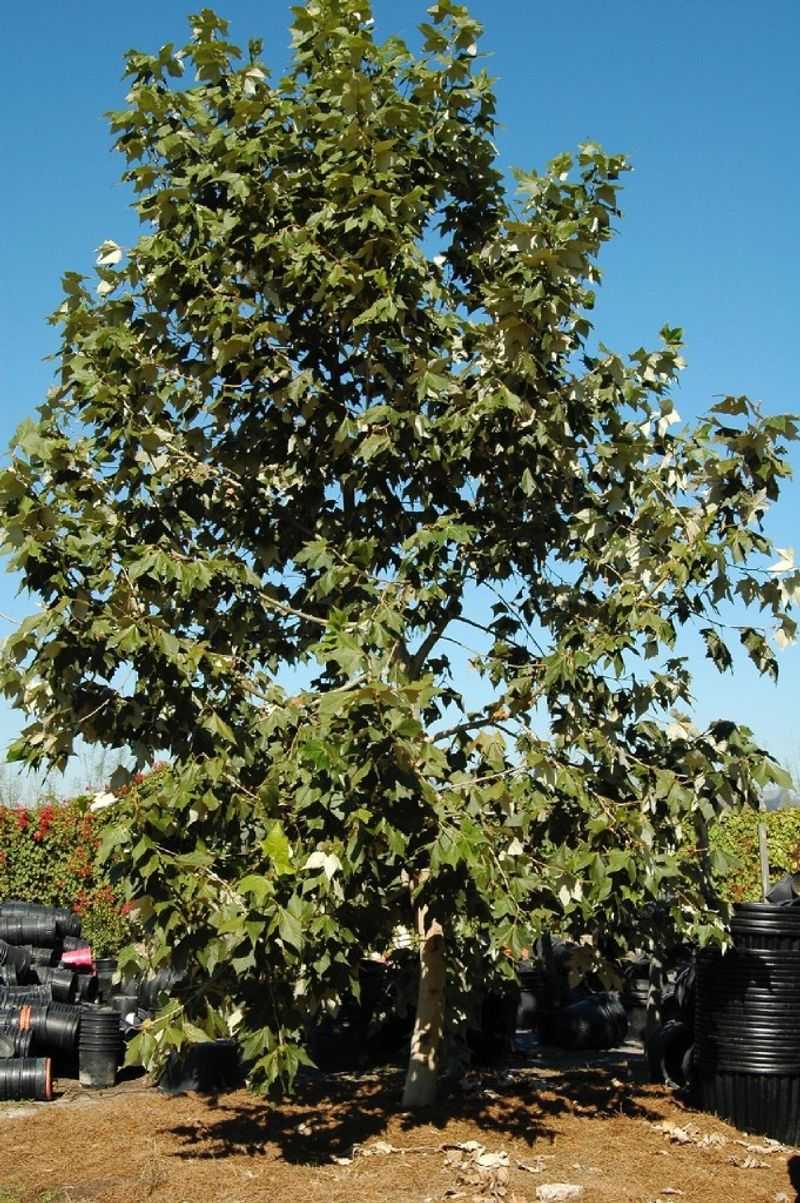
Picture this: you plant a tree, and within just a few years, it is already throwing serious shade over your patio or backyard.
That is the kind of payoff Mexican Sycamore delivers, and it is one of the main reasons Austin homeowners have fallen for it in a big way. Fast growth and big shade make a winning combination in Central Texas.
Platanus mexicana is a close relative of the American Sycamore but handles Austin’s heat and dry conditions much better.
While the American version can struggle without consistent moisture, the Mexican Sycamore is tougher and better adapted to the climate found throughout Central Texas.
It is a smart swap for anyone who loves the look of a sycamore but wants a tree that can handle Austin summers.
The leaves are impressively large, sometimes reaching eight inches or more across. That size means the canopy fills in quickly and blocks a lot of sunlight.
Underneath a mature Mexican Sycamore, the temperature difference is noticeable on a hot August afternoon in Austin.
The bark is another visual highlight. It peels away in patches to reveal creamy white and tan tones underneath, giving the trunk a striking, almost artistic appearance. This tree adds real character to any landscape, not just shade.
Mexican Sycamore does appreciate some water during dry spells, especially when young. Planting it near a low area where water collects naturally can help it thrive.
It grows best in full sun and can reach 40 to 50 feet tall at maturity. For quick, dramatic shade in Austin, few trees can compete with this one.
5. Lacey Oak
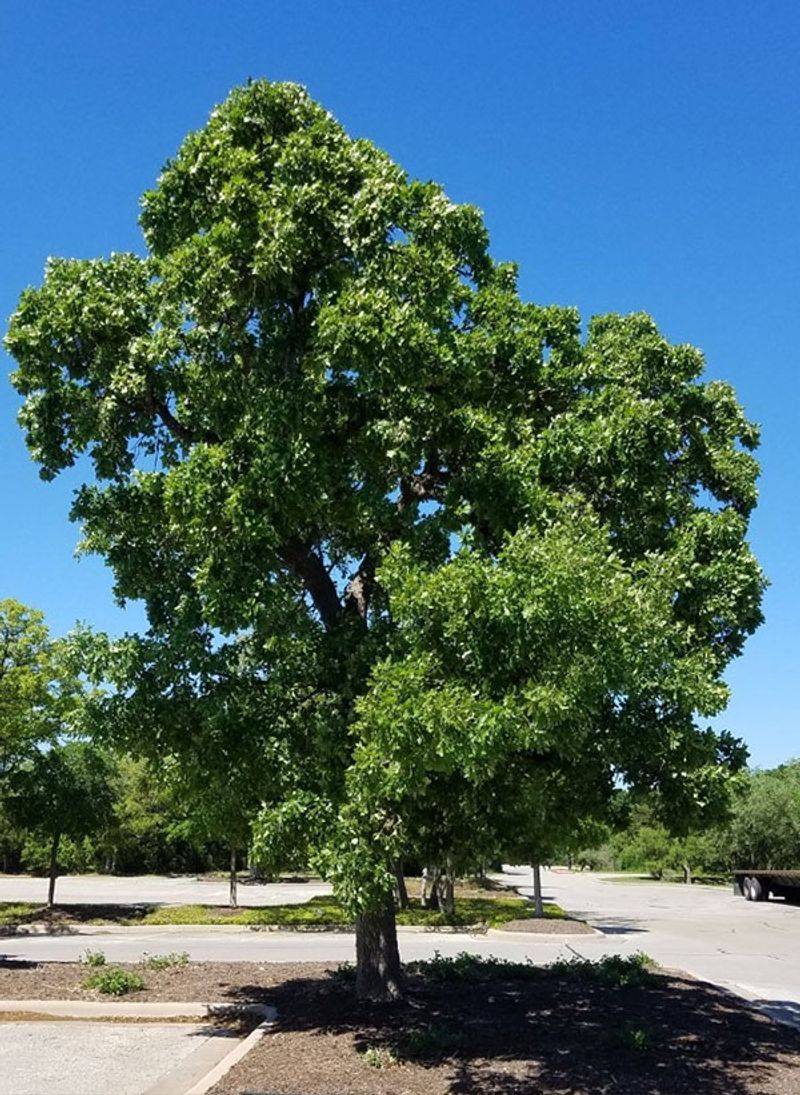
Some trees quietly steal the show without anyone expecting it. Lacey Oak is exactly that kind of tree.
It is not the biggest oak in Texas, and it does not grow the fastest, but its soft blue-green leaves and tidy shape make it one of the most visually charming native trees you can plant in an Austin yard.
Quercus laceyi is native to the Edwards Plateau, the rocky limestone region that stretches across Central Texas and right through the Austin area.
That means it is perfectly at home in the thin, alkaline soils that challenge so many other trees. Where other species struggle, Lacey Oak settles in comfortably and gets to work.
One of the most delightful surprises this tree offers is its spring color. When new leaves emerge in early spring, they come in a soft peachy-pink tone before transitioning to that signature blue-green color.
It is a brief but beautiful show that catches the eye every year. Drought tolerance is one of Lacey Oak’s strongest qualities. Once it is established in your Austin landscape, it rarely needs supplemental watering.
That makes it a very low-maintenance choice for homeowners who want beauty without a lot of effort.
At maturity, Lacey Oak typically reaches 25 to 35 feet tall with a rounded canopy. That size makes it a great fit for smaller yards or as a complement to larger trees.
It provides solid shade without overwhelming a space. Fall color tends toward orange and russet tones, adding another seasonal highlight.
For a tough, attractive, and uniquely Texan shade tree, Lacey Oak is a standout pick for Austin landscapes.
6. Texas Red Oak
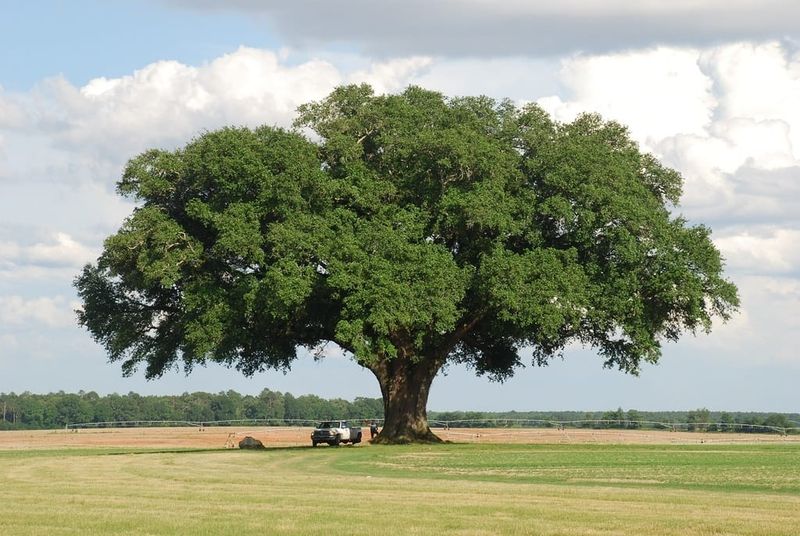
Austin does not always get the fiery autumn displays that cooler states are famous for, but the Texas Red Oak changes that story in a big way.
When fall arrives and temperatures finally drop, this tree lights up with brilliant shades of red, orange, and scarlet that make the whole yard feel like a seasonal celebration. It is the kind of color that stops neighbors in their tracks.
Quercus buckleyi, also called Spanish Oak in some parts of Texas, is a true native of Central Texas. It evolved in the same rocky, limestone-heavy soils that cover much of the Austin region.
That deep compatibility with local conditions means it does not need a lot of pampering to perform well in your landscape.
The tree grows at a moderate pace and reaches 30 to 50 feet at maturity. Its canopy develops a nice open structure with strong, well-spaced branches.
That framework provides reliable shade during the hot Austin summers while also letting some dappled light through, which many gardeners appreciate.
Drought tolerance is solid once the tree is established. Like most native Texas oaks, it handles dry spells without too much stress.
Giving it regular water during its first two or three years helps it build a deep root system that will carry it through future dry seasons.
Texas Red Oak is also a valuable wildlife tree. Acorns produced by this species are an important food source for deer, birds, and small mammals in the Austin area.
Planting one supports the local ecosystem while giving you a structurally strong, beautiful shade tree that earns its place in any Central Texas yard for generations to come.