The Best Time To Plant Amaryllis Bulbs If You Want Christmas Flowers
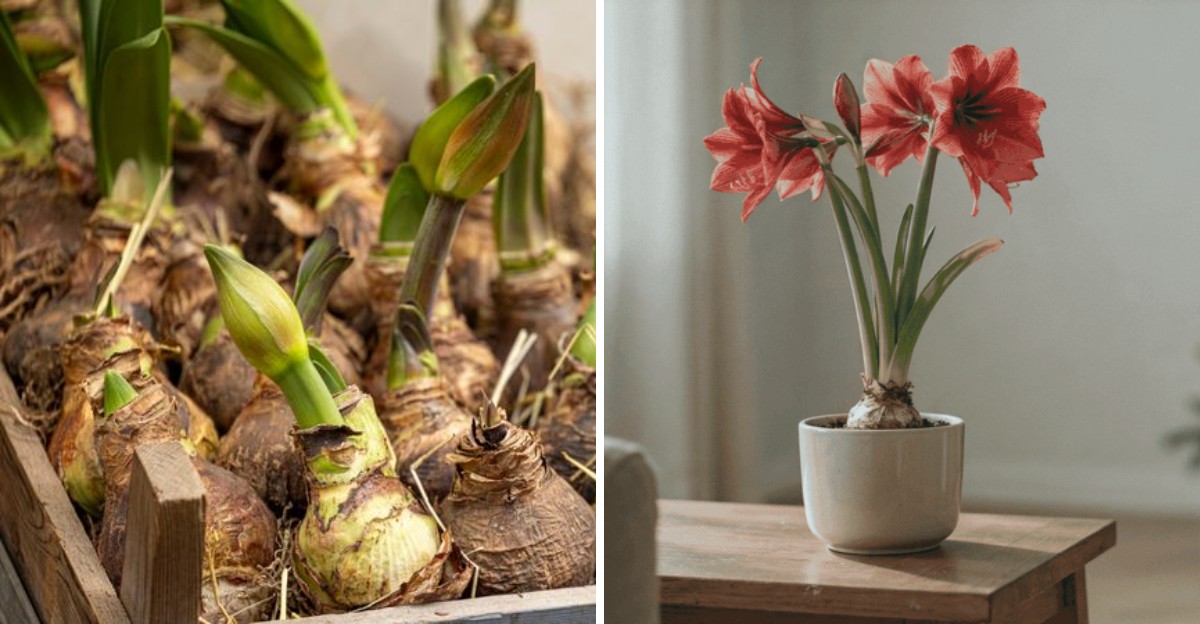
A bulb the size of a softball can push up a flower stalk taller than a ruler and a half. It does this indoors, in winter, with no garden soil and no cold treatment at all.
I am surprised every year by how fast the show arrives. Most of these bulbs bloom about six to ten weeks after potting, and the bigger ones can send up two stalks.
Each stalk often carries four trumpet-shaped flowers. The catch is timing. Pot too late and your flowers open around New Year’s Day.
Pot too early and the petals fade before the stockings go up. Gardeners in warm climates can even plant bulbs outdoors, where they bloom in spring.
So when should that bulb go into the pot? The answer sits on your calendar sooner than you might expect.
The Amaryllis Calendar Has a Sweet Spot Most People Miss
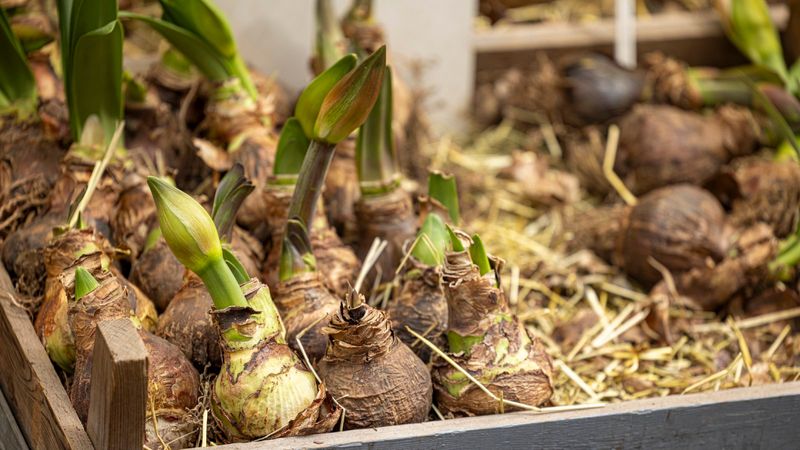
Most holiday shoppers grab amaryllis bulbs in December, and that is the problem. By then, the clock has nearly run out for Christmas flowers.
Aim to plant between late October and mid-November. University extension services and major bulb suppliers agree that most bulbs bloom about six to ten weeks after potting. Count backward from December 25 and you land right in that window.
I like to circle the first week of November on my calendar. That date gives a typical bulb about seven weeks, which leaves a little cushion if growth runs slow.
If you buy a variety labeled as early or fast blooming, mid-November usually still works. Here is a helpful trick. Look at the bulb tag or package before you plant.
Some growers list an expected bloom time, and South African grown bulbs often bloom faster than Dutch bulbs in early winter.
Dutch bulbs harvested in fall can need the longer end of the range. South African bulbs, grown in the Southern Hemisphere, are often ready to move quickly by late fall.
Write your planting date on a sticky note on the pot. That tiny habit helps you track progress and plan better next year.
Stagger Your Amaryllis Plantings for a Safer Christmas Bet
Bulbs are a bit like kids at a race. They all start together, yet some sprint ahead while others take their sweet time.
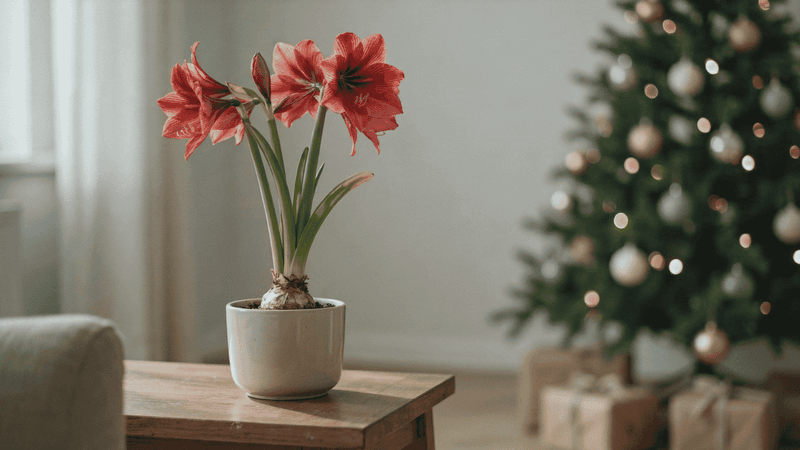
Planting two or three bulbs a couple of weeks apart is my favorite way to beat the guesswork. Pot one in late October, another in early November, and a third around mid-November. One of them will likely be in full color on Christmas morning.
Staggering also stretches the fun. Each stalk usually holds two to six flowers, and big bulbs may send up a second stalk later. With several pots going, you can enjoy blooms from early December into February.
I tried this the first year my timing failed, and it changed everything. One pot opened just before Christmas, one opened on the holiday, and the last one brightened gloomy January days.
Bigger bulbs are worth the extra cost. A bulb measuring 30 to 34 centimeters around often produces more stalks than a small one.
Label each pot with its planting date. You will quickly learn how your home’s light and warmth affect speed, and that knowledge pays off every winter after.
A Snug Pot Keeps Those Tall Amaryllis Stalks From Tipping
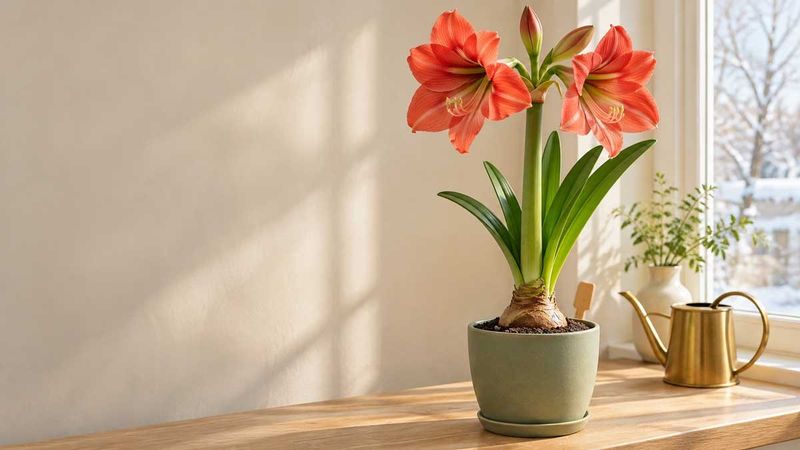
Amaryllis bulbs actually like tight quarters. A pot only about one to two inches wider than the bulb is the right fit.
Choose a heavy pot if you can. Ceramic or clay helps balance the tall flower stalk, which can easily reach 18 to 24 inches. I learned this the hard way when a plastic pot flopped over and snapped a stalk full of buds.
Make sure the pot has a drainage hole. Fill it with a fresh, well-draining potting mix rather than garden soil, which packs down and holds too much water.
Before planting, some gardeners soak the bulb’s roots in lukewarm water for a few hours. It is optional, but it can help dry roots wake up.
Set the bulb pointed end up. Leave the top third of the bulb sitting above the soil line, since burying it fully can invite rot.
Press the mix gently around the bulb so it stands firm. Then give it one good watering and let the pot drain well. That first drink settles the soil without drowning the roots that are just getting started.
Warm Rooms and Light Watering Wake Up a Sleepy Amaryllis Bulb
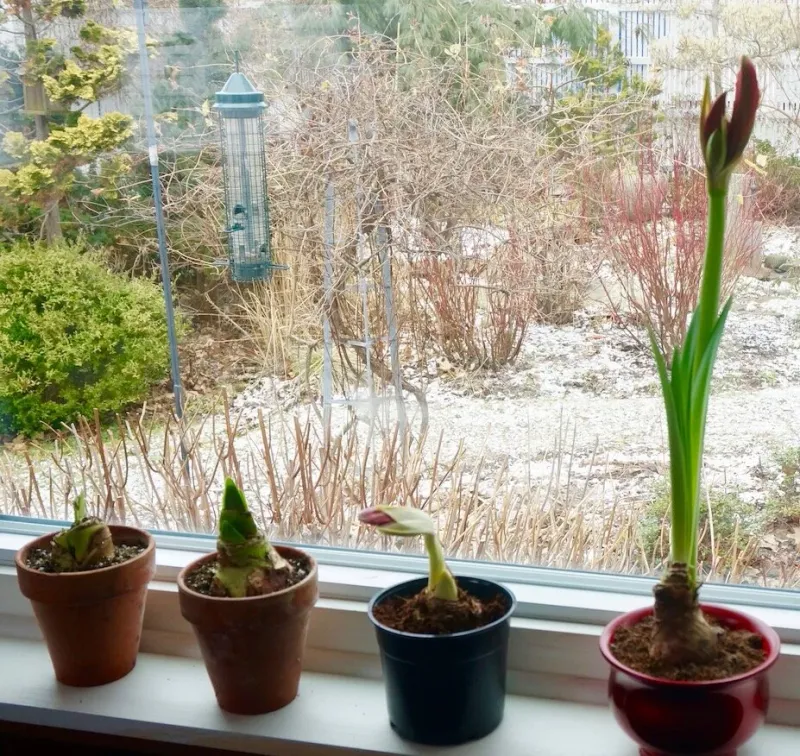
Warmth is the switch that turns these bulbs on. Keep your potted bulb in a room around 68 to 75 degrees Fahrenheit.
Cool rooms slow everything down. If your house runs chilly in November, a warm spot near, but not on top of, a heat source can speed things up. Bright light matters too, so a sunny window is a great home.
Water is where many folks go wrong, me included. After that first soaking, water only lightly until you see green growth poking out. Soggy soil around a bulb with few roots can quickly lead to rot.
Once the stalk or leaves start growing, increase watering. Let the top inch of soil dry out between drinks, and empty any water left sitting in the saucer.
Some bulbs send up a flower stalk first, while others push out leaves first. Both are normal, so do not worry if your plant looks different from a friend’s.
Check your pot every few days. Watching that fat bud rise is half the fun, and it helps you catch problems early.
Turn the Pot So Your Amaryllis Stem Grows Straight
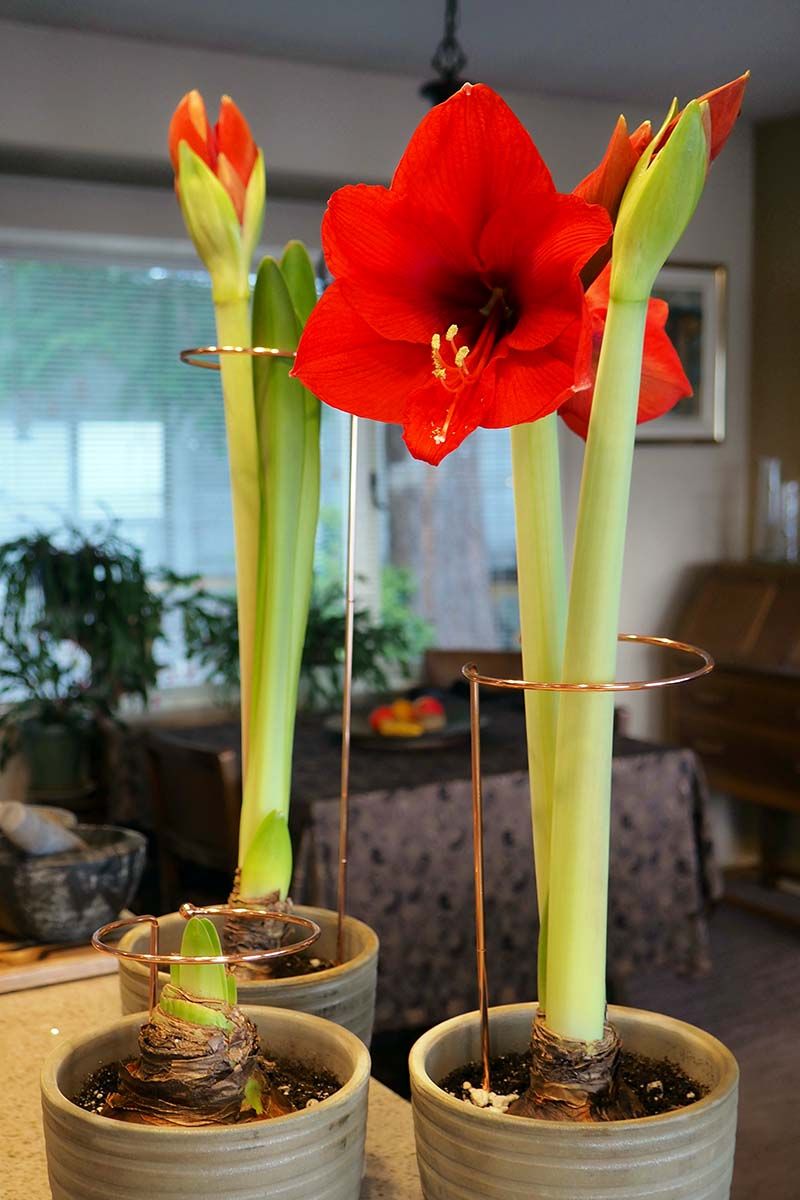
Leaning stalks are sneaky. One day the stem looks straight, and the next it bends toward the window like it wants to peek outside.
Give the pot a quarter turn every few days. Plants grow toward light, so rotating helps the stalk stay even and upright.
Feeding can start once leaves are growing well. A balanced houseplant fertilizer used every couple of weeks, following the label, supports healthy leaves and strong growth. Skip heavy feeding before roots form.
A thin bamboo stake can help very tall stalks. Slide it into the soil near the edge of the pot so you avoid stabbing the bulb, then tie the stalk loosely with soft twine.
Fun fact for your next holiday party. The plant sold as amaryllis is usually Hippeastrum, a relative from Central and South America. The true Amaryllis belladonna comes from South Africa.
The name mix-up happened long ago, and stores kept the friendly common name. Either way, both types belong to the same plant family and share that wonderful trumpet shape that makes holiday guests stop and stare.
Speed Up or Slow Down an Amaryllis Bud Before December 25
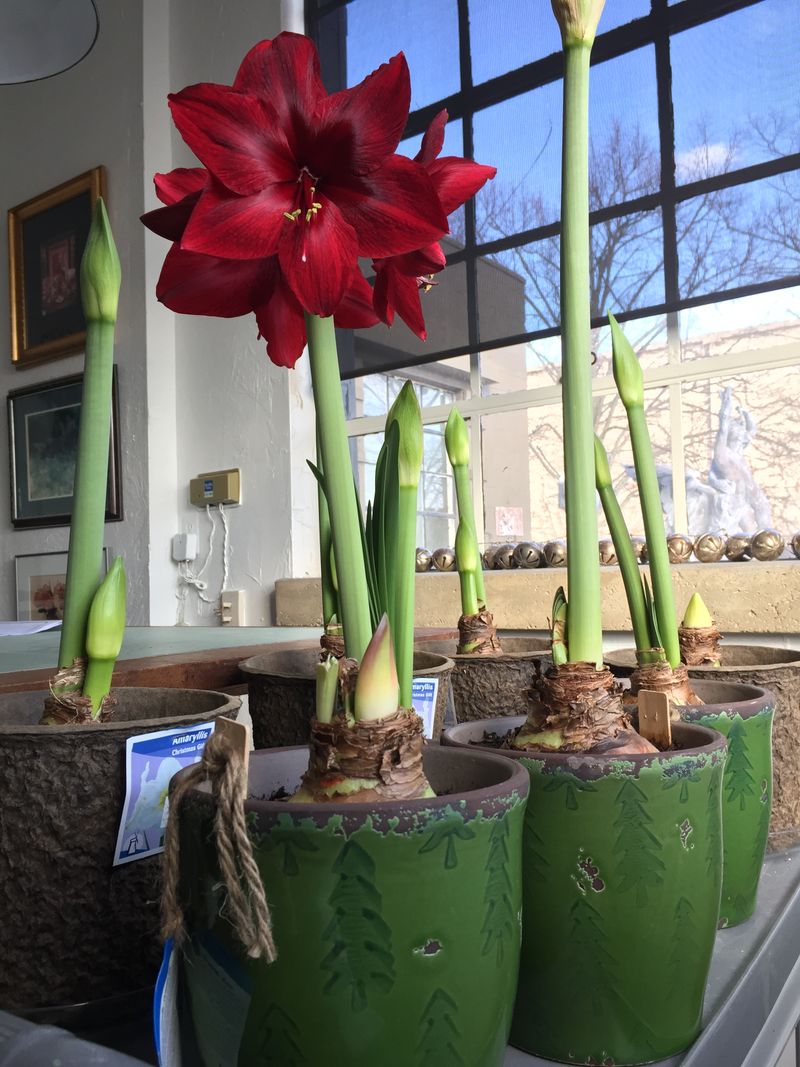
Mid-December is when I start playing timekeeper. The bud shows color, and I can usually tell whether my plant is early, late, or right on schedule.
If the bud looks ready to burst too soon, move the pot to a cooler room with less direct sun. Lower temperatures slow growth, which can hold the flowers back several days.
Running late? Give the plant more warmth and bright light. A spot in a warm room can nudge growth along, though there is a limit to how much you can rush it.
Once the bud splits and swells, flowers usually open within a few days. Watch for the stem tip to turn color and plump up, since that is your clue.
Avoid extreme moves like setting the pot by a hot vent. Dry, blasting air can stress the plant and shorten bloom life.
Honestly, a bloom on December 22 or December 28 still makes the season feel special. I count any flower during holiday week as a win, and my family never seems to notice the exact date.
Cooler Spots Help Open Amaryllis Flowers Last Longer
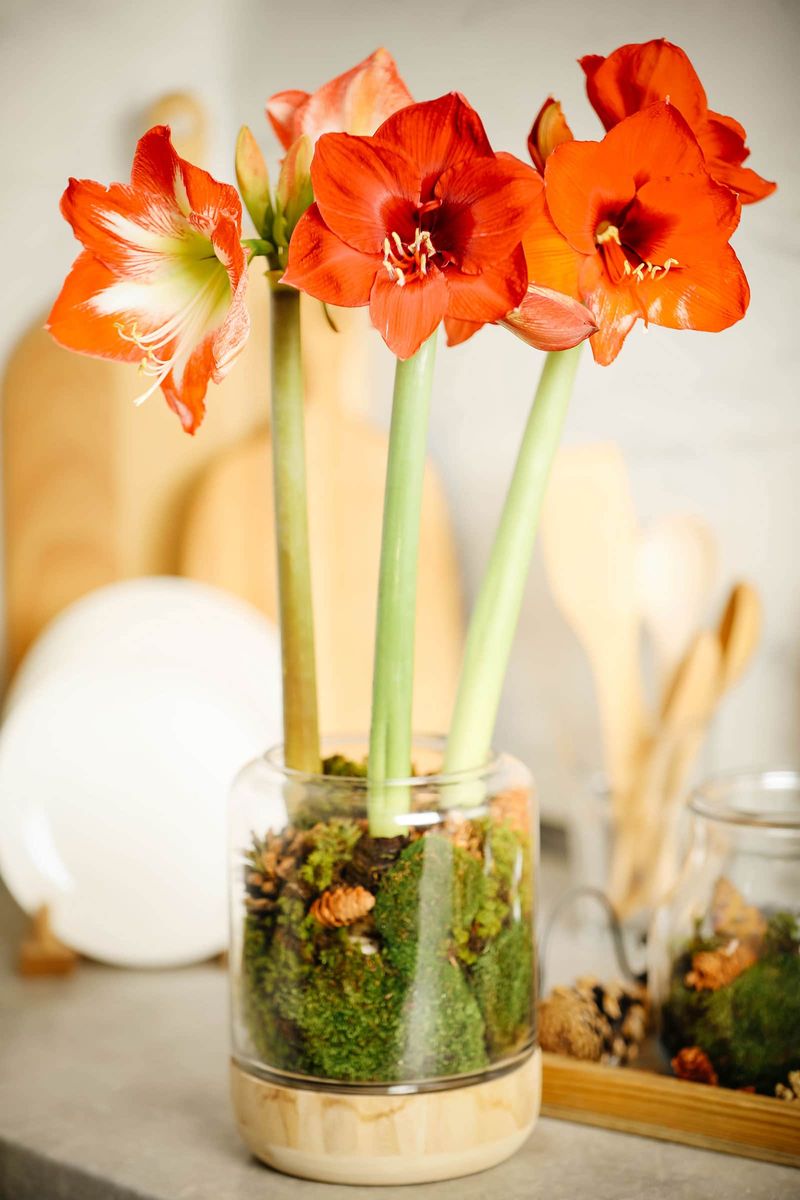
Nothing beats the moment those giant petals finally open. Each flower can measure several inches across, and the color seems to glow in winter light.
To make the show last, move the plant out of direct sun once flowers open. Bright indirect light keeps the color rich without speeding up fading.
Cooler air helps too. A room around 60 to 65 degrees Fahrenheit slows the plant down, often adding extra days of bloom.
My blooms usually last two to three weeks this way. Keep watering as the top inch of soil dries. Thirsty plants fade faster, but wet feet still cause trouble.
Some gardeners snip off the yellow pollen-covered anthers as flowers open. This prevents pollen stains on tablecloths and may help flowers last a bit longer.
One safety note matters for families. Amaryllis bulbs and plants are toxic to cats and dogs, according to the ASPCA, so keep pots away from curious pets.
Small children should not chew leaves or bulbs either. A high table or shelf keeps the display safe and still looks festive.
Save That Amaryllis Bulb for Next Year’s Holiday Blooms
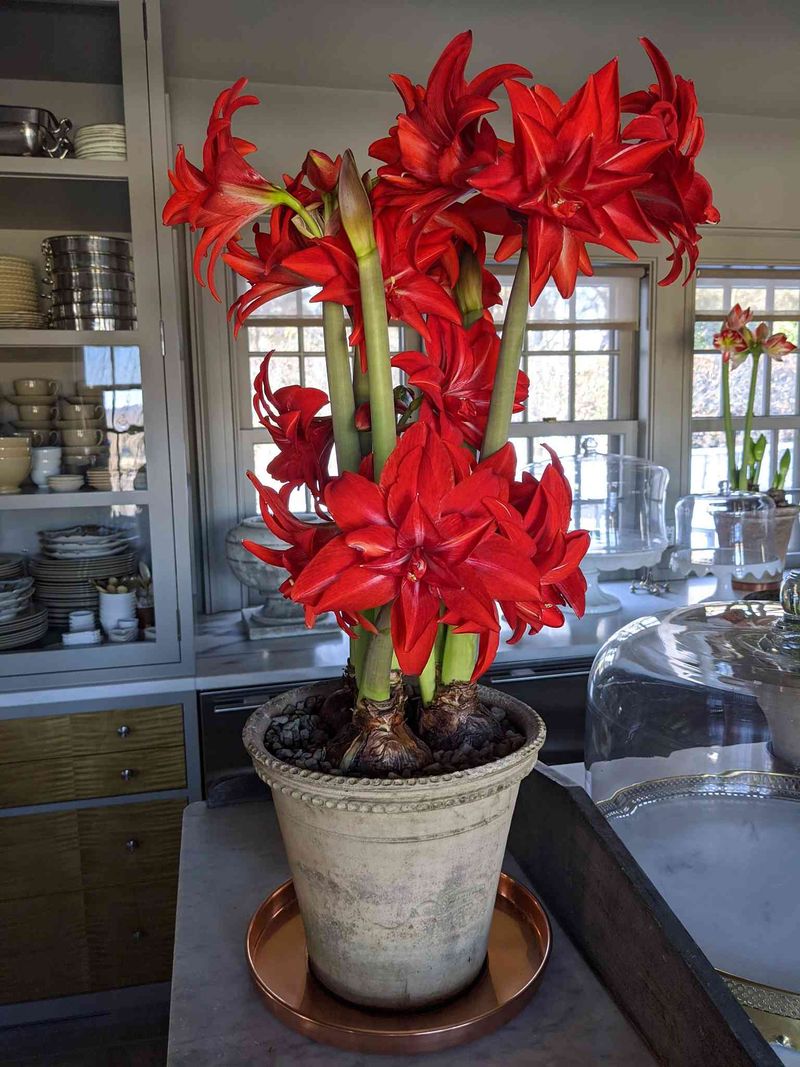
Tossing the bulb after the holidays feels like throwing away a gift card. With some care, the same bulb can bloom again next winter.
When the flowers fade, cut the stalk a few inches above the bulb. Keep the long green leaves, since they make food that refuels the bulb.
Grow the plant in bright light through spring and summer, watering and feeding regularly. After frost danger passes, the pot can go outdoors in partial sun.
Around late August or September, cut back water and stop fertilizer. The leaves will yellow and wither, which is the signal to trim them back.
Store the bulb in a cool, dark, dry place around 40 to 55 degrees Fahrenheit for about eight to ten weeks. Keep it away from apples, which give off ethylene gas that can harm flower buds.
Then repot and water to start the cycle again. If you rest your bulb in early September, you can start it again in early November for Christmas.
Gardeners in warm parts of Florida or California can even plant bulbs outdoors, where they bloom in spring.