Cleaning Out Your Indiana Shed This Winter? Watch For These Egg Sacs First
A single bagworm bag dangling from a shed rafter can hold 500 to 1,000 eggs. That little twiggy cone looks like trash, yet it holds a whole spring generation waiting to hatch.
I’m the first to admit I used to sweep everything into the bin without a second glance. Then I found a tan, foamy lump glued to a tomato stake and realized I almost tossed a garden ally.
Indiana winters push all kinds of critters into quiet sheds, old pots, and stacked lumber. Some leave behind papery balls, others leave silky pouches, and a few leave crusty foam that feels like packing material.
The tricky part is that helpers and troublemakers often share the same dusty corner. Which bundles deserve a new home, and which ones should leave your property for good?
That Foamy Tan Lump On Your Tomato Stake Is Full Of Tiny Hunters
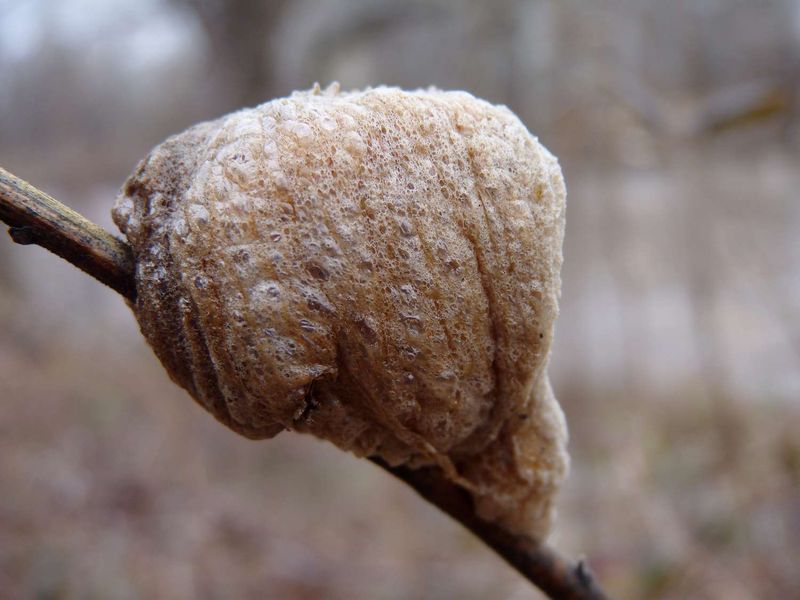
My first one looked like a wad of toasted marshmallow glued to a bamboo stake. It turned out to be a praying mantis egg case, called an ootheca, and it can hold dozens to a couple hundred eggs.
Female mantises build these cases in fall by whipping a frothy liquid around their eggs. The foam hardens into a tough, insulating shell that protects the eggs through freezing weather. The young usually hatch in late spring, once days warm up.
Shape offers a clue to the species. The Chinese mantis, a non-native species common in Indiana, makes a rounder, puffy case about the size of a walnut. The native Carolina mantis makes a flatter, longer case, though it is found more often in southern parts of the state.
Mantises eat plenty of garden pests, but they also snack on bees, butterflies, and even each other. Purdue entomologists describe them as generalists rather than targeted pest control.
Many gardeners choose to keep native cases and are less attached to the Chinese ones. Either way, knowing what you hold helps you decide its fate with confidence.
Twiggy Bagworm Cones Belong In The Trash, Not The Compost
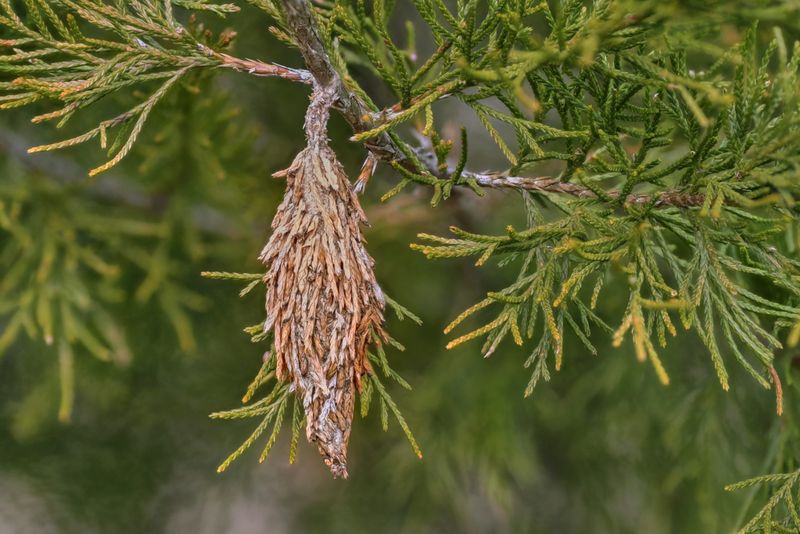
Honestly, bagworm bags fooled me for years. They look like tiny brown pinecones made of shredded needles, and they love arborvitae, juniper, and spruce near sheds and fences.
Each bag is 1 to 2 inches long and is spun by a caterpillar that decorates it with bits of its host plant. In fall, the female stays inside and leaves hundreds of eggs that wait out the winter in that cozy pouch.
Purdue Extension notes that hand-picking bags during winter is one of the simplest ways to control this pest. Snip the silk band that ties each bag to a twig, since a tight band can girdle and weaken the branch over time.
Drop the bags into a sealed plastic bag and put them in the trash. Tossing them on the ground or into compost gives the eggs a chance to hatch in late May or June.
Check stored Christmas wreaths, potted evergreens, and nearby shrubs too. A few minutes of picking now can save you from bare, browned branches next summer.
Small Silky Spider Egg Sacs Tucked In Shed Corners
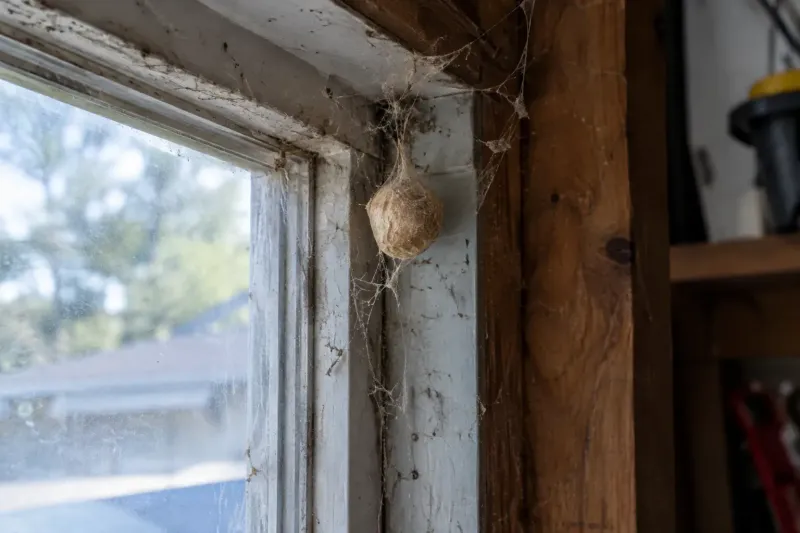
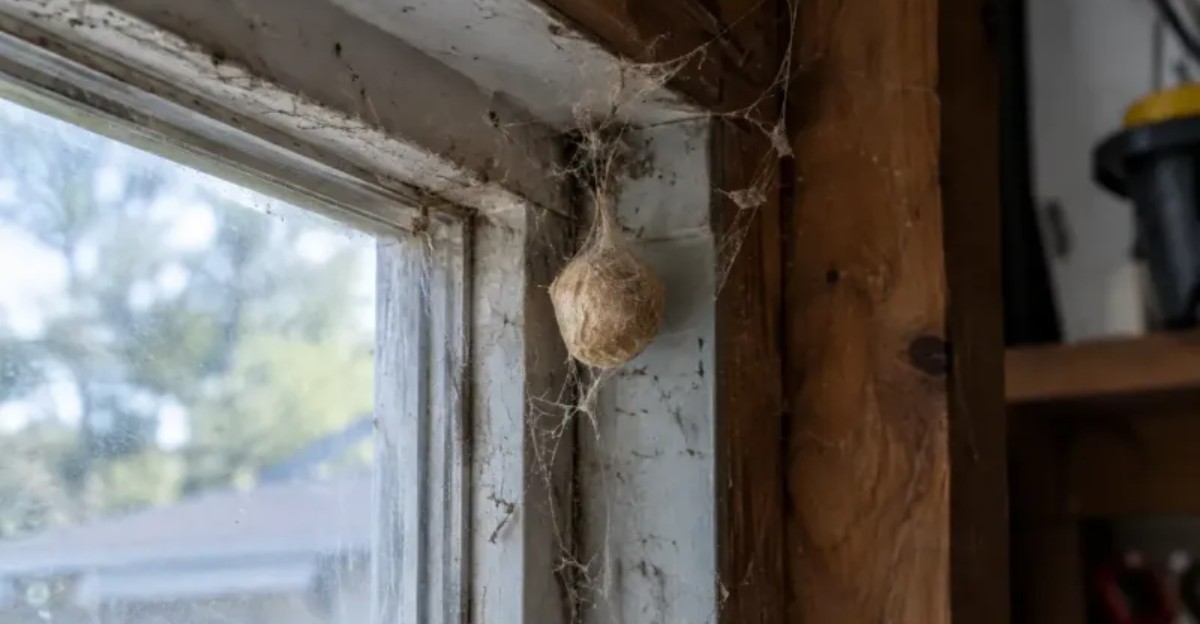
Spider egg sacs are the most common surprise in a winter shed. They show up as fuzzy white, cream, or tan balls tucked behind paint cans, under shelves, and along window frames.
Most measure about the size of a pea, though some are flatter discs stuck to boards. Many Indiana spiders lay eggs in fall, and the spiderlings stay inside until spring warmth wakes them.
Common house spiders often build brownish, pear-shaped sacs hanging in messy webs. Garden orb weavers make larger, fluffy sacs on sheltered walls and eaves. Cellar spiders actually carry their eggs in their jaws, so a loose sac usually belongs to someone else.
Most of these spiders are harmless and help manage flies, gnats, and other bugs. If a sac sits somewhere you rarely touch, leaving it alone is a reasonable choice.
Inside a home, though, a hatch can mean dozens of tiny spiders on the move. Sheds are a better place for them than your kitchen, so never carry gear inside without a quick look.
Glossy Black Widow Sacs Call For Gloves And Extra Caution
Gloves first, curiosity second. That rule has served me well around dark shed corners, stacked flowerpots, and woodpiles.
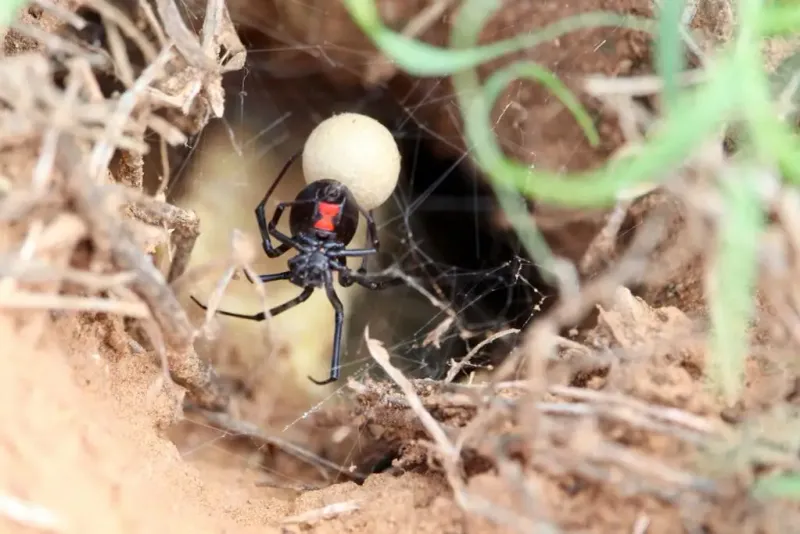
Northern black widows live across Indiana and favor undisturbed, cluttered spots. Their egg sacs are round, tan to grayish, papery, and about half an inch wide, hidden inside a messy, tough tangle of web. A female may guard several sacs, sometimes even into cooler months.
Brown recluse spiders also show up in Indiana, mostly in the southern counties. Their sacs are loose, off-white, and flattish, tucked into boxes or behind stored items.
Bites from either spider are uncommon and usually happen when someone presses against one by accident. Still, wear thick gloves, long sleeves, and shake out boots, gloves, and tarps before using them.
Use a stick or long-handled tool to pull objects out of dark spaces rather than reaching blindly. If you spot a shiny black spider with a red hourglass, back off and plan your removal calmly. Good light, a flashlight, and patience prevent most surprises.
A Shop Vacuum Handles Unwanted Spider Sacs Without The Mess
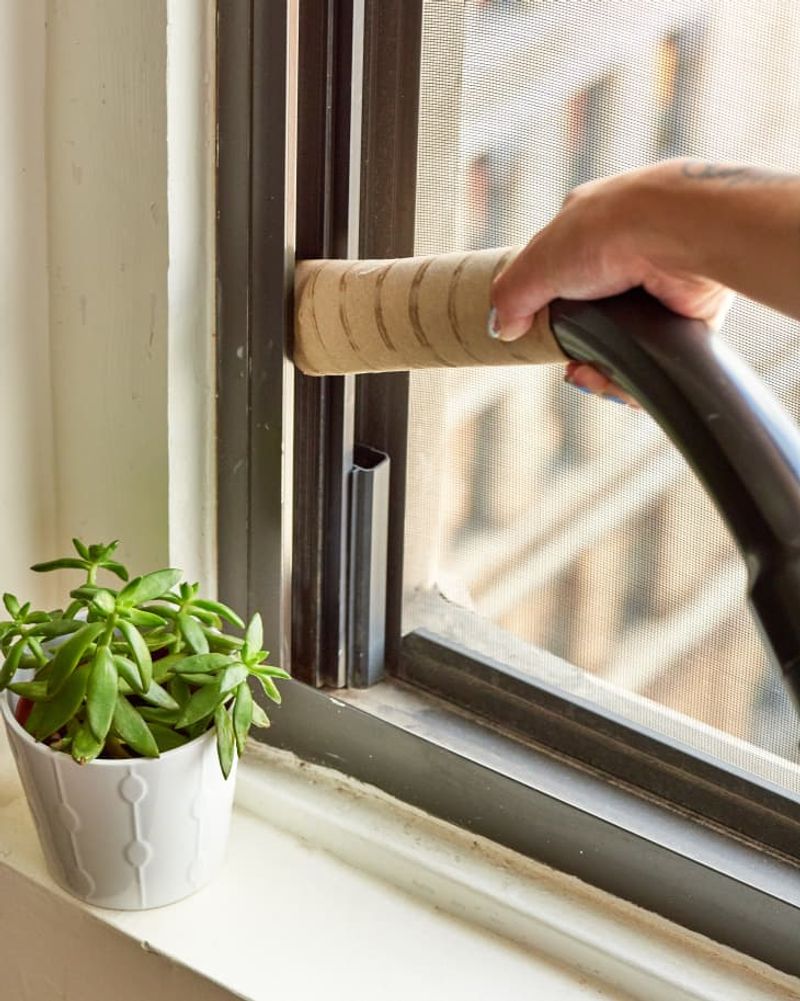
Grab the shop vac. It is my favorite tool for sacs I do not want, because it removes them without squishing or touching anything.
Use the narrow hose attachment and work slowly along rafters, corners, and shelf edges. Pull in the web, the sac, and any spider nearby in one smooth pass.
Empty the canister or remove the bag right away. Seal the contents in a plastic trash bag and set it outside in a lidded can so nothing crawls back out.
For one sac in an easy spot, a jar or zip bag works too. Slide it over the sac, scrape it gently off the surface, and seal it. Avoid crushing it with bare hands, since a broken sac can release hundreds of spiderlings at once.
Skip spraying insecticides on sacs. The silk shields the eggs well, so sprays often do little while adding chemicals to your stored tools and soil. Physical removal is faster, cheaper, and kinder to the helpful insects sharing your shed.
Mantis Egg Cases Deserve A Cold Outdoor Perch, Not Your Kitchen
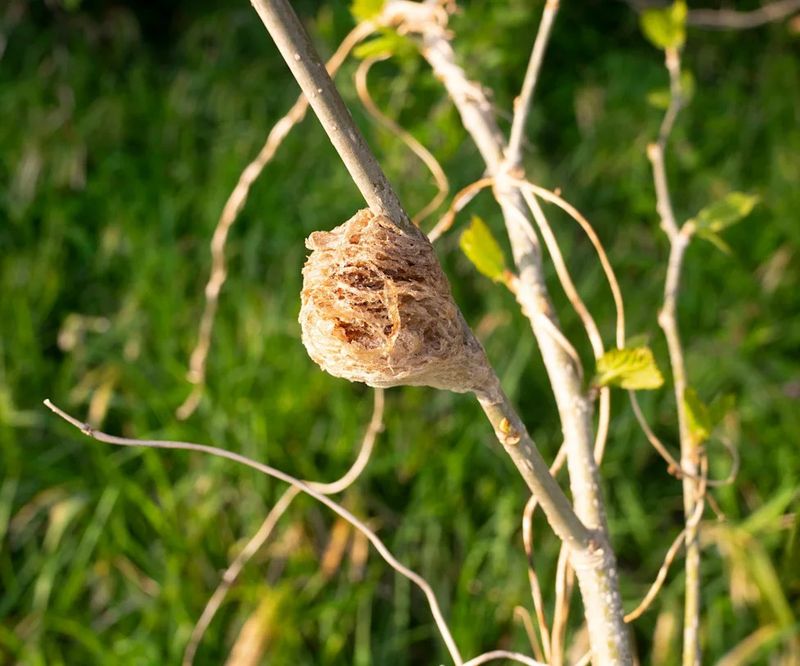
Bringing a mantis case indoors felt like a kind idea once. Within weeks, a warm room can trigger an early hatch, and the tiny nymphs scatter with nothing to eat.
Keep cases you want to save cold. If one is stuck to a stake or pot you plan to use, carefully clip the twig it sits on or pry it gently with a putty knife.
Tie or wedge the case onto a shrub branch about two to three feet off the ground. Height keeps it away from ants and hungry mice, while outdoor temperatures keep the eggs on their natural schedule.
Choose a spot with some shelter from wind, like inside a dense bush or near a fence. Handle the case by its edges and avoid crushing the foam.
Spring hatching usually lines up with the arrival of small insects for the babies to eat. That timing matters, so patience pays off here. If you decide a Chinese mantis case should go, seal it and trash it instead.
Sealed Bins And Patched Gaps Keep Next Year’s Shed Egg Sacs Away
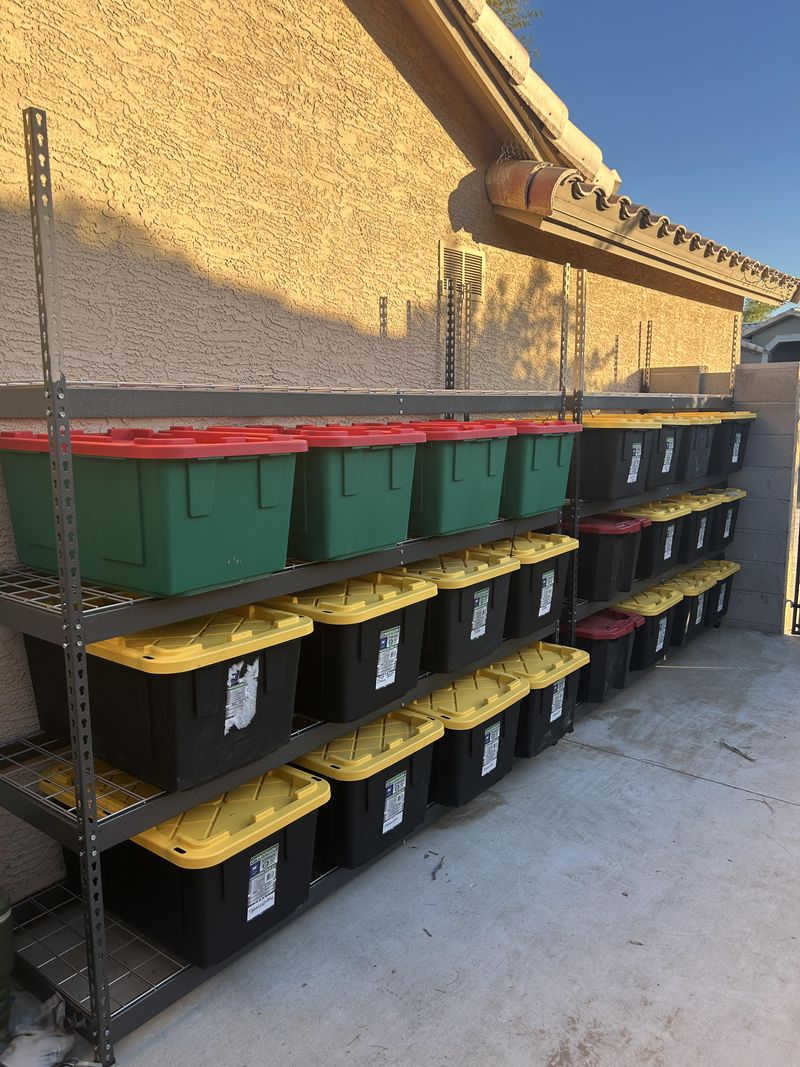
Clutter is the welcome mat. Every cardboard box, loose tarp, and pile of old pots gives spiders and insects a quiet place to lay eggs.
Swap cardboard for lidded plastic or metal bins, which also keep out mice. Raise items onto shelves so you can sweep underneath and spot new webs early.
Walk the outside of your shed with a flashlight. Caulk cracks, add weather stripping to the door, and fix torn window screens so fewer critters drift in next fall.
Trim shrubs and grass back from the walls and rake leaf piles away. A clear strip around the building cuts down on pests sneaking inside from the yard. Store birdseed and pet food in sealed containers, since spilled food draws mice and insects.
Finally, make this cleanup a winter habit. A quick check of stakes, pots, and nearby evergreens each year keeps surprises small. If you find many black widow sacs or feel unsure, a local pest professional or Purdue Extension office can help you sort it out.