The 9 Best Types Of Tubular Flowers To Lure Hummingbirds To Your Florida Yard
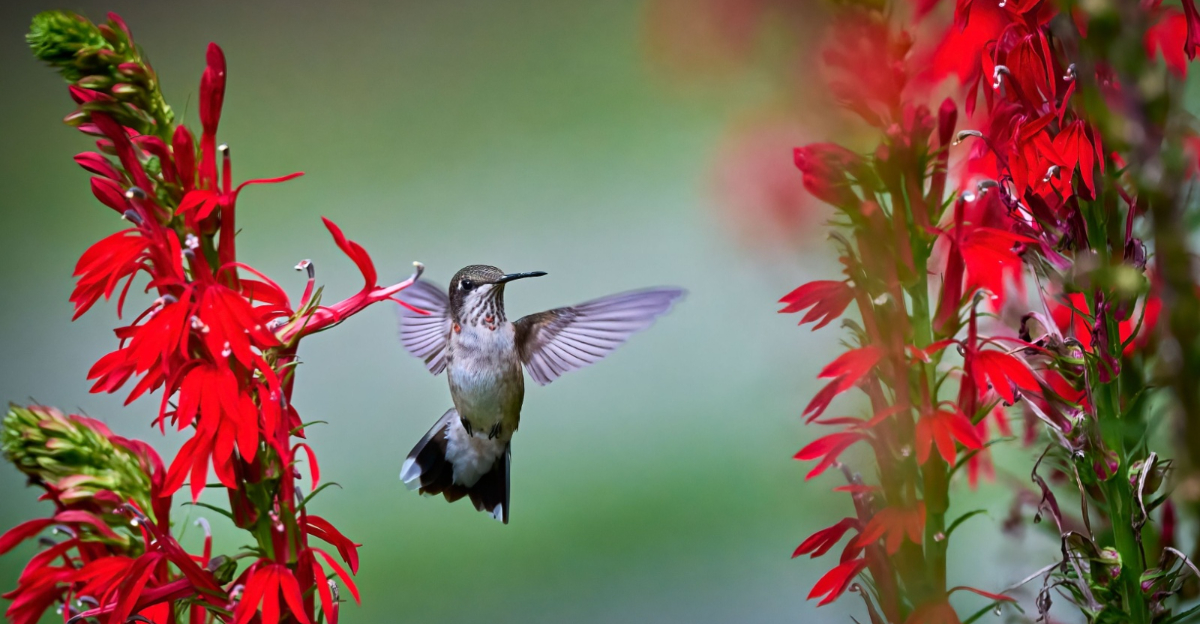
Hummingbirds have clear favorites, and tubular flowers sit high on the list. In Florida yards, those long, narrow blooms offer the shape, color, and nectar that make birds stop, hover, and come back for more.
A few well-chosen plants can bring quick bursts of movement and turn a quiet garden into a space that feels lively all day. Even better, many of these flowers handle Florida heat well and keep blooming through long stretches of the season.
The result is not just more color in your landscape, but more of those fast, flashing visits that make hummingbirds so fun to watch.
With the right mix of tubular blooms, your yard can start feeling like a reliable feeding spot instead of a place they pass over.
1. Coral Honeysuckle Turns Trellises Into Hummingbird Magnets
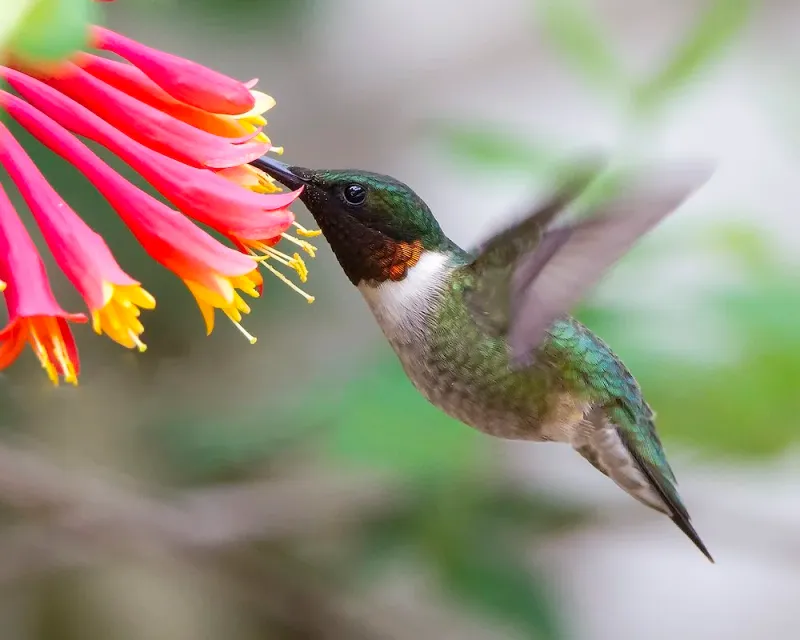
Few vines make a trellis look as alive as coral honeysuckle (Lonicera sempervirens), a Florida native that puts on a show from late winter all the way through fall. Its slender, trumpet-shaped blooms come in warm shades of red and coral-orange, and they are packed with nectar that hummingbirds cannot resist.
Unlike its invasive cousin, Japanese honeysuckle, this species is well-behaved and will not take over your yard.
Coral honeysuckle wraps itself around fences, arbors, and trellises with ease, making it a natural choice for anyone who wants to add vertical interest to the landscape. It grows best in full sun to partial shade and handles Florida’s sandy soils without much fuss.
Once established, it is surprisingly drought-tolerant, which is a real bonus during dry stretches in spring.
Planting coral honeysuckle near a sitting area or a window gives you a front-row seat every time a hummingbird comes in for a visit. The ruby-throated hummingbird is especially drawn to this plant during its spring migration through Florida.
UF/IFAS recommends coral honeysuckle as one of the top native vines for Florida wildlife gardens, and it is easy to see why.
2. Firebush Keeps Nectar Coming Through Florida Heat
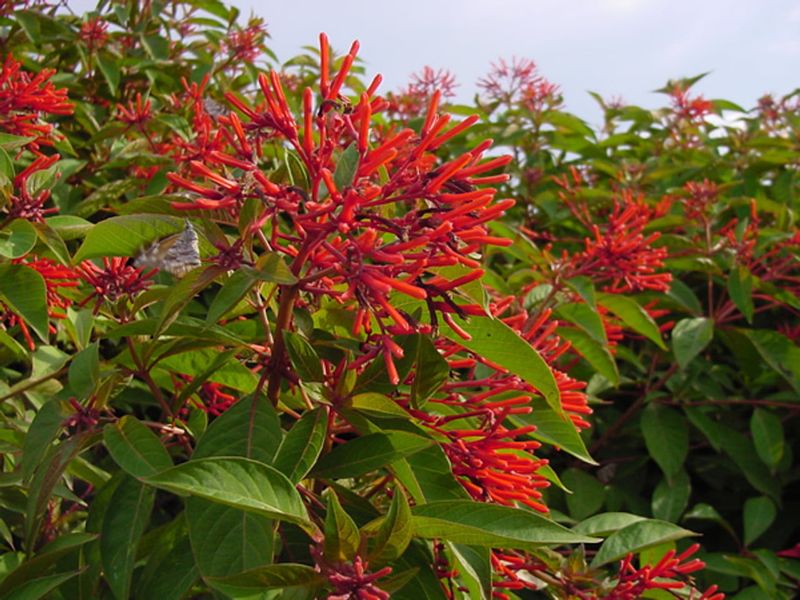
Ask any Florida gardener which shrub works hardest in summer heat, and firebush (Hamelia patens) will come up again and again. This native shrub produces clusters of slender, tubular flowers in fiery shades of red and orange, and it barely takes a break from blooming.
From late spring through the first cool nights of fall, the nectar keeps flowing, and hummingbirds keep coming back for more.
Firebush thrives in full sun and handles Florida’s intense heat and humidity with zero complaints. It can grow into a large shrub if left unpruned, reaching six to ten feet tall, but it responds well to trimming if you need it to fit a smaller space.
Planting it near the edge of a garden bed gives hummingbirds a clear flight path and an easy approach to the blooms.
Beyond hummingbirds, firebush also draws butterflies and other pollinators, making it a true wildlife magnet. According to UF/IFAS, it is one of the most reliable native plants for supporting wildlife in Florida landscapes.
The berries that follow the flowers are also eaten by birds, which means firebush keeps giving even after the blooms fade.
3. Scarlet Sage Delivers Big Hummingbird Appeal
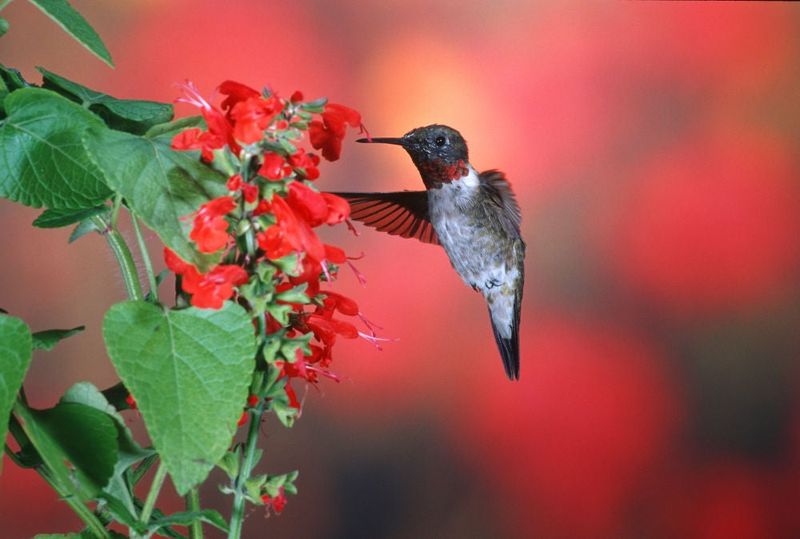
Bright, cheerful, and surprisingly tough, scarlet sage (Salvia coccinea) punches well above its size when it comes to attracting hummingbirds. The flower spikes rise above the foliage in vivid red, and each individual bloom is a narrow tube loaded with nectar.
Hummingbirds zero in on those blooms fast, hovering and darting between spikes like they have a favorite table at a restaurant.
Scarlet sage is a native Florida wildflower that reseeds itself freely, meaning once you plant it, it tends to come back year after year without much effort on your part. It grows well in a wide range of soil types and does not need heavy fertilizing to perform.
Full sun brings out the best bloom production, though it tolerates partial shade in hotter parts of the state.
What makes scarlet sage especially useful is how naturally it fits into different garden styles. It looks great in a formal bed, a cottage-style border, or even a naturalized wildflower patch.
Pink and white varieties exist, but the red form is the one that hummingbirds prefer most strongly. UF/IFAS lists scarlet sage as a recommended native plant for Florida pollinator gardens, and it earns that spot with every bloom cycle.
4. Cardinal Flower Lights Up Damp Florida Corners
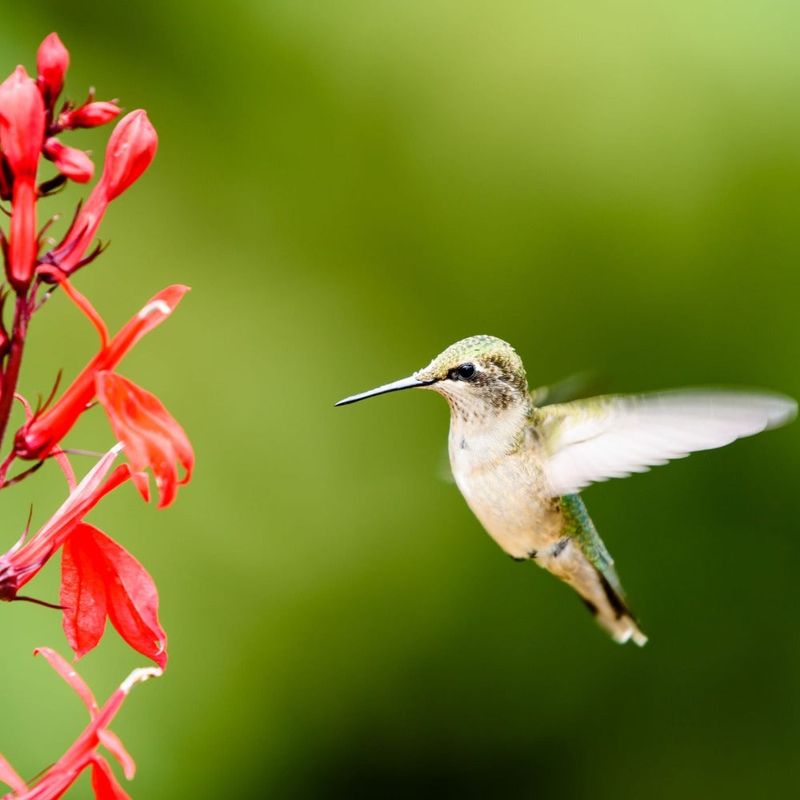
Vivid is not a strong enough word for the red that cardinal flower (Lobelia cardinalis) brings to the garden. The tall flower spikes blaze with color, and that intense red is one of the most powerful hummingbird signals in the plant world.
Ruby-throated hummingbirds are strongly attracted to red tubular blooms, and cardinal flower delivers exactly that in a bold, upright form that stands out from almost anything else in the yard.
There is one thing to understand clearly before planting cardinal flower: it needs moisture to perform well. This is not a plant for dry, sandy beds or spots that bake in full sun without irrigation.
It thrives along pond edges, rain gardens, low-lying areas, or any spot in your Florida yard that stays reliably moist. Given the right conditions, it rewards you with spectacular late-summer blooms right when migrating hummingbirds are moving through the state.
Cardinal flower pairs beautifully with other moisture-loving natives like swamp milkweed or blue flag iris. It typically grows two to four feet tall and spreads slowly over time through offsets and reseeding.
UF/IFAS recognizes it as a valuable native species for Florida wetland-edge gardens and wildlife-friendly landscapes.
5. Coral Bean Brings Early Color To The Yard
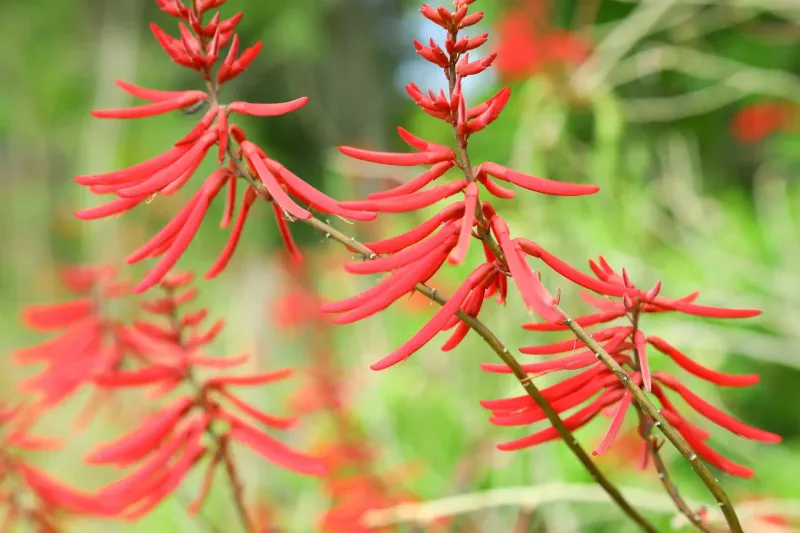
Before most other hummingbird plants have even leafed out, coral bean (Erythrina herbacea) is already putting on a show. The long, slender spikes of scarlet tubular flowers appear in early spring, sometimes before the leaves fully emerge, giving migrating hummingbirds a reliable early-season food source.
That timing alone makes coral bean one of the most valuable plants you can add to a Florida wildlife garden.
Coral bean is a native Florida shrub or small tree that grows naturally in sandy soils, scrub habitats, and woodland edges throughout the state. It handles drought well once established and tolerates the kind of poor, dry soil that challenges many other plants.
Full sun to light shade suits it fine, and it rarely needs much attention after the first season.
One important safety note for households with children or pets: the bright red seeds that follow the flowers are poisonous and should not be handled or eaten. Placing coral bean in a part of the yard that is less accessible to young children is a smart approach.
That precaution aside, coral bean is a genuinely rewarding native plant. Its bold early blooms, wildlife value, and tough-as-nails personality make it a standout choice for Florida hummingbird gardens.
6. Firecracker Plant Keeps Hummingbirds Coming Back
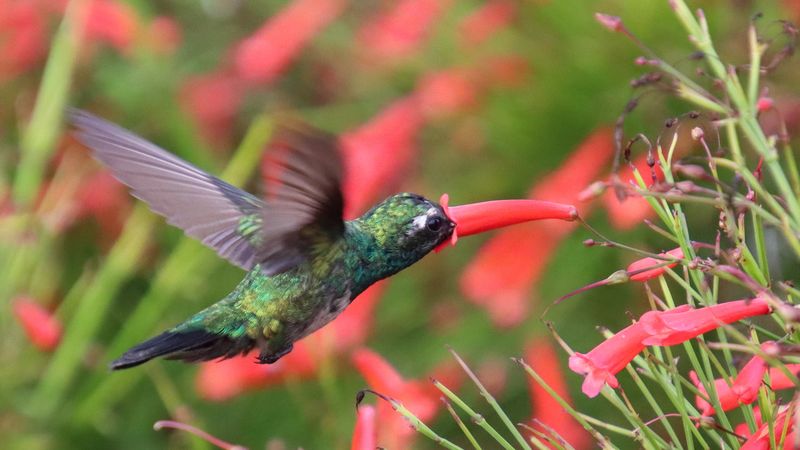
Graceful, flowing, and absolutely covered in tiny red tubes, firecracker plant (Russelia equisetiformis) brings a kind of soft movement to the garden that most plants simply cannot match. The arching, rush-like stems cascade outward and downward, creating a fountain effect that looks stunning spilling over a retaining wall, a raised bed edge, or a large container on a porch or patio.
Each slender stem is dotted with narrow tubular flowers that hummingbirds visit repeatedly throughout the day.
Firecracker plant blooms for most of the year in Florida’s warm climate, slowing down only during the coolest weeks of winter in northern parts of the state. It grows in full sun to partial shade and handles heat and drought well once it settles in.
The plant spreads gradually through underground runners, filling in gaps in a bed over time without becoming aggressive.
The cascading form of firecracker plant makes it a natural fit for spots where you want texture and movement rather than a stiff, upright shape. Planting it at the top of a slope or along a sunny fence gives hummingbirds easy access from multiple angles.
Florida gardeners who grow it often say the hummingbird visits start almost immediately after the first flush of blooms opens.
7. Cigar Flower Keeps The Bloom Show Going
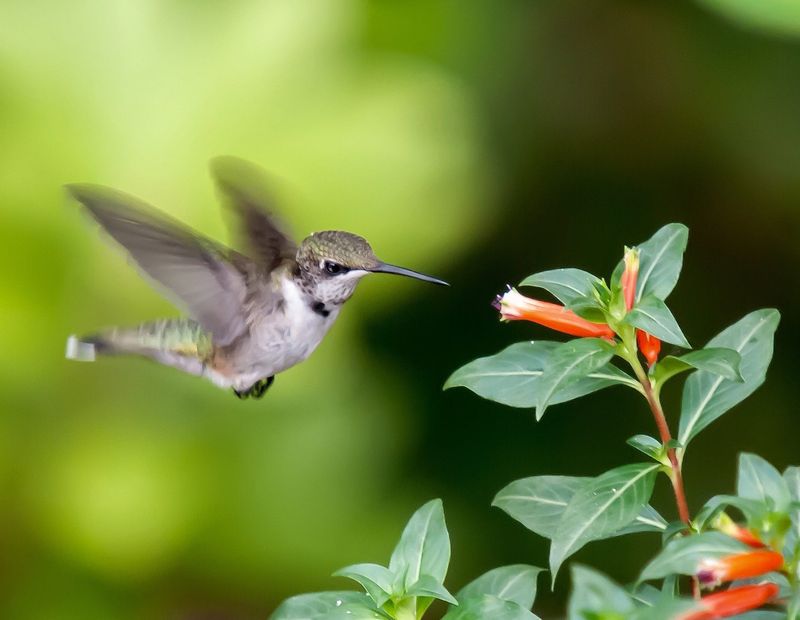
Compact, cheerful, and endlessly productive, cigar flower (Cuphea ignea) earns its place in Florida gardens by blooming almost without pause. The small tubular flowers are orange-red with a dark tip at the end, a color combination that looks a little like a tiny lit cigar, which is exactly how the plant got its name.
Hummingbirds work the blooms steadily, hovering from flower to flower with impressive efficiency.
Cigar flower works beautifully in garden beds, mixed borders, and containers, giving it a flexibility that larger shrubs cannot match. It stays relatively compact, usually reaching one to two feet in height, which makes it easy to tuck into spots where bigger plants would overwhelm the space.
Full sun brings out the heaviest blooming, though it performs reasonably well in partial shade.
Unlike some flowering plants that go through distinct boom-and-bust cycles, cigar flower maintains a steady supply of blooms across the growing season. That consistency is exactly what keeps hummingbirds returning to the same yard day after day.
Pairing it with taller plants like firebush or scarlet sage creates a layered garden that offers hummingbirds nectar at different heights, making the whole yard more attractive and functional for wildlife.
8. Crossvine Covers Walls With Trumpet Blooms
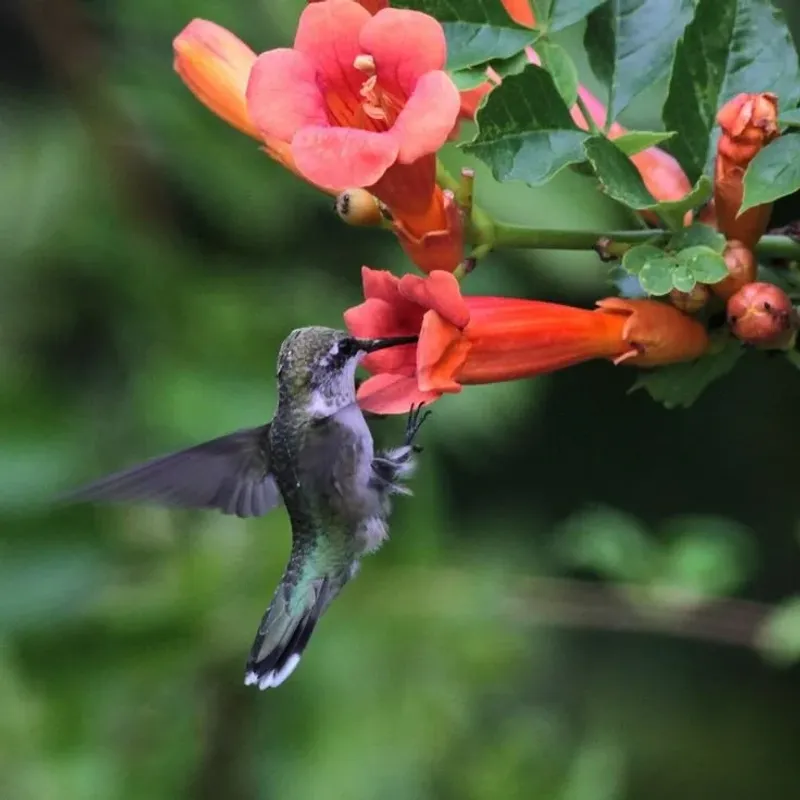
If you have a fence, wall, or pergola that needs serious coverage and serious color, crossvine (Bignonia capreolata) is the plant to call on. This vigorous native vine produces large, trumpet-shaped flowers in shades of orange-red with yellow throats, and the display in early spring is genuinely impressive.
Hummingbirds are drawn to those wide-mouthed tubes, which hold a good volume of nectar and are easy for the birds to access during their northward spring migration through Florida.
Crossvine climbs using tendrils with adhesive discs, allowing it to attach directly to walls, fences, and other structures without needing additional support. It can reach thirty feet or more in ideal conditions, making it one of the more powerful options for covering large vertical surfaces quickly.
Pruning after the main spring bloom helps keep the plant tidy and often encourages a lighter second flush of flowers later in the season.
Unlike some aggressive vines, crossvine stays manageable with occasional maintenance and does not pose the same invasive risk as non-native alternatives. It handles both full sun and partial shade, adapts to a range of Florida soil types, and tolerates brief dry periods.
For gardeners who want bold structure and reliable hummingbird traffic, crossvine delivers on both counts.
9. Trumpet Vine Adds Bold Drama To The Fence Line
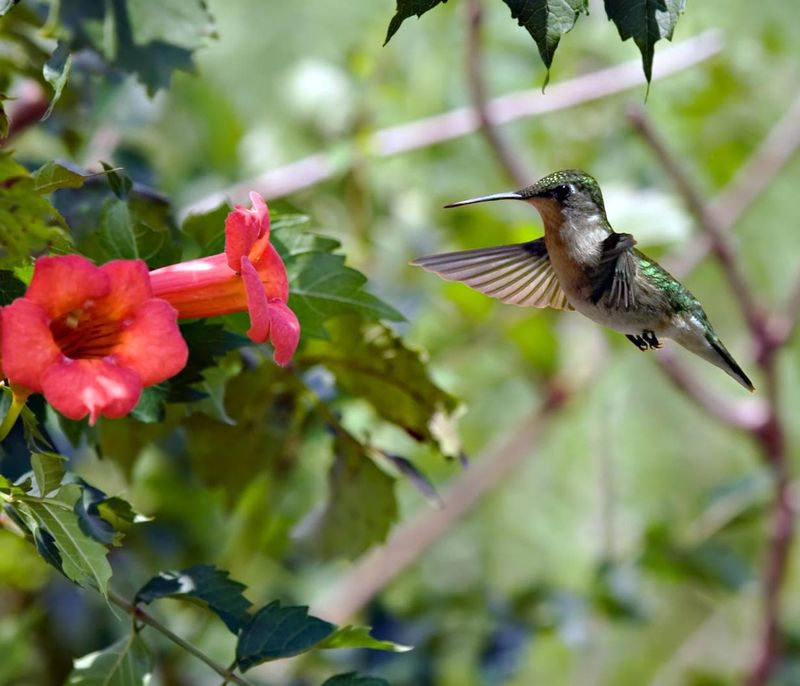
Bold, fast-growing, and loaded with large trumpet-shaped blooms, trumpet vine (Campsis radicans) makes a dramatic statement along any fence or wall. The flowers open in shades of orange and red from summer into fall, arriving right when late-season hummingbirds need a dependable nectar source before migration.
Each bloom is wide-mouthed and generously sized, making it one of the easier tubular flowers for hummingbirds to feed from quickly.
Trumpet vine climbs aggressively using aerial rootlets and can cover a large structure in just a few seasons. That vigor is both its greatest strength and the one thing gardeners need to manage carefully.
Planting it against a sturdy fence or masonry wall, rather than a wooden structure it might damage over time, is the smarter approach. Regular pruning keeps it from spreading beyond its intended space.
Florida gardeners in the northern and central parts of the state tend to have the best results with trumpet vine, as it appreciates a slight seasonal cool-down that the southernmost regions do not always provide. Full sun is ideal for maximum bloom production.
Despite needing a watchful eye, trumpet vine rewards patient gardeners with one of the most visually striking hummingbird displays a Florida yard can offer during the long, warm summer season.