The Best Types Of Tubular Flowers To Lure Hummingbirds To Your Texas Yard
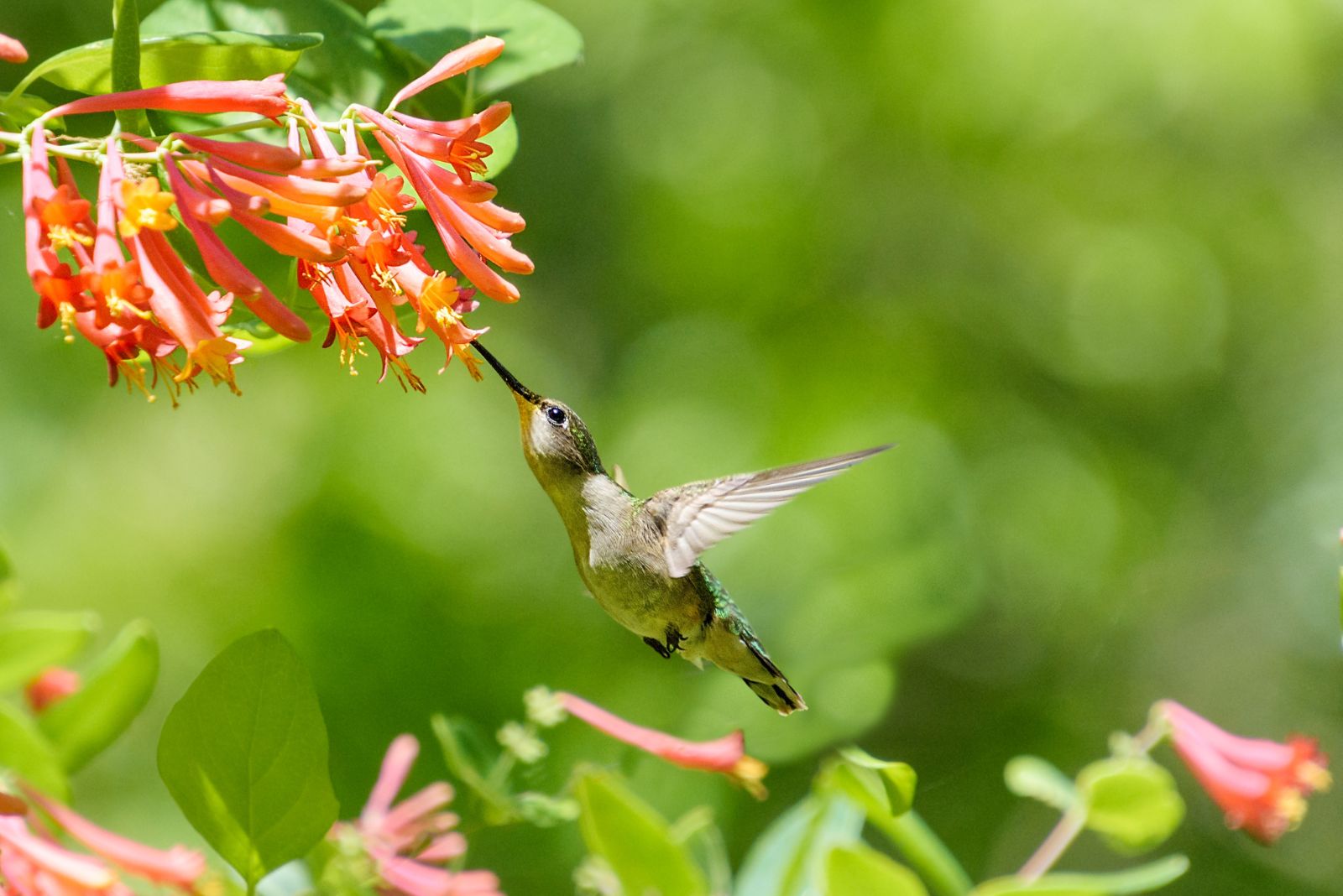
Few things make a Texas yard feel more alive than the quick flash of a hummingbird darting past the flowers. They move so fast that spotting one can feel like catching a tiny bit of magic in the middle of the day.
If you want more of those visits, the flowers you grow matter a lot. Hummingbirds are not just stopping by at random.
They are drawn to certain shapes, colors, and nectar-rich blooms that make feeding easier and more worthwhile. That is where tubular flowers really stand out.
These blooms are almost made for hummingbirds. Their long, narrow shape fits those tiny beaks perfectly, which makes them one of the smartest choices for anyone hoping to turn a quiet yard into a regular hummingbird stop.
In Texas, where long growing seasons can give flowering plants plenty of time to shine, the right varieties can keep these birds interested again and again.
A few well-chosen plants can add bold color to your yard while also bringing in some of the most fun and fascinating visitors you could hope to see outside your window.
1. Salvia
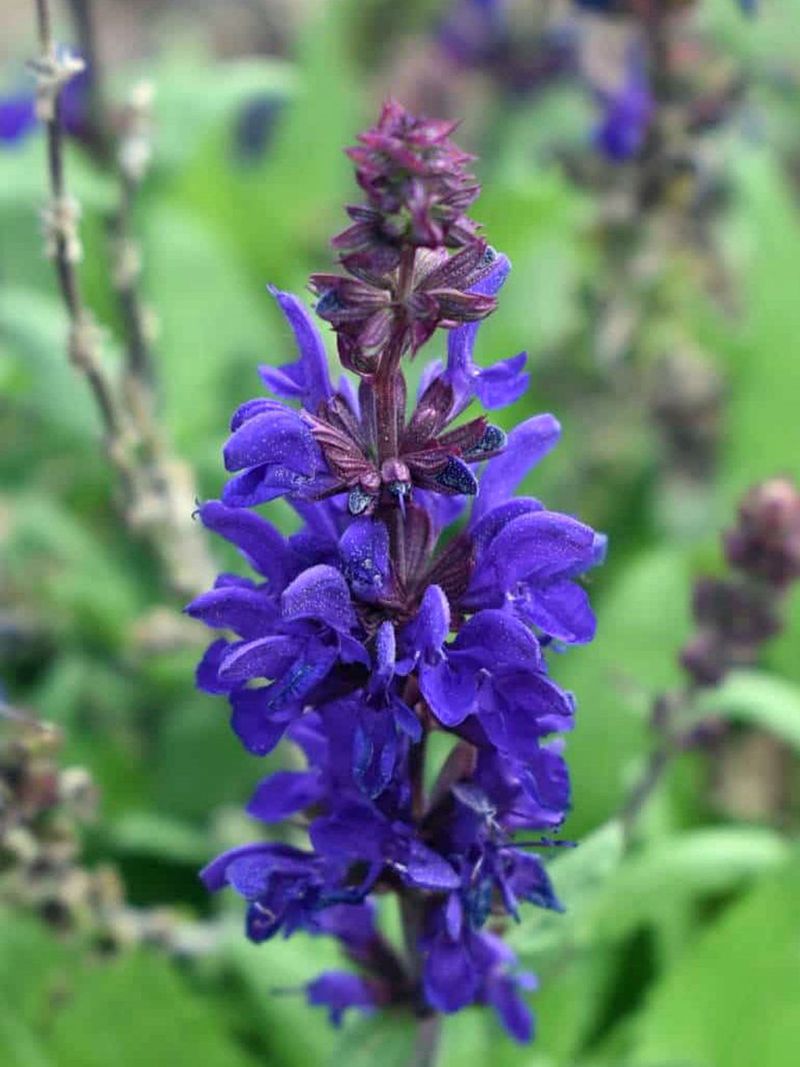
Ask any experienced Texas gardener which plant they would never remove from their yard, and salvia almost always tops the list. It is one of the most reliable hummingbird magnets you can grow in the Lone Star State.
With dozens of varieties available, there is a salvia for nearly every corner of your Texas landscape, from full sun borders to lightly shaded spots near a fence.
The flowers are perfectly shaped for hummingbirds. Each bloom is narrow and tubular, which means a hummingbird can push its long beak deep inside to reach the nectar without competition from bees or butterflies.
Autumn Sage, also called Salvia greggii, is a native Texas variety that blooms in shades of red, pink, and coral from spring all the way through fall. That long blooming window is a huge advantage for keeping hummingbirds coming back.
Salvia plants are also incredibly tough. They love the Texas heat, handle drought conditions without much fuss, and bounce back quickly after a dry spell.
Most varieties grow best in well-drained soil with full sun exposure. Once established, they need very little extra watering, which makes them budget-friendly and low-maintenance.
Pruning them back lightly after each bloom cycle encourages even more flowers to form. Plant several together in a cluster for maximum visual impact and to create a nectar-rich feeding station that hummingbirds will visit again and again throughout the warm Texas months.
2. Trumpet Vine
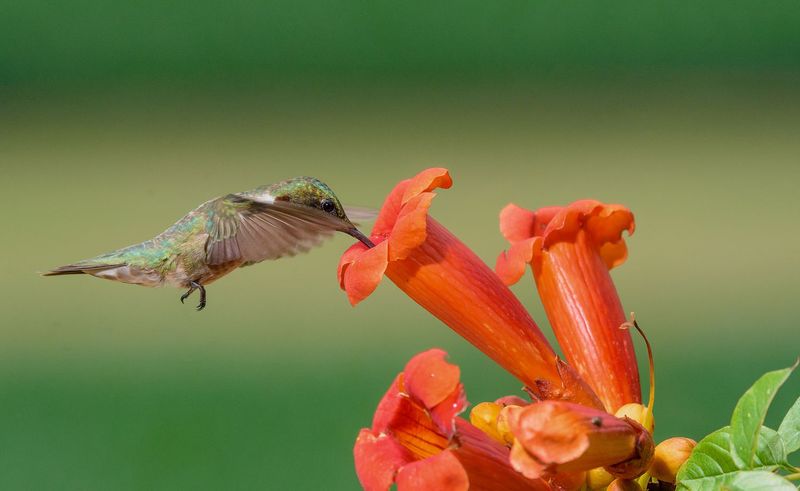
Few plants command attention the way trumpet vine does. When it is in full bloom, the clusters of bold orange-red flowers are almost impossible to ignore, and hummingbirds feel the same way.
This vigorous climber is native to the southeastern United States, including Texas, and it has been luring hummingbirds to backyard gardens for generations. If you have a fence, trellis, or pergola that needs covering, trumpet vine is your answer.
The trumpet-shaped flowers are wide enough to be visible from a distance, which helps hummingbirds spot them quickly while flying overhead. Each flower is packed with nectar, giving the birds a generous reward every time they visit.
Blooming typically peaks in summer, right when Ruby-throated and Black-chinned hummingbirds are most active across Texas. That timing makes trumpet vine a critical food source during the busiest part of the hummingbird season.
One thing to keep in mind is that trumpet vine grows fast, and it means it. Without some guidance and occasional trimming, it can spread beyond where you want it.
Planting it near a sturdy structure and pruning it once or twice a year will keep it manageable and looking great. It thrives in full sun and tolerates poor soil conditions, which makes it an ideal fit for the rugged Texas climate.
Even during hot, dry summers, this plant keeps producing those stunning blooms that hummingbirds simply cannot resist visiting.
3. Firebush
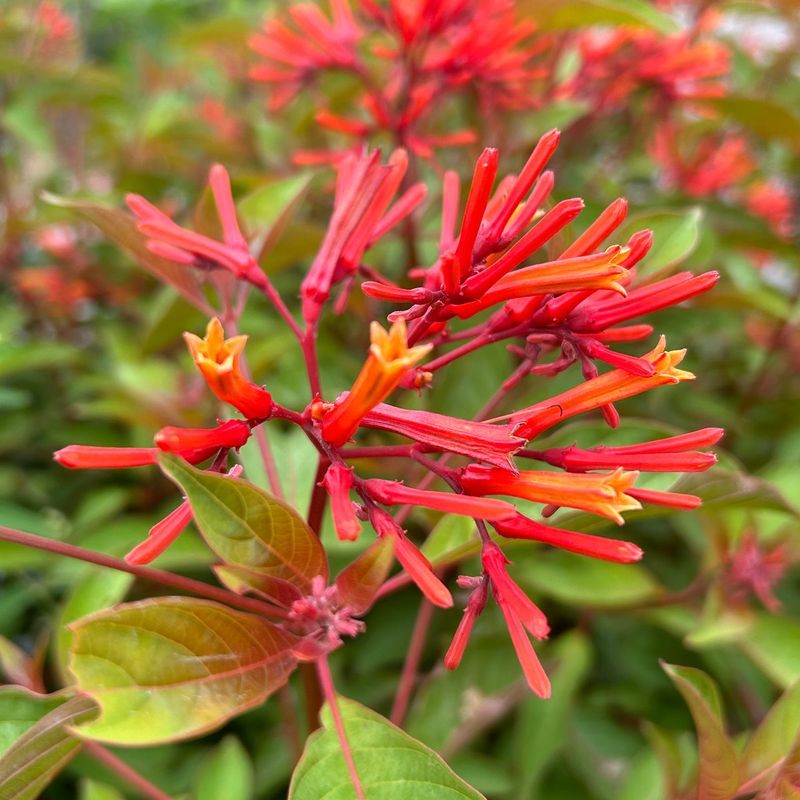
Walk past a firebush in full bloom and you will understand immediately why hummingbirds go wild for it. The plant practically radiates warmth with its clusters of red-orange tubular flowers that cover the shrub from late spring all the way through the first cool snap of fall.
In the warmest parts of Texas, such as the Rio Grande Valley and the Gulf Coast, firebush can act like a small tree and bloom almost year-round.
Native to tropical and subtropical regions, firebush is tailor-made for the Texas heat. It thrives in full sun, handles drought once established, and keeps producing flowers even when temperatures climb well above 90 degrees.
That kind of heat tolerance is exactly what Texas gardeners need. Hummingbirds, especially the Ruby-throated and Rufous species that pass through the state during migration, are drawn to the abundant nectar tucked inside each tubular flower.
Beyond the hummingbird appeal, firebush also attracts butterflies and produces small dark berries that songbirds enjoy. The foliage turns striking shades of red and orange in cooler weather, adding seasonal color to the landscape.
Plant it in a sunny border, near a patio, or as a colorful hedge along your property line. It pairs beautifully with other heat-loving Texas natives.
Give it room to grow since a well-established firebush can reach six feet or taller. For a plant that works this hard and looks this good, firebush deserves a permanent spot in every Texas hummingbird garden.
4. Coral Honeysuckle
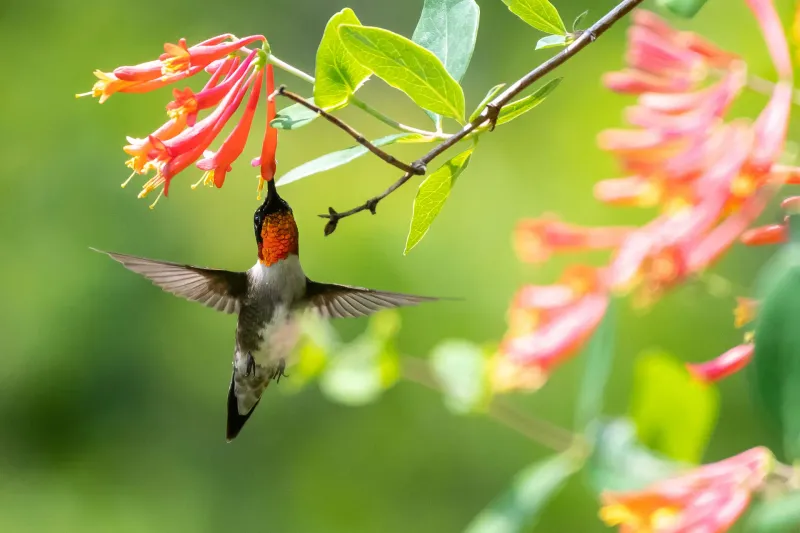
There is something genuinely special about a plant that is both beautiful and well-behaved. Coral honeysuckle earns that description every single time.
Unlike its invasive Japanese cousin, this native Texas vine stays where you put it and does not take over your entire yard. Gardeners across the state have come to love it for exactly that reason, and hummingbirds have loved it for much longer.
The flowers are long, slender, and a rich shade of coral red that practically glows in the sunlight. Hummingbirds are strongly attracted to that red color, and the tubular shape is a perfect match for their feeding style.
Coral honeysuckle blooms heavily in spring and continues producing flowers through summer, giving birds a reliable nectar source during two of the most active migration and nesting periods in Texas. After the flowers fade, small red berries form, which attract songbirds as a bonus.
Growing coral honeysuckle is straightforward. It performs well in full sun to partial shade and prefers well-drained soil, though it adapts to a range of conditions found across different Texas regions.
Train it along a fence, trellis, or garden wall for a stunning vertical display. It is also semi-evergreen in warmer parts of Texas, meaning you get foliage and structure in the garden even during cooler months.
For anyone who wants a low-fuss, native plant that genuinely pulls its weight in the hummingbird garden, coral honeysuckle belongs at the top of your planting list.
5. Red Yucca
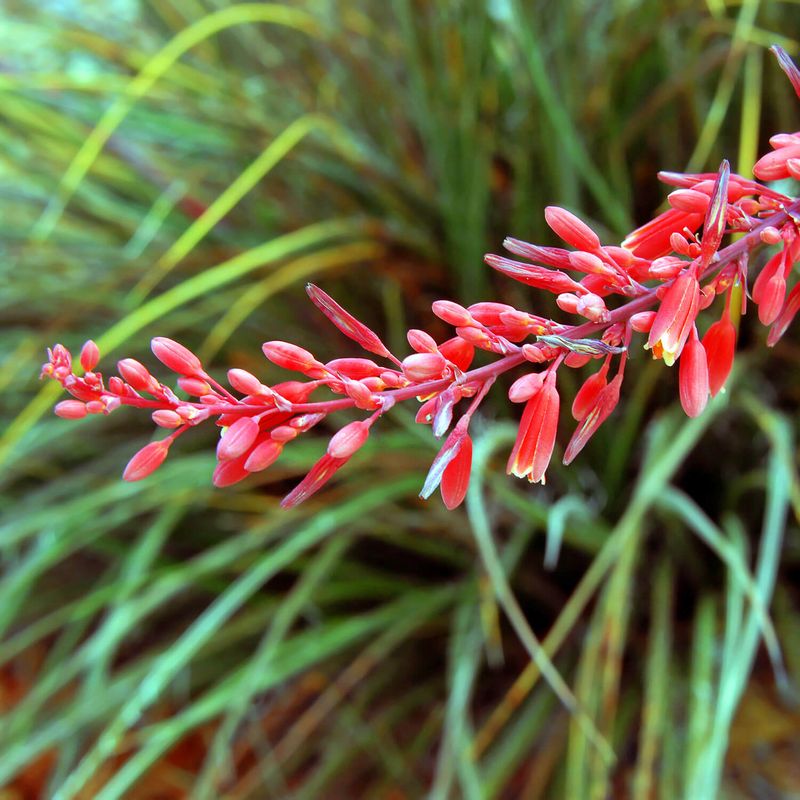
Do not let the name fool you. Red yucca is not actually a true yucca, but it is one of the toughest, most water-smart plants you can grow anywhere in Texas.
What makes it truly remarkable is how it combines extreme drought tolerance with long, arching flower spikes loaded with coral-red tubular blooms that hummingbirds find completely irresistible. It is a showstopper in the driest corners of any landscape.
The flower stalks can shoot up four to six feet tall, and each one is lined with dozens of narrow tubular blooms that open progressively from bottom to top.
That staggered blooming pattern means the plant offers fresh nectar over a much longer period than many other flowers.
Blooming typically runs from late spring through summer, sometimes stretching into early fall in warmer Texas regions. Hummingbirds quickly learn where the red yucca is and return to it repeatedly throughout the season.
From a practical standpoint, red yucca is almost unbeatable for low-water Texas landscapes. Once it is established, it needs almost no irrigation at all, surviving on natural rainfall even during the hottest and driest Texas summers.
It grows well in rocky, sandy, or poor soils, which makes it an excellent choice for Hill Country gardens, West Texas yards, and any space where water conservation matters. The grass-like foliage stays attractive year-round.
Plant red yucca in full sun for the best flowering performance, and enjoy watching hummingbirds visit those tall, colorful spikes all season long.
6. Cigar Plant
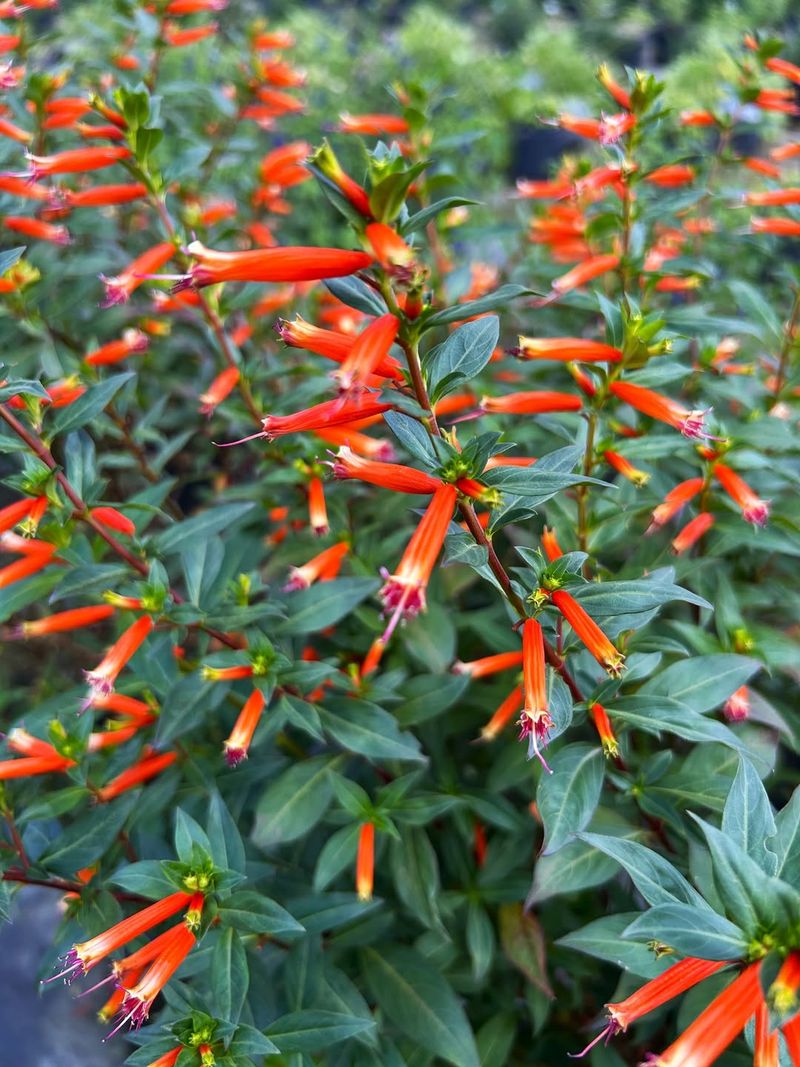
Quirky, cheerful, and surprisingly productive, the cigar plant is one of those garden gems that earns more attention than it usually gets.
The common name comes from the flowers themselves, which are small, bright, and tubular with a dark tip that really does look like a tiny lit cigar.
Hummingbirds do not care about the clever name, but they absolutely care about the steady supply of nectar those little blooms provide all season long.
One of the biggest advantages of the cigar plant is its nearly nonstop blooming habit. In warm Texas weather, which covers most of the year in many parts of the state, this plant just keeps going.
It does not take long breaks between bloom cycles the way some other plants do. That continuous production makes it an especially valuable plant for hummingbirds during late summer and fall, when some other nectar sources start to slow down.
Cigar plant works wonderfully in containers, which is a big plus for Texas gardeners with limited yard space or those who want to move plants around to follow the sun. It also performs well in garden borders and along pathways.
It prefers full sun and regular watering but is reasonably forgiving if you miss a day or two. The plant stays compact, usually reaching around two feet tall, making it easy to manage.
For anyone looking for a fun, reliable, and hummingbird-friendly addition to their Texas garden, the cigar plant delivers every single time without fail.
7. Turk’s Cap
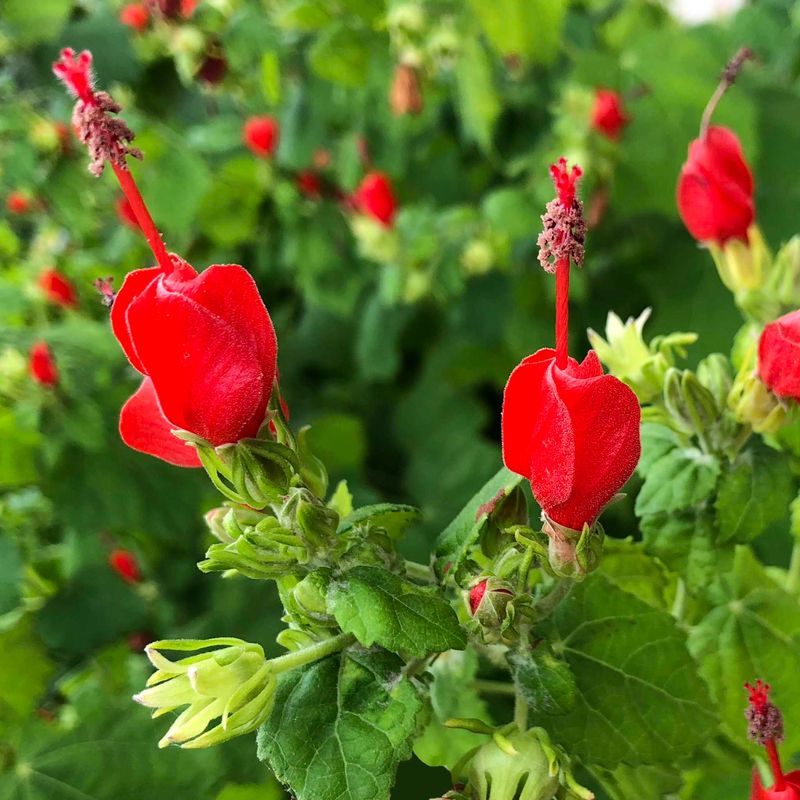
Most flowers open wide to show off their petals, but Turk’s Cap plays by its own rules. The bright red blooms stay tightly twisted and never fully open, forming a shape that looks like a small, coiled turban.
That unique design creates a protected nectar chamber that hummingbirds have figured out how to access perfectly. It is a fascinating example of how a plant and a bird can evolve together in the same Texas landscape.
What sets Turk’s Cap apart from many other hummingbird plants is its ability to thrive in partial to full shade. Most nectar-producing plants demand full sun, which limits where you can use them in the garden.
Turk’s Cap fills the shady gaps beautifully, making it an excellent choice for spots under trees, along shaded fences, or in woodland-style garden beds.
It blooms from early summer through fall, offering a long and reliable feeding window for hummingbirds passing through or nesting in Texas.
As a true Texas native, Turk’s Cap is well adapted to the state’s heat, humidity, and occasional drought. It grows vigorously once established and can reach four to nine feet tall in ideal conditions, creating a lush, shrubby presence in the garden.
After blooming, it produces small red fruits that birds and wildlife enjoy. Cut it back in late winter to encourage fresh, full growth in spring.
For Texas gardeners who want a dependable, native hummingbird favorite that thrives where other plants struggle, Turk’s Cap is a natural and rewarding choice.