The California Native Shrubs That Quietly Outperform Privet For A Privacy Screen
Privacy in a California yard often comes with a hidden price tag. Endless trimming, weekly watering, and a hedge that offers little to passing wildlife can wear on any gardener.
A different option has thrived on hillsides and in canyons for thousands of years. These plants block views as well, often with a fraction of the effort.
Bees hum through their flowers, birds feast on their fruit, and summer sprinklers can take a break.
Each one brings its own personality, from glossy and tidy to wild and berry-studded.
Fire safety and spacing still matter, and a little planning keeps things working together.
Fall planting gives these quiet achievers a head start, and the neighbors may wonder where the hedge trimmer went.
1. Toyon Builds A Tall Evergreen Wall
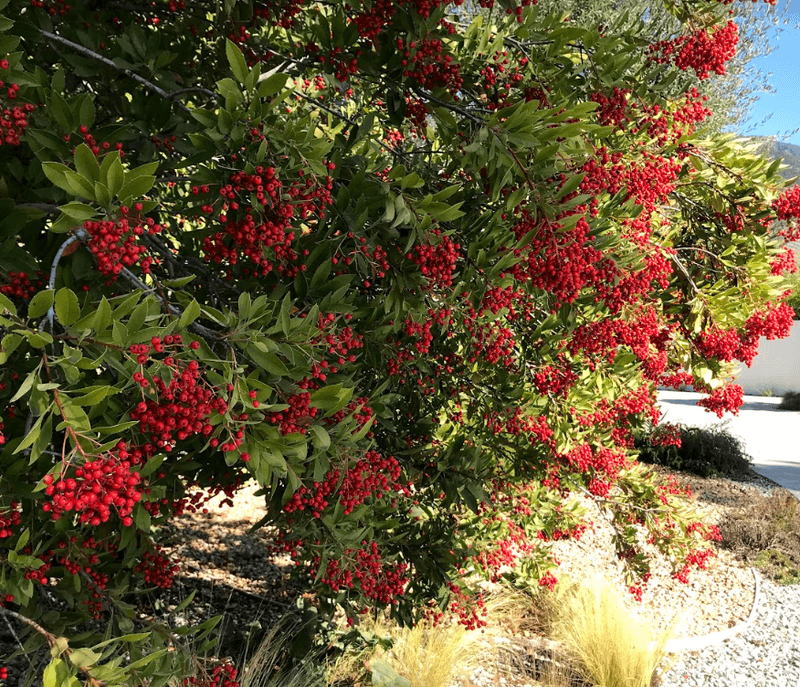
Red berries in December give toyon away from across the street. Birds notice, too, and robins and cedar waxwings can strip a shrub clean in a single afternoon.
Few hedges throw a better holiday party. Toyon, sold by nurseries as Heteromeles arbutifolia, usually reaches 6 to 15 feet tall and about as wide.
Growth runs moderate, bringing steady progress rather than an overnight wall. Full sun or part shade suits it, and it handles clay, sand, and slopes with ease.
Water is where toyon pulls ahead of privet. Once established, it needs only occasional deep watering, or none at all near the coast.
Privet, by contrast, tends to look its best only with regular irrigation and frequent shearing.
Some privets, glossy privet in particular, also spread by bird-carried seed into creeks, and Cal-IPC tracks it as an invasive concern.
Summer brings flat clusters of small white flowers that draw bees and butterflies. Berries follow in fall and color up through winter.
Many people believe early Hollywood took its name from these holly-like shrubs on local hills.
For a screen, plants spaced about 6 to 8 feet apart fill in nicely. Light pruning in late winter keeps them full at the base, while heavy shearing removes next year’s flowers.
A few feet of space from fences and walls lets air move and keeps the back side reachable. In fire zones, toyon belongs well away from the house, with brittle branches trimmed out each year.
2. Coffeeberry Fills In With Glossy Leaves
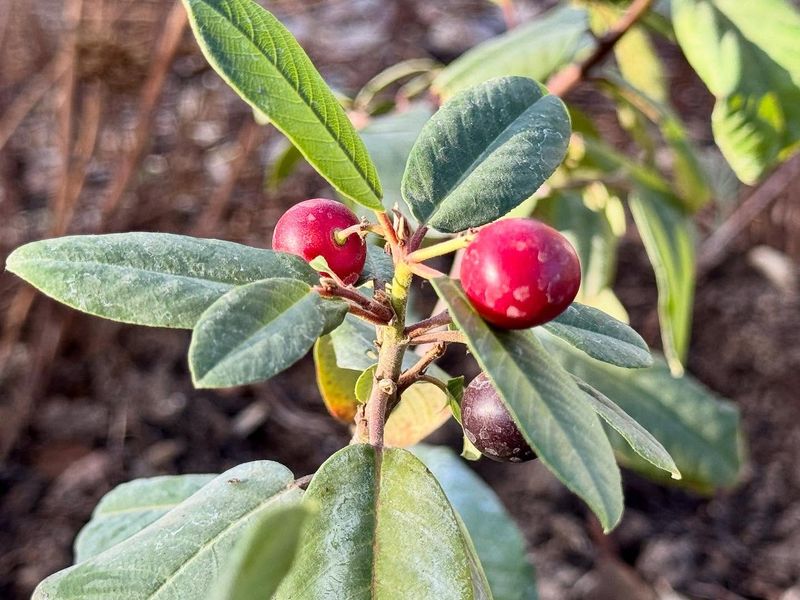
Shiny leaves catch the light on coffeeberry as if freshly polished. Neighbors sometimes guess it’s a fancy imported shrub, yet it grows wild from Oregon down to Baja California.
California coffeeberry, sold as Frangula californica, usually grows 4 to 10 feet tall and wide. Some plants reach 15 feet in good spots.
Growth runs moderate. Full sun suits it near the coast, while afternoon shade helps in hot inland gardens.
Once rooted in, coffeeberry gets by on very little summer water. A deep soak once or twice a month in hot areas is plenty, and coastal plants may need none.
Privet often sits on the same weekly sprinkler schedule as the lawn. That difference adds up quickly on a water bill.
The name comes from the berries, which turn green, then red, then nearly black. They resemble coffee beans, though brewing them is best avoided.
Your California Garden Changes Every Week. Your Plan Should Too.
Gardening in California changes quickly throughout the season. Every Friday you’ll receive a simple weekly plan showing exactly what to plant, prune, fertilize, harvest, and protect so you never miss the right timing.
Thrashers, mockingbirds, and band-tailed pigeons happily eat them in late summer and fall. A single shrub can feed a steady stream of visitors.
Selection matters a great deal. Larger forms work best for screening, while compact ones like Mound San Bruno stay shorter.
A native nursery can point toward a tall-growing type for hiding a second-story window.
Plants spaced 5 to 6 feet apart form a full screen. Coffeeberry takes light shaping well, and a quick late-winter trim keeps it tidy without losing its relaxed, natural look.
3. Pacific Wax Myrtle Grows Dense And Fast
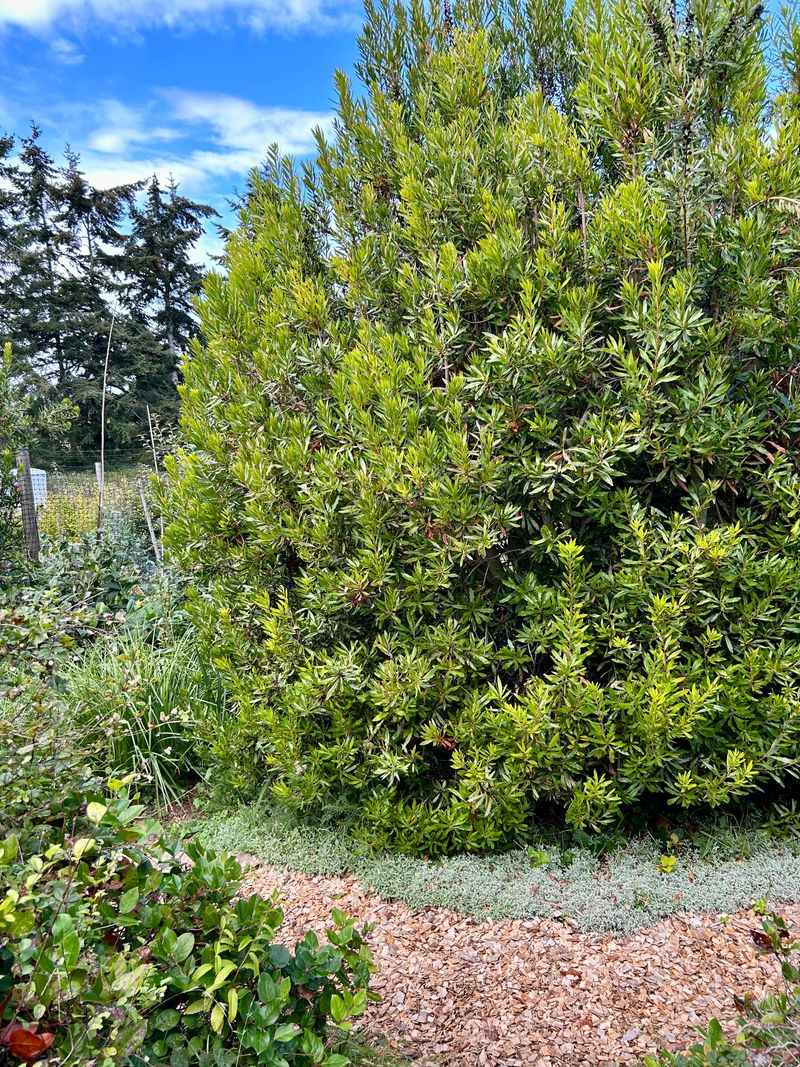
Coastal fog rolls in, and Pacific wax myrtle practically cheers. Gardeners near the ocean have long used it to hide patios, block wind, and soften fences.
Among the natives here, few match its tight, leafy growth. Nurseries may list it as Morella californica, though older tags still read Myrica californica.
This shrub commonly reaches 10 to 20 feet tall and 10 to 15 feet wide, sometimes more. Growth runs moderate to fast, with full sun along the coast and part shade inland.
One honest catch deserves mention. Wax myrtle prefers moister soil and cooler air than most plants on this list.
Near the coast it may need little extra water, but hot inland valleys call for regular summer irrigation. That still often beats thirsty privet, though it’s hardly a desert plant.
Narrow, glossy leaves release a light fragrance when crushed. Small purple fruits with a waxy coating appear in fall, and birds such as yellow-rumped warblers eat them.
Early East Coast settlers boiled wax from related plants to make bayberry candles. That history gives the shrub an old-fashioned charm.
Wax myrtle handles shearing well, so it can fill the formal hedge role privet usually plays.
Plants spaced 5 to 8 feet apart form a solid wall, and trimming the top slightly narrower than the bottom keeps the base full.
A spot with decent drainage works best, even where soil stays a bit damp. In fire-prone neighborhoods, it belongs well away from the house.
4. Catalina Cherry Stretches Into A Tall Screen

Blocking a two-story view takes serious height. Most hedges top out long before reaching a neighbor’s upstairs window, but Catalina cherry keeps climbing.
This native comes from the Channel Islands off Southern California, and nurseries often list it as Prunus ilicifolia subsp. lyonii.
It can grow 15 to 30 feet tall and about 15 to 20 feet wide, acting more like a small tree than a shrub.
Growth runs moderate, though some young plants surprise owners with a fast start. Full sun or part shade suits it well.
Once established, it handles dry summers nicely and needs only occasional deep watering. Good drainage matters, and coastal or mild inland areas keep it lush with little help.
Spring brings creamy white flower spikes that bees love. By late summer, dark purple cherries appear.
The thin flesh is edible and sweet, though the large pit makes it mostly a fun novelty. Birds and other wildlife enjoy the fruit far more than people do.
Compared with privet, Catalina cherry offers height, glossy evergreen leaves, and real wildlife value without constant clipping. Fallen fruit can be messy, so driveways and patios make poor neighbors for it.
For a screen, plants spaced 8 to 10 feet apart work well. Lower limbs stay on for full coverage, or come off only when a tree shape is the goal.
In fire country, spent growth is best cleared regularly. Fall planting gives roots a head start before the next dry season.
5. Lemonade Berry Handles Coastal Wind
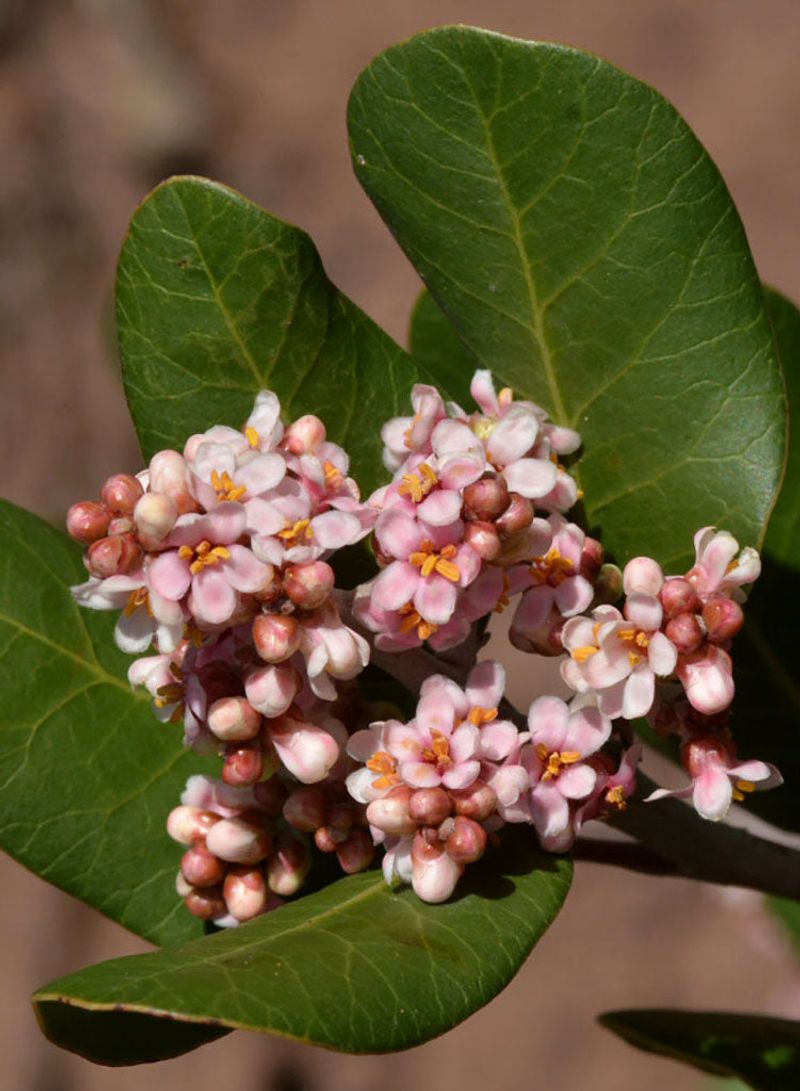
Salt spray, sandy soil, and a steady sea breeze can wreck a privet hedge. Lemonade berry shrugs it off, growing on Southern California bluffs right where the wind hits hardest.
Sold as Rhus integrifolia, this shrub usually grows 3 to 10 feet tall and spreads 6 to 15 feet wide, sometimes larger with age. Growth runs slow to moderate.
Full sun and coastal conditions suit it best. It handles some inland heat with afternoon shade.
Once established, it needs very little summer water. Too much irrigation and poor drainage can actually cause root problems.
Deep watering during the first two summers, followed by occasional soaks during long heat spells, sets it up well. After that, rainfall carries much of the load.
Thick, leathery leaves stay green all year. Pink and white flower clusters appear in late winter and early spring, drawing native bees.
Sticky, reddish fruits follow. Native peoples soaked the tart berries in water to make a lemony drink, which earned the shrub its zesty name.
A wide growth habit calls for spacing of 8 to 10 feet and plenty of room.
It works beautifully as an informal windbreak along a fence or slope, looking best with a natural, rounded form rather than heavy shaping.
Birds use the dense branches for shelter and nesting. Privet offers cover, too, but lemonade berry adds native flowers and fruit without the watering bill.
6. Sugar Bush Offers Thick Leathery Foliage
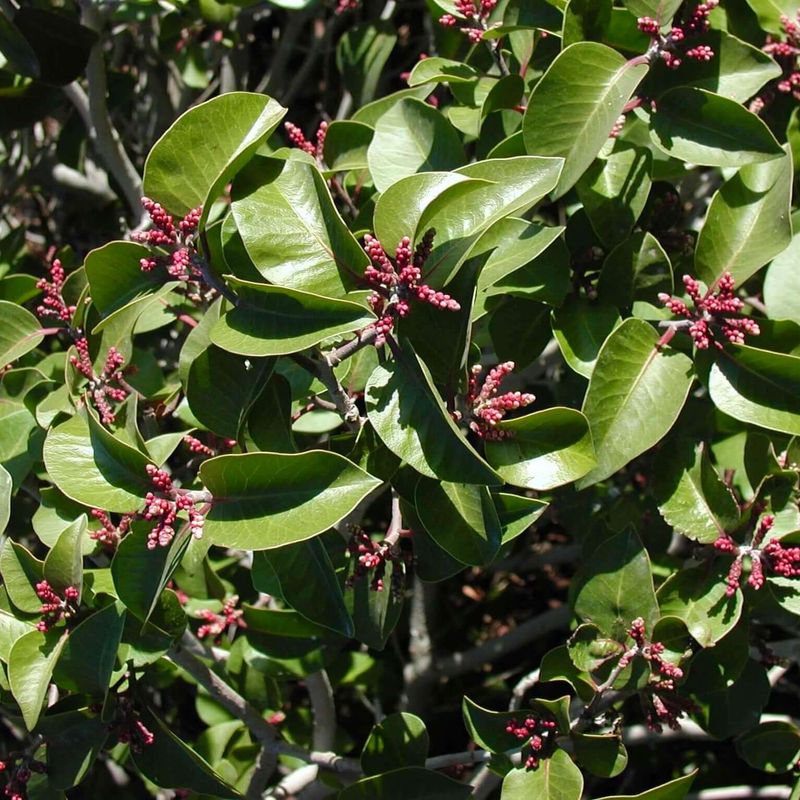
Each leaf feels almost like soft leather between the fingers. It folds slightly along the middle, a bit like a taco shell, and that thick armor helps the plant hold moisture through hot, dry summers.
Sold as Rhus ovata, sugar bush is a close cousin of lemonade berry. It usually grows 4 to 10 feet tall and wide, sometimes reaching 15 feet.
Growth runs slow to moderate, so patience pays off. Full sun and soil that drains well suit it best.
Where lemonade berry prefers the coast, sugar bush thrives farther inland. It handles heat and drought better than many shrubs once established.
After the first couple of years, occasional deep watering in summer is usually enough. Soggy soil remains its biggest threat.
Red buds open into pink and white flowers in late winter and spring. Bees flock to them when little else is blooming.
Small fuzzy fruits follow, coated in a sugary film that gives the plant its sweet name. Birds eat the fruit and shelter in the dense branches.
Compared with privet, sugar bush needs far less water and almost no clipping, since its natural rounded form fills space on its own.
Plants spaced 6 to 8 feet apart make a fine screen, and heavy shearing into a box shape is best skipped.
On slopes, its roots help hold soil in place. Near homes in fire zones, good spacing and regular removal of brittle growth keep it safer.
7. Coast Silktassel Adds Winter Tassels
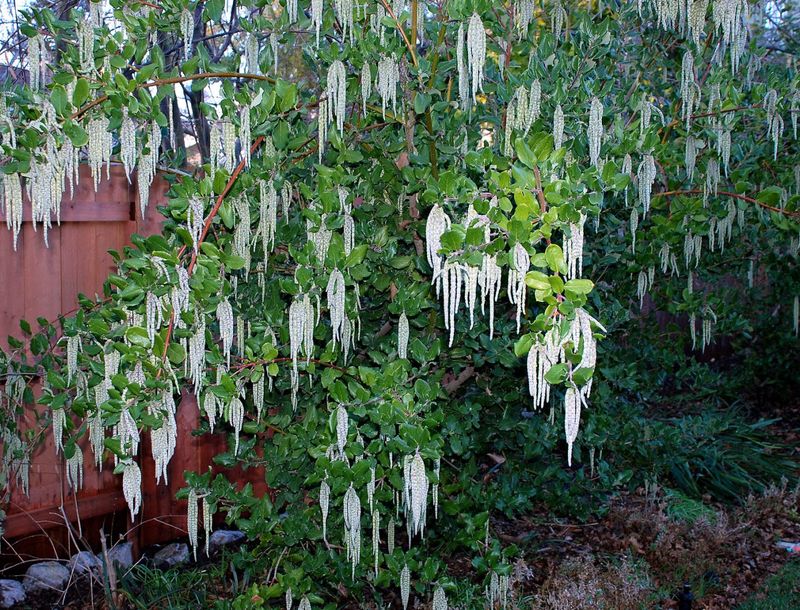
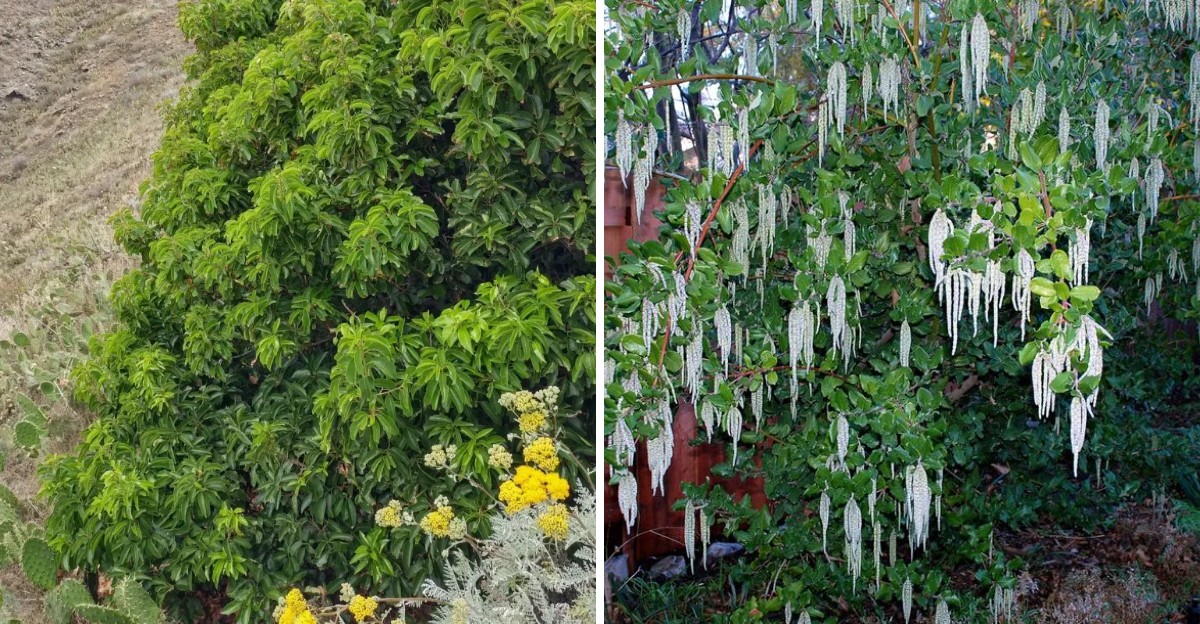
January gardens can look a little sleepy. Then coast silktassel shows up dripping with long, silvery tassels, like a shrub dressed for a winter gala. Passersby often stop to ask about it.
Sold as Garrya elliptica, coast silktassel usually grows 8 to 15 feet tall and about as wide, with some plants reaching 20 feet. Growth runs moderate.
Its leaves are dark green on top, woolly gray underneath, and wavy along the edges. The texture adds interest year-round.
The famous tassels are catkins, long chains of tiny flowers. Male plants produce the longest and showiest ones, sometimes 6 to 12 inches long.
Named male selections like James Roof deliver that dramatic look most reliably. Female plants make shorter tassels and later carry clusters of purple fruit that birds eat.
Silktassel grows naturally near the coast and prefers that mild climate. Full sun suits it near the ocean, while part shade works better inland.
Once established, it needs little summer water, though good drainage matters a great deal. Hot, dry inland spots stress it, so afternoon shade and an occasional deep drink help there.
Privet offers green walls and not much else. Silktassel delivers a screen with a showpiece season right when gardens need it most.
Plants spaced 6 to 8 feet apart form a handsome screen. Pruning right after the tassels fade protects next winter’s display from accidental removal.
8. Ray Hartman Ceanothus Rises Into A Blooming Screen
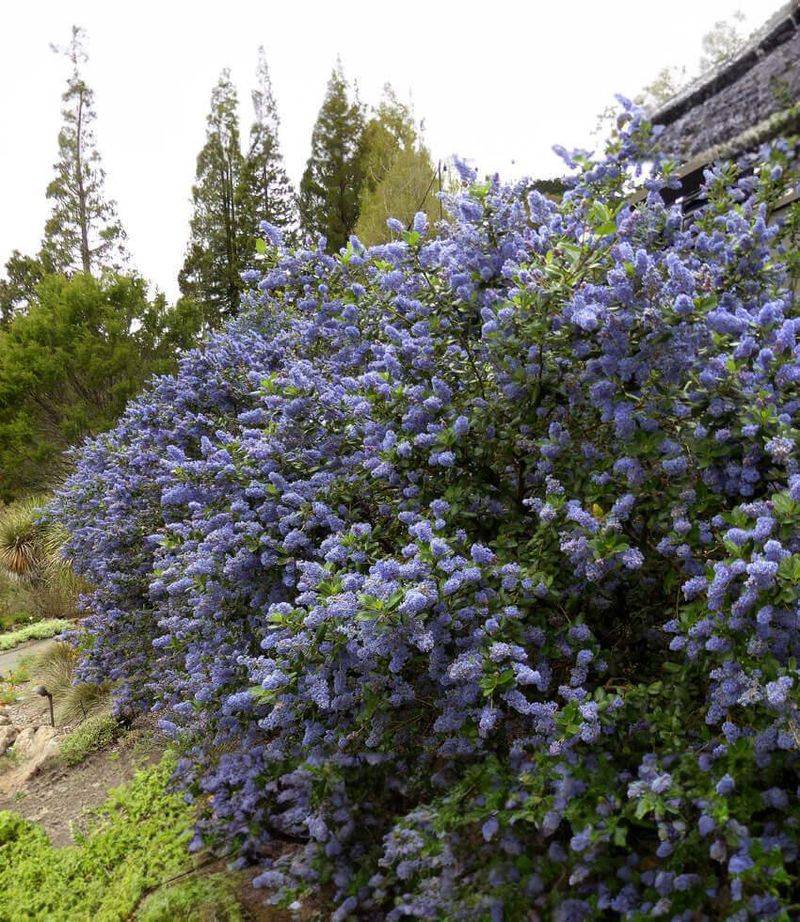
Spring arrives, and suddenly the whole shrub turns blue. Bees buzz so loudly around Ray Hartman ceanothus that the hum carries all the way to the porch, a show privet flowers can’t match.
Ray Hartman is a hybrid California lilac selected decades ago and named for a California nurseryman. It ranks among the largest ceanothus choices, often growing 12 to 20 feet tall and 10 to 20 feet wide.
Growth runs fast for a native. It works as a big shrub or can be trained into a small tree.
Full sun keeps it dense and flowering well. Drainage, though, makes or breaks success.
Ceanothus needs soil that drains quickly and little to no summer water once established. Too much irrigation in warm weather invites root rot, the most common reason these plants struggle in gardens.
Deep watering during the first year or two, then a gradual taper, sets it up well. Spots near lawns or under sprinklers that soak the roots are best avoided.
Light mulch kept away from the trunk helps, too. Ceanothus generally lives shorter than toyon or coffeeberry, often 10 to 20 years.
Its quick growth makes up for that, filling gaps while slower shrubs catch up. Paired with the others on this list, it creates a mixed, layered screen.
Plants spaced 8 to 10 feet apart have room to spread. Light pruning after bloom keeps it tidy, and in fire-prone areas, it belongs well away from walls.