California Groundcovers That Cool The Soil And Cut Water Use In Half
Bare soil in a California summer does not stay harmless for long.
It bakes. It cracks. It sheds water during irrigation, heats up plant roots, and sends moisture back into the air before the garden gets much benefit.
In sunny yards, that exposed surface can feel less like soil and more like a skillet.
That is why living groundcovers deserve a serious look.
The right low-growing plants shade the soil, slow evaporation, reduce runoff, cool the root zone, and keep weeds from taking over every open patch.
In many yards, they can cut irrigation needs dramatically compared with thirsty turf or bare ground that needs constant rescue.
Results vary by climate, soil, slope, plant choice, and irrigation setup, but the principle stays simple: covered soil uses water better.
So which groundcovers can handle California heat while helping the garden drink less?
Start with tough spreaders that stay low, protect the ground, and keep working long after mulch has faded into dust.
1. Dymondia
That brutal strip between concrete and curb needs something tougher than ordinary lawn.
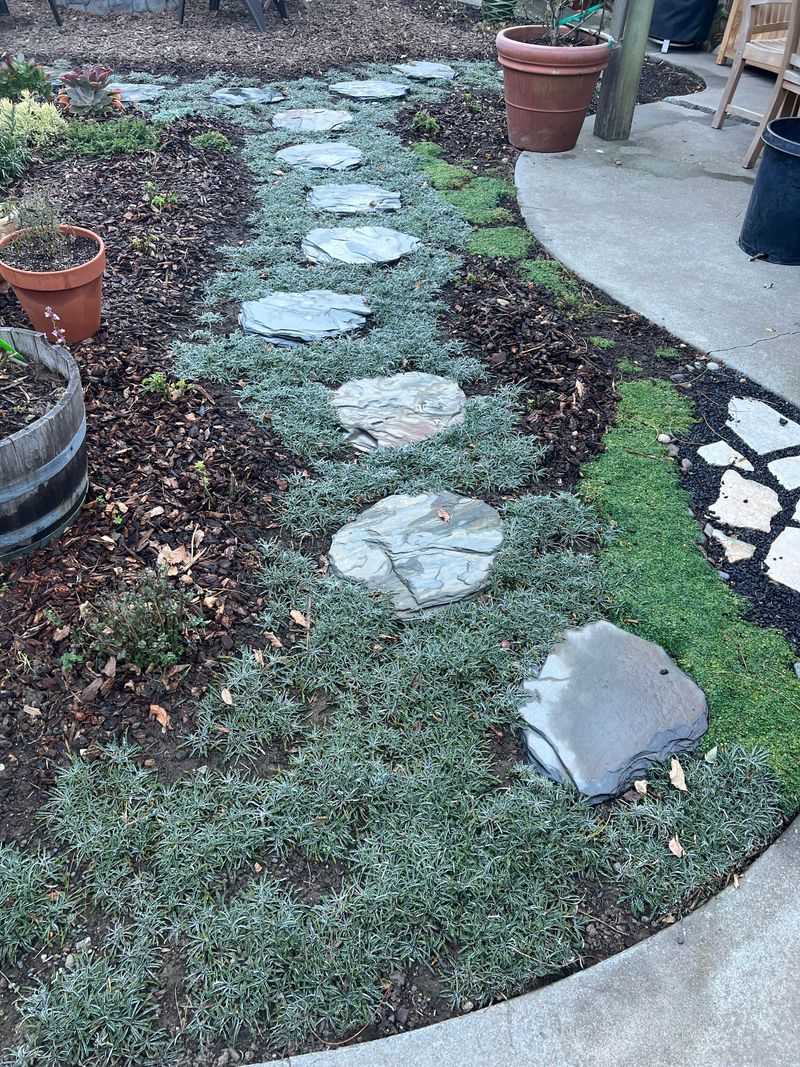
Dymondia thrives where reflected heat makes many plants quit. It creeps into a tight silver-green mat that stays extremely low, usually under two inches, and covers bare soil with a dense layer of narrow leaves.
That low mat does real work.
By shading the soil surface, it slows evaporation and keeps the root zone cooler. Instead of water flashing away from exposed ground, moisture stays available longer beneath the living cover.
It also handles light foot traffic.
Dymondia works well between stepping stones, along driveway strips, and in sunny edges where people occasionally step. It is not meant for heavy play areas, but it can manage casual use better than many delicate groundcovers.
Drainage matters.
This plant dislikes soggy winter soil, so it performs best in well-drained areas. Clay-heavy sites may need soil improvement or raised planting pockets before it settles in.
Water regularly during establishment.
Plugs spaced six to eight inches apart need consistent moisture through the first warm season. Once roots spread, irrigation can usually be reduced to deep, occasional watering.
Small yellow flowers may appear in summer.
They are a sweet bonus, but the real value is the cool silver carpet that turns one of the hottest parts of the yard into a low-water planting that looks intentional instead of scorched.
2. Kurapia
A shrinking lawn needs a replacement that can actually fill space.
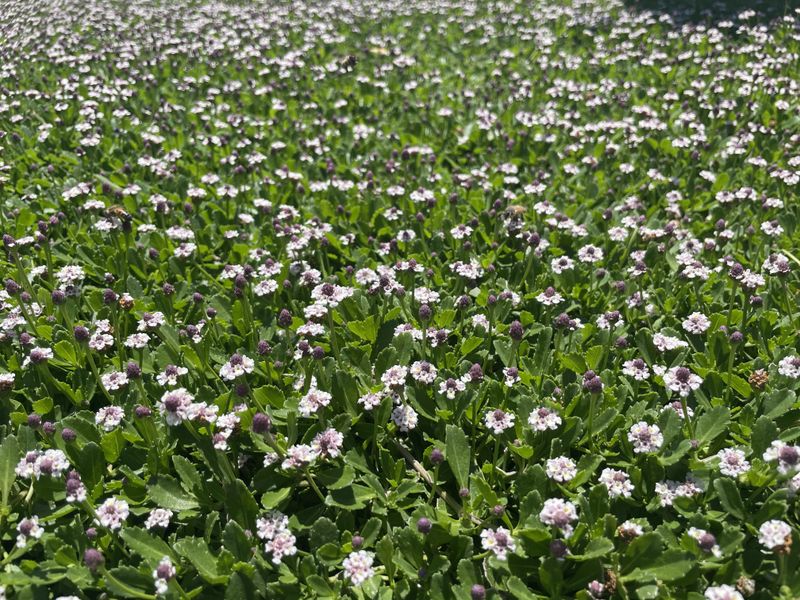
Kurapia spreads quickly by runners, forming a dense green carpet that can cover bare ground faster than many low-water alternatives. It stays low, blooms with tiny white flowers, and works especially well where homeowners want a living surface instead of thirsty turf.
Water savings are one of its biggest strengths.
Once established, Kurapia can use far less irrigation than a traditional cool-season lawn. In many California landscapes, that reduction can be dramatic, especially with efficient irrigation and smart scheduling.
It shades soil beautifully.
The dense growth covers the ground, limits evaporation, and reduces open space where weed seeds can sprout. A full Kurapia mat helps the soil hold moisture instead of losing it between waterings.
Your California Garden Changes Every Week. Your Plan Should Too.
Gardening in California changes quickly throughout the season. Every Friday you’ll receive a simple weekly plan showing exactly what to plant, prune, fertilize, harvest, and protect so you never miss the right timing.
Pollinators visit the flowers.
Bees often work the blooms during warm months, so gardeners who want fewer pollinators near patios or play areas may prefer to mow occasionally or plant it away from high-traffic lounging zones.
It handles moderate use.
Kurapia can take more foot traffic than many flowering groundcovers, though it is still not the same as athletic turf. Pathways, front yards, parkways, and low-use lawn replacements are better fits than rough play spaces.
Give it sun and drainage.
Regular water helps it establish during the first season. After that, irrigation can usually be reduced significantly.
Kurapia is not a tiny accent plant.
It is a serious ground-covering machine, and that is exactly why California gardeners keep paying attention.
3. Coyote Brush Pigeon Point
A dry slope needs roots, shade, and staying power.
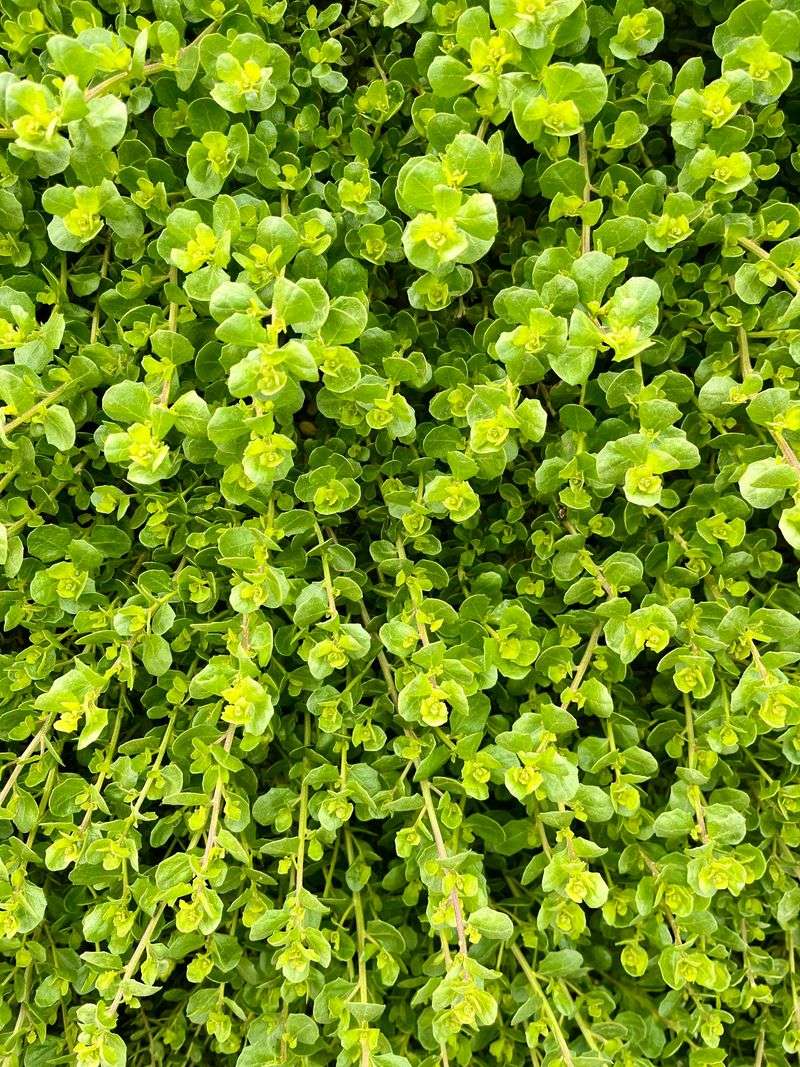
‘Pigeon Point’ coyote brush brings all three. This low-growing selection of a California native spreads wide, holds soil, and creates evergreen coverage on banks, edges, and large bare spaces that lose moisture fast.
The plant grows as a dense mound.
It usually stays around one to two feet tall while spreading several feet across. That broad canopy shades the soil and reduces the exposed surface that heats up during summer.
Slopes benefit especially.
Bare banks shed irrigation water and erode during winter rain. A mature planting of ‘Pigeon Point’ helps slow runoff, anchor the soil, and reduce the need for constant mulch replacement.
Water needs drop after establishment.
During the first couple of summers, deep occasional irrigation helps roots settle. Once mature, it can survive with very little supplemental water in many coastal and mild inland areas.
Fall flowers support wildlife.
Small pale blooms attract native bees and beneficial insects at a time when many other plants have already finished. Birds may also use the dense growth for cover.
Maintenance should stay thoughtful.
Remove dead wood, keep plants from burying paths, and give them enough space to spread. Avoid shearing them into stiff shapes that trap dry debris inside.
‘Pigeon Point’ is practical more than polite.
Give it room, and it can turn a hot, eroding slope into a cooler, steadier piece of landscape.
4. Carmel Creeper
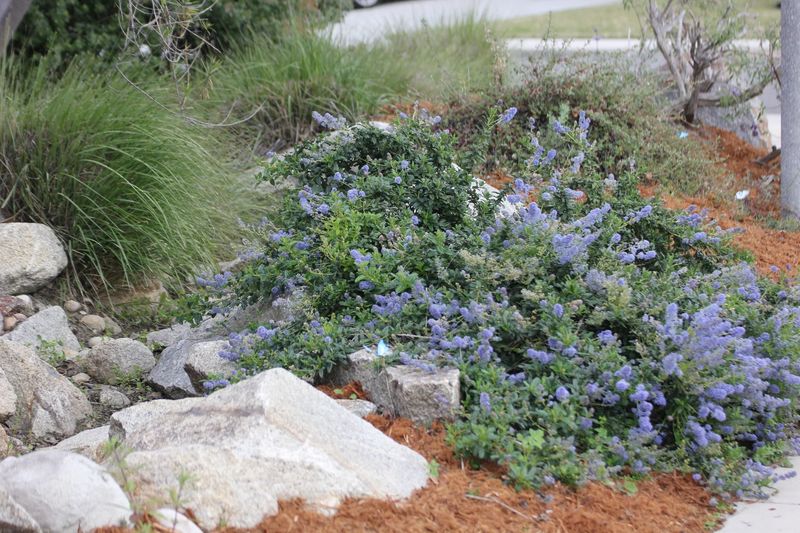
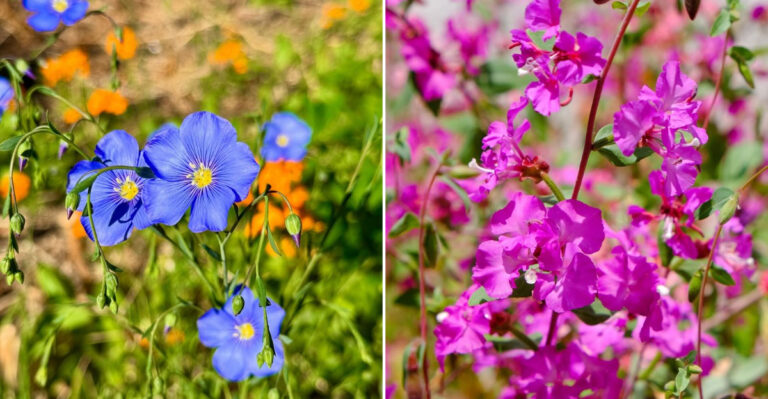
A sunny bank can become a blue-flowered blanket.
Carmel Creeper brings glossy evergreen leaves and a spectacular spring bloom, but its value lasts far beyond flower season. Once established, it covers dry ground, shades soil, and helps reduce erosion on exposed California slopes.
It wants a Mediterranean rhythm.
Cool-season moisture helps it establish. Dry summers suit it once roots are deep. Too much summer irrigation can create problems, especially in poorly drained soil.
Drainage is essential.
This plant performs best in full sun with fast-draining ground. Heavy clay that stays wet can lead to root issues, so placement matters more than pampering.
The spread is generous.
A single plant can reach several feet wide over time, making it useful for larger areas where small groundcovers would take forever to fill. That dense coverage also makes it harder for weeds to gain a foothold.
The soil underneath benefits.
Shade from the canopy reduces surface heat and moisture loss. On slopes, the plant also slows runoff and helps protect soil during winter rains.
Prune lightly after bloom only as needed.
Heavy cutting can spoil its natural shape. A little shaping keeps it from overwhelming paths or neighboring plants.
Carmel Creeper is showy in spring and sensible the rest of the year.
That is a rare combination, and California slopes could use more of it.
5. Hummingbird Sage
Shaded dry spots need a groundcover with different skills.
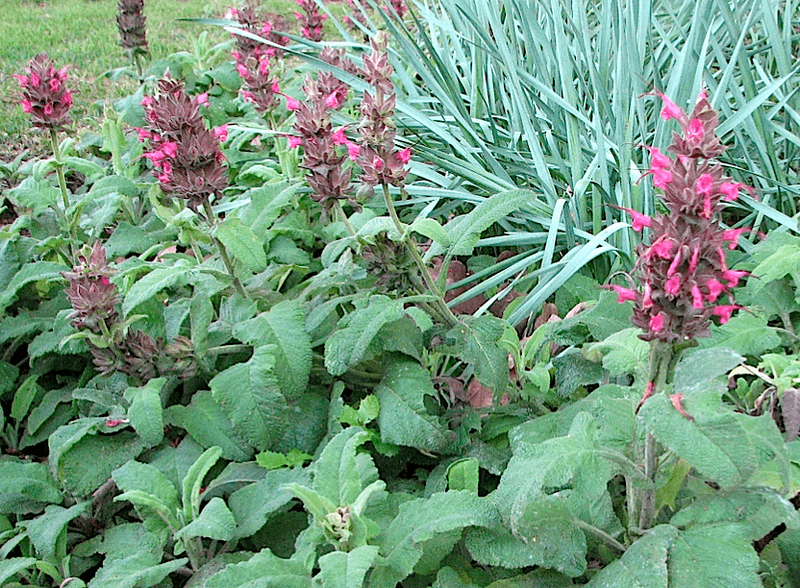
Hummingbird sage fills that role beautifully under oaks, along north-facing fences, and in part-shade garden edges. Its broad, fragrant leaves spread by rhizomes, creating a living layer over soil that would otherwise dry and crust.
The foliage cools the ground.
Those wide leaves shade the soil surface and help conserve moisture in places where bark mulch alone often thins out or slides away. In shade, that coverage can make a real difference.
The scent is unforgettable.
Brush the leaves, and the fragrance rises immediately, earthy, sweet, and herbal. It makes the plant feel alive even when it is not in bloom.
Spring flowers bring hummingbirds.
Tall magenta flower spikes appear when many gardens need color, and hummingbirds find them quickly. The blooms also add height above the low leafy mat without turning the plant into a shrub.
It prefers shade or part shade.
In hot inland sun, it may need more water and can look tired by midsummer. Under trees or in bright shade, established plants become far more drought-tolerant.
Fall planting works best.
Cool-season planting gives roots time to settle before the first hard summer. Water through the first dry season, then reduce irrigation once the patch spreads.
Hummingbird sage is not a turf replacement.
It is better than that for the right spot: fragrant, native, soil-cooling, wildlife-friendly coverage for shade that used to look impossible.
6. California Fuchsia
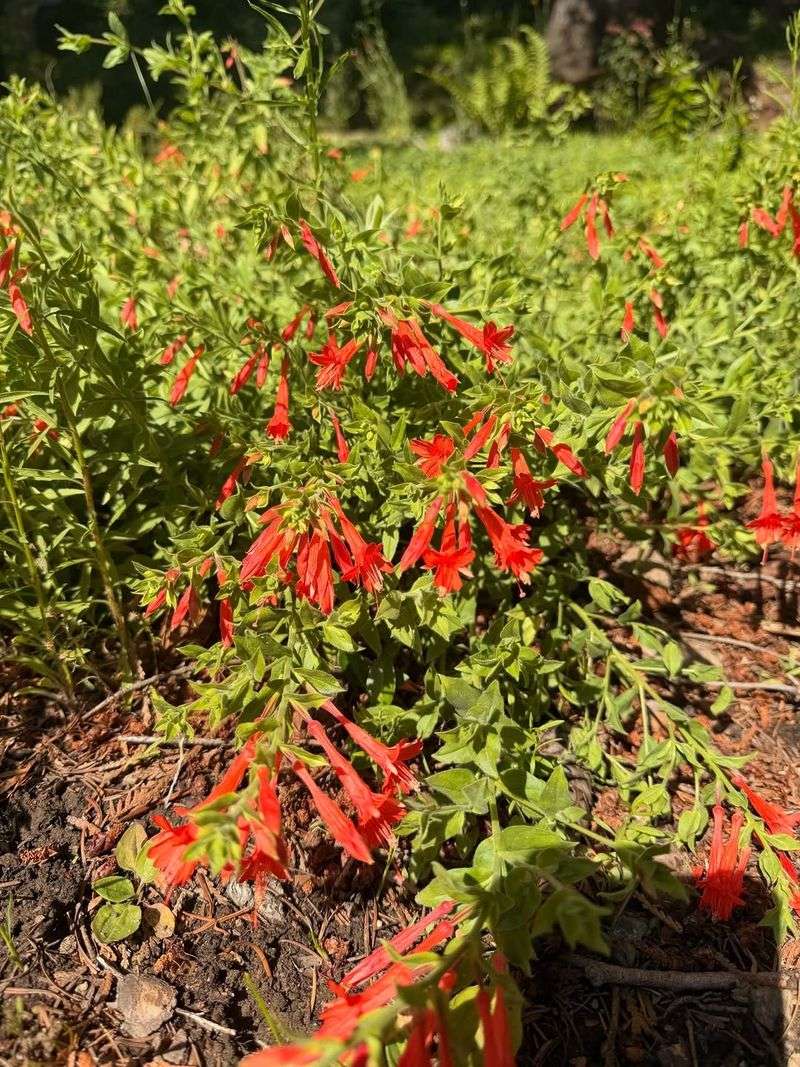
Late summer color usually costs water, but this plant breaks the rule.
California fuchsia waits until many gardens look tired, then opens bright orange-red tubular flowers just when hummingbirds are searching hard for nectar. Beneath the bloom show, it also covers hot, dry soil with spreading stems and runners.
This is a tough native for exposed spots.
Sunny borders, dry banks, and open spaces between larger shrubs can all suit it when drainage is good. The plant spreads into a loose mat that shades soil and slows moisture loss.
It asks for restraint.
Established California fuchsia often performs best with little summer water. Too much irrigation, especially in heavy soil, can make it floppy or cause root problems.
Winter cutting keeps it fresh.
A hard cutback in late winter encourages vigorous new growth and prevents the plant from becoming woody and tangled. That one task makes the difference between a tired patch and a strong one.
Hummingbirds are the main audience.
The flowers arrive at a perfect time for them, and they return repeatedly once the plant is in bloom. A patch near a window or patio can become a late-season show.
Choose the right form.
Different selections vary in height, spread, and tidiness. Smaller cultivars work better near paths, while looser forms can cover larger dry areas.
California fuchsia does not try to look lush in June.
It saves its best performance for the moment the garden needs it most.
7. Beach Strawberry
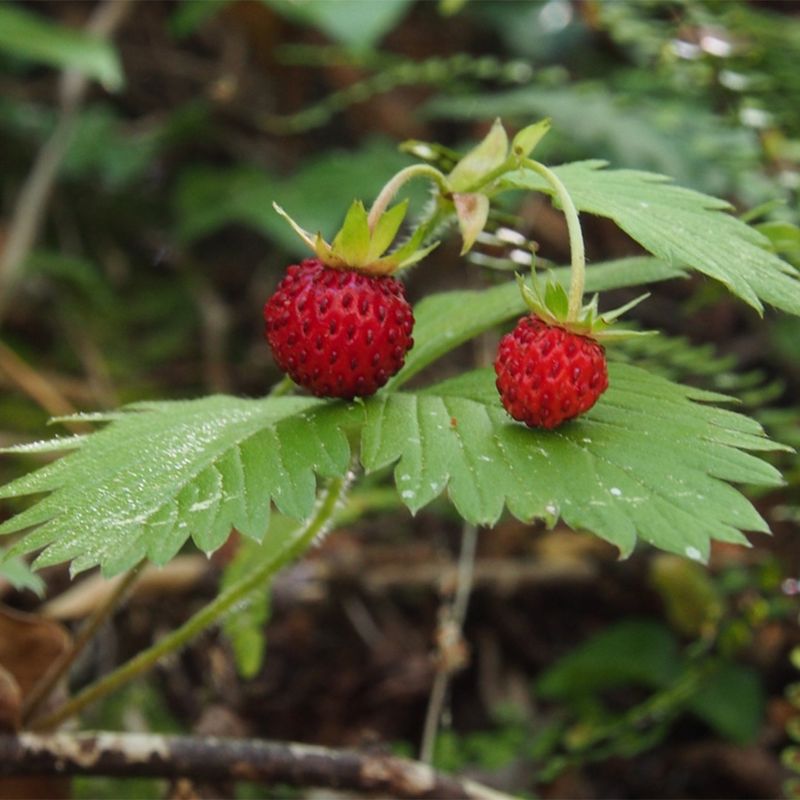
A living mulch can come with flowers and fruit.
Beach strawberry spreads by runners, weaving a mat of glossy green leaves across the soil. It is especially useful in coastal gardens, mild inland areas, and spaces with morning sun plus some afternoon relief.
The soil stays cooler beneath it.
A filled-in patch shades the surface, reduces evaporation, and limits weed germination. Compared with bare ground or thirsty turf, that living cover can make irrigation more efficient.
It handles light foot traffic.
Beach strawberry can work along paths, between stepping stones, and in lawn-alternative areas that get occasional use. Heavy, constant traffic will thin it, but casual stepping is usually fine once established.
Spring flowers add charm.
White blooms appear before small red fruits. The berries are edible, though often small and tart, and birds may appreciate them even more than gardeners do.
Water needs depend on location.
Coastal sites and mild foothill gardens may need moderate irrigation. Hot inland spots with reflected heat require more water and may need afternoon shade to stay attractive.
Runners help it repair gaps.
When a section gets disturbed, nearby runners can root and fill in again. That makes it more forgiving than some slower groundcovers.
Beach strawberry is cheerful and useful at the same time.
It covers soil, feeds wildlife, softens hard edges, and makes water work harder before it disappears into summer air.
8. Creeping Sage
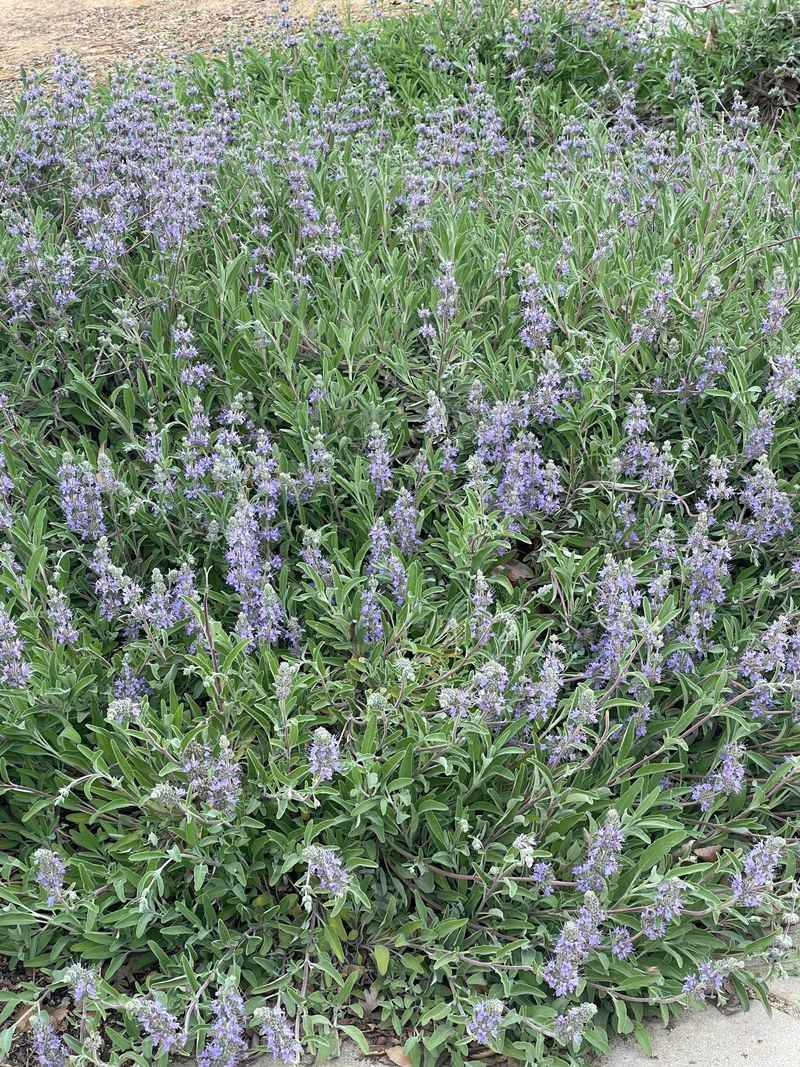
Hot spaces between shrubs do not have to stay bare.
Creeping sage spreads low across dry soil, filling gaps with fragrant foliage and lavender-blue flower spikes. It is a strong choice for California gardens where low water use, native habitat, and soil coverage all matter.
The leaves help shade the ground.
A mature patch reduces exposed soil, slows evaporation, and creates a cooler surface around larger drought-tolerant plants. That makes it useful in mixed native plantings and dry borders.
The fragrance is pure California garden.
Rub a leaf, and the scent is sharp, herbal, and resinous. It adds sensory value even when the plant is not blooming.
Pollinators use the flowers.
Native bees, bumblebees, and butterflies visit the blooms in late spring and early summer. The low foliage can also shelter beneficial ground-dwelling insects.
It prefers lean conditions.
Full sun, good drainage, and modest water suit it best. Rich soil and frequent irrigation can make it less durable and more prone to trouble.
Inland heat may require occasional support.
A deep soak now and then during the hottest months can keep plants looking better without turning the bed into a wet zone.
Skip heavy fertilizer.
Creeping sage does not need it, and too much growth can reduce the tidy, drought-adapted habit that makes the plant valuable.
This groundcover is not flashy in a lawn-like way.
It is better suited to the California garden reality: fragrant, low, tough, wildlife-friendly, and very good at covering soil that used to bake.