The California Trees That Give Back Beautiful Fall Color
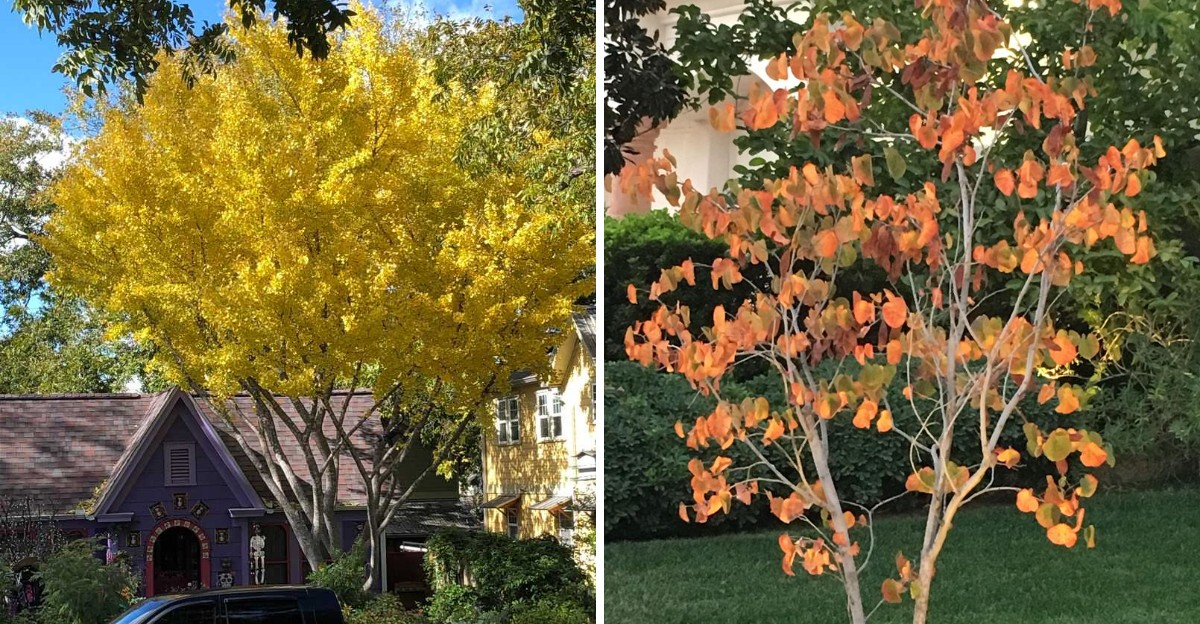
Many people write off California when the subject turns to fall color, and many people are wrong about that.
The state doesn’t lack autumn. It lacks the right trees planted in the right places, which is a completely different problem with a completely different fix.
Somewhere on a Sacramento street right now, a Chinese pistache is doing something a maple in Vermont wouldn’t dare attempt in October heat.
Somewhere in the foothills, a valley oak is turning gold so slowly you’d need a whole month to notice it happening.
That’s the twist nobody mentions. California’s autumn isn’t quiet because the climate refuses to cooperate.
It’s quiet because too many yards got planted with trees that were never built for this particular mix of heat, drought, and mild winters.
Eight trees change that story completely, some native to the state and some imported from thousands of miles away, all of them proven to deliver a real show when the leaves finally decide to turn.
1. Chinese Pistache
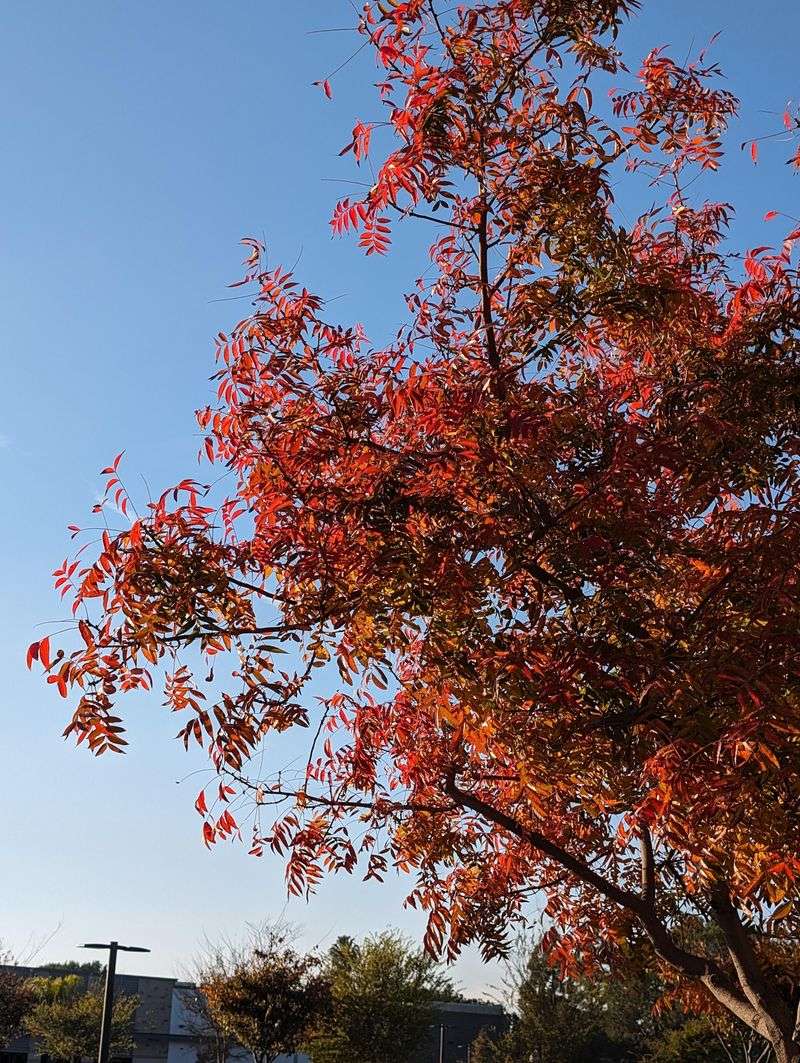
Ask a California landscaper for one tree that almost never disappoints in autumn, and this one comes up again and again. Its compound leaves shift from green to orange, then to a fiery scarlet that holds for weeks.
Worth saying plainly: this tree is not a California native. Pistacia chinensis comes from central and western China, but University of California Agriculture and Natural Resources materials list it among the dependable performers for inland valleys and warmer parts of the state.
Heat is exactly where it shines. Hot summers followed by cool nights seem to deepen the color rather than wash it out, which is why the tree does so well in Sacramento, Fresno, and Bakersfield.
It tolerates poor soil, handles drought once established, and asks very little beyond occasional deep watering. Mature size lands around 30 to 40 feet tall with a similar spread, so give it real room instead of squeezing it beside a driveway.
Young trees can look awkward and lopsided for the first few years. Light structural pruning in winter helps build a strong, even canopy.
Patience pays off, because the shape rounds out nicely by year five or six. One practical tip: buy your tree in October or November at the nursery.
You can see the actual fall color on that specific plant, since seedling-grown pistache varies quite a bit from tree to tree.
2. Liquidambar
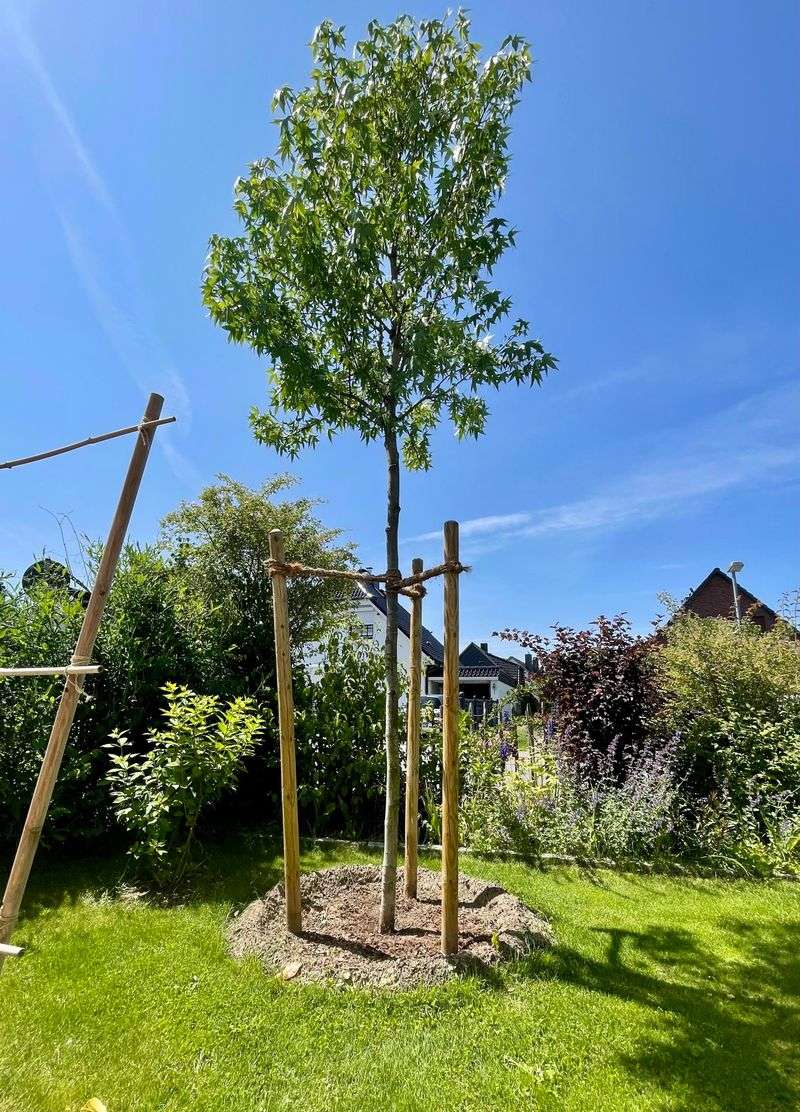
Few trees in California hit the deep wine-purple notes that this one does. The star-shaped leaves turn all at once or in patches, sometimes carrying yellow, orange, red, and burgundy on a single branch.
Also known as sweetgum, Liquidambar styraciflua hails from the southeastern United States. Count it as a non-native that adapted extremely well to California streets and parks.
UC Agriculture and Natural Resources guidance flags one important catch. The roots are aggressive and surface-prone, which means cracked sidewalks and lifted driveways when the tree is planted in a narrow parkway strip.
Give it a wide planting area, at least eight feet from hard surfaces, and the problem largely disappears. Deep, infrequent watering also encourages roots to travel down instead of sideways.
Your California Garden Changes Every Week. Your Plan Should Too.
Gardening in California changes quickly throughout the season. Every Friday you’ll receive a simple weekly plan showing exactly what to plant, prune, fertilize, harvest, and protect so you never miss the right timing.
Then there are the seed balls. Those spiky brown spheres drop by the hundreds and are genuinely annoying to rake or step on barefoot, so consider a fruitless cultivar if litter bothers you.
Named selections such as Palo Alto and Burgundy exist specifically because gardeners wanted predictable color. Palo Alto leans orange-red while Burgundy holds late purple tones well into December in milder coastal areas.
Expect 60 feet or more at maturity. Plant it where a big tree belongs, and you get one of the longest-lasting color displays anywhere in the state.
3. Japanese Maple
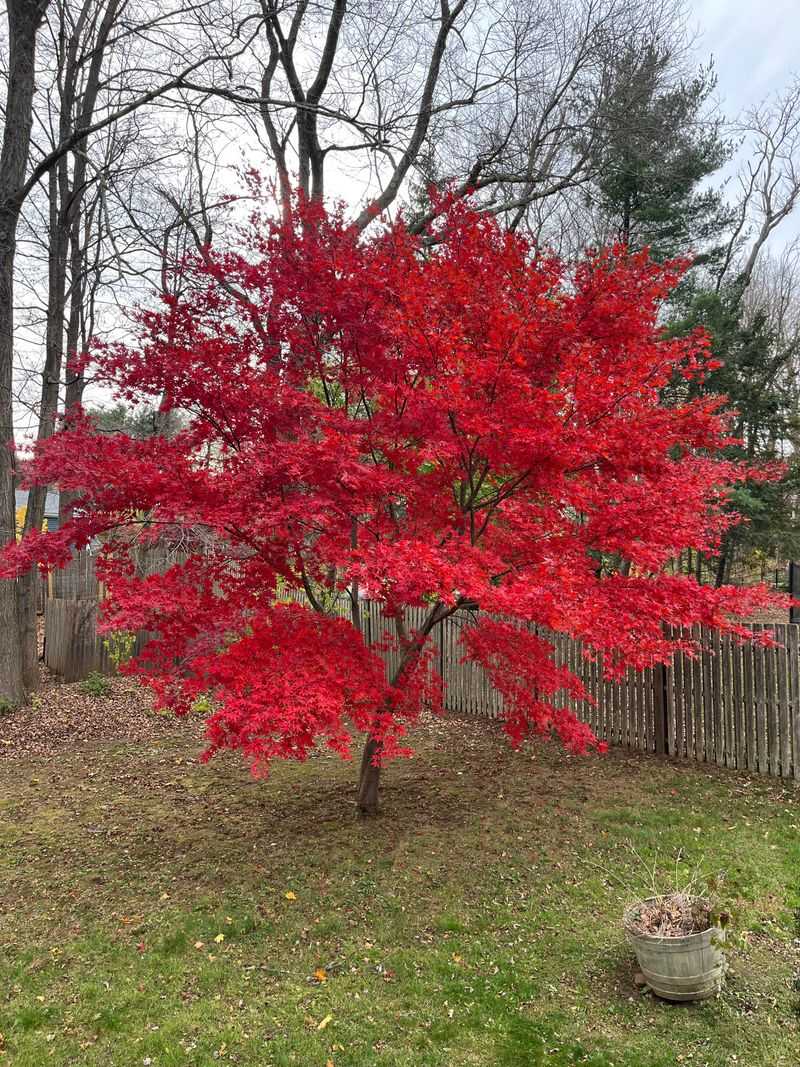
Small, sculptural, and almost impossibly delicate, this is the tree people photograph and then ask about by name. Autumn brings crimson, coral, amber, or even soft pink depending on the cultivar.
Origin matters here: Acer palmatum is native to Japan, Korea, and China, making it another non-native that earns its keep in California gardens. The big mistake is planting it out in the open.
Hot afternoon sun and dry inland wind scorch the leaf edges brown by August. A scorched tree simply cannot produce good fall color afterward.
Look for a spot with morning sun and afternoon shade, ideally on the east or north side of a house. A courtyard, a patio corner, or the filtered shade under a taller oak works beautifully.
Water needs are steady rather than heavy. Mulch two to three inches deep, keep the mulch off the trunk, and water regularly through the first several summers while roots establish.
Size stays manageable, usually 10 to 25 feet, and many dwarf forms never pass eight feet. That makes them realistic for small yards, side gardens, and large containers.
Coastal and foothill gardeners generally have an easier time than those in the hottest valley towns. In Fresno or Redding, treat it as a pampered specimen rather than a plant-and-forget tree.
4. Ginkgo
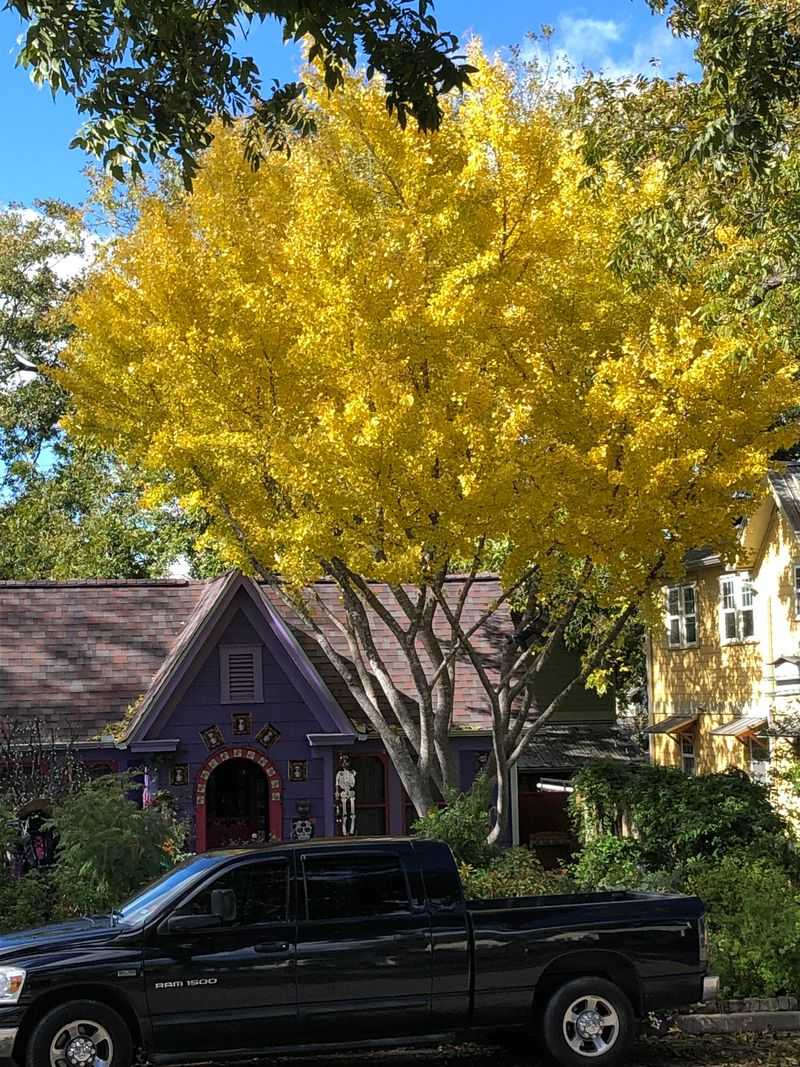
Ginkgo fossils date back more than 200 million years, which is a fun bit of history to hold onto. Dinosaurs walked under trees nearly identical to the one you can plant today.
Ginkgo biloba is native to China, so it belongs in the non-native group alongside pistache, liquidambar, and Japanese maple. It has been cultivated for centuries and handles California city conditions remarkably well.
Fall color arrives late, often mid to late November, and it’s pure butter yellow with no red or orange mixed in. The fan-shaped leaves seem to light up from inside on a gray afternoon.
The famous quirk is the drop. Ginkgo frequently sheds nearly all its leaves within a day or two after the first real cold snap, leaving a golden circle on the ground that looks staged.
Always buy a male, grafted cultivar such as Autumn Gold or Saratoga. Female trees produce fleshy seeds with a smell most people compare to spoiled butter, and nobody wants that beside a front walk.
Growth is slow, so think of this as a gift to whoever lives in the house in thirty years. Patience is the entry fee here.
On the upside, ginkgo shrugs off pollution, compacted soil, pests, and disease better than almost any other shade tree available in California nurseries.
5. Western Redbud
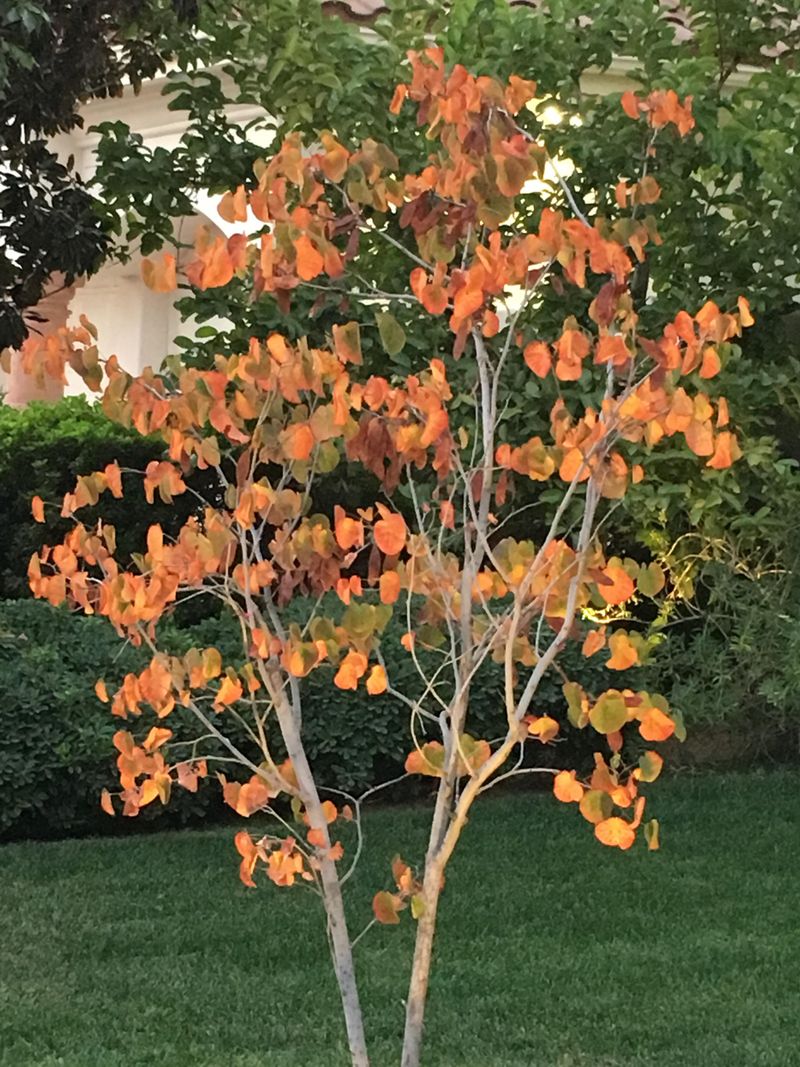
Spring gets all the credit for this tree, and fairly so, since bare branches erupt in magenta flowers before a single leaf appears. Autumn, though, quietly earns a second round of applause.
Cercis occidentalis is a true California native, found in foothills from the Sierra Nevada to the coast ranges. That native status means it already fits the state’s dry summers and wet winters without much help from you.
Come October and November, those round blue-green leaves shift to yellow, bronze, and sometimes a soft rusty red. Papery seed pods hang on afterward, turning coppery and catching low winter light.
Size stays modest, generally 10 to 18 feet, often with several trunks rising from the base. That multi-stem habit makes it a natural fit for wildlife corners, driveway edges, and spots where a big shade tree would overwhelm.
Drought tolerance is the headline benefit. Once established, this tree wants little to no summer water, and overwatering in hot months can actually shorten its lifespan.
Plant in full sun inland or coastal, in soil that drains reasonably well. Heavy clay that stays soggy through winter is the main thing to avoid.
Bees show up early for the flowers, and the whole tree tends to look more relaxed and wild than a formal nursery specimen.
6. Valley Oak
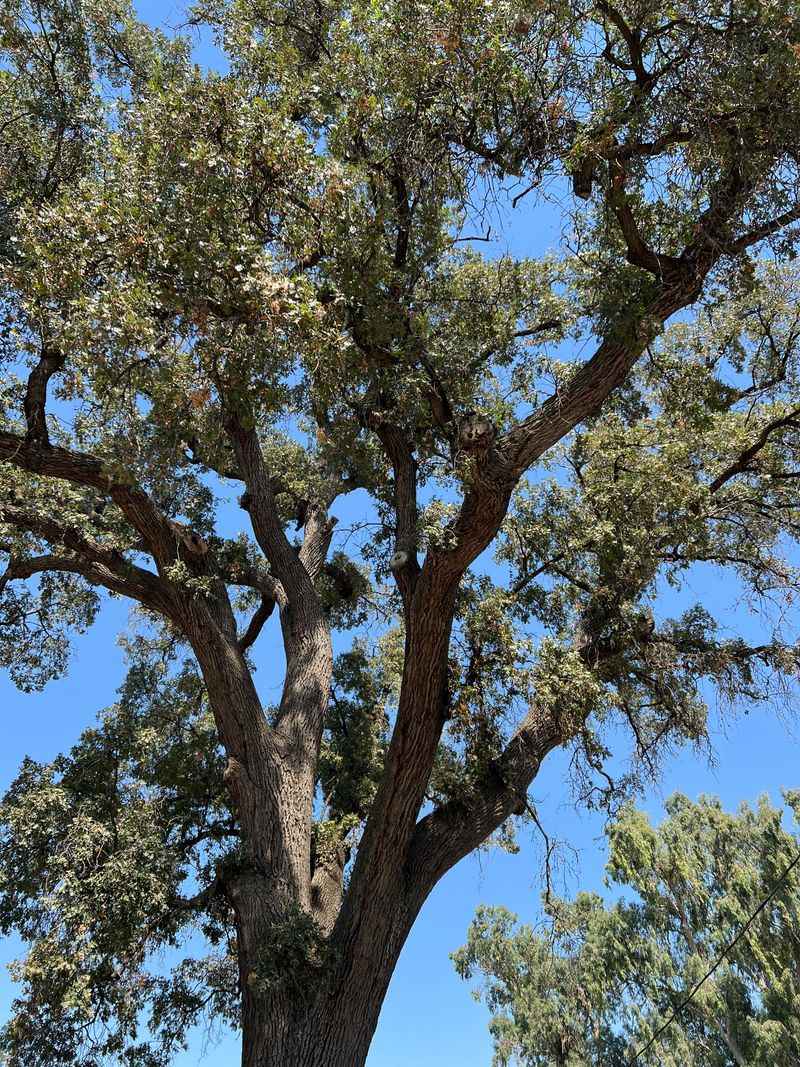
Nothing says California interior valley quite like a lone valley oak standing in a field of dry grass, branches spreading wider than the tree is tall. Quercus lobata is native, and not just to the state but specifically to California, growing nowhere else on earth naturally.
UC Agriculture and Natural Resources has long promoted it in oak conservation and landscape planting efforts. Fall color here is a slow burn rather than a fireworks show.
Leaves move gradually through yellow, soft gold, and warm tan across several weeks, often hanging on into December. Subtle does not mean unimpressive, though.
On a mature tree with a canopy stretching 70 feet across, that quiet gold covers an enormous amount of sky. Space is the real requirement with this tree.
Valley oak can reach 70 feet tall with an even wider spread, so it belongs on a large lot, a school campus, or a rural property, not a 40-foot suburban backyard. Summer water is the classic mistake gardeners make with it.
Established valley oaks resent frequent irrigation near the trunk, and lawn sprinklers running all summer can invite root rot. Keep turf and drip lines well away from the base as a result.
Growth is faster than most people expect for an oak, and the tree supports an enormous range of native birds, insects, and mammals throughout the year.
7. Big Leaf Maple
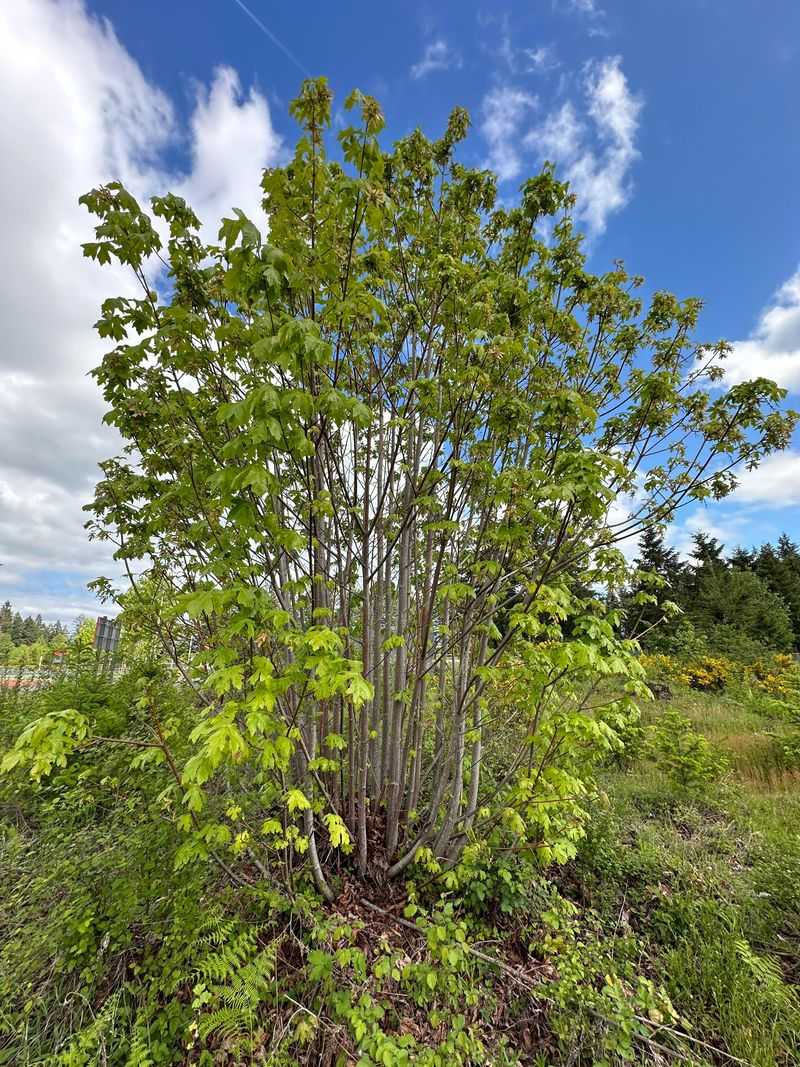
Big leaf maple produces the largest leaves of any maple in the world, sometimes a foot across or more. Hold just one against your face and it nearly covers it entirely.
Acer macrophyllum is a California native, common along streams and in canyons from the Central Coast north through the redwood country and into Oregon and Washington. Autumn brings deep golden yellow, occasionally with orange edges.
The sheer size of the leaves makes the display feel enormous even from a distance. Moisture is the deal-breaker with this particular tree.
Unlike valley oak or redbud, this maple genuinely wants a damp site, so think creek banks, low spots that collect winter runoff, or shaded north-facing slopes. Gardeners in hot, dry inland areas usually struggle with it.
Leaf scorch and early leaf drop show up by midsummer without consistent soil moisture and some afternoon shade. Where it’s happy, though, the tree grows fast and large.
Often 50 to 75 feet, with a broad canopy and a trunk that frequently collects moss and licorice ferns in coastal fog belts. Leaf cleanup is a real chore, though those giant leaves break down into excellent mulch if you run a mower over them.
8. California Buckeye
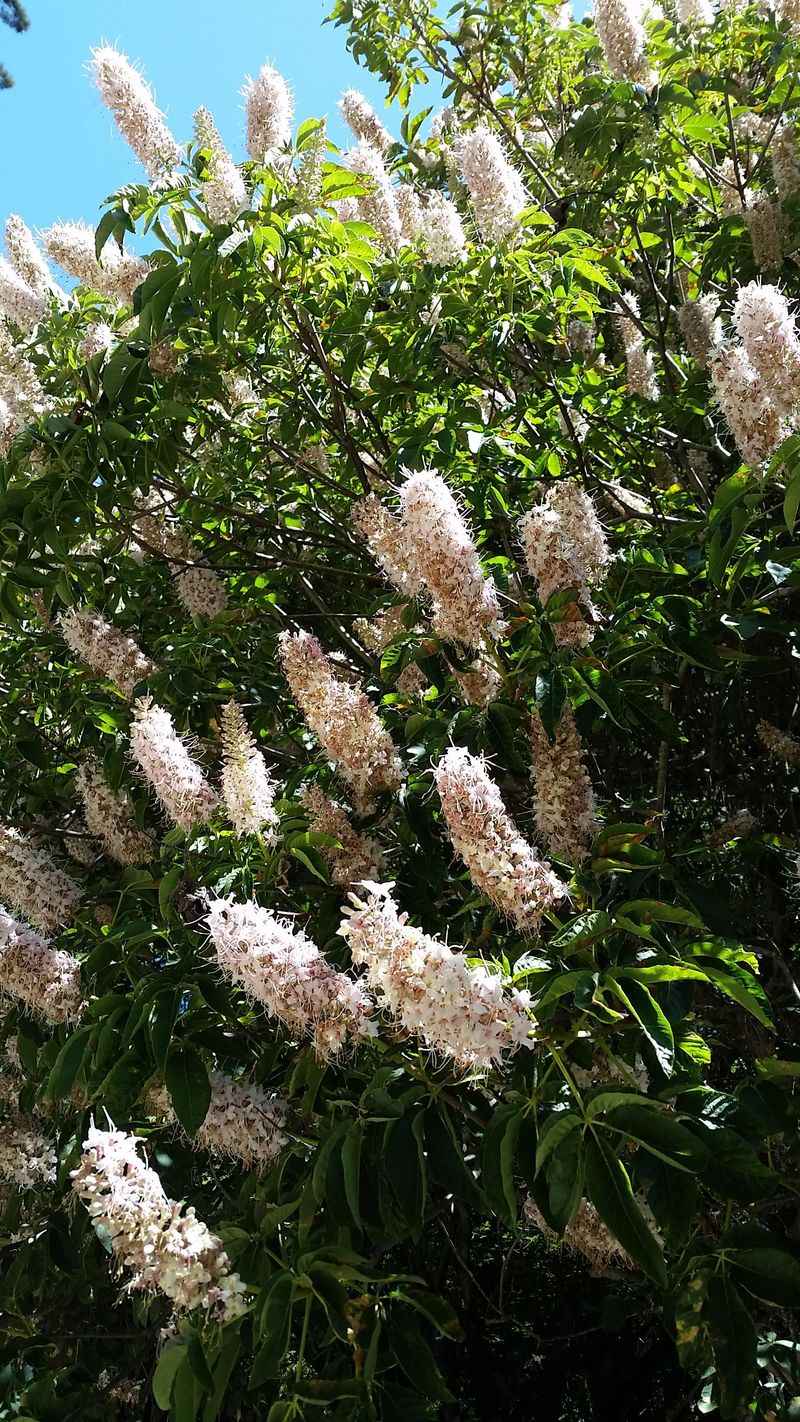
Round, dense, and unmistakable in a dry summer landscape, California buckeye takes an unusual approach to the seasons that catches a lot of people off guard the first time they notice it.
It drops its leaves in late summer during drought stress, then leafs out again with fresh growth by fall in milder years.
Aesculus californica is native to California specifically, found in foothills and canyons throughout much of the state. UC Agriculture and Natural Resources lists it among the more distinctive native trees for dry landscapes and naturalistic plantings.
Fall color, when it shows up, runs toward soft yellow and gold on the palmate leaves, each one shaped like an open hand.
Large, pear-shaped seed pods follow the summer flowers, eventually splitting open to reveal glossy mahogany-brown seeds that many gardeners collect purely for their looks.
Every part of this tree, including the seeds, contains compounds considered toxic if ingested, so keep that in mind around pets or small children who might pick things up off the ground. Placement away from play areas solves most of the concern.
Size stays moderate, generally 15 to 30 feet, with a broad, rounded canopy that provides good shade in summer.
It tolerates poor soil and needs no supplemental water once established, making it one of the lowest-maintenance native trees available.
Bees and other pollinators flock to the fragrant spring flower spikes, even though the nectar itself is toxic to honeybees specifically, a strange evolutionary quirk still being studied by researchers today.