The Dry Weather Mistakes That Invite Spider Mites Into Oregon Gardens
Oregon summers have a reputation for being mild and pleasant, and for most of the year that reputation holds up pretty well.
Then July arrives, the rain disappears completely, and suddenly the garden is dealing with heat, dust, and a pest so small you practically need a magnifying glass to confirm it is actually there.
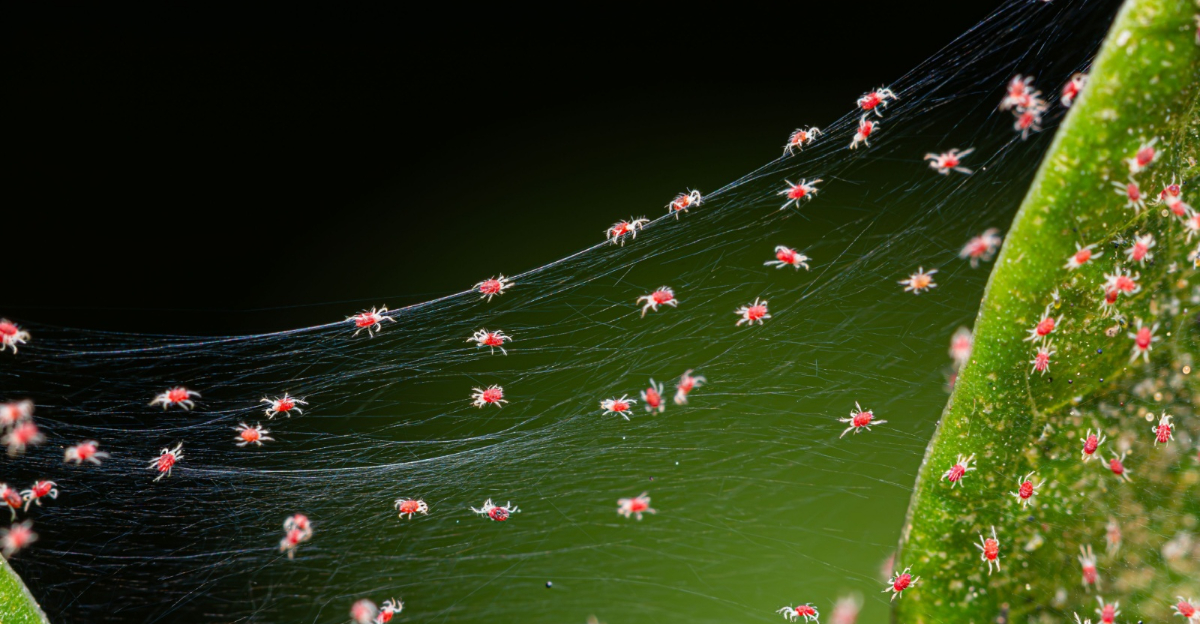
Spider mites are one of those midsummer problems that sneak up on Oregon gardeners because the early signs are easy to dismiss. A little stippling on the leaves, some faint webbing on the undersides, nothing that looks urgent at first glance.
But these tiny arachnids multiply fast in hot dry conditions, and a garden under water stress gives them exactly the environment they love most.
By the time the damage is obvious, the population is already well established and a lot less fun to deal with.
1. Allowing Plants To Remain Water-Stressed During Hot And Dry Weather
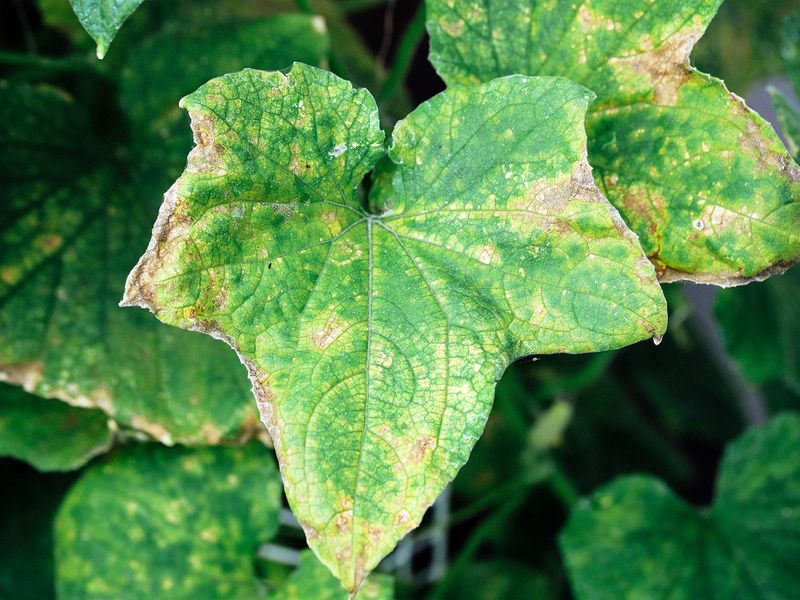
Hot, dry summers can push garden plants to their limits, and a water-stressed plant is far more vulnerable to visible pest damage than one that is adequately hydrated.
Spider mites are tiny arachnids that feed by piercing leaf tissue and removing cell contents, and plants already under stress may show their damage more dramatically.
Keeping plants appropriately hydrated during Oregon’s dry season is one of the most practical steps a gardener can take to support overall plant health.
Watering needs vary widely depending on the type of plant, the size of any container, the soil composition, sun exposure, wind, and whether a plant was recently installed.
A newly established shrub in full Oregon sun will need far more attention than a mature perennial in a partly shaded bed.
Relying on a fixed watering schedule for every plant in the garden can lead to some plants receiving too little moisture when temperatures rise.
Watch for signs of stress such as leaf curling, dull color, or wilting during cooler parts of the day when plants should normally look their best.
Checking the soil a few inches below the surface can give a much more accurate picture of moisture levels than simply glancing at the top layer.
Keeping plants healthy and well-watered during hottest months does not guarantee a mite-free garden, but it can reduce the visibility of damage and help plants recover more effectively.
2. Letting The Root Zone Become Excessively Dry
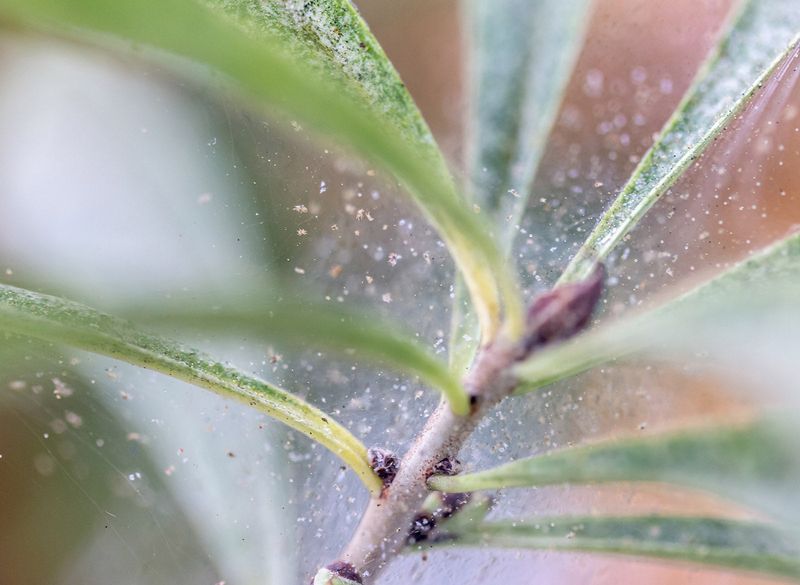
Many Oregon gardeners judge soil moisture by looking at the surface, but the surface can appear dry even when there is still adequate moisture a few inches down.
The opposite is also true: a surface that looks slightly damp after a brief irrigation may hide a root zone that has become dangerously dry underneath.
Checking soil moisture at root depth rather than at the surface gives a much clearer picture of what plants are actually experiencing.
A simple way to check is to push a finger, a wooden dowel, or a soil probe several inches into the ground near the plant’s root zone. If the soil feels powdery or crumbles apart at that depth, the root zone may be drier than the plant needs.
Your Oregon Garden Changes Every Week. Your Plan Should Too.
Gardening in Oregon changes quickly throughout the season. Every Friday you’ll receive a simple weekly plan showing exactly what to plant, prune, fertilize, harvest, and protect so you never miss the right timing.
Watering deeply enough to moisten the active root zone is generally more beneficial than frequent shallow watering that only wets the top inch or two of soil.
During Oregon’s dry summer months, container plants and plants growing in sandy or fast-draining soils may need more frequent attention because moisture can move through quickly.
Heavy clay soils common in parts of Oregon may hold moisture longer but can also become compacted, making it harder for water to penetrate evenly.
Keeping the root zone appropriately moist without leaving soil continuously saturated supports plant health and reduces the stress that can make spider mite feeding damage more noticeable on foliage.
3. Allowing Dust To Build Up On Leaves
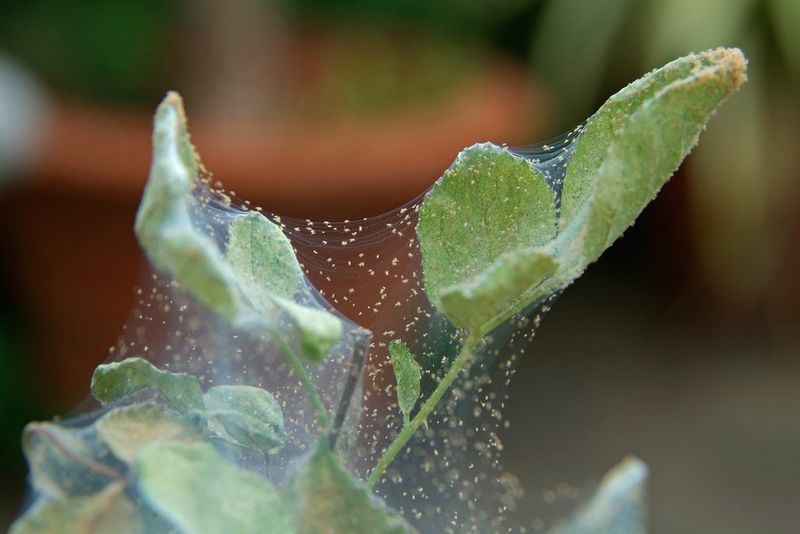
Gravel pathways, bare soil patches, nearby construction, and dry summer winds can all contribute to a fine layer of dust settling on garden foliage throughout Oregon.
Most gardeners do not think twice about dusty leaves, but dust buildup on foliage has long been associated with conditions that favor spider mite outbreaks.
Dusty environments can interfere with the activity of naturally occurring predatory mites that normally help keep spider mite populations in check.
Applying a layer of mulch over bare soil in garden beds can help reduce the amount of dust that becomes airborne during dry, windy days.
Organic mulches such as wood chips or bark work well in many Oregon garden settings, helping to keep soil surface moisture more stable while also limiting the dust that can coat nearby plant leaves.
Avoiding unnecessary foot traffic or equipment use on dry, bare soil near vulnerable plants can also make a practical difference.
Rinsing foliage with water can temporarily remove dust from leaf surfaces, and this practice may also dislodge some spider mites in the process.
Focus on getting water onto the undersides of leaves where spider mites tend to gather, rather than simply wetting the tops.
In Oregon’s dry summer conditions, this kind of light foliar rinse may need to be repeated periodically to stay ahead of dust accumulation and to support the conditions where natural predators of spider mites can remain active and effective.
4. Ignoring Early Stippling On Foliage
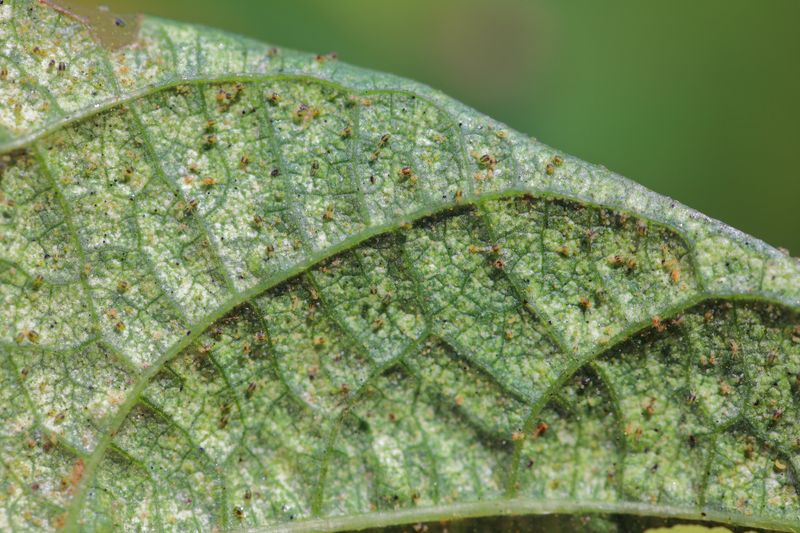
Tiny pale dots scattered across the surface of a leaf might seem like a minor cosmetic issue at first glance, but those specks are often the earliest visible sign that spider mites have moved in.
This pattern of damage is called stippling, and it occurs when spider mites pierce individual plant cells and remove their contents.
Each small dot represents a feeding site, and as the population grows, the stippling can spread rapidly across an entire plant.
Early stippling can be easy to overlook, especially on plants with naturally textured or variegated foliage. Oregon gardeners who check their plants regularly during hot, dry stretches are more likely to catch this damage before it progresses.
As feeding continues, leaves may begin to look faded, bronzed, or generally unhealthy, and in more advanced cases, fine webbing may appear on stems or between leaves, though webbing is not always present in the early stages.
Catching stippling early gives gardeners far more management options than waiting until damage becomes severe. A plant with light stippling on a few leaves can often be managed with targeted water sprays or careful monitoring.
A heavily infested plant with widespread bronzing and webbing requires more effort and may take longer to recover.
Taking a few minutes during each garden visit to look closely at foliage on ornamentals, shrubs, vegetables, and container plants can make a real difference in how quickly a spider mite problem is identified and addressed in Oregon gardens.
5. Checking Only The Tops Of Leaves
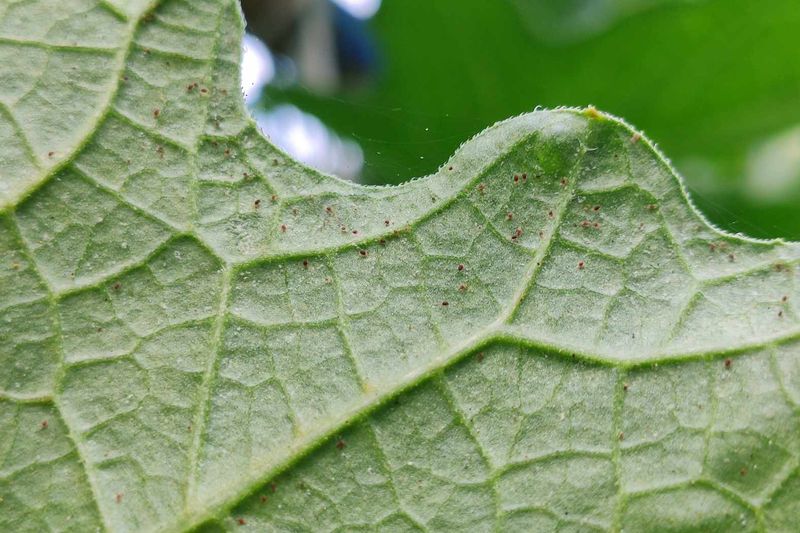
Flipping a leaf over to check the underside is a step many gardeners skip, but it is exactly where spider mites tend to gather and feed. The undersides of leaves offer shelter from direct sunlight and wind, making them a preferred location for spider mite colonies.
A plant can look perfectly healthy from above while the undersides of its leaves are already hosting a growing population of mites.
A useful technique for confirming the presence of spider mites is sometimes called the white-paper test. Hold a sheet of white paper under a leaf, then tap or shake the leaf firmly.
If tiny moving specks appear on the paper, spider mites may be present. Because spider mites are extremely small, a hand lens or magnifying glass can be helpful for getting a better look at the specks and confirming what you are seeing.
Regular inspection of leaf undersides should become a routine part of Oregon garden monitoring during hot, dry summer weather.
Focus this attention on plants that have shown stippling, on plants that are known to be favored by spider mites such as roses, beans, and certain ornamental shrubs, and on any plants that appear stressed or off-color.
Catching a mite population on the undersides of leaves before it spreads to neighboring plants gives gardeners the best chance of managing the situation with minimal disruption to the rest of the garden.
6. Skipping Water Sprays On Infested Foliage
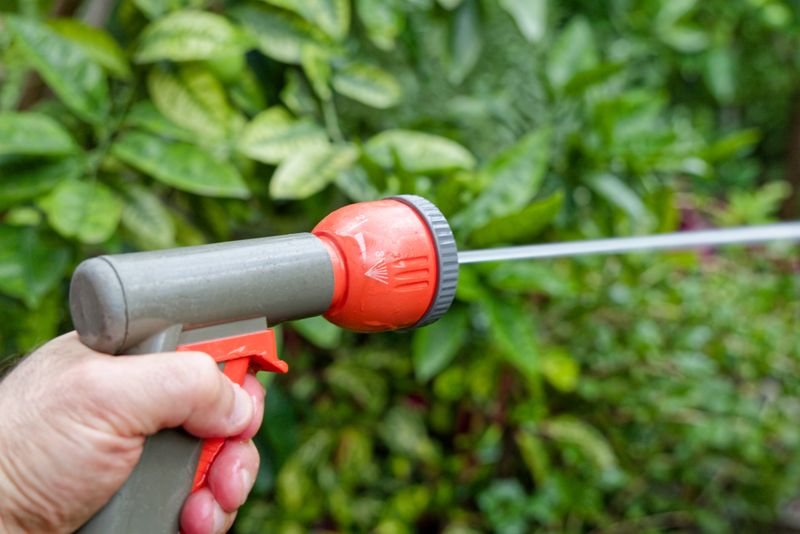
When spider mites are detected on garden plants, one of the most straightforward responses is a firm spray of water directed specifically at the undersides of affected leaves.
Water sprays can physically dislodge mites from the leaf surface, reducing the active population on the plant at that moment.
This approach is simple, inexpensive, and does not introduce chemicals into the garden environment.
Consistency matters with this method. A single water spray may reduce the number of mites present, but it is unlikely to remove every mite or egg from the plant.
Gardeners should plan to re-inspect treated plants and repeat water sprays as needed, since populations can rebound if some mites remain.
Checking the undersides of leaves a few days after spraying can give a clearer sense of whether the population is declining or holding steady.
For delicate plants, including some container flowers and tender vegetable seedlings common in Oregon gardens, a gentler spray pressure is worth considering to avoid damaging foliage or breaking fragile stems.
Directing water at the undersides of leaves rather than only wetting the tops will make the spray far more effective.
Combining regular water sprays with mulching, dust reduction, and close monitoring gives Oregon gardeners a practical, layered approach to managing spider mites during the dry summer months without reaching immediately for chemical products that could disrupt beneficial organisms already present in the garden.
7. Using Broad-Spectrum Insecticides Without Confirming The Pest
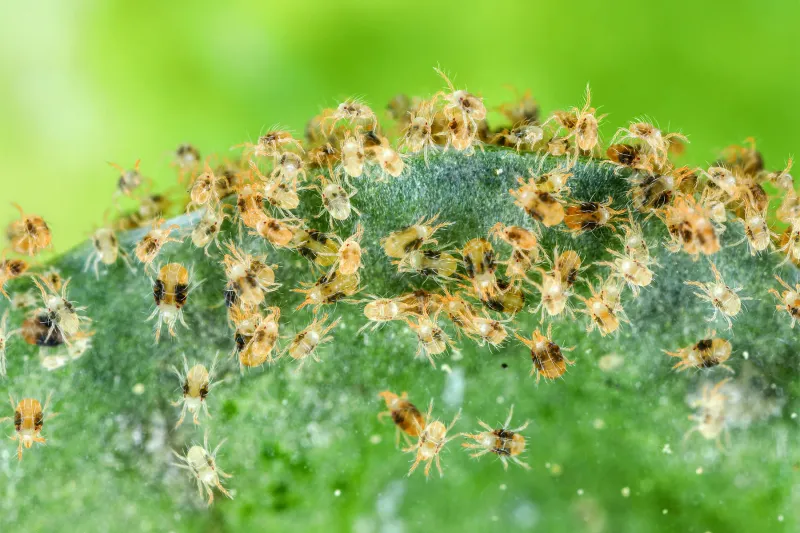
Reaching for a broad-spectrum insecticide at the first sign of leaf damage is a common reaction, but it can create more problems than it solves when spider mites are involved.
Spider mites are arachnids, not insects, and many general insecticide products offer little to no control against them.
Applying the wrong product wastes time and money while leaving the actual pest population undisturbed.
Beyond the issue of effectiveness, broad-spectrum insecticides can reduce populations of beneficial insects and predatory mites that naturally suppress spider mites in Oregon gardens.
Predatory mites are among the most important natural controls for spider mite populations, and when these beneficial organisms are eliminated by a pesticide application, spider mite numbers can surge in the weeks that follow.
This kind of rebound effect can make an already frustrating situation considerably worse.
Correct pest identification is the necessary first step before any management product is selected.
Using a magnifying lens to confirm the presence of spider mites, and checking credible resources for guidance on management options, helps gardeners choose the least disruptive approach that fits their situation.
If a pesticide is determined to be appropriate after careful identification and label review, selecting a product specifically labeled for spider mite management and following all label directions carefully is essential.
The label is a legal document, and using a product in a way that is inconsistent with its label directions is not advisable in any Oregon garden setting.
8. Overlooking Nearby Weeds And Plant Debris
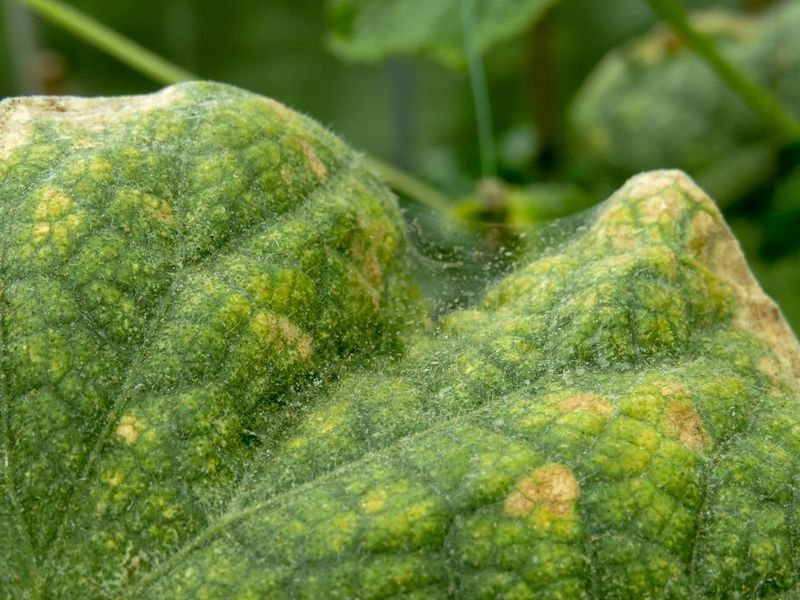
Garden edges, fence lines, and neglected corners filled with weeds or old plant debris can serve as habitat for spider mites between seasons or during dry summer stretches.
Weeds and volunteer plants growing near cultivated garden beds may host spider mite populations that can move onto prized ornamentals, vegetables, or fruit plants when conditions become favorable.
Keeping an eye on these areas is a reasonable part of an overall monitoring routine.
Common weeds found in Oregon gardens, including some broadleaf species, can support spider mite colonies that go unnoticed for weeks.
When temperatures climb and dry conditions persist, mite populations on weeds can grow quickly and begin spreading to nearby garden plants.
Removing weeds near vulnerable plants before they become heavily established is a practical step that reduces potential nearby sources of infestation.
Dried stems, fallen leaves, and old plant material left close to garden beds can also provide sheltered spots where mites may overwinter or take refuge during extreme heat.
Reasonable sanitation, such as removing spent plant material from beds at the end of the season and clearing obvious debris near garden borders, supports a healthier garden environment overall.
At the same time, not every piece of organic matter needs to be removed, since some garden debris supports beneficial insects and other organisms.
The goal is a balanced approach that reduces unnecessary habitat for spider mites while preserving the conditions that support a healthy and diverse Oregon garden ecosystem.