The Fast-Growing California Trees That Turn Into Expensive Problems Within Ten Years
A young tree in a nursery pot carries a lot of promise. Within a few seasons, it can deliver shade, privacy, and a softer look to a bare California lot.
Speed often feels like a bonus.
Ten years later, the picture can change considerably, with costs showing up in places few homeowners expected to check.
Some of the trouble hides underground. Some arrives overhead during a windy night, and some piles up quietly in gutters week after week.
Good care makes a real difference, and many quick growers behave well in the right spot.
A handful, though, have built lasting reputations among arborists, plumbers, and city crews. Knowing their habits before planting saves money, effort, and plenty of weekend cleanup.
1. Blue Gum Eucalyptus Drops Heavy Limbs
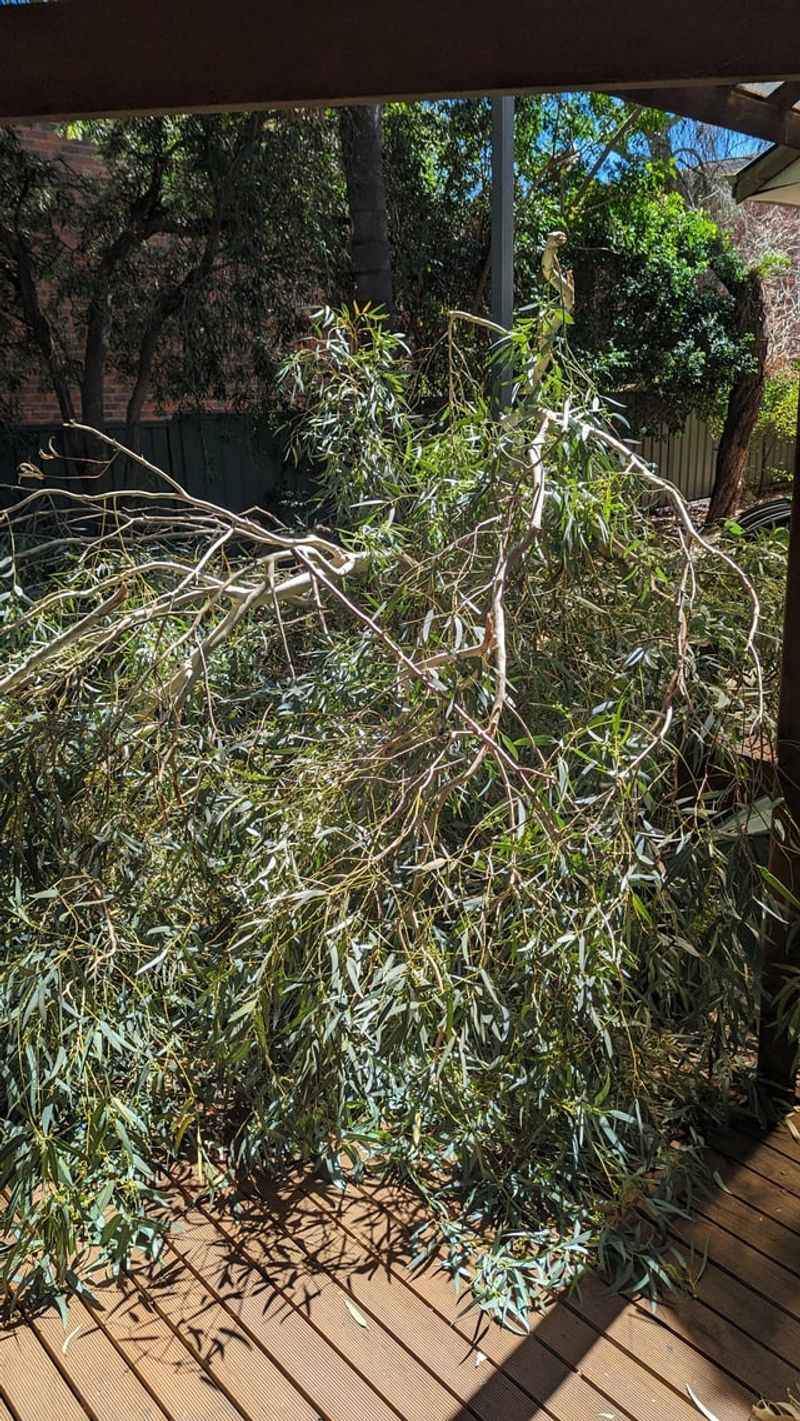
A calm summer afternoon isn’t always safe under a blue gum. Large, healthy-looking limbs can snap off without warning, even with no wind at all.
Arborists call this sudden limb drop, and it poses a real hazard over cars, patios, and roofs.
Size brings another surprise. Blue gum eucalyptus can soar past 100 feet, dwarfing almost any house lot.
It sheds long strips of bark, leaves, and woody seed capsules year round, so gutters and yards fill quickly and cleanup becomes a regular weekend chore.
Fire raises the bigger concern. Oily leaves and loose bark burn hot, and that litter builds up as dry fuel near structures.
Cal-IPC rates blue gum as a Limited invasive, since it spreads into some wild areas and crowds out native plants.
Removing a mature blue gum is a major job. Crews often need climbers or a crane, and costs can climb into the thousands, with stump grinding extra.
Existing trees benefit from a certified arborist inspection every few years, plus regular litter cleanup away from buildings and roofs.
New planting of blue gum on a home lot is best avoided.
Once Zone 0 rules take effect in designated fire areas, new trees within five feet of a home won’t be allowed.
Western redbud suits smaller yards, while Catalina ironwood offers a native option for larger properties with room to spare.
2. Fruitless Mulberry Lifts Paving With Surface Roots
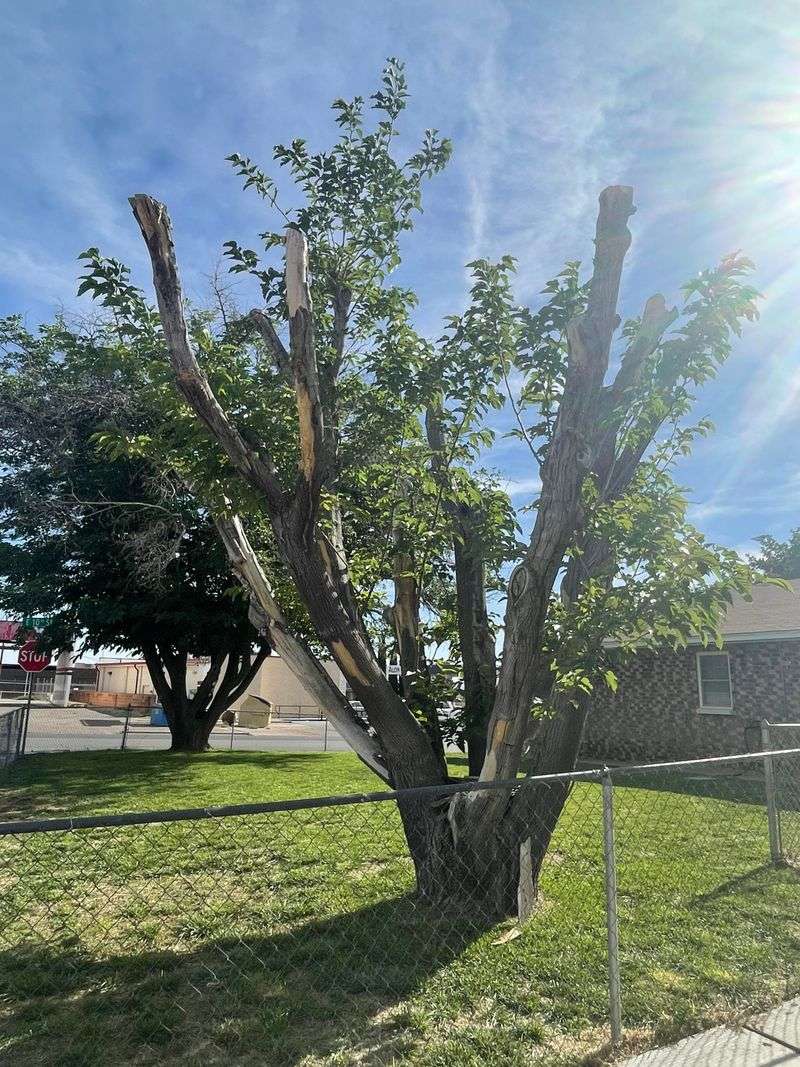
Older Central Valley neighborhoods show the clues clearly. Cracked driveways, tilted sidewalk panels, and lumpy lawns often sit right under a big fruitless mulberry.
Builders planted these trees widely in the 1970s and 1980s for fast summer shade.
Shade came quickly, and so did the roots. Fruitless mulberry grows thick roots near the surface, especially in lawns given shallow, frequent watering.
As those roots fatten, they push up concrete, pavers, and brick. Mowing becomes a bumpy ride, and tripping hazards appear on walkways.
Pollen adds another headache. Male mulberry trees release huge amounts in spring, and many people find it hard on allergies, prompting some Southwest cities to limit new plantings.
The tree also tends to get topped, which produces weak, crowded sprouts that need constant pruning.
Repair work adds up fast. Fixing a lifted driveway can mean breaking out concrete, cutting roots, and pouring new slabs.
Your California Garden Changes Every Week. Your Plan Should Too.
Gardening in California changes quickly throughout the season. Every Friday you’ll receive a simple weekly plan showing exactly what to plant, prune, fertilize, harvest, and protect so you never miss the right timing.
Cutting large roots can also make the tree less stable, so the fix rarely stays simple.
Deep, slow watering encourages roots to grow downward rather than along the surface, and root barriers help most when installed early.
New plantings fare better with smaller shade trees. A fruitless Chinese pistache such as ‘Keith Davey’ offers fall color, while desert willow suits tight spaces.
Any tree placed well away from slabs and foundations saves trouble later, and SelecTree from Cal Poly lists root habits for hundreds of species.
3. Silk Oak Sheds Debris And Breaks In Wind
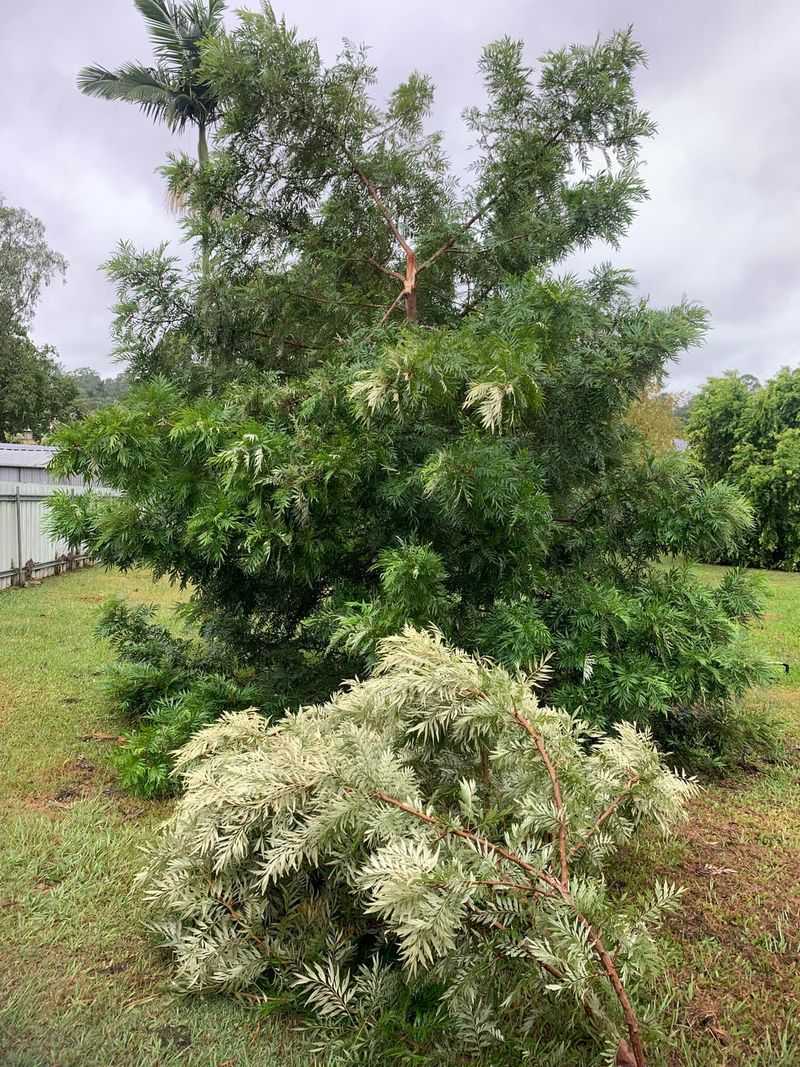
Golden-orange spring flowers make silk oak look like a showstopper, and fernlike leaves add a soft, tropical feel. Then the first strong Santa Ana wind arrives.
Branches soon start landing on the patio.
Silk oak, Grevillea robusta, isn’t a true oak at all. It comes from Australia and can shoot up 50 to 80 feet tall.
Its wood is brittle, so limbs break easily in storms, and a tree that tall over a home or driveway can cause serious damage in one gusty night.
Litter stays a year-round story. Leaves, spent flowers, and seed pods pile up in gutters, pools, and flower beds, packing pool skimmer baskets.
Some people develop skin irritation from handling the leaves and flowers, so gloves make sense during cleanup.
Young silk oaks once sold widely as indoor houseplants. Outdoors in California, though, the tree grows far beyond that tidy stage.
Pruning to reduce wind risk takes skilled crews, and regular trims add up over the years.
An arborist can thin the canopy so wind passes through more easily. Near buildings, replacement may still be the wiser long-term plan.
Strawberry tree, Arbutus ‘Marina,’ and native toyon offer a similar burst of color with far less mess and sturdier wood.
Fall, before Santa Ana season peaks, makes a smart time for an arborist visit. Dry litter cleared from roofs and gutters also reduces fire risk.
4. Liquidambar Heaves Sidewalks With Shallow Roots
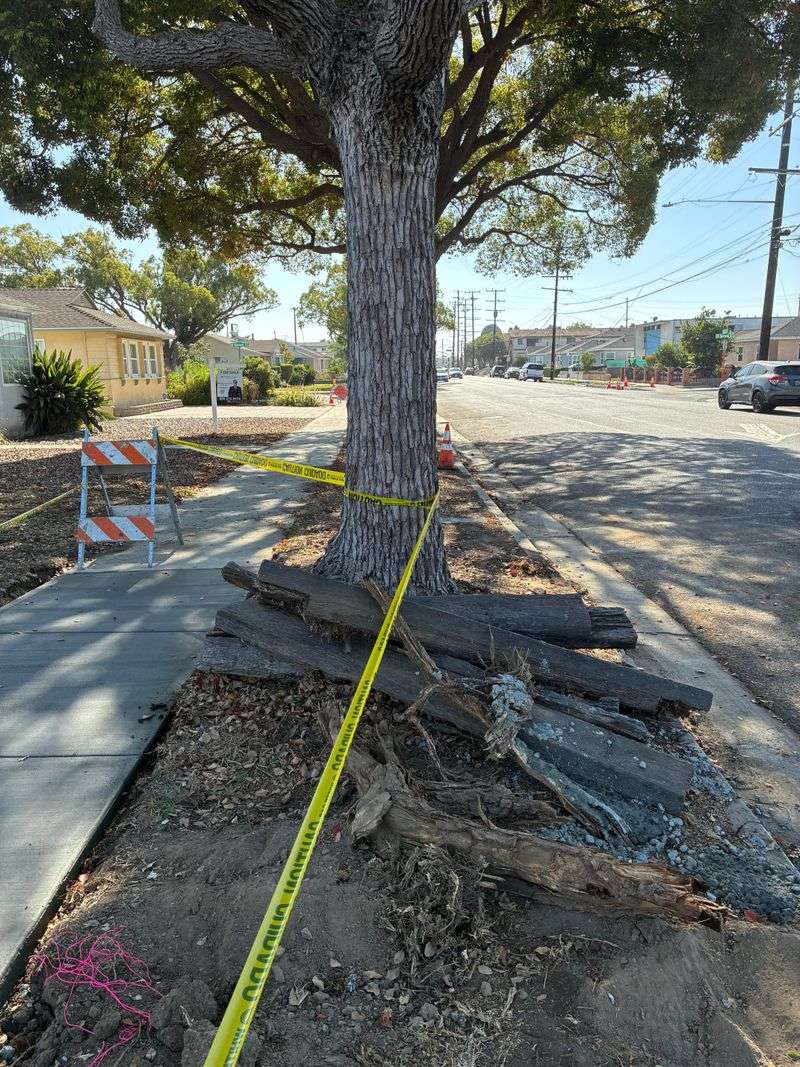
Bare feet and liquidambar make a painful mix, as anyone who has stepped on its spiky seed balls knows. The bigger cost, however, hides underground.
Shallow roots slowly lift sidewalks and curbs over the years.
Liquidambar, also called sweetgum, became a California street tree favorite for its brilliant fall color, with red, orange, and purple leaves recalling New England.
Its roots spread near the surface and thicken over time, and narrow parkway strips leave them nowhere to go but up.
Raised sidewalk panels create tripping hazards, and many cities make homeowners responsible for repairs. Grinding, ramping, or replacing concrete can get pricey.
Roots can also crowd curbs, gutters, and nearby driveways. Reaching 60 feet or more, the tree outgrows small yards quickly.
The gumballs deserve mention too. They drop for months, roll underfoot, clog drains, and jam lawn mowers, while fallen leaves add another autumn cleanup round.
Fruitless varieties such as ‘Rotundiloba’ skip the gumballs, though the root issue remains.
Liquidambar works best where it has plenty of open soil, at least several feet from paving. Root barriers at planting time help guide roots downward.
Narrow strips call for smaller picks from the city’s approved street tree list. Chinese fringe tree and crape myrtle bring seasonal color without heaving the walkway.
Late fall, when liquidambar color peaks, offers a good moment to evaluate existing trees and plan any replacements before winter planting season.
5. Indian Laurel Fig Invades Sewer Lines
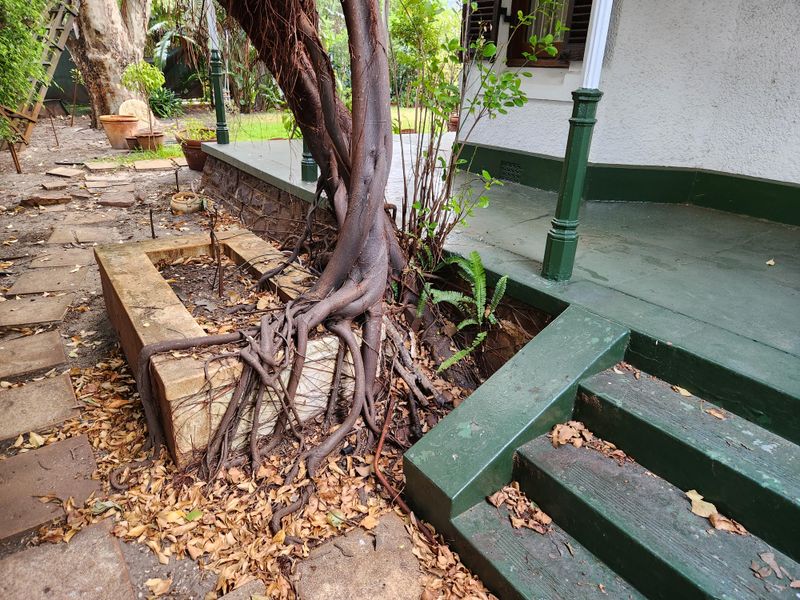
A gurgling toilet and a slow drain might trace back to the tree out front. Indian laurel fig roots are notorious for finding tiny cracks in old sewer pipes.
Once inside, they spread into thick mats that block the flow.
Ficus microcarpa, a glossy evergreen, appears all over Southern California, where cities planted it widely for dense shade and a tidy look.
Its roots proved among the most aggressive around. They travel far, chase moisture, and grow strong enough to crack sidewalks and lift curbs.
Older clay sewer lines face the greatest risk, since joints between pipe sections leak a little water and roots move right in.
A plumber can cut roots out with a special tool, but they often return. Full pipe replacement or lining can cost thousands of dollars.
Litter brings more grief. Small figs stain cars and walkways and attract crowds of birds, while thrips can curl the leaves.
Sidewalk damage from street ficus has become a long-running repair challenge in several Southern California cities.
Fig trees belong far from sewer lines, foundations, and pools. A yearly camera check of older pipes can catch trouble early.
Brisbane box and Western redbud offer far better-behaved replacements for many yards.
Removing a large ficus often requires root grinding and sidewalk repair at the same time, so coordinating with the city can save money when a street tree is involved.
6. Modesto Ash Attracts Borers And Disease
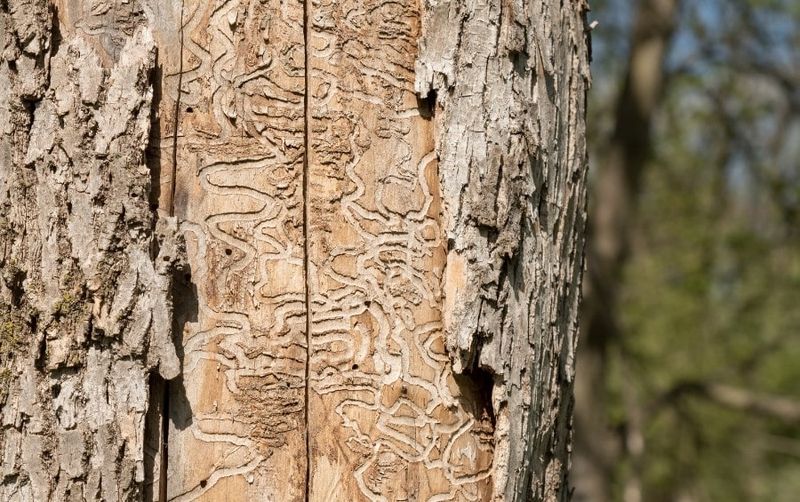
Thin, scorched leaves in midsummer often give the first warning. A Modesto ash that once looked lush starts losing branches near the top.
Many California homeowners have watched this slow decline unfold across Fresno, Sacramento, and other valley cities.
Modesto ash was a go-to shade tree for decades, especially in the Central Valley, because it grew fast and handled heat well.
Over time, it became known for serious problems. Anthracnose, a fungal disease, browns leaves in wet springs, and mistletoe steals water and nutrients from branches.
Borers add more trouble. Wood-boring beetles and clearwing moth larvae attack stressed trees, tunneling under bark, weakening limbs, and letting decay take hold.
Ash decline can follow, leaving a tree that’s brittle and unsafe over a home.
Many of these trees need removal well before old age. Taking down a large ash, grinding the stump, and replanting can stack up quickly.
Weak crotches and fast growth also make limbs prone to splitting.
Deep watering during dry spells keeps an existing ash less stressed and less inviting to pests. A certified arborist can remove mistletoe and brittle wood safely.
Replanting with a different species avoids repeat problems. Valley oak suits large spaces, while hackberry or a fruitless Chinese pistache handles smaller yards with fewer headaches.
Fall, as leaves drop, makes mistletoe clumps easy to spot, which helps an arborist plan winter pruning.
7. Tree Of Heaven Spreads Through Suckers
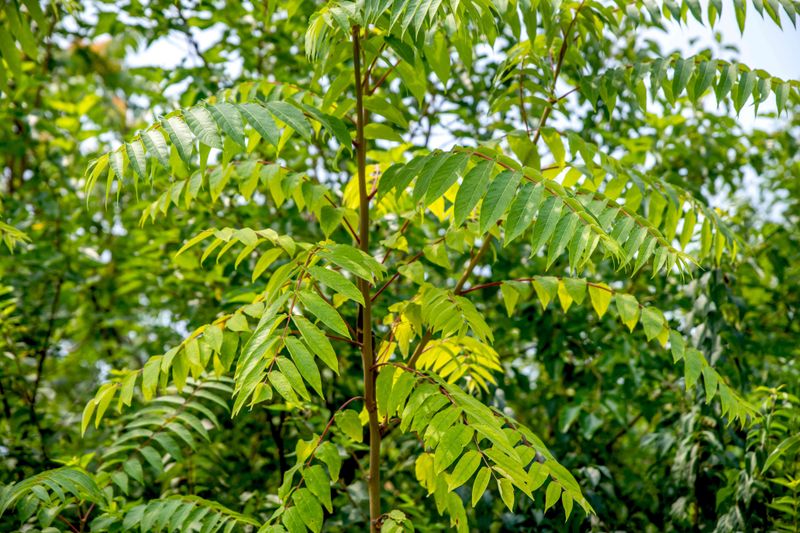
One cut trunk, and a dozen more sprouts appear. That frustrating pattern defines tree of heaven.
Ailanthus altissima arrived in California during the Gold Rush era, brought by Chinese immigrants who valued it for medicine.
Today it grows along roads, creeks, and backyards across the state. The California Invasive Plant Council rates it Moderate.
It spreads by seed and by root suckers that sprout far from the main trunk.
Growth is remarkably quick, with young sprouts shooting several feet in a single season. Suckers push up through lawns, garden beds, and cracks in paving.
The tree also releases chemicals that make it harder for other plants to grow nearby, and crushed leaves give off a strong, unpleasant smell.
Simply chopping the trunk usually backfires, since cutting triggers even more suckers as the roots respond.
Effective control often takes repeated work, sometimes including careful herbicide treatment by trained, licensed applicators, which makes complete removal costly.
Small seedlings pull by hand while roots are still short. Larger stands call for a licensed pest control advisor or arborist familiar with Ailanthus.
Native trees such as Western redbud or blue elderberry make good replacements and support local wildlife.
Fall, when seed clusters ripen and hang on, offers a good time to spot female trees and stop the next round of seedlings.
Staying ahead of this tree costs far less than chasing it later.
8. California Pepper Tree Litters And Lifts Concrete
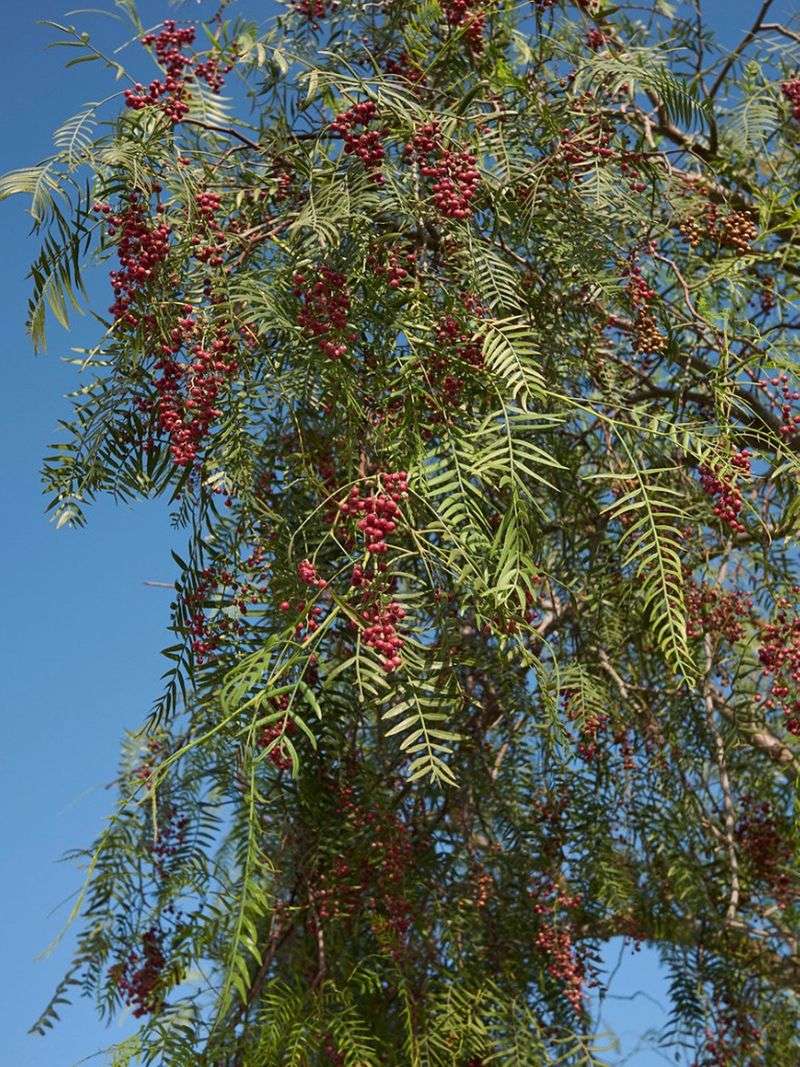
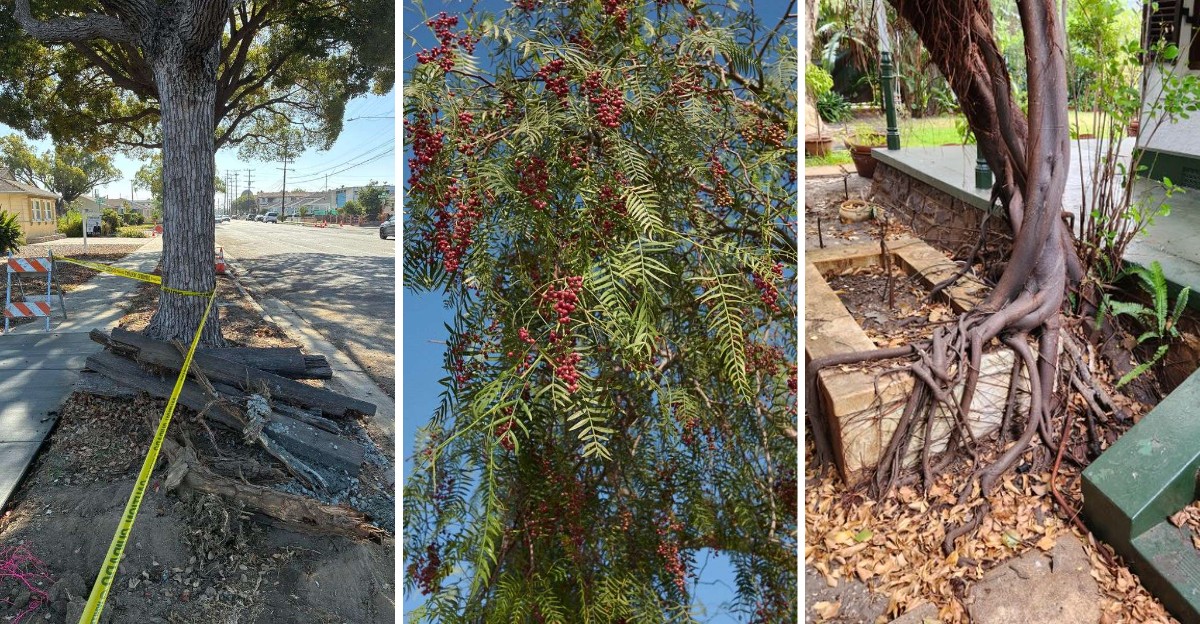
Weeping branches and rosy berries give the California pepper tree real old-ranch charm, and Mission-era courtyards made it famous.
Despite the name, it hails from Peru and nearby parts of South America.
Charm comes with chores. Schinus molle drops leaves, tiny twigs, flowers, and pink berries nearly year round, staining patios and piling up in pools.
Sap can drip onto cars parked below, so a tidy yard requires frequent sweeping.
Underground, the roots stay busy too. Pepper trees develop aggressive surface roots that can lift concrete, crack walkways, and crowd pipes.
The gnarled trunk widens over time, and the canopy can spread 40 feet, filling a small lot quickly.
Cal-IPC rates it a Limited invasive, since it escapes into some wild areas.
Pruning helps manage weight and keep limbs off roofs, though heavy topping is best avoided since it triggers weak sprouts.
Deep, occasional watering serves existing trees better than frequent sprinkles that feed shallow roots.
Plenty of smaller trees fit modern yards better, including Western redbud, desert willow, Australian willow, and multi-trunk Arbutus ‘Marina.’
SelecTree from Cal Poly lists mature size and root habits, and a city’s street tree list plus a certified arborist help guide the final choice.
In designated fire areas, new trees belong beyond five feet of the house under Zone 0 rules. Planning now keeps concrete flat and budgets steady for years.