The Florida Guide To Vibrant And Healthy Adenium Flower Plants
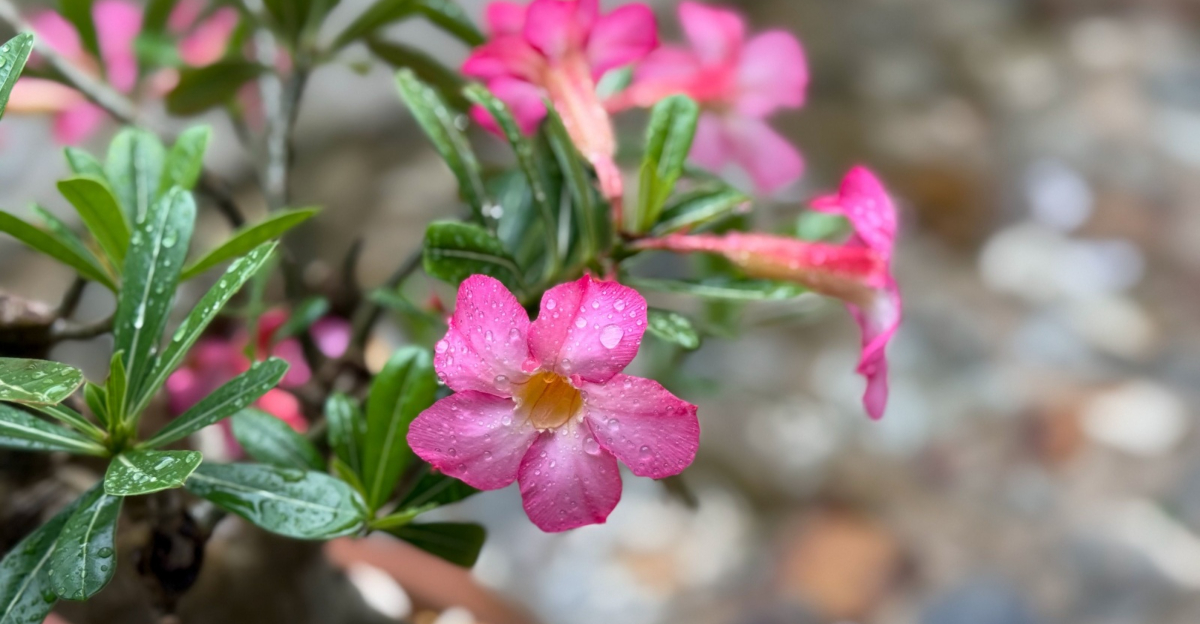
Desert rose in full bloom stops people mid step in Florida gardens. Thick sculpted trunks rise like living art, crowned with electric flowers in blazing pink, deep crimson, soft white, and sunset blends that glow under the sun.
Adenium carries a wild beauty, part desert survivor, part tropical showpiece, thriving in heat where many plants struggle.
Yet behind that bold display sits a plant with clear preferences, sharp instincts, and a rhythm shaped by light, warmth, and careful watering.
Florida growers who understand its nature unlock faster growth, stronger caudex form, and waves of vivid blooms that return again and again.
Healthy Adenium plants reward patience with color so intense it looks painted, not grown, turning patios, poolsides, and sunny corners into striking focal points that demand attention and spark conversation every time flowers open wide.
1. Sunlight Builds Strong Blooming Plants
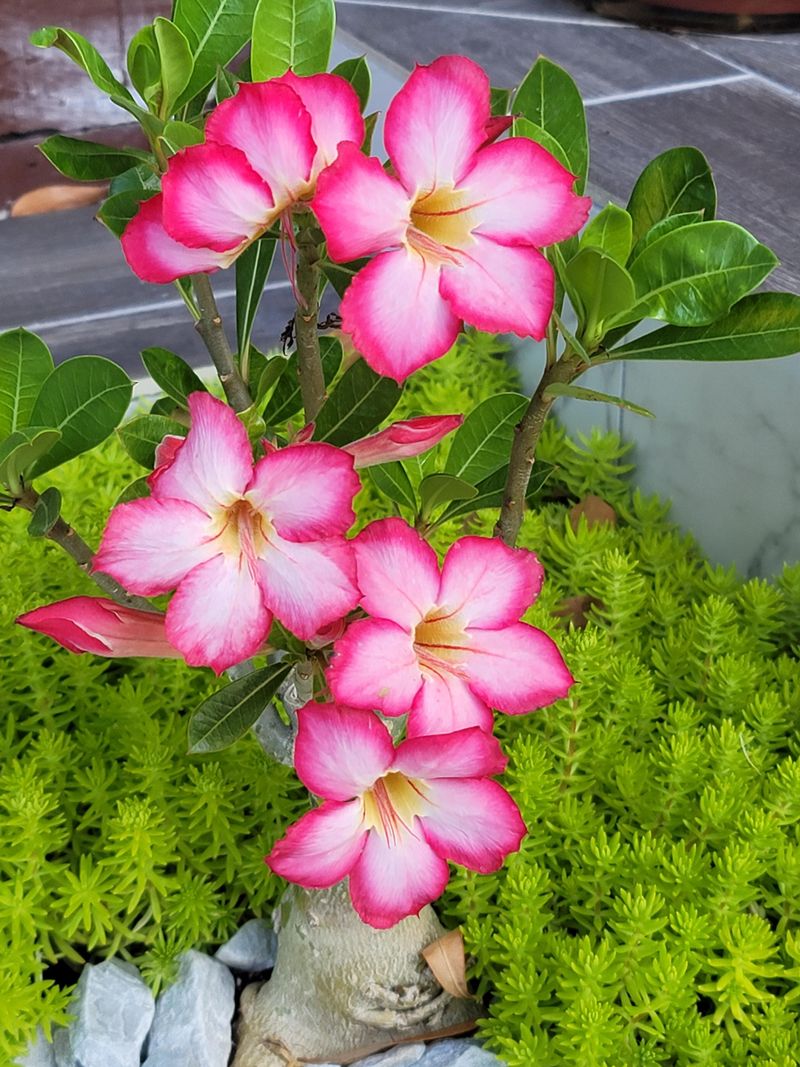
Bright, direct light is absolutely essential for adenium to produce those spectacular blooms Florida gardeners crave. These plants evolved in sunny, open landscapes and need at least six to eight hours of full sun daily to thrive and flower consistently.
When grown in too much shade, adenium develops weak, elongated stems that stretch toward light sources and produces far fewer flowers than sun-grown specimens.
Florida’s intense sunshine suits adenium perfectly during most of the year. However, plants purchased from nurseries or shipped from other states need gradual acclimation to prevent leaf scorch.
Start newly acquired plants in bright indirect light or morning sun for about a week, then gradually increase exposure over two to three weeks until they receive full sun throughout the day.
For apartment or condo dwellers with limited space, south-facing patios and balconies provide ideal conditions. West-facing locations also work well, though afternoon heat can be intense during peak summer months.
North-facing spaces rarely provide enough light for robust blooming. East-facing spots offer gentler morning sun but may lack the intensity adenium needs for maximum flower production.
Watch your plant’s response to its location. Compact growth, thick stems, and abundant buds indicate proper light levels.
Leggy growth, pale leaves, or sparse flowering signals insufficient sunlight and the need to relocate your adenium to a brighter spot in your Florida garden.
2. Warm Temperatures Keep Adenium Thriving
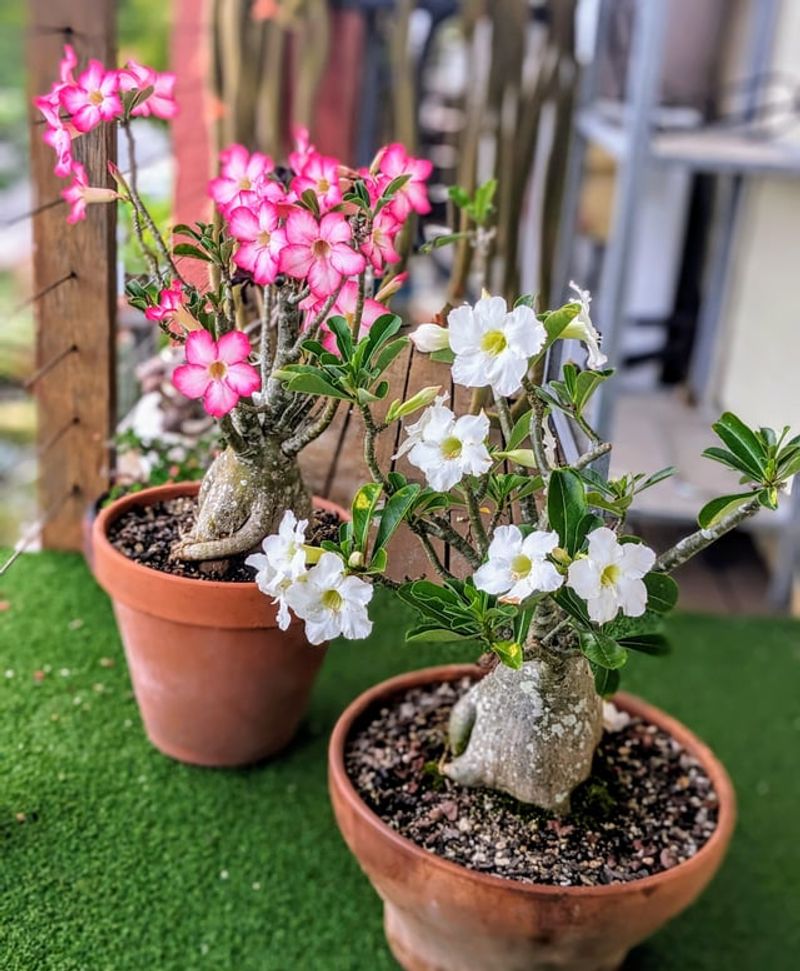
Heat lovers by nature, adenium plants absolutely flourish during Florida’s long, warm summers when temperatures consistently stay above 65 degrees. Growth accelerates dramatically once nighttime temperatures remain in the 70s, and blooming peaks when days reach the 80s and 90s.
Central and South Florida provide nearly ideal year-round conditions, while North Florida gardeners face seasonal temperature challenges.
The greatest threat to adenium in Florida comes from occasional cold snaps, particularly in northern counties where winter temperatures sometimes drop below 40 degrees. Adenium foliage suffers damage at temperatures below 50 degrees, and prolonged exposure to freezing conditions can cause serious harm to the entire plant.
Fortunately, container culture makes protection simple and effective.
During cold weather advisories, move potted adenium into garages, covered porches, or indoors near bright windows. Even unheated spaces that stay above freezing provide adequate protection for short cold periods.
If moving large containers proves difficult, cover plants with frost blankets or old sheets, removing covers once temperatures rise above 50 degrees to prevent overheating in morning sun.
Spring warmth triggers renewed growth and flowering across Florida. Once nighttime temperatures consistently stay above 60 degrees, adenium resumes active growth.
This typically occurs in March for South Florida, April for Central regions, and May for northern counties. Understanding these temperature patterns helps Florida gardeners time fertilizing, repotting, and other care activities for best results.
3. Well Drained Soil Prevents Root Problems
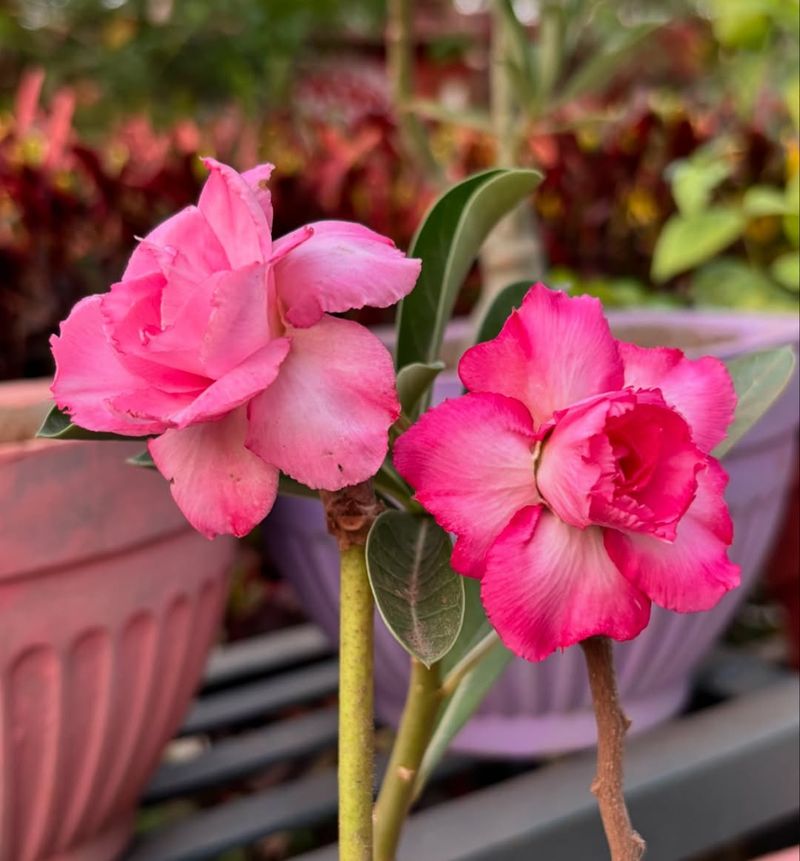
Soil drainage matters more for adenium success than almost any other care factor, especially in Florida’s humid climate where moisture lingers longer than in arid regions. Adenium roots evolved in sandy, rocky soils that drain within minutes of rainfall, and they struggle terribly in moisture-retentive mixes.
Heavy, water-holding soils create conditions that quickly damage the root system and compromise plant health.
Commercial cactus and succulent potting mixes provide excellent starting points for adenium culture. These blends typically contain ingredients like perlite, pumice, coarse sand, and pine bark that create air spaces and allow water to flow through quickly.
Some Florida growers enhance these mixes further by adding extra perlite or small lava rock to increase drainage, particularly helpful during our rainy summer months.
Never plant adenium in regular potting soil, garden soil, or moisture-control mixes designed for typical houseplants. These products retain too much water and create soggy conditions that adenium roots cannot tolerate.
Florida’s naturally heavy clay and sandy soils also pose challenges, which is why container growing with specialized mixes works best for most gardeners.
Container selection plays an equally important role in drainage success. Every pot must have adequate drainage holes in the bottom, and many growers prefer terracotta or unglazed clay pots that allow moisture to evaporate through the sides.
Avoid saucers that allow water to pool beneath pots, and never let containers sit in standing water after watering or rainfall.
4. Smart Watering Encourages Healthy Growth
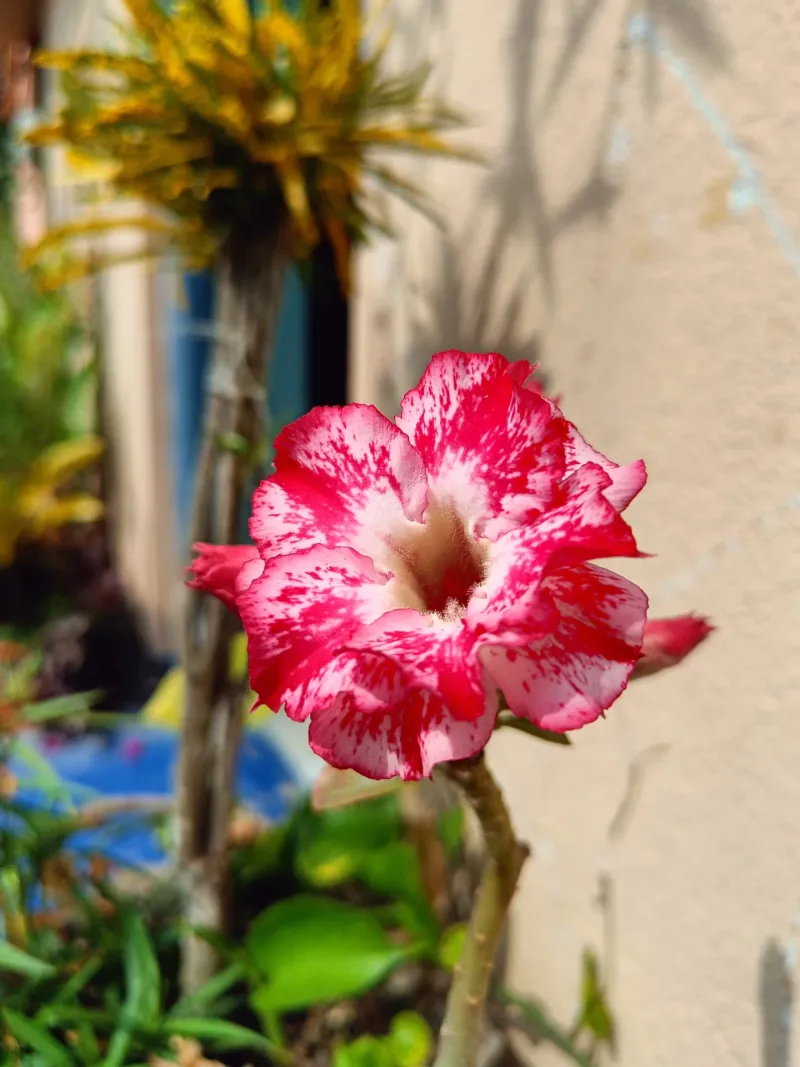
Finding the right watering rhythm takes practice but becomes intuitive once you understand adenium’s moisture preferences. During Florida’s active growing season from spring through fall, water thoroughly when the soil becomes dry an inch or two below the surface.
The swollen trunk stores significant moisture reserves, allowing adenium to tolerate dry periods far better than overwatering.
Summer heat and sunshine increase water needs considerably compared to cooler months. In June, July, and August, vigorous plants in full sun may need watering every three to five days, especially in smaller containers that dry faster.
Always check soil moisture before watering rather than following a rigid schedule, as rainfall, humidity levels, and container size all affect how quickly soil dries.
Florida’s high humidity creates a unique challenge because soil surfaces may appear dry while deeper layers remain quite moist. Stick your finger into the soil or use a moisture meter to assess true moisture levels before adding water.
Overwatering in humid conditions causes more adenium problems than any other care mistake, leading to soft stems, yellowing leaves, and compromised root health.
Winter watering requires dramatic reduction across most of Florida. As temperatures cool and growth slows, adenium enters a semi-dormant phase requiring minimal moisture.
From December through February, water only enough to prevent the trunk from shriveling, perhaps once every two to three weeks depending on location. Resume regular watering gradually as spring warmth returns and new growth emerges.
5. Feeding Boosts Color And Flower Power
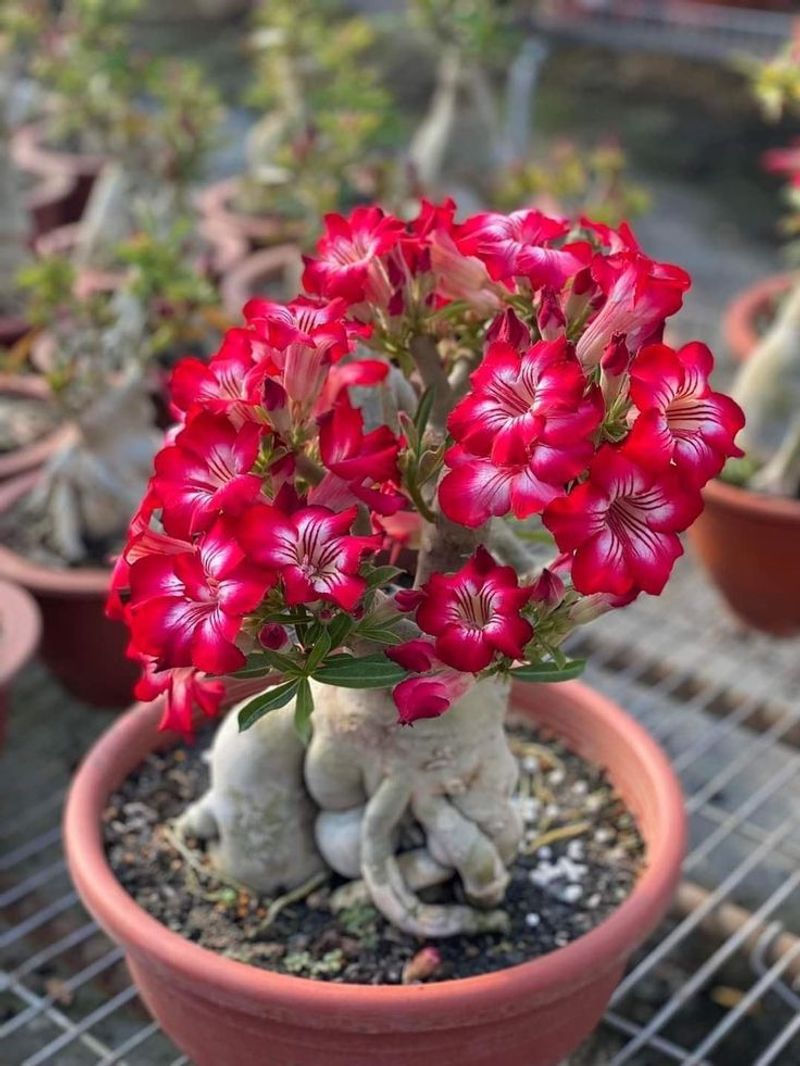
Proper nutrition amplifies adenium’s natural beauty and flowering potential throughout Florida’s long growing season. During active growth from March through October, regular fertilizing supports vigorous stem development, lush foliage, and abundant blooms.
Balanced formulations work well, though some growers prefer options slightly higher in phosphorus to encourage more flowers.
Slow-release granular fertilizers offer convenience for busy gardeners, providing steady nutrition over several months with single applications. Apply these products in early spring as growth resumes and again in midsummer if the product duration requires it.
Follow package directions carefully, as adenium needs less fertilizer than many flowering plants. Excessive feeding produces lush foliage at the expense of blooms and can create weak, water-filled growth.
Liquid fertilizers diluted to half or quarter strength provide another excellent option, particularly for container-grown adenium. Apply diluted solutions every two to three weeks during active growth, mixing the fertilizer into regular watering.
This approach gives you precise control over nutrition levels and allows quick adjustments based on plant response. Always fertilize adenium when soil is already slightly moist to prevent root stress.
Stop fertilizing completely during Florida’s cooler months when adenium growth naturally slows. From November through February, plants need little to no supplemental nutrition and benefit from a rest period.
Resume feeding gradually in March as temperatures warm and new leaves begin emerging, starting with half-strength applications before returning to regular feeding schedules by April.
6. Pruning Shapes Fuller More Beautiful Plants
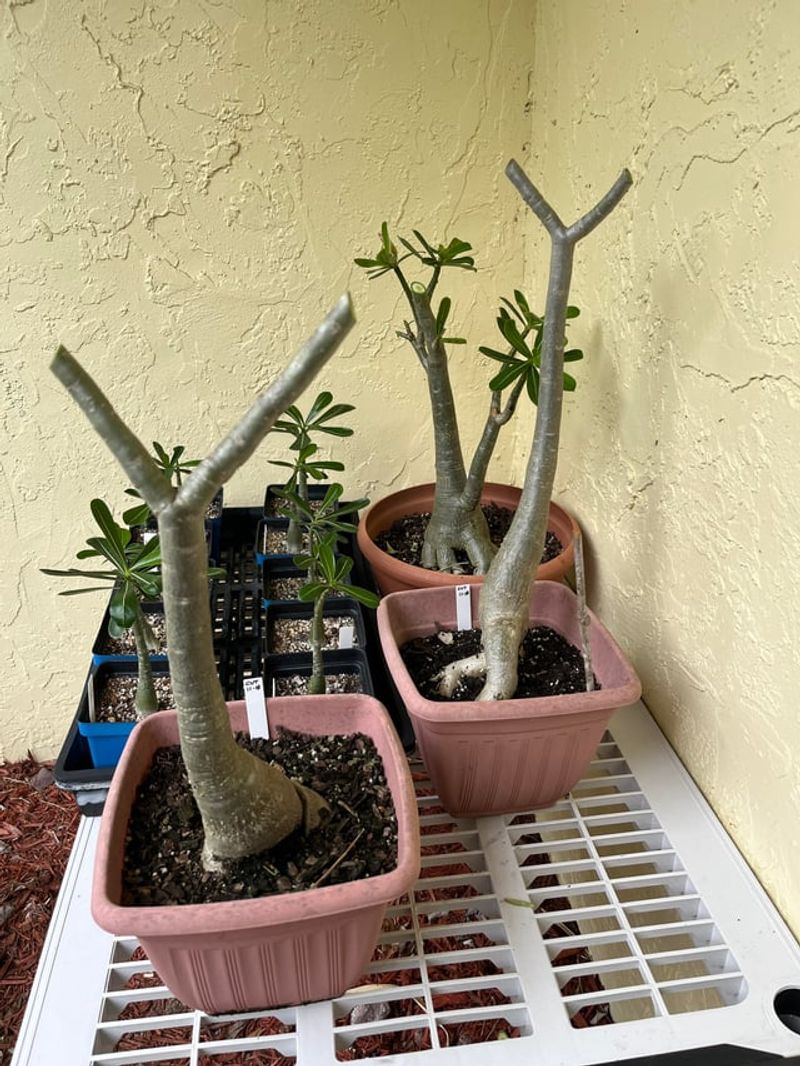
Strategic trimming transforms leggy adenium into full, multi-branched specimens that produce flowers on numerous stems instead of just one or two. Pruning works by removing the growing tip of stems, which triggers dormant buds lower on the branch to activate and develop into new shoots.
This creates bushier plants with more flowering points and visually appealing shapes.
Late winter or very early spring provides the ideal pruning window in Florida, just before active growth resumes. February and March work well across most of the state, allowing cuts to heal quickly as temperatures warm and growth accelerates.
Avoid pruning during active blooming periods or in late fall when plants prepare for winter rest. Clean, sharp pruning shears or knives prevent ragged cuts and reduce stress on plants.
Remove no more than one-third of the plant during any single pruning session. Make cuts just above leaf nodes or branches at slight angles to promote healing and water runoff.
Adenium sap can irritate skin, so wear gloves during pruning and wash tools afterward. Some gardeners dip cutting tools in rubbing alcohol between cuts to prevent disease spread, though this is less critical for healthy plants.
Young adenium plants benefit tremendously from early pruning that establishes good branching structure. Pinch or cut back the main stem when plants reach desired height, encouraging multiple branches from the base.
Mature plants need less frequent pruning, mainly to remove damaged growth, control size, or reshape specimens that have become unbalanced over time.
7. Container Growing Gives Better Control
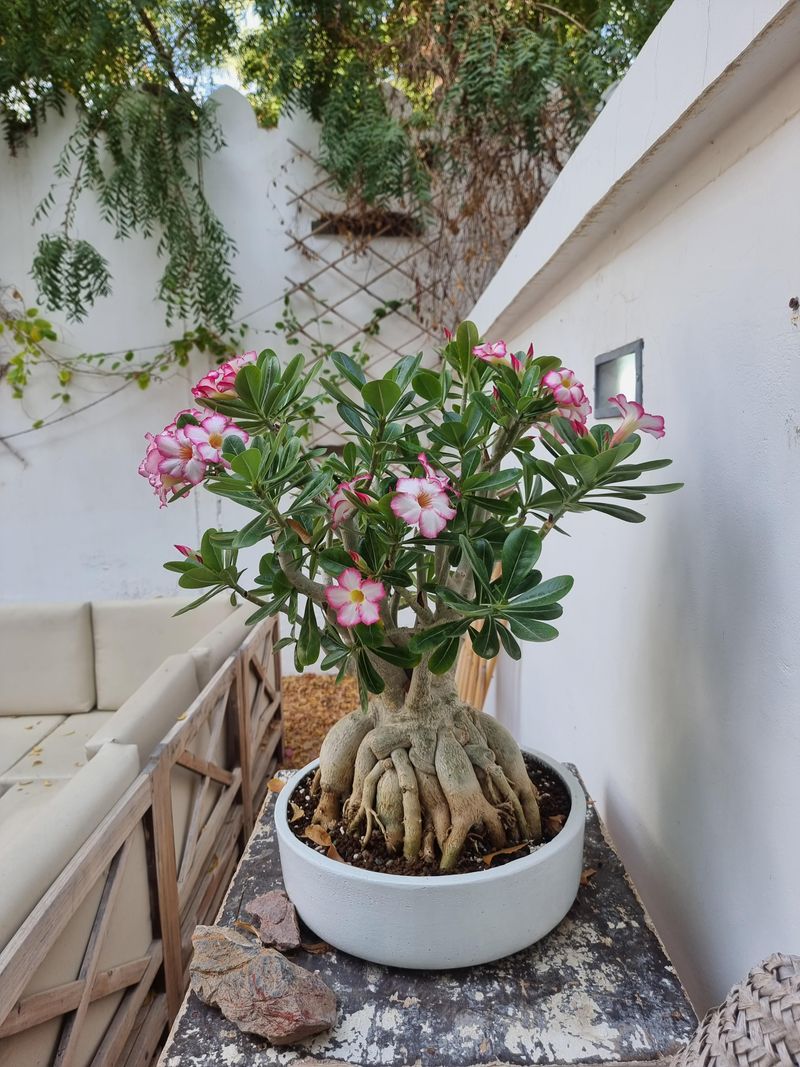
Pots and containers provide the absolute best growing environment for adenium in Florida, offering advantages that in-ground planting simply cannot match. Container culture allows complete control over soil composition, ensuring the fast-draining mix adenium requires regardless of your yard’s native soil.
This proves especially valuable in areas with heavy clay or poorly draining ground conditions that would otherwise make adenium cultivation difficult.
Drainage management becomes much simpler with container growing. You can position pots on feet or pot stands that elevate containers and ensure water never pools beneath them, critical during Florida’s heavy summer rains.
Moving containers under cover during extended rainy periods prevents waterlogged soil, something impossible with in-ground plants. This flexibility alone prevents countless problems throughout our wet season.
Cold protection represents another major container advantage, particularly for North and Central Florida gardeners. When frost threatens, simply roll or carry containers into protected areas rather than struggling with covers and blankets over in-ground plants.
Garages, covered porches, and even bright indoor spots provide safe temporary shelter during cold snaps, then plants return outdoors once temperatures rise.
Choose containers just slightly larger than the root mass, as adenium prefers relatively snug pots and flowers best when somewhat root-bound. Pots between 10 and 14 inches in diameter suit most mature adenium beautifully.
Repot every two to three years in early spring, moving up only one pot size. Terracotta and clay pots work wonderfully, though any container with adequate drainage holes functions well.
8. Seasonal Care Keeps Plants Vibrant Year Round
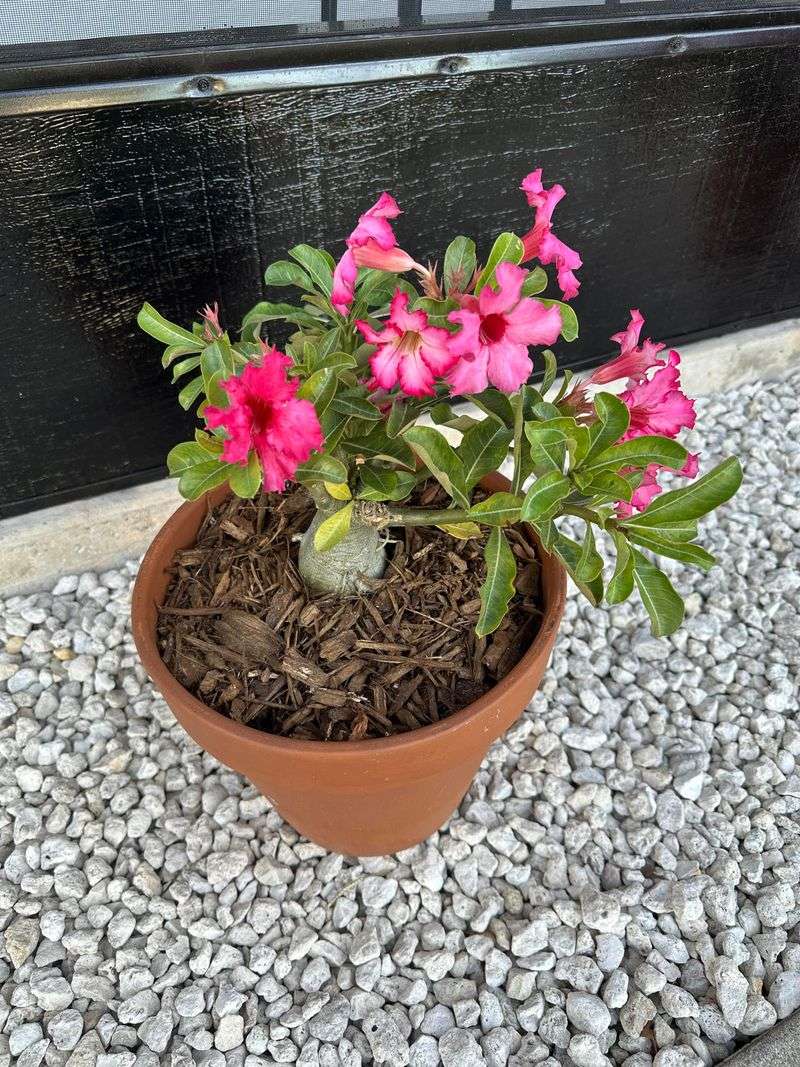
Understanding Florida’s seasonal rhythm helps you provide exactly what adenium needs throughout the year for sustained health and beauty. Spring arrives earliest in South Florida, often by late February, with warming temperatures triggering new leaf growth and flower bud formation.
This signals the time to resume regular watering, begin fertilizing, and perform any needed repotting or pruning before vigorous growth begins.
Summer represents peak growing season across all Florida regions. Adenium thrives in our heat and produces waves of blooms from May through September when properly cared for.
Increase watering frequency as temperatures rise and rainfall becomes unpredictable. Monitor containers daily during extreme heat, as small pots may dry completely within 24 hours.
Continue regular feeding throughout summer to support continuous flowering and growth.
Fall brings gradual changes as daylight shortens and temperatures moderate, particularly in northern counties. Flowering often continues through October and even November in warmer areas, but growth rates slow noticeably.
Begin reducing fertilizer applications in September and stop completely by November. Gradually decrease watering frequency as plants show signs of slowing growth and preparing for rest.
Winter dormancy varies significantly across Florida. South Florida adenium may continue light growth and occasional blooming all winter, while North Florida plants typically lose leaves and rest completely.
Reduce watering dramatically for all regions, providing just enough moisture to prevent trunk shriveling. Protect plants from any temperatures below 50 degrees.
As February arrives, watch for swelling buds that signal spring’s return and the beginning of another beautiful growing cycle.