The Hidden Pest Michigan Gardeners Should Check For When Basil Leaves Look Shredded Overnight
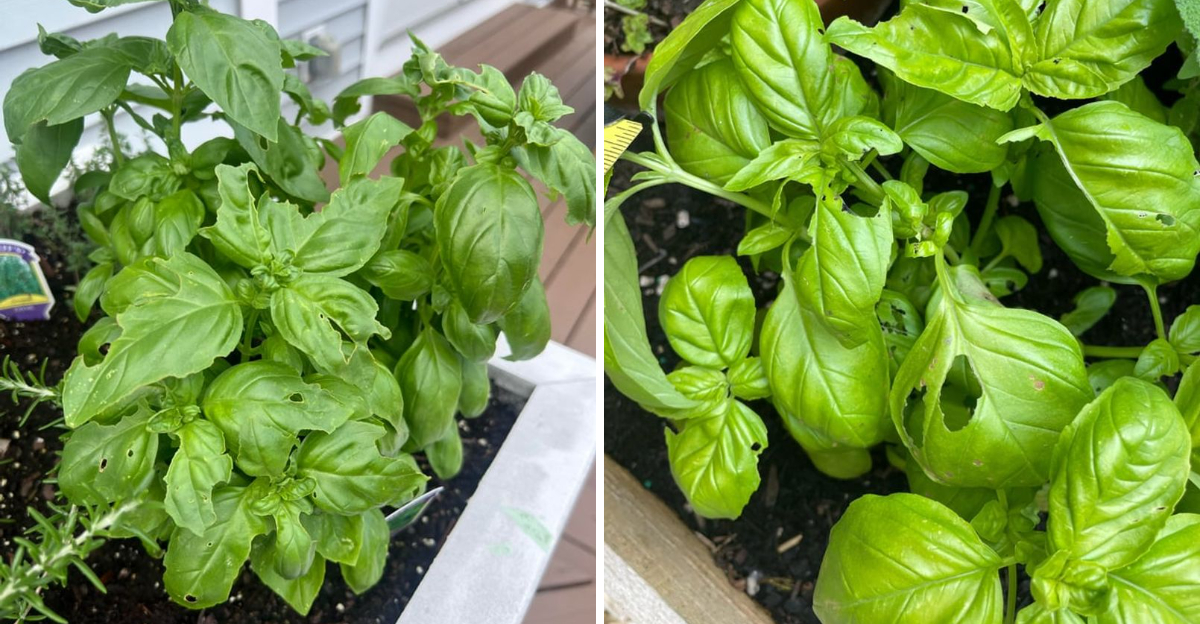
Shredded basil leaves discovered in the morning point to something active after dark, and the usual suspects get blamed before the real culprit gets considered.
Slugs take credit for a lot of overnight damage in Michigan gardens, but basil shredding has a specific hidden pest behind it more often than most gardeners realize.
This insect is small enough to go completely unnoticed during daytime inspections, hides in locations on the plant that casual checking misses entirely, and causes damage that looks far more severe than its population size would suggest.
Finding it requires checking the right places at the right time. Miss it and the basil keeps getting shredded while the real cause stays hidden in plain sight.
1. Earwigs
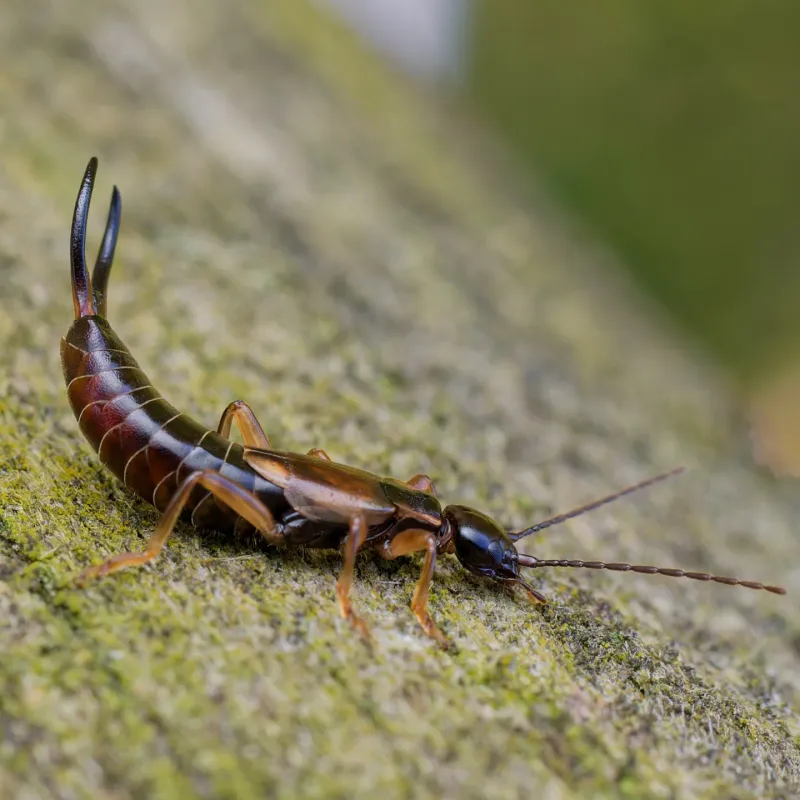
Most gardeners never even think about earwigs until the damage is already done.
These small, reddish-brown insects have distinctive curved pincers at the back of their bodies, and they are surprisingly common in Michigan gardens during warm, humid months.
The tricky part is that they are almost entirely nocturnal, meaning they feed after dark and hide before most gardeners ever step outside.
Earwigs love soft plant material, and basil is basically an open invitation for them. They chew through leaves quickly, leaving behind damage that looks dramatic by morning.
Because you rarely catch them in the act, many gardeners assume something else is responsible and spend days troubleshooting the wrong pest entirely.
Michigan summers create exactly the kind of warm, damp conditions that earwigs thrive in. Raised beds with mulch, container gardens near fences, and shaded spots near the house are all prime earwig territory.
They are not picky about location as long as they have moisture, shelter, and food nearby.
Checking for earwigs specifically should always be your first move when basil leaves look shredded after a single night. Other pests can cause similar damage, but earwigs are incredibly common and often overlooked.
Once you know what you are dealing with, protecting your basil becomes much more straightforward.
Start by inspecting your garden after dark with a flashlight, and you may be surprised by just how many of these little insects are actively moving around your plants.
2. Ragged Holes Point To Night Feeding
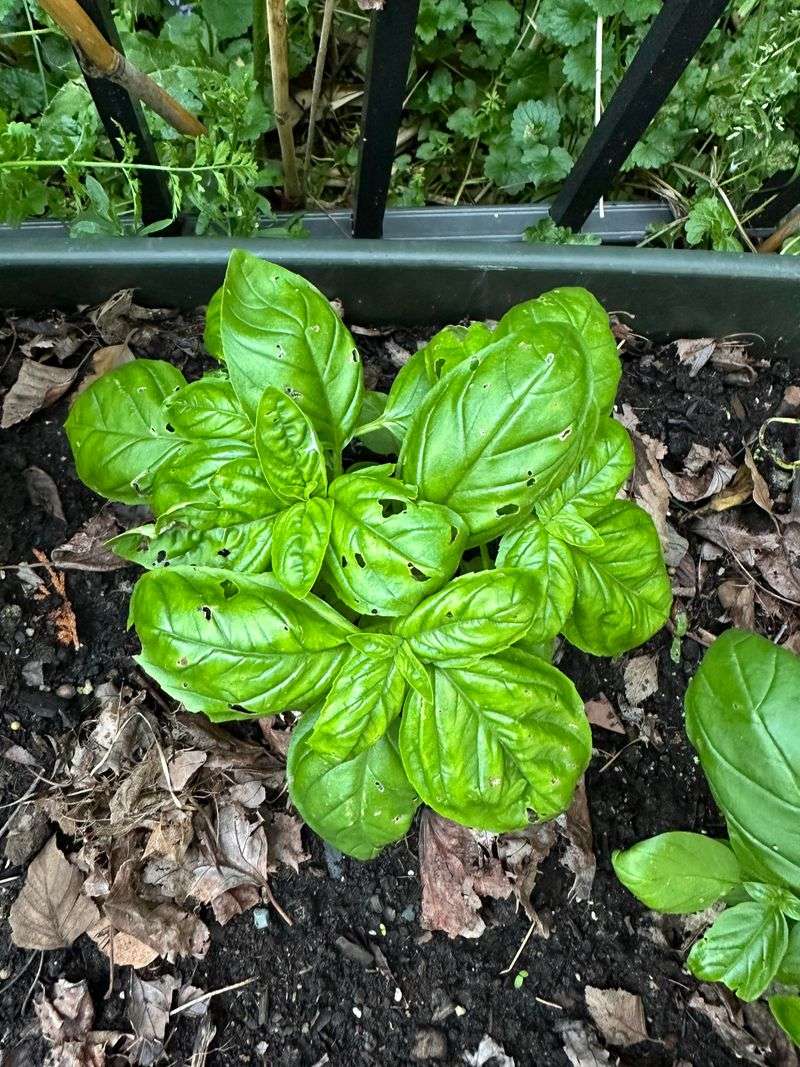
Not all leaf damage looks the same, and the pattern earwigs leave behind is actually pretty distinctive once you know what to look for. Instead of clean, round holes, earwig feeding creates rough, jagged edges with irregular shapes.
The holes can appear anywhere on the leaf, not just along the edges, and they often look almost torn rather than precisely chewed.
Tender new growth tends to show the worst damage because young basil leaves are softer and easier for earwigs to chew through quickly.
If you notice that the freshest leaves at the top of your plant look the most shredded, that is a strong clue pointing toward earwigs or similar night-feeding insects.
Older, tougher leaves at the bottom of the plant may show less damage simply because they require more effort to eat.
One of the most helpful clues is timing. If your basil looked perfectly fine when you checked it in the evening but showed significant damage by morning, that overnight window strongly suggests a nocturnal pest.
Your Michigan Garden Changes Every Week. Your Plan Should Too.
Gardening in Michigan changes quickly throughout the season. Every Friday you’ll receive a simple weekly plan showing exactly what to plant, prune, fertilize, harvest, and protect so you never miss the right timing.
Daytime insects like aphids or spider mites create gradual, ongoing damage that builds slowly over many days rather than appearing suddenly after a single night.
Paying close attention to the shape, location, and timing of the damage gives you real information to work with.
Ragged holes appearing overnight on soft young leaves, especially during warm humid Michigan weather, are a reliable sign that something is actively feeding after dark.
Catching this pattern early helps you respond faster and protect the rest of your basil before more leaves get chewed.
3. Damp Mulch Gives Earwigs A Daytime Hideout
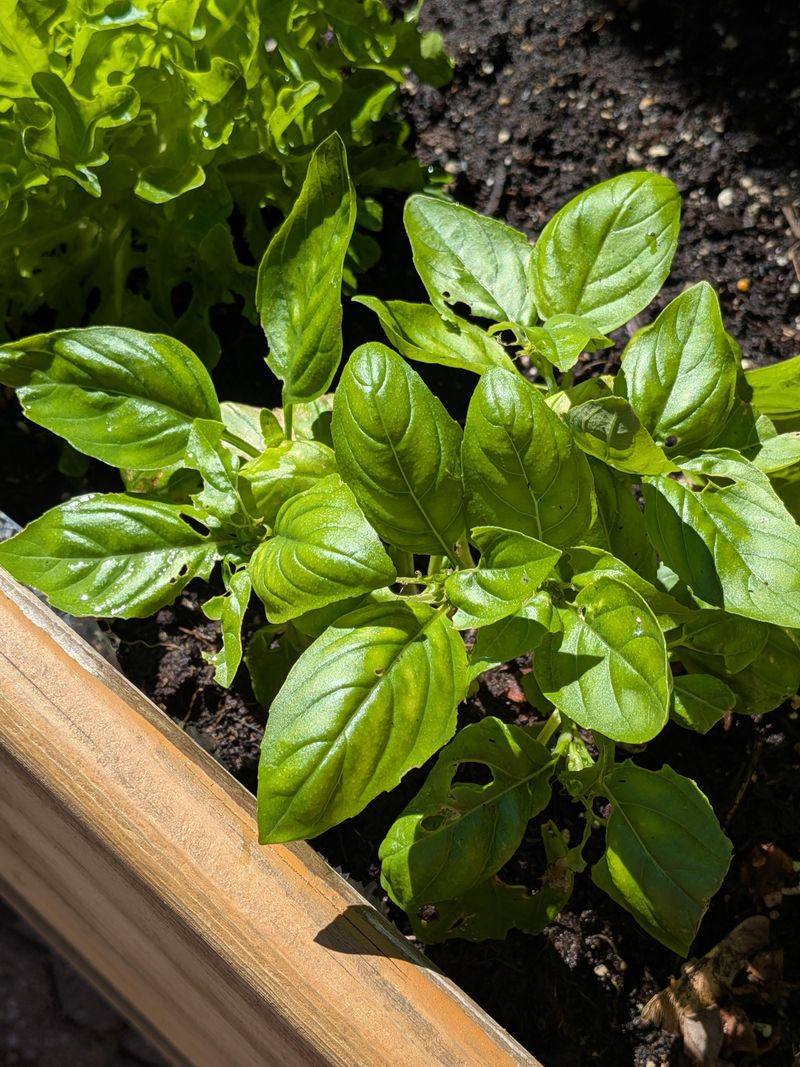
Mulch is usually considered a gardener’s best friend, but in the right conditions, it can quietly become part of the problem.
Earwigs absolutely love damp, dark spaces, and a thick layer of moist mulch sitting right next to your basil plants is practically a welcome mat for them.
During the day, they burrow underneath the mulch to stay cool and hidden, then come out at night to feed on whatever is close by.
Michigan gardens often have heavy mulch layers to help retain moisture through summer heat, which makes sense for plant health but also creates perfect earwig habitat.
The closer the mulch is piled against the base of your basil stems, the shorter the commute for earwigs looking for a meal after dark. Even a few inches of damp organic mulch can shelter a surprising number of these insects.
Pulling mulch back a few inches from the base of your basil plants can make a noticeable difference. Reducing the amount of moisture directly around the stems removes one of the main attractions earwigs look for.
You do not have to remove mulch from your whole garden, just create a small dry buffer zone right around your herbs.
It also helps to check under the mulch during the day if you suspect earwigs are present. Lifting a small section near your basil may reveal clusters of earwigs resting in the damp soil underneath.
Seeing them in their daytime hideout confirms what is happening at night and gives you a clear picture of just how close these insects actually are to your plants.
4. Pots, Trays, And Edging Can Hide The Culprit
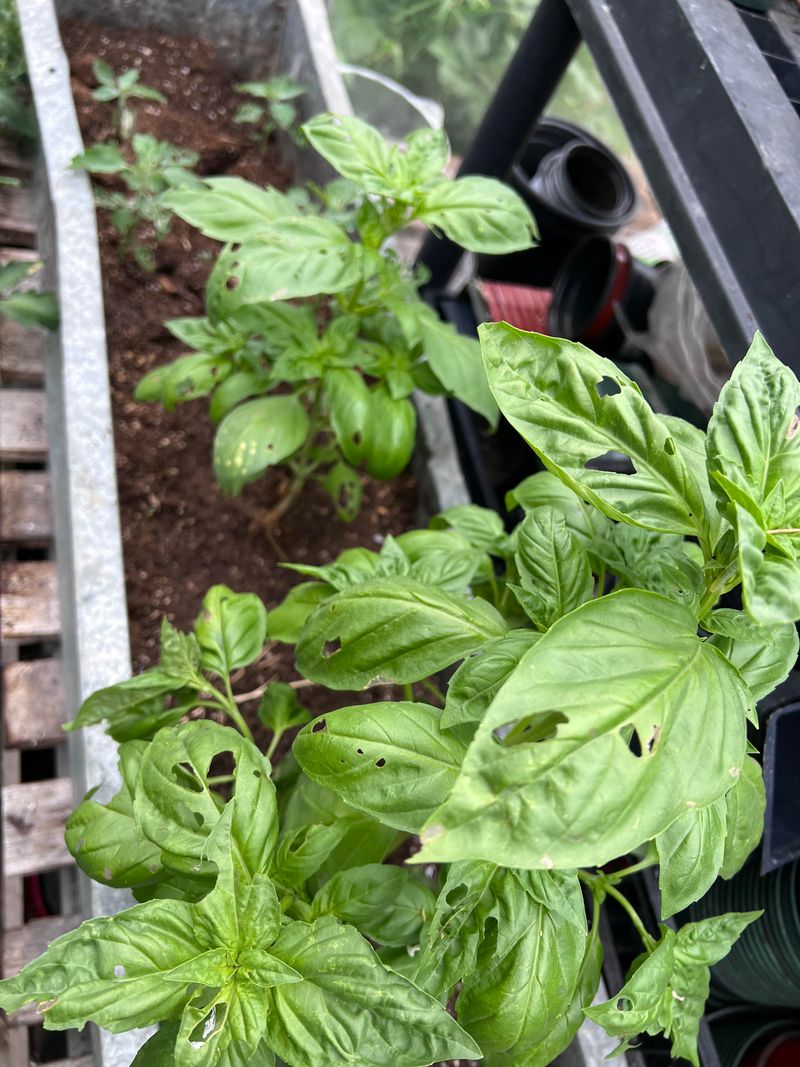
Earwigs are experts at finding the smallest, darkest, dampest spots available, and gardens are full of them.
The underside of a container, the gap beneath a seedling tray, the space under a stone edging border, or even the rim of a plastic saucer can all serve as a cozy daytime hiding spot.
These insects do not wander far from where they feed, so the culprit is almost always within a few feet of your damaged basil.
Container gardeners in Michigan often notice earwig damage more frequently than in-ground gardeners, partly because pots create so many hidden spaces. Every pot has a drainage hole, and every saucer holds a little moisture.
Earwigs are small enough to squeeze into incredibly tight spaces, and they will use anything close to the ground as shelter if it stays dark and damp enough through the day.
Making it a habit to lift containers, trays, and edging pieces near your basil is one of the fastest ways to confirm an earwig problem. You might find just a few, or you might find dozens tucked into a single dark corner.
Either way, actually seeing the insects tells you far more than guessing based on leaf damage alone.
Reducing the number of hiding spots near your basil can have a real impact on how much overnight feeding happens.
Moving saucers, lifting trays off the ground, and keeping edging clean and dry removes the sheltered spaces earwigs depend on.
It does not eliminate them from your garden entirely, but it does make the area around your basil far less appealing as a base of operations for nighttime feeding.
5. Young Basil Can Look Worse By Morning
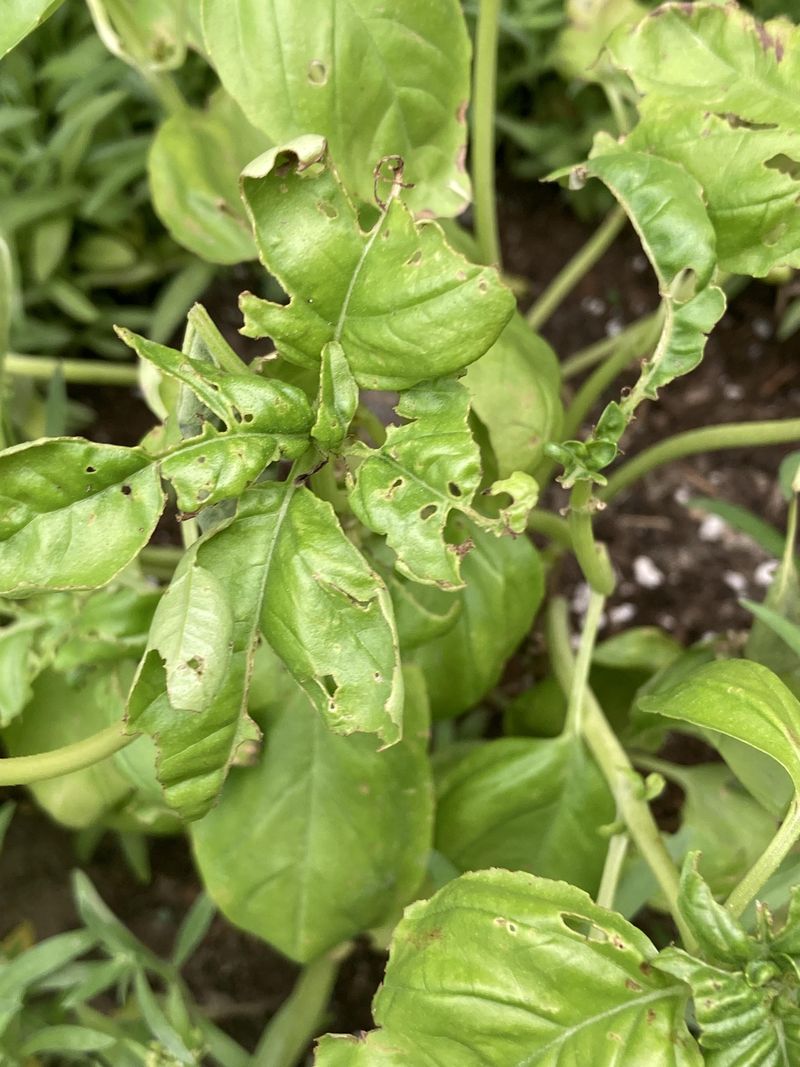
Fresh basil transplants and young seedlings are in a particularly vulnerable spot when earwigs are active nearby.
Soft, newly formed leaves have not yet developed the tougher cell structure that older basil growth has, which makes them significantly easier to chew through.
An earwig can do a lot of visible damage to a young plant in a single night simply because the tissue offers so little resistance.
If you have recently transplanted basil starts or are growing seedlings outdoors, those plants deserve extra attention during summer nights in Michigan.
A mature basil plant with established woody stems may lose a few leaves but keep producing without much setback.
A young seedling that loses most of its leaf surface overnight has a much harder time recovering and may struggle to grow at the same rate.
Gardeners who start basil from seed outdoors should be especially watchful during the first few weeks after germination.
Tiny seedlings are almost completely soft tissue, and even a small number of earwigs can strip them down significantly before sunrise.
Checking on new plantings more frequently during warm, humid stretches of Michigan summer is a smart protective habit to build early in the season.
Covering young basil with a lightweight row cover at night creates a simple physical barrier that earwigs cannot easily cross. Removing the cover during the day allows sunlight, airflow, and pollinators to reach the plants normally.
This targeted protection for young plants specifically can make a huge difference in how well your basil establishes itself before it grows large enough to handle a little overnight nibbling without serious setback.
6. Slugs Can Create A Similar Overnight Mess
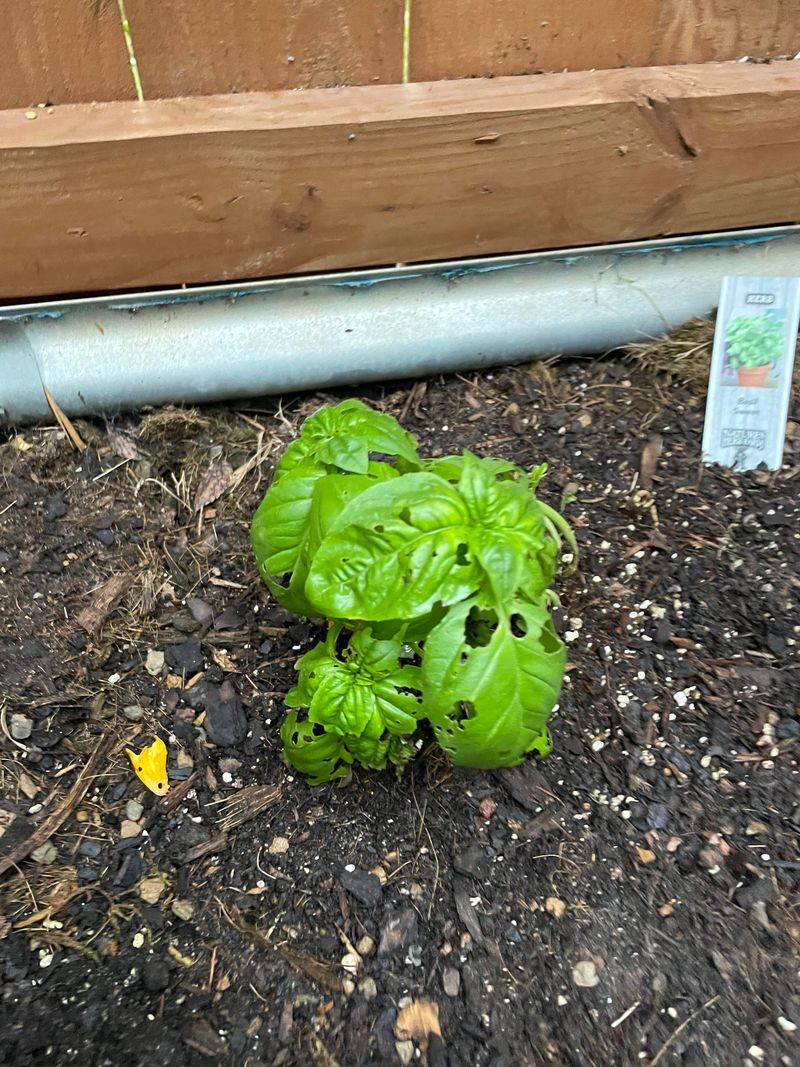
Before you settle completely on earwigs as the culprit, it is worth knowing that slugs can create nearly identical-looking damage on basil overnight.
Both pests are active after dark, both love soft plant material, and both leave behind large ragged holes that are hard to miss by morning.
Telling the two apart matters because the approaches you take to manage them are different, and guessing wrong wastes time.
The clearest difference between slug damage and earwig damage is the slime trail. Slugs leave a shiny, silvery mucus track on leaves, on the soil surface, and on nearby surfaces as they move.
If you see that glistening trail anywhere near your chewed basil, slugs are almost certainly involved. Earwigs do not leave any kind of trail, so clean damage with no residue points more strongly toward them.
Slugs also tend to create larger holes on average, often eating deep into the center of a leaf rather than working along the edges. They prefer very wet conditions, so damage tends to be worst after rainy nights or heavy watering.
Michigan gardeners dealing with a particularly wet stretch of summer weather should always check for both pests rather than assuming one or the other.
Going out early in the morning, right around dawn, gives you the best chance of spotting slugs before they retreat into hiding. They are slower to disappear than earwigs and may still be resting on or near damaged leaves in the early morning hours.
Catching them in the act removes all the guesswork and lets you choose the right response for whichever pest you actually find on your basil.
7. A Flashlight Check Gives The Best Answer
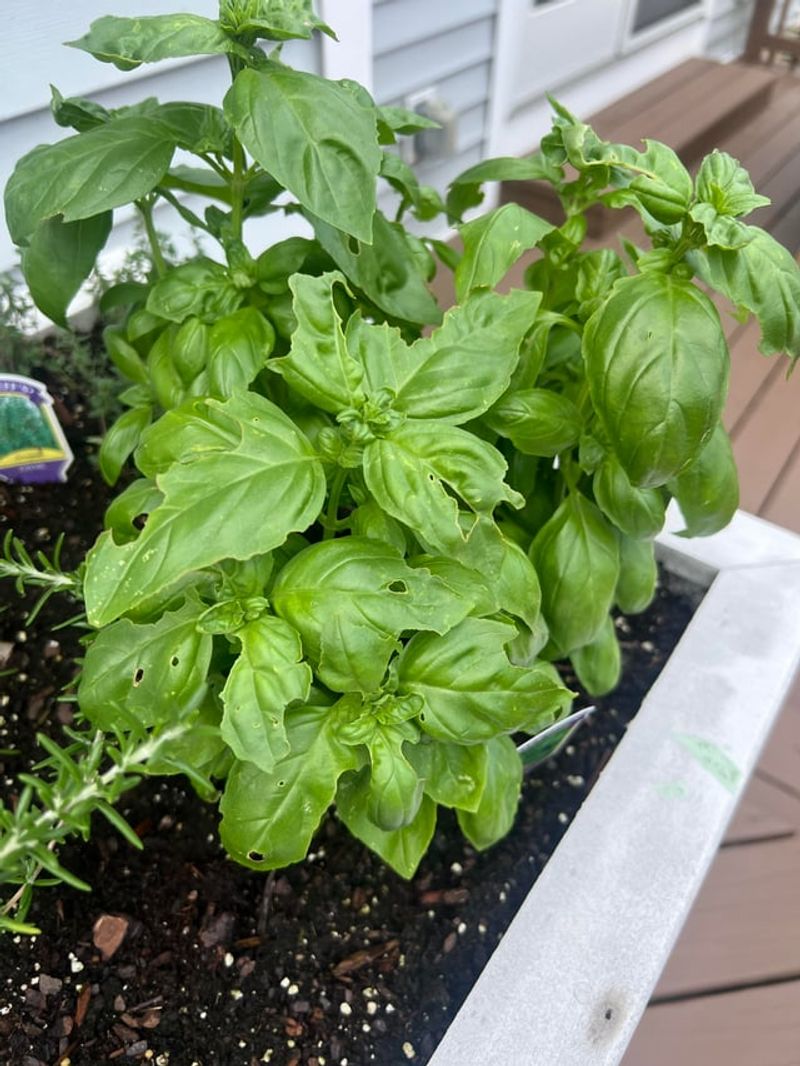
There is really no substitute for seeing things with your own eyes, and a simple nighttime inspection with a flashlight is the single most effective way to figure out what is actually eating your basil.
Waiting until morning and trying to identify the pest from the damage alone leaves a lot of room for error.
Going out after dark and looking directly at the plants while insects are actively feeding removes all the uncertainty.
Plan your flashlight check about one to two hours after sunset, when nocturnal pests are most actively moving and feeding. Walk slowly through your garden and shine the light directly on your basil leaves, checking both the top and underside of each leaf.
Earwigs will often be right on the leaf surface, chewing away without any concern about being discovered. Slugs may be visible on the leaf or moving along the soil nearby.
Also check the soil surface around the base of your basil stems, the rim of any nearby containers, the edges of mulch, and any boards or stones within a foot or two of the plants.
Earwigs move between their daytime hiding spots and feeding areas along predictable paths, and you may see them traveling as well as feeding.
This gives you a much better sense of where they are coming from and how many are present.
Taking a photo during your nighttime inspection is a great idea if you want to share what you found or look it up later.
A clear image of the actual insect on your basil is the fastest way to confirm your identification and decide on your next steps with confidence rather than guesswork.
8. The Takeaway For Michigan Basil Gardeners
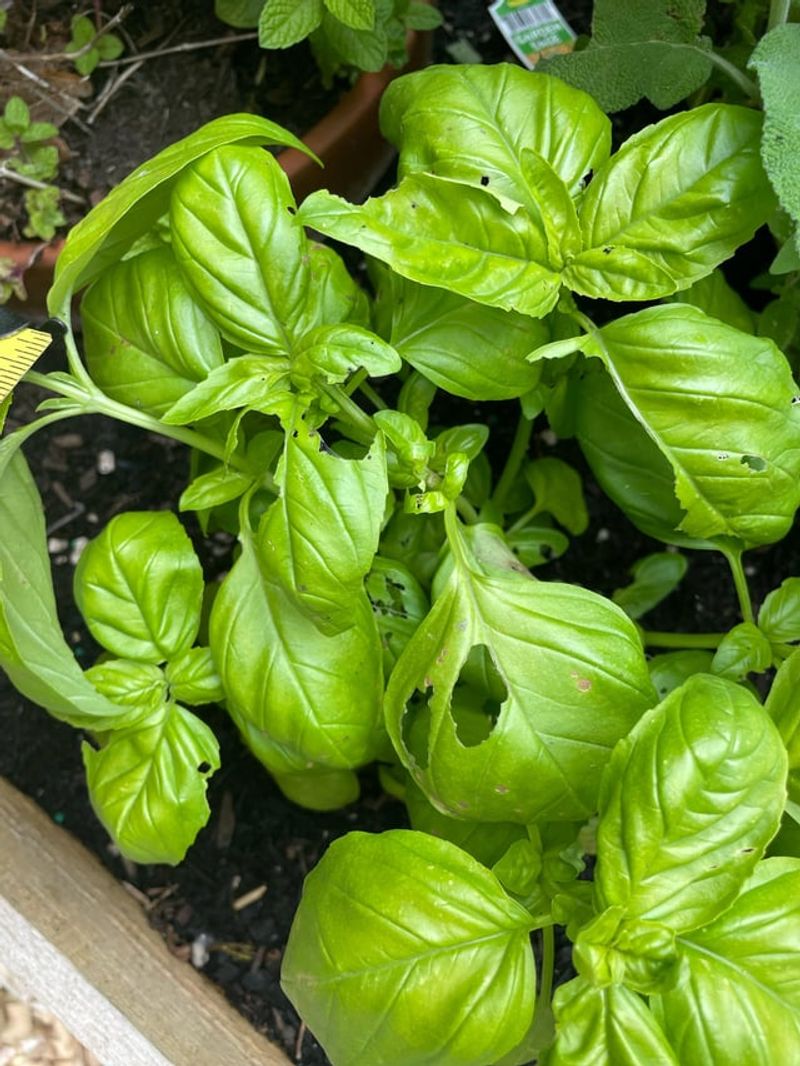
Shredded basil leaves that appear overnight are almost always the work of a nocturnal pest, and earwigs are the first thing Michigan gardeners should check for.
They are common, they are active during warm humid nights, and they are very good at staying hidden during daylight hours.
Slugs are a close second suspect, especially after rainy weather, and both can be active at the same time in the same garden.
The most useful steps you can take right now involve reducing the conditions that attract these pests to begin with. Pull mulch back from the base of your basil stems to create a small dry zone.
Lift containers, trays, and edging near your plants to remove daytime hiding spots. Improve airflow around your basil by spacing plants well and trimming away any crowded growth that keeps the soil beneath constantly damp.
Protecting young plants specifically should be a priority before the next wet night arrives. A lightweight row cover placed over seedlings and fresh transplants at dusk and removed in the morning creates an easy barrier without harming the plants.
For mature basil, reducing hiding spots nearby is usually enough to see a meaningful drop in overnight damage.
Most importantly, go out and actually look. A two-minute flashlight walk through your garden after dark will tell you more than a week of daytime inspections ever could.
Michigan summers are short and basil season goes fast, so catching this problem early and responding with confidence keeps your herb garden producing all the way through to fall. Your basil is worth protecting, and now you know exactly where to start.