The Meaning Behind Seeing Mockingbirds In Your Ohio Yard
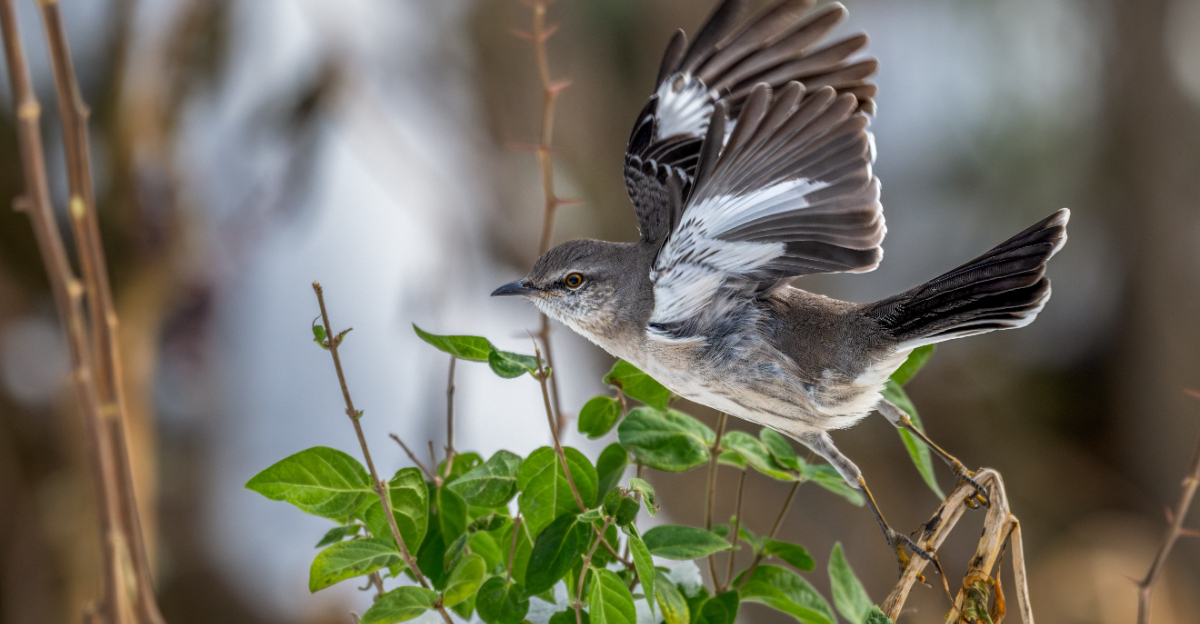
A mockingbird in an Ohio yard turns heads because it is not supposed to be there. Not in the way a robin or a cardinal belongs here.
A mockingbird in Ohio is a statement, a bird that has pushed its range northward and decided that this yard, this neighborhood, this particular patch of Ohio, was worth claiming.
That expansion is recent enough that older Ohioans remember when a mockingbird sighting was genuinely unusual.
Younger ones are starting to take them for granted. The shift between those two experiences says something real about what is happening to the climate and the landscape.
A mockingbird that settles into a yard is also reading that yard in a specific way. The plants, the structure, the food sources available through the season.
It chose this place for reasons that go beyond accident. What those reasons are, and what the visit signals, is worth understanding fully.
1. Read The Visit As A Yard Edge Clue
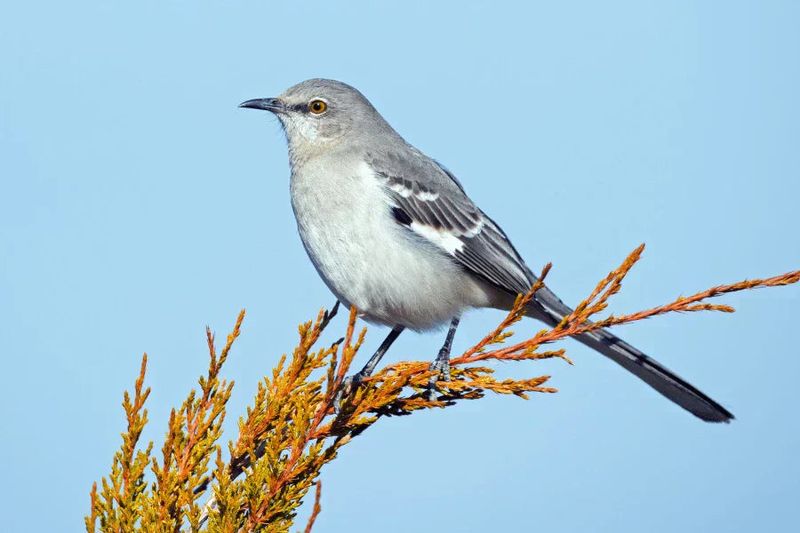
A flash of gray and white along the fence line can tell you something real about your Ohio yard. When a Northern Mockingbird shows up, the visit may suggest your space offers a useful mix of open ground and nearby cover.
Cornell Lab of Ornithology notes that Northern Mockingbirds favor open areas with scattered shrubs, low trees, thickets, or other edge features.
That edge, where mowed lawn meets a shrub border or garden bed, is exactly the kind of habitat this bird can use.
Watch where the bird goes after landing. If it drops to the grass, it may be hunting insects.
If it moves to a fruiting shrub, berries are likely part of the draw. A fence post, wire, or small tree used as a repeated perch suggests the bird has found a safe spot with a clear view of an open foraging area.
One visit does not confirm that your yard is ideal habitat. Sightings depend on season, food availability, nearby cover, and local bird movement.
Still, observing the bird’s behavior gives you useful clues. Note where it lands, what it eats, and how long it stays.
That simple observation can guide smarter planting and yard decisions going forward.
2. Know The Northern Mockingbird By Its Flashing Wings
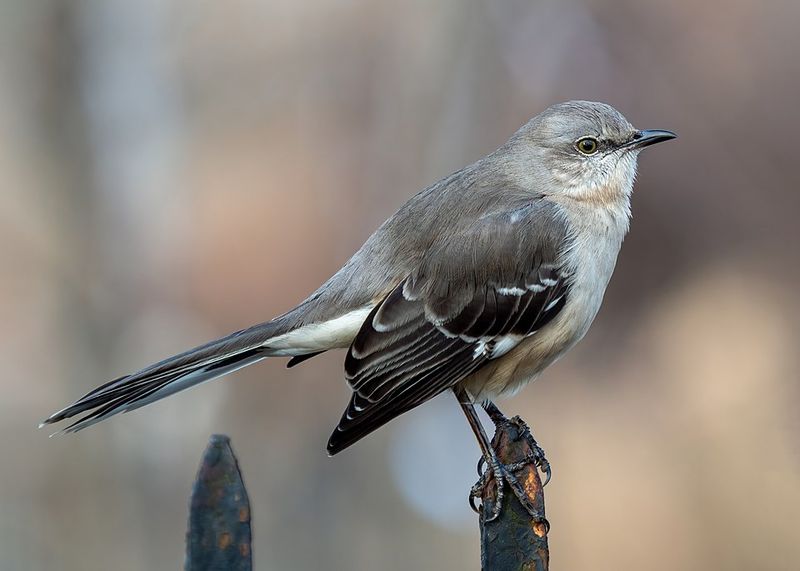
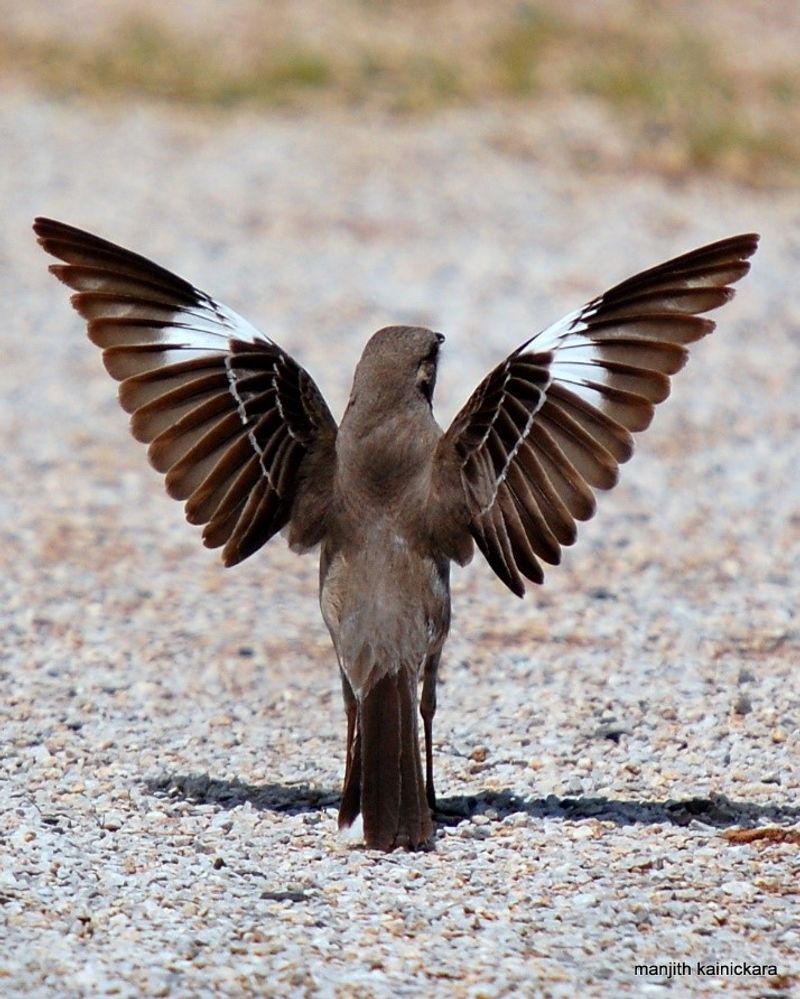
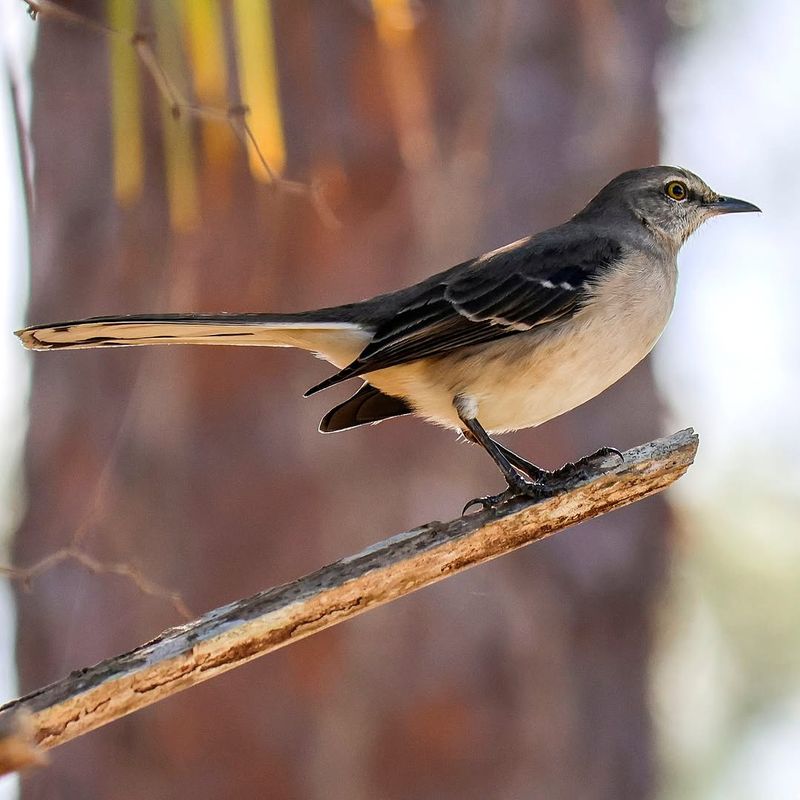
Gray above, pale below, with a long tail and two bold white wing patches that flash during flight or wing-spreading displays – that’s the look. The Northern Mockingbird is one of the easier backyard birds to recognize once you know what to look for.
Audubon’s field guide describes the bird as medium-sized with a slim body, a notably long tail, and white outer tail feathers that show clearly in flight.
The white wing patches are visible when the bird opens its wings, which it sometimes does while foraging on the ground.
Using binoculars helps a lot. Look for the pale underparts, the gray back, and that distinctive long tail before deciding the bird is a mockingbird.
Song alone is not enough for a confident identification, since other birds can also sing varied phrases. A clear look at the field marks, especially the wing patches and tail length, gives you a much stronger confirmation.
Your Ohio Garden Changes Every Week. Your Plan Should Too.
Gardening in Ohio changes quickly throughout the season. Every Friday you’ll receive a simple weekly plan showing exactly what to plant, prune, fertilize, harvest, and protect so you never miss the right timing.
Beginners sometimes confuse mockingbirds with shrikes or catbirds. A Gray Catbird is darker overall and lacks the white wing patches.
A Loggerhead Shrike has a black mask and a heavier bill. Taking a moment to observe carefully, rather than chasing the bird, is always the best approach.
3. Listen For Borrowed Songs From Nearby Birds
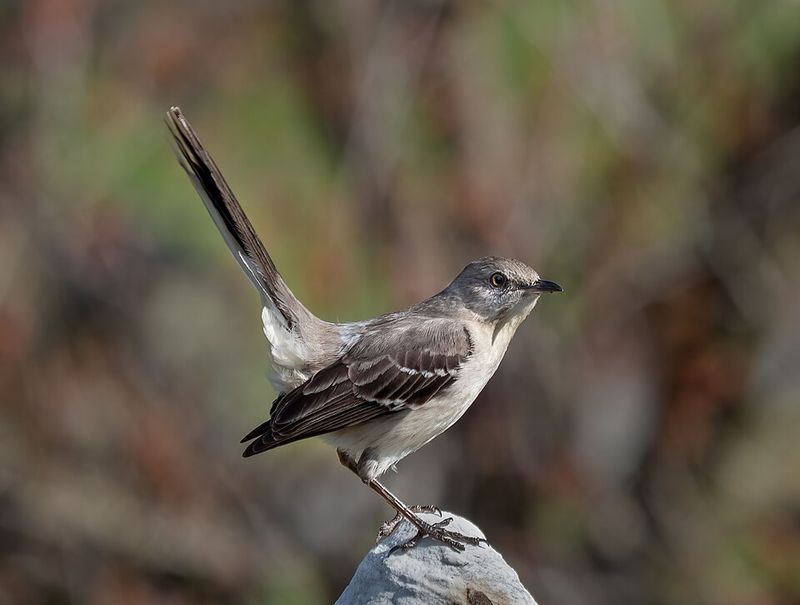
Few backyard sounds are as surprising as hearing a cardinal, a blue jay, a robin, and a cricket frog all seem to sing from the same spot in the yard. That is the Northern Mockingbird at work.
Cornell Lab of Ornithology explains that mockingbirds are well-known for mimicking the songs of other bird species. They repeat each phrase several times before switching to a new one.
A single bird may learn dozens of song types over its lifetime.
Listening carefully can help you notice the pattern. A mockingbird typically repeats a phrase three or more times, then shifts to a different borrowed song.
Males often sing from high, exposed perches like rooftops, treetops, or fence posts, especially during spring and early summer. Some males also sing at night, which can be startling if you hear it near an open window.
Reputable bird apps such as Merlin Bird ID from Cornell Lab can help you compare what you are hearing with known mockingbird recordings. Still, a visual confirmation is always useful before concluding a mockingbird is responsible.
Other mimics exist, and sound alone is not a guaranteed identifier. Listening is a great starting point, but pairing it with a sighting makes the identification much more satisfying.
4. Watch Open Lawn Where Insects Are Moving
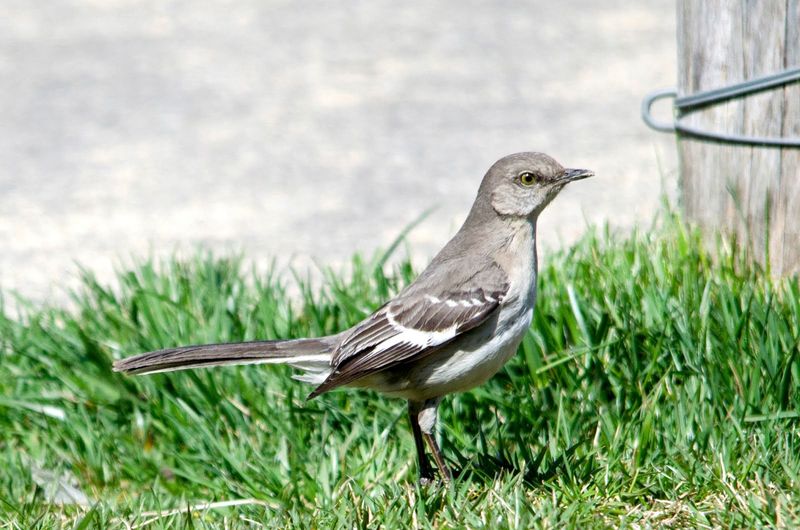
Short grass near a garden edge is one of the best places to watch a mockingbird work. According to Cornell Lab of Ornithology, mockingbirds eat a wide variety of insects, including beetles, grasshoppers, and ants.
This is especially true during spring and summer when insects are most active. They often forage on open ground, running short distances, pausing, and then picking up prey from the soil or grass surface.
A yard with some open, short-mowed lawn near a shrub border or garden bed gives mockingbirds a practical hunting space. The bird needs clear sightlines to spot movement and enough open ground to pursue small prey quickly.
Heavy thatch, very long grass, or dense ground cover can make foraging harder for a bird that prefers to hunt in the open.
Reducing broad pesticide applications on the lawn can help keep the insect activity that mockingbirds and many other birds depend on.
OSU Extension wildlife guidance encourages homeowners to consider the effect of pesticide use on beneficial insects and the birds that eat them.
Spot-treating specific problem areas is generally a better approach than blanket spraying. A lawn that supports some insect life is a lawn that supports the birds that feed on it, including the mockingbird scanning your grass from a nearby perch.
5. Plant Berry Shrubs For Fall And Winter Food
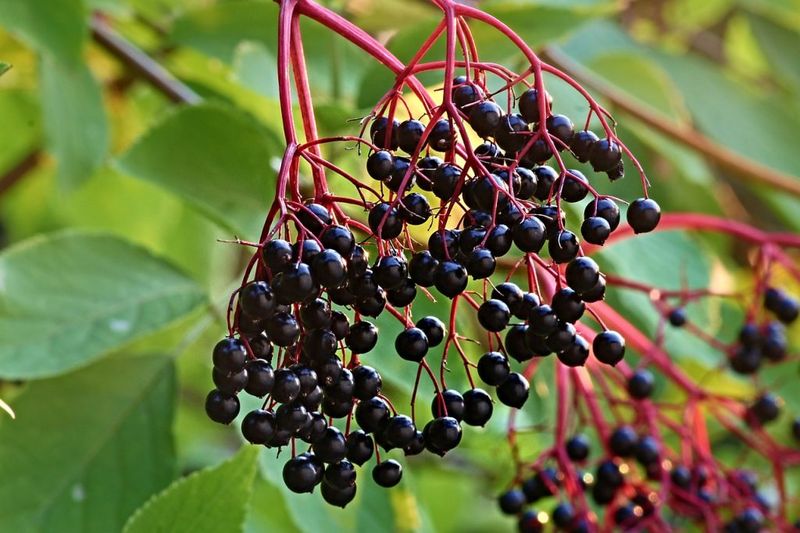
Come fall, the mockingbird’s diet shifts heavily toward fruit and berries. Cornell Lab of Ornithology notes that fruit becomes a major food source for Northern Mockingbirds in the colder months.
Individual birds sometimes defend a productive berry shrub as a personal food territory. Planting native or non-invasive fruiting shrubs can make your yard more useful to mockingbirds during lean seasons.
Several shrubs with strong wildlife value are well-suited to yards across Ohio. Serviceberry (Amelanchier spp.) produces fruit that many birds use.
Elderberry (Sambucus canadensis) is a native shrub recommended by OSU Extension for wildlife plantings. Winterberry holly (Ilex verticillata) holds bright red berries into winter.
Dogwood species, chokeberry (Aronia), and viburnums also provide fruit that birds can access when other food is scarce.
Before buying, match the plant to your site. Consider sun exposure, soil moisture, mature size, and whether the species is appropriate for your region.
Purchase nursery-propagated native plants from reputable local nurseries or garden centers rather than collecting from wild populations. Avoid shrubs known to be invasive in this region, such as Asian honeysuckle or autumn olive.
A few well-chosen shrubs can extend the window when your yard is genuinely useful to fruit-eating birds like the mockingbird.
6. Leave Perches Near Safe Hunting Spots
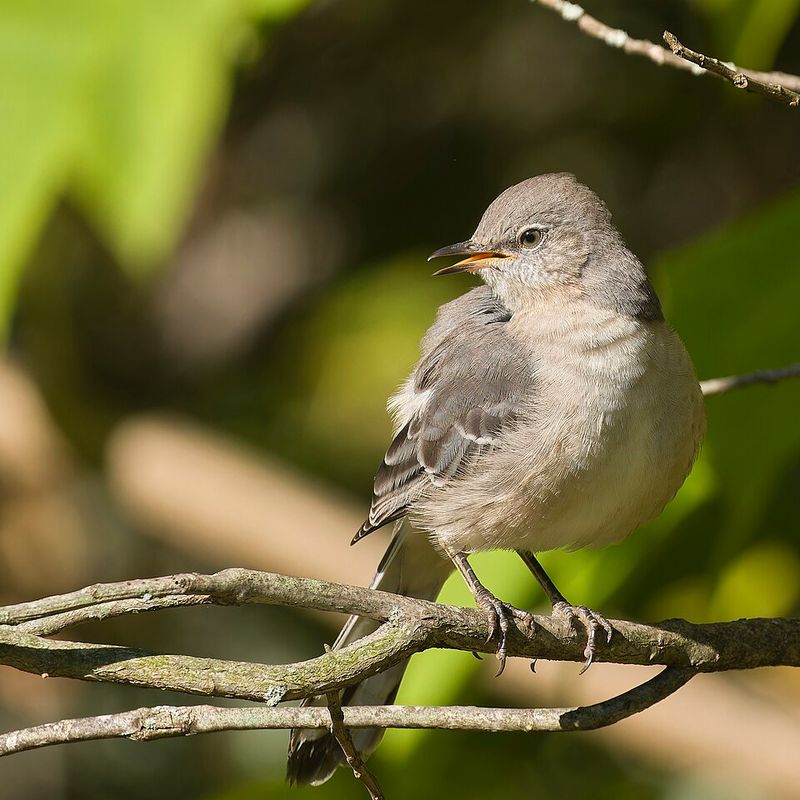
A fence post at the edge of the garden, a bare branch above a shrub border, or a utility wire above an open lawn – these are simple structures. They are exactly what a mockingbird looks for.
Audubon and Cornell Lab resources both describe the Northern Mockingbird as a bird that uses exposed perches to sing, scan for threats, and locate food below. A perch with a clear view over open ground is a practical tool for a bird that hunts by sight.
Yards that offer a layered mix of open space and nearby perch points tend to be more attractive to edge-loving birds than yards with only bare lawn or only dense shrubs. You do not need a complex setup.
A small ornamental tree near a garden border, a wooden post left standing, or even a sturdy fence can serve this role well.
Safety matters too. Placing shrubs and perches away from large windows can reduce bird collision risk.
Keeping cats indoors or away from active perch areas protects birds that land low or forage on the ground. Mockingbirds are bold, but they are still vulnerable to fast-moving threats.
A yard designed with some thought about open sightlines and reduced hazards is genuinely more useful to visiting birds.
7. Expect Bold Behavior Near Nests And Berries
Few backyard birds are as willing to stand their ground as a mockingbird guarding a nest or a productive berry shrub. Cornell Lab of Ornithology describes Northern Mockingbirds as highly territorial.
They’re known to chase away much larger birds, dogs, cats, and even people who wander too close to an active nest or a defended food source. The behavior can feel personal, but it is simply the bird doing what it has evolved to do.
If a mockingbird begins diving near your head or calling loudly as you pass a shrub, there is likely a nest or recently fledged young nearby. The best response is to give the area a wide berth for a few weeks.
Avoid trimming shrubs or doing heavy yard work near active nesting spots from spring through midsummer, when nesting is most common in this region.
Keep pets away from areas where a mockingbird is acting defensively. A cat or dog near a nest is a real threat to eggs and young birds.
Under federal law, active bird nests are protected, so do not remove a nest or handle young birds. If a fledgling is on the ground and appears healthy, leave it alone.
The parents are almost certainly nearby and watching, even if you cannot see them.
8. Turn One Mockingbird Into A Better Habitat Sign
A single mockingbird visit is a small signal worth paying attention to. The bird is telling you, in practical terms, that your yard has at least some of what it needs: open edges, a perch, insects, fruit, or nearby cover.
Taking that signal seriously and building on it is one of the most rewarding things a yard-conscious homeowner can do.
Start with a few targeted changes. Reduce broad pesticide use on the lawn to protect the insects that birds depend on.
Add one or two native or non-invasive berry shrubs purchased from a reputable local nursery. Leave a useful perch near an open foraging area.
Avoid heavy pruning of shrubs during nesting season, which generally runs from spring through midsummer. These steps do not guarantee visits, but they make your yard a more honest candidate for returning birds.
Sightings always depend on season, food supply, weather, nearby habitat, and the bird’s own movement patterns. No single yard improvement promises a mockingbird on the fence post every morning.
Still, habitat-minded choices add up over time. A yard with layered edges, berry shrubs, open lawn, and safe perches speaks a language that adaptable birds understand.
The mockingbird may feel like a message, but the real message is written in what your yard offers, and that part is entirely up to you.