The Most Beautiful Native North Carolina Shrubs Most Homeowners Never See At Garden Centers
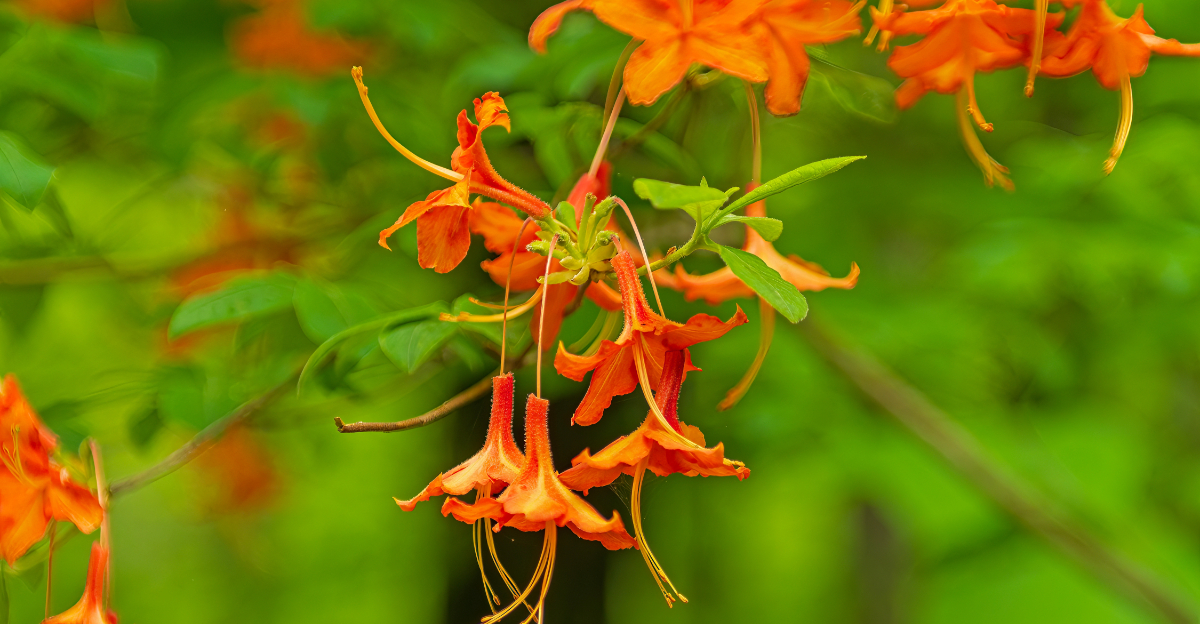
Some of the most beautiful shrubs in North Carolina are not the ones you see lined up at every garden center. In fact, many native shrubs with stunning blooms, rich foliage, and strong seasonal color are often overlooked or simply harder to find.
That is a missed opportunity for homeowners who want something unique and well suited to the local environment. These plants are built for North Carolina’s climate, which means they often grow with less trouble and bring lasting beauty year after year.
Some offer soft, delicate flowers, while others stand out with bold color, berries, or striking textures that change through the seasons.
If you are looking to move beyond the usual landscape choices, these native shrubs can add something truly special to your yard. Sometimes the best plants are the ones you have not discovered yet.
1. Sweetshrub / Carolina Allspice (Calycanthus floridus)
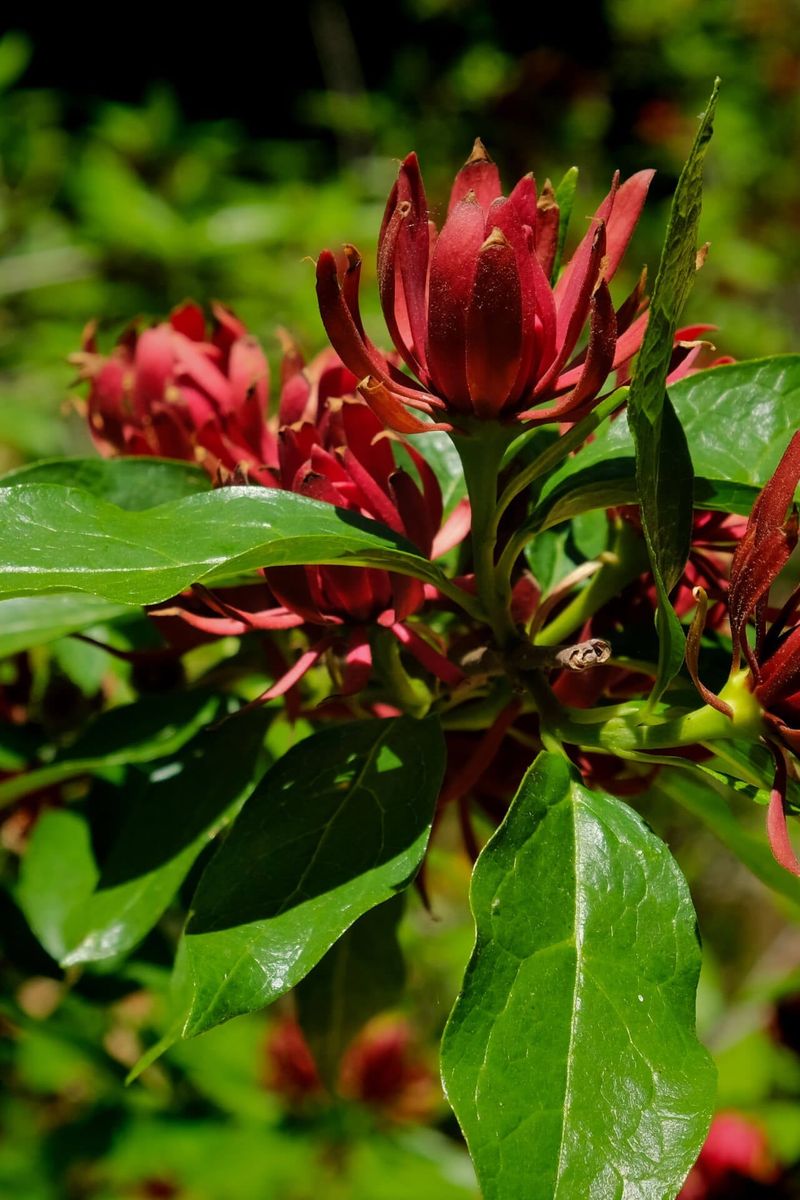
Walk past a blooming Sweetshrub on a warm spring day and you will stop in your tracks. The flowers smell like a mix of strawberries, bananas, and cloves all at once, which is something no imported shrub can compete with.
Carolina Allspice is a true North Carolina native, and it has been growing in these woodlands long before garden centers ever existed.
The deep burgundy-red flowers are unlike anything you typically see in a standard nursery. They have a swirling, layered look that feels almost tropical, yet this plant handles North Carolina summers and winters with ease.
It grows in partial shade or full sun, making it very flexible for different yard conditions.
Most homeowners are shocked to learn this shrub can reach six to nine feet tall and wide, making it a fantastic privacy screen or backdrop plant.
The foliage is lush and green all season long, and when you rub a leaf between your fingers, it releases that same spicy-sweet scent. Plant it near a porch or walkway where people can enjoy the fragrance up close.
Calycanthus floridus is also incredibly low-maintenance once established. It tolerates clay soil, which is very common across North Carolina, and it rarely needs extra watering after its first year.
For a plant this beautiful and easy, it is truly surprising how rarely you spot it at garden centers.
2. Dwarf Fothergilla (Fothergilla gardenii)
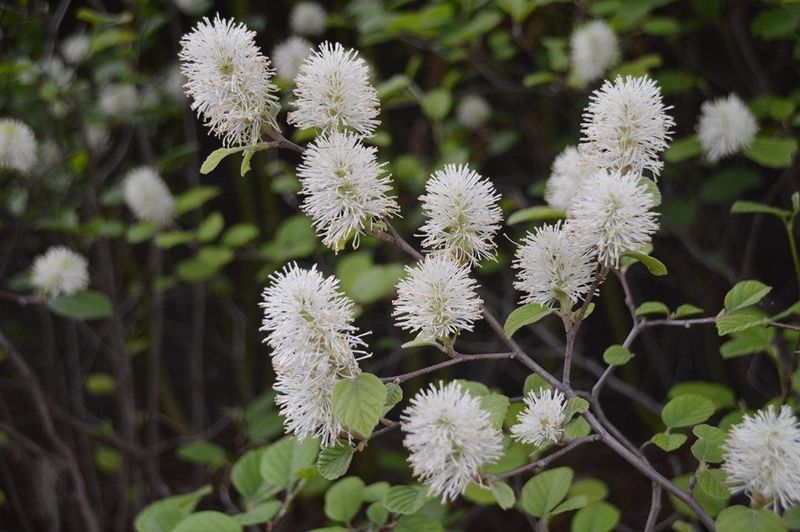
Imagine a shrub that puts on a flower show in spring, then follows it up with one of the most spectacular fall color displays in all of North Carolina.
That is exactly what Dwarf Fothergilla delivers, season after season, without demanding much attention from you at all. It is one of the most underappreciated native plants in the entire Southeast.
In early spring, before the leaves even appear, fuzzy white bottlebrush-shaped flowers cover the branches. They have a soft honey fragrance that pollinators absolutely love.
Bees flock to this shrub early in the season when not many other plants are blooming yet, making it a real wildlife hero in your yard.
By fall, the foliage transforms into a brilliant mix of orange, red, yellow, and purple all on the same plant at the same time. Very few shrubs anywhere can match that kind of color range.
Your North Carolina Garden Changes Every Week. Your Plan Should Too.
Gardening in North Carolina changes quickly throughout the season. Every Friday you’ll receive a simple weekly plan showing exactly what to plant, prune, fertilize, harvest, and protect so you never miss the right timing.
It typically stays between two and four feet tall, which makes it perfect for front yard borders or foundation plantings near North Carolina homes.
Fothergilla gardenii thrives in well-drained, slightly acidic soil, which is very common across the Piedmont and Coastal Plain regions of North Carolina. Full sun brings out the best fall color, but it also handles partial shade well.
If you only add one new native shrub to your yard this year, make it this one.
3. Mountain Witch Alder (Fothergilla major)
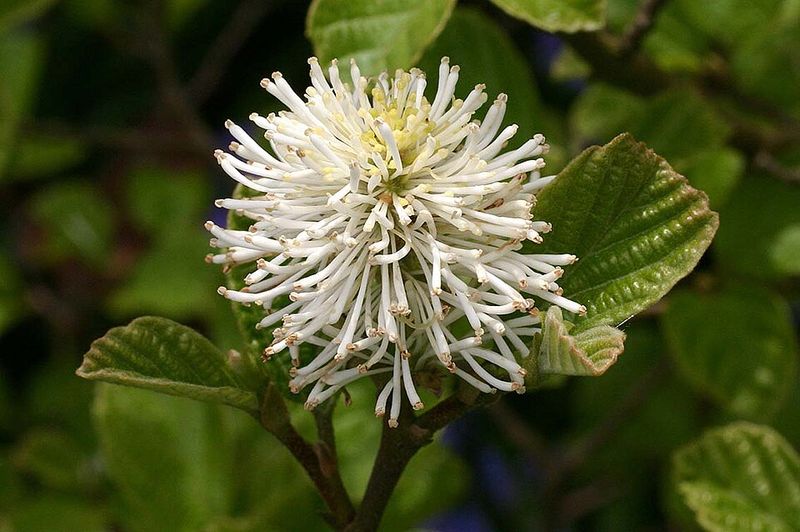
Up in the Blue Ridge and Appalachian highlands of North Carolina, Mountain Witch Alder has been quietly putting on one of nature’s greatest shows for centuries.
Most people in the Piedmont and coastal areas have never even heard of it, which is a real shame because it performs just as well at lower elevations too. This shrub deserves a much bigger audience.
Fothergilla major grows larger than its dwarf cousin, often reaching six to ten feet tall with an upright, rounded shape. The white bottlebrush flowers that appear in spring are intensely fragrant, filling the air around them with a sweet, honey-like scent.
You can smell a mature plant from several feet away on a calm morning, which makes it a joy near outdoor seating areas.
Fall color on this plant is genuinely jaw-dropping. The leaves turn shades of deep orange, scarlet, and golden yellow, often all at the same time on a single branch.
In North Carolina’s mountain regions, where fall foliage is already legendary, this shrub fits right in and adds its own burst of brilliance to the landscape.
It grows best in moist, well-drained, acidic soil and appreciates some afternoon shade in the hotter parts of North Carolina. Once established, it is remarkably tough and long-lived.
Landscapers who know their native plants consider this one of the top five most rewarding shrubs you can grow anywhere in the state.
4. Oakleaf Hydrangea (Hydrangea quercifolia)
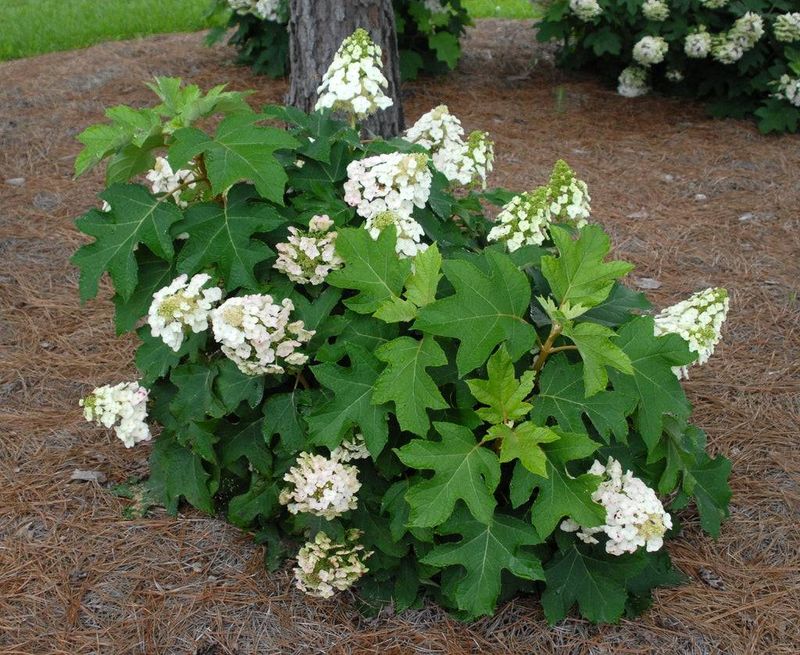
Most people in North Carolina have heard of hydrangeas, but the native Oakleaf Hydrangea is something entirely different from the imported varieties crowding garden center shelves every spring.
Named for its large, distinctly lobed leaves that resemble oak leaves, this shrub brings bold, dramatic texture to any landscape from spring through winter. It is a four-season plant in every true sense of the word.
The flowers appear in early summer as large, cone-shaped white panicles that can stretch up to twelve inches long.
As the season progresses, they gradually fade to soft pink and then to a warm parchment brown, staying attractive on the plant well into fall and even winter. Many gardeners use the dried flower heads in arrangements indoors.
Fall color on Hydrangea quercifolia is rich and warm, with leaves turning shades of burgundy and deep orange-red. After the leaves drop, the cinnamon-brown, peeling bark adds another layer of visual interest through the cold months.
No other shrub in North Carolina offers this much to look at across all four seasons.
Oakleaf Hydrangea thrives in partial shade, which makes it ideal for the shaded spots under trees that are notoriously hard to plant in North Carolina yards. It tolerates clay soil and dry shade better than most hydrangeas, native or otherwise.
Sizes range from compact three-foot varieties to large specimens reaching eight feet, so there is a form for almost every garden space.
5. Spicebush (Lindera benzoin)
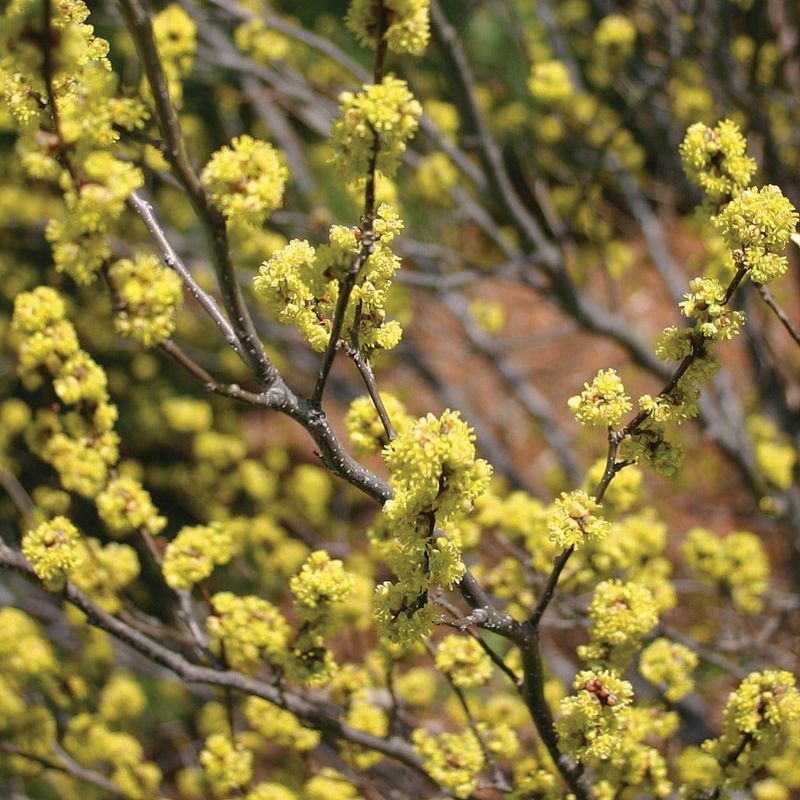
Few native plants in North Carolina have as many things going for them as Spicebush, yet it remains almost invisible in commercial nurseries. Soft yellow flowers appear on bare branches in very early spring, often before any other plant in the yard has woken up.
That early burst of color is a genuine treat after a long winter, especially in the shaded woodland gardens of central and western North Carolina.
The aromatic quality of this plant is remarkable. Crush a leaf, scratch a twig, or bruise a berry, and you get a warm, spicy scent reminiscent of allspice or bay leaves.
Native Americans historically used parts of this plant for seasoning and medicine, and early European settlers called it “wild allspice” for exactly that reason. It carries a rich cultural history right alongside its garden value.
Female plants produce bright red berries in fall that are irresistible to migrating birds, including thrushes, vireos, and the beautiful wood thrush. The berries are high in fat content, which makes them especially valuable for birds fueling up for long migrations.
Planting Spicebush is one of the best things a North Carolina homeowner can do for local wildlife.
Lindera benzoin grows six to twelve feet tall and wide in moist, partially shaded spots, which are common in North Carolina’s Piedmont and mountain regions.
It handles wet soil better than most shrubs, making it excellent near rain gardens or low spots in the yard that stay soggy after rain.
6. American Beautyberry (Callicarpa americana)
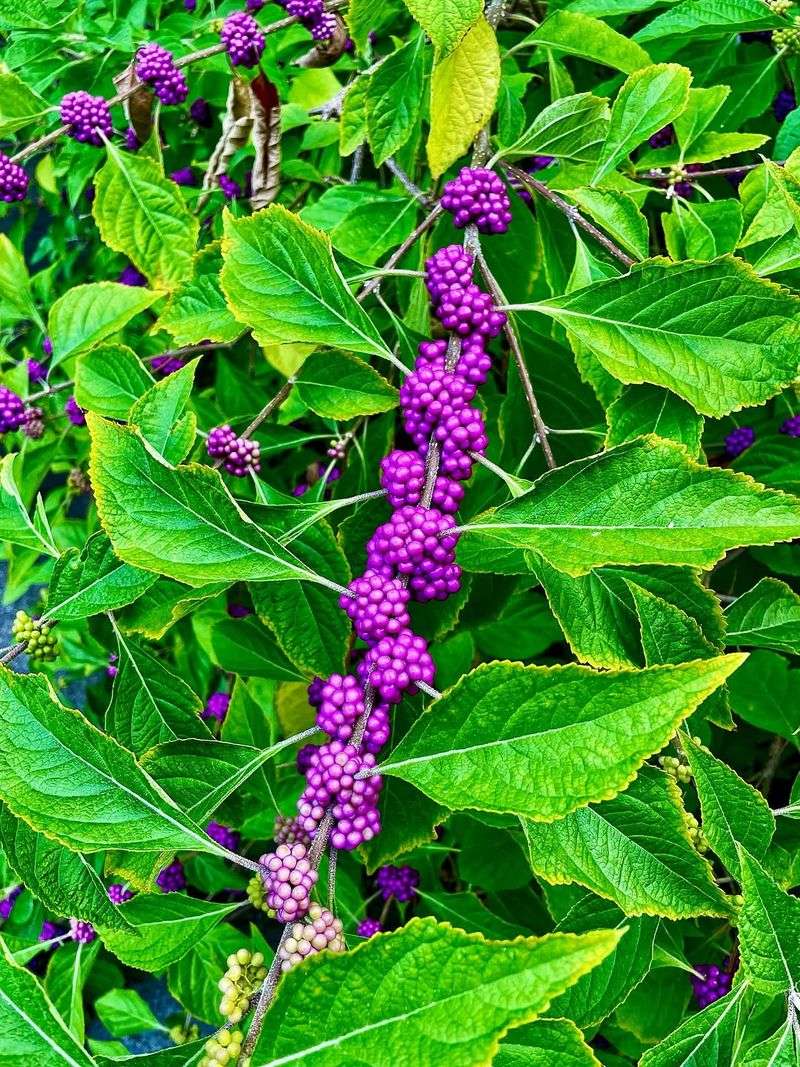
Nothing in the North Carolina native plant world produces a more jaw-dropping fall display than American Beautyberry. The berries are not just purple, they are a vivid, almost electric magenta-purple that looks almost too bright to be real.
Clusters of them wrap tightly around the arching stems like beaded bracelets, creating a visual effect that stops every visitor in their tracks from late summer through fall.
Callicarpa americana is a deciduous shrub that grows quickly, often reaching four to eight feet tall and wide in a single growing season after pruning.
It responds very well to hard pruning in late winter, bouncing back with vigorous new growth and even more berries than the year before.
Gardeners in North Carolina who prune it annually tend to get the fullest, most berry-loaded plants.
Beyond its beauty, this shrub is a wildlife powerhouse. More than forty species of birds eat the berries, including mockingbirds, robins, and brown thrashers, which are beloved backyard visitors across North Carolina.
White-tailed deer, raccoons, and foxes also browse the berries, making this shrub a genuine hub of natural activity in any yard.
It grows in full sun to partial shade and adapts to a wide range of soil types, including the sandy soils of eastern North Carolina and the clay soils of the Piedmont. Very few native shrubs are this easy to grow and this rewarding to look at.
Finding it at a specialty native plant nursery in North Carolina is well worth the extra effort.
7. Sweet Pepperbush (Clethra alnifolia)
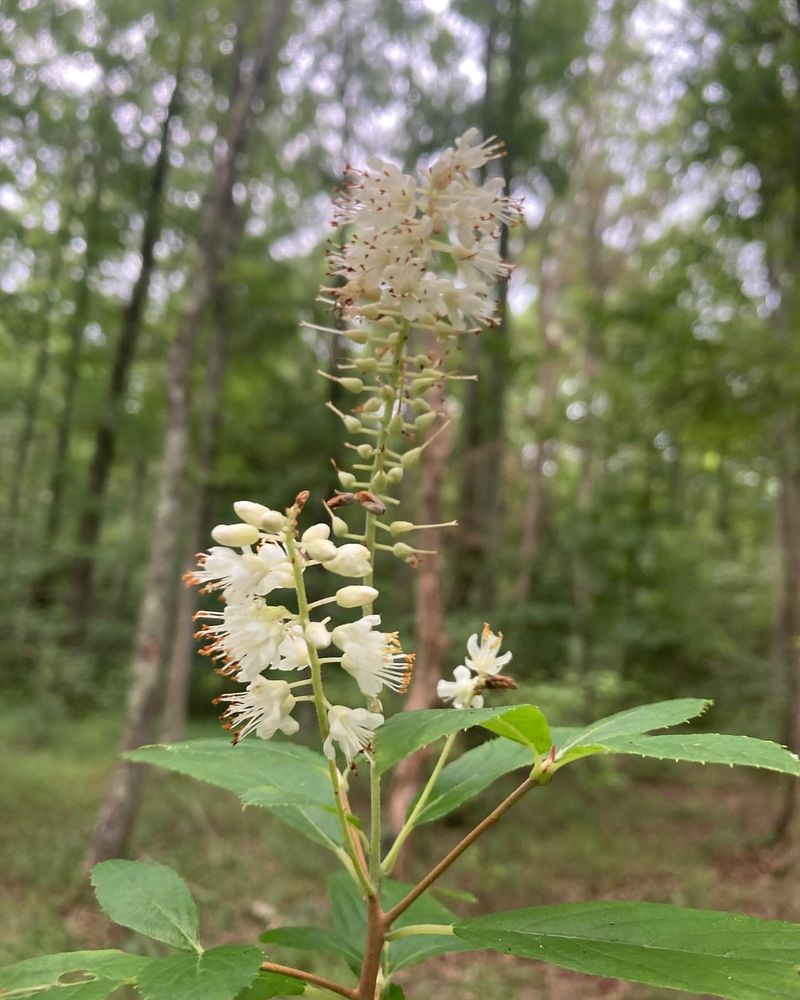
On a humid summer afternoon in North Carolina, few scents are as refreshing as the fragrance drifting from a blooming Sweet Pepperbush.
The white flower spikes rise upright above the foliage from midsummer into early fall, filling the air with a sweet, spicy perfume that carries surprisingly far.
Butterflies, bees, and hummingbirds visit the flowers constantly, turning the shrub into a buzzing, fluttering spectacle.
Clethra alnifolia is one of the best native shrubs for tough spots in North Carolina yards. It thrives in wet or boggy soil where most other plants struggle, making it a natural fit for rain gardens, low areas near downspouts, or the edges of ponds and streams.
It also handles full shade better than almost any other summer-blooming shrub.
The foliage turns a clean, bright yellow in fall before dropping, adding one more layer of seasonal interest to its already impressive resume.
Some cultivars, like the popular ‘Ruby Spice,’ offer deep pink flowers instead of white, giving North Carolina gardeners a fun color choice.
Even the standard white-flowered form is stunning enough to make a real statement in any landscape.
Mature plants typically reach four to eight feet tall and spread slowly by underground runners to form a tidy colony over time. This spreading habit makes it excellent for naturalizing along shaded property edges or stream banks in North Carolina.
Once established in moist soil, Sweet Pepperbush is almost entirely self-sufficient and requires very little care from year to year.
8. Flame Azalea (Rhododendron calendulaceum)
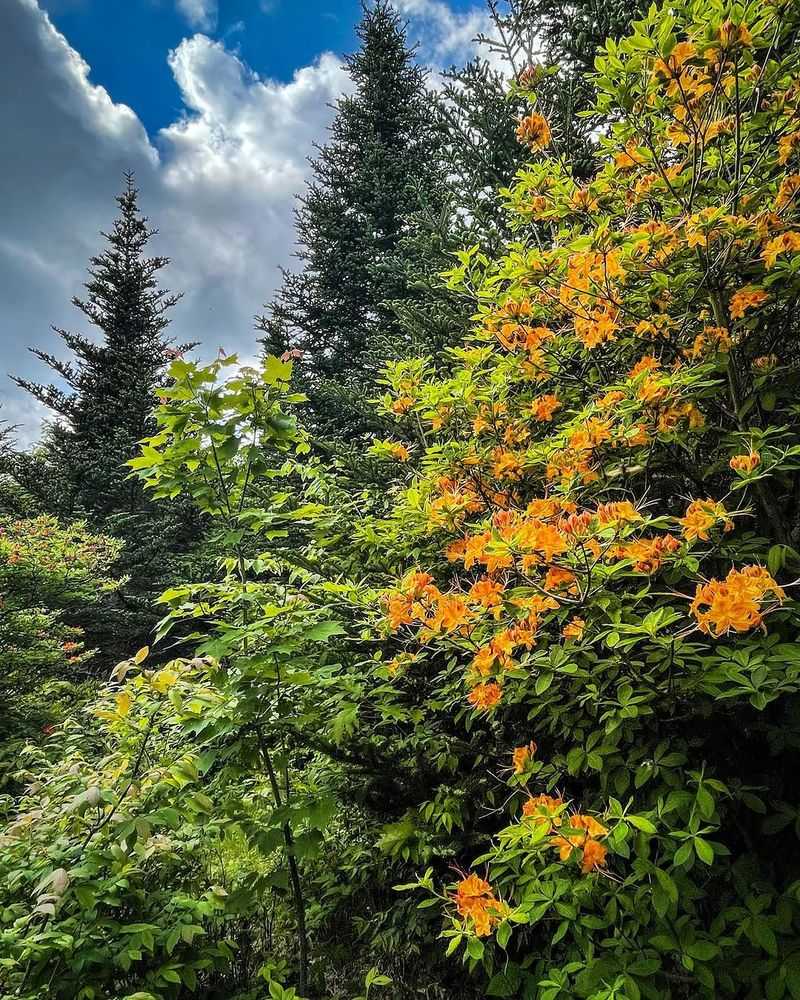
Standing in front of a blooming Flame Azalea in the North Carolina mountains feels like watching something on fire, in the best possible way.
The flowers range from soft yellow to deep orange to blazing red-orange, often with all those shades present within the same hillside population.
William Bartram, the famous early American naturalist, called it the most magnificent flowering shrub he had ever seen during his travels through the Southern Appalachians in the 1770s.
Rhododendron calendulaceum blooms in late spring, typically from May into June in North Carolina’s mountain elevations, right when the woodland understory is at its most lush and green.
The contrast between those vivid orange flowers and the fresh green foliage backdrop is absolutely striking.
Unlike most hybrid azaleas, this species has no fragrance, but its visual impact more than makes up for that.
This is a deciduous azalea, meaning it drops its leaves in winter, which surprises gardeners used to the evergreen hybrid varieties sold at big box stores. The bare winter structure is actually quite attractive, with smooth gray branches that catch morning light beautifully.
Fall leaf color adds another bonus, shifting to warm yellows and oranges before dropping.
Flame Azalea grows best in slightly acidic, well-drained soil with partial shade, especially afternoon shade in the warmer parts of North Carolina. It can reach six to eight feet tall over many years.
Specialty native plant nurseries in North Carolina occasionally stock it, and tracking one down is absolutely worth the effort for any serious gardener.
9. Leatherwood (Dirca palustris)
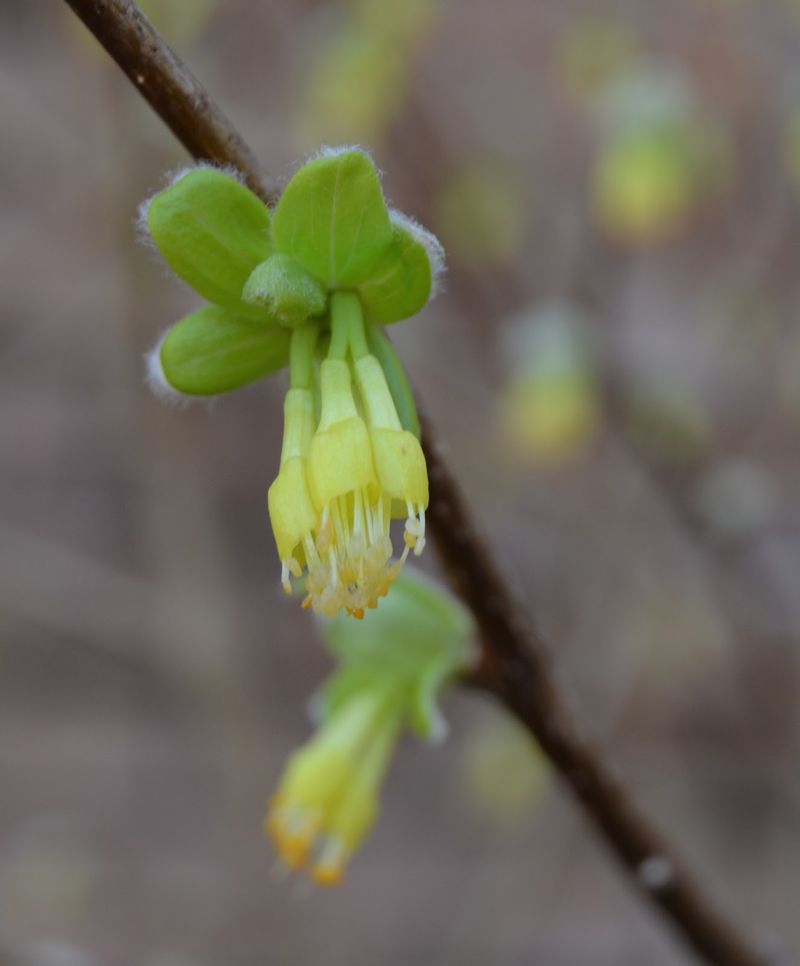
Leatherwood is one of North Carolina’s best-kept botanical secrets, and most gardeners have never even heard its name.
It blooms in late winter or very early spring, often while snow is still on the ground in the mountains, producing small clusters of pale yellow tubular flowers along bare, flexible branches.
That early bloom time makes it one of the first native shrubs to feed hungry bees and other early pollinators in North Carolina each year.
The common name comes from the incredibly tough, flexible stems that Native Americans used to weave into baskets, rope, and even clothing.
You can bend a young branch almost completely in half without breaking it, which is a genuinely surprising feature that makes this plant feel almost magical when you first discover it. The bark is unusually smooth and almost rubbery to the touch.
Dirca palustris grows slowly, eventually reaching four to six feet tall and wide over many years. Because of its slow growth and rarity, it commands a higher price at specialty native plant nurseries, but it is well worth the investment for a plant this unique.
It thrives in moist, rich, shaded woodland conditions, which are found in abundance across the mountain and upper Piedmont regions of North Carolina.
The foliage is clean and attractive all season, turning soft yellow before dropping in fall. It is a genuinely rare sight in home gardens across North Carolina, which means having one in your yard makes your landscape truly one of a kind.
Patient gardeners who seek it out are always glad they did.
10. St. Andrew’s Cross (Hypericum hypericoides)
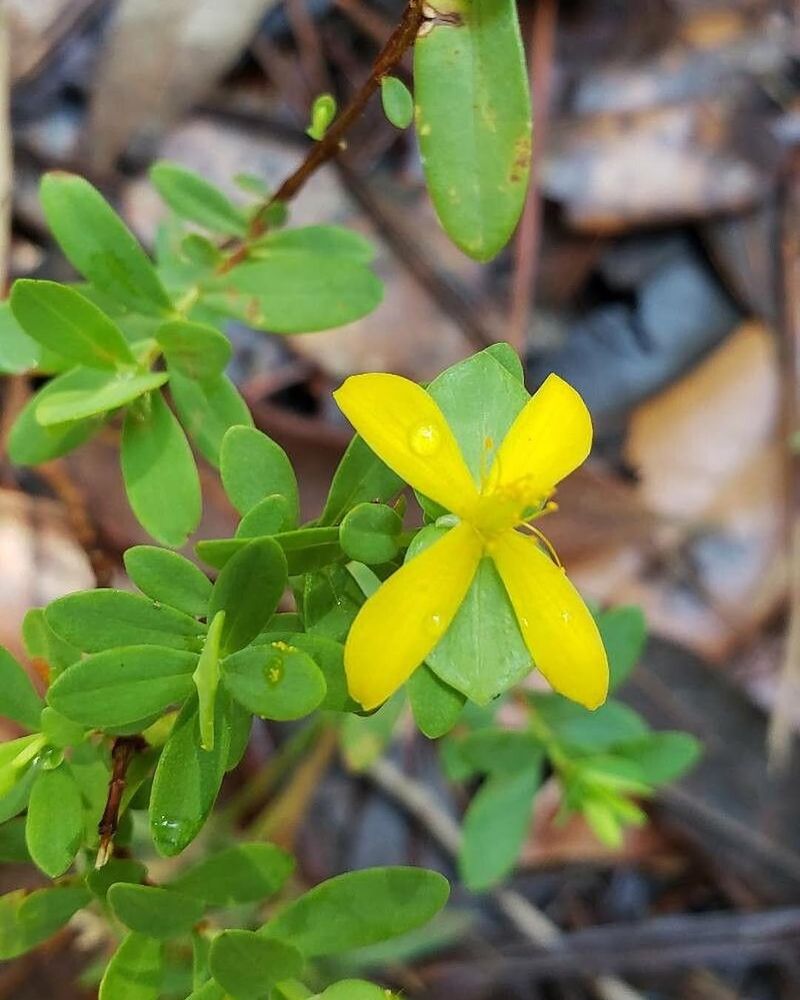
Bright yellow flowers arranged in a perfect cross shape give St. Andrew’s Cross its charming common name, and that cheerful bloom display runs from early summer well into fall across North Carolina.
It is one of the longest-blooming native shrubs in the state, which makes it incredibly valuable in a landscape where you want constant color without constant replanting.
The flowers are small but numerous, covering the plant in a golden haze on sunny days.
Hypericum hypericoides is a tough, wiry little shrub that typically stays between one and three feet tall, making it perfect for rock gardens, sunny slopes, or naturalized areas where low-maintenance ground coverage is the goal.
The fine-textured foliage gives it an airy, delicate look that contrasts beautifully with broader-leaved plants nearby. It is one of the few native shrubs that actually thrives in dry, poor soil conditions.
Drought tolerance is one of this plant’s standout qualities. Once established in North Carolina’s sandy coastal soils or rocky Piedmont clay, it rarely needs supplemental watering.
That kind of resilience is rare among flowering shrubs and makes it an excellent choice for water-conscious gardeners looking to reduce irrigation costs and effort.
Wildlife benefits are real with this plant too. Native bees and small butterflies visit the flowers regularly throughout the long bloom season.
The plant also provides dense low cover that small ground-nesting birds and beneficial insects appreciate.
For a shrub this tough, this pretty, and this wildlife-friendly, it is genuinely puzzling why St. Andrew’s Cross does not appear in more North Carolina garden centers every spring.