The 8 Most Common Mistakes Florida Gardeners Make With Banana Plants
Banana plants make people dream big. One lush clump can make a Florida yard feel tropical, bold, and straight out of a resort.
That excitement is exactly why so many gardeners get them wrong. Bananas grow fast, look dramatic, and seem easy at first, but a few common mistakes can leave them ragged, stalled, wind-torn, or far less impressive than expected.
Too much water, poor placement, bad pruning, and weak feeding habits can all chip away at that big, healthy look people want. In some yards, the plant survives but never really thrives.
In others, it turns into a floppy, overcrowded mess that delivers more frustration than beauty. The tricky part is that many of these mistakes look harmless in the beginning.
By the time the damage shows, the plant already looks tired. Spot the problems early, though, and banana plants can become one of the boldest, fastest-growing highlights anywhere in a Florida landscape.
1. Too Much Shade Slows Everything Down
Sunlight is not optional for banana plants. Full sun, meaning at least six to eight hours of direct light daily, is what pushes these plants to grow fast, produce strong stems, and eventually deliver fruit.
In Florida, where the growing season stretches long and the sun is intense, a well-placed banana plant in open ground can put on several feet of new growth in a single season.
Shade changes everything. When a banana plant sits under a large live oak, near a fence that blocks morning sun, or too close to the house on the north side, the whole system slows down.
Leaves may stay smaller, the pseudostem takes longer to mature, and fruiting becomes unlikely. According to UF IFAS Extension, bananas need full sun to reach their productive potential in Florida.
The mistake usually happens when gardeners plant young pups in spots that look bright in winter but become heavily shaded once surrounding trees leaf out in spring. Walk your yard at midday in June and check how much direct light actually hits the planting spot.
If large trees or structures are blocking the sun for most of the day, consider transplanting or removing the shade source before the plant falls further behind.
2. Bad Watering Ruins The Roots
Few things frustrate a banana plant faster than inconsistent watering. These plants are thirsty by nature.
They have enormous leaves that lose moisture quickly in Florida’s heat, and their root systems need steady access to water to keep all that top growth supported. During the hottest months, a mature plant in full sun can use a remarkable amount of water each week.
The trouble is that overwatering is just as damaging as underwatering. Banana roots sitting in waterlogged soil cannot breathe properly, and soggy conditions invite root rot and fungal problems.
Florida’s sandy soils drain quickly in some areas, but low spots or compacted ground can hold water far too long. UF IFAS Extension notes that bananas perform best in well-drained sites with consistent moisture rather than boom-and-bust watering cycles.
Water to keep soil evenly moist, aiming for about 1 to 1.5 inches of water per week during dry periods, while avoiding soggy soil. Mulching around the base helps retain moisture and keeps the root zone from drying out too fast between waterings.
If your yard has a low-lying area that stays wet after heavy rain, that spot is not suitable for bananas regardless of how much sun it gets.
3. Poor Soil Leads To Weak Growth
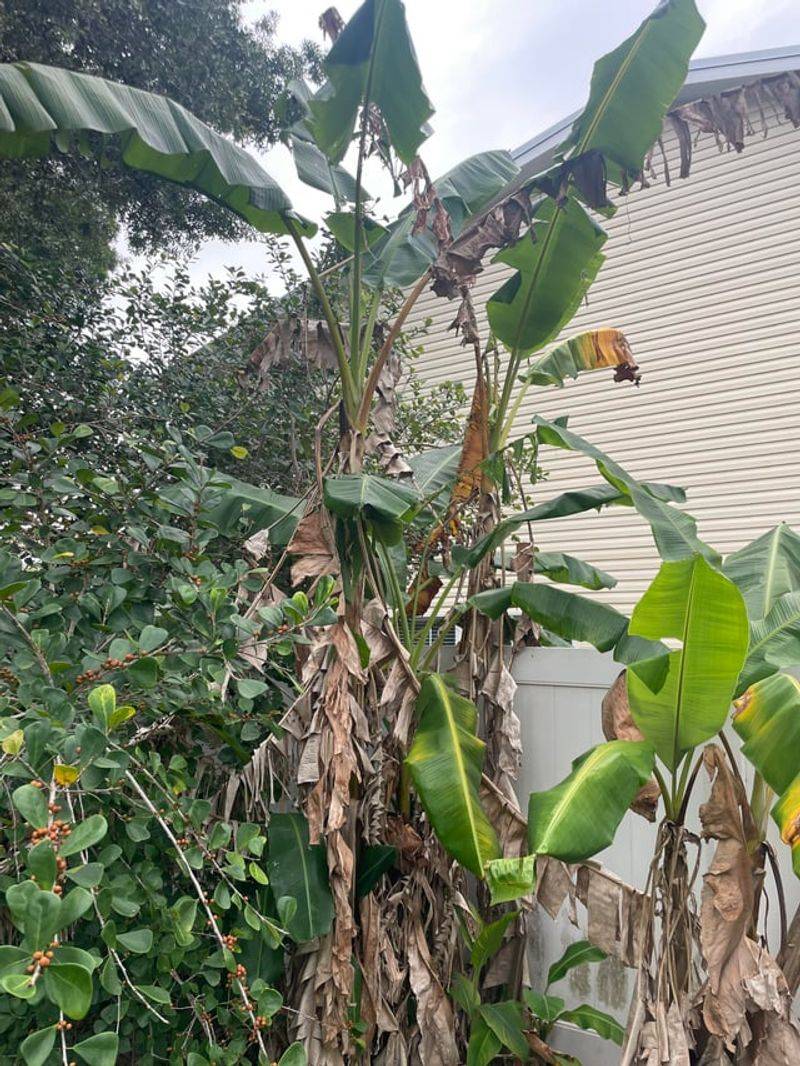
Sandy, nutrient-poor soil is the default in much of Florida, and banana plants are not fans of it. These are heavy feeders that naturally thrive in deep, rich, well-drained soil loaded with organic matter.
When you drop one into thin, compacted, or depleted ground without any amendments, the plant struggles to establish a strong root system and the visible growth reflects that pretty quickly.
Compaction is a particularly sneaky problem. Foot traffic, lawn mowers rolling over the root zone, and years of growing grass in the same spot can pack the soil so tightly that roots cannot push through it.
UF/IFAS recommends maintaining a grass-free area about 2 to 5 feet or more from the pseudostem and using organic mulch.
Before planting, work in generous amounts of aged compost or composted manure to build up the organic content. Avoid fresh manure, which can release harmful ammonia and attract larvae that feed on roots.
Raised beds or mounded planting areas work well in spots where drainage is poor. In North and Central Florida, where soils tend to be sandier and less fertile, regular soil improvement is especially important to keep banana plants growing vigorously through the season.
4. Cold Snaps Catch Plants Off Guard
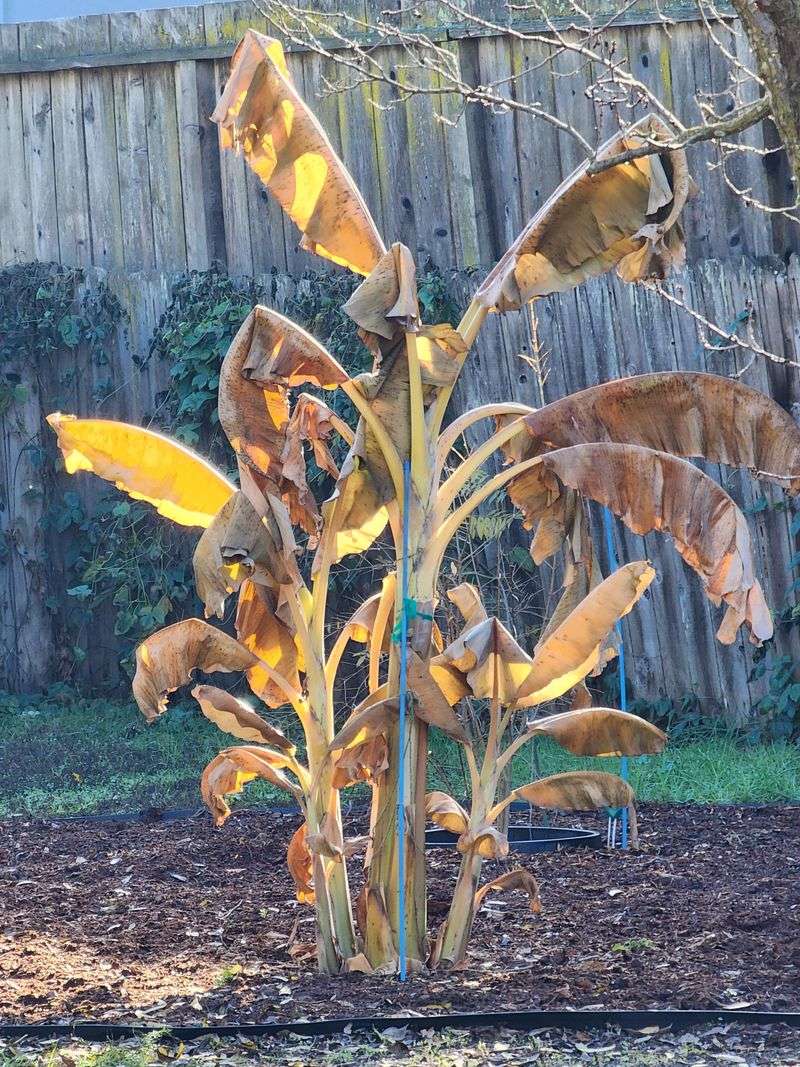
Florida winters can be deceptively mild right up until they are not. A stretch of warm January days followed by a sudden hard freeze is something North and Central Florida gardeners know well, and banana plants are among the first to show the damage.
The large, tropical leaves blacken and collapse almost immediately once temperatures drop below freezing, and an extended cold spell can push damage down into the pseudostem or even the rhizome.
South Florida gardeners have a real advantage here. In Miami-Dade and surrounding areas, hard freezes are rare, and banana plants can grow almost year-round without major cold interruption.
But in Gainesville, Tallahassee, or even Orlando during a bad winter, the same plants can be set back significantly. UF IFAS Extension notes that while the above-ground growth may be destroyed by frost, the underground rhizome often survives and will resprout when warm weather returns.
Managing expectations is part of growing bananas in the northern half of the state. Mulching heavily around the base before a predicted freeze helps protect the rhizome.
Some gardeners wrap the pseudostem with frost cloth or burlap for added protection. After cold damage, resist cutting everything back immediately.
Wait until new growth emerges to confirm what is still alive, then remove only the clearly declined material.
5. Overcrowding Creates A Mess Fast
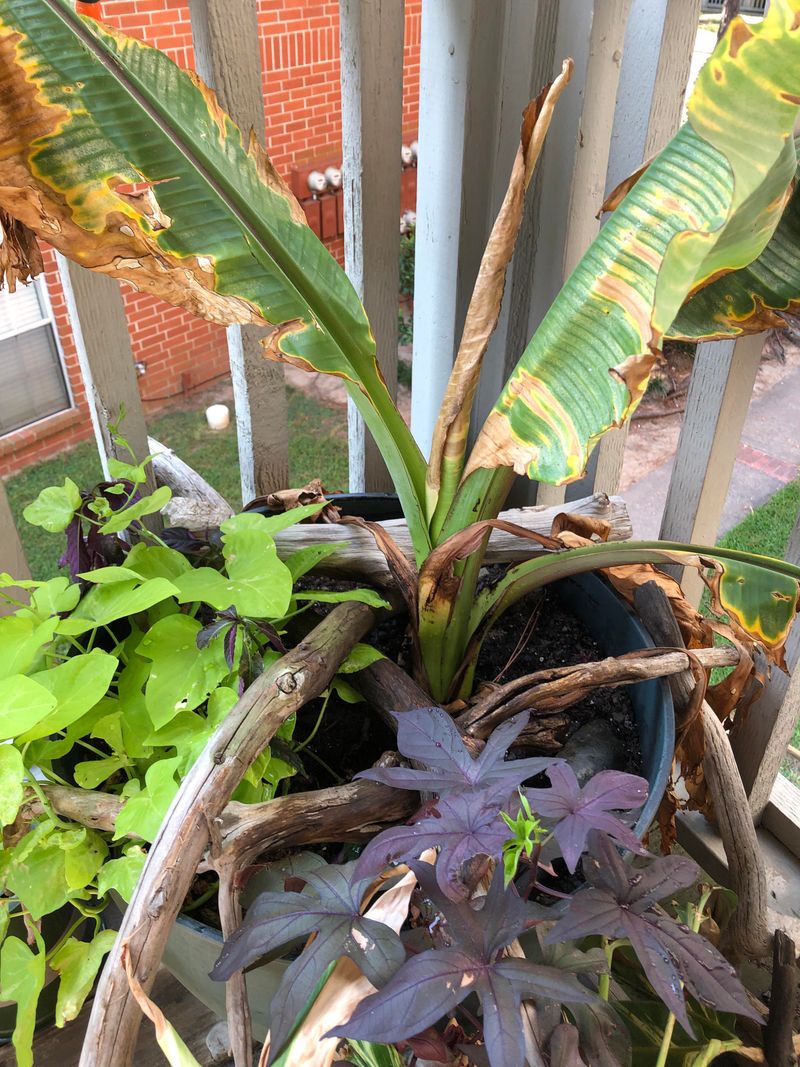
Left completely unchecked, a single banana plant becomes a sprawling mat of competing stems in just a few growing seasons. Each plant sends up offshoots called pups or suckers from the base, and in Florida’s warm climate those pups can emerge rapidly and grow fast.
Before long, what started as one tidy plant becomes a dense clump of fifteen or twenty competing stems all fighting for the same nutrients, water, and light.
Overcrowding reduces airflow through the clump, which creates humid conditions that encourage fungal problems. It also spreads the plant’s energy too thin.
When every pup is allowed to grow freely, none of them get enough resources to develop into a strong, productive plant. The result is a chaotic mass of thin, underdeveloped stems that rarely fruit well.
UF/IFAS recommends maintaining about 3 to 4 pseudostems of different ages, or roughly three plants in a simple home planting system. Remove any extra pups by cutting them off at ground level or digging them out.
Doing this once or twice a year keeps the planting manageable, productive, and much easier to work around in a Florida yard.
6. Skipping Fertilizer Shows Up Quickly
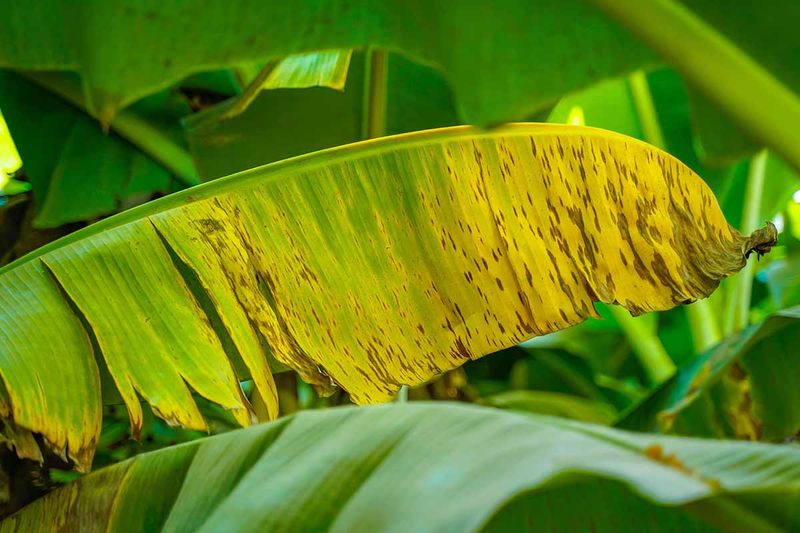
Banana plants are among the hungriest plants you can grow in a Florida yard, and they make no secret of it when they are not getting fed. Pale yellow leaves, slow growth, and a general lack of vigor are early signs that the plant is running low on nutrients.
Because Florida soils are often sandy and low in organic matter, nutrients leach out quickly, especially after heavy summer rains.
A regular fertilizing schedule makes a noticeable difference. UF/IFAS recommends regular fertilization with a high-potassium fertilizer, for example, around a 3-1-6 ratio, applied about every 4 to 8 weeks during active growth.
Magnesium and iron deficiencies are also common in Florida’s alkaline or sandy soils and can show up as yellowing between leaf veins.
Spreading a two-to-four-inch layer of compost around the base each season adds slow-release nutrients and improves soil biology over time. Organic mulches like wood chips or shredded leaves break down gradually and feed the soil as they decompose.
Container-grown banana plants need even more frequent feeding since nutrients flush out of pots faster than in-ground plantings. Staying consistent with fertilizing through spring and summer keeps growth strong and prepares plants for fruiting.
7. Cutting Too Much Sets Plants Back
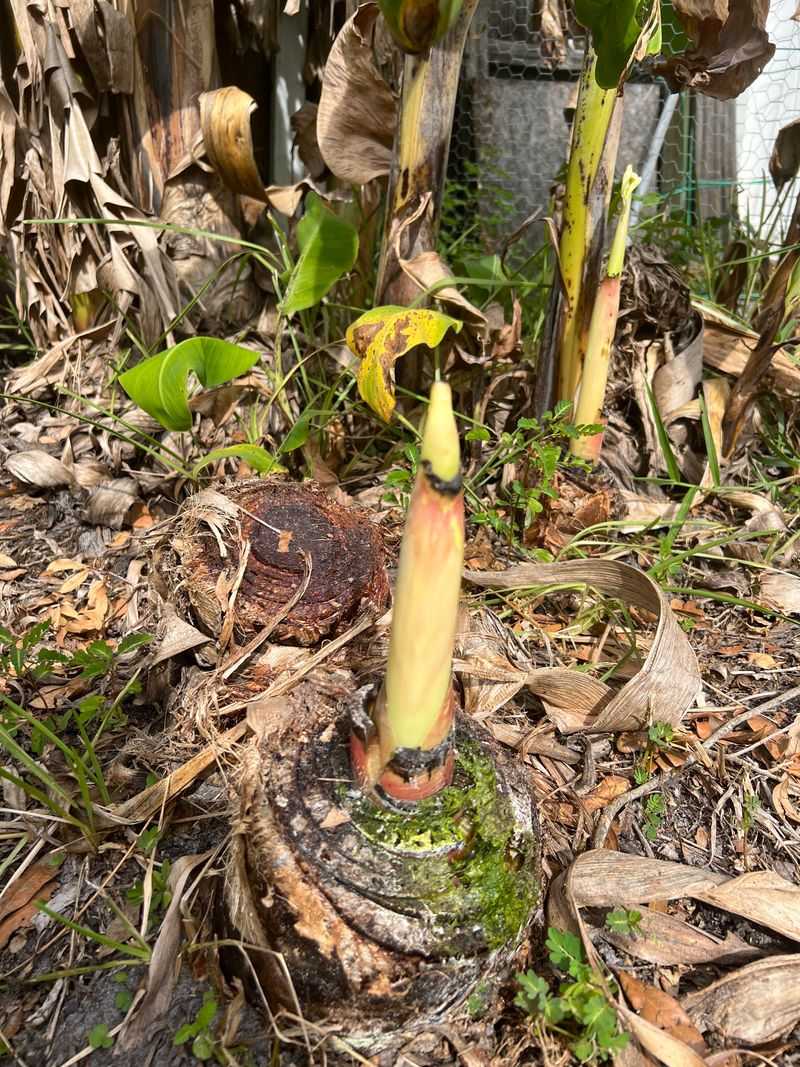
Pruning banana plants seems straightforward, but it is easier than you might think to overdo it. One of the most common errors is removing green, healthy leaves because they look a little ragged or torn.
Wind shredding is completely normal for banana foliage, especially in Florida where afternoon storms and tropical systems are common. A leaf does not need to be removed just because it looks tattered.
As long as it is still green and attached, it is producing energy for the plant.
Each leaf on a banana plant plays a direct role in photosynthesis and building the reserves that eventually support flowering and fruiting. Stripping away too much healthy foliage weakens the plant and slows the entire development cycle.
Only leaves that are fully brown and completely declined should be removed. UF IFAS Extension also notes that the main pseudostem should not be cut until after the fruit has been harvested, since cutting it early ends that stem’s productive life.
Understanding how banana stems work helps avoid unnecessary cuts. Each pseudostem grows, flowers once, produces one bunch of fruit, and then is done.
After harvest, that stem can be cut down to make room for a replacement sucker. Cutting healthy pseudostems or pups at the wrong time disrupts the natural growth cycle and can delay fruiting by a full season in Florida’s climate.
8. Waiting Too Long To Harvest
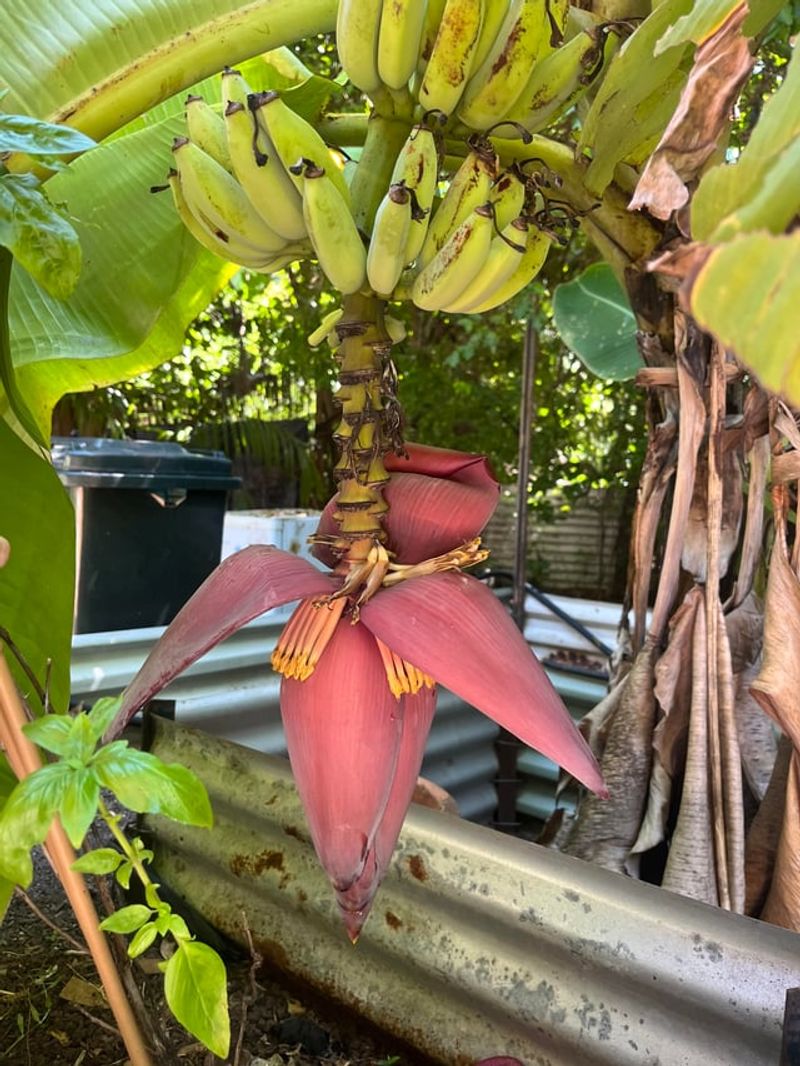
Watching your first banana bunch develop is genuinely exciting, and that excitement can make it hard to know when to actually cut it down. Many first-time growers wait until the fruit looks bright yellow on the plant, thinking that is the signal for harvest.
In practice, that is usually too late. Bananas left on the plant past their ideal window can split, attract pests, and lose the texture that makes them worth eating.
The right time to harvest is when the fruit is still green but has filled out and the angles on the individual fingers have rounded out and become less sharp. At that stage, the bunch can be cut from the plant and allowed to ripen indoors at room temperature.
In Florida’s heat and humidity, fruit left on the plant too long can also become a target for birds, squirrels, and insects that move in quickly once the skin starts to soften.
UF/IFAS notes that the time from flowering/shooting to harvest can range from about 80 to 180 days, depending on variety, temperature, and growing conditions. Keeping a loose mental note of when the flower appeared helps you gauge the harvest window.
Once you cut the bunch, hang it in a shaded, ventilated spot indoors and let it ripen naturally for the best flavor and texture.