The 9 Most Overplanted Florida Flowers (Try These Better Swaps)
You see them everywhere, front yards, medians, shopping centers, the same flowers on repeat like a broken record. Florida landscapes can start to feel copy and paste fast, and some of those popular picks come with more headaches than most people expect.
Here is the part many gardeners learn the hard way. A flower that looks great at the nursery does not always hold up in Florida heat, humidity, and sudden downpours.
Some fade fast, some struggle with pests, and others demand more care than they are worth. April is when many of these choices start going in the ground, which makes it the perfect time to rethink what actually works.
With the right swaps, you can get longer color, fewer problems, and plants that feel right at home in Florida conditions without constant upkeep.
1. Mexican Petunia Spreads Fast And Crowds Out Beds
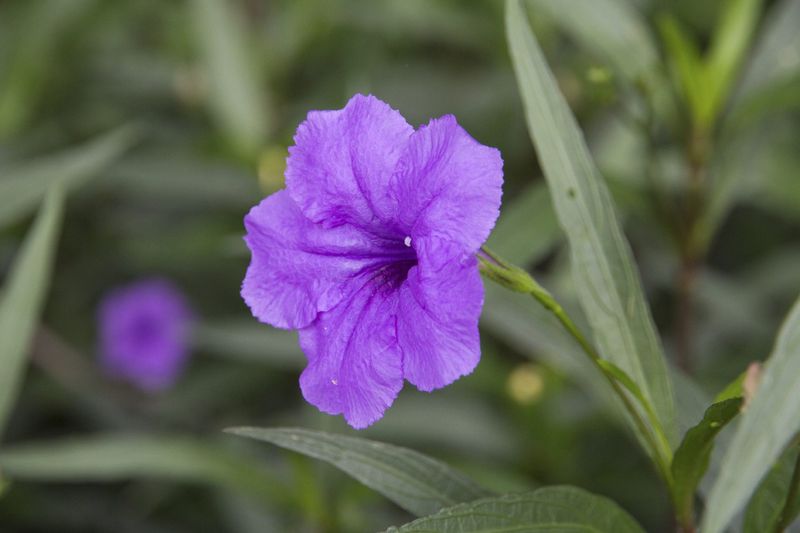
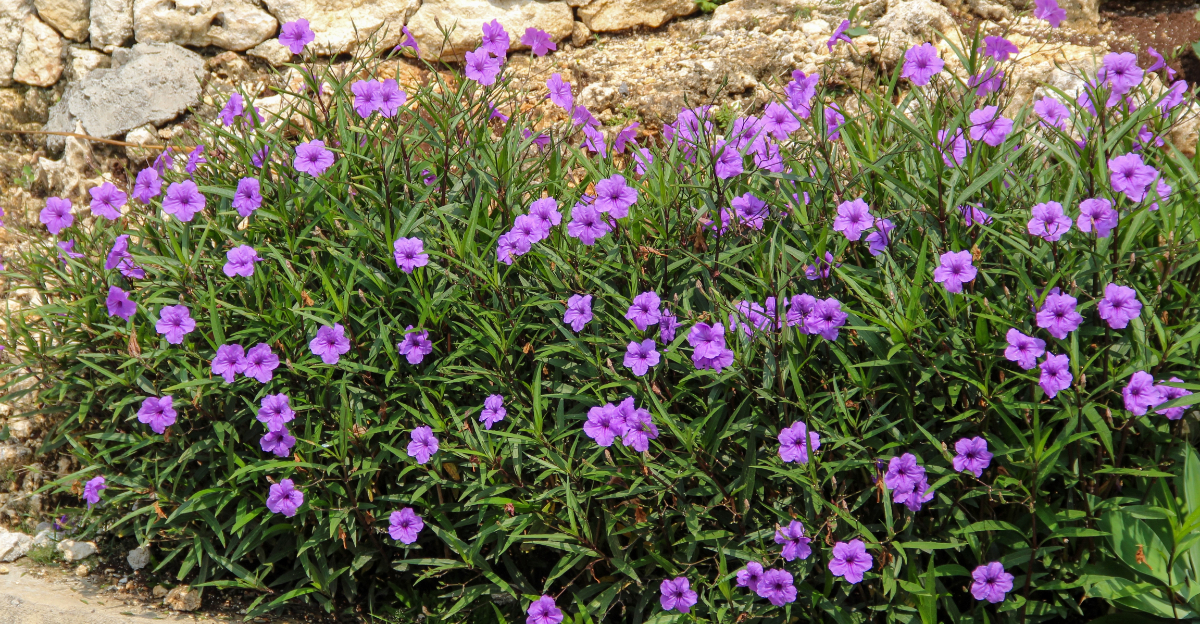
You plant a few of them because they look cheerful and low-maintenance, and within one season, Mexican petunia has quietly taken over the entire bed. Ruellia simplex is one of the most aggressively spreading plants you can put in a Florida landscape.
It sends out underground rhizomes and self-seeds at an impressive rate, filling every open space it can find.
The Florida Exotic Pest Plant Council lists Mexican petunia as a Category I invasive species, meaning it has been documented escaping into natural areas and pushing out native vegetation. Once it gets into wetlands or roadsides near your property, removal becomes a real challenge.
Many gardeners find themselves spending more time pulling it back than enjoying it.
A much smarter swap is the Florida native wild petunia, Ruellia caroliniensis. It looks similar but behaves itself, staying in manageable clumps rather than spreading everywhere.
Native bees and butterflies visit it regularly, giving it real ecological value beyond just looking pretty.
For best results, plant native wild petunia in a partly shaded spot with well-drained soil. Water it regularly until established, then step back and let it thrive with minimal care.
2. Nandina Looks Harmless But Creates Bigger Problems
At first glance, nandina seems like a perfectly reasonable choice. It is tidy, colorful in fall and winter, and tolerates a range of conditions without much fuss.
But behind that tidy appearance, this shrub has a reputation that Florida ecologists have been warning homeowners about for years.
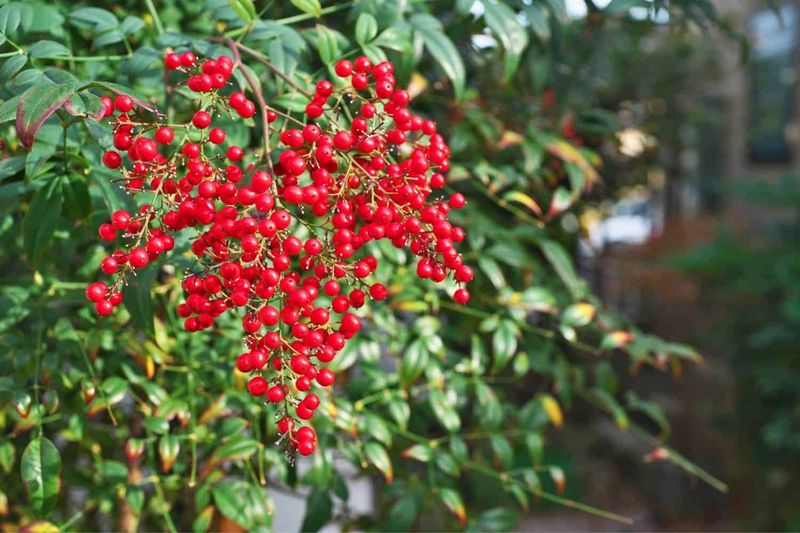
Nandina domestica produces clusters of red berries that birds eat and spread into natural areas. The berries contain compounds that can be harmful to birds, particularly cedar waxwings, which tend to eat large quantities at once.
Beyond that, nandina is considered invasive in parts of Florida and can establish itself in forests, roadsides, and disturbed areas where it competes with native plants.
Simpson stopper, Myrcianthes fragrans, is a native Florida shrub that checks all the same boxes without the ecological baggage. It grows at a manageable pace, produces small white flowers, and offers berries that native birds genuinely benefit from eating.
Simpson stopper works beautifully as a hedge or specimen plant in full sun to partial shade. Plant it in well-drained soil and give it moderate water during its first year.
Once it settles in, it requires very little attention while quietly supporting local wildlife.
3. Society Garlic Takes Over More Than Expected
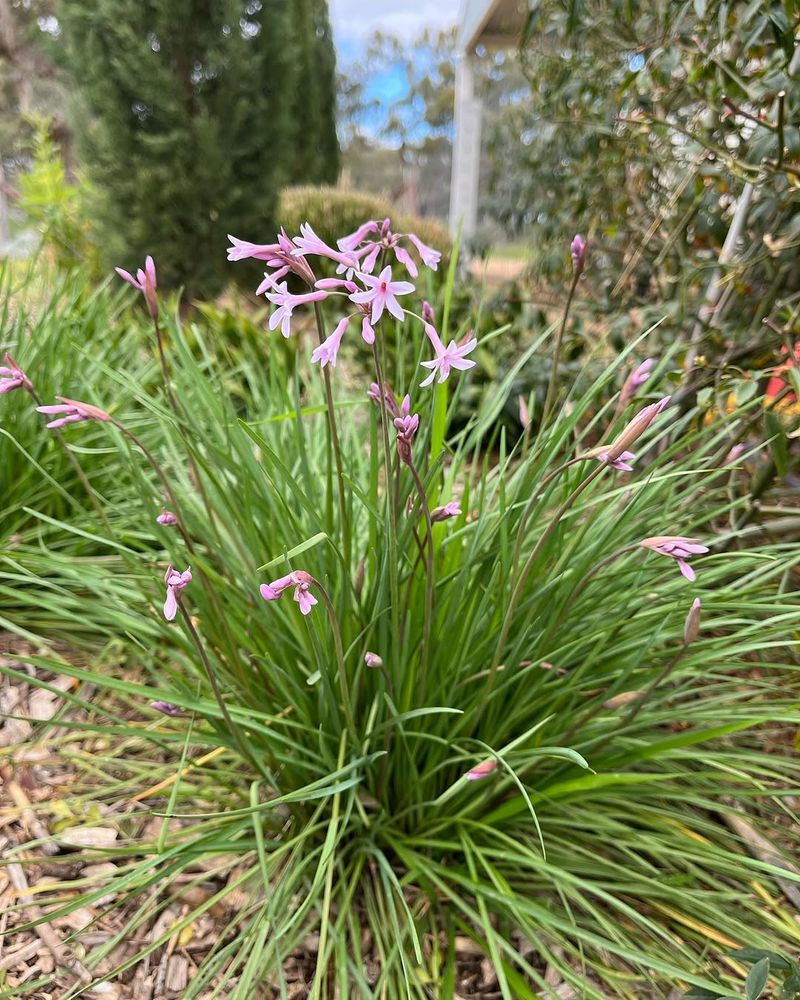
Society garlic has a reputation for being easy, and in many ways it is. But easy can sometimes mean too easy.
Over time, the clumps expand steadily, crowding nearby plants and creating a thick mat that is surprisingly hard to dig out once it gets established. Many gardeners who planted it for a pop of lavender color end up spending hours trying to reclaim their beds.
Beyond the spreading habit, society garlic offers very little to Florida wildlife. It is not native, it does not attract many pollinators compared to better options, and it does not integrate well into natural planting schemes.
It just keeps growing, smelling faintly of garlic, and pushing everything else out of the way.
Native rain lily, Zephyranthes atamasca, is a far more elegant solution. It blooms in spring and after summer rains, producing delicate white flowers that pop up seemingly out of nowhere.
It stays in neat clumps, plays well with other plants, and supports native bee populations.
Plant rain lily bulbs about two inches deep in a sunny to partly shaded spot. They prefer moist, well-drained soil and reward patience with reliable seasonal blooms that feel like a little celebration every time they appear.
4. Vinca Fills Space But Brings Disease Risks
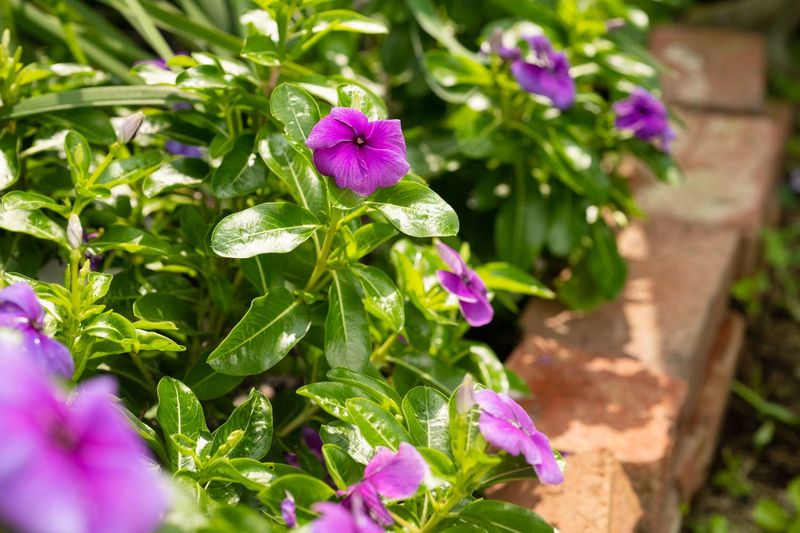
Annual vinca, also called periwinkle, has long been a go-to filler plant for Florida beds. The colors are bold, the plants are cheap, and they fill space fast.
But Florida summers have a way of humbling even the most determined vinca planting, because this plant and Florida humidity do not always get along.
Aerial phytophthora, a fungal-like pathogen, can sweep through a vinca planting with alarming speed during the rainy season. One week the bed looks great, and the next week plants are collapsing in patches.
The problem tends to get worse when plants are crowded or when water pools around the roots. Despite improved disease-resistant varieties, the issue remains frustratingly common across the state.
Blanket flower, Gaillardia pulchella, handles Florida summers with confidence. It loves the heat, shrugs off drought once established, and produces cheerful red and yellow blooms that pollinators find irresistible.
It is also native to Florida, which means it supports the local ecosystem rather than just filling space.
Plant blanket flower in full sun with sandy, well-drained soil. Avoid overwatering, since it prefers drier conditions.
Deadheading spent blooms regularly encourages continuous flowering from spring well into fall, giving you a long season of color without the disease drama.
5. Impatiens Struggle In Florida’s Humid Summers
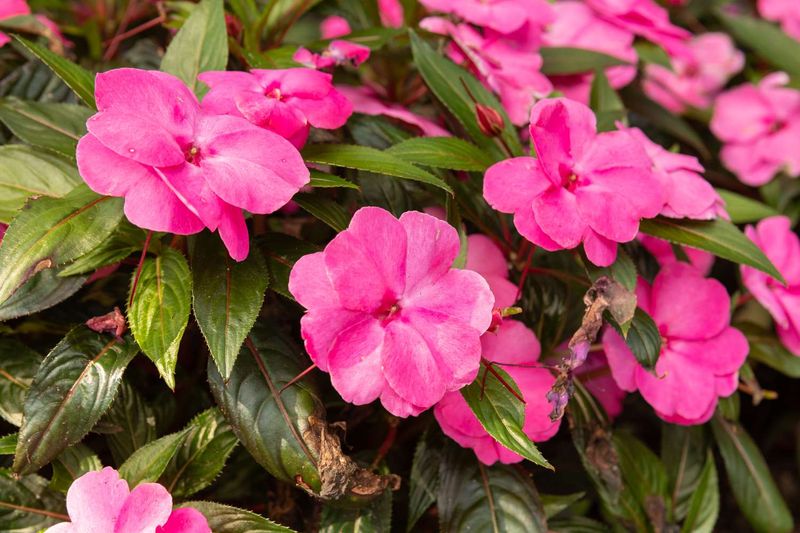
For decades, impatiens were the undisputed queen of shady Florida garden beds. Then downy mildew arrived, and everything changed.
Starting around 2011, a particularly aggressive strain of impatiens downy mildew began wiping out plantings across the country, and Florida gardeners felt the impact hard. An entire bed can go from full and lush to bare soil in a matter of days.
The combination of Florida humidity, warm nights, and the dense planting style most gardeners use makes conditions nearly perfect for the disease to spread. Even newer resistant varieties can struggle when summer really kicks in.
Replacing a full bed multiple times in a single season gets expensive and exhausting quickly.
Browallia americana is a shade-loving annual that thrives in exactly the conditions that make traditional impatiens suffer. It produces small blue, white, or violet flowers and handles heat and humidity without collapsing.
It is not as widely known as impatiens, but gardeners who try it tend to become loyal fans.
For best results, plant Browallia in a shaded or partly shaded spot with moist, well-drained soil. Water consistently but avoid waterlogging the roots.
Pinching back young plants encourages bushier growth and more blooms throughout the warm season.
6. Lantana Isn’t Always The Best Choice Everywhere
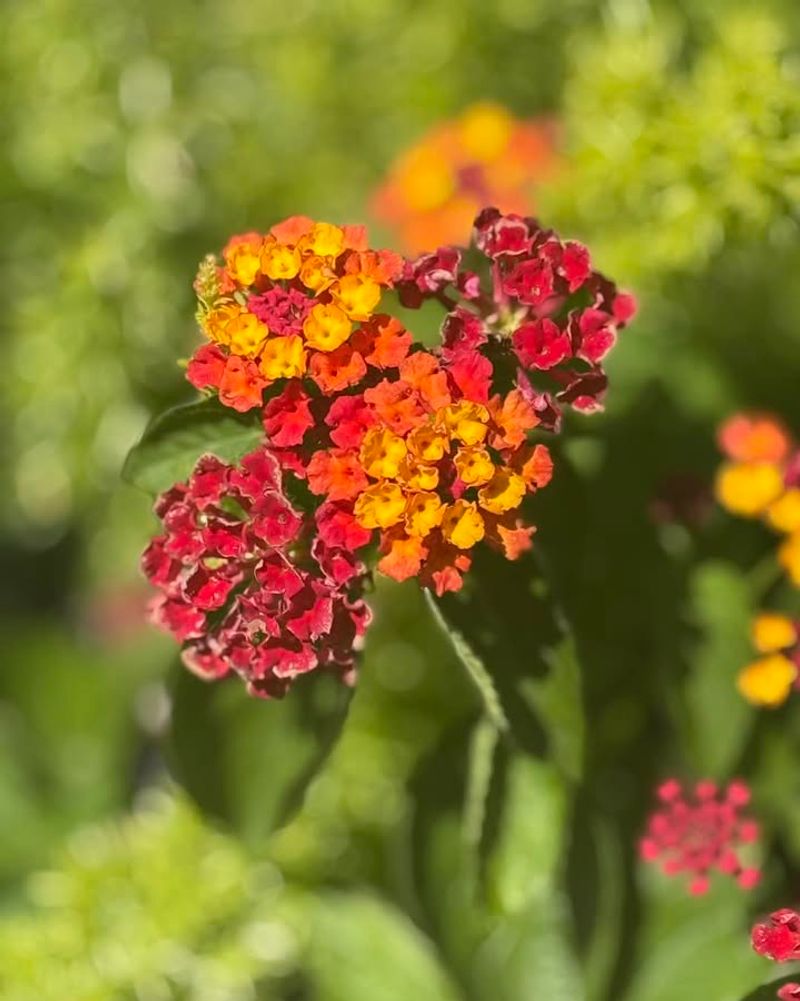
Lantana is everywhere in Florida, and for understandable reasons. It blooms nonstop, butterflies love it, and it laughs at drought and heat.
But the full picture is a bit more complicated than the garden center tag lets on. Not all lantana is created equal, and the most commonly sold varieties can cause real problems.
Lantana camara, the non-native species found in most nurseries, is listed as a Category I invasive by the Florida Exotic Pest Plant Council. It escapes into natural areas, spreads readily from bird-dispersed seeds, and can form dense thickets that crowd out native vegetation.
On top of that, all parts of the plant are toxic to dogs, cats, horses, and livestock, which is worth knowing if animals spend time in your yard.
Native lantana, Lantana involucrata, offers the same pollinator appeal in a much better package. It stays more compact, does not spread aggressively into natural areas, and still draws butterflies and bees in impressive numbers throughout the year.
Plant native lantana in full sun with well-drained soil. It handles dry periods well once established and needs only occasional trimming to keep its shape.
Choosing this species over non-native varieties means you get the beauty without contributing to a wider ecological problem.
7. Blue Daze Fades Fast In Tough Conditions
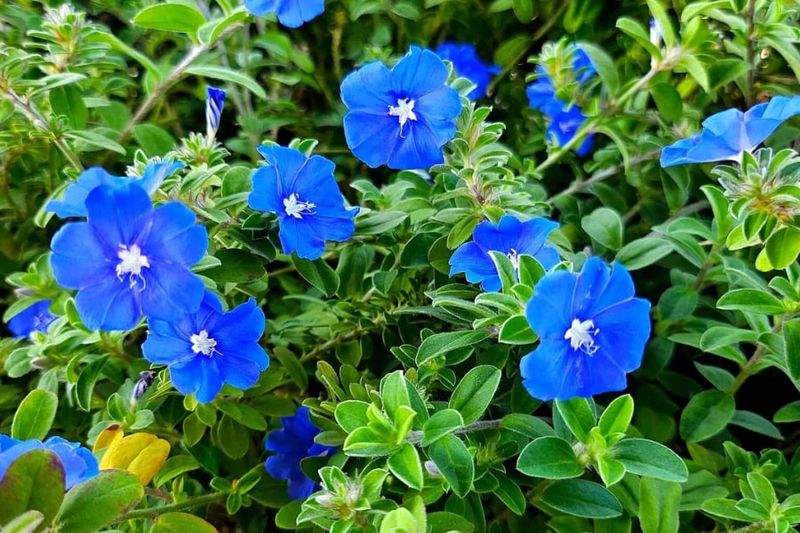
Blue daze has a lot of appeal on paper. The small sky-blue flowers are charming, it stays relatively low to the ground, and it looks great in containers or as a ground cover.
The problem is that blue daze has some very specific needs, and Florida landscapes do not always cooperate.
Poor drainage is its biggest enemy. Heavy rains, clay soil, or overwatering can cause the stems to thin out and flowering to slow dramatically.
It also struggles in spots where water pools after storms, which is a very common situation in many Florida yards. Without consistent care and ideal conditions, blue daze tends to look scraggly rather than lush, which defeats the purpose of planting it.
Beach sunflower, Helianthus debilis, is a Florida native that handles tough conditions with ease. It spreads cheerfully across sandy or well-drained soil, produces bold yellow flowers almost year-round, and requires almost no intervention once it gets going.
Birds enjoy the seeds, and the flowers attract a wide variety of pollinators.
Plant beach sunflower in full sun and give it room to spread, since it can cover several feet in a season. Avoid heavy clay soils and skip the fertilizer.
This is one plant that genuinely performs better when you leave it mostly alone.
8. Petunias Burn Out Quickly In Florida Summers
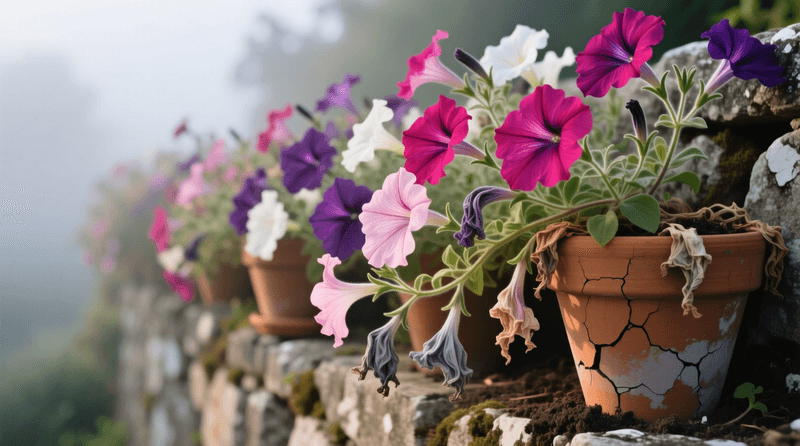
Petunias put on a gorgeous show in spring, and Florida gardeners understandably get attached to them. But as temperatures climb into the upper eighties and nineties and the humidity settles in, petunias start to look less and less impressive.
The blooms fade, the stems get leggy, and no amount of deadheading seems to keep up with the decline.
By midsummer, most petunia plantings in Florida look like they have had a rough few months, because they have. They are simply not built for the intensity of a Florida summer.
Replacing them repeatedly throughout the season adds up in both cost and effort, and the results are rarely as satisfying as that first spring flush.
Moss rose, Portulaca grandiflora, is the summer filler plant Florida gardeners have been overlooking. It thrives in heat, loves sandy well-drained soil, and produces jewel-toned flowers in shades of pink, orange, yellow, red, and white.
Best of all, it needs almost no water once established and laughs at full sun exposure.
Plant moss rose seeds or transplants in a sunny spot after the last cold snap. Space them about six to eight inches apart and resist the urge to overwater.
They reward neglect with an impressive display that lasts well into fall without complaint.
9. Oleander Comes With More Risk Than Reward
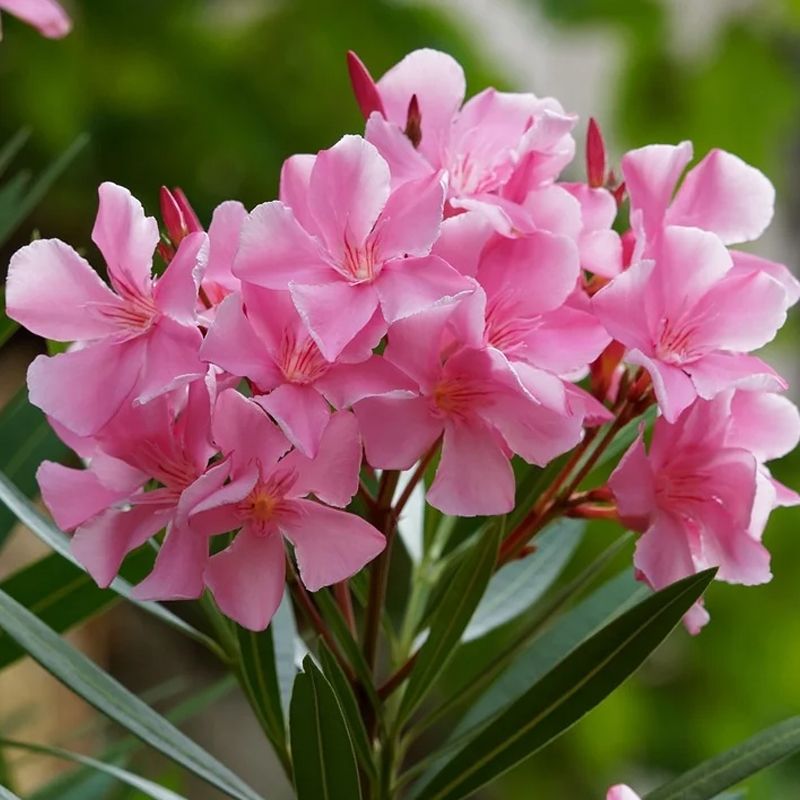
Oleander has been a Florida landscape staple for generations, and it is easy to see why. It grows fast, tolerates heat, drought, and salt air, and produces abundant clusters of pink, white, or red flowers.
But oleander carries a serious concern that many homeowners either do not know about or underestimate significantly.
Every part of oleander is highly toxic to humans, pets, and livestock. Even smoke from burning the wood can be hazardous.
For households with young children or animals, planting oleander along walkways, patios, or play areas introduces a genuine safety risk.
Beyond toxicity, oleander leaf scorch, caused by a bacterial pathogen spread by insects, has been spreading through Florida landscapes and can cause serious decline in established plants.
Firebush, Hamelia patens, is a Florida native that offers comparable toughness without the safety concerns. It produces clusters of tubular orange-red flowers that hummingbirds, butterflies, and native bees visit constantly.
It handles heat and drought well, grows quickly, and fits beautifully into both formal and naturalistic landscapes.
Plant firebush in full sun for the most flowers, though it tolerates partial shade reasonably well. Prune it back in late winter to encourage dense, vigorous new growth in spring.
It is one of the most reliable and ecologically valuable shrubs available to Florida gardeners today.