The Most Stunning Underrated Pennsylvania Native Shrub That Blooms From Spring Through Fall
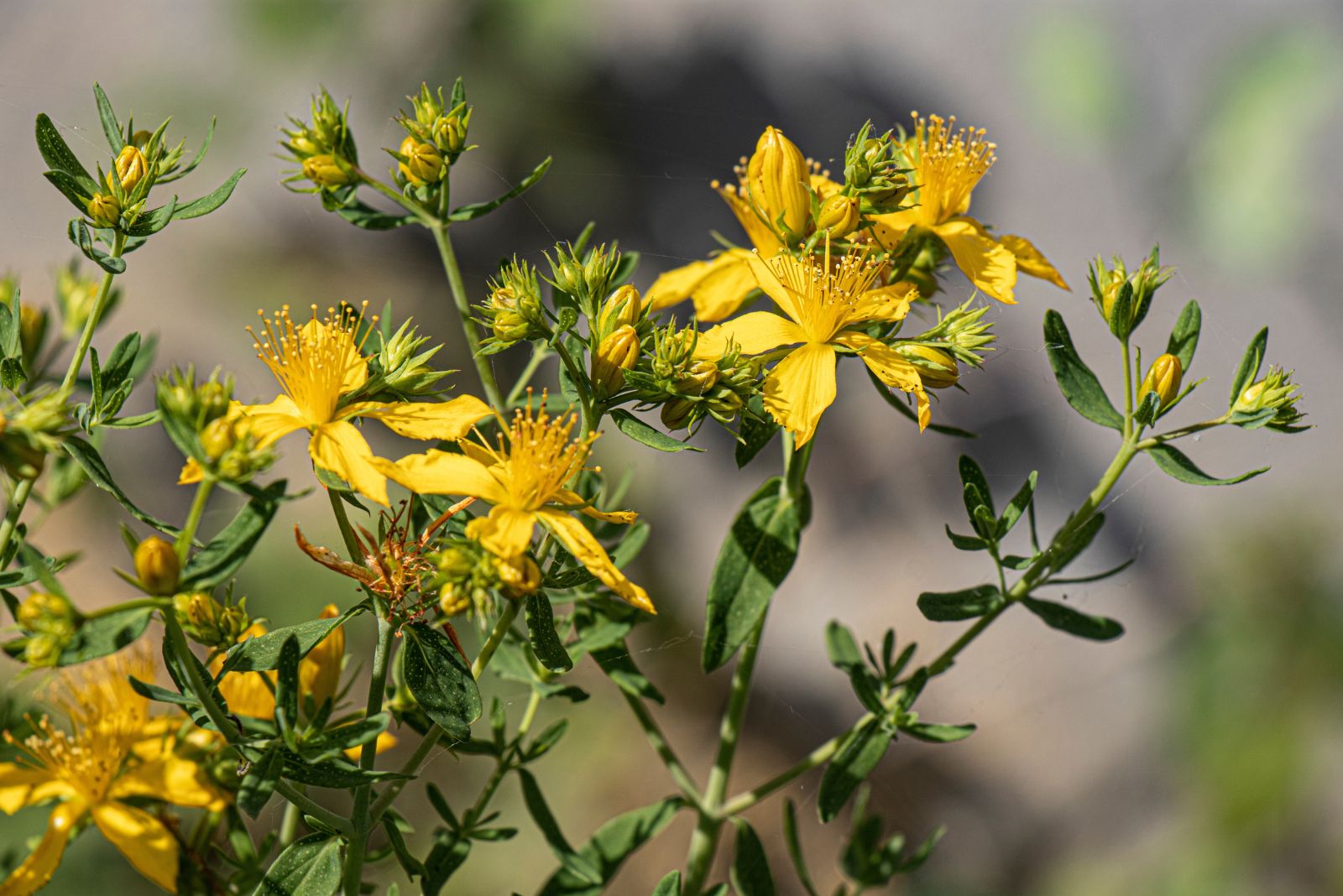
Pennsylvania has a genuinely impressive collection of native shrubs, but most of the attention goes to the same few names while one of the most remarkable performers in the group stays almost entirely off the radar.
This shrub blooms across a seasonal range that most plants cannot come close to matching, producing flowers from spring well into fall without much input from the gardener.
It handles partial shade and full sun, tolerates a range of soil conditions including some of the heavier clay that frustrates Pennsylvania gardeners regularly, and comes back every year with more presence than the season before.
Pollinators seek it out consistently, and the late-season interest it provides carries the garden through a stretch when most other shrubs have already gone quiet.
It shows up in far fewer yards than it deserves to, and the gardeners who do grow it tend to treat it as one of their best kept secrets. That reputation is about to get harder to keep.
1. Shrubby St. John’s Wort Is The Long-Blooming Native Shrub Pennsylvania Gardeners Overlook
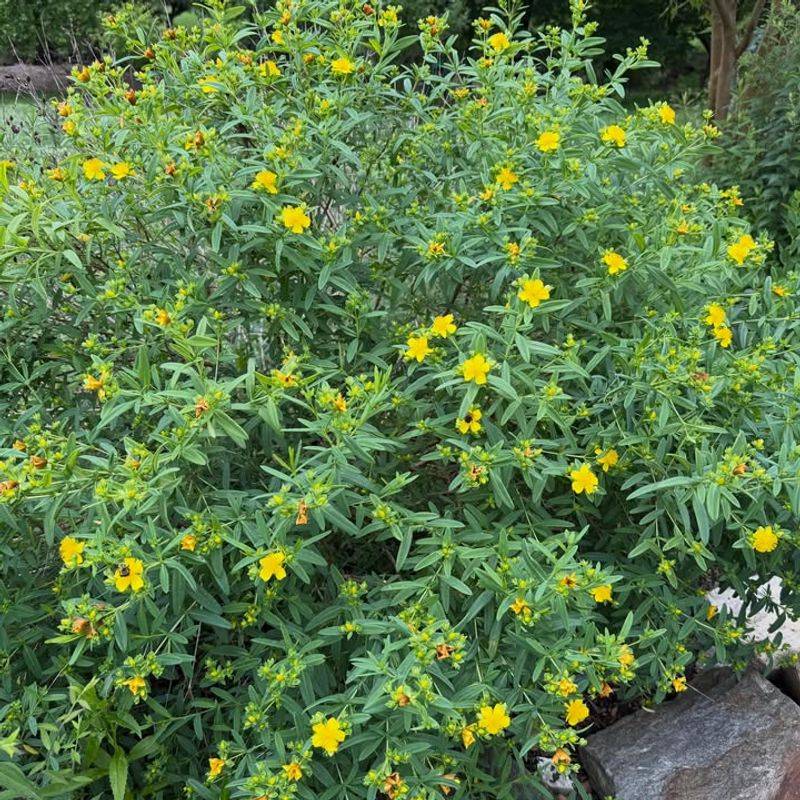
Somewhere between the flashy roses and the overplanted spirea, Shrubby St. John’s Wort quietly waits for someone to notice it. Most gardeners pass it by because it does not have a famous name or a spot at the front of the garden center.
That is honestly a shame, because this native shrub has a lot going for it. Shrubby St. John’s Wort, known scientifically as Hypericum prolificum, is a Pennsylvania native that grows naturally in rocky slopes, open woods, and stream banks.
It has been thriving in this region long before landscaping trends ever existed. Because it evolved here, it already knows how to handle Pennsylvania weather, soils, and seasons without extra help from you.
One thing gardeners often get wrong is expecting this shrub to bloom all spring. To be clear, it blooms mainly from early summer through fall, usually starting in July and going strong into September.
That is still an impressive run compared to many popular shrubs that flower for only a few weeks.
Its compact, rounded shape makes it easy to fit into almost any yard. The stems are sturdy, the leaves are a clean glossy green, and the overall look is tidy without needing constant trimming.
It grows roughly two to four feet tall, which is a manageable size for most home landscapes. If you want a shrub that earns its spot without demanding constant attention, Shrubby St. John’s Wort is one you should seriously consider adding to your Pennsylvania garden this season.
2. It Produces Bright Yellow Flowers For Months
Picture a shrub that keeps pumping out cheerful yellow blooms while everything else in your yard has already finished flowering.
That is exactly what Shrubby St. John’s Wort does, and it is one of the main reasons plant lovers who discover it never want to be without it again.
Most popular landscape shrubs have a bloom window of two to four weeks at best. Forsythia lights up for a moment in early spring, then goes green for the rest of the year.
Your Pennsylvania Garden Changes Every Week. Your Plan Should Too.
Gardening in Pennsylvania changes quickly throughout the season. Every Friday you’ll receive a simple weekly plan showing exactly what to plant, prune, fertilize, harvest, and protect so you never miss the right timing.
Lilac smells amazing for about two weeks and then fades away. Shrubby St. John’s Wort plays a completely different game.
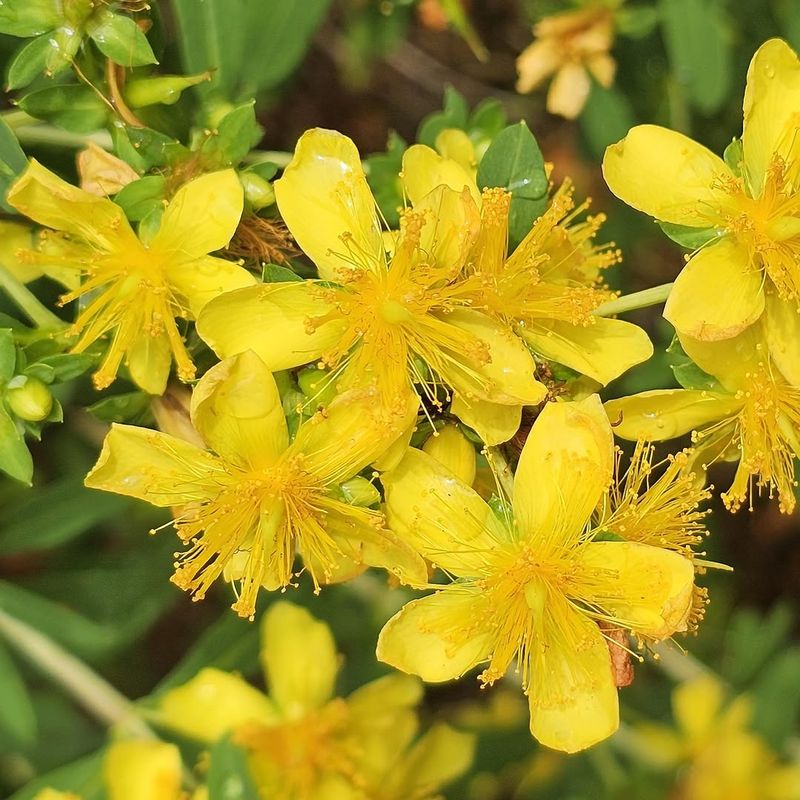
Starting in early summer, usually around late June or July, it opens its small but vivid yellow flowers and keeps producing them through late summer and into September.
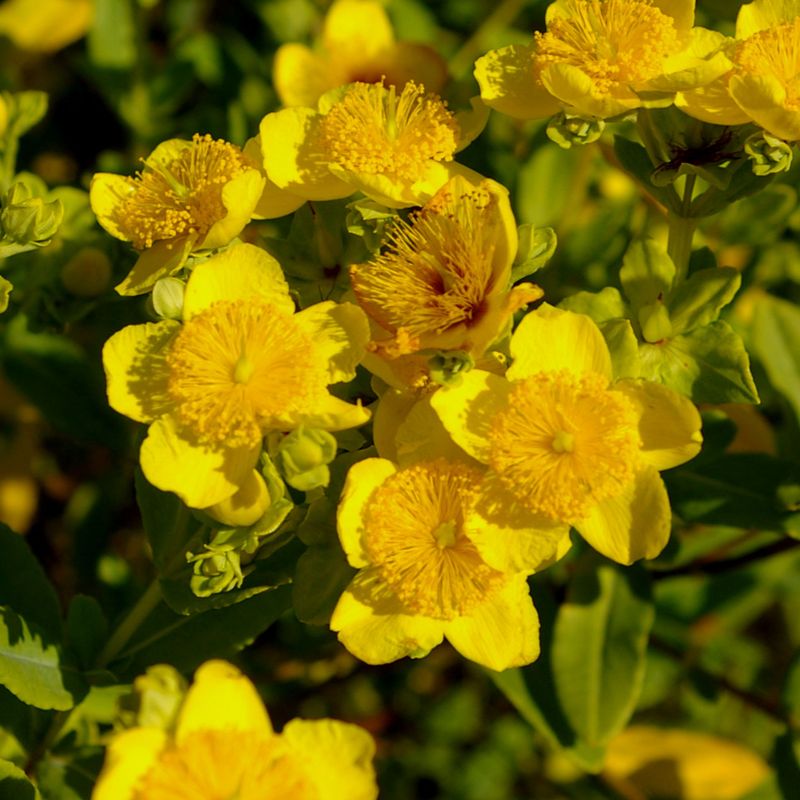
Each flower has five rounded petals and a burst of thin yellow stamens in the center, giving it a cheerful, sunshiny look.
The blooms are not huge, but they appear in clusters, so the overall effect is bold and bright. Against the dark green glossy leaves, the yellow color really pops.
In a garden border or foundation bed, this long bloom period is incredibly useful. You can pair it with plants that flower earlier in the season, and then let St. John’s Wort carry the color through the slower summer months.
It fills a gap that many yards struggle with. Gardeners who want continuous color without replanting every few weeks will find this shrub to be a reliable and rewarding choice all season long.
3. It Supports Pollinators
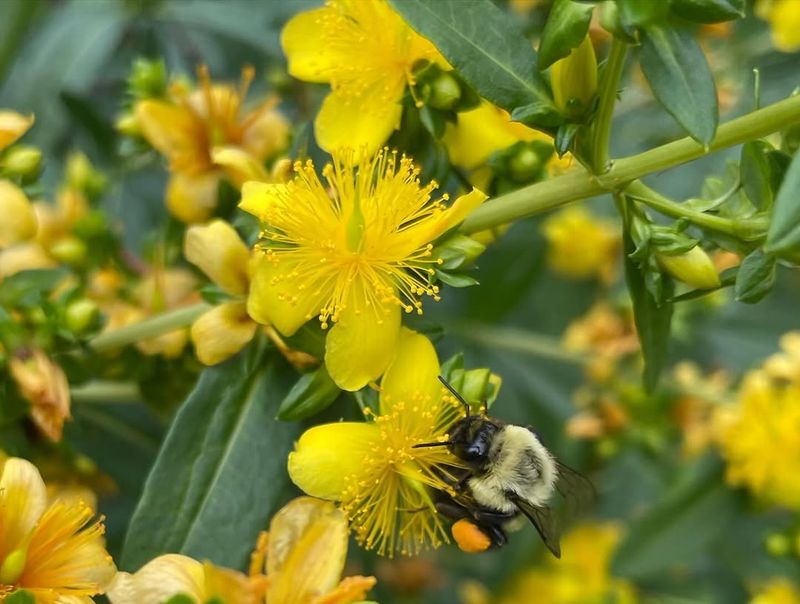
Here is a fun fact that might surprise you: Shrubby St. John’s Wort is a pollinator magnet. On a warm summer morning, you can stand next to one of these shrubs and watch bumblebees, native sweat bees, and other beneficial insects buzzing from flower to flower.
The activity is almost constant during peak bloom, and it is genuinely exciting to watch. The flowers are rich in pollen, which is exactly what many native bees need to feed their larvae.
Unlike some ornamental plants that have been bred to look pretty but offer little nutritional value to insects, Shrubby St. John’s Wort delivers real ecological value.
Native bees especially love it because they evolved alongside these plants and are perfectly built to collect from them.
Beyond bees, the shrub also attracts certain beetles and other beneficial insects that help keep pest populations in check naturally. Adding it to your yard means you are quietly building a healthier ecosystem right outside your door.
That is a big deal for home gardeners who want to do something meaningful for local wildlife without taking on a complicated project.
Many popular landscape plants, like non-native ornamentals, offer little to no benefit to local insects and birds. Choosing a native shrub like this one is a smarter ecological decision.
You get the beauty of a flowering shrub while also giving native pollinators a reliable food source through the summer months.
For Pennsylvania gardeners who care about their local environment, this is one of the most impactful plants you can add to your landscape this year.
4. It Handles Pennsylvania Conditions Well
Pennsylvania gardeners know the struggle. One week it is blazing hot and dry, the next it is cold and soggy.
Clay soil in one corner of the yard, sandy soil in another. Most fancy landscape shrubs throw a fit when conditions are not perfect. Shrubby St. John’s Wort simply does not have that problem.
Because this shrub is native to Pennsylvania and much of the eastern United States, it has spent thousands of years adapting to exactly the conditions found here. Rocky hillsides, open fields, stream edges, and woodland borders are all places it naturally calls home.
That adaptability carries over beautifully into home landscapes, where conditions can be unpredictable and inconsistent.
In terms of soil, it is remarkably flexible. It grows well in sandy soils, clay soils, and average garden loam.
It tolerates both dry spells and occasionally wet conditions better than many shrubs. Good drainage is helpful, but this plant will not fall apart if things get a little soggy after a heavy rain.
Sun exposure is another area where it performs well across a range. Full sun brings out the best flowering, but it also handles part shade without losing its appeal.
This makes it useful in spots where light levels change throughout the day or where taller trees cast partial shade in the afternoon. Once established, usually after one full growing season, it becomes quite self-sufficient.
You will not need to water it constantly or worry about it struggling through a dry August. For Pennsylvania’s unpredictable climate, that kind of toughness is genuinely valuable in a landscape plant.
5. It Stays Manageable In Smaller Gardens
Not every yard has room for a massive shrub that spreads six feet wide and needs heavy pruning every spring. For gardeners working with smaller spaces, finding a shrub that fits without taking over is a real challenge.
Shrubby St. John’s Wort solves that problem with its naturally compact, well-behaved growth habit.
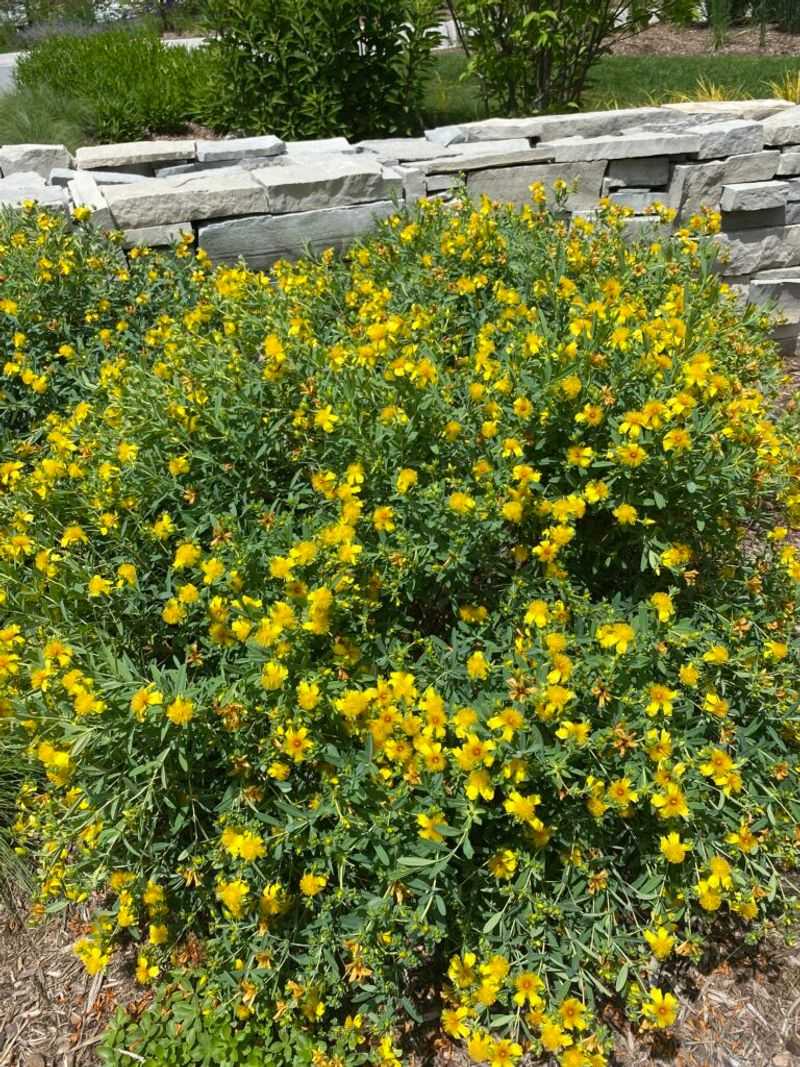
Most mature plants reach somewhere between two and four feet tall and about as wide. That is a very workable size for tight spots along a foundation, beside a front walkway, or at the edge of a patio.
It forms a rounded, tidy mound on its own without needing constant shaping. You can trim it lightly in early spring if you want to keep it extra neat, but it honestly holds its shape well without much help.
Compared to shrubs like forsythia or certain viburnums that can quickly outgrow their space, this one stays polite. It will not creep into your lawn, crowd out neighboring plants, or suddenly triple in size after a wet spring.
Gardeners who have dealt with aggressive shrubs before will appreciate how easy this one is to manage.
Placing it along a walkway is a particularly good idea because it creates a soft, colorful edge without blocking sightlines or growing into foot traffic areas. It also works nicely in mixed borders alongside perennials and ornamental grasses.
The compact size means you can use it in multiples without things feeling crowded. For small Pennsylvania yards where every inch of space matters, this shrub is a genuinely smart and stylish choice that delivers big impact in a small footprint.
6. It Adds Beauty Without High Maintenance
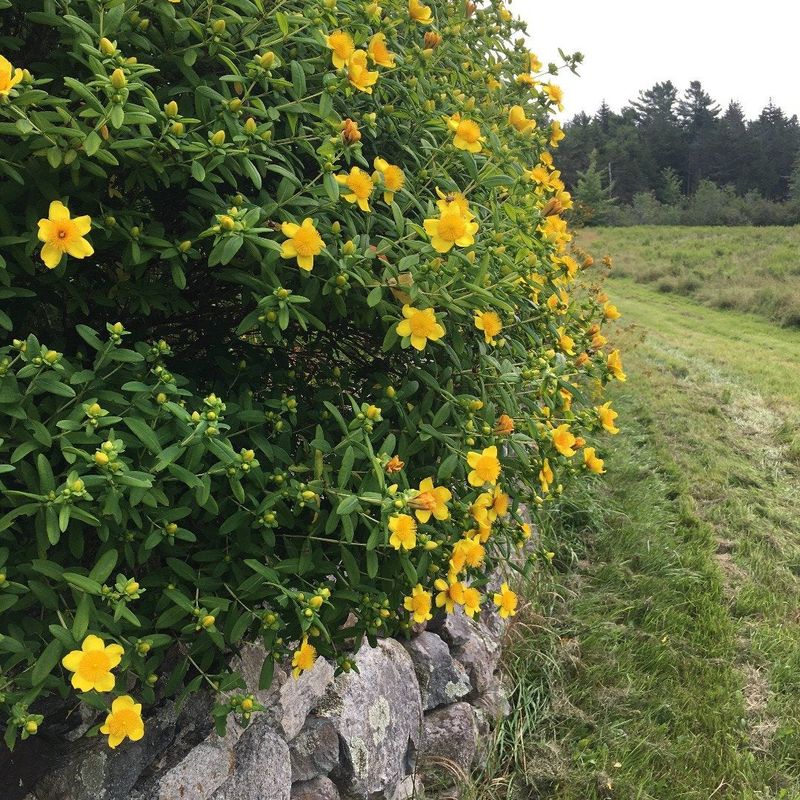
Some of the best things in a garden are the ones that do not ask much from you. Shrubby St. John’s Wort is exactly that kind of plant.
Once it settles in after its first season, it largely takes care of itself, and that is a quality every busy gardener can appreciate.
Watering needs drop significantly after establishment. A normal Pennsylvania rainfall pattern is usually enough to keep it healthy through the growing season.
You might water it during an unusually long dry stretch, but it handles short dry periods without wilting dramatically or dropping its leaves. That kind of quiet resilience is rare among flowering shrubs.
Fertilizing is rarely necessary. In fact, over-fertilizing native plants can sometimes cause more harm than good by pushing leafy growth at the expense of flowers.
Just let it grow in average soil without loading it up with extra nutrients, and it will reward you with a full season of blooms. Mulching around the base helps retain moisture and keeps weeds down, which is the most useful thing you can do for it.
Pest and disease problems are minimal. Because it is native, local insects and pathogens have a balanced relationship with it.
You will not likely find yourself reaching for sprays or treatments to keep it looking good. Compared to overused ornamentals like burning bush or non-native barberry, which bring ecological baggage along with their looks, Shrubby St. John’s Wort is a refreshingly honest choice.
It is beautiful, it is responsible, and it fits naturally into a Pennsylvania landscape without demanding anything extra from the person who planted it.